
Business
Dialog Axiata launches the affordable and powerful 5G Smartphone, Huawei Nova 7 SE


Gearing Sri Lanka to a “5G ready status” with its 5G trial network in select locations, across the country, Dialog Axiata PLC, Sri Lanka’s premier connectivity provider partnered Huawei to unveil the highly anticipated mid-range 5G smartphone, Huawei Nova 7 SE. Customers can now pre-order the latest Huawei 5G ready device from Dialog until 10th October 2020.
Speaking on this occasion, Chief Operating Officer of Dialog Axiata PLC, Lasantha Theverapperuma stated “Dialog is happy to introduce users to experience the enhanced 5G device capabilities at an affordable price point whilst creating easy access to its faster and latent-free 5G network as a step forward in our journey of facilitating all Sri Lankans with a world-class mobile experience. The launch of the 5G ready Huawei Nova 7 SE will mark the latest offering by Dialog in line with its commitment to delivering the Future, Today.”
Customers can now experience the power of 5G with the Huawei Nova 7 SE smartphone on the Dialog 5G trial networks available at the Dialog Iconic, Dialog Experience Centres at Alfred House and World Trade Center, and several zones in Colombo city. The Huawei Nova 7 SE features a 6.5inches LTPS Full HD display with a 90% screen to body ratio offering an endless viewing experience – ideal for gaming and watching movies. Users can also explore the boundless potential for creative expression offered by four versatile lenses as the 5G smartphone comes equipped with a 64MP AI Quad Camera set up. In addition to this, the device comes powered with an 8GB RAM and a 128GB storage and its Kirin 820 7nm 5G chipset facilitates faster processing. With a battery life spanning over 24 hours, this device is reimagined and designed to keep up with a modern user’s busy day-to-day life.
Priced at Rs. 64,999 the Huawei Nova 7 SE is available in Nova’s lush colour variants-Space Silver, Crush Green and Midsummer Purple. Customers who pre-order the device via Dialog will receive free benefits including; no down payment for pre-orders, a free Huawei Band 4, 100GB Anytime Data exclusively from Dialog (valid for 1 month), easy payment plans with leading credit cards – up to 40 months instalments with 0% interest, along with the added benefit for Dialog Club Vision members to redeem standard loyalty discounts on device purchases.
Customers can visit the Dialog Facebook Page for more information on the latest Huawei Nova 7E offers.

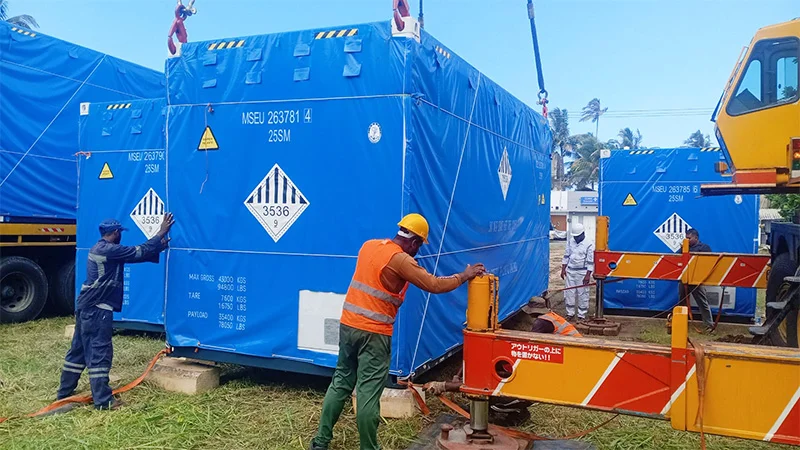
Sri Lanka has taken a major step towards modernising its power infrastructure with the arrival of the country’s first commercial-scale Battery Energy Storage System (BESS), part of a USD 50 million investment expected to transform the integration of renewable energy into the national grid.
The first shipment of battery units arrived at the Port of Colombo recently for the landmark Galle and Matara BESS projects being developed by Galilee BESS (Pvt) Ltd, a subsidiary of KHEN Energy Limited. The projects are expected to play a pivotal role in enhancing grid stability, reducing renewable energy curtailment and strengthening the country’s energy security.
The shipment comprised 25 containers, including 18 battery units weighing 42 metric tonnes each, making it one of the largest and most technically demanding renewable energy cargo movements handled in Sri Lanka to date.
Energy industry officials describe the project as a milestone investment that will help bridge one of the biggest challenges facing renewable energy development—storing electricity generated from intermittent sources such as solar and wind power for use when demand peaks.
Once operational, the BESS facilities will support the National System Operator by absorbing excess renewable energy during periods of high generation and releasing it when required, thereby improving efficiency and reliability across the power network.
The technology is being supplied by global energy storage leader Sungrow Power Supply Co., Ltd., reflecting growing international confidence in Sri Lanka’s renewable energy sector and its long-term clean energy ambitions.
Beyond its energy significance, the project also highlights the increasing scale and sophistication of infrastructure investments entering the country.
Expolanka Freight (Pvt) Ltd was entrusted with the end-to-end logistics operation, overseeing customs clearance, specialised transportation, storage, unloading and final placement of the battery units at the project sites.
Finance and Project Director Fazul Ansar said the operation required extensive engineering studies, route assessments and rigorous safety planning owing to the hazardous classification and extraordinary weight of the cargo.
Head of Project Logistics Mohamed Niyas said months of preparation had gone into route surveys, lifting studies and risk mitigation planning to ensure the successful execution of the project.
Project officials said specialised multi-axle trailers and cranes with lifting capacities ranging from 100 to 150 tonnes were deployed for the operation, while access modifications and last-mile transport solutions were implemented at both project locations.
By Ifham Nizam
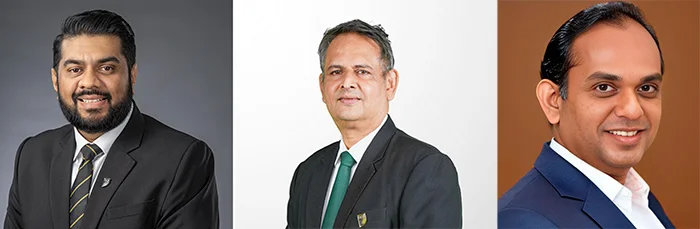
The AI and Data Analytics Summit 2026 organised by the Sri Lanka Section of BCS, the Chartered Institute for IT was successfully held on 22nd May 2026 at Waters Edge, Colombo. The high-impact summit themed “Next Generation AI & Data Analytics: Skills & Thoughts for the Intelligent Future” brought together senior policymakers, global technology experts, industry leaders, academics, and innovators to explore how Artificial Intelligence (AI) and Data Analytics are reshaping the nation’s digital and economic future.
The event, endorsed by the Ministry of Digital Economy, was graced by Waruna Sri Dhanapala, Secretary to the Ministry of Digital Economy, who attended as the Guest of Honour, underscoring the government’s strong commitment to advancing AI adoption, digital innovation, and data-driven governance in support of Sri Lanka’s broader public sector transformation agenda. Dr. Sadeep Jayasumana, Chief Scientist at Octave, delivered the keynote address on Generative AI, sharing insights into its transformative potential.
Speaking on the significance of the summit, Prof. Lasith Gunawardena, Chairman the Sri Lanka Section of BCS, the Chartered Institute for IT noted that Artificial Intelligence and Data Analytics have become present-day enablers of innovation, economic growth, and societal progress. He emphasized that the summit was guided by BCS’s purpose of Making IT Good for Society and by the national need to bring together thought leaders, practitioners, policymakers, and industry experts to foster collaboration, knowledge sharing, and the responsible adoption of transformative technologies, thereby strengthening Sri Lanka’s digital readiness and supporting a resilient, inclusive, and globally competitive digital economy.
Ransith Fernando, Chair of the summit mentioned ” This year’s summit brought together 21 speakers who shared valuable insights, ideas, and experiences. We heard inspiring success stories, gained practical knowledge from industry practitioners, and explored strategic perspectives from business leaders. These conversations highlighted both the opportunity and the responsibility before us. While innovation is accelerating globally, Sri Lanka must align policy, talent, and industry readiness to truly operationalize AI at scale and ensure an inclusive and sustainable digital transformation.”
Deshan Liyanage, Co-Chair of the AI and Data Analytics Summit 2026 commented that this year’s summit was a fully sold-out event, reflecting the growing national momentum around Artificial Intelligence and Data Analytics in Sri Lanka. He extended heartfelt gratitude to all participants who joined and contributed to the success of the summit, as well as to the sponsors whose support made the event possible. Special appreciation was conveyed to Sysco LABS as the Strategic Partner, Linear Six as the Bronze Partner, InTalent Asia as the Resource Partner, and Motivista as the Event Partner. He also acknowledged the valuable collaboration of industry associations including SLASSCOM, FITIS, and CSSL, whose partnership helped strengthen and elevate the initiative.
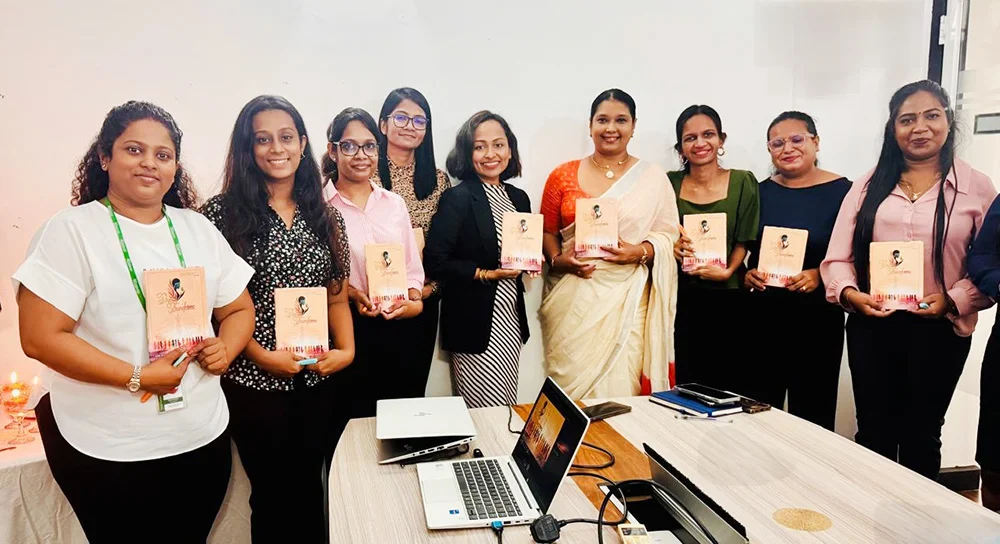
As part of its commitment to advancing women’s empowerment and building a stronger leadership pipeline, Eswaran Brothers Exports (EB), a leading tea manufacturer in Sri Lanka, launched its flagship women’s leadership initiative, She Transforms, a customized six-month leadership development journey. Developed with award-winning leadership expert Senela Jayasuriya and supported by Value for Women, the programme forms a key pillar of the Company’s wider gender agenda focused on leadership capacity building, inclusion and long-term institutional change.
Women make up 44% of Eswaran Brothers’ workforce, yet only 23% held senior roles at the time of an initial gender diagnostic conducted with Value for Women and supported by FMO, the Dutch Development Finance Bank. The assessment found that despite their potential, many women faced unclear career pathways and limited structural support at critical life stages.
In response, Eswaran Brothers introduced strategic mindset and policy interventions designed to remove barriers and create a more enabling environment for women to grow and lead. These efforts included mentorship opportunities, enhanced support for employees returning from maternity leave, coaching for managers, and initiatives aimed at strengthening inclusion and career progression across the organization.

Battling Australia force series decider as questions grow for Pakistan

West Indies bowl vs Sri Lanka, Hetmyer not in the XI

Implementation of water supply projects in small town and rural areas.
Cabinet nod to submit Import and Export (Control) Regulations No. 04 of 2026 to Parliament for its concurrence
Declaration of Elephant Migratory Corridors to minimize HEC in Monaragala and Hambantota districts

Qualifier Maja Chwalinska extends dream French Open run

‘Dates have the highest sugar content to fight Coronavirus’

Sunday Island 27 December – Headlines

#SundayIsland 17th December – Headlines

Sunday Island – 28th March

Sunday Island Headlines – 21 March

Sunday Island – 21st February – Headlines
-

 News5 days ago
IMF urges Lanka not to meddle with exchange rate
-
 Business6 days ago
Sri Lanka’s construction industry losing ground while no one watches
-

 Business3 days ago
IMF’s unstated rate:Sri Lanka’s $695m loan costs about 5.33% per annum
-

 News2 days ago
Lankan duo emerge winners in Latin dance championship held in Blackpool, UK
-
 News5 days ago
State of emergency extended
-

 Features6 days ago
The Division Bell Mystery
-

 News3 days ago
UNP challenges NPP move to amend Vihara – Devalagam Act
-

 Features4 days ago
Are threats to Buddha Sasana external or from within?