
Foreign News
Crowds overrun US-backed group’s new aid distribution site in Gaza

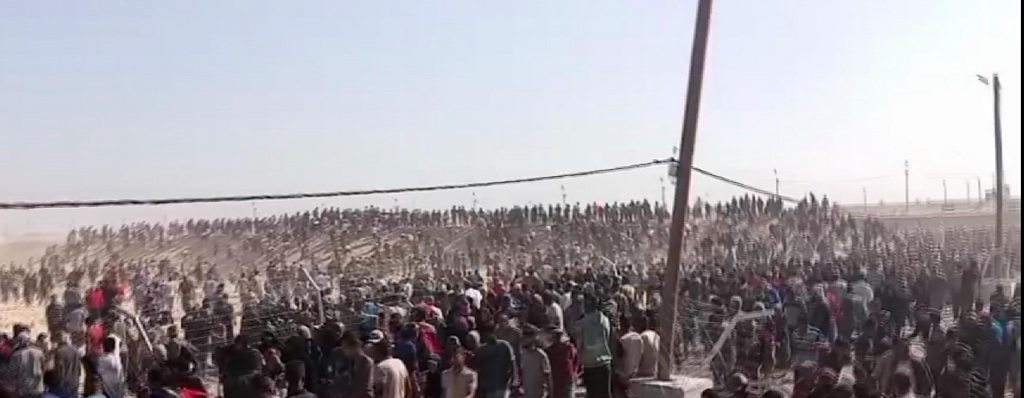
Thousands of Palestinians have overrun an aid distribution site in Gaza set up by a controversial US and Israeli-backed group, a day after it began working there.
Videos showed crowds walking over torn-down fences and earth berms at the Gaza Humanitarian Foundation’s (GHF) compound in the southern city of Rafah.
The group said that at one point its team fell back because the numbers seeking aid were so great. The Israeli military said troops nearby fired warning shots.
The GHF, which uses armed American security contractors, aims to bypass the UN as the main supplier of aid in Gaza, where experts have warned of a looming famine after an 11-week Israeli blockade that was recently eased.
The UN said the videos from Rafah were “heartbreaking” and that it had a detailed plan ready to get enough aid to the “desperate population” of 2.1 million.
The UN and many aid groups have refused to co-operate with GHF’s plans, which they say contradict humanitarian principles and appear to “weaponise aid”.
They have warned that the system will practically exclude those with mobility issues, force further displacement, expose thousands of people to harm, make aid conditional on political and military aims, and set an unacceptable precedent for aid delivery around the world.
Israel has said an alternative to the current aid system is needed to stop Hamas stealing aid, which the group denies doing.
The GHF announced on Monday that it had “commenced operations in Gaza” and begun giving out supplies to Palestinians at its distribution sites.
On Tuesday afternoon, the Israeli military confirmed two sites located in the Tal al-Sultan neighbourhood of Rafah and the Morag Corridor – an east-west military zone that separates the city from the rest of Gaza – had begun distributing food to families.
At around the same time, Israeli and Palestinian media shared pictures showing long queues of Palestinians at the Tal al-Sultan site.
But just over an hour later, they began posting videos showing thousands of men, women and children streaming into the compound. In one clip, some people are seen running and ducking as what appear to be gunshots ring out.
Witnesses described a scene of chaos as people seized food parcels and other aid from the site. They also said Israeli troops stationed nearby had opened fire.
“The situation was extremely difficult. They only allowed 50 people to cross at a time,” one man told BBC Arabic’s Middle East daily radio programme. “In the end, chaos broke out – people climbed over the gates, attacked others, and took all the [aid].”
“It was a humiliating experience,” he added. “We’ve suffered greatly from hunger. We’re just looking for a bit of sugar to make a cup of tea, and a piece of bread to eat.”
A woman said hunger and poverty had “overwhelmed everyone”.
“People are exhausted – willing to do anything, even risk their lives – just to find food and feed their children.”
A statement from the GHF acknowledged that “the needs on the ground are great” and said it had so far handed out about 8,000 food boxes – equivalent to 462,000 meals – through a partnership with local non-governmental organisations.
However, it said Palestinians had experienced several hours of delays in accessing one site “due to blockades imposed by Hamas”, without providing evidence.
“At one moment in the late afternoon, the volume of people at the SBS [Secure Distribution Site] was such that the GHF team fell back to allow a small number of Gazans to take aid safely and dissipate. This was done in accordance with GHF protocol to avoid casualties. Normal operations have resumed,” it added.
The Israel Defense Forces (IDF) said its troops had fired “warning shots in the area outside the compound”.
“Control over the situation was established, food distribution operations are expected to continue as planned, and the safety of IDF troops was not compromised,” it stated.
Gaza’s Hamas-run Government Media Office said Israel’s efforts to distribute aid had “failed miserably”. It also denied that Hamas had tried to stop civilians reaching the GHF’s sites.
At a news conference in New York, UN spokesman Stéphane Dujarric said: “We have been watching the video coming out of Gaza around one of the distribution points set up by the Gaza Humanitarian Foundation. And frankly, these videos, these images, are heartbreaking.”
“We and our partners have a detailed, principled, operationally sound plan supported by member states to get aid to a desperate population. We continue to stress that a meaningful scale-up of humanitarian operations is essential to stave off famine and meet the needs of all civilians wherever they are,” he added.
The US state department’s spokeswoman called the UN’s criticism “the height of hypocrisy”.
“It is unfortunate, because the issue here is giving aid to Gaza, and then suddenly it moves into complaints about style or the nature of who’s doing it,” Tammy Bruce told reporters.
Challenged by the BBC about the independence and neutrality of the GHF, Bruce acknowledged there are “some disagreements” about how the distribution of food and aid into the region is “being implemented”.
But she added: “I think that most of us would agree that this is good news… the real story here is that there’s food aid going in.”
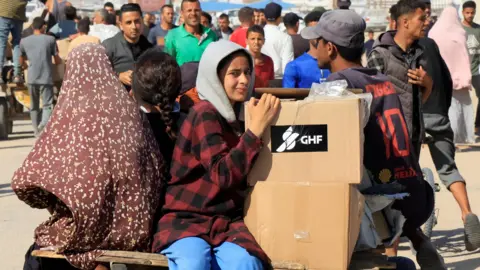
The GHF initially plans to set up four distribution sites in southern and central Gaza where Palestinians will be able to collect food and other aid for their families. It says it aims to feed a million people – just under half the population – by the end of this week.
The sites are meant to be secured by American contractors, with Israeli troops patrolling the perimeters. To access them, Palestinians are expected to have to undergo identity checks and screening for involvement with Hamas.
UN and other aid agencies have insisted they will not co-operate with any scheme that fails to respect fundamental humanitarian principles of humanity, impartiality, independence and neutrality.
On Sunday night, Jake Wood resigned as the GHF’s executive director, saying the group’s system could not work in a way that would be able to fulfil those principles.
The GHF’s board rejected the criticism and accused “those who benefit from the status quo” of being more focused on “tearing this apart than on getting aid in”.
The group also alleged on Monday that Hamas had made death threats to NGOs supporting its distribution sites and attempted to block civilians from accessing the aid.
Hamas has publicly warned Palestinians not to co-operate with GHF’s system.
Israel imposed a total blockade on humanitarian aid and commercial supplies to Gaza on 2 March and resumed its military offensive two weeks later, ending a two-month ceasefire with Hamas. It said the steps were meant to put pressure on the armed group to release the 58 hostages still held in Gaza, up to 23 of whom are believed to be alive.
On 19 May, the Israeli military launched an expanded offensive that Prime Minister Benjamin Netanyahu said would see troops “take control of all areas” of Gaza. The plan reportedly includes completely clearing the north of civilians and forcibly displacing them to the south.
Netanyahu also said Israel would temporarily ease the blockade and allow a “basic” amount of food into Gaza to prevent a famine, following pressure from allies in the US.
Since then, Israeli authorities say they have allowed at least 665 lorry loads of humanitarian aid, including flour, baby food and medical supplies, into Gaza.
However, more than 400 loads were on the Gazan side of the Kerem Shalom crossing awaiting distribution by the UN as of Tuesday evening, according to the Israeli military body in charge of aid co-ordination, Cogat. It called on the UN to “do its job”.
There was no immediate comment from the UN, but it said last week that its teams faced significant challenges in collecting supplies due to insecurity, the risk of looting and co-ordination issues with Israeli forces.
The head of the UN’s World Food Programme warned on Sunday that the aid was only a “drop in the bucket” of what was needed in the territory to reverse the catastrophic levels of hunger, amid significant shortages of basic foods and skyrocketing prices.
Half a million people face starvation in the coming months, according to an assessment by the UN-backed Integrated Food Security Phase Classification (IPC).
Israel launched a military campaign in Gaza in response Hamas’ cross-border attack on 7 October 2023, in which about 1,200 people were killed and 251 others were taken hostage.
At least 54,056 people have been killed in Gaza since then, including 3,901 over the past 10 weeks, according to the territory’s Hamas-run health ministry.
[BBC]


United States President Donald Trump has issued a new warning to Nicolas Maduro, saying “it would be smart” for the Venezuelan leader to step down, as Washington escalates a pressure campaign that has drawn sharp rebukes from Russia and China.
Speaking at his Mar-a-Lago resort in Florida on Monday, flanked by Secretary of State Marco Rubio and Secretary of Defense Pete Hegseth, Trump suggested he was prepared to further ratchet up the tensions after four months of mounting pressure on Caracas.
When asked if the goal was to force Maduro from power, Trump told reporters: “Well, I think it probably would… That’s up to him what he wants to do. I think it’d be smart for him to do that. But again, we’re gonna find out.”
“If he wants to do something, if he plays tough, it’ll be the last time he’s ever able to play tough,” the US leader added.
Trump levied his latest threat as the US Coast Guard continued for a second day to chase a third oil tanker that it described as part of a “dark fleet” that Venezuela uses to evade US sanctions.
“It’s moving along, and we’ll end up getting it,” Trump said.
The US president also promised to keep the two ships two ships and the nearly 4 million barrels of Venezuelan oil the coastguard has seized so far.
“Maybe we’ll sell it. Maybe we’ll keep it. Maybe we will use it in the strategic reserves,” he said. “We’re keeping it. We’re keeping the ships also.”
[Aljazeera]

Saudi Arabia has surpassed its record for the number of executions carried out annually for a second year in a row.
At least 347 people have now been put to death this year, up from a total of 345 in 2024, according to the UK-based campaign group Reprieve, which tracks executions in Saudi Arabia and has clients on death row.
It said this was the “bloodiest year of executions in the kingdom since monitoring began”.
The latest prisoners to be executed were two Pakistani nationals convicted of drug-related offences.
Others put to death this year include a journalist and two young men who were children at the time of their alleged protest-related crimes. Five were women.
But, according to Reprieve, most – around two thirds – were convicted of non-lethal drug-related offences, which the UN says is “incompatible with international norms and standards”.
More than half of them were foreign nationals who appear to have been put to death as part of a “war on drugs” in the kingdom.
The Saudi authorities have not responded to the BBC’s request for comment on the rise in executions.
“Saudi Arabia is operating with complete impunity now,” said Jeed Basyouni, Reprieve’s head of death penalty for the Middle East and North Africa. “It’s almost making a mockery of the human rights system.”
She described torture and forced confessions as “endemic” within the Saudi criminal justice system.
Ms Basyouni called it a “brutal and arbitrary crackdown” in which innocent people and those on the margins of society have been caught up.
On Tuesday, a young Egyptian fisherman, Issam al-Shazly, was executed. He was arrested in 2021 in Saudi territorial waters and said he had been coerced into smuggling drugs.
Reprieve says 96 of the executions were solely linked to hashish.
“It almost seems that it doesn’t matter to them who they execute, as long as they send a message to society that there’s a zero-tolerance policy on whatever issue they’re talking about – whether it’s protests, freedom of expression, or drugs,” said Ms Basyouni.
There has been a surge of drug-related executions since the Saudi authorities ended an unofficial moratorium in late 2022 – a step described as “deeply regrettable” by the UN human rights office.
Speaking anonymously to the BBC, relatives of men on death row on drugs charges have spoken of the “terror” they’re now living in.
One told the BBC: “The only time of the week that I sleep is on Friday and Saturday because there are no executions on those days.”
Cellmates witness people they have shared prison life with for years being dragged kicking and screaming to their death, according to Reprieve.
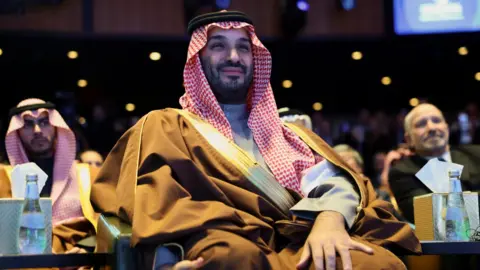
The de facto ruler of Saudi Arabia, Mohammed bin Salman – who became crown prince in 2017 – has changed the country profoundly over the past few years, loosening social restrictions while simultaneously silencing criticism.
In a bid to diversify its economy away from oil, he has opened Saudi Arabia up to the outside world, taken the religious police off the streets, and allowed women to drive.
But the kingdom’s human rights record remains “abysmal”, according to the US-based campaign group Human Rights Watch, with the high level of executions a major concern. In recent years, only China and Iran have put more people to death, according to human rights activists.
“There’s been no cost for Mohammed bin Salman and his authorities for going ahead with these executions,” said Joey Shea, who researches Saudi Arabia for Human Rights Watch. “The entertainment events, the sporting events, all of it is continuing to happen with no repercussions, really.”
According to Reprieve, the families of those executed are usually not informed in advance, or given the body, or informed where they have been buried.
The Saudi authorities do not reveal the method of execution, although it is believed to be either beheading or firing squad.
In a statement sent to the BBC, the UN’s special rapporteur on extrajudicial, summary or arbitrary executions, Dr Morris Tidball-Binz, called for an immediate moratorium on executions in Saudi Arabia with a view to abolition,.
He also pressed for “full compliance with international safeguards (including effective legal assistance and consular access for foreign nationals), prompt notification of families, the return of remains without delay and the publication of comprehensive execution data to enable independent scrutiny”.
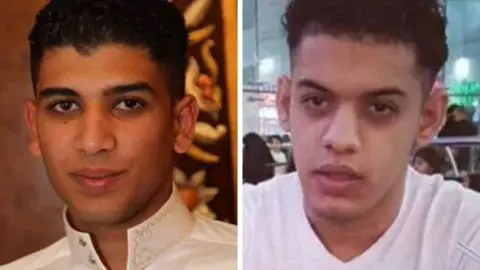
Among the Saudi nationals executed this year were Abdullah al-Derazi and Jalal al-Labbad, who were both minors at the time of their arrest.
They had protested against the government’s treatment of the Shia Muslim minority in 2011 and 2012, and participated in the funerals of people killed by security forces. They were convicted of terrorism-related charges and sentenced to death after what Amnesty International said were grossly unfair trials that relied on torture-tainted “confessions”. UN human rights experts had called for their release.
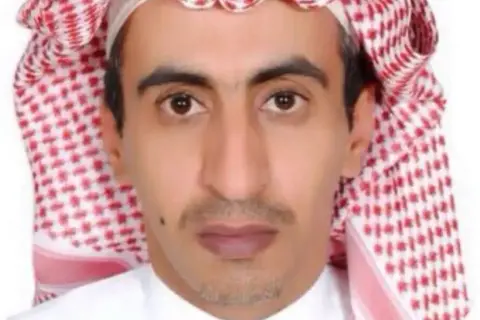
The UN also condemned the execution in June of journalist Turki al-Jasser, who had been arrested in 2018 and sentenced to death on charges of terrorism and high treason based on writings he was accused of authoring.
“Capital punishment against journalists is a chilling attack on freedom of expression and press freedom,” Unesco’s Director-General, Audrey Azoulay, said.
Reporters Without Borders said he was the first journalist to be executed in Saudi Arabia since Mohammed bin Salman came to power, although another journalist, Jamal Khashoggi, was murdered by Saudi agents at the Saudi consulate in Istanbul in 2018.
Last December, UN experts wrote to the Saudi authorities to express concern over a group of 32 Egyptians and one Jordanian national sentenced to death on drugs charges, and their “alleged absence of legal representation”. Since then, most of the group have been executed.
A relative of one man put to death earlier this year said he had told her that people were being “taken like goats” to be killed.
The BBC has approached the Saudi authorities for a response to the allegations but has not received one.
But in a letter dated January 2025 – in reply to concerns raised by UN special rapporteurs – they said Saudi Arabia “protects and upholds” human rights and that its laws “prohibit and punish torture”.
“The death penalty is imposed only for the most serious crimes and in extremely limited circumstances,” the letter stated. “It is not handed down or carried out until judicial proceedings in courts of all levels have been completed.”
[BBC]
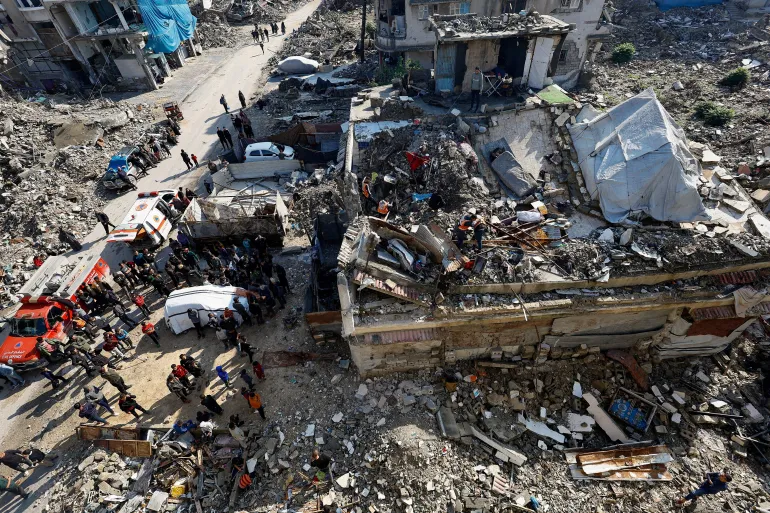
The United States Middle East envoy, Steve Witkoff, will hold talks in Miami, Florida, with senior officials from Qatar, Egypt and Turkiye as efforts continue to advance the next phase of the Gaza ceasefire, even as Israel repeatedly violates the truce on the ground.
A White House official told Al Jazeera Arabic on Friday that Witkoff is set to meet representatives from the three countries to discuss the future of the agreement aimed at halting Israel’s genocidal war on Gaza.
Axios separately reported that the meeting, scheduled for today [Friday], will include Qatari Prime Minister and Foreign Minister Sheikh Mohammed bin Abdulrahman bin Jassim Al Thani, Turkish Foreign Minister Hakan Fidan and Egyptian Foreign Minister Badr Abdelatty.
At the same time, Israel’s public broadcaster, quoting an Israeli official, said Prime Minister Benjamin Netanyahu is holding a restricted security consultation to examine the second phase of the ceasefire and potential scenarios.
That official warned that Israel could launch a new military campaign to disarm Hamas if US President Donald Trump were to disengage from the Gaza process, while acknowledging that such a move was unlikely because Trump wants to preserve calm in the enclave.

Despite Washington’s insistence that the ceasefire remains intact, Israeli attacks have continued almost uninterrupted, as it continues to renege on the terms of the first phase and blocks the free flow of desperately needed humanitarian aid into the besieged Palestinian territory.
[Aljazeera]

Implementation of the loan scheme, “Sustainable Agriculture Program”

Cabinet nod to implement ‘Suraksha’ Student Insurance Programme in the year 2025 / 26
Establishment of Consultancy Boards for strengthening and promoting local production industries.

Match fees more than doubled for women’s domestic cricketers in India

National progress can be achieved only when everyone fulfills the responsibilities entrusted to them with steadfast determination, unity of purpose and resilience in the face of any challenge – President

Indonesia’s Gede Priandana becomes first to pick five wickets in an over in T20Is

‘Dates have the highest sugar content to fight Coronavirus’

Sunday Island 27 December – Headlines

#SundayIsland 17th December – Headlines

Sunday Island – 28th March

Sunday Island Headlines – 21 March

Sunday Island – 21st February – Headlines
-

 News23 hours ago
Members of Lankan Community in Washington D.C. donates to ‘Rebuilding Sri Lanka’ Flood Relief Fund
-

 Midweek Review7 days ago
How massive Akuregoda defence complex was built with proceeds from sale of Galle Face land to Shangri-La
-
 News6 days ago
Pope fires broadside: ‘The Holy See won’t be a silent bystander to the grave disparities, injustices, and fundamental human rights violations’
-

 News6 days ago
Pakistan hands over 200 tonnes of humanitarian aid to Lanka
-

 Business5 days ago
Unlocking Sri Lanka’s hidden wealth: A $2 billion mineral opportunity awaits
-

 News7 days ago
Burnt elephant dies after delayed rescue; activists demand arrests
-

 Editorial7 days ago
Colombo Port facing strategic neglect
-

 News5 days ago
Army engineers set up new Nayaru emergency bridge