
Foreign News
Rights groups condemn new record number of executions in Saudi Arabia


Saudi Arabia has surpassed its record for the number of executions carried out annually for a second year in a row.
At least 347 people have now been put to death this year, up from a total of 345 in 2024, according to the UK-based campaign group Reprieve, which tracks executions in Saudi Arabia and has clients on death row.
It said this was the “bloodiest year of executions in the kingdom since monitoring began”.
The latest prisoners to be executed were two Pakistani nationals convicted of drug-related offences.
Others put to death this year include a journalist and two young men who were children at the time of their alleged protest-related crimes. Five were women.
But, according to Reprieve, most – around two thirds – were convicted of non-lethal drug-related offences, which the UN says is “incompatible with international norms and standards”.
More than half of them were foreign nationals who appear to have been put to death as part of a “war on drugs” in the kingdom.
The Saudi authorities have not responded to the BBC’s request for comment on the rise in executions.
“Saudi Arabia is operating with complete impunity now,” said Jeed Basyouni, Reprieve’s head of death penalty for the Middle East and North Africa. “It’s almost making a mockery of the human rights system.”
She described torture and forced confessions as “endemic” within the Saudi criminal justice system.
Ms Basyouni called it a “brutal and arbitrary crackdown” in which innocent people and those on the margins of society have been caught up.
On Tuesday, a young Egyptian fisherman, Issam al-Shazly, was executed. He was arrested in 2021 in Saudi territorial waters and said he had been coerced into smuggling drugs.
Reprieve says 96 of the executions were solely linked to hashish.
“It almost seems that it doesn’t matter to them who they execute, as long as they send a message to society that there’s a zero-tolerance policy on whatever issue they’re talking about – whether it’s protests, freedom of expression, or drugs,” said Ms Basyouni.
There has been a surge of drug-related executions since the Saudi authorities ended an unofficial moratorium in late 2022 – a step described as “deeply regrettable” by the UN human rights office.
Speaking anonymously to the BBC, relatives of men on death row on drugs charges have spoken of the “terror” they’re now living in.
One told the BBC: “The only time of the week that I sleep is on Friday and Saturday because there are no executions on those days.”
Cellmates witness people they have shared prison life with for years being dragged kicking and screaming to their death, according to Reprieve.
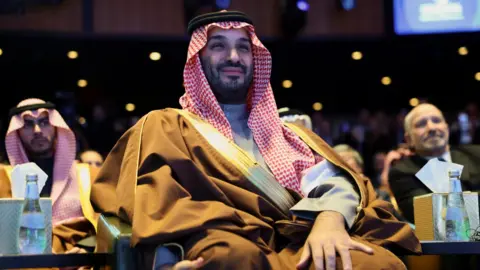
The de facto ruler of Saudi Arabia, Mohammed bin Salman – who became crown prince in 2017 – has changed the country profoundly over the past few years, loosening social restrictions while simultaneously silencing criticism.
In a bid to diversify its economy away from oil, he has opened Saudi Arabia up to the outside world, taken the religious police off the streets, and allowed women to drive.
But the kingdom’s human rights record remains “abysmal”, according to the US-based campaign group Human Rights Watch, with the high level of executions a major concern. In recent years, only China and Iran have put more people to death, according to human rights activists.
“There’s been no cost for Mohammed bin Salman and his authorities for going ahead with these executions,” said Joey Shea, who researches Saudi Arabia for Human Rights Watch. “The entertainment events, the sporting events, all of it is continuing to happen with no repercussions, really.”
According to Reprieve, the families of those executed are usually not informed in advance, or given the body, or informed where they have been buried.
The Saudi authorities do not reveal the method of execution, although it is believed to be either beheading or firing squad.
In a statement sent to the BBC, the UN’s special rapporteur on extrajudicial, summary or arbitrary executions, Dr Morris Tidball-Binz, called for an immediate moratorium on executions in Saudi Arabia with a view to abolition,.
He also pressed for “full compliance with international safeguards (including effective legal assistance and consular access for foreign nationals), prompt notification of families, the return of remains without delay and the publication of comprehensive execution data to enable independent scrutiny”.
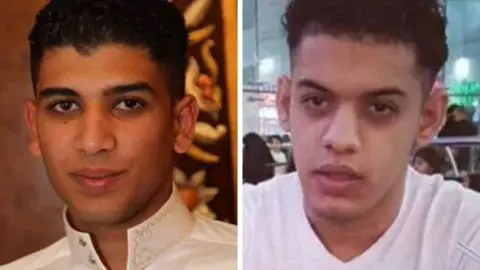
Among the Saudi nationals executed this year were Abdullah al-Derazi and Jalal al-Labbad, who were both minors at the time of their arrest.
They had protested against the government’s treatment of the Shia Muslim minority in 2011 and 2012, and participated in the funerals of people killed by security forces. They were convicted of terrorism-related charges and sentenced to death after what Amnesty International said were grossly unfair trials that relied on torture-tainted “confessions”. UN human rights experts had called for their release.
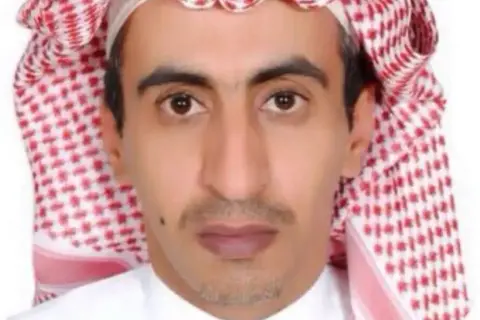
The UN also condemned the execution in June of journalist Turki al-Jasser, who had been arrested in 2018 and sentenced to death on charges of terrorism and high treason based on writings he was accused of authoring.
“Capital punishment against journalists is a chilling attack on freedom of expression and press freedom,” Unesco’s Director-General, Audrey Azoulay, said.
Reporters Without Borders said he was the first journalist to be executed in Saudi Arabia since Mohammed bin Salman came to power, although another journalist, Jamal Khashoggi, was murdered by Saudi agents at the Saudi consulate in Istanbul in 2018.
Last December, UN experts wrote to the Saudi authorities to express concern over a group of 32 Egyptians and one Jordanian national sentenced to death on drugs charges, and their “alleged absence of legal representation”. Since then, most of the group have been executed.
A relative of one man put to death earlier this year said he had told her that people were being “taken like goats” to be killed.
The BBC has approached the Saudi authorities for a response to the allegations but has not received one.
But in a letter dated January 2025 – in reply to concerns raised by UN special rapporteurs – they said Saudi Arabia “protects and upholds” human rights and that its laws “prohibit and punish torture”.
“The death penalty is imposed only for the most serious crimes and in extremely limited circumstances,” the letter stated. “It is not handed down or carried out until judicial proceedings in courts of all levels have been completed.”
[BBC]


A daredevil social media free-climber nicknamed the “Spider-Man of Yemen” has died after falling into a volcanic crater in the country’s south-west.
Al-Qaqa Ibn Antar had been attempting to climb its steep rock faces on Friday without safety equipment when he fell in, according to local authorities.
The 30-year-old had a large following on social media and was well known for performing daring acrobatic stunts in online videos.
The Hardah Dam volcanic crater is one of the country’s most famous natural landmarks.
Video footage appearing to show the moment of the fall has been widely circulating online.
It shows Antar climbing the near-vertical wall of the crater before appearing to lose his grip and fall.
Yemen’s Civil Defence Authority praised the “heroic efforts” of its water rescue team for successfully recovering Antar’s body “from the bottom of the crater” in a statement issued on Sunday.
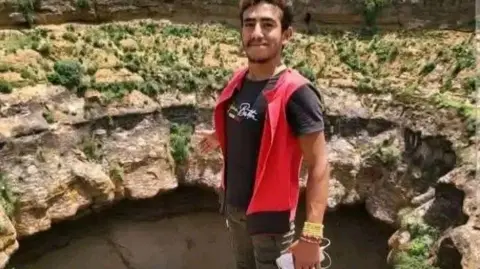
It described the operation over the weekend as “highly dangerous”, and “one of the most difficult and complex field rescue missions”.
The authority said the team had been promoted after demonstrating “exceptional field capabilities amid rugged terrain, harsh environmental conditions and high temperatures inside the volcanic crater”.
It produced footage showing rescuers scaling down the side of the crater using climbing equipment, before winching a cage down to recover the climber’s body.
His body was found by divers inside the 120m-wide crater at a depth of 30m (98ft) below the water surface, according to the Associated Press.
The Hardah Dam in Dhale province has become somewhat of a tourist attraction in recent years, with a hot sulfur lake sitting at its base.
[BBC]
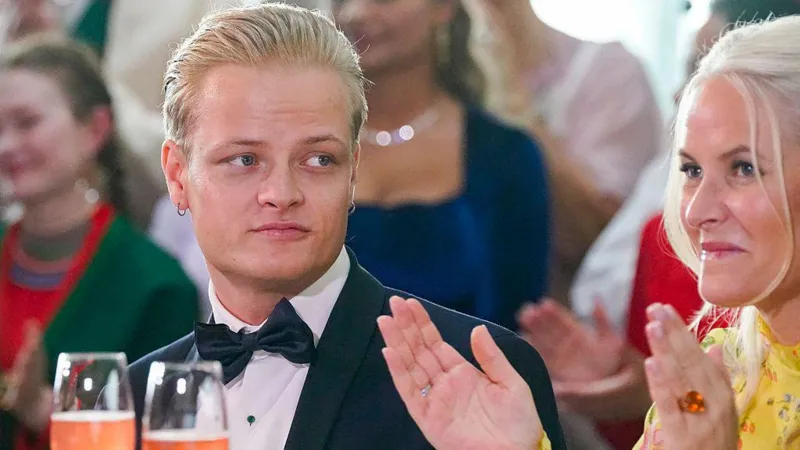
Marius Borg Høiby, the 29-year-old son of Norway’s Crown Princess Mette-Marit, has been found guilty of two counts of rape and sentenced to four years in prison.
The three judges in courtroom 250 at Oslo District Court cleared him of two other counts of rape, but found him guilty of many of the other offences of which he had been accused.
Høiby was not in court for the verdict for unspecified health reasons, but joined the session via video link.
Prosecutors had called for Høiby to be given seven years and seven months in prison. His defence lawyers had called for a lesser term of 18 months and have said he will appeal.
Even though Marius Borg Høiby is not himself a royal figure, the trial has cast a shadow over the broader royal family. His mother married Crown Prince Haakon when he was four, and he grew up within the family. The palace has said it will not comment on Monday’s verdict.
Mette-Marit is very ill with a form of pulmonary fibrosis and has recently been placed on a lung transplant list.
Her son’s lawyers have repeatedly sought his release from prison so he could spend time with his mother because of her declining health.
After the verdict, Høiby’s defence lawyer Petar Sekulic again asked the court for his release, however the court rejected the plea late on Monday, ruling that there was a risk that he might contact a woman he was convicted of assaulting, and who he had broken a restraining order to see in the past.
One of the three judges in the trial, Judge Jon Sverdrup Efjestad, began the session early on Monday with a summary of their conclusions, before going into a 128-page ruling explaining the verdict.
Høiby had denied all four counts of rape, but the judges convicted him of raping two women, including one on the Crown Prince’s estate at Skaugum in 2018 and another involving a woman in Oslo in 2024.
He was also convicted of abusing an ex-girlfriend, Norwegian influencer Nora Haukland and of causing serious bodily harm to another partner, in whose flat he was arrested in the upmarket Frogner area of Oslo in August 2024.
However, he was cleared of two further rapes, involving a woman he met at a hotel in Oslo in November 2024 and another he met while on holiday in the Lofoten islands in 2023.
Sekulic said it was “in the nature of the case that there could be an appeal”.
His defence colleague Ellen Holager Andenæs told reporters they were satisfied with the acquittals but were more critical of other aspects of the verdict.
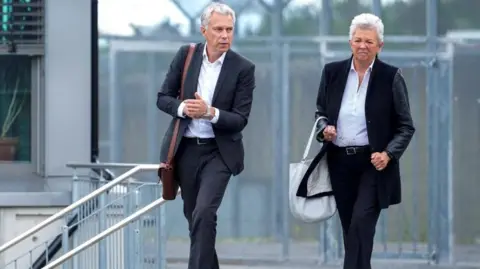
Both lawyers then went to discuss the verdict with Høiby at Ila prison and detention centre outside Oslo.
The case against Høiby involved six women, but only one of the women was in court to hear the verdict and she was seen crying as Høiby was found guilty of raping her.
Prosecutors said she had been either incapacitated or asleep when she was raped after a party in Oslo in March 2024, and after they had engaged in consensual sex.
The case rested on videos that Høiby had filmed at the time and, giving evidence in February, the woman told the court that she was asleep and would never have allowed it to happen.
The court agreed the victim had been unable to resist what had happened.
All four rape charges involved women who had been either asleep or incapacitated at the time. The women had been unaware of the incidents until police found videos on Høiby’s phone after his arrest.
The judges also found it proven that the woman in the 2018 rape case had been asleep at the time and unable to resist Høiby. She only found out that Høiby had filmed what had happened last year.
Høiby was also convicted of several offences including abuse and reckless behaviour towards the sixth woman in the case, who became known as the Frogner woman because of the area of Oslo where she lived.
The court ruled he should pay a total of 640,000 kroner (£50,000; €57,000) in compensation to four of the women, including Nora Haukland, the only woman judges ruled could be named in the case.
Anja Emilie Kruse, a criminologist at the University of Oslo who researches sexual violence and attended part of the trial, believes there is a frustration in parts of Norwegian society that the courts seem unable to deliver justice in rape cases.
“The burden of evidence needs to be high,” she concedes. However, most rape allegations by women are placed on file by police, Kruse has told the BBC, and the state prosecutor told the court on Monday that one in three Norwegian rape cases that do reach court ends in acquittal.
“These two women who today experienced their cases ending in acquittal are far from alone in having that experience, and the rape cases that do make it to court are just a kind of tip of the iceberg,” says Kruse.
The palace said in an email to the BBC that “the matter has been considered by the courts, and we have no comment on the outcome”. It has already made clear there will be no further statement on Mette-Marit’s declining health until she has had a lung transplant.
“There is no doubt that this case has affected people’s perception of the royal family,” said Caroline Vagle, royal correspondent for Se og Hør magazine.
That was further compounded by revelations on the eve of the trial that the crown princess had had a three-year friendship with late sex offender Jeffrey Epstein.
But Vagle believes the mood now is completely different: “Her health is the main concern now – and it overshadows everything else.”
Peggy Simcic Brønn, who is a specialist in reputation and public relations and professor emirata at BI Norwegian Business School, believes the royal family is in the midst of an institutional crisis.
“The Høiby case is a tragedy and a crisis for any family,” she said.
“The way they handle it is let the person be convicted, let him serve his sentence, but try to make amends as a family for what that person has done to their reputation and the impact on the royal house itself.”
[BBC]

Five Indian air force personnel have been killed after the aircraft they were travelling in crashed in the northeastern Indian state of Assam, according to officials.
The Antonov An-32 transport plane “met with an accident” during a “routine sortie” in Assam’s Jorhat region, the Indian Air Force said in a statement on Saturday.
“Crash site management and initial enquiries are on at this time,” the Air Force wrote, adding that an investigation to determine the cause of the accident was under way.
News channel NDTV broadcast images of the crash site, showing a thick black plume of smoke and the aircraft apparently broken into pieces.
India’s air force operates a fleet of about 105 An-32 aircraft to transport people and cargo.
The last major crash involving a twin-engine turboprop took place in 2019 in Arunachal Pradesh state, near the border with China, when 13 people were killed
(Aljazeera)

Tuesday at T20 World Cup: New Zealand eye first win; Ireland run into England

‘Spider-Man of Yemen’ dies falling into volcanic crater

Norwegian crown princess’s son found guilty of two counts of rape

Trump says deal to end war with Iran already signed and details to be released ‘pretty soon’

Showers will occur in the Western, Sabaragamuwa and North-western provinces and in Galle, Matara, Kandy and Nuwara-Eliya districts

Easter Sunday carnage: WR asks AG to question Dappula on ‘grand conspiracy’ claim

‘Dates have the highest sugar content to fight Coronavirus’

Sunday Island 27 December – Headlines

#SundayIsland 17th December – Headlines

Sunday Island – 28th March

Sunday Island Headlines – 21 March

Sunday Island – 21st February – Headlines
-
 News4 days ago
CIABOC summons Yoshitha over his participation in British Navy training programme
-
 News6 days ago
Local firms move millions of dollars overseas for phantom imports: Govt.
-
 Midweek Review6 days ago
July 09: An inexcusable overall security failure and exceptional contingency plan
-

 News6 days ago
AI raises concerns over arrest of Sallay and rapper under PTA
-

 News3 days ago
Commonwealth lawyers urge Lanka to uphold rule of law
-

 Features2 days ago
Politics of protected species
-

 Sports1 day ago
Tharanga set for high-profile javelin clash in Ostrava
-

 News4 days ago
Justice Minister responds to social media claims he represented Easter Sunday ringleader