
News
CPSL alleges AKD’s budget proposals technocratic continuity in populist garb

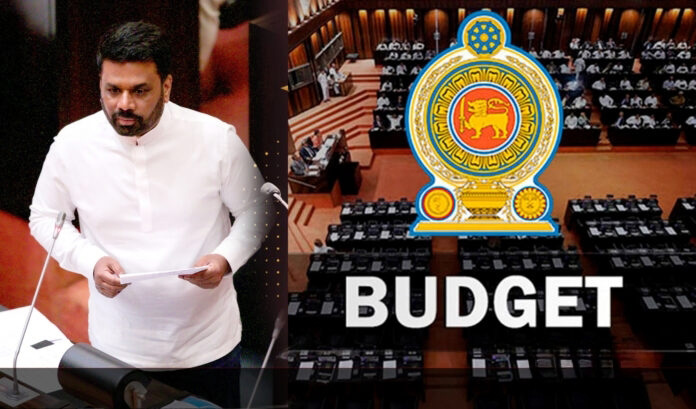
Anura Kumara Dissanayake’s 2026 Budget speech, while breaking symbolically from tradition, reveals a deeper continuity with neoliberal orthodoxy and IMF-aligned fiscal governance, the Communist Party said in a statement issued yesterday (13).
The text of the CPSL statement: “Beneath the rhetoric of “economic democracy” lies a technocratic document that prioritises lender confidence over public empowerment, and party consolidation over structural transformation.
The budget speech omits any serious analysis of the global and local economic context, particularly the imperialist financial architecture that continues to extract value from the Global South through debt, ISBs, and structural adjustment.
The speech is saturated with fiscal jargon and macroeconomic metrics, clearly aimed at multilateral institutions (IMF, WB, ADB) rather than the Sri Lankan public. This alienates the very people the NPP claims to represent.
Despite AKD’s purported Marxist credentials, there is no mention of imperialist exploitation, financialisation, or the deindustrialisation of the Global North that has shifted production (and debt burdens) to the Global South.
The threat of war, driven by imperialist attempts to reassert dominance through military means, is ignored, despite its direct implications for Sri Lanka’s geopolitical and economic stability.
The budget introduces US dollar–denominated local bonds, ostensibly to absorb excess forex liquidity in local banks. This adds to the external debt burden and exposes the country to additional currency risk. Debt repayments already consume nearly two-thirds of recurrent expenditure, yet the government boasts of Rs 1 trillion in “savings”—a misleading claim, as one-third of this is invested in high-interest treasury bills, effectively indebting the state to itself.
Crucially, the debt repayment projections presented in the budget need to be re-examined. For instance, Sri Lanka’s interest and capital repayment obligations in 2028 pertaining to International Sovereign Bonds (ISBs) alone amount to approximately USD 935 million. Even if the foreign debt stock remains unchanged at 2025 levels, this sum will still be required to service interest and partial principal repayment on the so-called “Past Due Interest (PDI) bond.” This reality raises serious questions about the President’s recent assurances that there is “nothing to worry about” regarding future debt payments.
If the government indeed refrains from any new borrowing in 2026—even from development partners such as the ADB or World Bank—such a repayment trajectory would imply a self-imposed austerity of unprecedented magnitude. On the other hand, if the government proceeds with plans to raise roughly USD 300 million domestically in 2026, interest payments alone—at an estimated 7%—would add a further USD 21 million to the 2028 repayment bill. None of this appears to be reflected in the President’s confident assertion that “we will pay.” The statement, while politically soothing, conceals the structural fragility of Sri Lanka’s debt position and the contradiction between the rhetoric of fiscal sovereignty and the arithmetic of debt servicing.
On the other hand, the so-called “savings” are not being used to address urgent public needs—such as shortages of insulin, HIV, TB, Malaria and other drugs and crucial health requirements for hospitals—but are instead earmarked for importing 1,775 double cab vehicles for NPP officials. These tenders were issued even before the budget was passed, and the vehicles will be paid for in scarce foreign exchange.
The one ostensible “plus” in the budget is increased revenue through taxation. However, this is largely driven by import duties and sales tax on vehicles, which deplete foreign reserves.
A key revenue measure is the lowering of the VAT threshold from Rs 60 million to Rs 36 million, dragging small and medium enterprises (SMEs) – such as garages, bakeries, furniture shops – into the 18% VAT net.
SMEs employ over 90% of the workforce. This move will force many to shut down or pass the tax burden onto consumers, exacerbating unemployment and the cost of living for the poor and middle class.
The increase in plantation wages is a welcome step, but it is funded through state subsidies, not by compelling plantation companies to pay fair wages. This increases fiscal pressure without addressing corporate accountability.
The Rs 25 billion poverty eradication allocation is grossly inadequate. Based on World Bank poverty metrics and census data, this translates to just Rs 4,600 per person in extreme poverty.
The budget fails to integrate this with land reform, which remains the most effective tool for rural poverty alleviation. Instead, the Land Use Policy Plan prioritizes land release for private investors, sidelining the 81% of the multidimensionally poor who live in rural areas.
The budget promises 3,000 new projects in 2026, echoing Mahinda Rajapaksa’s post-war construction boom. But unlike 2009–2014, today’s bureaucracy is inert, and there has been no significant project rollout since AKD took office.
The proposed 5% medium-term growth rate is mathematically implausible. Achieving it would require investment to rise from 27% to 37–38% of GDP, with the private sector contributing 89% of that—an unrealistic expectation given current economic condition.
Public investment remains at a paltry 4% of GDP, undermining any serious growth strategy.
The budget’s vision of Sri Lanka as a “hub for data centres” is untethered from reality. Data centres require massive, uninterrupted electricity and water supplies, none of which are addressed in the budget’s infrastructure allocations. Without a parallel investment in energy and digital infrastructure, this proposal remains a hollow slogan.
NPP’s 2026 budget is a document of contradictions: technocratic in tone, populist in optics, and neoliberal in substance. It fails to challenge the global structures that perpetuate Sri Lanka’s dependency, while deepening domestic inequality through regressive taxation and elite-focused expenditure. The absence of a coherent development strategy, land reform, or industrial policy reveals a government more concerned with managing crisis optics than transforming structural realities.


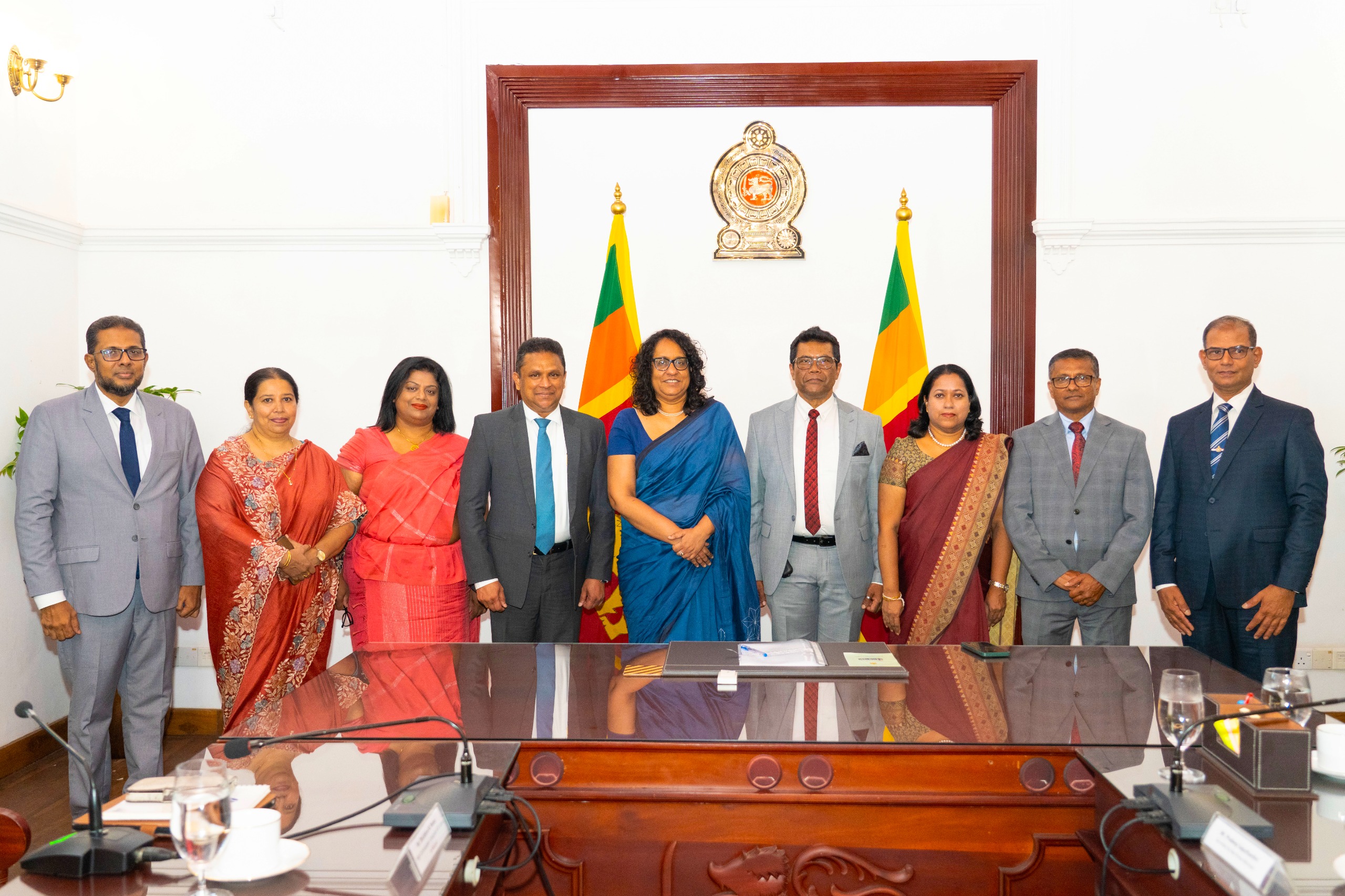
The heads of mission designate to Sri Lanka paid a courtesy call on Prime Minister Dr. Harini Amarasuriya on 26th of March at the Prime Minister’s office.
The delegation comprised Dharshana M. Perera, High Commissioner – designate of Sri Lanka to Malaysia, Ms. Dayani Mendis, Ambassador and PRUN – designate of Sri Lanka to Austria, Ms. N.I.D. Paranavitana, Ambassador – designate of Sri Lanka to Ethiopia & African Union, Prof. (Ms.) M.I. Fazeeha Azmi,Ambassador – designate of Sri Lanka to Iran, Saman Kumara Chandrasiri, Ambassador – designate of Sri Lanka to Israel, and M. Farook M. Fawzer, Representative – designate of Sri Lanka to Palestine.
The Prime Minister, Dr. Harini Amarasuriya, extended her best wishes to the Heads of Mission–designate and underscored the importance of their forthcoming assignments in advancing Sri Lanka’s national interests emphasizing their collective role in contributing towards the socio-economic upliftment of Sri Lanka.
The Prime Minister further highlighted the importance of projecting a positive and credible image of Sri Lanka internationally, through consistent, professional, and strategic engagement in their respective host countries and multilateral platforms.
She encouraged the Heads of Mission to actively identify and facilitate high-quality investment opportunities, particularly in sectors aligned with Sri Lanka’s development priorities, with a focus on sustainability, innovation, and long-term value addition.
Particular emphasis was placed on the promotion and diversification of Sri Lanka’s exports, including the exploration of new markets and strengthening trade linkages.
The meeting was attended by the Secretary to the Prime Minister, Additional Secretary to the Prime Minister Ms. Sagarika Bogahawatta and heads of mission-designate.
[Prime Minister’s Media Division]
News
SC finds Keheliya, others, guilty of violating FRs of public through corrupt drug procurement deal
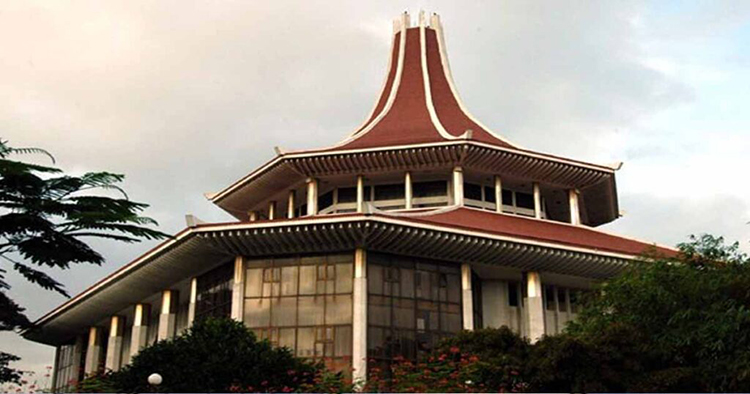
The Supreme Court yesterday held former Health Minister Keheliya Rambukwella and several senior health officials liable for violating the fundamental rights of the public over a controversial drug procurement carried out under the 2022 Indian Credit Line.
Delivering the judgment, a three-judge bench, headed by Chief Justice Preethi Padman Surasena, and comprising Justice Kumudini Wickremasinghe and Justice Janak de Silva, found that the procurement of medical supplies from an unregistered company, in breach of established procedures, had resulted in a serious infringement of public rights.
The Court ruled that the granting of a Waiver of Registration by the authorities was “wrongful, arbitrary and capricious,” and held that the direct procurement carried out on an unsolicited basis was unlawful. The transaction was accordingly declared null and void.
In a significant order, the Court directed Rambukwella to pay Rs. 75 million in compensation to the State from his personal funds.
The then Health Ministry Secretary Janaka Chandragupta and former Chairman of the National Medicines Regulatory Authority (NMRA), Prof. S. D. Jayaratne, were each ordered to pay Rs. 50 million.
The Court further directed NMRA Chief Executive Officer Dr. Wijith Gunasekara and former Director of the Medical Supplies Division Dr. Thusitha Sudarshana to pay Rs. 50 million each as compensation.
The ruling followed the hearing of a fundamental rights petition filed by Transparency International Sri Lanka and two other parties.
The Court also instructed the Commission to Investigate Allegations of Bribery or Corruption to initiate appropriate action under the Anti-Corruption Act against those found responsible.
Senior Counsel Senany Dayaratne, with Nishadi Wickramasinghe, Lasanthika Hettiarachchi, Janani Abeywickrema and Maheshika Bandara, appeared for the petitioners.
News
Sajith nudges govt. to follow India’s example in giving relief to consumers by slashing taxes on fuel
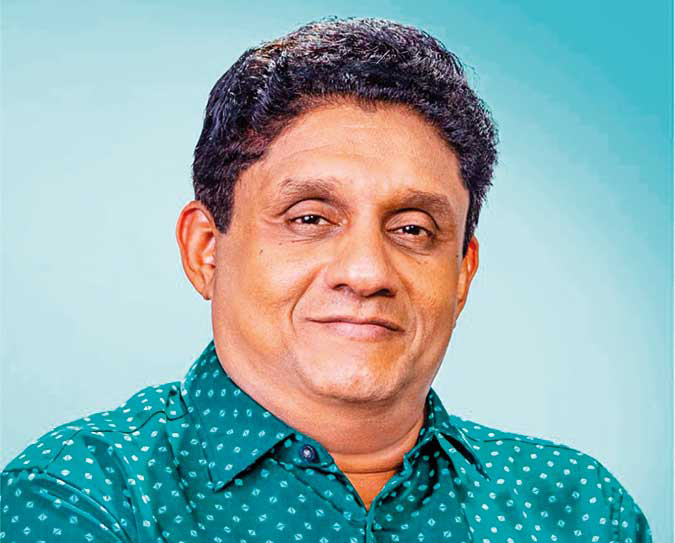
Opposition and SJB Leader Sajith Premadasa yesterday urged President Anura Kumara Dissanayake to reduce taxes on fuel, just as the Indian government has done.
He said in a post on X that “Modi government has decided to reduce the Special Additional Excise Duty on petrol and completely remove it for diesel in order to cushion the hardship on the Indian consumer. High time for Anura Kumara Dissanayake to keep up to his election promise and follow suit.”
Meanwhile foreign media reported that India has slashed excise duties on petrol and diesel to protect consumers and rein in a potential spike in inflation, while imposing windfall taxes on aviation fuel and diesel exports, amid volatile global oil markets, as a result of the Iran war.
Global oil prices have surged past $100 per barrel after the near closure of the Strait of Hormuz, which serves as a conduit for 40% of India’s crude oil imports, since the US and Israel first struck Iran on February 28.
In a government order, released late on Thursday, India’s Finance Ministry reduced the special excise duty on petrol to three Indian rupees ($0.0318) per litre from 13 Indian rupees earlier. It also cut the duty on diesel to zero from INR 10 rupees per litre.
The government did not say how much the duty cuts would cost. The move comes ahead of elections next month in four Indian states and one federal territory, with Indian voters known to be extremely sensitive to higher prices.
“Government has taken a huge hit on its taxation revenues to ensure very high losses of oil companies, approximately 24 rupees a litre for petrol and 30 rupees a litre for diesel, at this time of sky high international prices, are reduced,” Indian Oil Minister Hardeep Singh Puri said in a post on X.

Courtesy call by the Heads of Mission- Designate on Prime Minister

Three dead after helicopter crash in Hawaii

Woods charged with driving under influence after crash

Showers may occur at a few places in the Rathnapura, Kaluthara, Galle, and Matara districts during the evening or night

SC finds Keheliya, others, guilty of violating FRs of public through corrupt drug procurement deal

Sajith nudges govt. to follow India’s example in giving relief to consumers by slashing taxes on fuel

‘Dates have the highest sugar content to fight Coronavirus’

Sunday Island 27 December – Headlines

#SundayIsland 17th December – Headlines

Sunday Island – 28th March

Sunday Island Headlines – 21 March

Sunday Island – 21st February – Headlines
-

 News4 days ago
Senior citizens above 70 years to receive March allowances on Thursday (26)
-

 Features17 hours ago
A World Order in Crisis: War, Power, and Resistance
-

 Features6 days ago
Trincomalee oil tank farm: An engineering marvel
-

 News2 days ago
Energy Minister indicted on corruption charges ahead of no-faith motion against him
-

 News3 days ago
US dodges question on AKD’s claim SL denied permission for military aircraft to land
-

 Features6 days ago
The scientist who was finally heard
-

 Business3 days ago
Dialog Unveils Dialog Play Mini with Netflix and Apple TV
-

 Sports2 days ago
SLC to hold EGM in April