
News
CPSL alleges AKD’s budget proposals technocratic continuity in populist garb

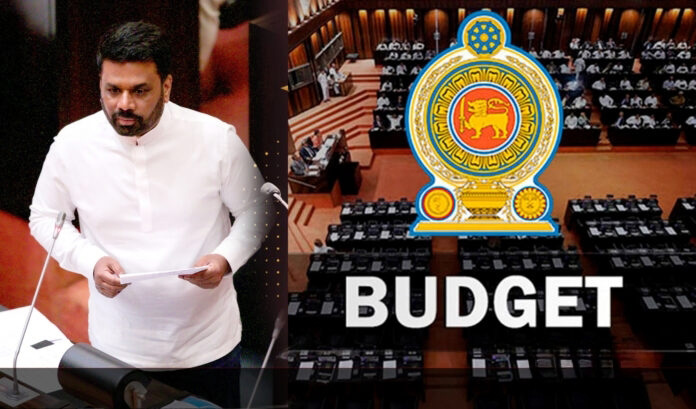
Anura Kumara Dissanayake’s 2026 Budget speech, while breaking symbolically from tradition, reveals a deeper continuity with neoliberal orthodoxy and IMF-aligned fiscal governance, the Communist Party said in a statement issued yesterday (13).
The text of the CPSL statement: “Beneath the rhetoric of “economic democracy” lies a technocratic document that prioritises lender confidence over public empowerment, and party consolidation over structural transformation.
The budget speech omits any serious analysis of the global and local economic context, particularly the imperialist financial architecture that continues to extract value from the Global South through debt, ISBs, and structural adjustment.
The speech is saturated with fiscal jargon and macroeconomic metrics, clearly aimed at multilateral institutions (IMF, WB, ADB) rather than the Sri Lankan public. This alienates the very people the NPP claims to represent.
Despite AKD’s purported Marxist credentials, there is no mention of imperialist exploitation, financialisation, or the deindustrialisation of the Global North that has shifted production (and debt burdens) to the Global South.
The threat of war, driven by imperialist attempts to reassert dominance through military means, is ignored, despite its direct implications for Sri Lanka’s geopolitical and economic stability.
The budget introduces US dollar–denominated local bonds, ostensibly to absorb excess forex liquidity in local banks. This adds to the external debt burden and exposes the country to additional currency risk. Debt repayments already consume nearly two-thirds of recurrent expenditure, yet the government boasts of Rs 1 trillion in “savings”—a misleading claim, as one-third of this is invested in high-interest treasury bills, effectively indebting the state to itself.
Crucially, the debt repayment projections presented in the budget need to be re-examined. For instance, Sri Lanka’s interest and capital repayment obligations in 2028 pertaining to International Sovereign Bonds (ISBs) alone amount to approximately USD 935 million. Even if the foreign debt stock remains unchanged at 2025 levels, this sum will still be required to service interest and partial principal repayment on the so-called “Past Due Interest (PDI) bond.” This reality raises serious questions about the President’s recent assurances that there is “nothing to worry about” regarding future debt payments.
If the government indeed refrains from any new borrowing in 2026—even from development partners such as the ADB or World Bank—such a repayment trajectory would imply a self-imposed austerity of unprecedented magnitude. On the other hand, if the government proceeds with plans to raise roughly USD 300 million domestically in 2026, interest payments alone—at an estimated 7%—would add a further USD 21 million to the 2028 repayment bill. None of this appears to be reflected in the President’s confident assertion that “we will pay.” The statement, while politically soothing, conceals the structural fragility of Sri Lanka’s debt position and the contradiction between the rhetoric of fiscal sovereignty and the arithmetic of debt servicing.
On the other hand, the so-called “savings” are not being used to address urgent public needs—such as shortages of insulin, HIV, TB, Malaria and other drugs and crucial health requirements for hospitals—but are instead earmarked for importing 1,775 double cab vehicles for NPP officials. These tenders were issued even before the budget was passed, and the vehicles will be paid for in scarce foreign exchange.
The one ostensible “plus” in the budget is increased revenue through taxation. However, this is largely driven by import duties and sales tax on vehicles, which deplete foreign reserves.
A key revenue measure is the lowering of the VAT threshold from Rs 60 million to Rs 36 million, dragging small and medium enterprises (SMEs) – such as garages, bakeries, furniture shops – into the 18% VAT net.
SMEs employ over 90% of the workforce. This move will force many to shut down or pass the tax burden onto consumers, exacerbating unemployment and the cost of living for the poor and middle class.
The increase in plantation wages is a welcome step, but it is funded through state subsidies, not by compelling plantation companies to pay fair wages. This increases fiscal pressure without addressing corporate accountability.
The Rs 25 billion poverty eradication allocation is grossly inadequate. Based on World Bank poverty metrics and census data, this translates to just Rs 4,600 per person in extreme poverty.
The budget fails to integrate this with land reform, which remains the most effective tool for rural poverty alleviation. Instead, the Land Use Policy Plan prioritizes land release for private investors, sidelining the 81% of the multidimensionally poor who live in rural areas.
The budget promises 3,000 new projects in 2026, echoing Mahinda Rajapaksa’s post-war construction boom. But unlike 2009–2014, today’s bureaucracy is inert, and there has been no significant project rollout since AKD took office.
The proposed 5% medium-term growth rate is mathematically implausible. Achieving it would require investment to rise from 27% to 37–38% of GDP, with the private sector contributing 89% of that—an unrealistic expectation given current economic condition.
Public investment remains at a paltry 4% of GDP, undermining any serious growth strategy.
The budget’s vision of Sri Lanka as a “hub for data centres” is untethered from reality. Data centres require massive, uninterrupted electricity and water supplies, none of which are addressed in the budget’s infrastructure allocations. Without a parallel investment in energy and digital infrastructure, this proposal remains a hollow slogan.
NPP’s 2026 budget is a document of contradictions: technocratic in tone, populist in optics, and neoliberal in substance. It fails to challenge the global structures that perpetuate Sri Lanka’s dependency, while deepening domestic inequality through regressive taxation and elite-focused expenditure. The absence of a coherent development strategy, land reform, or industrial policy reveals a government more concerned with managing crisis optics than transforming structural realities.


First comprehensive review of EPF, ETF launched, says Deputy Minister
The Government has launched the first comprehensive review of the Employees’ Provident Fund (EPF) and Employees’ Trust Fund (ETF) since their establishment, Deputy Minister of Labour Mahinda Jayasinghe told Parliament on Friday.
He said the review was aimed at improving the efficiency of the two retirement benefit schemes and enhancing services provided to millions of members.
Addressing Parliament, Jayasinghe said the Labour Department had already introduced several measures to modernise the administration of the funds, including digitalisation initiatives and improved mechanisms to recover outstanding contributions from defaulting employers.
According to the latest figures, the EPF has 22.9 million registered members and beneficiaries, of whom 3.1 million active accounts receive monthly contributions. The ETF has around three million registered members.
The Deputy Minister said the EPF’s total assets had reached Rs. 4.9 trillion by the end of 2025, while the ETF’s assets stood at Rs. 637.5 billion. He added that there were 101,000 active employers in 2025, including 376 semi-government institutions.
Jayasinghe said no government had undertaken such a systematic review of the two funds since their establishment, with the EPF being introduced in 1958 and the ETF in 1980.
He said the Labour Department had accelerated the recovery of unpaid EPF contributions from private and semi-government institutions, with Rs. 3.4 billion allocated through the 2026 Budget to settle outstanding contributions of semi-government institutions.
He added that steps had also been taken to reactivate stalled court cases and execute pending warrants related to contribution defaults.
The Deputy Minister said a new software system was being developed by integrating the data systems of the Labour Department and the Central Bank of Sri Lanka (CBSL) to create a unified platform.
He further noted that the Digital EPF facility, launched last December, enables employees to register and access a range of EPF-related services online. These reforms, he said, would eventually allow members to obtain EPF and ETF services through a single-window system.
The Sri Lanka Press Institute (SLPI), and its constituent partners, the Newspaper Society of Sri Lanka (NSSL), The Editors’Guild of Sri Lanka (TEGOSL), the Free Media Movement (FMM), the Sri Lanka Working Journalists Association (SLWJA) together with its affiliated organizations, the Muslim Media Forum (MMF), the Tamil Media Alliance (TMA), The Federation of Media Employees Trade Union (FMETU), the South Asia Free Media Association – SL Chapter (SAFMA) object the proposed Chartered Institute of Media Professionals of Sri Lanka (CIMP) Bill.
“Our primary objection stems from the government-led nature of this initiative. History shows that robust professional bodies, such as the Institute of Engineers and the Sri Lanka Institute of Architects, were founded and drafted by the professionals themselves before being incorporated by Parliament. In contrast, the CIMP is a state-driven project ordered to be published by the Minister of Health and Mass Media despite objections raised by media’s professional bodies.
We view this as an attempt to impose a state-managed regulatory framework upon a profession that must remain independent of government inteference to function effectively,” an SLPI news release said.
“The SLPI, its constituents and affiliated organizations maintain that professional media standards must be self-regulated in principle and led by the media community, not mandated by law under ministerial oversight. The SLPI has presented an alternative mechanism, viz., the Sri Lanka Media Commission (SLMC), based on co-regulatory and self-regulatory principles, which improves professionalism. In addition, the Sri Lanka College of Journalism, which is recognised by the media industry for training journalists for more than two decades, could also be an alternative way of building relevant journalism standards with government financial support if it intends to genuinely promote media professionalism. We call upon the government to withdraw this Bill and engage in a genuine dialogue with stakeholders that respects the autonomy and freedom of the media in a democracy.”
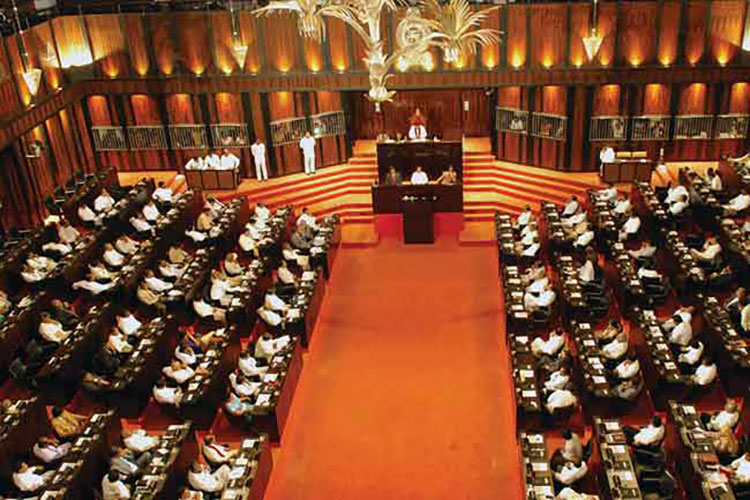
More than Rs. 332 million in public funds has been spent on maintaining Provincial Council chairpersons and their staff despite the dissolution of Provincial Councils, Deputy Minister of Provincial Councils and Local Government Ruwan Senarath told Parliament on Friday.
The Deputy Minister disclosed this in response to a question raised by NPP Gampaha District MP Ruwan Nishantha Mapalagama.
According to Senarath, a total of Rs. 332.9 million had been incurred during the relevant period for the upkeep of Provincial Council chairpersons and their administrative staff, although the respective councils had ceased functioning after completing their terms.
He explained that the expenditure had continued due to provisions in the Constitution and existing legal framework, under which the positions of Provincial Council chairpersons remain valid even after the expiry of the councils’ official terms.
Senarath said the legal provisions governing Provincial Councils had resulted in chairpersons and their staff continuing to receive related facilities despite the councils themselves no longer being operational.
The disclosure came amid concerns over public expenditure incurred on maintaining institutions that remain inactive due to the absence of Provincial Council elections.

Typhoon Noul makes landfall in China, with hundreds of thousands evacuated

Colombo Kaps down Dambulla Sixers by 21 runs

Kandy Royals win by 11 runs
Showers will occur in the Western, Sabaragamuwa and North-western provinces and in Galle, Matara, Kandy and Nuwara-Eliya districts

Govt. launches EPF, ETF shake-up

SLPI concerned over the proposed Chartered Institute of Media Professionals of Sri Lanka

‘Dates have the highest sugar content to fight Coronavirus’

Sunday Island 27 December – Headlines

#SundayIsland 17th December – Headlines

Sunday Island – 28th March

Sunday Island Headlines – 21 March

Sunday Island – 21st February – Headlines
-
 Midweek Review5 days ago
Three high-profile alleged suicides shaping key investigations
-

 News2 days ago
Fort Magistrate orders arrest of MP Archchuna
-

 Editorial2 days ago
An indictment of all parties
-

 News5 days ago
Customs asked to resume probe or face legal action
-
Editorial6 days ago
Welcome bid to tackle rolling death traps
-

 Opinion3 days ago
Ukraine’s power struggle spills on to the streets
-

 News2 days ago
National-level cybersecurity facility Lab established
-

 News7 days ago
Merchant Shipping Secretariat probes bribery scandal