
News
Controversy over dismissed high profile cases: CIABOC can initiate fresh action: DG Legal Affairs


By Shamindra Ferdinando
Director General, Legal Affairs, at the Presidential Secretariat attorney-at-law Harigupta Rohanadeera says the Commission to Investigate Allegations of Bribery or Corruption (CIABOC) retained the right to initiate fresh proceedings in respect of cases dismissed by courts as well as those withdrawn by the institution.
Rohanadeera said so appearing in the latest ‘Salakuna’ live interview on ‘Hiru’ anchored by Chamuditha Samarawickrema. The Presidential Secretariat Director General explained how those cases could be resumed again though being terminated on technical grounds.
Samarawickreme, one-time media head of President Maithripala Sirisena questioned the rationale in the dismissal of a spate of high profile cases initiated by the CIABOC and the Attorney General’s Department during the previous administration.
The new CIABOC comprises retired Supreme Court Justice Eva Wanasundera, retired Court of Appeal Justice Deepali Wijesundera and retired DIG and one time Chief of State Intelligence Service during the previous Rajapaksa administration Chandra Nimal Wakishta.
The new commission has been constituted in terms of the 20th Amendment enacted last October by President Gotabaya Rajapaksa hitherto shared with the Parliament and the judiciary.
The CIABOC dropped all charges against former lawmaker and Foreign Ministry Monitoring MP Sajin Vass Gunawardena pertaining to Mihin Lanka case. That particular case dealt with misappropriation of public funds amounting to Rs 883 mn.
The other persons freed included one-time Eastern Province Chief Minister Sivanesathurai Chandrakanthan alias Pilleyan (now MP backing the SLPP), Minister Johnston Fernando, Minister Rohitha Abeygunawardena, Minister Basil Rajapaksa, Minister Mahindananda Aluthgamage, Minister Janaka Bandara Tennakoon and former Chief Justice Mohan Peiris. The former CJ received appointment as Sri Lanka’s top representative at the United Nations in New York.
Asked to explain the status of follow-up action on report of the Presidential Commission of Inquiry into Political Victimization (2015-2019), Rohanadeera pointed out the appointment of a Special Presidential Commission of Inquiry (PCoI) to go into the report. The P CoI comprises Supreme Court Judges Dhammika Priyantha Samarakoon Jayawardena, Hema Kumuduni Wickramasinghe and Court of Appeal Judge Sobhitha Rajakaruna.
Reference was also made to the recommendations made by Presidential Commission of Inquiry into Political Victimization pertaining to deprival of civic rights of politicians’ et al.
Rohanadeera declined to comment on the status of parliamentary proceedings and follow-up action pertaining to the report submitted by the Commission. Denial of civic rights has been made against Rajitha Senaratne (SJB), Patali Champika Ranawaka (SJB), R. Sampanthan (TNA), M.A. Sumanthiran (TNA), Anura Kumara Dissanayake (JVP), the late Mangala Samaraweera (former lawmaker), Ravi Karunanayake (former lawmaker), Ajith P Perera (former lawmaker), Arjuna Ranatunga (former lawmaker), Ranjan Ramanayake (former UNP lawmaker, now in remand for contempt of court), Ranil Wickremesinghe (UNP Leader), Sarath Fonseka (SJB), Rauff Hakeem (SLMC), Malik Samarawickrema (former lawmaker), J.C. Weliamuna, PC (former High Commissioner to Australia), Jayampathi Wickremaratne , PC (former lawmaker), Wasantha Navaratne ,PC, Thusith Mudalige ( Additional Solicitor General, AG’s Department), Upul Jayasuriya,PC, Dilrukshi Dias Wickramasinghe, PC (former Solicitor General), Janaka Bandara (Senior State Counsel AG’s Department), Shani Abeysekera (SSP, Former CID Director) B.S. Tissera (ASP,ex- CID), Ravi Waidyalankara (SDIG FCID), Nishantha Silva ( IP, ex- CID OIC), Ravi Seneviratne (SDIG, ex- CID), Ravindra Wijeguneratne( Admiral, ex- Navy Commander), JJ Ranasinghe (Rear Admiral SLN), Prasad Kariyawasam (ex-Foreign Secretary), Ravinatha Aryasinha (Ambassador in Washington), Saman Ekanayake (ex-Secy to PM Wickremesinghe), S.A. Khan (ex-Ambassador to the UAE) and C.A.H.M. Wijeratne ( Former Director General Legal, MFA and Ambassador for Sri Lanka to Poland).
Rohanadeera also dealt with several other issues, including the contentious issue of making vaccination compulsory as part of the overall government response to raging Covid-19 pandemic.
The top official strongly backed the measure in line with what he called doctrine of necessity. Pointing out the Director General of Health Services (DGHS) Dr Asela Gunawardena enjoyed the legal right to decide on such matters, Rohanadeera said that anyone opposed to mandatory vaccination could move the Supreme Court.
General Shavendra Silva, who is the head of the Covid-19 Task Force, recently declared that those visiting public places would be asked to produce vaccination certificate from Sept 15.
Acknowledging the freedom of speech and the right to dissent and protest, the attorney-at-law emphasized the responsibility on the part of the people to follow the health guidelines or prepare to face the consequences.



Former first lady Shiranthi Rajapaksa, wife of former President Mahinda Rajapaksa was produced before the Hulftsdorp court, after being arrested by officers of the Commission to Investigate Allegations of Bribery or Corruption (CIABOC) and produce
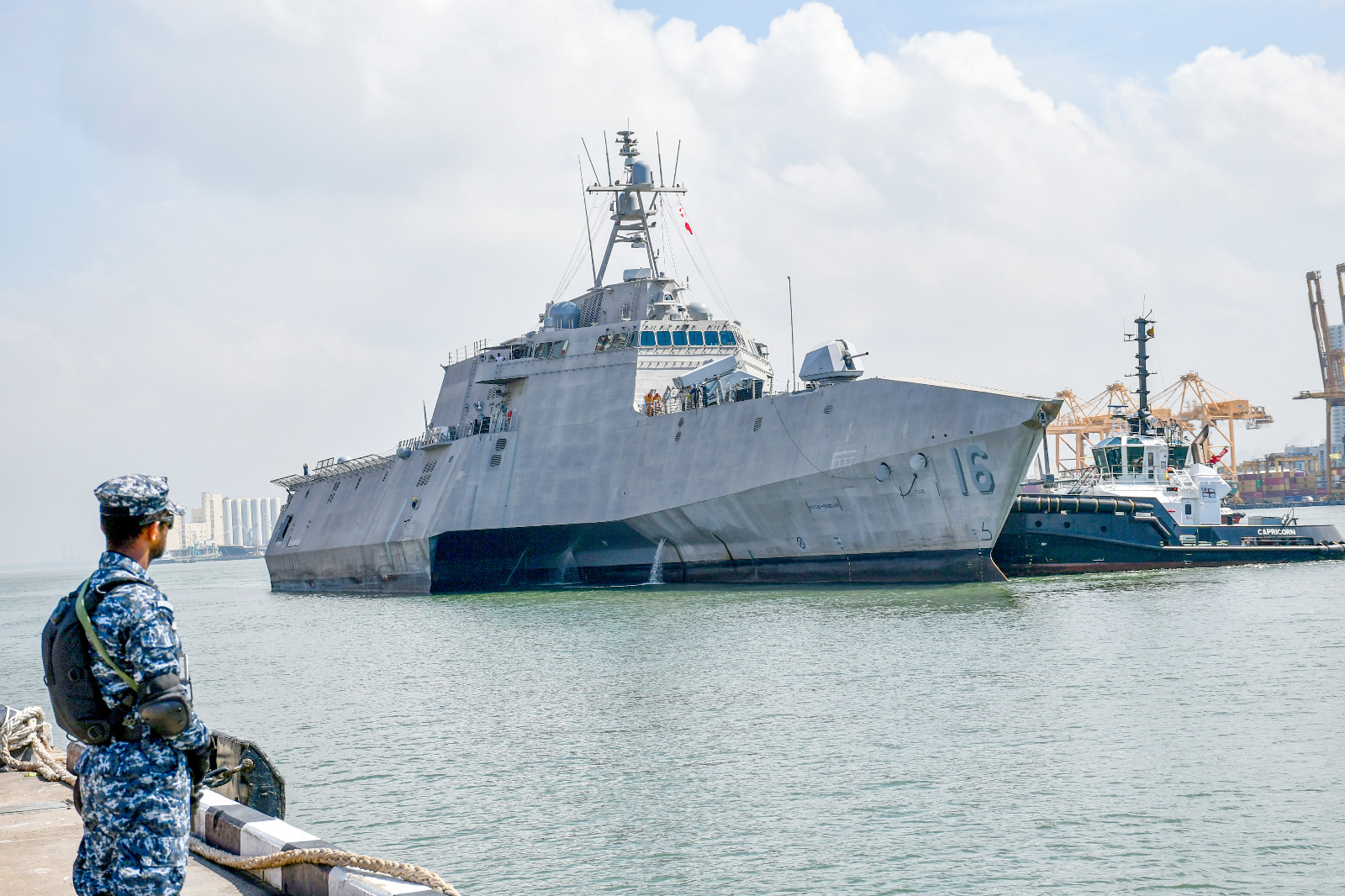
The U.S. Navy ship USS Tulsa (LCS 16) arrived at the Port of Colombo this morning, 7 October 2026 for replenishment purposes.
The visiting ship was welcomed by the Sri Lanka Navy in accordance with naval traditions.
The 127.7-metre-long platform is a Littoral Combat Ship commanded by Commander BM Wanier. Commissioned on 16 February 2019, USS Tulsa has since been in service with the US Navy.
The ship previously made a port call in Sri Lanka on 27 August 2025.
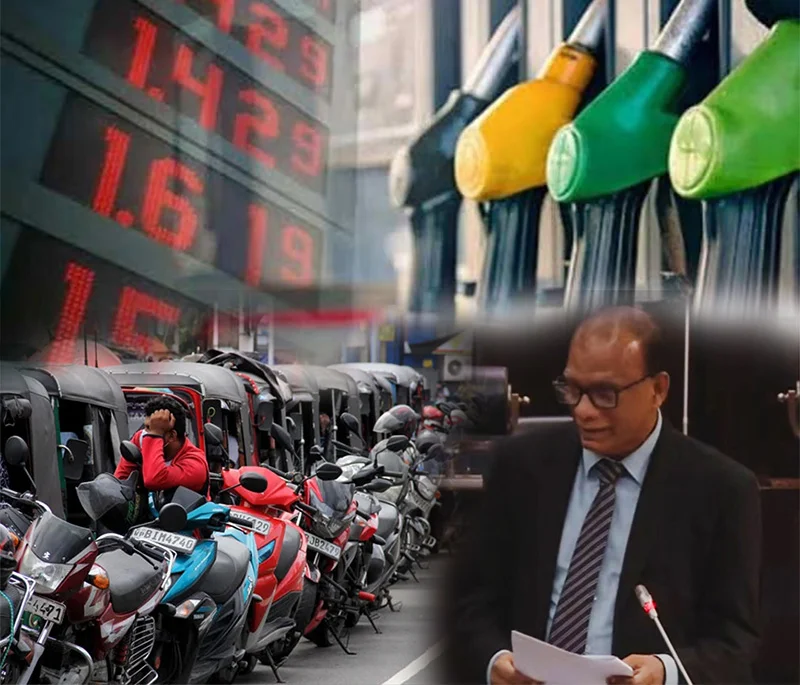
Govt. tells fuel distributors to maintain stocks to ensure uninterrupted supplies
by Saman Indrajith and Norman Palihawadane
The government had instructed private fuel distributors to maintain minimum stocks and ensure uninterrupted supplies to the market, Energy Minister Anura Karunathilaka told Parliament yesterday (06).
Karunathilaka said the Ministry of Energy Secretary had notified the relevant companies of the requirement, following a reduction in supplies by some private distributors, amid higher international fuel prices.
The Minister said private companies had informed the government that they were facing losses because international prices had risen while fuel was being sold, locally, at prevailing prices. As a result, some companies had reduced the volumes released to the market.
The reduced supplies had increased the burden on the Ceylon Petroleum Corporation (CPC), whose share of the diesel market had risen from about 54% to 82%, the Minister said.
“The CPC currently holds an 82% share of the market,” he said, adding that it had increased its supplies, compared with February, to compensate for the reduction by private distributors.
Karunathilaka said the government could not, under the existing agreements with private companies, specify the quantities they should supply to individual filling stations. However, it could require them to maintain minimum stocks in the country.
The Minister said the Energy Ministry had already instructed companies that had failed to maintain the required stocks to take steps to prevent supply disruptions.
The Minister attributed the queues reported at some filling stations to reduced supplies from private distributors, as well as normal variations in fuel distribution. He also said demand for CPC fuel had increased because private companies generally did not provide fuel to dealers on credit, while the CPC offered a three-day credit facility.
“We expect that, as the Ceylon Petroleum Corporation takes on this additional burden, the problem will ease to some extent by Wednesday or Thursday,” Karunathilaka said.
He said instructions had also been issued to increase supplies to CPC filling stations. A special discussion on the issue is scheduled for today (07), with officials of the Energy Ministry and CPC expected to participate,
along with President Anura Kumara Dissanayake.
Meanwhile, Petroleum Dealers’ Association officials have called for an early solution to the supply issue. Association Chairman D.V. Shantha Silva said queues had been reported at many filling stations, mainly those operated by private distributors.
He said the situation was not due to an overall shortage of fuel, but was linked to reduced orders by Lanka IOC, Sinopec and R.M. Parks amid concerns over losses incurred on fuel sales.
The Ceylon Petroleum Private Tanker Owners Association has urged motorists to refrain from panic buying, saying there was no nationwide disruption to fuel supplies.
The government earlier increased fuel prices and introduced a per-litre diesel subsidy following concerns raised by distributors over rising international prices.

Former first lady Shiranthi Rajapaksa arrested by CIABOC

U.S. Navy ship USS Tulsa arrives in Colombo for replenishment visit

Smriti Mandhana appointed India captain across formats

Ronaldo apologizes for Portugal walkout; says Jesus broke promise

Showers in the Western, Sabaragamuwa, Central, Uva, North-western and Southern provinces and in Anuradhapura and Mannar districts

Fuel crunch looms

‘Dates have the highest sugar content to fight Coronavirus’

Sunday Island 27 December – Headlines

#SundayIsland 17th December – Headlines

Sunday Island – 28th March

Sunday Island Headlines – 21 March

Sunday Island – 21st February – Headlines
-

 News7 days ago
US-assisted ‘Ice’ detection: NPC to examine IGP’s move to transfer drug-busting team
-

 Editorial6 days ago
Colombo Port drug bust: The plot thickens
-

 Editorial7 days ago
Drug busting, transfers and trust deficit
-

 Features4 days ago
The first woman in the foreign service or Ceylon Overseas Service it was then called
-
 News7 days ago
Sri Lankan facing death penalty in Saudi Arabia: Mano G appeals to Crown Prince
-

 Editorial5 days ago
Fuelling discontent and protest
-

 News3 days ago
Geneva takes up Sallay’s case and govt. ignores opportunity to answer accusations
-

 Latest News4 days ago
Tharindu Rathnayake, bowlers secure Asian Games Bronze for Sri Lanka