
Features
Clean Sri Lanka environmentally, socially and psychologically


Philosophical approach should integrate sociological and psychological principles as an essential part of the campaign
by Prof. Athula Sumathipala
Clean Sri Lanka; what does it entail?
The mission of the “Clean Sri Lanka” project” is to reposition the nationwide efforts of environmental, social, and governance initiatives through introducing change, integration, and collaboration”.
As stated on its official website, “Clean Sri Lanka project aims to address a cleaner physical environment and a nationwide moral commitment to enhance ethical principles. Enhancement of the three pillars of sustainability; Economic, Social and Governance (EESG), have been identified as the framework to address the overarching objectives of this strategic plan with specific stakeholder goals, actions, time lines and outcomes”.
Human nature of resistance to change
Human nature is such that they are resistant to change. That is why so many people especially as organiations, when presented with a new initiative or idea—even a good one, with tons of benefits—will resist it.
We have already witnessed such resistance, in relation to the clean Sri Lanka project; threat to strikes, misinformation campaigns etc. No surprise. That resistance can also be easily exploited by the opportunists who wants to derail this programme for their own gains, no matter what the overall benefits the proposed programme brings.
The role of “proactive change management”
Proactive change management happens when leaders actively seek to manage the challenges and opportunities in a program. Every change projects comes with many unpredictable aspects. A proactive change manager will anticipate such potential challenges and plan for such problems well in advance. Thereby, they will be equipped to create contingency plans for unexpected challenges.
The role of the brain in facing changes
The brain has three main parts: the cerebrum, cerebellum and brainstem. Cerebrum is the largest part of the brain and is composed of right and left hemispheres. They interpret sights, sounds and touches. It also regulates emotions, reasoning and learning.
Cerebellum maintains the balance, posture, coordination and fine motor skills.
Brainstem, regulates many automatic body functions.
Part of the brain, the amygdala interprets change as a threat and releases the hormones leading to fear, fight, or flight. (See Figure 1)

In particular, the function of the brain’s prefrontal cortex, which is responsible for complex thinking, self-regulation, and future orientation, is only completed around the age of 24.
Because the brain’s prefrontal cortex is still developing, teenagers rely more on a part of the brain called the amygdala to make decisions and solve problems than adults. The amygdala is involved in emotions, impulses, aggression, and instinctual behaviour.
The limbic system, often referred to as the emotional centre of the brain, is responsible for processing emotions, forming memories, and regulating behaviour. It includes key structures like the amygdala, hippocampus, and hypothalamus, each playing a vital role in emotional and social processing.
Therefore, biologically, we can conclude that the younger generation acts more emotionally than rationally compared to the adults. However, that does not mean all adults are acting rationally. Understanding this phenomenon is in no way justifying and normalising it.
Hence, adolescents and also adults should learn about emotional regulation and improve their skills to communicate their frustrations, anger, disagreements in an acceptable and civilised manner.
Such frustrations, anger, disagreements are potential manifestations of the Clean Sri Lanka programme which could be easily exploited by opportunists.
That’s why the science and the art of science should be carefully integrated into proactive change management using cognitive behavioural principles, conformity theory and principles, as they are key components in this, Clean Sri Lanka project for successful implementation.
Emotional regulation
Emotional regulation is the conscious or unconscious processes of monitoring, evaluating, modulating, and managing emotional experiences and expression of emotion in terms of intensity, form, and duration of feelings, emotion related physiological states and behaviours.
Being able to regulate emotions is important since our emotions are closely connected to how we think and behave. Our thoughts and feelings help us to decide how best to respond to a situation and what action we should take. Essentially, emotional regulation can influence positive and negative behaviour.
Learning skills to regulate emotions means that, instead of acting impulsively and doing something that may be regretted later, we are able to make thought-out choices. It also helps out to manage our conflicts of interest or competing interests.
This means that we can learn to manage relationships with others, solve problems, and have better control over our behaviours.
To do so, one need to develop emotional intelligence. Positive attitudes and emotional intelligence go hand in hand. That is why it’s so important.
Attitude is a way of thinking or feeling about something, it’s a psychological construct which governs behaviours. Negative or destructive attitudes are like flat tyers, without changing one cannot go anywhere.
Emotional intelligence (EI)
In a book written by Daniel Goleman in 1995, on emotional intelligence theory, he outlined five components of EI: self-awareness, self-regulation, motivation, empathy, and social skills.
Self-regulation; helps openness to change, motivation; helps a passion for work beyond monetary returns, energy and persistence, empathy; putting yourself in others’ shoes, social skills; ability to find common ground and rapport, and persuasiveness. People with EI makes good leaders as they can use their ability to recognise and understand their own emotions to make more informed and rational decisions. They can also use their ability to empathise with the emotions of their team members to take into account their perspectives and needs when making decisions
Emotional Intelligence can matter more than IQ; “intelligence quotient”. In his book, Goleman pointed out that emotional intelligence is as important as IQ for success, including in academic, professional, social, and interpersonal aspects of one’s life. It’s something which can be developed through coaching and mentoring.
Conformity principles
Conformity is a form of social influence that involves a change in the common belief or behaviour of a person or group of people to fit into how others are. This may have a good outcome or bad outcome.
Solomon Asch conducted several experiments in the 1950s to determine how people are affected by the thoughts and behaviours of other people. In one study, a group of participants was shown a series of printed line segments of different lengths: a, b, and c (Figure 1). Participants were then shown a fourth line segment: x. They were asked to identify which line segment from the first group (a, b, or c) most closely resembled the fourth line segment in length. (See Figure 2)

Each group of participants had only one true, outsider. The remaining members of the group were confederates of Ash. A confederate is a person who is aware of the experiment and works for the researcher. Confederates are used to manipulate social situations as part of the research design, and the true, outside participants believe that confederates are, like them, uninformed participants in the experiment. In Asch’s study, the confederates identified a line segment that was shorter than the target line a, the wrong answer. The outside participant then had to identify aloud the line segment that best matched the target line segment.
Asch (1955) found that 76% of participants conformed to group pressure at least once by indicating the incorrect line. Conformity is the change in a person’s behavior to go along with the group, even if he does not agree with the group.
Research shows that the size of the majority, the presence of another dissenter, and the public or relatively private nature of responses are key influences on conformity.
The size of the majority: The greater the number of people in the majority, the more likely an individual will conform. In Asch’s study, conformity increased with the number of people in the majority, up to seven individuals. At numbers beyond seven, conformity leveled off and decreased slightly. The presence of another dissenter: If there is at least one dissenter, conformity rates drop to near zero (Asch, 1955).
The correct answer to the line segment question was obvious, and it was an easy task. But the outsiders who participated in the study gave wrong answers. Researchers (Deutsch & Gerard, 1955) have categorized the motivation to conform into two types: normative social influence and informational social influence
In normative social influence, people conform to the group norm to fit in, feel good, and be accepted by the group. However, with informational social influence, people conform because they believe the group is competent and has the correct information, particularly when the task or situation is ambiguous.
So, what is happening in current society. The great majority of good people conform to the bad minority allowing the wrong thing to happen. Therefore, the very same conformity principles can be used by empowering the majority of good people not to conform to the bad or wrong minority.
To achieve that people should get out of the “learned helplessness” mode, which was described by Seligman in 1976. Learned helplessness is what social science researchers call it when a person is unable to find resolutions to difficult situations, even when a solution is accessible. People that struggle with learned helplessness tend to complain a lot, feeling overwhelmed and incapable of making any positive difference in their circumstances. The feel that they are powerless to change others who have conformed to the “norm”. They give up and just get one.
There is also the bystander effect, or bystander apathy. Social psychological theory states that individuals are less likely to offer help to a victim or initiate an action in the presence of other people. They simply assume that the other person will do it. If everybody expects the other person will do ultimately no one will do it.
Social psychology is the scientific study of how thoughts, feelings, and behaviors are influenced by the actual, imagined, or implied presence of others. Social psychologists explain human behavior as a result of the relationship between mental states and social situations, studying the social conditions under which thoughts, feelings, and behaviors occur, and how these variables influence social interactions.
The best way to describe what to do in the context of all the above phenomena are operating, is using Cognitive behavioural theory and interventions based on that. Cognitive-Behavioral Theory states that human thinking determines human behaviour and feeling. Therefore, by changing one you can change the other.
The triad; behaviors, thoughts and feelings
The basis of cognitive behavioral theory is that a person’s thoughts, ideas, and beliefs underpin their emotional reactions and behaviors. (See Figure 2)
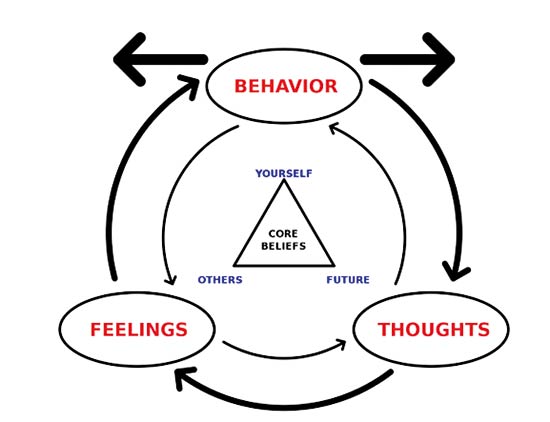
As described in the above diagram we have assumptions and core beliefs about us, the others, the future, the country, the world and so on. We call it a schemata. We process information using these schemata. Some of these can be positive and useful (functional) and some are negative and counterproductive.
The easiest way to understand this is to learn about Kisa Gothami’s story. When Kisa Gothami’s newborn son died, she did not realize so and she ran to Lord Buddha asking him to cure her son. Lord Buddha at once knew that the baby was dead but wanted Kisa Gothami to learn about death herself. Lord Buddha asked her to find a handful of mustard seeds from a household where no one has died. She went knocking on all the doors in the village but could not find a single house without a death in the family. Soon she realized the lesson Lord Buddha was trying to teach her: that no family is spared the occurrence of death. Lord Buddha used a bahaviour to teach Kisa Gothami to change the way she thinks about death. We call it cognitive restructuring.
Compatibilities between cognitive approaches to therapy, such as CBT, and Buddhism have been acknowledged by its originators Aron Beck (2005) and Kwee & Ellis (1998).
Our nation needs mass scale cognitive behavioural interventions to change the way they think about many things; us, others, future, country, what is rights and wrongs, one’s responsibilities and duties. We need to change our learned helplessness mentality created through the so-called bankrupt society that has no future.
Without addressing these assumptions, core beliefs, and thinking errors; the schemata, by using scientific principle and interventions, to change the crucial behaviors and thinking neither the President nor 159 MPs alone will be able to do much for the nation who expect a paradigm shift in the development of a nation. Their duty was not finished by voting a new President and a Government into power with the 2/3rd majority.
Each citizen who is seriously thinking of a prosperous nation need to change first to change the country and it;s wrong doings. If you want the Government to stop bribery and corruption you need to first stop offering bribes. Reflect on your self first and also inculcate such attitudes in the younger generations with optimism.
Role of media in behavioural change
The media has an undisputed role in influencing behavioral change by shaping public opinion, disseminating information, and creating awareness.
Raising awareness through campaigns can promote positive behaviors, changing stereotypes, bringing progressive narratives. modeling behaviors in films or on social media, can inspire individuals to adopt similar behaviors.
Creating social pressure through peer Influence challenging conformity, learned helplessness, conducting campaigns on social media encouraging widespread behavioral change, educating and empowering, supporting and influencing public policy and reinforcing positive behaviors are a few.
However, be mindful that media is a double-edged sword, it can inspire positive change when used responsibly but can also perpetuate negative behaviors if misused. Its influence on behavior depends largely on the accuracy, ethics, and creativity of the content it disseminates.
Be mindful, for the first time in history, the essential and fundamental conditions; objective and subjective, have come together offering a golden opportunity for a genuine change. The political leadership should not leave any stone unturned to use the scientific advances of science relevant to
three fundamental components: biological, psychological, and sociocultural factors. These elements are not isolated; they interact dynamically to shape the way we perceive the world and respond to it. They should understand how these foundational aspects of behavior provide a framework for understanding the complex nature of human actions and how to change them.
The author of this article is an internationally renowned academic with a strong track record in research especially carried out in Sri Lanka using cognitive behavioural principles. Some of his interventions are considered front line in post disaster situations.
He is an Emeritus Professor at Kings College London and Keele University. He is also the Director, Institute for Research and Development in Health and Social care and the Chairman of the National Institute of Fundamental Studies.
He had been an invited plenary speaker at the 11th International Congress on Behavioural Medicine, Washington DC, USA (August 2010), 19th World Psychiatric Association (WPA), World Congress of Psychiatry, Portugal, Lisbon (August, 2019). Melbourne, Australia (February, 2018). 16th Congress of the International Federation of Psychiatric Epidemiology Melbourne, Australia (Oct, 2017), Royal Australian and New Zealand College of Psychiatrists (RANZAP) Napier, New Zealand (Oct 2007), to name a few related to cognitive behavioral theory/therapy.


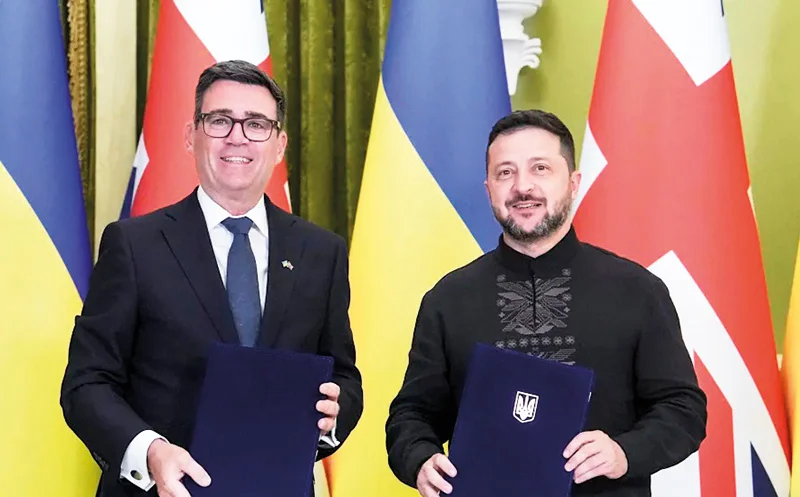
 The present offer by the UK to strengthen Ukraine’s defense capabilities in the missile technology field in particular comes as ‘a stitch in time’ and the initiative is also likely to be appreciated considerably by democratic opinion world wide for the possible morale-boosting effect it would have on Ukraine. Besides continuous arms support, the conviction that the world’s frontline democracies are behind it would prove a huge plus in Ukraine’s eyes in its grinding fightback against the Russian invasion.
While continued US support for Ukraine could not be considered ‘a given’ any more, British Prime Minister Andy Burnham’s words during a recent visit to Kyiv that the UK would stand by Ukraine ‘for as long as it takes’ is the kind of assurance that Ukraine needs at present. For, the conflict in Ukraine is essentially a war of liberation conducted by the latter against an invader and deeply at issue here is the upholding of International Law and its foundational concepts, such as national sovereignty and a nation’s right to political self-determination. The world of democracy is of the firm view that the latter ideals cannot be compromised, come what may.
The UK has its work cut out in this connection. It would find it difficult to convince the Trump administration that it should staunchly stand by Ukraine but it could campaign vigorously with the rest of the West and the EU fold in particular to unflaggingly support the embattled and over-run country.
Ukraine has shown an impressive adeptness in using drone technology in particular against her enemy and has even manufactured her own hardware in this respect but using the relevant blueprints handed over by the UK for the manufacture of more sophisticated cruise missiles, for instance, may prove financially difficult, going forward. It is left to be seen whether the UK and the rest of the West who are with Ukraine will continue to be with her, considering their own rising financial constraints.
The latter impediments could only multiply in the future. Oil, gas and energy prices are on the rise and the latter costs are glaringly reflected in kitchens and meal tables the world over. As we go along consumer discontent would steadily intensify and governments, East and West, would need to figure out with considerable rigour and foresight how such disaffection could be ably managed. Failing which, in most democratic societies, the chances are that publics would be out on the streets demanding that their grievances be redressed forthwith.
These rising concerns are reflected in a recent move by some EU governments to consider imposing what is described as ‘a windfall tax’ on the profits specified major oil companies operating within their shores have made in the wake of the US-Israel war on Iran. The rationale apparently is to use such tax earnings to cushion the rising cost of living of their publics and bolster the respective countries’ social expenditure.
In a recent letter to the president of the EU Council the EU governments referred to said, among other things, while drawing attention to the ‘discontent that is growing over the rising cost of living’: ‘A common approach’ is needed that ‘ensures those who profit from the crisis contribute their share to reducing the burden on the general population.’ Meanwhile, Oxfam with reference to the above development is on record as calling for a ‘permanent windfall tax of at least 50% on profits exceeding a 10% return on investment.’
Such are the rising economic pressures on the majority of Western governments. The question to be posed is how consistent they would be in their assistance to Ukraine if they decide consensually to stand by her. The soaring cost of living in the West compels the conclusion that there could be no guarantee that Western assistance to Ukraine, particularly in the defense and security fields, would be of a longstanding kind.
Of particular concern would be the fact that the weapons systems on offer from the UK to Ukraine could be increasingly costly to manufacture going forward. Besides they would need to be manufactured and put into action without delay.
However, these considerations should in no way deflect Ukraine’s supporters from the principled policy stance of defending her to the extent possible. Because at issue is the defense of International Law and the democratic system of government from their enemies; fascism and authoritarian rule.
While during World Wars 1 and 2 the US was with the major democracies of the West, this time around with regard to Ukraine, the US has chosen to be at cross-purposes with them. For instance, in relation to tariff matters and defense expenditure, in the NATO context, the US is pursuing a hard line which puts it at polar opposites with the West. Thus it is no longer possible to talk unreservedly of a ‘Western democratic alliance’. Put plainly, the cause of democratic development has been weakened.
A measure of relief for the supporters of Ukraine in the West could come by way of the upcoming mid-term polls in the US. If the Democratic Party fares well in them the pressure would be on the Trump administration to defer to opposition opinion at home, accommodate the best interests of Ukraine in its West European policy and perhaps even work towards a diplomatic solution to the Ukraine crisis in cooperation with Russia. Accordingly, the Democratic Party would need to put the Trump administration on the defensive, so to speak.
Until such time Ukraine’s Western supporters have no choice but to remain committed to it, ensure its steadfast defense against the invasion and work judiciously towards keeping the economic pressures at home in check.
Interestingly, at the present juncture in international politics the US could be said to be more weak than strong. For example, it has to some extent been militarily humbled by Iran; so much so it is resorting to economic means to keep Iran in check.
In keeping with this strategy, the US has launched ‘a new big wave of anti-Iran economic sanctions’ at the time of writing, aimed at cutting Iran away from all its major income sources. Some of these relate to digital assets, technology, gold, aviation and shipping. The hoped for result is the complete severance of Iran from the US dollar system.
However, while the UK and EU have no choice but to adhere to their policy of backing Ukraine, going forward they would need to dialogue more closely with the US and ensure that it cooperates with them on outstanding questions, such as Ukraine and the strengthening of democracy. The well being of the world is served when the latter aim is pursued.

OPA 39th Annual Conference calls for Sri Lanka to move Beyond Recovery towards Sustainable Transformation
The Orgnisation of Professional Associations (OPA) successfully concluded its 39th Annual Conference, held recently at the Cinnamon Grand Colombo, under the theme “Envisioning Sri Lanka: Beyond Recovery”.
Held under the patronage of Jayantha Gallehewa, President of the OPA, with the leadership and guidance of Tisara De Silva, President-Elect and Chairman of the 39th Annual Conference, the Conference brought together leading professionals, academics, business leaders and representatives of the public and private sectors to deliberate on Sri Lanka’s next phase of national development.
The Inaugural Session, on August 2026, was graced by Prime Minister Dr. Harini Amarasuriya, as the Chief Guest; Andrew Patrick, British High Commissioner to Sri Lanka, as the Guest of Honour; and Murtaza Jafferjee, Chairman of the Advocata Institute, Sri Lanka, as the Keynote Speaker.
In her address, Prime Minister Dr. Harini Amarasuriya emphasised that overcoming the economic crisis alone should not be Sri Lanka’s ultimate objective, stressing that recovery must serve as the foundation for a broader economic and institutional transformation necessary for sustainable national progress. Reflecting on the difficult period experienced by the country, the Prime Minister noted that Sri Lanka had faced significant economic, social and institutional challenges, which had weakened public confidence and created uncertainty about the country’s future.
She stressed that “recovery only provides the foundation” and that Sri Lanka can move forward sustainably only by using that foundation to bring about meaningful transformation.
The Prime Minister observed that the theme of the OPA’s 39th Annual Conference, “Envisioning Sri Lanka: Beyond Recovery,” aptly encapsulated these national aspirations. She emphasised that Sri Lanka’s objective should not merely be to return to the conditions that existed before the crisis, but to forge a stronger national foundation characterised by robust institutions, a resilient economy, high-quality public services and an enabling environment in which every citizen has the opportunity to thrive.
She further underscored that Sri Lanka’s future development cannot be secured through economic growth and physical development alone. She emphasised that the effective mobilisation of the country’s knowledge, skills and professional expertise, is equally essential to achieving sustainable and inclusive national progress
The Technical Sessions held on 12 August 2026 brought together 19 distinguished experts and professionals representing academia, industry, banking and finance, public health, technology, management and business leadership. Their diverse expertise provided a multidisciplinary platform to examine the critical challenges, emerging opportunities and strategic choices that will shape Sri Lanka’s next phase of development, with particular emphasis on economic transformation, institutional strengthening, digitalisation, private-sector growth, human capital and sustainable development.
The deliberations were structured around four principal sub-themes: “Resilient Recovery and Sustainable Economic Development”; “Future Readiness: Innovation & Transformation”; “Policy for Impact: Advancing Equity, Sustainable Living, and National Well-Being”; and “Leadership, Governance and National Responsibility.”
Across these thematic areas, the sessions explored the structural reforms, institutional requirements and policy choices necessary to move Sri Lanka beyond economic stabilisation towards a more productive, competitive, resilient and inclusive economy. The discussions brought together diverse professional perspectives, enabling participants to examine national priorities through economic, technological, industrial, financial, social and governance lenses.
Particular emphasis was placed on the need to move beyond the diagnosis of problems towards pragmatic, evidence-based and implementable solutions. The deliberations recognised that sustainable national progress requires not only sound policies, but also effective institutions, professional competence, innovation, responsible leadership and the capacity to translate policy into tangible outcomes.
The sessions further underscored the importance of collaboration across sectors, recognising that Sri Lanka’s complex development challenges cannot be addressed in isolation. Stronger engagement among Government, private sector, professional associations, academia and civil society was identified as essential to fostering a coherent national response and ensuring that professional knowledge and expertise are effectively translated into policy and action.
Collectively, the Technical Sessions provided a substantive platform for knowledge exchange, critical reflection and forward-looking dialogue, reinforcing the OPA’s commitment to bringing the country’s professional expertise to bear on the task of building a resilient, innovative, equitable and prosperous Sri Lanka.
The OPA expressed its sincere appreciation to Prime Minister Dr. Harini Amarasuriya, the Chief Guest; Andrew Patrick, British High Commissioner to Sri Lanka and Guest of Honour; and Murtaza Jafferjee, Chairman of the Advocata Institute, Sri Lanka and Keynote Speaker, for their distinguished contributions to the Conference.
Much of what the 39th Annual Conference achieved would not have been possible without the leadership, commitment and generous contributions of Jayantha Gallehewa, President of the OPA; Tisara De Silva, President-Elect and Chairman of the 39th Annual Conference; Eng. Ravi Rupasinghe, General Secretary; Dharshana Wijemanne, Treasurer; Bhanu Wijayaratne, Convener & the Chairman of the Session Planning Committee of the 39th Annual Conference Committee, Past Presidents and Office Bearers; Presidents and representatives of Member Associations; members of the Executive Councils and General Forum; and the distinguished Session Chairmen, Resource Persons and professionals who shared their time, expertise and insights in pursuit of the Conference’s shared vision. The OPA remains immensely grateful to all those whose collective contributions enriched the 39th Annual Conference and strengthened its role as a meaningful platform for professional exchange, informed dialogue and national reflection.

 For Sri Lankans living 14,000 kilometres from home, the sound of home has never felt closer — and that’s thanks to one man and his band.
Since stepping into the spotlight, Gamini Hemalal and the Ceymphony Band have turned into the heartbeat of the Sri Lankan community in Toronto.
Their mission is simple: bring the music, bring the memories, bring the people together. And it’s working.
What turned out to be the talk-of-the-town was their intimate musical evening with Sri Lanka’s legendary crooner Sohan Weerasinghe.

Sohan Weerasinghe: Had
everyone on their feet at the
Angus Glen Golf Club, in
Toronto, Canada
It was a ‘full house’ long before the big date. Tickets vanished within days — demand was that overwhelming.
According to those who were there, it was a truly amazing evening. The hall was packed, the energy electric. Sohan didn’t just sing — he owned the stage.
With his velvet vocals, his charm, and that signature style, he had everyone on their feet. The ladies, especially, couldn’t get enough. No wonder they call him “The Ladies’ Man!”
One attendee summed it up perfectly:
“We had so much fun. It is truly a blessing to have our kids around us, enjoying these beautiful moments together. Thank you, Gamini Hemalal, for such a wonderful evening, with an amazing crowd and an incredible atmosphere. Your hard work and dedication truly made it a special night.
“We also need to say a big thank you to the Ceymphony Band for delivering such an outstanding performance. You all were absolutely amazing! Our entire family had a fantastic time, and we truly enjoyed every moment.

Ceymphony Band: Extremely popular in the scene in Toronto
“Wishing you all continued success. Keep up the amazing work, we can’t wait for the next.”
And the next is already on the cards: ‘Halloween Pissu Baila Party 2026,’ on Friday, 30th October, at the famous Angus Glen Golf Club.
Gamini promises a crazy night of baila, music, dancing and Halloween vibes with the Ceymphony Band. Action runs from 8:00 PM to 12:00 midnight, with plenty of prizes to be won.

Gamini Hemalal: Amazing work for the Sri Lankan community,
in Toronto, Canada
Gamini is also putting together a special event, connected with the 2027 Avurudu celebrations — ‘Avurudu Musical Show 2027,’ a uniquely styled musical Avurudu celebration … Ceymphony Band style.
It’s scheduled to be held on Saturday, 10th April, 2027, also at the Angus Glen Golf Club.
Through music, Gamini Hemalal and Ceymphony are doing what diaspora bands do best — they’re shrinking the distance between two worlds.
One baila beat at a time, one full house at a time, they’re making sure that even in Canada, Sri Lankans feel like home.
Yes, there is plenty of action, indeed, for the Sri Lankan community in Toronto, Canada.

More than 360 dead, 1,400 missing in Nepal and Tibet after Himalayan floods

Bosnian Serb convicted war criminal Ratko Mladic dies

Prince of Wales to celebrate 150th anniversary with six-a-side cricket

Unyielding Dinusha, spirited tail hold off India to save Colombo Test

US golfer Gogel gets six-month ban for betting

UAE’s Asif Khan handed 15-month ban for using a banned substance

‘Dates have the highest sugar content to fight Coronavirus’

Sunday Island 27 December – Headlines

#SundayIsland 17th December – Headlines

Sunday Island – 28th March

Sunday Island Headlines – 21 March

Sunday Island – 21st February – Headlines
-

 News7 days ago
Country’s first woman Surveyor General appointed
-

 Business6 days ago
SriLankan Airlines makes ShakthiSAT Mission possible for talented Sri Lankan student
-

 Features7 days ago
Medical education in Sri Lanka: Then and now
-
 Latest News6 days ago
Imran Khan moved to private hospital amid deteriorating health
-

 Latest News6 days ago
Government has declared 21, 22 and 23 August 2026 as national days of mourning
-
 Features5 days ago
My secondary schooling after Royal Primary
-

 Latest News6 days ago
Tharanga edges out Chopra in 88m javelin battle
-
 News7 days ago
22A: Opp. demands all available SC judges hear petitions