
Business
Bottle-to-bottle recycling can boost Sri Lanka in the transition to circularity in plastics

By Amila Abeynayaka
Dr. Abeynayaka is a Policy Researcher currently attached to the IGES Centre Collaborating with UNEP on Environmental Technologies (CCET), Institute for Global Environmental Strategies (IGES), Japan.
Pollution caused by the irresponsible disposal of plastics is a significant issue, particularly in developing countries like Sri Lanka.
 According to Great Britain’s Royal Statistical Society, it is estimated that only 9% of all plastics ever produced globally has been recycled. This is particularly concerning since according to the United Nations Environment Programme (UNEP), all nations collectively produce about 300 million metric tonnes of plastic every year – nearly equivalent in weight to that of the entire global human population.
However, not all plastics are equal in this equation. Polyethene terephthalate (PET) plastics, in particular, stand out, given that they are 100% recyclable. PET is considered the most promising food-packaging plastic for recycling and is used extensively for this purpose, particularly for the production of bottles containing drinks, hand sanitisers, dishwashing liquid etc. In addition, PET is more suitable for the recycling process, given its ability to minimise the possibility of contamination following consumption.
Hence, in sharp contrast with the overall recycling rate of plastics, PET bottle recycling rates in some countries exceed 80%. Sri Lanka also aspires to increase its PET bottle collection and recycling rate from 27% to 100% by 2025 to ‘ensure safe, high-quality and durable products,’ as per the National Action Plan on Plastic Waste Management in Sri Lanka (NAPPWM).
The changes required
Technology is not a constraint and is already available within the country. However, achieving this target requires crosscutting enabling conditions, including legal arrangements and policy changes, stakeholder engagement and dialogue, public participation, financing, and capacity development.
Legal and policy changes are necessary for a crucial shift towards bottle-to-bottle recycling. This relates to recycling an entire PET bottle to produce a new PET bottle, a concept that has been successfully implemented in many developed regions.
After being used by consumers, the three common scenarios for PET bottles are; bottle-to-bottle recycling, incineration and landfill disposal.
It is clear that bottle-to-bottle recycling is by far the preferred option among these options. It reduces pollution and carries a host of other benefits, including reducing carbon emissions by decreasing the need for new plastics.
However, Sri Lanka doesn’t legally allow recycled products in food-grade manufacture. The Extraordinary Gazette Notification No. 1160/30 of 29th June 2010 prohibits the use of ‘any food in any package, appliance, container or vessel that has been made from recycled plastic.’ This reality needs to change and conducive regulations/policies should be introduced.
Implementing the changes
In terms of implementation, bottle-to-bottle recycling can be done through two methods; mechanical and chemical recycling. The first refers to using mechanical processes (which typically involve cleaning, grinding, re-melting, and re-granulating). It is considered that through this method, bottle-to-bottle recycling is possible up to 4 to 6 times for PET plastics.
Chemical recycling, in contrast, uses a chemical process to achieve this objective, to break down the material to its original form for processing and, after that, for the production of new items. This system allows potentially infinite cycles of recycling. Still, it has implications for the comparatively larger generation of carbon emissions associated with transboundary PET waste movements.
Besides the method of recycling that should be employed, another critical consideration is whether bottle-to-bottle recycling carries risks since the plastics could potentially get contaminated, especially in food-grade packaging. For instance, contact between plastics and other waste, such as electronic waste, increases the risk of the presence of toxic metals in recycled plastics.
However, such concerns can be addressed by putting the necessary safeguards in place by adopting models similar to those of developed countries. For instance, in the European Union (EU), recycled plastics used in food contact materials should only be obtained from recycling processes that have been assessed for safety by the European Food Safety Authority and authorised by the European Commission.
Transition to a ‘circular’ model
Such certification ensures the separation of different types of waste, domestic waste collection systems with storage and transportation that avoid contaminations and sound tech-driven recycling. Another alternative exists, too, including chemical recycling to regenerate material similar to virgin material.
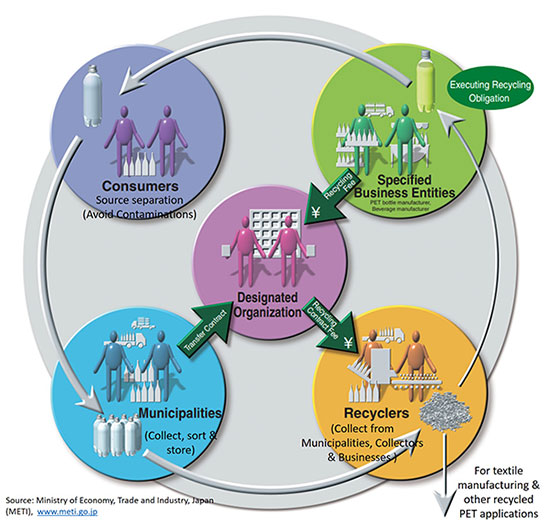
However, such efforts require collaboration between and high levels of awareness among all stakeholders. This includes manufacturers and recyclers in the private sector, consumers and the Government. The model used in Japan provides an excellent case study. In this model, consumers ensure proper segregation of used plastic containers and packages, which facilitates the collection of the segregated waste by the Municipal Government. Manufacturers recycle this waste and, after that, use it in products. Hence, all stakeholders play an equally-critical role, which ensures the smooth functioning of the system.
Sri Lanka too can transition to a similar model, with high ‘circularity,’ which involves a ‘closed loop’. In this, the value of plastics is retained through reuse and recycling, not allowing leakage into the environment. This is unlike the present ‘linear’ model in which plastics are used and disposed of, creating significant damage.
Such a model will be beneficial economically – for instance, by reducing foreign exchange lost through imports of plastics each year and socially and environmentally – by reducing pollution and its harmful effects – which includes the likes of the increased spread of diseases such as dengue.
Hence, Sri Lanka should begin the transition towards bottle-to-bottle recycling of PET plastics. However, as indicated, this requires the support of all stakeholders.
The author would appreciate your feedback on the article. You can start a conversation with Dr. Abeynayaka directly on Twitter on @litterlifecycle.
Web: www.iges.or.jp/en | www.ccet.jp
Transforming “waste” into “resources” once again (a Japanese example)


A five star 100-room Maldivian resort hotel property controlled by Browns Investments PLC has been disposed for USD 57.5 million, Browns Investment said in a stock exchange filing on Friday. The company had previously disclosed in September that the deal was in the pipeline pending completion of precedent conditions.
The property. Barcelo’ Whale Lagoon Maldives, belonged to Browns Ari Resort (Private) Ltd., a subsidiary of Browns investments, was purchased by ASB Hotel Properties Maldives Private Ltd.
“The transaction was completed following the satisfaction of the conditions precedent set out in the Sale and Purchase Agreement, for a total consideration of USD 57,500,000,” the filing said. The price was considered “significant” but was not the highest in the Maldives where high end hotel properties command top dollar.
Browns Investments (BIL) has a significant presence in the Maldives, developing multiple properties, notably through partnerships with Spain’s Barceló Hotel Group for projects like Barceló Whale Lagoon (now sold), Barceló Nasandhura (city hotel/apartments), and the Bodufaru Beach Resort (a major integrated project with three hotels) in North Male Lagoon, with BIL aiming to be a major Sri Lankan hotel operator in the Maldives with large room capacity.
BIL’s key Maldives projects are:
Bodufaru Beach Resort: A large-scale development in North Male Atoll with three five-star hotels, a significant undertaking with Barceló Hotel Group and Syno Hydro Corporation.
Nasandhura Palace Hotel (Barceló Nasandhura): A luxury city hotel and apartment complex in Male, managed by Barceló.
Strategy & Partners:
Browns Investments partners with Barceló Hotel Group, a Spanish hotel chain, for management and investment in their Maldivian properties.
The company aims to become the largest Sri Lankan hotel investor and operator in the Maldives, significantly expanding its room keys in the region, as described on the Browns Investment website.
Browns Investments is actively developing and managing luxury hotel properties in the Maldives, focusing on large integrated resorts and city hotels, leveraging international partnerships to grow its presence in the high-end tourism market, according to the company.
Business
Marketing Alumni Association of USJ Outlines Strategic Vision to Strengthen the Future of Marketing in Sri Lanka

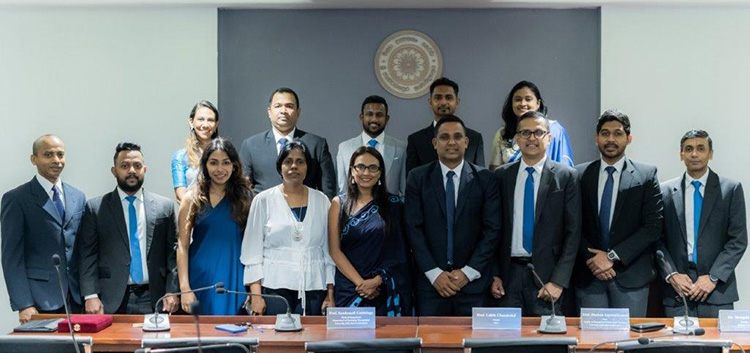
The Marketing Alumni Association (MAA) of the University of Sri Jayewardenepura (USJ) set out its strategic direction for the year ahead at its Annual General Meeting (AGM) held on 10 December 2025. The event brought together academic representatives from the Department of Marketing Management and a strong contingent of alumni, providing a platform to review the association’s progress and reaffirm its commitment to advancing the marketing profession in Sri Lanka.
As the official body representing graduates of the Department of Marketing Management of the University of Sri Jayewardenepura, the MAA has, over the past 25 years, supported a network of more than 1,500 marketing professionals who now hold influential roles in leading private and public sector organizations. The association remains committed to elevating the standing of the Japura Marketing degree by strengthening industry partnerships, supporting academic excellence, and fostering a high-performing alumni community.
A key focus of the AGM was the appointment of Oshadee Withanawasam as President of the MAA for the upcoming term (2025-2027). In his inaugural address, Mr. Withanawasam emphasized the importance of strategic leadership, industry relevance, and collaborative growth in positioning USJ and its alumni at the forefront of marketing innovation in Sri Lanka.
Over the past year, the MAA has intensified its engagement efforts through a series of high-impact initiatives. The Kings and Queens Dinner Dance 2025, which brought together over 200 members, strengthened camaraderie within the alumni network. On the academic front, the association’s flagship ‘Fine Touch’ guest lecture series, conducted in partnership with the Department of Marketing Management, USJ, continued to offer undergraduates valuable exposure to industry best practices and emerging trends.
A significant milestone for the association was the launch of its first structured mentoring program for undergraduates of the department. This initiative marks a notable advancement in bridging academic training with practical corporate experience, equipping students with the competencies required to excel in a competitive business environment.
The MAA also continued to deliver meaningful social impact through its ‘Bring a Smile’ initiative, which has supported rural schoolchildren for three consecutive years (2023–2025) by providing essential stationery supplies. Further strengthening its commitment to education, the association introduced a scholarship scheme in 2024 to support deserving undergraduates pursuing their higher education in marketing.
During the AGM, outgoing President Dr. Darshana Jayasinghe and the Head of the Department of Marketing Management of USJ, Prof. Sandamali Galdolage, commended the association’s continued progress and reiterated their support for its long-term vision.
The following office bearers were appointed for the new term: Oshadee Withanawasam (President), Amitha Amarasinghe (Deputy President), Nipuni Karunarathna (Vice President), Vimukthi Kaushalya (Secretary), Thisaru Menake (Assistant Secretary), Nuwan Indika (Treasurer), and Thilanka Kalpage (Assistant Treasurer). Committee Members for the term include Prof. Ashoka Malkanthie, Chandra Kodithuwakku, Manuri Jayasinghe, Champika Vincent, Naleendra Yasassri Perera, Kaushan Agalawatte, Chandranath Gamage, and Pamudi Ketawalage.
Dr. Darshana Jayasinghe and Lalith Sumanasiri will serve as Advisors, while Prof. Sandamali Galdolage, Manojee Dabare, and Prof. Lalith Chandralal will continue as Trustees of the MAA.
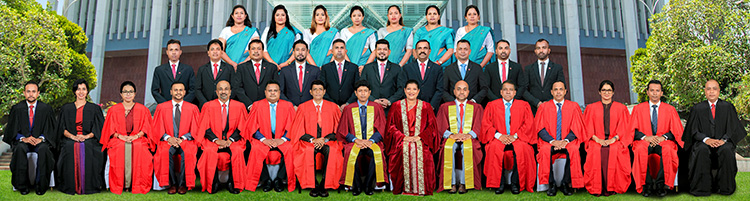
A graduation ceremony for 18 Certified Sales Training Consultants, qualified to mentor aspiring marketing professionals and enhance standards in the country’s sales sector, was held recently at the Bandaranaike International Conference Hall.
The graduates represent the first phase of a programme aimed at producing 50 Certified Sales Training Consultants nationwide. The training and certification were conducted by the Asian College of Sales and Marketing (ACSM).
According to ACSM Director and Learning Consultant Sugath Munasinghe, the need for professionally certified sales training consultants to raise the quality and effectiveness of the sales sector has been identified for some time. He added that ACSM, as a higher education institute, will continue to provide structured training and certification to meet this demand.

Showers will occur in the Eastern, Uva and Central provinces and in Polonnaruwa and Hambantota districts.

Steps are being taken to abolish the Executive Presidency and establish a Parliamentary System of Government – Prime Minister

The full speech delivered by President Anura Kumara Dissanayake in Parliament (2025-12-19)

Lawyers slam NPP Mayor for claiming judicial powers

Electricity consumers oppose going to WB to cover CEB losses from Ditwah, instead of using funds in its kitty

PM rejects Hakeem’s call for involving ex-Presidents for disaster fundraising

‘Dates have the highest sugar content to fight Coronavirus’

Sunday Island 27 December – Headlines

#SundayIsland 17th December – Headlines

Sunday Island – 28th March

Sunday Island Headlines – 21 March

Sunday Island – 21st February – Headlines
-

 Midweek Review4 days ago
How massive Akuregoda defence complex was built with proceeds from sale of Galle Face land to Shangri-La
-

 News3 days ago
Pakistan hands over 200 tonnes of humanitarian aid to Lanka
-
 News3 days ago
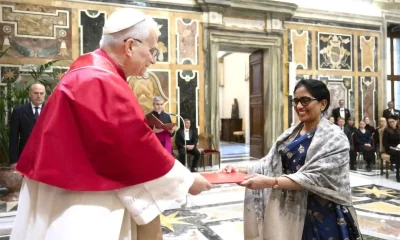
Pope fires broadside: ‘The Holy See won’t be a silent bystander to the grave disparities, injustices, and fundamental human rights violations’
-
 News4 days ago
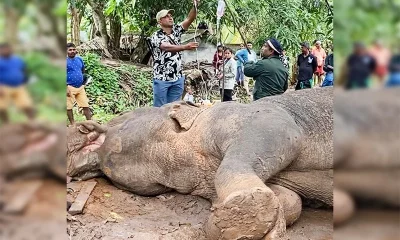
Burnt elephant dies after delayed rescue; activists demand arrests
-

 Editorial4 days ago
Colombo Port facing strategic neglect
-

 News2 days ago
Army engineers set up new Nayaru emergency bridge
-

 Business2 days ago
Unlocking Sri Lanka’s hidden wealth: A $2 billion mineral opportunity awaits
-

 News4 days ago
Sri Lanka, Romania discuss illegal recruitment, etc.