
Features
BEYOND REASONABLE DOUBT?


The killing of a Prime Minister
by Sanjiva Senanayake
(PART I)
Many people ‘know’ the conventional tale about the assassination of the Prime Minister of Ceylon, S.W.R.D. Bandaranaike, 62 years ago. However, they each have a slightly different take and theory about the facts, the reasons, the conspiracy theories and who ‘actually’ did it. Those then unborn or too young to have been aware of it at the time, have heard about it from older people. We have to assume that the intrinsic Lankan sense of rumour would have spiced up the details as time went by.
There is a common belief that the standards of general governance, integrity and legal processes were much higher back then, in Ceylon, than now. Bolstering this justifiable belief, adjudication was done by the Supreme Court (SC), the verdict was confirmed in the Court of Criminal Appeal and accepted by the Privy Council in London. Therefore, the predominant view continues to be that justice was served objectively and impartially.
However, there were many controversial interpretations and theories that circulated before, during and after the Bandaranaike trials. There were several aspects of the conduct of the trial and the actual evidence presented that raised questions about the guilt of the alleged assassin and, as a consequence, the guilt of the others.
Articles about those traumatic events of long ago have been published periodically, but they have progressively reverted to recounting and sometimes sensationalizing the standard version, and have not adequately addressed the many controversial questions.
This article focuses specifically on the alleged murderer and the most critical of the controversies, based on the ‘eye-witness’ evidence led at the SC trial – was Somarama proved to be the assassin beyond reasonable doubt? If there is any doubt, it opens up the possibility of a different, politically motivated conspiracy, especially since Bandaranaike was the Prime Minister during turbulent times.
THE STORY IN SUMMARY
The PM was shot several times with a revolver at his residence ‘Tintagel’ – 65, Rosmead Place – at around 10 am on September 25, 1959. Despite appearing to recover somewhat by evening following surgery, and even dictating a message to the nation from hospital, he died the next morning. The only thing Bandaranaike said about the identity of the gunman was that he was “a foolish man dressed in the robes of a monk”. This was the first major targeted political assassination in post-independence Ceylon, one that changed the future course of the country.
A Buddhist monk, Talduwe Somarama, was immediately arrested in the house, with a gun in hand, on suspicion of being the assailant. He was a hitherto low-profile Buddhist monk who was an eye specialist at the College of Indigenous Medicine in Rajagiriya.
After several days another monk, the politically powerful Mapitigama Buddharakkitha, was arrested in addition to several other individuals alleged to have assisted Buddharakkitha as part of a year-long conspiracy to kill Bandaranaike using Somarama as the assassin. Buddharakkitha, although only 38-years old, was the chief monk of the important Kelaniya Temple and, as the head of the Eksath Bhikkhu Peramuna (EBP), the most politically powerful monk in the country at the time. He was also headstrong, impulsive and confrontational – certainly not a pious monk. Although the EBP helped bring Bandaranaike to power in 1956, by 1959 Buddharakkitha was antagonistic toward the PM for being too ‘soft’ in pushing a more aggressive Sinhala Buddhist agenda. Buddharakkitha was aligned with the right-wing of the government and his antagonism toward the leftists (and vice versa) in the government was public knowledge.

After exhaustive investigations and a long trial in the SC, a special jury found both monks and H.P. Jayawardena, a close associate of Buddharakkitha, guilty of the conspiracy, and Somarama guilty of committing the murder, and all three were sentenced to death. The convictions were upheld in the Court of Criminal Appeal, but due to an inadvertent omission in intervening legislative change, Buddharakkitha and Jayawardena were sentenced to life in prison for conspiring to commit murder. An appeal to the Privy Council in London failed, and Somarama was subsequently executed.
There the matter rested and most people forgot about the details of the case with the passage of time. Other dramatic political events followed thereafter leading to an attempted coup d’etat on January 27, 1962 to overthrow the government of Bandaranaike’s widow. Resort to violence for political purposes became more prevalent from the 1970s, and targeted assassinations of political leaders more frequent.
Only two books have been written in English about the assassination; one by the late Justice A.C. Alles and the other by the late Lucian Weeramantry, who was Somarama’s counsel in the trial. It is surprising that more books and academic studies do not seem to have been published specifically about the assassination, an important event in our post-Independence history.
Justice Alles’ book provides a lot of relevant background material but, judging by assertions made and conclusions drawn, it appears to have been written on the assumption that the conspiracy allegedly planned by Buddharakkitha was true and the verdicts just, although he does refer to some questionable issues.
Weeramantry restricts himself to the procedures followed, the evidence led and the submissions made in the SC, to demonstrate that there was more than ‘reasonable doubt’ about the convictions. He argues that the prosecution of the case was politically influenced and not neutral.
It is a fascinating case with many twists and turns as well as contradictions. A critical reading of the above books is recommended to anyone who is interested in digging further into the unusual events specifically pertinent to the murder and trial. A deeper understanding of contemporary political and social developments also helps.
BACKGROUND IN BRIEF
Bandaranaike left the United National Party (UNP) in 1951 and formed the Sri Lanka Freedom Party (SLFP). His party lost badly at the next general election in March 1952 and it appeared that his political career was doomed. In the meantime, political pressures by Sinhalese and Buddhist groups for affirmative action had been intensifying since Independence to redress what was perceived as historical discrimination against them from colonial times. The UNP was rather indifferent to these forces but Bandaranaike decided to channel them and was supported strongly by the ‘pancha maha balavegaya’ consisting of Buddhist monks, Ayurveda practitioners, vernacular teachers, peasants and workers.
The SLFP then formed a coalition called the Mahajana Eksath Peramuna (MEP) with a leftist party headed by Philip Gunawardena and a small party
led by W. Dahanayake, to contest the general election of April 1956. A key election slogan was ‘Sinhala-Only in 24 hours’, a potent rallying cry that meant different things to different people. The UNP too adopted the slogan prior to the election when it realised its electoral potential, but its late volte-face lacked credibility and the MEP won by a landslide.
However, the very next year, Bandaranaike initiated discussions with Tamil political leaders to provide devolution of some powers through the establishment of Regional Councils and the so-called Bandaranaike-Chelvanayakam Pact was signed in July 1957. It was a compromise on both sides, which the PM likened to the Buddha’s Middle Way, but most of the politicians of the time were focused on short-term gains and not inclined to compromise for stability and longer-term progress. There were opposition and agitation from both sides and some avoidable incidents occurred in the process. Eventually, the pact was abrogated under severe pressure in April 1958, with the EBP too playing a major role.
The antagonistic posturing did not cease and this led to one week of intense conflict at the end of May, the so-called Sinhala-Tamil riots that left long-lasting social scars. The PM’s rule was seen as weak and indecisive in bringing the riots under control and the Governor General, Sir Oliver Goonetilleke, played a major role in quelling it.
Despite all this, Bandaranaike introduced the Tamil Language (Special Provisions) Act No. 28 of 1958 less than three months later in August 1958 as a compromise measure to accommodate Tamil demands regarding matters such as education, public service entrance examinations and the administration of the north and east. This too was criticized by extremists on both sides.
Ceylon in 1959, a decade after Independence but still looking for direction, was a hotbed of political turmoil. Agitations and strikes were rampant, with the constant interplay of all the emotion-rousing political forces of the time – urban vs. rural; westernized vs. nationalist; capitalist vs. socialist; Buddhist vs. Catholic; Sinhala vs. Tamil; rich vs. poor – trying to quickly carve pieces out of the emerging national pie. The old order was dying and a new one was being born.
In April 1959, Bandaranaike had a difference of opinion with the Inspector General of Police, Osmund de Silva and decided to replace him. The PM had been previously warned by various Buddhist leaders and MEP coalition partners in Parliament about a right-wing conspiracy to topple his administration with the involvement of the police and armed forces. Although Osmund de Silva was a Buddhist, all the senior Police officers next in line were not and, despite protests from within the Police, Bandaranaike decided to appoint M.W.F Abeykoon, an administrative officer from outside the Police service, angering several senior officers.
That was not all. The urban elites, more inclined to western lifestyles, accustomed to calling the shots politically and economically, and linguistically quite alienated from the masses, were becoming increasingly alarmed at the turn of events since the debacle in 1956 of their preferred political party, the UNP. The growing influence of more aggressive Sinhalese and Buddhist groups was causing concern among the established organizations and social groups.
There was an international dimension too. Despite the intense Cold War then raging, the Bandaranaike government had established diplomatic relations with the Soviet Union in December 1956 and signed an economic and technical cooperation agreement in 1958. The previous UNP government had recognized the People’s Republic of China in January 1950, supported China’s entry to the United Nations and entered into the historic Rubber-Rice barter agreement in 1952. The Bandaranaike government established full diplomatic relations with China in 1957.
The government’s plans to nationalize State-assisted private schools and foreign businesses such as the oil companies, and its decision in October 1957 to abrogate the Defence Pact with Britain and take back control of Trincomalee harbour and the RAF airbase at Katunayake, were all loud alarm bells.
By the latter half of 1959 the PM was into the fourth year of his five-year term, and already the coalition was fraying. The leftist faction, led by Philip Gunawardena, resigned from the government in April 1959 due to pressure from the coalition’s right wing regarding socialist measures such as the Paddy Lands Act, which included land reform. Strikes became more frequent and intense.
In this milieu, there were many disparate groups that could have had reasons to eliminate Bandaranaike, and perhaps get a bonus by pinning the blame on Buddharakkitha to neutralize a powerful, antagonistic group such as the EBP and the growing direct involvement of Buddhist monks in politics.
THE SHOOTING
Unlike today, firearms were not easily available and targeted political killings were extremely rare. The level of security considered necessary was quite basic and Bandaranaike himself was not keen on too many guards. Access to his residence was freely available during the morning to all and sundry. The shooting at close quarters happened on the verandah of the PM’s private residence with at least 30 people in the immediate vicinity.
Somarama was seated at one end of the outside verandah. There was another monk (Niwanthidiye Ananda) seated about 10 feet away from Somarama and more to the centre of the verandah, near the entrance to the corridor that led from the front porch into the interior of the house. Several others were standing around including a teacher named Gunaratne who was opposite Ananda.
The PM first spoke with Ananda and gave him some instructions. He then moved along the verandah toward Somarama and, as he bent and worshipped him in greeting, a gunshot was heard. Bandaranaike cried out in pain, turned and tried to run back into the house. Further shots were heard, and the PM was hit in the chest and abdomen. Altogether he was hit by four bullets, the first one glancing his left wrist and three entering his torso as he staggered into the house. Gunaratne, who should have had a clear view of the shooting, was also shot in the neck area by a fifth bullet as Bandaranaike stumbled past him to escape into the house along the central corridor.
In the utter confusion that followed, Somarama followed the PM into the house carrying a revolver and was then assaulted by several people who came from other parts of the house before he could say anything. In the melee the revolver went off once, the last bullet, but no one was hurt. The World War I vintage revolver, in rather poor condition, that had been used was recovered by the police.
Somarama’s version was that someone dressed in robes shot repeatedly at the PM from the garden just below the verandah, threw the revolver on to the verandah and then ran off toward the road. He then involuntarily picked up the gun and followed the PM into the house to hand it over to someone responsible.
In the meantime, PC Samarakoon, who was the sentry at the main gate, rushed to the house and shot at Somarama, injuring him in the thigh and groin area. The PM was sent to hospital by car and, soon after that, DIG Sidney de Zoysa, who had a prior appointment to meet the PM, arrived and took control of the chaotic situation. In fact, de Zoysa passed the PM’s car going toward the hospital on his way to the house, but didn’t realise the injured PM was in it. Some time after de Zoysa’s arrival, a bleeding Somarama in obvious pain was, for some inexplicable reason, despatched to the Harbour Police station on the other side of the city and detained there for around two hours before being taken to hospital where he underwent an operation to remove one of his testicles.
The firing of the first five bullets was rapid and probably took less than 10 seconds, since the PM was also moving away. The despatch of the PM by car and the arrival of Sidney de Zoysa would probably have happened within 10-15 minutes thereafter.
It seems, at first glance, to be a straightforward case. The alleged assailant, the weapon, the victim and witnesses were all readily available, and it happened in the heart of Colombo, in a narrow space, in broad daylight. On the face of it, only the motive and the possible involvement of others had to be discerned. But in political murders things are not always what they seem.
THE LEGAL PROCESS
Buddharakkitha and Jayawardena were arrested on October 14, 1959 and held in remand custody, along with Somarama. Following intensive investigations by the police, the magisterial inquiry started on December 14, 1959, less than three months after the murder, and went on until July 27, 1960. At the end of the almost seven month-long hearings, five people were named to stand trial in the SC.
1. Mapitigama Buddharakkitha thero
2. H.P. Jayawardena
3. Anura de Silva
4. Talduwe Somarama thero
5. Newton Perera
All the accused were to be charged with conspiracy to murder the PM, and the fourth with murder as well. The indictment read as follows:
That between the 25th of August, 1958, and the 26th of September, 1959, at Kelaniya, Wellampitiya, Rajagiriya, Colombo and other places within the jurisdiction of this Court, you did agree to commit or abet or act together with the common purpose of committing or abetting an offence, to wit, the murder of Solomon West Ridgeway Dias Bandaranaike, and that you are thereby guilty of the offence of conspiracy to commit or abet the said offence of murder, in consequence of which conspiracy the said offence of murder was committed, and that you have thereby committed an offence punishable under section 296 read with sections 113B and 102 of the Penal Code.
It specifically mentioned a date 13 months earlier (August 25, 1958) as the origin of the conspiracy. This was the date on which the PM, on the advice of senior technocrats of the Ministry of Finance, decided not to award a shipping contract to a company in which Buddharakkitha’s brother had a significant interest. The direct implication is that Buddharakkitha’s resentment due to this act was the trigger for a year-long conspiracy that led to the assassination.
The defence counsel made a request for a Special Jury at the start of the SC trial due to the highly politically-charged nature of the case. They requested that government employees should be excluded but, in the end, the Foreman of the English-speaking jury was a public servant. As a matter of interest, six members were Christians and the seventh was a Buddhist, and all were from Colombo. However, the integrity of the members of the jury was never questioned.
During the SC trial it became apparent that the third accused was an insignificant character and he was finally acquitted unanimously. It was not clear why he was charged at all, or placed ahead of the alleged murderer Somarama, if there was indisputable evidence against Somarama.
Newton Perera, a police officer, allegedly procured the revolver and ammunition used in the killing. He was also accused of training Somarama to shoot, but this was not established. He was subsequently found not guilty in the SC with the jury divided five to two.
The SC trial commenced seven months later, on February 22, 1961 before Justice T.S. Fernando, and went on till May 12, 1961. The government retained George Chitty QC, a prominent criminal defence lawyer from the private Bar, to lead the prosecution in the SC, by-passing the Attorney General’s Department. The Deputy Solicitor General, A.C.M. Ameer, who was the prosecutor in the Magistrate’s Court, resigned in protest.
There were criticisms that the prosecutor for the State focused more on getting judgements against the accused who were charged, rather than seeking the truth via a broader inquiry to get to the bottom of who actually killed the PM of the country, and why. Some of the defence counsel, including Phineas Quass QC, who came over from the UK to defend Buddharakkitha and Jayawardena, also alluded to this during the trial.
The prosecution did not call Gunaratne who was in a perfect position to see the shooting at close quarters. Neither did the prosecution call key witnesses DIG Sidney de Zoysa or any of the senior (Gazetted) police officers who investigated the case. De Zoysa was called instead by Weeramantry, Somarama’s counsel. There was a lot of evidence led by the prosecution that did not appear to have relevance. The government even paid to bring down a ‘witness’ from the UK (Bruno Perera), who only served to distract attention. He was reprimanded and fined by the Judge at the end of the trial.
The seven members of the Special Jury were the final arbiters of the judgement rather than the Judge. They would have had a tedious task in assessing the oral evidence, unravelling the many counsel’s interventions and addresses, absorbing the Judge’s directions on points of law, and then arriving at a decision in a short while. In those non-computerized days, the jury had to rely only on what they heard in the courts almost every day for 55 days and make a decision on a matter of life and death, without the advantage of printed transcripts of evidence. A total of 97 witnesses testified and the typed record of the proceedings ran into 3,536 pages.
(Note: typed transcripts of the day’s proceedings were, however, made available to the Judge and counsel the following day)
TO BE CONTINUED …..


By Ifham Nizam
Sri Lankan scientists have uncovered a remarkable long-distance migration route used by seabirds, linking the island’s shores with the Arctic—an achievement that is expected to reshape global understanding of bird movement and highlight Sri Lanka’s importance in the natural world.
The discovery, led by Professor Sampath S. Seneviratne of the University of Colombo, shows that Heuglin’s Gulls travel nearly 8,000 kilometres from Sri Lanka to breeding grounds in northern Russia, following a carefully chosen path that combines coastal travel with long inland journeys.
Prof. Seneviratne told The Island that the finding challenges the long-standing belief that seabirds depend mainly on ocean routes.
“For a long time, we assumed seabirds would stay close to the sea throughout their migration. What we are seeing here is very different. These birds are moving across land as well, using a route that connects Sri Lanka directly with the Arctic,” he said.
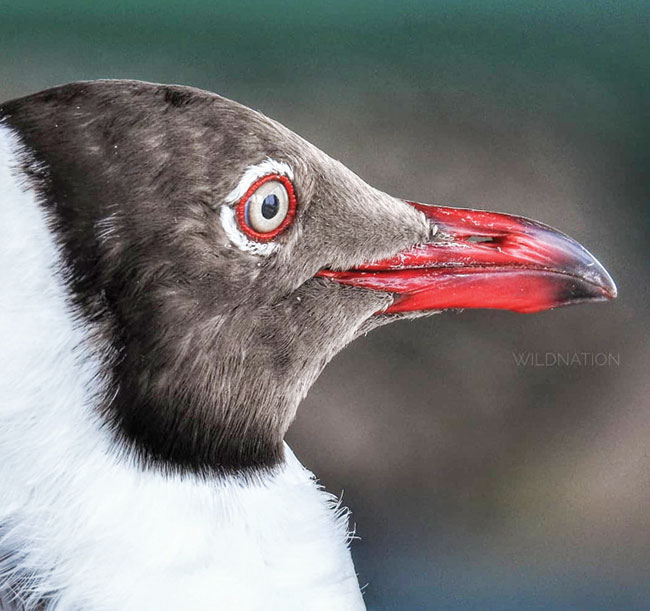
Brown headed gull- migrating from Himalayas to Mannar
The birds begin their journey from the northwestern coast of Sri Lanka, especially around Mannar—an area known for its rich birdlife and coastal habitats. From there, they cross over to India and move along the western coastline before turning inland.
Their journey then takes them through Pakistan and Afghanistan, across parts of Central Asia, and onwards to the Arctic region, where they breed during the northern summer.
What has drawn particular attention from scientists is the route chosen by the birds.
Instead of attempting to cross the world’s highest mountain ranges, or taking a much longer path over the open ocean, the gulls appear to follow a middle course that allows them to avoid harsh conditions while still maintaining a steady journey.
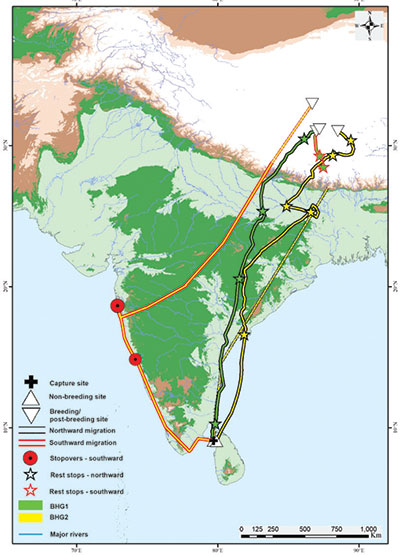
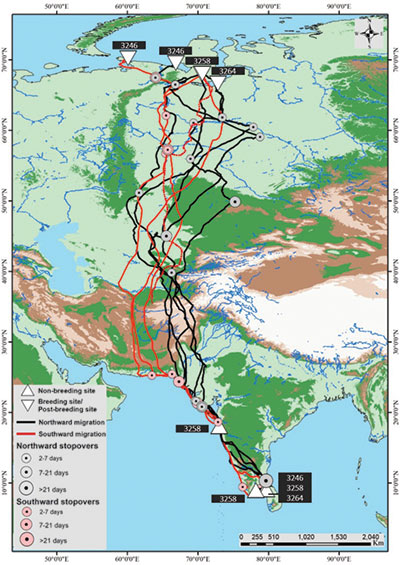
Map 1 &2 birds moving through the continent to reach the Artctic
“They are not simply taking the shortest distance,” Prof. Seneviratne explained. “They are choosing a route that gives them the best chance of survival. Along this path, they are able to find food, rest, and avoid extreme environments.”
The birds travel long distances each day, covering hundreds of kilometres, but they do not do it all in one stretch. Their journey depends heavily on stopovers—places where they pause to rest and rebuild energy.
“These stopovers are critical,” Prof. Seneviratne said. “If the birds cannot find suitable places to feed and recover, they will not be able to complete the journey.”
Co-researcher Dr. Gayomini Panagoda said the discovery sheds light on a route that had remained largely hidden until now.
“We always knew these birds were leaving Sri Lanka during certain times of the year, but we did not fully understand where they were going or how they got there,” she said. “Now we have a much clearer picture of their journey.”

Awareness among schoolchildren
She added that the findings show how closely connected different parts of the world are through nature.
“A bird that spends part of its life in Sri Lanka ends up in the Arctic. That tells us how linked these ecosystems really are,” she said.
The findings also underline the importance of Sri Lanka’s coastal areas, which serve as vital feeding and resting grounds for migratory birds before they begin their long journey north.
Veteran ornithologist , Professor Emeritus Sarath Kotagama said these habitats are of international importance and must be protected.
“These coastal regions, especially places like Mannar, provide the food and shelter these birds need before migration. If those areas are damaged, it will affect bird populations far beyond Sri Lanka,” he said.
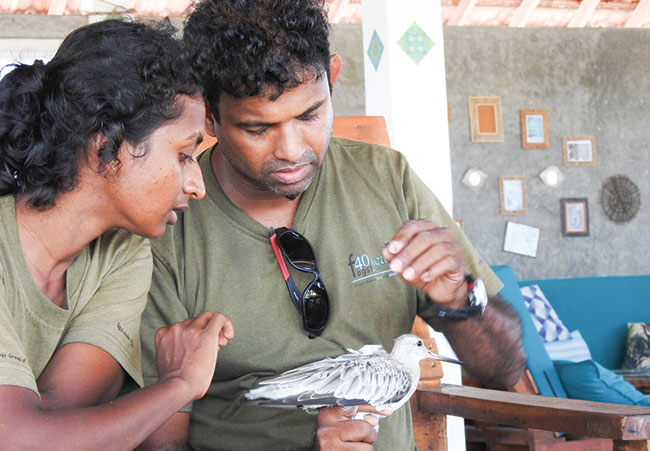
Professor Seneviratne with Dr. Gayomini Panagoda
Kotagama warned that increasing pressure on coastal ecosystems—from development, pollution, and climate change—could pose serious risks.
“We are already seeing changes in many of these birds. If we are not careful, we could lose habitats that are essential not just for local wildlife, but for species that travel across continents,” he said.
The discovery also draws attention to the wider network of migration routes that connect countries across Asia and beyond. Birds do not recognise national borders, and their survival depends on conditions in many different places along their journey.
Prof. Seneviratne stressed that protecting these birds will require cooperation between countries.
“These birds travel across several regions, and each of those regions plays a role in their survival. Conservation cannot be done by one country alone,” he said.
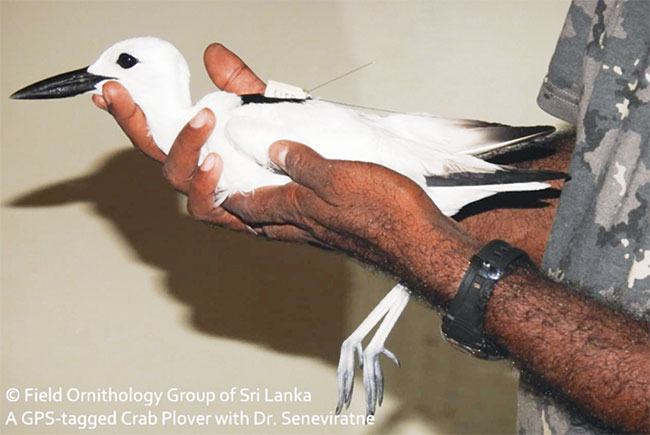
A GPS tagged Crab Plover
He added that more work is needed to understand how other species use similar routes and how changes in climate and land use may affect migration patterns in the future.
“There is still much we do not know. This is just one piece of a much larger picture,” he said.
Environmentalists say the findings should encourage stronger action to protect wetlands and coastal ecosystems in Sri Lanka, many of which are under increasing threat.
“These areas are not just important for birds,” Dr. Panagoda said. “They support fisheries, protect coastlines, and are part of our natural heritage. Protecting them benefits both people and wildlife.”
She noted that conserving these habitats will also help ensure that future generations can continue to witness the arrival and departure of migratory birds.
For Sri Lanka, the discovery is both a moment of pride and a reminder of responsibility.
It highlights the role the island plays in supporting wildlife that travels across vast distances and connects different parts of the world.
It also shows that even a small country can have a big impact when it comes to global biodiversity.
As Prof. Seneviratne put it, “What happens in Sri Lanka does not stay in Sri Lanka. These birds carry that connection across continents.”
The discovery is expected to encourage further research into bird migration in the region, as scientists continue to explore how different species move across landscapes and adapt to changing conditions.
It also reinforces the need to protect the natural environments that make such journeys possible.
In the end, the story of these birds is not just about distance. It is about survival, connection, and the delicate balance of nature.
From the shores of Sri Lanka to the frozen Arctic, their journey is a powerful reminder that the natural world is far more connected than we often realise—and that protecting one part of it helps protect the whole.

 For the morally-conscious, the tendency among some sections in Sri Lanka to promote the production of drones for national defence purposes could be deeply worrying. Besides, this proposition flies in the face of common sense and disregards the relentlessly increasing harsh economic realities coming in the wake of the current wars that could push many a southern country into beggary. In fact even the West is facing an economic recession.
To begin with the latter issues, it is a proved reality that the majority of Southern countries are descending further into poverty at present. The FAO has the ‘bleeding statistics’ . For instance, food insecurity in Asia is of such disquieting proportions that the region accounts for ‘ approximately half of the world’s 370.7 million undernourished people’.
It is against such a bleak economic backdrop that countries of the South are being called on to pump money into the production or importing of drones. Pointed reference needs to be made here to the South because drones are peddled as cutting-edge defence systems that are comparatively economical to acquire and relatively easy to operate. It is even voiced that with time drones could enable even smaller countries of the South to acquire ‘strategic parity’ with the major powers of the North and middle level powers.
Meanwhile, no thought is spared for the poor of the South who would sink steadily into poverty and powerlessness. Because more defence spending by southern countries only entrenches the ruling classes of those countries, and in some cases their military high commands, further in the systems of governance and repression.
This has essentially been the experience of the majority of post-colonial states. As aptly phrased by economic and political analyst Susan George in the seventies, it has always been a case of ‘The Other Half Dying’.
Accordingly, it cannot be perceived as to how more defence spending by the South on drones could help alleviate the latter’s principal problem of deepening poverty. As for the perceived escalating insecurities of the South, these problems are of such complexity that drones could never be seen as offering a quick fix for them. They need patient, multi-pronged managing, mainly at the negotiating table with the powers that matter. These are long- gestation projects that need to be compulsorily undertaken in view of the fact that the alternative could be indefinite conflict and war.
Since Sri Lanka too is mentioned as one of those countries that needs to look at the drone proposition with some seriousness, it is relevant to underscore that Sri Lanka is second in a list of countries that are described as facing acute material hardships at present in the wake of the economic instability bred by the Hormuz crisis. The source of such information is no less than the respected Kiel Institute for the World Economy. The first 10 such gravely affected countries are: Zambia, Sri Lanka, Taiwan, Pakistan, Equatorial Guinea, Kenya, Bangladesh, Vietnam, the Philippines and Thailand.
It is thought-provoking that among the above countries are not only those that have been traditionally seen as experiencing severe underdevelopment but also up-and-coming middle income countries that have been hitherto described as being on a fast track to development. The interesting mix proves that no country at present could consider itself immune to current economic shocks originating mainly in the Middle East that could plunge it dramatically into acute poverty virtually overnight.
We are left to conclude that ‘Bread’ or the economic well being of people could in no way be sacrificed for ‘Drones’ in democratic countries whose governments are obliged to be accountable to the people. Considering the phenomenal hardships that could be waiting to happen worldwide, the world could very well do without more ‘Guns’ or ‘Drones’.
However, if southern governments in particular opt for ‘Drones’ or an accumulation of ‘Guns’, the chances are that there could be overwhelming tides of social discontent in their countries, bred by economic want, that could then ignite indefinite war and repression. That is, a ‘No-Win’ situation for all concerned.
Ukraine has been spiritedly and admirably taking the fight back to the invading Russian forces over the past few years but its skillful use of sophisticated drones of its own making has in no way decreased the human costs the war has been incurring for itself. Ukraine has no choice but to continue with all the weaponry at its command to beat back the Russian invader but sooner rather than later it would need to take into account the immense suffering the war has been inflicting on its people and focus on the fact that the Russians are not backing down but using equally lethal weaponry against it.
The above are some of the dilemmas of the present wars that call for urgent resolution. Warring countries are obliged to address on a priority basis the misery and destruction their actions incur for their publics and consider deploying diplomacy, preferably under the aegis of the UN, to work out peaceful solutions to their enmities and differences. Considering the futility of their war Russia and Ukraine are obliged to think on these lines.
No less a power than the US should be considering deeply right now the advisability of continuing with its military interventions in the South in particular to achieve its self interests. The rising loss of American lives and the economic costs of war in the Middle East will be weighing heavily with the Trump administration and it shouldn’t come as a surprise if negotiations are given a serious try, going ahead. Ground realities in the region moreover indicate that the US ‘has bitten off more than it could chew’ and that Iran is remaining hostile and unyielding despite being bloodied.
For both sides to the war what should be inescapable is the harsh reality of continuing human suffering on a chilling scale. Sophisticated and increasingly destructive weaponry such as drones and missiles are being used but they have not brought either side any closer to victory. Instead human misery is being perpetrated mindlessly with a steady deadening of consciences and a flagrant abandoning of reason.
Accordingly, what perceived legitimate aims could drone warfare, for instance, help achieve? It is quite some time since sections of the world community came to realize the futility of violence and war. There is no choice but for humans to recognize and revere the principle of the sacredness of life. A return to fundamentals is imperative.
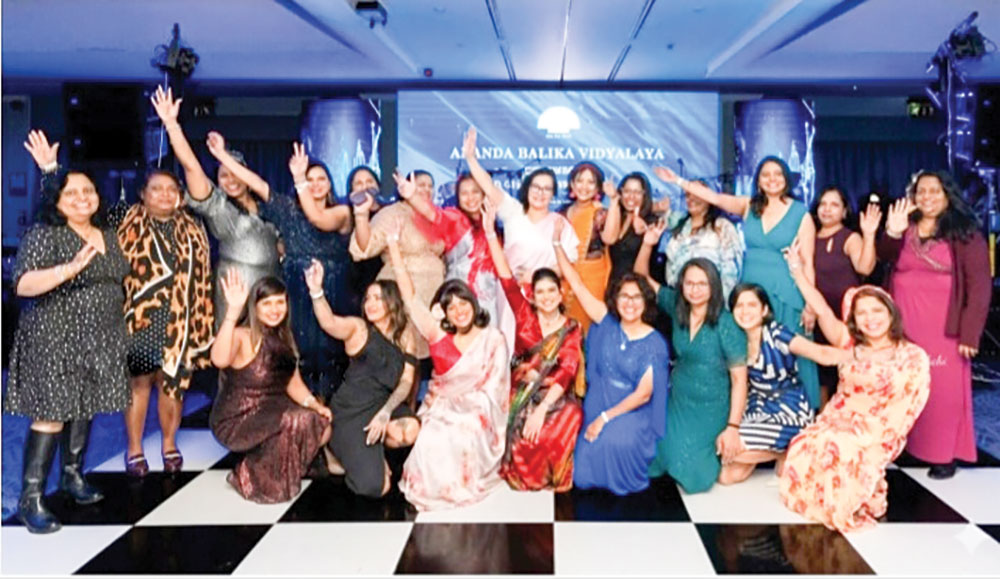
 Singer Rajiv Sebastian has the unique ability to woo an audience and he did just that on his recent trip to London, performing at the Funky ’70s Bash Dinner Dance.
This particular event of music, nostalgia, and celebration, was organised by the Ananda Balika Vidyalaya Old Girls’ Association – UK, and held at the DoubleTree by Hilton London Elstree, in Borehamwood, on 28th February.
They say the success of the evening was made possible through the dedication and hard work of President Devika Arrawwalage and the committed committee members of the Ananda Balika Vidyalaya OGA – UK.
Rajiv Sebastian was in top form, delivering an engaging performance that took the audience on a nostalgic musical journey through the iconic sounds of the’70s.
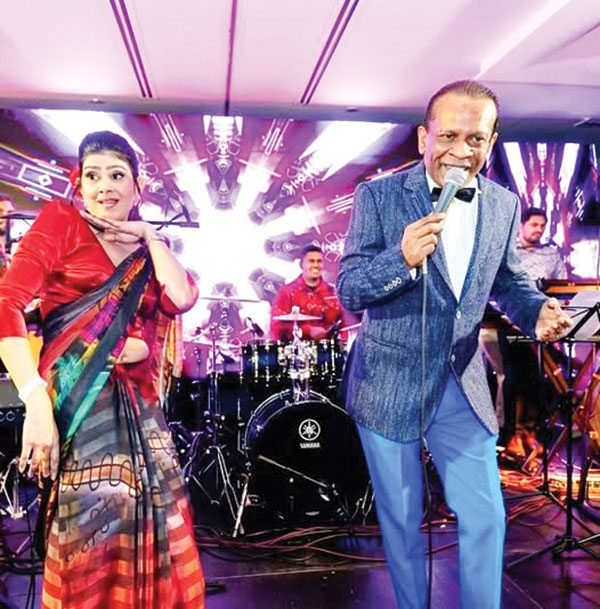
Doing the first set in full suit, with a fan joining in the action
He did three sets, appearing in three different outfits – suit, the normal shirt and trouser, and the sarong – and the crowd loved it.
Adding to the energy of the event, I’m told, was the music provided by the band Hasthi, made up of Sri Lankan musicians based in the UK.
At the end of a truly enjoyable and memorable event, the organisers had this to say about Rajiv Sebastian’s performance:
“On behalf of the entire team, I want to extend our heartfelt thanks to you for travelling all the way from Sri Lanka to perform at our first ever ABV dinner dance in the UK.
-
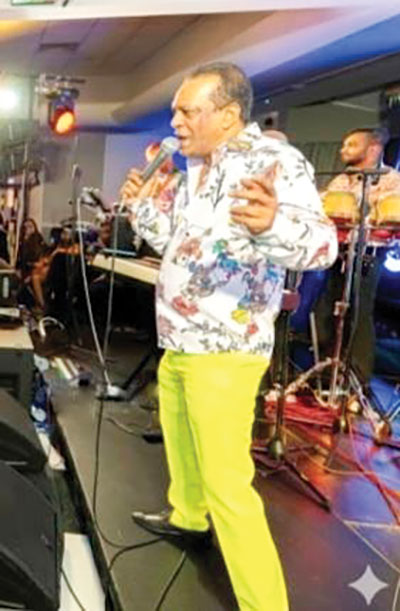
- Superb talent for captivating an audience
-
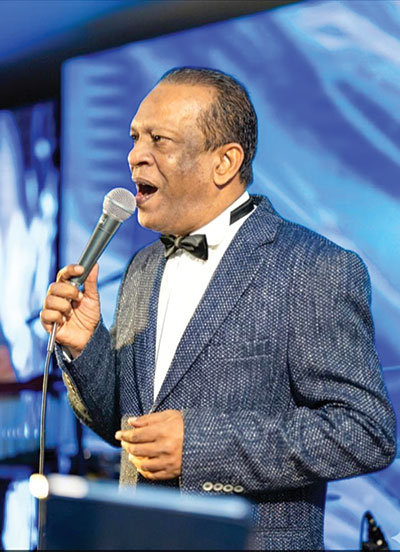
- Rajiv Sebastian
“Your performance was truly the highlight of the night. You have a superb talent for captivating an audience; from the moment you took the stage, your vibrant energy and incredible vocal range completely transformed the atmosphere.
“It was wonderful to see how effortlessly you engaged the crowd, keeping the dance floor packed and everyone in high spirits throughout the evening. You have graced the stage as a guest artiste on three separate occasions, delivering exceptional performances that set you apart from your peers.
“We feel incredibly privileged to have had an artiste of your calibre and charisma join us. You didn’t just provide music; you created an unforgettable experience that people are still talking about.
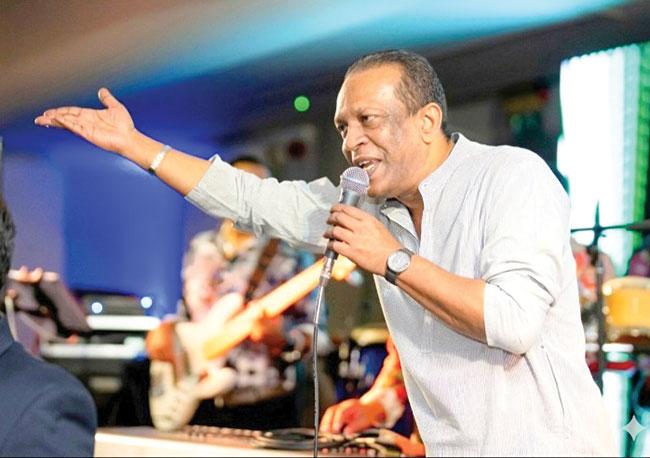
Surprises for his fans in Sri Lanka, as well
“Thank you for sharing your immense gift with us. Hope to see you back on a UK stage very soon!”
Yes, and it’s happening soon; Rajiv says he is off to London again, in mid-April, and will be performing at four different venues.
He also mentioned that he has some surprises for his fans in Sri Lanka, when he and his band, The Clan, present their 35th Anniversary concert … in June, this year.

Brook, Bethell receive warnings from Cricket Regulator after Wellington incident

Former Minister Mahinda Wijesekara passes away aged 83

Navy seize 323kg of heroin from fishing vessel in southwestern seas

Magnitude 7.4 quake hits off Indonesia’s Ternate, tsunami warning lifted

NASA successfully launches historic Artemis II moon mission

Sameer Rizvi arrives in the IPL to guide Delhi Capitals home in low-scoring chase

‘Dates have the highest sugar content to fight Coronavirus’

Sunday Island 27 December – Headlines

#SundayIsland 17th December – Headlines

Sunday Island – 28th March

Sunday Island Headlines – 21 March

Sunday Island – 21st February – Headlines
-

 Features6 days ago
A World Order in Crisis: War, Power, and Resistance
-

 News7 days ago
Energy Minister indicted on corruption charges ahead of no-faith motion against him
-

 Sports7 days ago
SLC to hold EGM in April
-

 Opinion7 days ago
When elephants fight, it is the grass that suffers
-
 Features7 days ago
Lest we forget
-

 News3 days ago
Tariff shock from 01 April as power costs climb across the board
-
 Business7 days ago
Pan Asia Bank empowers export sector as Strategic Partner of NCE Export Awards
-
 News6 days ago
Minister Jayakody indicted in Colombo High Court over alleged corruption