
Features
An interlude in Sofia, doctorate, Indo-Lanka relations and Vijaya Kumaratunga


(Excerpted from volume ii of the Sarath Amunugama autobiography)
Following the successful Tashkent meeting, UNESCO geared up for its annual sessions to be held in Sofia in Bulgaria. This was a two week long meeting which was to map out the next two year programme for the institution. UNESCO’s International Programme for Development Communications (IPDC) had an important role to play and I was included in the large list of officials who were to move lock, stock and barrel to Sofia to manage the conference.
UNESCO also invited several Third World journalists to cover this meeting and I managed to nominate Gamini Wijetunga, editor of Desathiya’ to be a member of this group. He first came to Paris for a briefing and then accompanied me to Sofia to cover the General Conference.
The Bulgarians who had only recently asserted some independence from Russian domination went all out to make this event a great success. On the opening night they hosted a gala reception on the grounds of the Sofia museum. The museum was a fabulous place with many exhibits from the Greek and Roman civilizations which had covered much of Bulgaria’s Mediterranean territory. Famous Bulgarian wines and Russian Vodka flowed at this reception as the organizers wished to distance themselves from the drab Russian political culture which was now being assailed by the USSR leadership under Gorbachev.
Their new found commitment to freedom of action was so strong that they were lining up a female Bulgarian diplomat to succeed M’Bow when his term was over. Unhappy about the constant criticism from western media, M’Bow was not averse to being lionized by the USSR and the East European countries. In one of his adroit moves he asked me to visit GDR [East Germany] and repair the damage caused by an affair which could have come out of a spy novel.
A senior GDR official had been on the staff of UNESCO. He had been accused of spying for the West while being attached to our organization, by the GDR authorities. When he returned to his country for a holiday while being on the staff of UNESCO, he had been detained in East Berlin by his government. M’Bow took up the position that the relevant officer was a UNESCO/UN employee and could not be detained by a member state. Rather than accept this position, the GDR authorities remained adamant in detaining the officer.
M’Bow then had no alternative but to break off relations with the GDR. Since IPDC was relatively independent, I was asked to mediate. As soon as I landed in Tegel airport in East Berlin with my wife, who was also invited by the GDR, I sensed that they wanted to settle this matter and end the impasse. We were received with bouquets of flowers and much ceremony and driven to a state guest house where we had discussions about IPDC and UNESCO.
A visit had been arranged for us to see the sights of East Berlin which had been familiar to me from earlier visits as Director of Information of Sri Lanka. An unforgettable sight was the dilapidated Jewish synagogue which had been kept unrestored as a symbol of the `Kristalnacht’ in which the Jews of Berlin were attacked by the Nazis. We also visited the Pergammon Museum with its famous Egyptian collection. The impasse with the UNESCO official was resolved when he was allowed to come to Paris, resign his job and get back to Berlin.
Going against the grain of spy novels, he did not make a run for it from Paris but returned to East Germany to hold a position there. Maybe he was a double agent. From time-to-time UN agencies are rocked with allegations of spying by nationals planted there by secret agencies. It is an open secret that the UN in New York is riddled with spies from different camps and the New York Police Department is busy trailing such suspects. Not only are there spies but there are others who try to persuade officials from behind the iron curtain to defect or play a double game. The Chinese in my time were less subtle. My friend from Xinhua News Agency told me that they got all the information they want from the managers and cooks of the hundreds of Chinese restaurants which dot the city. Many of them are subsidized and our UNESCO friends from China would wine and dine us at the best Chinese restaurants in the city, which served exquisite dishes. French politicians and bureaucrats were also similarly entertained. They say that the best Chinese food outside of Shanghai can be found in Paris.
The long stay in Sophia helped me to explore the ancient city which had seen waves of cultural invasion including the Turks. The mix of cultures was seen by us in the Bulgarian cuisine which was an eclectic offering of Mediterranean, Western, Russian and Ottoman Turkish dishes. Due to the UNESCO `invasion’, Bulgarian restaurants and markets were doing good business. In the meanwhile Gamini Wijetunga had made contact with a large ` of Sri Lankan students who had come on scholarship to Universities in Sophia.
They were mostly from families which had links with the Lankan Communist Party and had been rewarded for the fidelity of their parents for the cause. These students were very helpful in taking us to small eateries which cooked delicious local meals. They also invited us to their University dorms and cooked rice and curry meals for us. But what surprised us was the vehemence with which the students complained of the old Communist regime.
This was seen even in East Germany among the young; even though GDR was the most orthodox of the Communist regimes. All this was to boil over in the coming years leading to the fall of the Soviet Union. Bulgaria too had been strongly in the Soviet camp due to its undisputed leader Dimitrov, the head of the Comintern, who defied the Nazis after being falsely accused in the Reichstag fire trial. He later became the leader of Bulgaria as a confidante of Stalin and later one of the geriatric leaders of the USSR. Today Bulgaria is a free state and very much in the western camp.
Doctorate
The break in Sofia helped me to revise my thesis which was to be submitted for a doctorate in Social Anthropology [Called Ethnology in the French system] to the University of France. I was fortunate in having two South Asia specialists, Jean-Claude Galay and Eric Meyer, as my supervisors. Since I was a senior student, it was a friendly interaction involving their reading chapters of my thesis and sharing a meal in a cafe or Jean-Claude’s apartment while talking about it.
It was plain sailing but for the fact that it had to be submitted in the French language. Following many foreign students, I wrote my thesis in English and had it translated into French. Once it was accepted, a day was fixed for the defence of the thesis at the EHESS (École des Hautes Études en Sciences Sociales – School of Advanced Studies in the Social Sciences) . According to French tradition it is a public event which is held after a notice is published in the newspapers. Accordingly my defence of the
thesis was held with the public accommodated in the hall.
Most of those who turned up were South Asia specialists with a few well-wishers like Ananda Guruge, Jacques Renault and his wife. On the high table was the jury which comprised the Chairman from College de France, Collette Caillart of the Sorbonne, Eric Mayer of the CNRS and Jean Claude Galay who was my supervisor- I made a brief presentation in French giving a summary of my thesis. Then the Board, especially the Chairman asked a series of questions which I easily answered because I knew the subject better than him, followed by Caillart and Eric Meyer who bowled a few full tosses at me.
Then the discussion was opened to the house and I easily answered the questions directed at me. In the French system after a short break the jury delivers its verdict. We remained in the hall and the jury returned after a while and announced that I had successfully completed the requirements for a doctorate and signed the book to attest to that effect. After the usual congratulations we retired to a nearby pub to celebrate. That night my wife had arranged a dinner at our home to thank our friends, Ananda Guruge, Eric Meyer, Manu Ginige, Jacques Renault, Navaz and many others who were treated to a rice and curry dinner.
A few days later I called over at the EHEESS to collect my certificate. One of my objectives in coming to Paris was now satisfactorily concluded. But I continued to keep up with Eric and Jean-Claude for quite some time. Jean’Claude went to Cambridge, Eric retired and Louis Dumont died at a ripe old age to be celebrated by the world of social science as one of the great scholars of our time.
Indo-Lanka Relations
In the latter part of Indira Gandhi’s ‘reign’, relations between India and Sri Lanka went from bad to worse. This period was marked by the rise of the LTTE and the elimination of all those Tamils, including Tamil militants, who did not join them. The LTTE argued that Tamil ‘traitors’ had to be eliminated before they took on the Sinhala forces. Sabaratnam, the EPRLF leader and his whole central committee was gunned down in Chennai and in Jaffna.
While it may not have been the official line of the Indian Government, RAW which had a history of going ‘rogue’ against the Indian establishment, was strengthening the LTTE. At the same time they were introducing ‘moles’ into the LTTE exploiting caste differences. Initially LTTE was seen as a `Karaiyar’ (Karawe) outfit just as the JVP leadership was dominated by its Sinhala Karawe members. It was the sea that gave the LTTE the edge as it could cross over to the southern tip of India by boat when pressed by the army in the North. Velvettiturai was a staging post for the LTTE which could travel to South India and back with impunity. VVT was the home town of Prabhakaran.
Another of JRJ’s miscalculations was his belief that the USA would take his side and balance his relationship with India. He sent his close associate Ernest Corea as Ambassador to the US to cement the relationship. But the US stance was that we should settle this problem with India’s assistance. President Reagan sent his personal envoy General Vernon Walters to Colombo with that message. Walters repeated that advice at an impromptu press conference held on the tarmac in Katunayake en route to New Delhi.
In Delhi he warned the Indian policy makers not to miltarize the conflict. The US facilitated a meeting with the Israelis to help modernize the SL army and also recommended the use of British mercenaries. This was negotiated by Ravi, JRJ’s son who had taken on the role of security advisor much to the relief of the father who had a troubled relationship with him. I was told that JRJ had a secret meeting with Israeli leader Yiztak Rabin in the Hotel Crillon in Paris during a State visit to France.
But the LTTE was on the offensive and I was present with Gamini Dissanayake and the President in the President’s lodge in Kandy when Generals Attygalle, Ranatunga and Seneviratne wanted talks to begin with India and the LTTE as the military situation was grave. Though JRJ did not give it much thought the US-Pakistan-Israel axis troubled India and undercut his attempts to woo her.
Vijaya’s Visit To Paris
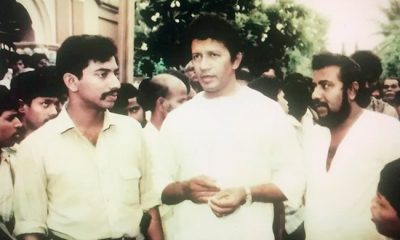
While being pushed to the wall in the North, JRJ’s dealings with the Opposition also took an unfavourable turn. The strong showing of the Kobbekaduwa campaign came as shock to him and he responded by calling his opponents Naxalites and imprisoning them. Some of the radicals – Vasudeva and the JVP, went underground creating further problems. The impression that JRJ was using these tactics to get revenge and cripple the legitimate democratic opposition gained ground. His venom was particularly directed at Vijaya Kumaratunga who was the live wire of the Kobbekaduwa campaign.
He was arrested and detained in the magazine prison under inhuman conditions. Vijaya’s candidacy to enter Parliament for the Mahara constituency, a part of JRJs old Kelaniya seat, was thwarted by the use of force. It was all getting very personal and bitter, and JRJ was fast losing his popularity. After many appeals Vijaya was released and his wife Chandrika arranged for him to recuperate with a holiday in France. She had many friends there and Manu Ginige who acted as a coordinator told me that we should spend some time with Vijaya.
I was happy to oblige as we had many common friends in the Sinhala film industry. We first met for dinner in the house of one of Chandrika’s friends who was now a rich stockbroker. Through Vijaya was the chief guest he was withdrawn and was recovering from the effects of his unfair detention. He was missing his wife and children and was spending time with the children of his host rather than engaging in a conversation with them. He seemed spaced out and uncomfortable.
The following day he called me at UNESCO and suggested having lunch as he was missing rice and curry. Manu Ginige had found a restaurant which specialized in ‘Paella’, a popular Spanish food with a lot of rice and meats which we all enjoyed eating. Vijaya was very reflective that day and spoke very little. He was keen to get back to Sri Lanka where he was to be a key player in the anti-UNP resistance. However he was the leader of the left who kept a line at communication to the Tamil leaders as a strong supporter of devolution of power to the north and east even when it was an unpopular proposal at that time.
He became a chief target of the JVP which assassinated him in cold blood. Had he lived he would have been elected President which would have changed much at Sri Lanka’s subsequent history. His name must be added to Premadasa, Gamini and Lalith who would have each enhanced the Presidency had they lived. It was Sri Lanka’s tragic fate that it lost its leaders to violence and be succeeded by others who did not have their charisma and competence.









 ‘Adapt, shrink or die’ – thus runs the warning issued by the Trump administration to UN humanitarian agencies with brute insensitivity in the wake of its recent decision to drastically reduce to $2bn its humanitarian aid to the UN system. This is a substantial climb down from the $17bn the US usually provided to the UN for its humanitarian operations.
Considering that the US has hitherto been the UN’s biggest aid provider, it need hardly be said that the US decision would pose a daunting challenge to the UN’s humanitarian operations around the world. This would indeed mean that, among other things, people living in poverty and stifling material hardships, in particularly the Southern hemisphere, could dramatically increase. Coming on top of the US decision to bring to an end USAID operations, the poor of the world could be said to have been left to their devices as a consequence of these morally insensitive policy rethinks of the Trump administration.
Earlier, the UN had warned that it would be compelled to reduce its aid programs in the face of ‘the deepest funding cuts ever.’ In fact the UN is on record as requesting the world for $23bn for its 2026 aid operations.
If this UN appeal happens to go unheeded, the possibilities are that the UN would not be in a position to uphold the status it has hitherto held as the world’s foremost humanitarian aid provider. It would not be incorrect to state that a substantial part of the rationale for the UN’s existence could come in for questioning if its humanitarian identity is thus eroded.
Inherent in these developments is a challenge for those sections of the international community that wish to stand up and be counted as humanists and the ‘Conscience of the World.’ A responsibility is cast on them to not only keep the UN system going but to also ensure its increased efficiency as a humanitarian aid provider to particularly the poorest of the poor.
It is unfortunate that the US is increasingly opting for a position of international isolation. Such a policy position was adopted by it in the decades leading to World War Two and the consequences for the world as a result for this policy posture were most disquieting. For instance, it opened the door to the flourishing of dictatorial regimes in the West, such as that led by Adolph Hitler in Germany, which nearly paved the way for the subjugation of a good part of Europe by the Nazis.
If the US had not intervened militarily in the war on the side of the Allies, the West would have faced the distressing prospect of coming under the sway of the Nazis and as a result earned indefinite political and military repression. By entering World War Two the US helped to ward off these bleak outcomes and indeed helped the major democracies of Western Europe to hold their own and thrive against fascism and dictatorial rule.
Republican administrations in the US in particular have not proved the greatest defenders of democratic rule the world over, but by helping to keep the international power balance in favour of democracy and fundamental human rights they could keep under a tight leash fascism and linked anti-democratic forces even in contemporary times. Russia’s invasion and continued occupation of parts of Ukraine reminds us starkly that the democracy versus fascism battle is far from over.
Right now, the US needs to remain on the side of the rest of the West very firmly, lest fascism enjoys another unfettered lease of life through the absence of countervailing and substantial military and political power.
However, by reducing its financial support for the UN and backing away from sustaining its humanitarian programs the world over the US could be laying the ground work for an aggravation of poverty in the South in particular and its accompaniments, such as, political repression, runaway social discontent and anarchy.
What should not go unnoticed by the US is the fact that peace and social stability in the South and the flourishing of the same conditions in the global North are symbiotically linked, although not so apparent at first blush. For instance, if illegal migration from the South to the US is a major problem for the US today, it is because poor countries are not receiving development assistance from the UN system to the required degree. Such deprivation on the part of the South leads to aggravating social discontent in the latter and consequences such as illegal migratory movements from South to North.
Accordingly, it will be in the North’s best interests to ensure that the South is not deprived of sustained development assistance since the latter is an essential condition for social contentment and stable governance, which factors in turn would guard against the emergence of phenomena such as illegal migration.
Meanwhile, democratic sections of the rest of the world in particular need to consider it a matter of conscience to ensure the sustenance and flourishing of the UN system. To be sure, the UN system is considerably flawed but at present it could be called the most equitable and fair among international development organizations and the most far-flung one. Without it world poverty would have proved unmanageable along with the ills that come along with it.
Dehumanizing poverty is an indictment on humanity. It stands to reason that the world community should rally round the UN and ensure its survival lest the abomination which is poverty flourishes. In this undertaking the world needs to stand united. Ambiguities on this score could be self-defeating for the world community.
For example, all groupings of countries that could demonstrate economic muscle need to figure prominently in this initiative. One such grouping is BRICS. Inasmuch as the US and the West should shrug aside Realpolitik considerations in this enterprise, the same goes for organizations such as BRICS.
The arrival at the above international consensus would be greatly facilitated by stepped up dialogue among states on the continued importance of the UN system. Fresh efforts to speed-up UN reform would prove major catalysts in bringing about these positive changes as well. Also requiring to be shunned is the blind pursuit of narrow national interests.
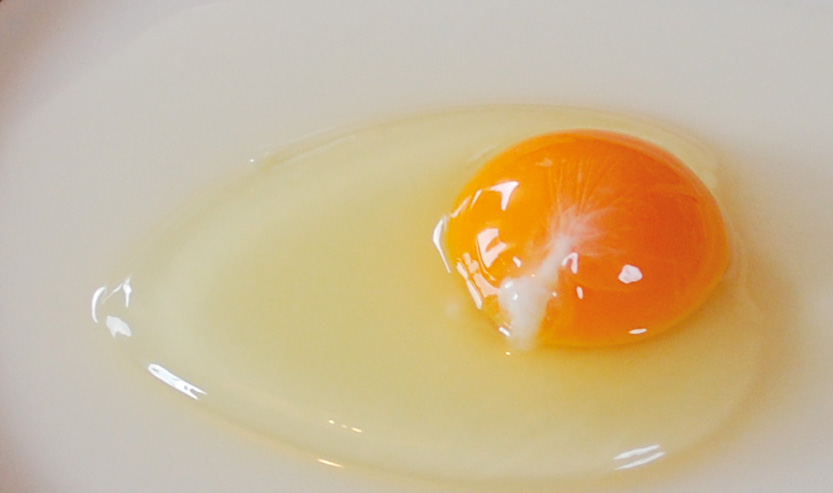
 Hi! Great to be back after my Christmas break.
Thought of starting this week with egg white.
Yes, eggs are brimming with nutrients beneficial for your overall health and wellness, but did you know that eggs, especially the whites, are excellent for your complexion?
OK, if you have no idea about how to use egg whites for your face, read on.
Egg White, Lemon, Honey:
Separate the yolk from the egg white and add about a teaspoon of freshly squeezed lemon juice and about one and a half teaspoons of organic honey. Whisk all the ingredients together until they are mixed well.
Apply this mixture to your face and allow it to rest for about 15 minutes before cleansing your face with a gentle face wash.
Don’t forget to apply your favourite moisturiser, after using this face mask, to help seal in all the goodness.
Egg White, Avocado:
In a clean mixing bowl, start by mashing the avocado, until it turns into a soft, lump-free paste, and then add the whites of one egg, a teaspoon of yoghurt and mix everything together until it looks like a creamy paste.
Apply this mixture all over your face and neck area, and leave it on for about 20 to 30 minutes before washing it off with cold water and a gentle face wash.
Egg White, Cucumber, Yoghurt:
In a bowl, add one egg white, one teaspoon each of yoghurt, fresh cucumber juice and organic honey. Mix all the ingredients together until it forms a thick paste.
Apply this paste all over your face and neck area and leave it on for at least 20 minutes and then gently rinse off this face mask with lukewarm water and immediately follow it up with a gentle and nourishing moisturiser.
Egg White, Aloe Vera, Castor Oil:
To the egg white, add about a teaspoon each of aloe vera gel and castor oil and then mix all the ingredients together and apply it all over your face and neck area in a thin, even layer.
Leave it on for about 20 minutes and wash it off with a gentle face wash and some cold water. Follow it up with your favourite moisturiser.
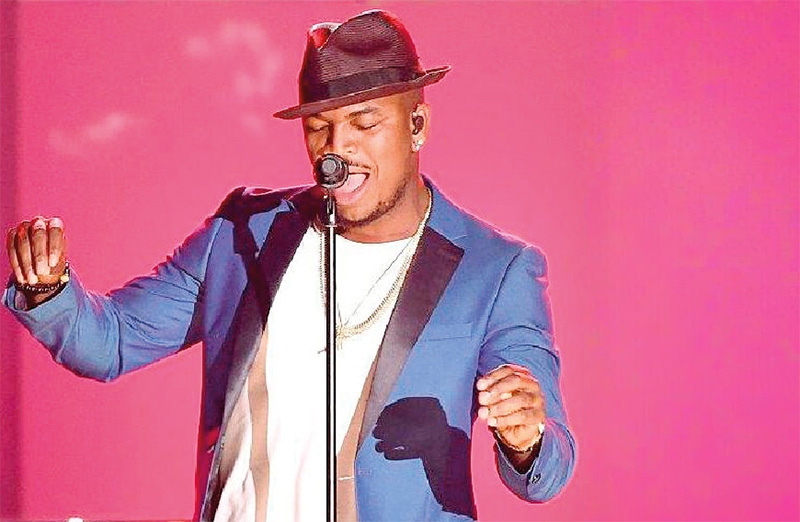
 Superlatives galore were used, especially on social media, to highlight R&B singer Ne-Yo’s trip to Sri Lanka: Global superstar Ne-Yo to perform live in Colombo this December; Ne-Yo concert puts Sri Lanka back on the global entertainment map; A global music sensation is coming to Sri Lanka … and there were lots more!
At an official press conference, held at a five-star venue, in Colombo, it was indicated that the gathering marked a defining moment for Sri Lanka’s entertainment industry as international R&B powerhouse and three-time Grammy Award winner Ne-Yo prepares to take the stage in Colombo this December.
What’s more, the occasion was graced by the presence of Sunil Kumara Gamage, Minister of Sports & Youth Affairs of Sri Lanka, and Professor Ruwan Ranasinghe, Deputy Minister of Tourism, alongside distinguished dignitaries, sponsors, and members of the media.
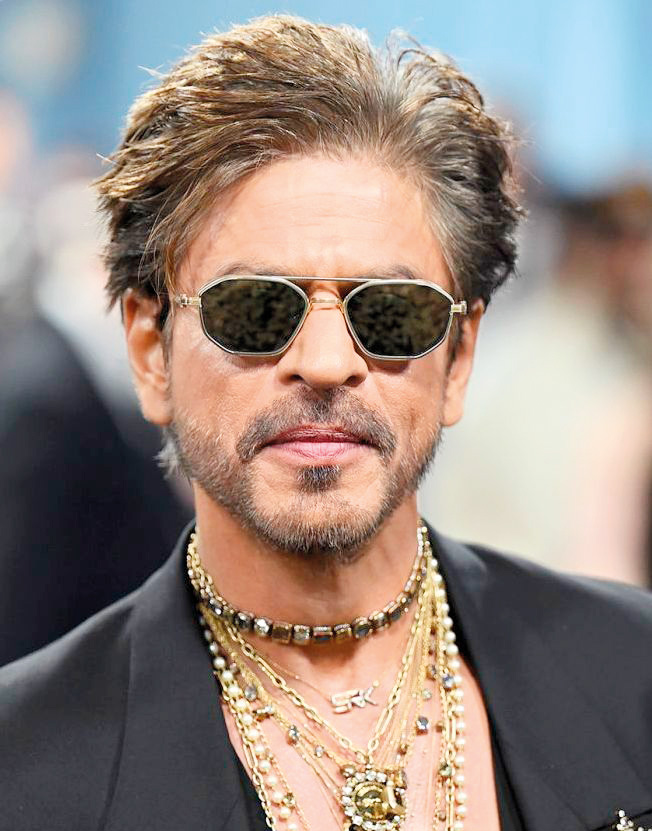
Shah Rukh Khan: Disappointed his fans in Sri Lanka
According to reports, the concert had received the official endorsement of the Sri Lanka Tourism Promotion Bureau, recognising it as a flagship initiative in developing the country’s concert economy by attracting fans, and media, from all over South Asia.
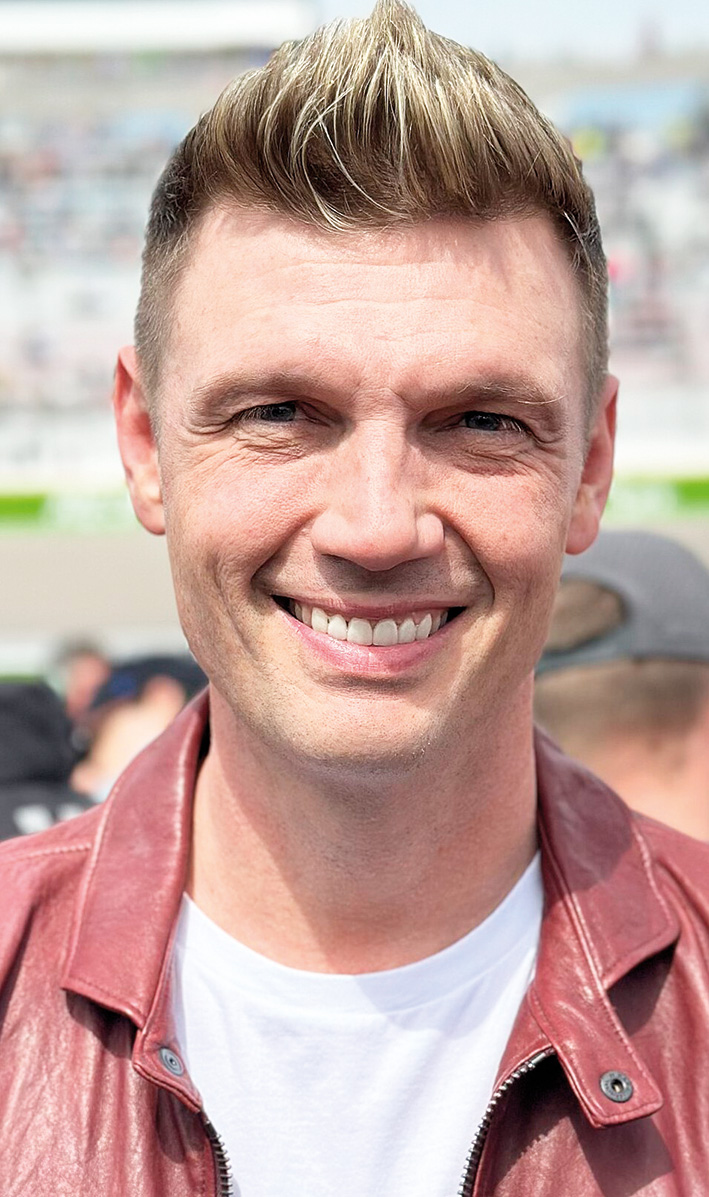
Nick Carter: His concert, too, was cancelled due to “Unforeseen circumstances
However, I had that strange feeling that this concert would not become a reality, keeping in mind what happened to Nick Carter’s Colombo concert – cancelled at the very last moment.
Carter issued a video message announcing he had to return to the USA due to “unforeseen circumstances” and a “family emergency”.
Though “unforeseen circumstances” was the official reason provided by Carter and the local organisers, there was speculation that low ticket sales may also have been a factor in the cancellation.
Well, “Unforeseen Circumstances” has cropped up again!
In a brief statement, via social media, the organisers of the Ne-Yo concert said the decision was taken due to “unforeseen circumstances and factors beyond their control.”
Ne-Yo, too, subsequently made an announcement, citing “Unforeseen circumstances.”
The public has a right to know what these “unforeseen circumstances” are, and who is to be blamed – the organisers or Ne-Yo!
Ne-Yo’s management certainly need to come out with the truth.
However, those who are aware of some of the happenings in the setup here put it down to poor ticket sales, mentioning that the tickets for the concert, and a meet-and-greet event, were exorbitantly high, considering that Ne-Yo is not a current mega star.
We also had a cancellation coming our way from Shah Rukh Khan, who was scheduled to visit Sri Lanka for the City of Dreams resort launch, and then this was received: “Unfortunately due to unforeseen personal reasons beyond his control, Mr. Khan is no longer able to attend.”
Referring to this kind of mess up, a leading showbiz personality said that it will only make people reluctant to buy their tickets, online.
“Tickets will go mostly at the gate and it will be very bad for the industry,” he added.

In pictures: New Year welcomed around the world

Foreign warships commended for their assistance during weather disaster in Sri Lanka

Machu Picchu train crash leaves one dead and dozens injured

I invite you to step into 2026 with renewed energy, hope, and determination – PM

Fairly heavy showers about 75 mm are likely at some places in the Central and Uva provinces and in Batticaloa and Ampara districts

National Audit Office reveals NHSL lapses

‘Dates have the highest sugar content to fight Coronavirus’

Sunday Island 27 December – Headlines

#SundayIsland 17th December – Headlines

Sunday Island – 28th March

Sunday Island Headlines – 21 March

Sunday Island – 21st February – Headlines
-
 News6 days ago
Street vendors banned from Kandy City
-

 Sports3 days ago
Gurusinha’s Boxing Day hundred celebrated in Melbourne
-

 News6 days ago
Lankan aircrew fly daring UN Medevac in hostile conditions in Africa
-
 News1 day ago
Leading the Nation’s Connectivity Recovery Amid Unprecedented Challenges
-

 Sports4 days ago
Time to close the Dickwella chapter
-

 Features6 days ago
Rethinking post-disaster urban planning: Lessons from Peradeniya
-

 Features2 days ago
It’s all over for Maxi Rozairo
-

 Opinion6 days ago
Are we reading the sky wrong?