
Features
An interlude in Sofia, doctorate, Indo-Lanka relations and Vijaya Kumaratunga


(Excerpted from volume ii of the Sarath Amunugama autobiography)
Following the successful Tashkent meeting, UNESCO geared up for its annual sessions to be held in Sofia in Bulgaria. This was a two week long meeting which was to map out the next two year programme for the institution. UNESCO’s International Programme for Development Communications (IPDC) had an important role to play and I was included in the large list of officials who were to move lock, stock and barrel to Sofia to manage the conference.
UNESCO also invited several Third World journalists to cover this meeting and I managed to nominate Gamini Wijetunga, editor of Desathiya’ to be a member of this group. He first came to Paris for a briefing and then accompanied me to Sofia to cover the General Conference.
The Bulgarians who had only recently asserted some independence from Russian domination went all out to make this event a great success. On the opening night they hosted a gala reception on the grounds of the Sofia museum. The museum was a fabulous place with many exhibits from the Greek and Roman civilizations which had covered much of Bulgaria’s Mediterranean territory. Famous Bulgarian wines and Russian Vodka flowed at this reception as the organizers wished to distance themselves from the drab Russian political culture which was now being assailed by the USSR leadership under Gorbachev.
Their new found commitment to freedom of action was so strong that they were lining up a female Bulgarian diplomat to succeed M’Bow when his term was over. Unhappy about the constant criticism from western media, M’Bow was not averse to being lionized by the USSR and the East European countries. In one of his adroit moves he asked me to visit GDR [East Germany] and repair the damage caused by an affair which could have come out of a spy novel.
A senior GDR official had been on the staff of UNESCO. He had been accused of spying for the West while being attached to our organization, by the GDR authorities. When he returned to his country for a holiday while being on the staff of UNESCO, he had been detained in East Berlin by his government. M’Bow took up the position that the relevant officer was a UNESCO/UN employee and could not be detained by a member state. Rather than accept this position, the GDR authorities remained adamant in detaining the officer.
M’Bow then had no alternative but to break off relations with the GDR. Since IPDC was relatively independent, I was asked to mediate. As soon as I landed in Tegel airport in East Berlin with my wife, who was also invited by the GDR, I sensed that they wanted to settle this matter and end the impasse. We were received with bouquets of flowers and much ceremony and driven to a state guest house where we had discussions about IPDC and UNESCO.
A visit had been arranged for us to see the sights of East Berlin which had been familiar to me from earlier visits as Director of Information of Sri Lanka. An unforgettable sight was the dilapidated Jewish synagogue which had been kept unrestored as a symbol of the `Kristalnacht’ in which the Jews of Berlin were attacked by the Nazis. We also visited the Pergammon Museum with its famous Egyptian collection. The impasse with the UNESCO official was resolved when he was allowed to come to Paris, resign his job and get back to Berlin.
Going against the grain of spy novels, he did not make a run for it from Paris but returned to East Germany to hold a position there. Maybe he was a double agent. From time-to-time UN agencies are rocked with allegations of spying by nationals planted there by secret agencies. It is an open secret that the UN in New York is riddled with spies from different camps and the New York Police Department is busy trailing such suspects. Not only are there spies but there are others who try to persuade officials from behind the iron curtain to defect or play a double game. The Chinese in my time were less subtle. My friend from Xinhua News Agency told me that they got all the information they want from the managers and cooks of the hundreds of Chinese restaurants which dot the city. Many of them are subsidized and our UNESCO friends from China would wine and dine us at the best Chinese restaurants in the city, which served exquisite dishes. French politicians and bureaucrats were also similarly entertained. They say that the best Chinese food outside of Shanghai can be found in Paris.
The long stay in Sophia helped me to explore the ancient city which had seen waves of cultural invasion including the Turks. The mix of cultures was seen by us in the Bulgarian cuisine which was an eclectic offering of Mediterranean, Western, Russian and Ottoman Turkish dishes. Due to the UNESCO `invasion’, Bulgarian restaurants and markets were doing good business. In the meanwhile Gamini Wijetunga had made contact with a large ` of Sri Lankan students who had come on scholarship to Universities in Sophia.
They were mostly from families which had links with the Lankan Communist Party and had been rewarded for the fidelity of their parents for the cause. These students were very helpful in taking us to small eateries which cooked delicious local meals. They also invited us to their University dorms and cooked rice and curry meals for us. But what surprised us was the vehemence with which the students complained of the old Communist regime.
This was seen even in East Germany among the young; even though GDR was the most orthodox of the Communist regimes. All this was to boil over in the coming years leading to the fall of the Soviet Union. Bulgaria too had been strongly in the Soviet camp due to its undisputed leader Dimitrov, the head of the Comintern, who defied the Nazis after being falsely accused in the Reichstag fire trial. He later became the leader of Bulgaria as a confidante of Stalin and later one of the geriatric leaders of the USSR. Today Bulgaria is a free state and very much in the western camp.
Doctorate
The break in Sofia helped me to revise my thesis which was to be submitted for a doctorate in Social Anthropology [Called Ethnology in the French system] to the University of France. I was fortunate in having two South Asia specialists, Jean-Claude Galay and Eric Meyer, as my supervisors. Since I was a senior student, it was a friendly interaction involving their reading chapters of my thesis and sharing a meal in a cafe or Jean-Claude’s apartment while talking about it.
It was plain sailing but for the fact that it had to be submitted in the French language. Following many foreign students, I wrote my thesis in English and had it translated into French. Once it was accepted, a day was fixed for the defence of the thesis at the EHESS (École des Hautes Études en Sciences Sociales – School of Advanced Studies in the Social Sciences) . According to French tradition it is a public event which is held after a notice is published in the newspapers. Accordingly my defence of the
thesis was held with the public accommodated in the hall.
Most of those who turned up were South Asia specialists with a few well-wishers like Ananda Guruge, Jacques Renault and his wife. On the high table was the jury which comprised the Chairman from College de France, Collette Caillart of the Sorbonne, Eric Mayer of the CNRS and Jean Claude Galay who was my supervisor- I made a brief presentation in French giving a summary of my thesis. Then the Board, especially the Chairman asked a series of questions which I easily answered because I knew the subject better than him, followed by Caillart and Eric Meyer who bowled a few full tosses at me.
Then the discussion was opened to the house and I easily answered the questions directed at me. In the French system after a short break the jury delivers its verdict. We remained in the hall and the jury returned after a while and announced that I had successfully completed the requirements for a doctorate and signed the book to attest to that effect. After the usual congratulations we retired to a nearby pub to celebrate. That night my wife had arranged a dinner at our home to thank our friends, Ananda Guruge, Eric Meyer, Manu Ginige, Jacques Renault, Navaz and many others who were treated to a rice and curry dinner.
A few days later I called over at the EHEESS to collect my certificate. One of my objectives in coming to Paris was now satisfactorily concluded. But I continued to keep up with Eric and Jean-Claude for quite some time. Jean’Claude went to Cambridge, Eric retired and Louis Dumont died at a ripe old age to be celebrated by the world of social science as one of the great scholars of our time.
Indo-Lanka Relations
In the latter part of Indira Gandhi’s ‘reign’, relations between India and Sri Lanka went from bad to worse. This period was marked by the rise of the LTTE and the elimination of all those Tamils, including Tamil militants, who did not join them. The LTTE argued that Tamil ‘traitors’ had to be eliminated before they took on the Sinhala forces. Sabaratnam, the EPRLF leader and his whole central committee was gunned down in Chennai and in Jaffna.
While it may not have been the official line of the Indian Government, RAW which had a history of going ‘rogue’ against the Indian establishment, was strengthening the LTTE. At the same time they were introducing ‘moles’ into the LTTE exploiting caste differences. Initially LTTE was seen as a `Karaiyar’ (Karawe) outfit just as the JVP leadership was dominated by its Sinhala Karawe members. It was the sea that gave the LTTE the edge as it could cross over to the southern tip of India by boat when pressed by the army in the North. Velvettiturai was a staging post for the LTTE which could travel to South India and back with impunity. VVT was the home town of Prabhakaran.
Another of JRJ’s miscalculations was his belief that the USA would take his side and balance his relationship with India. He sent his close associate Ernest Corea as Ambassador to the US to cement the relationship. But the US stance was that we should settle this problem with India’s assistance. President Reagan sent his personal envoy General Vernon Walters to Colombo with that message. Walters repeated that advice at an impromptu press conference held on the tarmac in Katunayake en route to New Delhi.
In Delhi he warned the Indian policy makers not to miltarize the conflict. The US facilitated a meeting with the Israelis to help modernize the SL army and also recommended the use of British mercenaries. This was negotiated by Ravi, JRJ’s son who had taken on the role of security advisor much to the relief of the father who had a troubled relationship with him. I was told that JRJ had a secret meeting with Israeli leader Yiztak Rabin in the Hotel Crillon in Paris during a State visit to France.
But the LTTE was on the offensive and I was present with Gamini Dissanayake and the President in the President’s lodge in Kandy when Generals Attygalle, Ranatunga and Seneviratne wanted talks to begin with India and the LTTE as the military situation was grave. Though JRJ did not give it much thought the US-Pakistan-Israel axis troubled India and undercut his attempts to woo her.
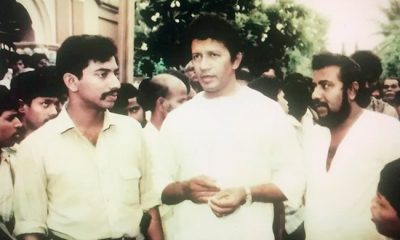
Vijaya’s Visit To Paris
While being pushed to the wall in the North, JRJ’s dealings with the Opposition also took an unfavourable turn. The strong showing of the Kobbekaduwa campaign came as shock to him and he responded by calling his opponents Naxalites and imprisoning them. Some of the radicals – Vasudeva and the JVP, went underground creating further problems. The impression that JRJ was using these tactics to get revenge and cripple the legitimate democratic opposition gained ground. His venom was particularly directed at Vijaya Kumaratunga who was the live wire of the Kobbekaduwa campaign.
He was arrested and detained in the magazine prison under inhuman conditions. Vijaya’s candidacy to enter Parliament for the Mahara constituency, a part of JRJs old Kelaniya seat, was thwarted by the use of force. It was all getting very personal and bitter, and JRJ was fast losing his popularity. After many appeals Vijaya was released and his wife Chandrika arranged for him to recuperate with a holiday in France. She had many friends there and Manu Ginige who acted as a coordinator told me that we should spend some time with Vijaya.
I was happy to oblige as we had many common friends in the Sinhala film industry. We first met for dinner in the house of one of Chandrika’s friends who was now a rich stockbroker. Through Vijaya was the chief guest he was withdrawn and was recovering from the effects of his unfair detention. He was missing his wife and children and was spending time with the children of his host rather than engaging in a conversation with them. He seemed spaced out and uncomfortable.
The following day he called me at UNESCO and suggested having lunch as he was missing rice and curry. Manu Ginige had found a restaurant which specialized in ‘Paella’, a popular Spanish food with a lot of rice and meats which we all enjoyed eating. Vijaya was very reflective that day and spoke very little. He was keen to get back to Sri Lanka where he was to be a key player in the anti-UNP resistance. However he was the leader of the left who kept a line at communication to the Tamil leaders as a strong supporter of devolution of power to the north and east even when it was an unpopular proposal at that time.
He became a chief target of the JVP which assassinated him in cold blood. Had he lived he would have been elected President which would have changed much at Sri Lanka’s subsequent history. His name must be added to Premadasa, Gamini and Lalith who would have each enhanced the Presidency had they lived. It was Sri Lanka’s tragic fate that it lost its leaders to violence and be succeeded by others who did not have their charisma and competence.









by Prof. C. A. Saliya
 When people picture wealth, they often imagine luxury cars, large homes and expensive holidays. But financial advisers who work with wealthy clients describe a different picture: people who spend carefully, keep cash aside, invest patiently and understand the risks they take.
A recent Research NZ report, based on interviews with financial advisers, found that many wealthy people are discreet about money. They tend to live within their means, maintain emergency savings, take calculated investment risks and pay close attention to tax and financial structures.
For Sri Lankan families facing high living costs, loan repayments and uncertainty about the future, the lesson is not that everyone must become rich overnight. It is that better financial habits can create greater security over time.
Wealth is often quiet
One of the strongest habits associated with long-term financial stability is controlled spending. Many people with high incomes do not automatically increase their lifestyle every time they earn more. Instead, they decide in advance what they can afford, save consistently and avoid treating every salary increase as permission to spend more.
This does not mean denying life’s small pleasures. It means knowing the difference between a need, a want and a purchase made only to impress others.
In Sri Lanka, where social pressure can sometimes encourage visible spending on weddings, vehicles, clothing or celebrations, this is a difficult but useful principle. A household that earns well but spends everything may look prosperous while remaining financially fragile. By contrast, a family that saves even a modest amount regularly can build options: education for children, a medical reserve, a home deposit or capital for a small business.
The Central Bank of Sri Lanka’s financial-literacy survey found that bank-account ownership is high, but financial behaviour remains a concern. Its later roadmap notes that Sri Lankans show satisfactory financial knowledge compared with other countries, while positive everyday financial behaviour still lags behind.
Knowledge, in other words, is not enough. People also need routines.
Keep an emergency fund before taking bigger risks
The wealthy people described in the RNZ article often kept readily available savings for genuine emergencies and avoided using these funds for ordinary spending.
This is perhaps the most practical lesson for an average family. An emergency fund is not money that “does nothing.” It is money that protects a household from making a desperate decision when illness, job loss, vehicle repairs or an unexpected school expense arrives.
For some, the first target may be one month of essential expenses. Over time, it can be increased. The point is not perfection; it is having a buffer.
Without one, families may turn to costly borrowing, informal lenders or repeated credit-card debt. Research on household finance shows that weak credit knowledge, cross-borrowing and reliance on informal debt can increase the risk of over-indebtedness.
Saving alone may not be enough—but investing requires care
Saving is the starting point, not always the final destination. Money kept entirely in cash or low-return accounts can lose purchasing power over time, especially when prices rise. This is why financially secure people often invest—not recklessly, but with an understanding that long-term returns usually require some level of risk.
The key phrase is calculated risk. That means asking basic questions before investing: What is the business model? Is the institution regulated? How easily can I access my money? What happens if the investment falls in value? Am I being promised unusually high returns? Do I understand where my money is going?
A proper investment plan should not depend on rumours, social-media tips or promises of “guaranteed” profits. It should be diversified where possible—spread across suitable assets rather than placed in a single company, property deal or scheme.
For a young worker, investing may begin with a small, regular contribution. For a business owner, it may mean reinvesting carefully in a viable enterprise. For a family nearing retirement, capital protection and predictable income may matter more than aggressive growth. There is no single plan for everyone.
Debt can build wealth or destroy it

The RNZ article also makes a more controversial point: wealthy people sometimes use other people’s money, through debt or outside equity, to build businesses or buy assets. When investment returns exceed borrowing costs, borrowing can magnify gains. But the reverse is equally true: when returns fall or income is interrupted, debt magnifies losses.
This distinction is crucial in Sri Lanka.
Debt used for a productive purpose—such as a well-researched business, equipment that generates income, or an asset with manageable repayments—can be different from debt used for consumption. Borrowing for status purchases, repeated expenses or a lifestyle beyond one’s income can quickly become a burden.
Before taking a loan, families should calculate the monthly repayment under difficult conditions, not only favourable ones. Could the instalment still be paid if income falls? Is the interest rate fixed or variable? Is there enough emergency savings left after the initial payment? These questions may feel cautious, but caution is often what keeps a financial setback from becoming a crisis.
Pay attention to taxes and paperwork
Another quiet habit of financially successful people is paying attention to tax. They understand that the amount earned is not the same as the amount kept. They keep records, claim lawful deductions where applicable and structure businesses or investments properly.
The quiet habits
For self-employed people and small-business owners, this can be especially important. Clear records of income, expenses, invoices and taxes are not merely administrative chores. They help owners understand whether a business is truly profitable and make it easier to obtain formal finance when needed.
This is not an argument for avoiding tax. It is an argument for understanding the rules, meeting obligations and using legitimate options available under the law. When in doubt, taxpayers should seek advice from a qualified professional.
The human side of money
The most important lesson is that wealth is rarely created by one dramatic decision. It is usually built through repeated small choices: saving before spending, avoiding unnecessary debt, learning before investing, and staying patient when others are chasing quick gains.
A literature review of household finance supports this practical view. Studies consistently associate financial literacy, planning, self-control and budgeting with better saving and investment decisions. At the same time, the research warns that financial outcomes are shaped by income, access to formal financial services and economic conditions—not simply by individual discipline.
That matters in Sri Lanka, where many households are working hard simply to meet daily needs. Advice about wealth should never become blame. Not everyone starts with the same income, family support or opportunity.
But the habits that strengthen financial resilience are available in some form to most people: keep records, build a buffer, question easy-money promises, borrow carefully and make decisions based on long-term goals rather than short-term appearances. (See table)
Wealth may not always look glamorous. Often, it looks like an emergency fund nobody sees, an investment made patiently, a loan avoided, and a family that sleeps more peacefully because it has planned ahead.
(Prof. C. A. Saliya, is a charted accountant, academic, researcher and former banker. He is the author of SAMAJA GAVESHAKAYA and Springer Publication DOING SOCIAL RESEARCH. He can be contacted at saliya.ca@gmail.com. The views expressed in this article are his own and do not necessarily represent those of the organisations with which he is affiliated.)
by Prof. Ranjith Bandara,
Emeritus Professor, University of Colombo
This article examines why community exclusion, excessive bureaucratic control, unequal distribution of conservation benefits, weak institutional accountability, and short-sighted political leadership continue to undermine wildlife conservation in Sri Lanka.
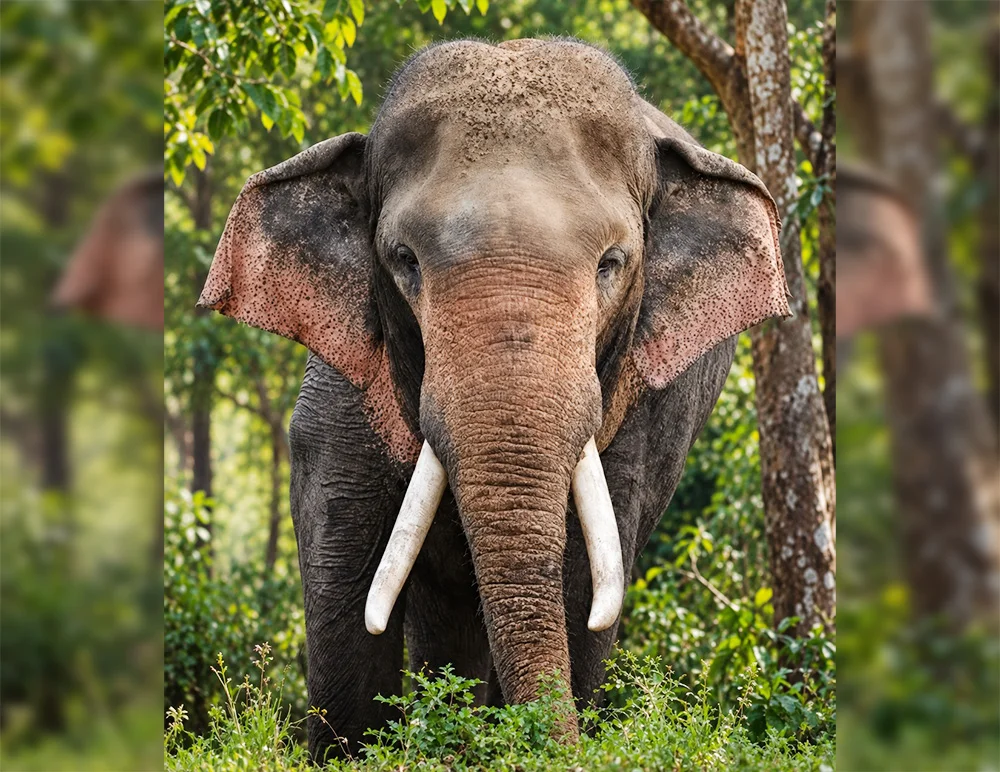
The death of Tusker Kavantissa is more than the loss of one of Sri Lanka’s most remarkable wild elephants. It exposes uncomfortable questions about how we protect our natural heritage, how conservation decisions are made, and why repeated warnings have failed to produce meaningful reforms. His death should compel us to examine not only what happened to one extraordinary animal, but also the deeper weaknesses in our wildlife conservation system.
Tusker Kavantissa, one of Sri Lanka’s most prominent wild tuskers, died on 16 October, 2026, after receiving veterinary treatment for an injury, reportedly caused by gunfire. Although the wound had shown some improvement, his health subsequently deteriorated. The precise cause of death requires confirmation through a proper post-mortem examination. Nevertheless, the circumstances raise serious questions about preventive protection, wildlife management, and institutional preparedness.
The wider picture is equally disturbing. According to recently reported figures, Sri Lanka has lost an average of approximately 402 elephants and 138 people annually, since 2019, due to human–elephant conflict. These figures reflect a continuing national tragedy affecting both wildlife and rural communities.
What Sri Lanka faces today is not merely a wildlife conservation problem. It is also a crisis of environmental governance, shaped by institutional weaknesses, political decisions, and the failure to recognise the economic and social realities of conservation.
Conservation without communities
One of the fundamental weaknesses of our conservation approach is that local communities are often treated as subjects of regulation rather than partners in conservation. They are expected to bear the risks, respect restrictions, and cooperate with government programmes, yet their influence over decisions affecting their lives remains limited.
For rural families living alongside wild elephants, conservation is not an abstract environmental objective. It directly affects their safety, agricultural income, property, and everyday lives.
Farmers frequently possess valuable knowledge about elephant movements, vulnerable locations, seasonal changes, and practical protection measures. Yet conservation interventions are sometimes designed without adequately considering this experience.
When decisions are imposed from above, communities may feel excluded from programmes they are expected to support. This weakens trust, reduces cooperation, and ultimately undermines conservation outcomes.
We must recognise that protecting elephants and protecting farmers are not conflicting objectives. Both are essential. A conservation policy that safeguards wildlife while neglecting human security cannot be considered successful.
The real challenge is to replace conservation imposed on communities with conservation undertaken alongside them. Meaningful participation requires more than consultation meetings. Communities must have a genuine role in planning, implementing, monitoring, and evaluating conservation activities.
Bureaucratic authority versus public accountability
Wildlife conservation requires strong institutions, professional expertise, and effective regulations. However, excessive bureaucratic control can become an obstacle when administrative authority takes precedence over practical outcomes.
Decision-making in Sri Lanka’s conservation system remains heavily dependent on central institutions. Administrative procedures, overlapping responsibilities, and limited coordination can delay responses to urgent problems.
More importantly, excessive centralisation can discourage local innovation and prevent communities from contributing practical solutions.
When administrative authority becomes more important than results, conservation risks becoming an exercise in controlling people rather than protecting nature.
This criticism should not be confused with questioning the dedication of frontline wildlife officers and veterinarians. Many work under difficult conditions with limited resources. The efforts undertaken to save Tusker Kavantissa deserve recognition.
However, individual commitment cannot compensate indefinitely for institutional weaknesses.
We must ask whether our conservation institutions have the capacity to identify risks early, protect vulnerable animals, coordinate emergency responses, and evaluate the effectiveness of their interventions.
Public accountability should, therefore, extend beyond compliance with administrative procedures to measurable conservation outcomes.
Who bears costs, and who receives benefits?
Perhaps the most neglected dimension of wildlife conservation in Sri Lanka is the unequal distribution of its economic costs and benefits.
Wild elephants contribute substantially to tourism, biodiversity, cultural heritage, and the country’s international image. Their conservation generates benefits enjoyed by society as a whole.
Yet the financial and personal costs are concentrated among rural communities living within elephant habitats.
A study published in 2023, involving 300 farming households in southern Sri Lanka, revealed a striking imbalance. Although these households lived near two national parks, none received economic benefits from tourism. Meanwhile, 57 percent had experienced elephant-related crop damage.
The findings raise a fundamental economic question: if the entire country benefits from elephant conservation, why should a relatively small and vulnerable section of society bear a disproportionate share of its costs?
Conservation cannot remain economically sustainable when its benefits are widely enjoyed but its costs are concentrated among those least able to bear them.
A separate study, published in 2024, involving 439 affected farming households, examined the possibility of financing compensation through tourism revenue. It demonstrated the potential for tourism-based financial mechanisms to support human–elephant coexistence.
The policy implications are significant
A proportion of wildlife tourism revenue could be directed towards affected communities through transparent benefit-sharing arrangements. Such measures could support compensation, village protection, local employment, community enterprises, and agricultural improvements.
However, financial compensation alone is insufficient. The 2023 study also indicated that fear of elephants and concerns about crop damage strongly influenced community attitudes. People must feel safe in their homes and farms, not merely receive payment after suffering losses.
Equitable benefit-sharing is, therefore, more than an act of generosity. It is an economic and social requirement for sustainable conservation.
Political decisions and absence of long-term vision
The weaknesses in wildlife conservation cannot be attributed solely to public officials. Political leadership must accept its share of responsibility.
Poor land-use planning, habitat fragmentation, obstruction of elephant movement corridors, and development decisions that inadequately consider environmental consequences have contributed to human–elephant conflict.
Political decisions made for immediate gains can create environmental and economic costs lasting for decades.
Another weakness is the preference for visible, short-term interventions.
Constructing electric fences, relocating elephants, and launching emergency operations can attract considerable publicity. However, such interventions should be evaluated according to their effectiveness, not their visibility.
Political leadership should be judged not by the number of conservation programmes announced, but by the lives protected, conflicts prevented, and long-term improvements achieved.
There is also a serious problem of policy continuity. Conservation cannot be governed according to electoral cycles or changing political priorities.
Elephant habitats, migration patterns, and ecological processes do not change with governments. Successful conservation, therefore, requires consistent national commitments extending beyond individual political administrations.
Without such continuity, public investment may be wasted while the underlying problems remain unresolved.
Problem is not always a lack of policy
Sri Lanka’s conservation crisis cannot be explained simply by a shortage of scientific knowledge or policy recommendations.
In many instances, the greater challenge lies in translating available knowledge into coordinated, adequately funded, and politically supported action.
The National Action Plan for the Mitigation of Human–Elephant Conflict, prepared in 2020, proposed a science-based approach that emphasised community participation, protection of villages and agricultural land, and more effective conflict-management strategies.
Yet an important question remains: how much of this plan has been implemented successfully?
Have implementation difficulties arisen from inadequate resources, weak institutional coordination, administrative resistance, or insufficient political commitment?
An independent assessment of the plan’s implementation would help identify these obstacles and establish clear responsibilities.
We must also recognise that a substantial proportion of Sri Lanka’s wild elephants live outside protected areas. Attempting to confine all elephants within national parks and forest reserves is, therefore, neither realistic nor sustainable.
Effective conservation requires land-use policies informed by elephant ecology, settlement patterns, agricultural needs, and the practical realities of human–wildlife coexistence.
A sound policy that remains largely unimplemented offers little protection to either elephants or people.
Towards more responsible conservation system
Sri Lanka needs a fundamental change in how wildlife conservation is governed.
Four priorities deserve immediate attention.
First, local communities must become genuine partners in conservation management, with meaningful responsibilities and decision-making opportunities.
Second, conservation benefits must be distributed more fairly. Wildlife tourism should contribute directly to protecting the livelihoods and safety of communities that bear conservation costs.
Third, existing national conservation plans should be independently reviewed to identify implementation gaps and establish a realistic timetable for corrective action.
Fourth, conservation institutions must become more accountable for measurable outcomes, including reductions in human deaths, elephant mortality, crop losses, and property damage.
These reforms require cooperation among wildlife, forestry, agriculture, land, irrigation, and local government institutions.
They also demand political leadership willing to prioritise long-term results over short-term publicity.
For exceptional animals, such as Tusker Kavantissa, improved risk monitoring, preventive protection, and timely veterinary responses are particularly important. However, conservation should not be limited to protecting a few well-known animals.
Every wild elephant has ecological value, just as every person living alongside elephants has an equal right to safety.
The objective must be a system that protects both.
Lesson tusker Kavantissa leaves behind
The death of Tusker Kavantissa should not become another moment of national sorrow that gradually fades from public memory. It should mark a turning point in how Sri Lanka approaches wildlife conservation.
A proper investigation into his death is essential. Equally important is an honest examination of the conservation system within which such tragedies continue to occur.
The real challenge is not choosing between people and elephants. It is creating a system in which both can coexist safely, and where the responsibilities, costs, and benefits of conservation are shared fairly.
This requires more than scientific expertise and stronger regulations. It demands accountable institutions, meaningful community participation, economic fairness, and political leadership guided by a clear long-term vision.
Our greatest failure would not be the loss of Tusker Kavantissa alone. It would be allowing the same weaknesses in our conservation system to claim more lives while we continue to avoid the reforms that could prevent them.

by Jehan Perera
The government appears set to overcome the first major challenge to one of its foundational principles. It has faced down demands from sections of the Buddhist clergy and opposition parties to release Ven. Galagodaatte Gnanasara from his prison sentence for contempt of court.
Ven Gnanasara is best known as the general secretary of the Bodu Bala Sena, a nationalist Sinhala grouping. The government seemed unfazed by a protest march organised by Buddhist monks and the opposition parties and its supporters organised an even bigger march to support the government’s position. It is notable that the general population did not get involved in either march in any substantial number. The issue has now become a test of whether the government will uphold its commitment to apply the law equally, irrespective of a person’s position or status, even when doing so brings it into conflict with a powerful constituency.
The case has a specific legal history. Ven. Gnanasara was sentenced to six years’ imprisonment by the Court of Appeal in 2018 for contempt of court in a case involving former military personnel where he disrupted the proceedings. The Supreme Court rejected his appeal in 2018. Former President Maithripala Sirisena subsequently granted him a presidential pardon in 2019. Last month, the Supreme Court invalidated that pardon. The initial demand by Buddhist monks and their lay supporters was that Ven. Gnanasara should be permitted to wear his Buddhist robes when appearing in public before the courts. The government has indicated its willingness to examine the procedures governing the treatment of Buddhist monks in prison, in consultation with the relevant religious authorities. However, the initial demand has now been escalated into a demand for a presidential pardon.
One of the central promises of the National People’s Power (NPP) during its election campaign two years ago was to apply the law equally to all. This commitment has shaped the government’s approach to allegations of corruption and criminality involving individuals who previously wielded political power. The NPP government was swept into power on a wave of antipathy towards those in previous governments who were perceived to have abused their positions for private gain. The economic collapse Sri Lanka experienced in 2022, and the hardships endured across society, remain vivid in the public memory. The past two years have seen the government pursuing those accused of corruption and other offences. Several high-ranking members of previous governments have faced arrest and legal proceedings and been sentenced to jail.
Religious Concerns
The ability of opposition parties to mobilise widespread resistance against proceedings involving their leaders has been limited, as much of the general population continues to favour accountability for past financial crimes. However, the case of Ven. Gnanasara is different. It does not concern allegations of financial corruption, but the relationship between religious authority, the courts and the law of the land. This is where the distinction between respecting religious traditions and upholding the law becomes crucial. There is a sense among sections of the general population that Buddhist monks should not be treated on a par with others and that requiring Ven. Gnanasara to appear in court without his robes was unjust and contrary to the national ethos. Such sentiments reflect the special place Buddhism occupies in Sri Lanka’s history and society. Sinhala Buddhist nationalism has been a potent political force throughout the country’s history, drawing on a heritage that extends back more than two millennia. The question is whether respect for Buddhism needs to also entail the exemption of individual monks from the ordinary requirements of the law and thereby treat them differently.
The challenge would be to accommodate legitimate religious concerns through rational and lawful procedures without allowing religious status to become a source of legal privilege. The government has been amenable to addressing the issue of monastic robes, but has so far resisted the demand to release Ven. Gnanasara through a new pardon. President Anura Kumara Dissanayake and government members have made it clear that the government would not bend the law to accommodate any individual. They have taken the position that any shortcomings in existing rules should be addressed by changing the rules through proper procedures, rather than by making an exception for a particular individual. If the government holds its position, it will demonstrate that its commitment to the rule of law extends even to constituencies that have historically enjoyed considerable political influence.
This is important not only for the country’s democratic institutions but also for its economic future. Sri Lanka is seeking to recover from its economic collapse and establish the foundations for sustained growth. The International Monetary Fund’s analysis of Sri Lanka’s governance weaknesses has repeatedly emphasised the economic costs of corruption and institutional deficiencies. Its 2024 analysis of governance and growth concluded that comprehensive and coherent reforms could bring significant macroeconomic benefits. The IMF’s 2025 assessment also highlighted the importance of sustained governance reforms in unlocking the country’s growth potential. Investors, both domestic and foreign, need confidence that public institutions function according to predictable rules, that contracts and property rights are protected, and that political connections or social status will not determine how the law is applied.
Sensitive Issue
Sri Lanka has long sought the leap towards prosperity that has proved elusive under successive governments. Economic reform alone will not achieve it. The connection between the rule of law and economic prosperity is direct. Businesses are more likely to invest when they can expect disputes to be resolved fairly, public resources to be managed transparently and regulatory decisions to be made on rational grounds. No country can achieve a durable economic take-off if its institutions are perceived to operate according to political favour, inherited privilege or communal pressure. Sri Lanka cannot afford to return to a political culture in which powerful interests are shielded from accountability while ordinary citizens bear the costs.
Changing a political culture that has evolved over the decades if not centuries is a difficult undertaking, particularly in a country where political leaders have long relied on religious and communal identities to consolidate their support. It requires not only firmness but also sensitivity, dialogue and a willingness to reform laws and institutions where genuine deficiencies exist. The present controversy offers an opportunity to demonstrate that these objectives need not be in conflict. The government can respect the Buddhist clergy’s concerns about the treatment of monks in prison while refusing to grant an individual an exemption from a judicial sentence. It can recognise the importance of Buddhism to the country while maintaining that no religious or political authority stands above the law.
The question is whether national traditions and ethos are interpreted in ways that strengthen justice, responsibility and social harmony, or invoked to defend privileges that undermine them. The country needs a transformation in public expectations from privilege to accountability, from communal claims to equal citizenship, and from personal discretion to institutions governed by law.
The government’s handling of the case involving Ven. Gnanasara is therefore about more than one monk or one sentence. This particular case will determine whether the government can build a system in which no government, religious authority or politically influential individuals can place themselves beyond the law. A just society must be able to honour both its traditions and its commitment to equality before the law.

Crystal Palace urged to retire bald eagle mascot

Little time to unpack as India open in Christchurch

Senior England players to miss Sri Lanka T20Is for WPL 2027

Bangladesh and Nepal to host Women’s Under-19 T20 World Cup from January 21 to February 6

Showers above 100 mm are likely at some places in the Western, Sabaragamuwa, Central, North-western, Northern and Southern provinces and in Anuradhapura district.

Low-quality coal causes power cuts: Ex-LECO Chief

‘Dates have the highest sugar content to fight Coronavirus’

Sunday Island 27 December – Headlines

#SundayIsland 17th December – Headlines

Sunday Island – 28th March

Sunday Island Headlines – 21 March

Sunday Island – 21st February – Headlines
-

 Features4 days ago
Kotahena:A Small Enclave, An Extraordinary Legacy
-

 News5 days ago
Asgiri Mahanayake calls for immediate release of Gnanasara Thera
-

 News3 days ago
Record 1,600 students take Russian Classical Ballet examination in Sri Lanka
-
 News7 days ago
AC President recuses himself from hearing prison attire case pertaining to Gnanasara Thera
-
 News6 days ago
Naval officer testifies Yoshitha received Rs. 5.15 mn in salaries during SLN service
-
 News4 days ago
Karannagoda pushed for £24,536 for Yoshitha’s UK training, Court told
-

 Editorial6 days ago
Saving Anojan: Beyond Executioner’s Blade
-
 News7 days ago
CID informs Fort Magistrate’s Court investigation into money laundering case against Namal completed