
Business
After Cyclone Ditwah: Climate-proofing Sri Lanka’s health system


As Sri Lanka currently counts human and economic costs of Cyclone Ditwah, the images are both disturbing and somewhat familiar: flooded hospitals, access roads buried by landslides, evacuation centres overflowing with displaced families, and officials in health and disaster management services scrambling to meet everyone’s needs. The death toll is at 355 and rising, with hundreds more missing and over 200,000 displaced, with effects being borne disproportionately in the central hills and low-lying river basins across the country. It has once again placed the spotlight on the preparedness of our disaster response ecosystem, and with climate-related disasters no longer a few and far between, Cyclone Ditwah is a tragic but predictable reminder and caution of the same vulnerabilities that have persisted for years.
A recent chapter of the Institute of Policy Studies of Sri Lanka’s (IPS) State of the Economy report examines how climate risks intersect with Sri Lanka’s health infrastructure, disease profiles, and governance. In the aftermath of Ditwah, there must be an urgent call to reassess Sri Lanka’s disaster preparedness.
Cyclone Ditwah and Vulnerabilities in Health and Communities

Dr Pulasthi Amarasinghe_IPS / Usha Perera_IPS
A considerable number of hospitals and divisional medical centres of Sri Lanka operate in flood-prone and landslide-risk areas throughout the country. Figure 1 shows that the analysis of health facilities against national hazard information reveals the location of hospitals by type that exist in districts that currently face the most severe Ditwah impacts in the central highlands and Sabaragamuwa, Gampaha, and Colombo’s surrounding low-lying urban areas. When rivers overflow, health facilities themselves become vulnerable, not just lifelines.
Moreover, the physical exposure quickly becomes an epidemiological risk. Flood-prone districts tend to report some of the highest average annual numbers of dengue and leptospirosis cases. While access to routine care and emergency transport is disrupted, heavy rainfall and poor drainage create ideal conditions for the spread of vector- and waterborne diseases. Ditwah will therefore not only create an immediate trauma burden, but likely a second wave of climate-sensitive illnesses among people in the most exposed communities.
Climate projections suggest more intense and frequent extreme weather, with a large share of Sri Lanka’s population expected to live in climate “hotspots” by mid-century. However, the transformation of the health system to address the climate reality is occurring at a slower pace than the rate at which climate change is affecting Sri Lanka.
Data and Coordination Lag Behind Frontline Needs
Sri Lanka has strong technical capacity in many parts of its health system and a national Disaster Management Centre (DMC) with a mandate for early warning and response. Yet the overall architecture of disaster and climate risk governance remains fragmented, with the Ministry of Health and the DMC, particularly at the local level, and other agencies linked more by ad hoc coordination. This severely undermines the preparation of relevant stakeholders, even in highly predictable natural disasters such as Ditwah.
In the IPS State of the Economy findings on the topic, health officials and frontline workers report how, even in “normal” times, they juggle multiple unconnected reporting formats and databases. During a large-scale disaster like Ditwah, district health authorities would benefit from real-time information on displaced individuals and households, facilities and their occupancy, and the availability of medicine and staff. Currently, much of this is still pieced together informally or in silos rather than through integrated dashboards that bring hazard, health, and facilities data together.
Additionally, the health-disaster ecosystem loses its ability to monitor diseases as dengue, leptospirosis, and diarrheal diseases, which need to be tracked during heavy rainfall and after floodwaters recede. The current system fails to connect meteorological data with health information systems and prevents the conversion of weather alerts into specific health warnings for local areas. Ditwah is therefore exposing not only weaknesses in physical infrastructure, but also the absence of a joined-up “climate and health” information system.
Digital Fortification: What We Must Build Before the Next Ditwah
One of the core ideas in the IPS report chapter is the need for “digital fortification” of the health sector. A quick and effective solution is an integrated emergency coordination platform that connects the DMC, Ministry of Health, provincial and district health offices, hospitals, and field staff. It can provide a shared picture of affected populations, and regularly update the status of health facilities, bed and drug availability, ambulance routes, and staff deployment. Additionally, a climate and health surveillance system that combines real-time climate and hazard data with routine disease reporting can flag high-risk areas for dengue, leptospirosis, and other climate-sensitive conditions.
Both interventions can be built on existing digital health tools, such as the Hospital Health Information Management System. It would require expanding coverage, backup power for connectivity, and the personnel and training necessary to raise efficiency. Linking these tools to geographic information systems would allow planners to see which facilities are at risk of being cut off and how best to coordinate vertically within health and disaster management systems, and horizontally across them.
From Tragedy to Transformation
Digital solutions do not substitute investments in infrastructure, staff, or primary care. However, they present feasible ways forward in a recovering economy to stretch limited resources by providing decision-makers with timely, detailed information and tools. As climate disasters become more frequent, Sri Lanka cannot afford not to invest in simple yet effective solutions.
Cyclone Ditwah is a national tragedy. It should also be a turning point in how we think about climate resilience in the health sector. As reconstruction support and international assistance are mobilised, Sri Lanka has an opportunity to ensure that “building back” includes building more intelligent, more connected, and more anticipatory disaster preparedness systems.
By Pulasthi Amarasinghe and Usha Perera


Reliable and affordable energy is essential to Sri Lanka’s economic growth, industrial development and competitiveness. As the country seeks to strengthen energy security while reducing its dependence on fossil fuels, the energy sector will be a key area of discussion at the Sri Lanka Economic & Investment Summit 2026, organised by The Ceylon Chamber of Commerce on 12-13 October 2026.
The session, “Beyond Fossil Dependence: Balancing Security, Sustainability, and Growth,” will examine how Sri Lanka can diversify its energy sources, accelerate renewable energy adoption and attract investment while ensuring a reliable energy supply for businesses and households. Discussions will also consider the infrastructure and policy frameworks needed to support the country’s transition towards a modern and competitive energy system.
Ms. Edore Onomakpome – Regional Infrastructure Industry Manager – Bangladesh, Sri Lanka and Nepal, at the International Finance Corporation will keynote the session, and join the panel discussion featuring G.M.R.D. Aponsu – Secretary to the Ministry of Energy, Damitha Kumarasinghe – Director General (Chief Executive Officer), Public Utilities Commission of Sri Lanka, and Manjula Perera – Managing Director, WindForce PLC. The discussion will be moderated by Sheran Fernando – Senior Advisor, Plus94.
The session will also explore the role of public-private collaboration in developing new energy solutions, encouraging investment and creating opportunities within Sri Lanka’s evolving energy sector. It will consider how energy policy and investment decisions can support both economic expansion and the country’s longer-term sustainability objectives.
The Sri Lanka Economic & Investment Summit 2026 is supported by its valued sponsors and partners. Platinum Sponsor – Standard Chartered Bank Sri Lanka, Gold Sponsor – VISA Worldwide (Pvt) Ltd., Bronze Sponsor – South Asia Gateway Terminals (Pvt) Ltd., Strategic Development Partner – Asian Development Bank, Telecommunication Partner – Dialog Telecommunication, Television Partner – Dialog Television, Session Sponsors – David Pieris Motor Company (Pvt) Ltd., Hemas Holdings PLC, Sunshine Holdings PLC, International Construction Consortium (Pvt) Ltd., Official Logistics Partner – Hayleys Advantis Limited, Official Airline – SriLankan Airlines Ltd., Official Hospitality Partner – Shangri-La Colombo, Airline Partner – China Eastern Air Holding Co. Ltd.
Registrations are now open at https://sleis.chamber.lk/. For more information, contact Alikie on 011 558 8805 (alikie@chamber.lk) or Shanuka on 0701082541 (events.division@chamber.lk).
Business
A fresh chapter for the George Keyt Foundation: A renewed commitment to the Sri Lankan art ecosystem


The George Keyt Foundation (GKF), dedicated to preserving the legacy of modernist painter George Keyt and fostering local art, has announced strategic appointments to its leadership team, bringing together a mix of global academic expertise, corporate leadership, and artistic passion. These enhancements aim to inject fresh expertise and academic depth into the Foundation’s long-term vision.
Establishment of the New Advisory Committee
To broaden its operational reach and deepen its engagement with the global art market, the George Keyt Foundation has established an Advisory Committee. The newly appointed committee members include:
• Dr Sujatha Meegama is a Senior Lecturer in Buddhist Art History at the Courtauld. She is an acclaimed art historian, author and academic, bringing specialised knowledge in South Asian art history to guide the foundation’s curatorial and educational directives.
• Dr Shamil Wanigaratne: A clinical psychologist, author, and avid art historian, Shamil will lend his unique perspective to help the foundation design meaningful public outreach and cultural preservation strategies.
• Abbas Esufally: A veteran corporate leader and patron of the arts, Abbas is transitioning from his role as a GKF Trustee to this advisory position, where he will continue to offer his sharp business acumen and extensive network.
New Trustee Appointment
Leesha Captain has been appointed to the Board of Trustees. Inspired by Sri Lankan artists, Leesha is a recognised supporter of the local art scene. Leesha’s hands-on perspective will strengthen the foundation’s core team as they develop and design new art programs.
A Vision for the Future
“These new appointments mark an exciting chapter for us as we build on our decades-long history of promoting Sri Lankan artists,” says Malaka Talwatte, Chairman of the Foundation. “The combination of Leesha on the board, alongside the diverse expertise of our new Advisory Committee, will significantly amplify our efforts in curating high-profile exhibitions and expanding local and international partnerships”.
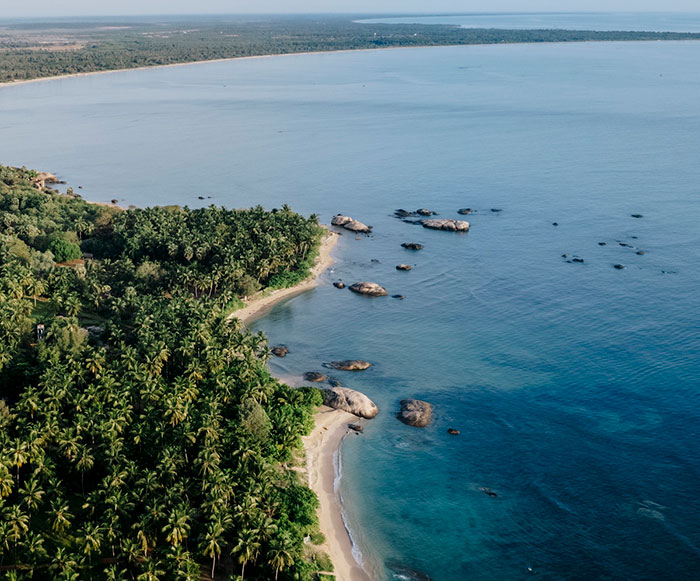
Sun Siyam Pasikudah, part of the Privé Collection under Maldivian-owned Sun Siyam Resorts, will mark World Tourism Day on 27 September 2026 with a full day programme celebrating the culture, cuisine and natural beauty of Sri Lanka’s east coast, paired with community focused sustainability activities.
The celebrations open with a special buffet of authentic Sri Lankan cuisine, followed by a street food festival showcasing regional snacks and traditional sweets rarely found on resort menus. A signature World Tourism Day mocktail and cocktail, created for the occasion, will be served through the day, while traditional Sri Lankan cultural dance performances bring the island’s heritage to life for guests.
Beyond the festivities, the resort has planned a tree planting activity with guests and a beach or park clean up campaign, both reflecting Sun Siyam Pasikudah’s ongoing commitment to responsible tourism along Sri Lanka’s northeast coast.

Landslide Early Warnings issued to the districts of Colombo, Galle, Gampaha, Hambanthota, Kalutara, Kandy, Kegalle, Kurunegala, Matara, Nuwara Eliya and Ratnapura

Showers in the Western, Uva and Sabaragamuwa provinces and in Galle, Matara, Kandy, Nuwara-Eliya, Batticaloa and Ampara districts.

22A, Judicature Amendment Bills passed with 2/3 majority

TIN mandatory for key transactions from Nov. 1

Navy brings 25 Indonesian fishermen ashore after trawler capsizes

Former Mineral Sands Chairman arrested over recruitment irregularities

‘Dates have the highest sugar content to fight Coronavirus’

Sunday Island 27 December – Headlines

#SundayIsland 17th December – Headlines

Sunday Island – 28th March

Sunday Island Headlines – 21 March

Sunday Island – 21st February – Headlines
-

 News6 days ago
Namal Rajapaksa Buddhist gambit fails, bail denied
-

 Features7 days ago
Why the spelling Sri Lankan names in English vary
-

 Features7 days ago
Three bands, a new identity: Sri Lankan wolf snake recognised as distinct species
-

 Business7 days ago
SLIIT holds largest-ever convocation
-

 News6 days ago
Vehicle prices drop by up to Rs. 1 mn, says importers’ body
-

 News6 days ago
Govt monitors reported Saudi death sentence – Foreign Ministry
-
 Business6 days ago
Lanka’s famed beach shack battles demolition
-

 Business7 days ago
All-new Bolero MaXX Pik-Up unveiled in Lanka