
Latest News
WWC 2025: De Klerk upstages Ghosh as South Africa win thriller

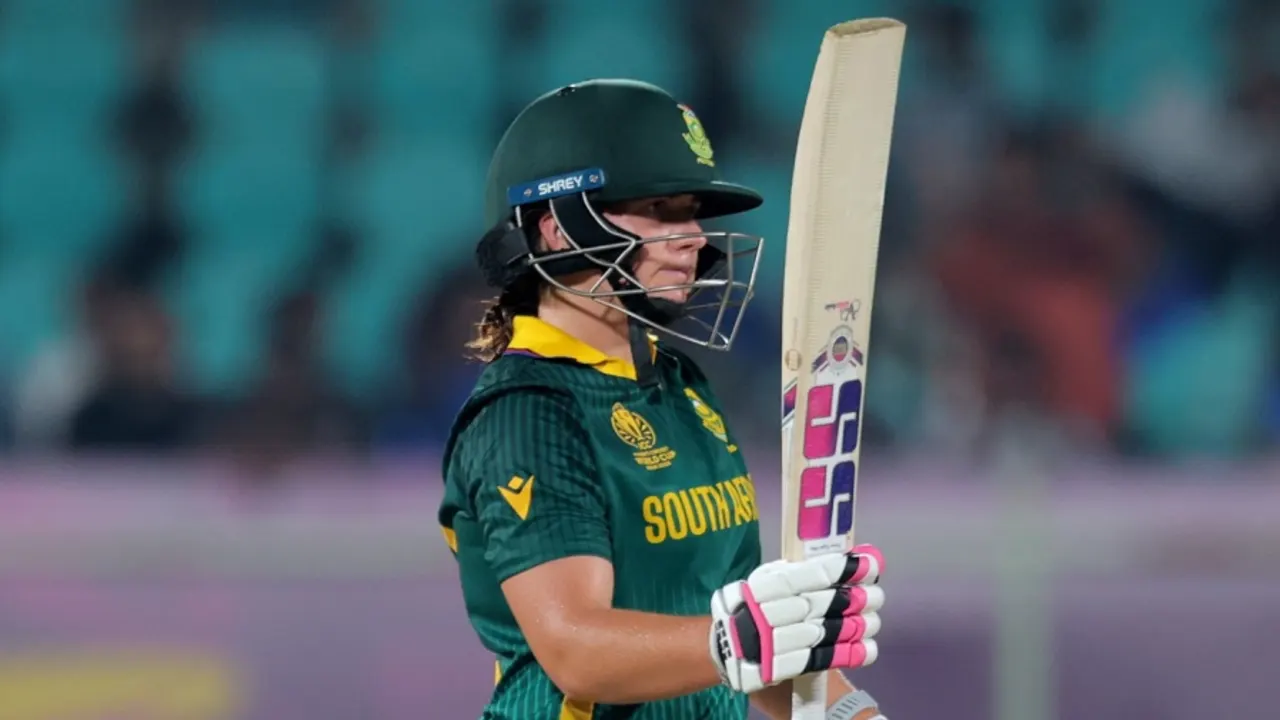
Nadine de Klerk’s career-best 84* trumped Richa Ghosh’s counter punching 94 in the battle of No.8s as South Africa emerged victorious in the Women’s World Cup’s first thriller. South Africa completed the fifth-highest successful chase in World Cups and their eight highest in women’s ODIs in a match where the advantage changed sides several times and overflowed with tension.
Put into bat, India started well when they scored 55 in the powerplay before South Africa stormed through the next 16 overs and reduced India to 102 for 6. Ghosh and Amanjot Kaur put on 51 for the seventh wicket before Ghosh and Sneh Rana, who produced a cameo of 33 from 24 balls took India to a competitive total. In their last 10 overs, India scored 98 runs which may have knocked the wind out of South Africa’s sails.
It seemed that way as their reply started poorly. They were 81 for 5 in the 20th over and looked all but out of the game. Laura Wolvaardt and Chloe Tryon put on 61 for the sixth wicket, Chloe and de Klerk shared a stand of 69 but when Tryon was dismissed, South Africa still needed 41 runs off 25 balls. De Klerk scored 39 runs off the next 15 balls she faced to take South Africa to victory with seven balls to spare. South Africa moved up to fourth on the points table, level with England and India but with a lower net run-rate.
Having chased 275 against India at the 2022 World Cup, South Africa would have known what’s possible but they were off to the worst possible start. Tazmin Brits was dismissed for the first duck of her ODI career when Kranti Gaud pulled off a stunning return catch, reacting in a time of 0.5 seconds to grab the ball with her left hand. Sune Luus reviewed successfully when given out lbw to Amanjot but went fishing at a wide ball in the next over and nicked off. India thought they had Kapp six balls later but it bobbled out of Rawal’s hands at point.
Kapp and Wolvaardt recovered decently with a 39-run third-wicket stand but were separated by a magic ball from Rana which held its line as Kapp played inside and was bowled. Anneke Bosch’s wretched run continued and she popped a return catch to Deepti to extend her run of scores under 20 to eight ODI innings. SInalo Jafta continued to look convincing at No.6 but was the first South African done in by left-arm spin. She was lbw to Shree Charani as she shuffled across and missed a flick.
Through all that Wolvaardt was stoic and patient. She reached fifty off 81 balls, by which point Tyron was on five off 22. The pair worked well together, Tryon found some scoring rhythm and their partnership grew to 61 before Gaud was brought back for a second spell. Her fifth ball was full and straight and Wolvaardt could not keep it out as it smashed into middle stump.
Tryon kept things going with de Klerk and South Africa entered the last 10 overs needing 81 runs. What they didn’t have was a player with Ghosh’s power. Tryon may be as close as it comes but she struggled with a calf niggle that was protected by a compression sock and then required heavy strapping. They needed 60 off the last six overs. Tryon tried to get Amanjot away but it was de Klerk who got a short, wide ball away for four and she found her touch at the right time.
In the next over, she hit Rana for six and four before taking a single to put Tryon on strike. She came down the track and was hit on the pad and given lbw and a review could not save her. Then, it was all de Klerk. She took on Gaud and sent her over midwicket and down the ground for back-to-back sixes – the first got her to fifty – and then made room to carve her away for four. At that point, Ghosh went down needing treatment on her hamstring a la Rishabh Pant in the T20 World Cup final. Then, South Africa lost their heads. This time, de Klerk kept hers.
She took a smart single to keep strike. 23 needed off 18. The game was all but done but de Klerk still needed to stay there. She hit two fours off Deepti, over square leg and covers and then South Africa needed 12 off 12. De Klerk finished it off with two sixes over deep midwicket and long-on as Wolvaardt fist-pumped and a small contingent of South African fans sang louder than the several thousand home crowd.
Earlier, India started well as boundaries came easily in the opening exchanges with two off Kapp’s first over and five in the first five overs. Pratika Rawal hit all of them and survived an lbw shout off Kapp after the South African overstepped. Smriti Mandhana struggled for fluency but hit a glorious shot in anger when she advanced on Khaka and hit her back over her head for six. With that she become the batter with the most runs in ODIs in a calendar year, going past Belinda Clarke.
After a solid powerplay, Mandhana became the first to fall when she went after Nonkululekho Mlaba’s second ball and toe-ended it to Luus at long-on. Mlaba and de Klerk dried up boundaries, with only one between overs 10 and 17 and then Mlaba struck again. She spun the ball past Harleen Deol’s outside edge, bowled her and waved goodbye for good measure.
South Africa’s fourth seam option Tumi Sekhukhune was brought on in the 18th over and immediately found a good length. In her second over, she foxed Rawal with a slower ball. Rawal was too early on the stroke and got a leading edge that went up high enough for Brits to comfortably make her way from midwicket to take it.
That brought Jemimah Rodrigues to join Harmnapreet Kaur. But they were only together for just an over. Rodrigues was dismissed for her second duck in three matches when she attempted a sweep against Tryon and missed. She was given out lbw and reviewed unsuccessfully, making it the third time in the tournament she has been dismissed by left-arm spin. Overall, India are the team that have been most susceptible, with 11 dismissals in the tournament to left-arm spin.
Harmanpreet laboured her way to nine off 24 balls before she tried to force Tryon away on the off side but top-edged and Kapp took a low catch at backward point. With India 100 for 5 at the halfway mark, Wolvaardt went for the kill and brought back Kapp. Deepti followed her down leg and was caught behind but reviewed in vain. India were 102 for 6 but Amanjot and then some to come.
After digging India out of a similar hole – 124 for 6 against Sri Lanka. – Amajot recovered from the fever that kept her out of the Pakistan match and found herself needing to do it again. Ghosh almost deserted her when she nearly popped a return catch to Kapp but then hit Tryon over mid-on for four for the first boundary in 14.3 overs. A rare Luus misfield gave Ghosh a second four off Khaka and it was clear she would become the senior partner. She swept Tyron and Mlaba, hit Sekhukhune over long-on for six and contributed 36 runs in a stand of 51 with Amanjot. By the time Amanjot was ready to get going, Tryon was delivering her last ball and Amanjot mis-hit her over mid-off. Luus ran backwards to take her 56th international catch, equally Dane van Niekerk for the most outfield catches by a South African in ODIs.
India lost Amanjot with the last 10 overs looming but Ghosh provided momentum. She picked up a de Klerk slower ball and hit it for six and got back-to-back boundaries off Mlaba and reached her seventh ODI fifty off 53 balls. Ghosh reverse swept Mlaba, hit Kapp over cover for four and then took on Khaka, taking 19 runs off seventh over. She entered the 90s when she hit de Klerk over her head for four and then moved to 94 with a slice past point. She hit the next ball to long-on but reviewed for a no-ball and ball tracking showed the ball would have passed her 4cm below her waistline. South Africa finished with two wickets in two balls which may have been crucial to their victory march.
Brief scores:
South Africa Women 252 for 7 in 48.5 overs (De Klerk 84*, Laura Wolvaardt 70, Marizanne Kapp 20, Chloe Tryon 49; Kranti Goud 2-59, Sneh Rana 2-47) beat India Women 251 in in 49.5 overs (Pratika Rawal 37, Smriti Mandhana 23, Richa Ghosh 94, Sneh Rana 33; Marizzanne Kapp 2-45, Nadine de Klerk 2-52, Nonkululeko Mlaba 2-46, Chloe Tryon 3-32) by three wickets
[Cricinfo]

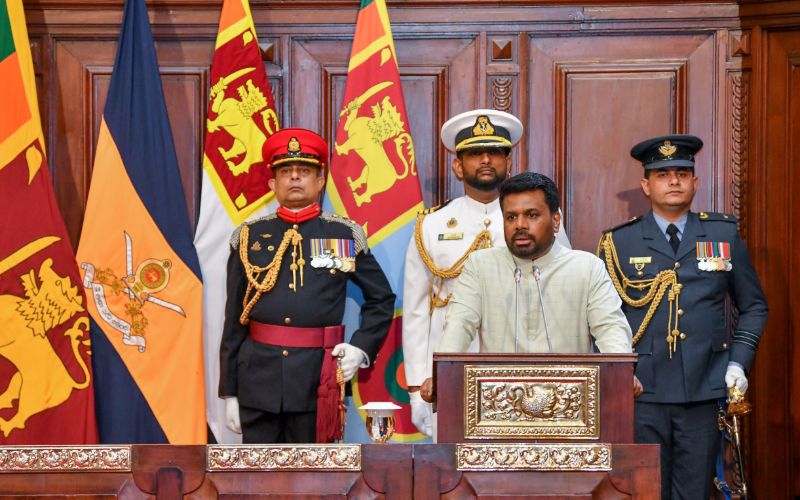
The presentation of the “Vishishta Seva Vibhushana” medals, awarded in recognition of the distinguished service rendered by senior officers of the regular forces of the Sri Lanka Army, Navy and Air Force, was held this afternoon (30) at the Presidential Secretariat under the patronage of President Anura Kumara Dissanayake.
The President stated that the senior officers of the three Armed Forces receiving the “Vishishta Seva Vibhushana” medals today have made an exceptional contribution to the country and its people. He noted that they remained committed to their duties and accountable for their responsibilities regardless of whether it was day or night, whether weather conditions were favourable or adverse, or whether their lives were at risk. He emphasised that the country needs a public service of this nature today.
The “Vishishta Seva Vibhushana” medal, established as an award under a proclamation issued by the President, is a distinguished honour. It is awarded only to officers of the three Armed Forces who have completed at least 25 years of continuous service and have maintained a commendable service record, and in accordance with regulations established by the President through a notification published in the Gazette regarding its conferment, forfeiture or restoration.
A total of 57 serving and retired officers of the three Armed Forces were presented with the “Vishishta Seva Vibhushana” medals by the President.
Following the presentation, the President joined the medal recipients for a group photograph.
The full speech delivered by President Anura Kumara Dissanayake on the occasion is as follows:
“We have a special appreciation for you as a group of officers who have demonstrated a strong sense of responsibility and accountability. As the most senior officers of the three Armed Forces, you are receiving one of the most important and distinguished honours today. You have earned this honour in recognition of the exceptional contribution you have made throughout a significant part of your lives towards safeguarding our motherland and its people. We are deeply grateful to you for the outstanding service you have rendered in protecting the country and its people.
As the most senior officers who have served in the three Armed Forces, you have played an exceptional role for more than 25 years, including during the highly complex periods of armed conflict faced by our country and during other natural disasters. I know that you carried out these responsibilities with greater commitment, endurance and risk than an ordinary public servant. Your wives and family members also played an exceptional role in supporting you throughout your discharge of these social responsibilities. They stood behind you and provided the strength and support you needed while you made immense sacrifices and faced considerable risks. We must also extend our special appreciation to them for the significant role they played in supporting you.
One of the major challenges we face as a Government today is the lack of a strong public service. The public service has suffered a significant decline. We are all aware, to varying degrees, of the reasons that have contributed to this situation. If we are to move forward as a country, we need a strong public service. The contribution you have made as public officials towards strengthening the public service has been exceptional. As the most senior officers of the three Armed Forces, you have played a significant role in serving the public service. You remained committed to your duties. You did not consider whether your duties had to be performed during the day or at night, under favourable or adverse weather conditions, or in situations where your lives were at risk. You remained committed to your duties and accountable for your responsibilities. We need a public service of this nature. As a group that has demonstrated responsibility and accountability, we have a special appreciation for you.
If our country has experienced setbacks on many fronts, overcoming these challenges and moving forward requires people who have the resilience to endure them. You are receiving this distinguished “Vishishta Seva Vibhushana” honour today as a group that has faced the challenges encountered throughout your careers and made an exceptional contribution towards overcoming them.
A common challenge we face as a country is establishing professionalism. We can create positions and professions. However, the question remains as to whether an individual has attained the required professional standard in the discharge of their duties. Today, these 57 officers have been selected from among the many officers of the three Armed Forces as those who have demonstrated such professionalism. This is essential to our public service. You have set important examples towards restoring the public service.
There is also a concern regarding discipline within our public service and society. All of us must have the ability to maintain self-discipline. This is extremely important if we are to move forward as a country. Public servants work within the public service in the course of their duties, while in their everyday lives, they live and interact with wider society. In such circumstances, how do we maintain self-discipline? Many countries have progressed not merely through laws and regulations, but through the self-discipline developed by their people.
Society is exposed to many forms of irregularities and anti-social activities. In such an environment, how do we maintain self-discipline? If we are able to maintain self-discipline regardless of the external environment, even when it is contrary to such values, that is extremely important.
It is true that the “Vishishta Seva Vibhushana” award recognises your service. It is also true that, as President, I and the State honour you. However, this should no longer be regarded as something personal. This is not merely a medal or recognition that you have received. It should be regarded as a social responsibility. Only then can you become an example to your children, neighbours and relatives. You can also become an example to your institution. Only then can we rebuild our public service and society, which are facing a serious decline, and provide an example for others to follow. Therefore, I believe that the medal you receive in recognition of your distinguished service will serve as a foundation for our society to move in a new direction”.
Deputy Minister of Defence, Major General Aruna Jayasekara (Retired), Secretary to the President Dr Nandika Sanath Kumanayake, Secretary to the Ministry of Defence, Air Vice Marshal H. S. Sampath Thuyacontha (Retd) and senior officials, including the Commanders of the three Armed Forces, were also present.
[President’s Media Division]
[Prime Minister’s Media Division]
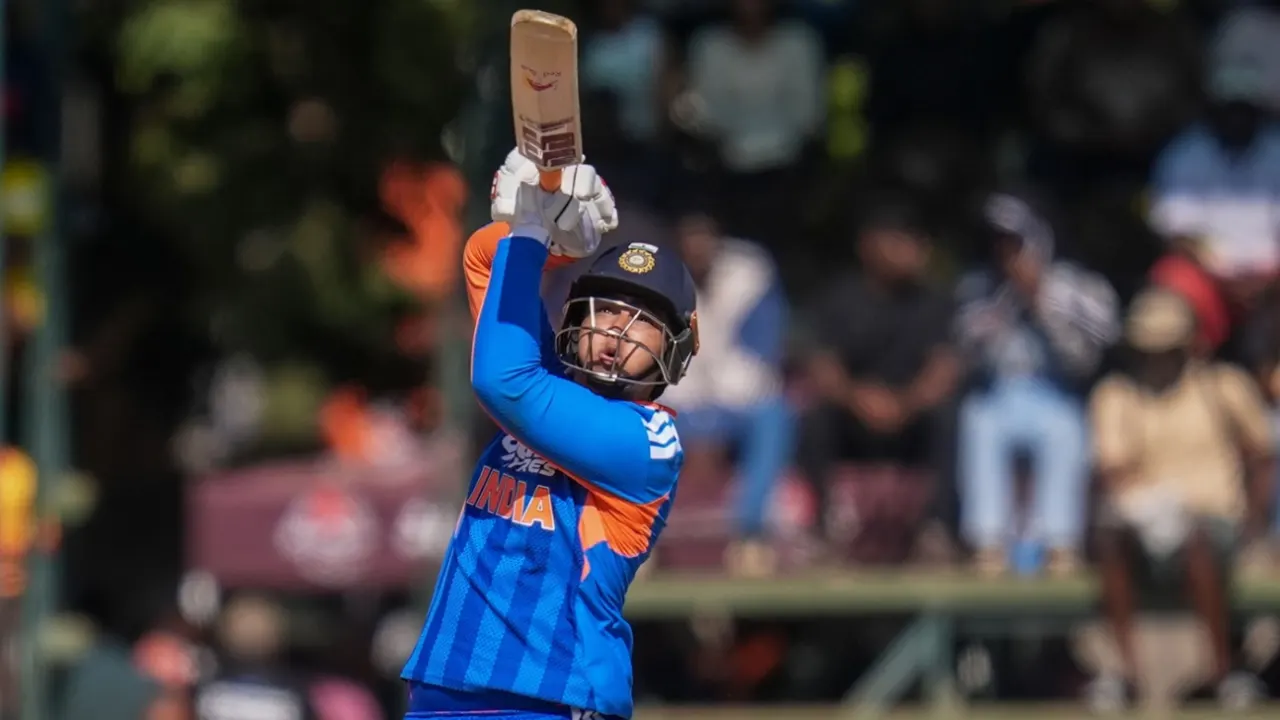
After six abandoned matches, five of them without a toss, because of incessant rain – Shreyas Iyer called it a “torrential downpour” – in Nisshin, we might finally get some cricket again at the men’s Asian Games.
The timing couldn’t have been better because the four remaining games will decide the positions on the podium. Pakistan and Bangladesh still don’t have a gold in this edition (as of Wednesday morning); Sri Lanka have just one; India have seven but that’s well behind the 28 they finished with in 2023.
India are the defending champions, and it will take a gargantuan effort from the second string Sri Lanka side to throw them off their path. Even the full-strength Sri Lanka T20I side has not been able to score 150 of late, or win a match since June, and have only one win from their last ten attempts. The Sri Lanka squad that hasn’t played even a moment of cricket since landing in Japan has a captain – Sahan Arachchige – with just one T20I to his name, which came back in the 2023 Asian Games, when they lost to Afghanistan. The more recognisable names are Niroshan Dickwella and Ashen Bandara, who haven’t featured in a T20I since 2021 and 2023 respectively. There are six other players in that squad of 15 who have played fewer than ten T20Is each, and another four who are uncapped.
India, unlike most other Full Member sides, have sent their big guns to Japan.
There’s also an ODI series going on at home, and the ODI World Cup is just a year away. But they chose to send the likes of Jasprit Bumrah, Shreyas Iyer and Ishan Kishan, among others, to Japan instead, which shows their commitment to the gold-medal cause.
Rain or shine, Sri Lanka will have to sweat it out on Thursday to try and get the better of India.
India have been plagued by injuries of late and one of the names on that list was that of Washington Sundar, who returned to action in the Japan T20I last week. He didn’t get to bat, but bowled two overs and took two wickets in his first game in two months. India would want to give him more game time before he heads back home for the West Indies T20Is that start on October 6. Washington has otherwise had an impressive year across formats with an unbeaten 52 in an ODI to give India their first win of their UK tour after he took a four-for in the Test against Afghanistan, in which he also scored 52*.
Niroshan Dickwella last played a T20I in 2021 and he is back in the scheme of things despite an underwhelming Lanka Premier League a couple of months ago, where he scored only 110 runs in six innings at a strike rate of 142.85 while averaging 18.33. He has, however, been among the runs of late, and scored a brisk 80 off 115 balls in the first Test against India. If he gets to bat on Tuesday, this could be a great chance for Dickwella to show why he was once an all-format regular for Sri Lanka.
India had rested Bumrah for the one-off T20I against Japan and played Arshdeep Singh and Yash Thakur as the quicks, and Ravi Bishnoi, Axar Patel and Washington as the lead spinners. India will now have to decide whom to leave out for Bumrah. The other question will be whether to give Vaibhav Sooryavanshi a game, although neither Abhishek Sharma nor Sanju Samson have any reason to be dropped.
India (possible): Abhishek Sharma, Sanju Samson (wk), Ishan Kishan, Shreyas Iyer (capt), Tilak Varma, Axar Patel, Shivam Dube, Washington Sundar, Ravi Bishnoi, Yash Thakur/Arshdeep Singh, Jasprit Bumrah
Sri Lanka will be expected to hand out a few debut caps and give game time to some of the more inexperienced players.
Sri Lanka (possible): Niroshan Dickwella (wk), Lasith Croospulle, Sahan Arachchige (capt), Nuwanidu Fernando, Ashen Bandara, Chamika Karunaratne, Tharindu Ratnayake, Wanuja Sahan, Vijayakanth Viyaskanth, Nuwan Thushara, Binura Fernando
[Cricinfo]

What happened on diverted Flydubai flight from Dubai to Tel Aviv?

“Vishishta Seva Vibhushana” medals presented under President’s patronage

Hindu Priests Seek State Intervention for Sivarasa Anojan

“A Nation United” National Steering Committee meets under President’s Chairmanship

PM declares open 2nd Day of National AI Expo 2026

Waste management and recycling to receive priority in the 2027 Budget – PM

‘Dates have the highest sugar content to fight Coronavirus’

Sunday Island 27 December – Headlines

#SundayIsland 17th December – Headlines

Sunday Island – 28th March

Sunday Island Headlines – 21 March

Sunday Island – 21st February – Headlines
-

 Latest News7 days ago
Showers above 100 mm are likely at some places in the Western, Sabaragamuwa, Central and North-western provinces and in Galle and Matara Districts
-

 Editorial7 days ago
Crimes punished and unpunished
-

 Features6 days ago
Beyond traditional jobs: Why Sri Lanka needs to facilitate the gig economy
-

 Editorial5 days ago
Birth of a bad law
-

 News3 days ago
Police remove Thileepan statue in Jaffna
-
 Latest News6 days ago
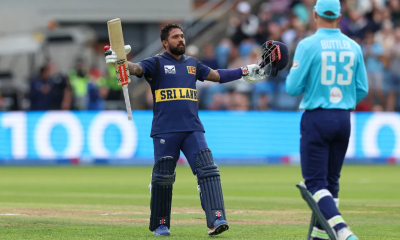
Kusal, Wellalage star as Sri Lanka defend 322 in Headingley thriller
-

 News5 days ago
TIN mandatory for key transactions from Nov. 1
-

 News7 days ago
IMF: Sri Lanka on course for 2027 market return