
Foreign News
Why is Namibia culling elephants and hippos for meat?

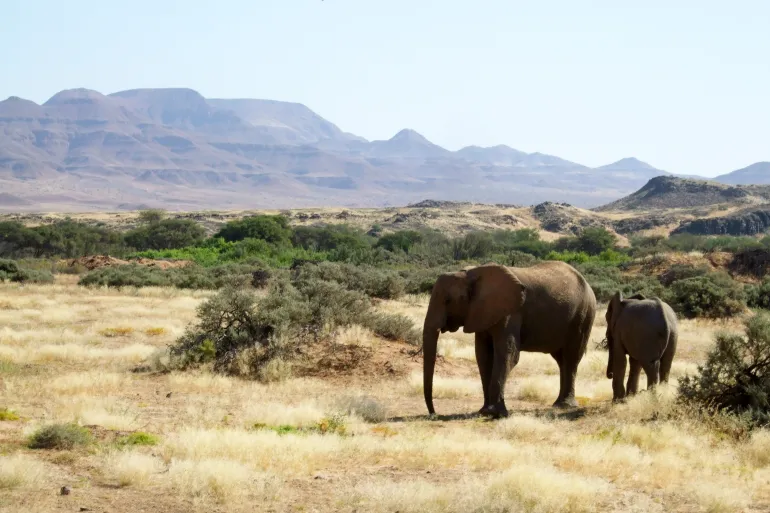
More than 700 wild animals, including hippos and elephants, are being culled in Namibia’s game parks to provide meat for the country’s hungry, the government has said, as the arid Southern African region battles its worst drought in 100 years.
A spokesperson for United Nations Secretary-General Antonio Guterres described the situation in the country as a “humanitarian crisis we’ve never spoken much of” at a media conference on Friday.
About 84 percent of the country’s food reserves have been exhausted as a result of the drought, the UN said, with nearly half of the 2.5 million population expected to experience high levels of food insecurity during the lean season from July to September.
“This exercise is necessary and is in line with our constitutional mandate where our natural resources are used for the benefit of Namibian citizens,” a statement on Monday from the country’s environment ministry read.
Here’s what you need to know about the cull-for-meat plan.
Southern Africa is recording its most severe drought in decades, beginning from October 2023. Rising temperatures in the region have resulted in low rainfall. In February, when the rainy season would normally peak, the region received less than 20 percent of needed rainfall, according to scientists.
While the region is drought-prone, experts say the El Nino weather phenomenon which typically causes higher global temperatures, combined with human-caused climate change, is driving the current worse than usual dry spell. Namibia, Zimbabwe, Malawi and Zambia have declared drought emergencies.
Like its neighbours, Namibia is dependent on agriculture and livestock which need rain to flourish. However, it has recorded several droughts in recent years, affecting food production. Authorities declared drought emergencies three times between 2013 and 2019.
The UN said the current drought is contributing to cases of acute malnutrition – and in some cases, death – in children under five.
The drought also increases the risks of violence against women and girls, the UN said. Women and girls who usually fetch water for their families are having to travel longer distances, making them more vulnerable to assault.
Authorities say diseases like cholera are also spreading.
In addition, the Namibian environment ministry says drier than normal conditions are exacerbating human-wildlife conflict as man and beast compete for water and land resources. Namibia, like its neighbours, has significant numbers of wildlife, including 24,000 elephants, one of the largest populations in the world.

Professional hunters and safari operators are being contracted to kill a total of 723 animals, according to authorities.
The animals identified for culling include 30 hippos, 60 buffalos, 50 impalas, 100 blue wildebeest, 300 Zebras, 83 elephants and 100 elands (antelopes).
Already, 56,875 kg of meat from 157 wild animals has been sourced for the government relief programme, according to the government statement. It is not clear which animals have been culled so far and over what period.
The culls are taking place in parks and communal areas that authorities believe have “sustainable game numbers” – that is, where the culling will not adversely affect the animal population, and where the animals may already exceed available water and grazing resources.
Elephants are also being specifically targeted in areas which have become prone to human-wildlife conflict.
Parks in which culling is being carried out include Namib-Naukluft Park, Mangetti National Park, Bwabwata National Park, Mudumu National Park and Nkasa Rupara National Park.

In 2023, Namibian authorities resolved to reduce elephant numbers because of rising cases of human-wildlife conflict in the country. The culling program, authorities said on Friday, would help achieve that goal, in addition to providing food.
Countries across Southern Africa say they are struggling with rising elephant numbers.
Botswana, Namibia, Angola, Zambia and Zimbabwe account for more than half of the African bush elephant population. Governments there say the numbers have rapidly increased since the 1990s and now they face an “overpopulation” problem. However, critics say those claims are exaggerated.
While elephants are a popular attraction on safaris, communities living close to them say they are increasingly bearing the brunt of their tempers. Dwindling animal habitat space as a result of human encroachment, as well as lower water and food resources, force more people into contact with the animals.
Without intervention amid the current crisis, conflicts between elephants and humans are expected to worsen, Namibian officials said.
All five of the countries with the most elephants allow trophy hunting to offset their numbers and generate income. Some have also tried to sell off their elephants to private entities. However, those actions have often attracted widespread criticism from animal rights organisations and Western governments.
In a controversial auction in 2021, Namibia tried to sell off 170 elephants but only a third were bought. Officials blamed the failure on a backlash from animal welfare groups.
Last year, Botswana President Mokgweetsi Masisi threatened to send 20,000 elephants to Germany, after authorities there mulled policies to restrict trophies from crossing its borders because of poaching concerns. Botswana hosts about 130,000 bush elephants, the world’s largest population.
[Aljazeera]

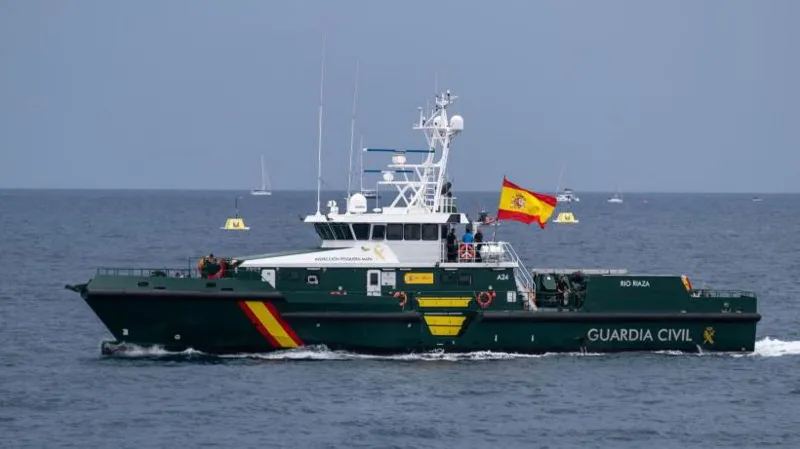
Spanish police have seized what is thought to be a national record haul of cocaine from a ship in the Atlantic Ocean.
Between 30,000 to 45,000kg were found when the Civil Guard intercepted a freighter in international waters, the body’s main union, the AUGC, announced. It called the move a “historic blow to drug trafficking”.
The vessel was intercepted off Spain’s Canary Islands on Friday and around 20 people were arrested, the AUGC told the AFP news agency. It had travelled from Sierra Leona and was on its way to Libya.
The Civil Guard has declined to give details of the investigation for legal reasons.
Interior Minister Fernando Grande-Marlaska told reporters in Madrid that the seizure was “one of the biggest, not only nationally but internationally”.
The Civil Guard shared a photograph on X showing the drugs stuffed into the hold of the intercepted vessel.
“Today history is being written in the Maritime Service of the Civil Guard,” it wrote.
“Intercepted in international waters the largest known seizure: between 30,000 and 45,000 kg of cocaine on board a freighter.”
While the boat was headed to Libya, AFP reported that the pattern of previous operations suggests that it was due to offload the drugs onto smaller vessels for distribution in Europe.
In January, Spanish authorities made its biggest seizure of cocaine at sea from a ship that was carrying almost 10 tonnes.
[BBC]

Three people have died and a UK national is seriously ill in hospital after a suspected hantavirus outbreak on a small cruise ship in the Atlantic Ocean.
The operator of the MV Hondius ship, tour company Oceanwide Expeditions, said a Dutch husband and wife, as well as a German national, had died but the cause has not yet been established.
However, the Dutch company said hantavirus has been confirmed in the case of the 69-year-old UK national who is in intensive care in Johannesburg, South Africa.
Hantavirus is usually passed to humans from rodents via their faeces, saliva or urine. It can cause severe respiratory illness. Rarely, it can be transmitted between people.
The MV Hondius vessel is currently off the coast of Cape Verde and has 149 people onboard.
Oceanwide Expeditions said there were also two crew members on board “with acute respiratory symptoms, one mild and one severe”.
They were of British and Dutch nationality and both required urgent medical care, it said. It said it had not been established that hantavirus had been confirmed in the pair. And it added that no other persons with symptoms had been identified.
Negotiations are in progress with local authorities following what Oceanwide Expeditions described as “a serious medical situation”.
Dr Aaron Motsoaledi, South Africa’s minister of health, said of the British patient that he was critical and had been admitted to a private facility.
“He’s being taken care of. As you know, hantavirus, like all viruses, don’t have any specific treatment, so they are giving symptomatic treatment and support as much as they could.”
He said health workers and anyone who had contact with the patient would now be traced and tested.
Outlining a timeline, the company said a passenger had become unwell while onboard and died on 11 April.
His cause of death could not be determined, and his body was taken off the ship after it docked at St Helena on 24 April.
The passenger’s wife also disembarked on St Helena and the firm said it was told she had become unwell during the return journey and later died.
“At this time, it has not been confirmed that these two deaths are connected to the current medical situation on board,” it added.
On 27 April, the firm said, another passenger – the British national – became seriously ill and was “medically evacuated” to South Africa.
The 69-year-old remains in a critical but stable condition in Johannesburg after it was confirmed a variant of hantavirus had been identified.
The firm added that on Saturday, a third passenger onboard MV Hondius died.
The cause of death has not been established, Oceanwide Expeditions said. It confirmed the passenger was German.
Oceanwide Expeditions said the cause of the deaths were being investigated.
“The disembarkation of passengers, medical evacuation and medical screening require permission from, and co-ordination with, the local health authorities,” it said. “Local health authorities have visited the vessel and assessed the situation.
“The medical transfer of the two ill persons on board has not yet taken place.”
It added that the option of sailing on to Las Palmas or Tenerife was being considered “to be the gateway for disembarkation, where further medical screening and handling could take place”.
The World Health Organization (WHO) said it was “acting with urgency” to support the MV Hondius, and thanked South African authorities for taking care of the British patient.
WHO’s regional director for Europe, Dr Hans Henri P Kluge, said: “I am in close contact with our teams to ensure a co-ordinated, science-based response.
“Hantavirus infections are uncommon and usually linked to exposure to infected rodents.
“While severe in some cases, it is not easily transmitted between people. The risk to the wider public remains low. There is no need for panic or travel restrictions.”
According to the South African government, MV Hondius departed from Ushuaia in southern Argentina about three weeks ago, before it completed its journey to Cape Verde, where it is anchored outside the capital, Praia.
It is described as a 107.6m (353ft) polar cruise ship, with space for 170 passengers in 80 cabins, along with 57 crew members, 13 guides and one doctor.
One passenger onboard the MV Hondius, who asked to remain anonymous, told the BBC: “The latest word is that a plane is on its way and once it gets here three people will be evacuated from the ship and flown straight to Europe.
“Then the rest of us will almost certainly sail to the Canary Islands.
“The Cape Verde authorities clearly want nothing to do with us. This is what we’re hearing from the captain and staff. From what I can see the mood (on the ship) is pretty good.
“Only one person has been tested (the one now in South Africa) and he tested positive for hantavirus. So, we don’t actually know yet if the other cases are that or something unrelated.
“If they are all hantavirus then the transmission is a bit mysterious. We’ve been informed that there are no rodents on board, and person-to-person transmission is difficult/rare.
“Hopefully the other patients on board will be tested soon and then we’ll know better what’s going on.”
President of the Cape Verdean Public Health Institute, Maria Da Luz, said passengers would not be disembarking in Cape Verde in order to protect the local population, Cape Verde’s media outlet A Nacao reports.
Oceanwide Expeditions said strict precautionary measures were in process on board, including isolation measures, hygiene protocols and medical monitoring.
“All passengers have been informed and are being supported,” it said.
“Oceanwide Expeditions is in close contact with those directly involved and their families, and is providing support where possible.”
Microbiologist Siouxsie Wiles told the BBC the time between people being exposed to hantavirus and showing symptoms could be anywhere from one to eight weeks.
“With this incubation period are we going to see more people coming down with the disease in the next days and weeks?”
The UK Foreign Office told the BBC it was monitoring reports, and ready to support British nationals.
Hantavirus was in the headlines last year after the wife of Oscar-winning actor Gene Hackman died from a respiratory illness linked to hantavirus in March 2025.
[BBC]
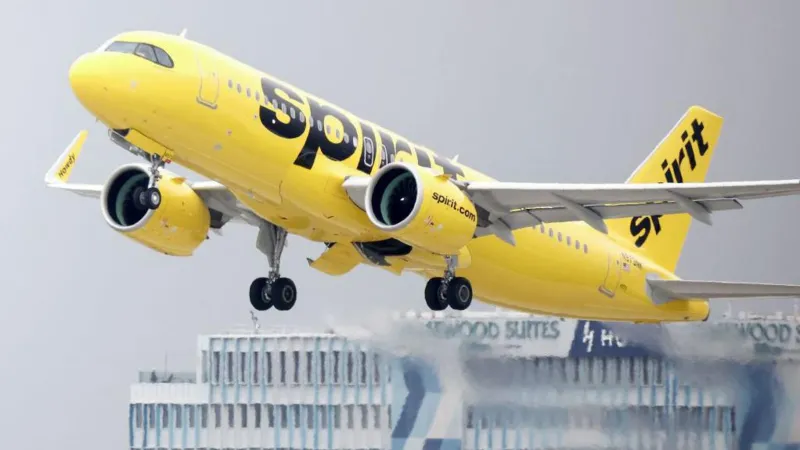
Spirit Airlines is shutting down as a business after failing to secure a $500m (£368m) bailout from the Trump administration.
The budget airline was in talks with the US government about a rescue deal which would have saved it from collapse.
But discussions collapsed and the carrier said in an announcement on its website on Saturday that with “great disappointment” the airline had “started an orderly wind-down of our operations, effective immediately”.
Spirit was emerging from its second bankruptcy filing in recent years before the US-Israel war in Iran, but the resulting surge in jet fuel costs pushed it over the brink.
All upcoming flights with Spirit have been cancelled.
In Saturday’s statement, the airline said it would automatically process refunds for any flights purchased through Spirit with a credit or debit card to the original form of payment.
Guests who booked flights via a travel agent should contact the travel agent directly to request a refund.
Compensation for those who booked flights using a voucher, credit, airline points or any other method will be determined at a later date through the bankruptcy court process.
The airline said it was unfortunately not able to reimburse guests for other related costs such as emergency hotel stays or replacement flights associated with cancelled trips.
Spirit’s customer service is no longer available, the airline said early on Saturday, but customers with questions can contact the carrier’s claims agent.
The airline’s demise was so abrupt that it has left some ticket holders in the lurch.
One Spirit customer, Yash Kothari, told the BBC’s US partner CBS News that he didn’t learn about the airline’s shutdown until he arrived at Philadelphia International Airport for a flight at 05:45 local time (09:45 GMT) on Saturday.
“The email came in at 1 am, so I was unaware,” Kothari told the outlet.
Fuel costs can make up as much as 40% of an airline’s outgoings, and airlines have seen the cost of jet fuel double since the US and Israeli strikes began at the end of February.
Savanthi Syth, airlines analyst at the investment bank Raymond James, said spiralling jet fuel costs in the wake of the Iran war had proved “the final nail in the coffin” for Spirit.
Speaking to the BBC, Syth said the operator had shied away from the radical overhaul it needed during a 2024 bankruptcy procedure.
Spirit had been in the process of making the changes it needed in its current bankruptcy process, scaling back the number of flights it was offering and aircraft it owned, she said.
But its ability to survive the year was in question even before the Iran war, Syth added.
“If it wasn’t for the fuel scenario, they would have been okay through the summer, beyond the summer I would have said it was still precarious.”
Some have been cutting flights and others have hiked fares to cope. with the cost increases. At the same time, the head of the International Energy Agency (IEA) has warned Europe could run out of jet fuel in as little as six weeks.
At the end of April, Spirit had been confident its rescue deal with the Trump administration was to be finalised imminently.
But after that deal fell through, Trump on Friday told BBC partner CBS the airline had been offered “a final proposal” to keep it in business.
The earlier plan, which would have seen the US government take effective ownership of as much as 90% of the airline, faced stiff opposition from Wall Street, Capitol Hill and even a member of Trump’s own cabinet. Transportation Secretary Sean Duffy told Reuters a rescue would amount to tossing “good money after bad”.
[BBC]

Members of Sri Lanka Cricket Transformation Committee Officially Appointed

Three prison guards arrested following the death of an inmate

Showers or thundershowers will occur at most places of the island after 1.00 pm.

CJ urged to inquire into AKD’s remarks on May 25 court verdict

ITAK MPs representing East take their woes to Canadian HC

People demand release of Keppapilavu land

‘Dates have the highest sugar content to fight Coronavirus’

Sunday Island 27 December – Headlines

#SundayIsland 17th December – Headlines

Sunday Island – 28th March

Sunday Island Headlines – 21 March

Sunday Island – 21st February – Headlines
-

 News6 days ago
Treasury chief’s citizenship details sought from Australia
-

 News5 days ago
Rooftop Solar at Crossroads as Sri Lanka Shifts to Distributed Energy Future
-
 News4 days ago
“Three-in-one blood pressure pill can significantly reduce risk of recurrent strokes”
-

 News6 days ago
Central Province one before last in AL results
-

 Sports6 days ago
Well done AKD!
-

 News4 days ago
Alarm raised over plan to share Lanka’s biometric data with blacklisted Indian firm
-
 News2 days ago
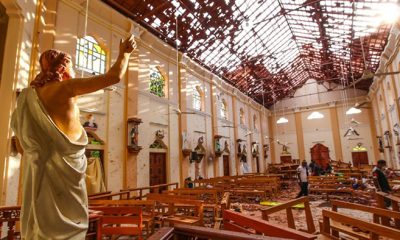
Easter Sunday Case: Ex-SIS Chief concealed intel, former Defence Secy tells court
-

 News3 days ago
Ten corruption cases set for court in May, verdict ordered in one case – President