
Foreign News
Spain seizes record amount of cocaine in Atlantic Ocean, authorities say

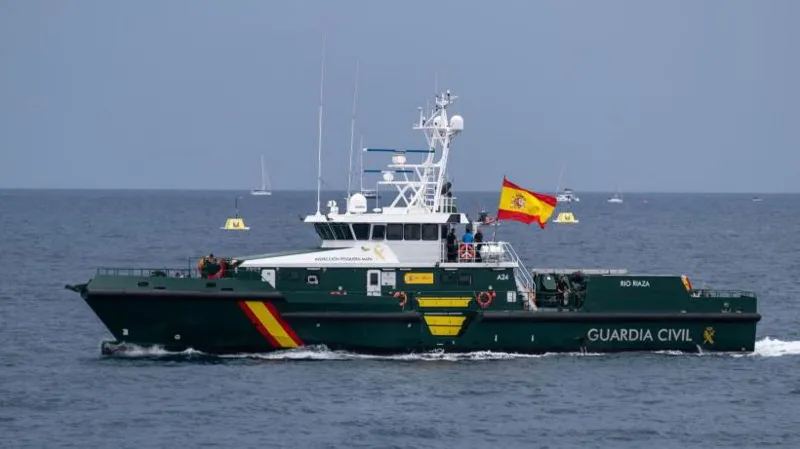
Spanish police have seized what is thought to be a national record haul of cocaine from a ship in the Atlantic Ocean.
Between 30,000 to 45,000kg were found when the Civil Guard intercepted a freighter in international waters, the body’s main union, the AUGC, announced. It called the move a “historic blow to drug trafficking”.
The vessel was intercepted off Spain’s Canary Islands on Friday and around 20 people were arrested, the AUGC told the AFP news agency. It had travelled from Sierra Leona and was on its way to Libya.
The Civil Guard has declined to give details of the investigation for legal reasons.
Interior Minister Fernando Grande-Marlaska told reporters in Madrid that the seizure was “one of the biggest, not only nationally but internationally”.
The Civil Guard shared a photograph on X showing the drugs stuffed into the hold of the intercepted vessel.
“Today history is being written in the Maritime Service of the Civil Guard,” it wrote.
“Intercepted in international waters the largest known seizure: between 30,000 and 45,000 kg of cocaine on board a freighter.”
While the boat was headed to Libya, AFP reported that the pattern of previous operations suggests that it was due to offload the drugs onto smaller vessels for distribution in Europe.
In January, Spanish authorities made its biggest seizure of cocaine at sea from a ship that was carrying almost 10 tonnes.
[BBC]


Three people have died and a UK national is seriously ill in hospital after a suspected hantavirus outbreak on a small cruise ship in the Atlantic Ocean.
The operator of the MV Hondius ship, tour company Oceanwide Expeditions, said a Dutch husband and wife, as well as a German national, had died but the cause has not yet been established.
However, the Dutch company said hantavirus has been confirmed in the case of the 69-year-old UK national who is in intensive care in Johannesburg, South Africa.
Hantavirus is usually passed to humans from rodents via their faeces, saliva or urine. It can cause severe respiratory illness. Rarely, it can be transmitted between people.
The MV Hondius vessel is currently off the coast of Cape Verde and has 149 people onboard.
Oceanwide Expeditions said there were also two crew members on board “with acute respiratory symptoms, one mild and one severe”.
They were of British and Dutch nationality and both required urgent medical care, it said. It said it had not been established that hantavirus had been confirmed in the pair. And it added that no other persons with symptoms had been identified.
Negotiations are in progress with local authorities following what Oceanwide Expeditions described as “a serious medical situation”.
Dr Aaron Motsoaledi, South Africa’s minister of health, said of the British patient that he was critical and had been admitted to a private facility.
“He’s being taken care of. As you know, hantavirus, like all viruses, don’t have any specific treatment, so they are giving symptomatic treatment and support as much as they could.”
He said health workers and anyone who had contact with the patient would now be traced and tested.
Outlining a timeline, the company said a passenger had become unwell while onboard and died on 11 April.
His cause of death could not be determined, and his body was taken off the ship after it docked at St Helena on 24 April.
The passenger’s wife also disembarked on St Helena and the firm said it was told she had become unwell during the return journey and later died.
“At this time, it has not been confirmed that these two deaths are connected to the current medical situation on board,” it added.
On 27 April, the firm said, another passenger – the British national – became seriously ill and was “medically evacuated” to South Africa.
The 69-year-old remains in a critical but stable condition in Johannesburg after it was confirmed a variant of hantavirus had been identified.
The firm added that on Saturday, a third passenger onboard MV Hondius died.
The cause of death has not been established, Oceanwide Expeditions said. It confirmed the passenger was German.
Oceanwide Expeditions said the cause of the deaths were being investigated.
“The disembarkation of passengers, medical evacuation and medical screening require permission from, and co-ordination with, the local health authorities,” it said. “Local health authorities have visited the vessel and assessed the situation.
“The medical transfer of the two ill persons on board has not yet taken place.”
It added that the option of sailing on to Las Palmas or Tenerife was being considered “to be the gateway for disembarkation, where further medical screening and handling could take place”.
The World Health Organization (WHO) said it was “acting with urgency” to support the MV Hondius, and thanked South African authorities for taking care of the British patient.
WHO’s regional director for Europe, Dr Hans Henri P Kluge, said: “I am in close contact with our teams to ensure a co-ordinated, science-based response.
“Hantavirus infections are uncommon and usually linked to exposure to infected rodents.
“While severe in some cases, it is not easily transmitted between people. The risk to the wider public remains low. There is no need for panic or travel restrictions.”
According to the South African government, MV Hondius departed from Ushuaia in southern Argentina about three weeks ago, before it completed its journey to Cape Verde, where it is anchored outside the capital, Praia.
It is described as a 107.6m (353ft) polar cruise ship, with space for 170 passengers in 80 cabins, along with 57 crew members, 13 guides and one doctor.
One passenger onboard the MV Hondius, who asked to remain anonymous, told the BBC: “The latest word is that a plane is on its way and once it gets here three people will be evacuated from the ship and flown straight to Europe.
“Then the rest of us will almost certainly sail to the Canary Islands.
“The Cape Verde authorities clearly want nothing to do with us. This is what we’re hearing from the captain and staff. From what I can see the mood (on the ship) is pretty good.
“Only one person has been tested (the one now in South Africa) and he tested positive for hantavirus. So, we don’t actually know yet if the other cases are that or something unrelated.
“If they are all hantavirus then the transmission is a bit mysterious. We’ve been informed that there are no rodents on board, and person-to-person transmission is difficult/rare.
“Hopefully the other patients on board will be tested soon and then we’ll know better what’s going on.”
President of the Cape Verdean Public Health Institute, Maria Da Luz, said passengers would not be disembarking in Cape Verde in order to protect the local population, Cape Verde’s media outlet A Nacao reports.
Oceanwide Expeditions said strict precautionary measures were in process on board, including isolation measures, hygiene protocols and medical monitoring.
“All passengers have been informed and are being supported,” it said.
“Oceanwide Expeditions is in close contact with those directly involved and their families, and is providing support where possible.”
Microbiologist Siouxsie Wiles told the BBC the time between people being exposed to hantavirus and showing symptoms could be anywhere from one to eight weeks.
“With this incubation period are we going to see more people coming down with the disease in the next days and weeks?”
The UK Foreign Office told the BBC it was monitoring reports, and ready to support British nationals.
Hantavirus was in the headlines last year after the wife of Oscar-winning actor Gene Hackman died from a respiratory illness linked to hantavirus in March 2025.
[BBC]
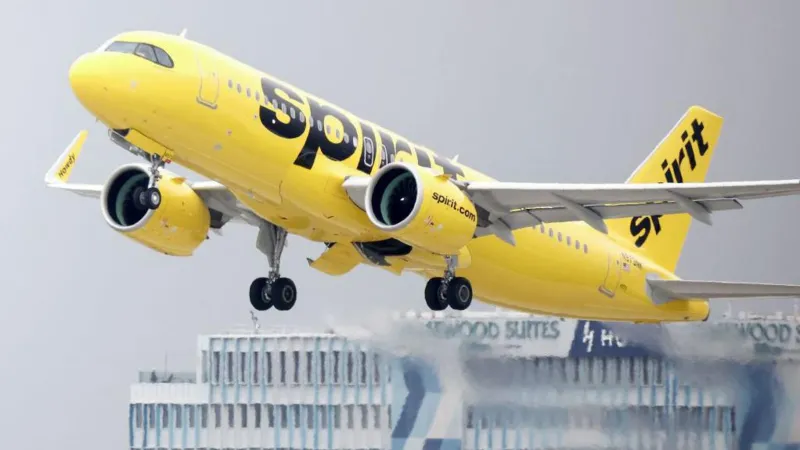
Spirit Airlines is shutting down as a business after failing to secure a $500m (£368m) bailout from the Trump administration.
The budget airline was in talks with the US government about a rescue deal which would have saved it from collapse.
But discussions collapsed and the carrier said in an announcement on its website on Saturday that with “great disappointment” the airline had “started an orderly wind-down of our operations, effective immediately”.
Spirit was emerging from its second bankruptcy filing in recent years before the US-Israel war in Iran, but the resulting surge in jet fuel costs pushed it over the brink.
All upcoming flights with Spirit have been cancelled.
In Saturday’s statement, the airline said it would automatically process refunds for any flights purchased through Spirit with a credit or debit card to the original form of payment.
Guests who booked flights via a travel agent should contact the travel agent directly to request a refund.
Compensation for those who booked flights using a voucher, credit, airline points or any other method will be determined at a later date through the bankruptcy court process.
The airline said it was unfortunately not able to reimburse guests for other related costs such as emergency hotel stays or replacement flights associated with cancelled trips.
Spirit’s customer service is no longer available, the airline said early on Saturday, but customers with questions can contact the carrier’s claims agent.
The airline’s demise was so abrupt that it has left some ticket holders in the lurch.
One Spirit customer, Yash Kothari, told the BBC’s US partner CBS News that he didn’t learn about the airline’s shutdown until he arrived at Philadelphia International Airport for a flight at 05:45 local time (09:45 GMT) on Saturday.
“The email came in at 1 am, so I was unaware,” Kothari told the outlet.
Fuel costs can make up as much as 40% of an airline’s outgoings, and airlines have seen the cost of jet fuel double since the US and Israeli strikes began at the end of February.
Savanthi Syth, airlines analyst at the investment bank Raymond James, said spiralling jet fuel costs in the wake of the Iran war had proved “the final nail in the coffin” for Spirit.
Speaking to the BBC, Syth said the operator had shied away from the radical overhaul it needed during a 2024 bankruptcy procedure.
Spirit had been in the process of making the changes it needed in its current bankruptcy process, scaling back the number of flights it was offering and aircraft it owned, she said.
But its ability to survive the year was in question even before the Iran war, Syth added.
“If it wasn’t for the fuel scenario, they would have been okay through the summer, beyond the summer I would have said it was still precarious.”
Some have been cutting flights and others have hiked fares to cope. with the cost increases. At the same time, the head of the International Energy Agency (IEA) has warned Europe could run out of jet fuel in as little as six weeks.
At the end of April, Spirit had been confident its rescue deal with the Trump administration was to be finalised imminently.
But after that deal fell through, Trump on Friday told BBC partner CBS the airline had been offered “a final proposal” to keep it in business.
The earlier plan, which would have seen the US government take effective ownership of as much as 90% of the airline, faced stiff opposition from Wall Street, Capitol Hill and even a member of Trump’s own cabinet. Transportation Secretary Sean Duffy told Reuters a rescue would amount to tossing “good money after bad”.
[BBC]
“We called it ‘moon dust’,” Jeffery Camp, a 61-year-old retired military veteran who lives in Sarasota, Florida, says when describing the terrain in Maidan Shar, Afghanistan, where he served with the United States Army from 2008 to 2009.
The fine particles of dust there would find their way into “your vehicles, your equipment, your lungs”, he says ruefully while describing the searingly dry summers and freezing windy winters in the eastern provincial capital.
Camp is one of the 832,000 US service members deployed to Afghanistan from 2001 to 2021 during what became the longest war in US history.
He joined the Army in 1983, well before the September 11, 2001, attacks on the US, which led to the war in Afghanistan. “Service was a calling, not a reaction to a national crisis,” he tells Al Jazeera.
During 20 years of war, 2,461 US soldiers were killed and at least 20,000 wounded.
“I left both Iraq and Afghanistan with a profound respect for the human cost of war, not just for American service members but for the populations of those countries. War is not clean, and the people who bear the longest burden are rarely the ones who made the decisions,” Camp says.
Tuesday marks 60 days of the US-Israel war on Iran.
Since February 28, US-Israeli attacks on Iran have killed at least 3,375 people, according to Iran’s Ministry of Health.
The US military has confirmed 13 combat-related deaths among its service members across the region, with more than 200 injuries.

Since the 1950s, US-led wars have killed millions of civilians and tens of thousands of military personnel.
According to an analysis by the Cost of War Project at Brown University’s Watson Institute of International and Public Affairs, US-led wars since 2001 have directly caused the deaths of about 940,000 people across Afghanistan, Pakistan, Iraq, Syria, Yemen and other post-9/11 conflict zones.
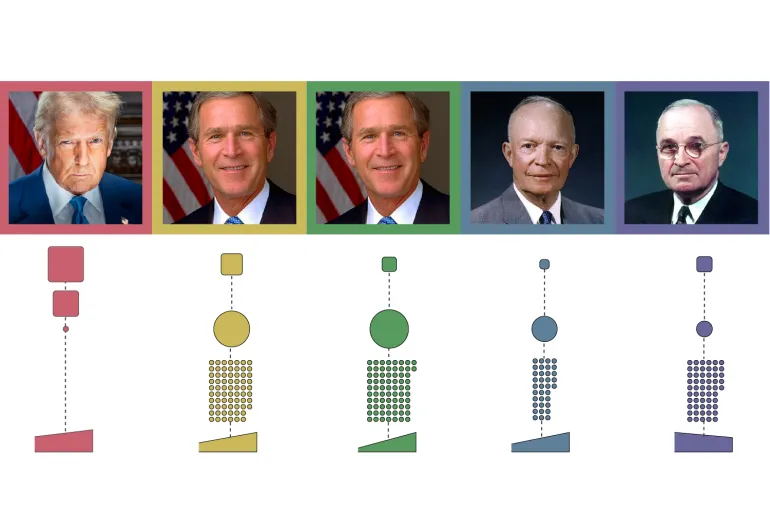
The graphic below breaks down the estimated number of civilians killed for every US soldier in the Korean, Vietnam, Afghanistan and Iraq wars.

Iran war: $11.3bn spent on munitions in first six days
According to the Pentagon, the Trump administration spent $11.3bn during the first six days of the war, with an estimated $1bn subsequently spent on the war every day until the April 8 ceasefire.
According to Mark Cancian, a senior adviser with the Defense and Security Department at the Center for Strategic and International Studies, the $1bn per day figure is “a little high”.
Speaking to Al Jazeera, he says the war “was very expensive in the first few days” because the US used costly long-range munitions, including Tomahawk missiles. They cost $2.5m each, and the US military used hundreds of them.
Cancian calculates that in addition to the $11.3bn spent on munitions, an additional $1.4bn should be added for combat losses and infrastructure damage and a further $26.5m for support costs, bringing the total for the first six days to $12.7bn.
Cancian estimates that after the first week of its air strikes, the US spent “about half a billion dollars a day”, and now, during the ceasefire, that figure is likely “under $100m per day” because the US is not using any munitions.
On a per-day cost basis, the Iran war may be one of the most expensive in recent history.
According to figures from the Costs of War Project, the 20-year Afghanistan war cost an estimated $2.3 trillion, averaging more than $300m per day, while the eight-year Iraq War, which began in 2003, cost an estimated $2 trillion, averaging about $684m per day.

‘Another prolonged war’
Naveed Shah is the political director of Common Defense, a grassroots veteran-led organisation based in Washington, DC, that aims to engage, organise and mobilise veterans.
Shah, who served in Iraq from 2006 to 2010, believes the US must defend its national interests and has a vital role to play in deterring threats, but too often overreaches with open-ended wars of choice that create more problems than they solve.
“The current conflict with Iran is repeating the mistakes that led us to spending 20 years in Iraq and Afghanistan: shaky evidence at best, moving goalposts and dangerous rhetoric that risks drawing us into another prolonged war,” Shah tells Al Jazeera.
“At the same time, while we’re deploying troops overseas, the government is trying to claw back the care we promised for our veterans,” Shah says.
“The true cost of war extends far beyond the battlefield. It echoes for decades in veterans’ bodies and minds and for their families. For the families of the troops who won’t come home, it will be an empty seat at the dinner table and a hole in their heart for eternity,” he says.
According to the Cost of War Project, the US is expected to spend at least $2.2 trillion on obligations for veterans’ healthcare over the next 30 years.
Iran war most unpopular in US history
According to a Reuters/Ipsos poll from April 12, 60 percent of Americans disapprove of US military strikes on Iran. This is up from a 43 percent disapproval rating at the start of the war.
Historically, US wars have mostly enjoyed a “rally around the flag” effect, which causes low disapproval at the outset.
The chart below compares the disapproval rating at the start and end of the five main wars the US has led since the 1950s.

US consumers are paying the price
Marwa Jadoon, 40, from Oklahoma, whose name has been changed to keep her identity concealed, says her out-of-pocket expenses have increased by more than 35 percent over the past couple of months.
“As someone with multiple considerably expensive health conditions, I’m paying more than I’ve ever paid before just to cover only my essential medications and recurring testing. It’s limited my ability to afford additional treatments since healthcare costs are astronomical in the US. I’ve cut costs in groceries and anything outside of essentials,” Jadoon says.
Jadoon feels she’s been shortchanged with the policy shifts that came at the same time she was made redundant, further complicating her life.
“I find it appalling that my tax dollars are funding a war when we have repeatedly been told that we cannot afford universal healthcare. At the end of last year, I lost my job and had to apply for unemployment and Soonercare,” she says, referring to state-covered healthcare.
She explains that unemployment benefits would not even cover her rent.
“How can my tax dollars afford to pay for wars and foreign governments while I can’t even receive Medicaid because they deemed $400 is too much a month? My phone bill alone is $116 a month. My student loan payments are almost $200 a month. I would love to see anyone in the current administration survive on $400 a week with no medical coverage,” Jadoon says.
Another woman in Oklahoma, who also wished to remain anonymous due to her job with the state government, says, “The war in Iran and its funding has made me feel cornered. I feel it at the gas pump, I feel it at the doctor, dentist. I feel it at the bank. I feel it when I’m at the grocery store, thinking how exactly everyone is acting so calm. And it moves me, literally. Emotions carry little power. I’m ready to do something about it. I’ve been stolen from and lied to, and I’ve had enough.
According to the Climate Solutions Lab at the Watson Institute for Public and International Affairs at Brown University, the total consumer burden from the increase in petrol and diesel prices across the US as a result of the war on Iran is estimated at $27.8bn, roughly $200 per household.
The national average price of petrol has increased nearly 40 percent from $2.90 per gallon ($0.76 per litre) before the war to $4.10 per gallon ($1.08 per litre) now.

[Aljazeera]

Members of Sri Lanka Cricket Transformation Committee Officially Appointed

Three prison guards arrested following the death of an inmate

Showers or thundershowers will occur at most places of the island after 1.00 pm.

CJ urged to inquire into AKD’s remarks on May 25 court verdict

ITAK MPs representing East take their woes to Canadian HC

People demand release of Keppapilavu land

‘Dates have the highest sugar content to fight Coronavirus’

Sunday Island 27 December – Headlines

#SundayIsland 17th December – Headlines

Sunday Island – 28th March

Sunday Island Headlines – 21 March

Sunday Island – 21st February – Headlines
-

 News6 days ago
Treasury chief’s citizenship details sought from Australia
-

 News5 days ago
Rooftop Solar at Crossroads as Sri Lanka Shifts to Distributed Energy Future
-

 News4 days ago
“Three-in-one blood pressure pill can significantly reduce risk of recurrent strokes”
-

 News6 days ago
Central Province one before last in AL results
-

 Sports6 days ago
Well done AKD!
-

 News4 days ago
Alarm raised over plan to share Lanka’s biometric data with blacklisted Indian firm
-
 News2 days ago
Easter Sunday Case: Ex-SIS Chief concealed intel, former Defence Secy tells court
-

 News3 days ago
Ten corruption cases set for court in May, verdict ordered in one case – President