
News
Used cars turn to gold as economy skids on the edge


By Amal Jayasinghe
Supermarket shelves are bare and restaurants can’t serve meals, but Sri Lanka’s economic crisis is a bonanza for used car dealers, with vehicle shortages pushing prices higher than a house in a nice area.
The island nation of 22 million is on the brink of bankruptcy, inflation is red hot and the government has barred a range of “non-essential” imports to save dollars needed to buy food, medicine and fuel.
In the car market, this two-year ban has kept factory-fresh automobiles off local roads, forcing desperate buyers to pay some of the world’s highest prices for beaten-up compacts and no-frills family sedans.
Anthony Fernando spent a recent weekend coursing through sales lots in the Colombo outskirts on behalf of his daughter, who has tried to find an affordable set of wheels for nearly a year.
“She was thinking that prices will come down,” the 63-year-old told AFP, but now she is “paying for procrastinating”.
Prices have gone “beyond the reach of a common person”, he said.
A five-year-old Toyota Land Cruiser was on offer online for an eye-watering 62.5 million rupees ($312,500) — triple the pre-ban rate, and enough to buy a house in a middle-class Colombo neighbourhood or a new luxury apartment in the city centre.
A decade-old Fiat five-seater with a busted engine that might be stripped for parts elsewhere was listed at $8,250 — more than twice Sri Lanka’s average yearly income.
“A car and a house are symbols of success,” said a grinning Sarath Yapa Bandara, the owner of one of the capital’s biggest dealerships.
“That is why most people are willing to buy even at these high prices.”
Car ownership remains a virtual necessity in the traffic-snarled streets of Colombo, where a ramshackle bus and rail network was already struggling with overcrowding.
The number of taxis has also fallen sharply, with drivers selling their cabs to cash in on the dizzying prices, and those still working charging double their old fares or more.
“You must have your own car,” said Udaya Hegoda Arachchi, another buyer preparing to bite the bullet at a dealership.
“We can’t expect prices to come down anytime soon, given the economic situation in the country,” he told AFP.
Covid has sent Sri Lanka into a tailspin, drying up all-important earnings from tourism and foreign remittances.
In March 2020 the government brought in a wide-ranging import ban — including for new cars — to stop foreign currency from leaving the country.
But the policy has not been able to staunch the outflow of dollars, and has instead left the nation struggling to source critical goods.
Food retailers have rationed rice, restaurants have shuttered because they cannot find cooking gas, and cash-strapped power utilities unable to afford oil have imposed rolling blackouts. Farmers have run out of fertilizer.
Rating agencies have warned that Sri Lanka might default soon although the government says it will meet its commitments. It is trying to renegotiate its Chinese debts with Beijing.
The import ban has also left car parts in short supply, meaning drivers are at risk of being stranded after a breakdown.
Ravi Ekanayake told AFP that his Colombo repair garage was doing a roaring trade from owners unable to afford the astronomical costs of switching to a new vehicle.
“But parts are scarce. It is a catch-22: You either get caught with an old car without parts or you don’t have the money to buy a new car.”
Financial analyst Murtaza Jafferjee said the prices also underscored a problem caused by excessive money printing by a cash-strapped central bank, with “too much money chasing too few goods”.
He said the prices were also increasing transport costs and adding to inflation, which hit a record 14 percent in December.
“When vehicles become unaffordable for a segment of society, their activities will be limited. Then we will also see a loss of economic output,” the CEO of JB Securities said.
“We are about to collapse and not many people appreciate the depth of the problem.”


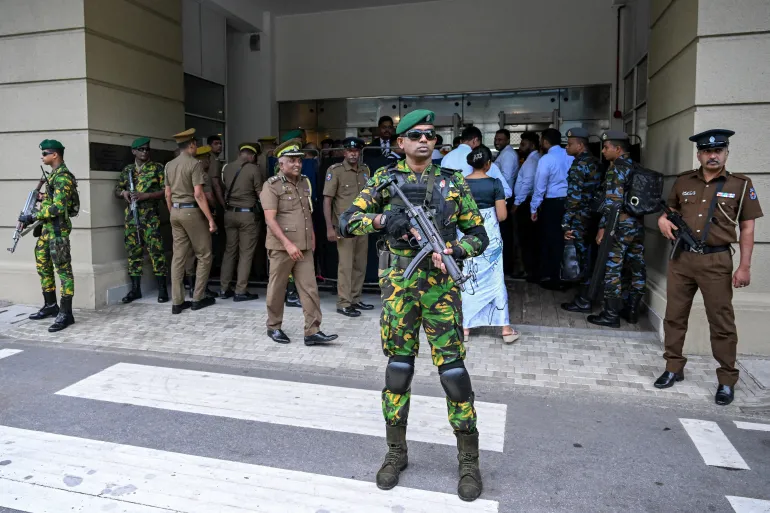
The High Court has convicted 14 of the 24 men accused of being directly involved in the 2019 Easter Sunday bombings, which killed 279 people.
The three-judge bench read out its decision on Tuesday after a five-year trial and said sentencing would take place later, the AFP news agency reported.
The charges included murder and conspiracy to commit terrorism.
Nine others were acquitted, while another defendant was found guilty of only some of the charges, the court said.
[Aljazeera]
By Shamindra Ferdinando
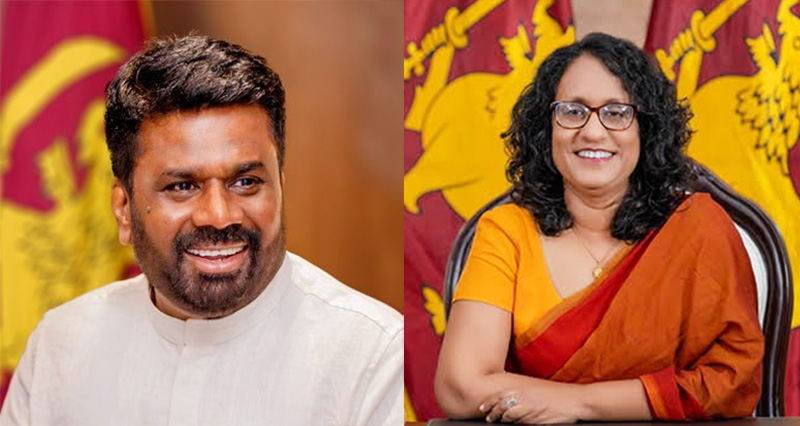
The ruling NPP yesterday (21) dismissed claims of a widening rift, within the government, over the proposed 22nd Amendment. Asked whether the NPP was concerned over a section of the Opposition alleging Prime Minister Dr. Harini Amarasuriya and two dozen MPs taking a view contrary to that of the party in this regard, authoritative party sources said some persons were propagating speculation for their own interest.
Declaring that there was absolutely no issue regarding the controversial Amendment, sources emphasised once it was tabled in Parliament, it would be passed with 2/3 majority.
Sources dismissed claims that out of its 159-member parliamentary group a section of NPPers was opposed to the government move. According to an influential Opposition activist, there are 57 JVPers and 66 NPPers in the government group and the rest contested the last parliamentary polls, having aligned with the JVP.
Ministerial sources told The Island that the government was confident of going ahead with the 22nd Amendment and Judicature (Amendment) Bills. Sources said that the NPP was not bothered about the Opposition protests in and outside Parliament.
Speaker Dr. Jagath Wickremaratne is expected to disclose the confidential ruling that he received from the Supreme Court in respect of more than 65 petitions for and against the 22nd Amendment and Judicial Amendment Bills. The enactment of the 22nd Amendment would pave the way for extending the retirement age of Supreme Court judges, from 65 to 67 years, and Court of Appeal judges, from 63 to 65 years.
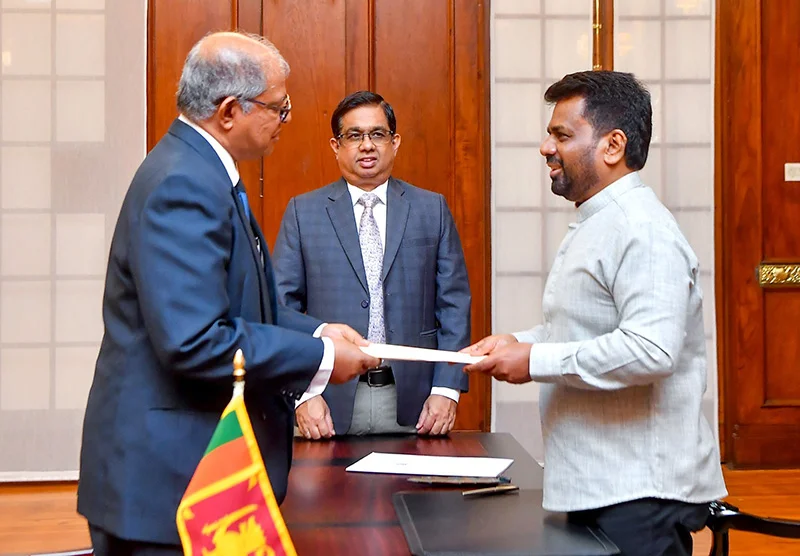
President Anura Kumara Dissanayake has appointed Court of Appeal Judge Mayadunna Sri Mevan Anthony Edirimannasuriya Corea as the Acting President of the Court of Appeal.
The appointment has been made as President’s Counsel Nalin Rohantha Abeysuriya, who currently serves as President of the Court of Appeal, will be overseas until the 24th.
Accordingly Justice Mayadunna Corea was sworn in as Acting President of the Court of Appeal before President Anura Kumara Dissanayake at the Presidential secretariat last morning (21).
Secretary to the President Dr Nandika Sanath Kumanayake was also present at the occasion.

High Court convicts 14 over deadly Easter bombings

Mandhana, Shafali and Ghosh lead dominant India to Asian Games gold

Fatima Sana and Umm-e-Hani secure bronze for Pakistan in Asian Games

India bat first in Asian games womens cricket final

Showers about 100mm will occur in the Western, Sabaragamuwa, Central and North-western provinces and in Galle and Matara Districts

Govt. confident of 2/3 majority despite NPP split speculation

‘Dates have the highest sugar content to fight Coronavirus’

Sunday Island 27 December – Headlines

#SundayIsland 17th December – Headlines

Sunday Island – 28th March

Sunday Island Headlines – 21 March

Sunday Island – 21st February – Headlines
-

 News6 days ago
US embassy won’t comment on IGP’s probe into joint drug raid
-

 News4 days ago
Shanakiyan urges urgent action over reported death sentence for Lankan in Saudi Arabia
-

 News5 days ago
Bid for Basil’s extradition nears final stage: Police
-

 Business6 days ago
All-new Bolero MaXX unveiled in Sri Lanka
-

 News3 days ago
Namal Rajapaksa Buddhist gambit fails, bail denied
-

 Opinion6 days ago
A journalist who wrote across the divide
-

 Editorial7 days ago
More fuel price shocks shrouded in secrecy
-

 Features3 days ago
Why the spelling Sri Lankan names in English vary