
News
‘Human rights belong to all’ says Lankan born member of New Zealand Parliament


Sri Lankan born member of the New Zealand Parliament Vanushi Walters during her maiden speech to the house on Wednesday made a brief statements in both Sinhala and Tamil and said that human rights belong to all.
“…I was now not only a Sri Lankan but also a New Zealander, my family having arrived in 1987. I felt the rush waking up the morning after my mother told me Richard de Zoysa’s story,” Ms Walters, who is the first Sri Lankan born MP to be elected to the New Zealand Parliament told the House.
“Richard was my father’s second cousin, a journalist in Sri Lanka, killed in 1990 as a result of his courageous criticism of the then Government. The cloak that morning arrived like a wave of outrage. Surely people weren’t being tortured and killed by their own Government, and if they were, the cloak demanded I do something about it,” she said.
The following are excerpts of the speech delivered by Ms. Walters (Labour—Upper Harbour):
“I felt the rush waking up as a six-year-old in an apartment at the crest of The Terrace, connecting with the fact that I was now not only a Sri Lankan but also a New Zealander, my family having arrived in 1987. I felt the rush waking up the morning after my mother told me Richard de Zoysa’s story.
“Richard was my father’s second cousin, a journalist in Sri Lanka, killed in 1990 as a result of his courageous criticism of the then Government. The cloak that morning arrived like a wave of outrage. Surely people weren’t being tortured and killed by their own Government, and if they were, the cloak demanded I do something about it.
“It was a story and a feeling that began a 27-year journey in human rights advocacy for me. There is still so much to be done for human rights protection in many countries around the world because human rights belong to all.
“The rush of the cloak was there when I first nervously woke up as a qualified lawyer. It was there the morning after my father, Jana Rajanayagam, had several strokes and heart attacks, after being the finance manager of the Upper Hutt City Council and then the North Shore City Council. In an instant, he was physically unable to work, and, thankfully, received Government support through those tough times. I remember when I woke several years later, the morning after he died. The cloak didn’t rush back that morning, but arrived in slow motion with a new kind of inescapable weight.
“The electricity didn’t seem to stop when I stepped on board the majestic Rainbow Warrior II for an interview as a climate campaigner. It was there, buzzing through a pile of hundreds of letters that sat on the floor of a hotel lobby in Mexico, saved by a former prisoner of conscience, sent by strangers to win him his freedom, and they had. It was there with unhelpful giddiness, when I walked in to sit my final exams at Auckland University and then at Oxford. The electricity danced across the room in Johannesburg as young human rights activists talked, cried, and shared visions of hope about the future of human rights.
“It was there, embodying possibility, listening to stories about my great-grandmother Naysum Saravanamuttu, the second woman to be elected to the State Council of Ceylon in 1931. This is a feeling we should all have, in the work we do and in the relationships we hold. This is the great ambition for all New Zealanders: not only to ensure that we look out for each other when times are tough and we must but to support and connect people with the things that will bring that electricity.
“We have an obligation to continue to address racism and discrimination. Where voices aren’t represented at decision-making tables, we have an obligation to shake the tables. We must not only hear the loud and organised but fiercely listen for piercing silences and work to bring the marginalised and disempowered from the periphery to the centre. We have an obligation to protect all human rights, including economic, social, and cultural rights, and, because rights are meaningless without the ability to access them, we have a connected obligation to ensure sound access to advocacy and to the courts.
We have an obligation to do more, and then more again, to address climate change.
“We have an obligation, as we turn the corner towards the 200-year anniversary of the signing of Te Tiriti, to fulfil its articles. We have an obligation to examine the edges of policy and law, where education impacts justice, where justice impacts employment, and where employment impacts health, and to design bridging policy solutions that recognise lives aren’t lived in select committee silos; they’re just lived. This is how we really disrupt the churn of poverty.
“I want to make special mention of my early mentors: Lecretia Seales, whose keen intellect was matched by her courage; Margie Taylor; Ced Simpson; and Pakiasothy Saravanamuttu, all of whom have had a significant impact on the decisions I’ve made in my journeying”.

Latest News
Landslide Early Warnings issued to the districts of Colombo, Galle, Gampaha, Hambanthota, Kalutara, Kandy, Kegalle, Kurunegala, Matara, Nuwara Eliya and Ratnapura


The National Building Research Institute has issued landslide early warnings to the districts of Colombo, Galle, Gampaha, Hambanthota, Kalutara, Kandy, Kegalle, Kurunegala, Matara, Nuwara Eliya and Ratnapura from 16:00 hrs on 25.09.2026 To 16:00 hrs on 26.09.2026
Accordingly,
LEVEL III [RED] landslide early warnings have been issued to the Divisional Secretaries Divisions and surrounding areas of Neluwa, Nagoda, Niyagama and Thawalama inthe Galle district, Ganga Ihala Korale, Udapalatha, Doluwa and Pasbage Korale in the Kandy district, and Kothmale West, Ambagamuwa, Kotmale East and Norwood in the Nuwara Eliya district.
LEVEL II [AMBER] landslide early warnings have been issued to the Divisional Secretaries Divisions and surrounding areas of Elpitiya, Baddegama and Karandeniya in the Galle district, Walallawita in the Kalutara district, Deltota, Udunuwara, Gangawata Korale, Yatinuwara and Panvila in the Kandy district, Aranayake, Dehiowita, Mawanella, Deraniyagala and Yatiyanthota in the Kegalle district, Thalawakelle in the Nuwara Eliya district and Ratnapura and Pelmadulla in the Ratnapura district.
LEVEL I [YELLOW] landslide early warnings have been issued to the Divisional Secretaries Divisions and surrounding areas of Seethawaka and Padukka in the Colombo district, Attanagalla and Mirigama in the Gampaha district, Katuwana and Walasmulla in the Hambanthota district, Ingiriya and Bulathsinhala in the Kalutara district, Hatharaliyadda, Poojapitiya, Medadumbara, Kundasale, Ududumbara, Thumpane, Akurana, Pathadumbara, Harispattuwa and Pathahewaheta in the Kandy district, Warakapola, Bulathkohupitiya, Galigamuwa, Kegalle and Ruwanwella in the Kegalle district, Mallawapitiya, Alawwa, Polgahawela and Mawathagama in the Kegalle district, Pitabeddara, Kotapola and Pasgoda in the Matara district, Nuwara Eliya in the Nuwara Eliya district and Elapatha, Ayagama, Nivithigala, Kuruwita and Kalawana in the Ratnapura district

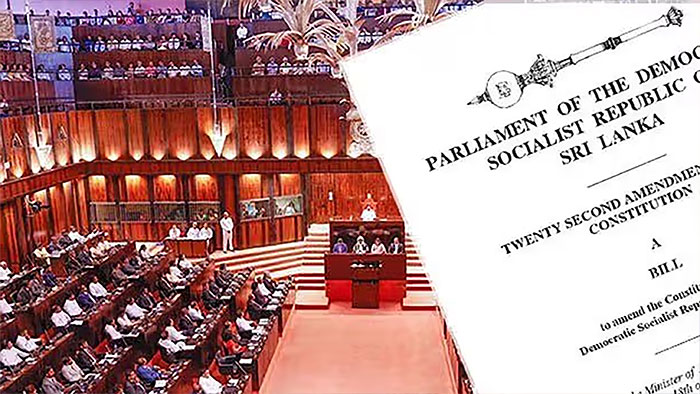
Parliament yesterday passed the Twenty-Second Amendment to the Constitution Bill and the Judicature (Amendment) Bill with two-thirds majorities, with 158 MPs voting in favour and 63 against each Bill.
The Illankai Tamil Arasu Kadchi (ITAK) and Sri Lanka Muslim Congress (SLMC) voted with the SJB against the Bills.
NDF MPs Ravi Karunanayake and Faizer Musthapha and SJB Badulla District MP Nayana Wasalathilaka were not present when the votes were taken.
The final vote on the Judicature (Amendment) Bill was announced at around 8.08 p.m. after Opposition MPs called for divisions on its clauses during the Committee Stage.
The votes followed a two-day debate which commenced on Thursday (24), after Justice and National Integration Minister Harshana Nanayakkara presented the Bills for their Second Reading.
The Supreme Court’s determination on the Bills was presented to Parliament on Tuesday (22) by Speaker Dr Jagath Wickramaratne. The Court determined that the 22nd Amendment Bill did not require approval at a referendum and could be passed by a special two-thirds majority in Parliament.
The amendment provides for raising the mandatory retirement age of Supreme Court judges from 65 to 67 and that of Court of Appeal judges from 63 to 65. It also provides for the Chief Justice to retire at 67 or after completing six years in office, whichever comes earlier.
The Speaker informed Parliament that the Judicature (Amendment) Bill could be passed by a simple majority.
The SJB opposed the legislation and its MPs attended Parliament dressed in black yesterday. The party also staged a protest at Polduwa Junction, Battaramulla, under the theme “No to 22, which destroys democracy”, with Opposition Leader Sajith Premadasa and several SJB politicians participating.
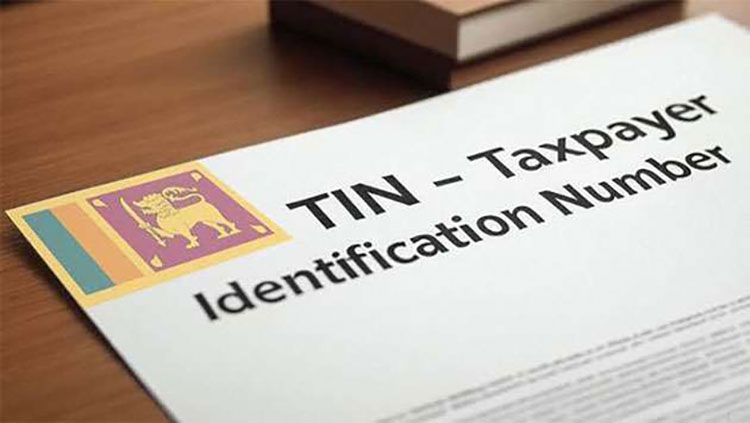
A valid Taxpayer Identification Number (TIN) Certificate will be required for a range of key transactions in Sri Lanka from November 1, 2026, the Inland Revenue Department (IRD) has announced.
The requirement, introduced under the Inland Revenue (Amendment) Act, No. 11 of 2026, applies to transactions specified under Section 102(3) of the Inland Revenue Act.
Accordingly, individuals will be required to produce a valid TIN Certificate when opening an account at a bank or financial institution, obtaining approval for a building plan, registering or renewing the licence of a motor vehicle, registering land or title to land, registering a business, transferring shares in a company incorporated in Sri Lanka or obtaining a credit card.
In the case of share transfers, both the transferor and transferee will be required to provide TIN certificates.
The IRD said officials handling such transactions had been instructed to ensure that a valid TIN Certificate was submitted before processing or completing the relevant transaction.
The Department advised those who do not already have a TIN to obtain one in advance through its e-Services platform.
It said a printout of the TIN verification result showing the applicant’s National Identity Card number and TIN could also be accepted instead of the certificate.The IRD also reiterated that obtaining a TIN is mandatory for resident individuals aged 18 and above under the applicable provisions.

Landslide Early Warnings issued to the districts of Colombo, Galle, Gampaha, Hambanthota, Kalutara, Kandy, Kegalle, Kurunegala, Matara, Nuwara Eliya and Ratnapura

Showers in the Western, Uva and Sabaragamuwa provinces and in Galle, Matara, Kandy, Nuwara-Eliya, Batticaloa and Ampara districts.

22A, Judicature Amendment Bills passed with 2/3 majority

TIN mandatory for key transactions from Nov. 1

Navy brings 25 Indonesian fishermen ashore after trawler capsizes

Former Mineral Sands Chairman arrested over recruitment irregularities

‘Dates have the highest sugar content to fight Coronavirus’

Sunday Island 27 December – Headlines

#SundayIsland 17th December – Headlines

Sunday Island – 28th March

Sunday Island Headlines – 21 March

Sunday Island – 21st February – Headlines
-

 News6 days ago
Namal Rajapaksa Buddhist gambit fails, bail denied
-
 Features6 days ago
Why the spelling Sri Lankan names in English vary
-

 Features6 days ago
Three bands, a new identity: Sri Lankan wolf snake recognised as distinct species
-

 Business6 days ago
SLIIT holds largest-ever convocation
-

 News6 days ago
Vehicle prices drop by up to Rs. 1 mn, says importers’ body
-

 News6 days ago
Govt monitors reported Saudi death sentence – Foreign Ministry
-
 Business6 days ago
Lanka’s famed beach shack battles demolition
-

 Business6 days ago
All-new Bolero MaXX Pik-Up unveiled in Lanka