
Sports
USA and Canada claim 4x100m upsets on dramatic penultimate day in Oregon


On paper, Jamaica’s women’s 4x100m team looked unbeatable. The US squad shredded those predictions, using better teamwork to win the gold medal at the World Athletics Championships Oregon22.Similarly, the Canadian team claimed an upset in the men’s 4x100m on Saturday (23), as Andre De Grasse anchored the quartet to gold ahead of USA.
On a day of 4x100m surprises, there was also a second world javelin title for Anderson Peters, Pedro Pichardo added world gold to his Olympic triple jump title, Gudaf Tsegay took the 5000m title and Emmanuel Korir kicked to 800m victory.
In the women’s 4x100m final, as Twanisha Terry held off a hard-charging Shericka Jackson on the home stretch, the crowd at Hayward Field produced the loudest roar in nine days of competition.
“It was not expected of us today and I am glad we pulled it through,” said Melissa Jefferson, who ran the first leg for USA.
She added that she and her teammates “have a lot of confidence in ourselves and I knew we would show the world what we are capable of.”
The US team ran a world-leading 41.14, the second-fastest ever at a World Championships, with Jamaica clocking 41.18. They reversed positions from the Tokyo Olympics, where Jamaica claimed the gold and the US won the silver.
“The race was electrifying,” said Terry. “You heard the stadium. The stadium went crazy. We just brought it home.”
The US won its eighth gold medal and 13th overall in the event after placing third in 2019.
Jamaica, which captured its 16th medal, not only fielded the three world and Olympic medallists in the 100m, but in Elaine Thompson-Herah, the nation had the fastest woman alive in the 100m. Shelly-Ann Fraser-Pryce is the five-time and reigning world champion in the 100m and Jackson is the fastest woman alive in the 200m. They had five individual medals from this World Championships between them.
Kemba Nelson, the leadoff leg, was the 60m champion for the University of Oregon in 2021 and running on her home track.The members of the US team, by comparison, had no hardware to show from their individual events in Eugene. Jefferson was eighth in the 100m, Abby Steiner placed fifth in the 200m, Jenna Prandini did not reach the final in the 200m and Terry did not make the 100m final.But the US team had experience from the preliminary round, with Steiner replacing Aleia Hobbs as the only difference in team composition. For Jamaica, Nelson was the only carryover.
“Of course, we wanted to win,” said Thompson-Herah. “But we are glad for the silver tonight and we cannot complain.”
Fraser-Pryce won her third medal in Eugene — one gold and two silvers — for a total of 14 World Championships medals, tying compatriot Usain Bolt.
Germany won its first medal since 2009 in the 4x100m, clocking 42.03, while Nigeria placed fourth with an African record of 42.22.Dina Asher-Smith pulled up with an injury ahead of the final hand-off for Great Britain, the team going on to finish sixth.With a better final handoff and a determined De Grasse, Canada reclaimed the top spot on the men’s 4x100m podium for the first time since 1997.
“It’s not on home soil, but it felt like it,” De Grasse said of the cheering Canadians who came down for the World Championships.
The tight-knit Canadian quartet, who have grown up together in the sport, clocked a world-leading 37.48, with De Grasse running a final leg of 8.79 to keep Marvin Bracy-Williams-Williams of the US in his rear-view mirror. The US ran 37.55, with Great Britain taking the bronze in 37.83.
Aaron Brown led off for Canada, followed by Jerome Blake, Brendon Rodney and De Grasse. The US had a formidable team of Christian Coleman, the 2019 world 100m champion, two-time world 200m champion Noah Lyles, Elijah Hall and Bracy-Williams, who was second in the 100m. Fred Kerley, the world 100m champ, suffered an injury in the 200m and was not available for the relay.
“When Andre got (the baton) with the lead,” said Brown, “there’s no way they are going to catch him.”
However, De Grasse, who has struggled with injuries and Covid-19 this season, said he was tightening up a little bit. “I was hoping not to get caught,” he said.With a semifinal exit in the 100m and withdrawal from the 200m, the Olympic 200m champion said it was an advantage to have fresh legs instead of running six races.Bracy-Williams said the US had a “few things to clean up” on the exchanges. “Mine was not very good and that may have cost us the race,” he said. “Nonetheless, we got a medal, got the stick around. We will win next time.”
And after failing to make the final at the Tokyo Olympics, the US appreciated a medal of any kind. De Grasse’s victory brought some joy to his household after his partner, defending world champion Nia Ali, crashed out of the 100m hurdles heats.
(worldathletics.org)


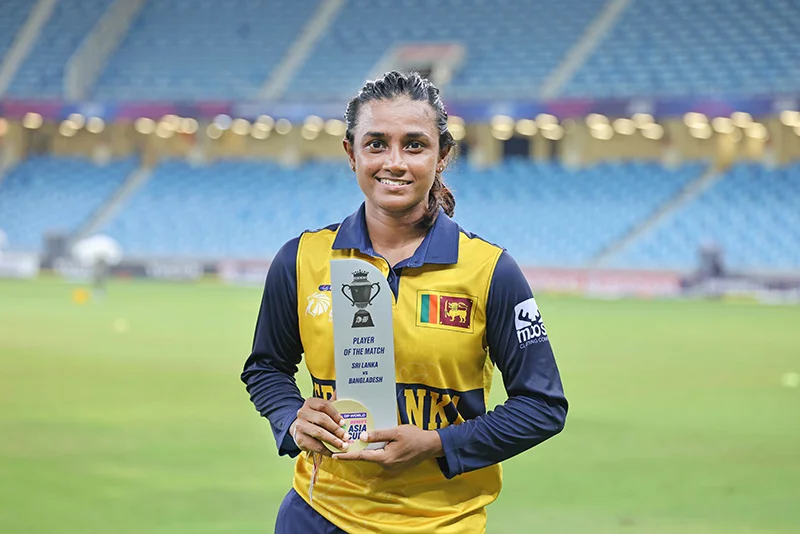
Sri Lanka’s women continue to provide compelling evidence that they could be genuine contenders for the next World Cup, while their male counterparts have, in recent years, largely been making up the numbers at global events.
The defending Asia Cup champions, who stunned formidable India in Dambulla two years ago to lift the title, marched into this year’s semi-finals with an unbeaten record.
Sri Lanka topped their group with three wins from three games and importantly, will avoid India in the semi-finals. Their opponents in Friday’s knockout clash will be either Pakistan or Thailand.
For years, Sri Lanka have leaned heavily on their talismanic captain Chamari Athapaththu, one of the greats of the women’s game. More recently, however, others have begun putting their hands up when the skipper has fallen cheaply. That growing depth has also given Chamari greater freedom to play her natural, attacking game.
Last week, Nilakshika de Silva produced a rescue act against Indonesia. On Sunday, after the captain fell to only her second ball, it was the turn of vice-captain Harshitha Samarawickrama to take charge and steer Sri Lanka home through choppy waters.
Chasing 115 to win their final group game against Bangladesh at Dubai Sports City, Sri Lanka were quickly in trouble as seamer Marufa Akter sent both openers packing cheaply. With wickets continuing to tumble at the other end, Harshitha kept her head while others were losing theirs.
At 44 for five, with half the side back in the pavilion, Sri Lanka were staring down the barrel. Harshitha and Nilakshika then began the repair job, adding 38 for the sixth wicket to drag the innings back from the brink.
Marufa has been an outstanding find for Bangladesh and they rely heavily on her for breakthroughs. With one over remaining in her quota, she was summoned back to break the partnership and did precisely that, removing a well set Nilakshika as she attempted to improvise.
There was, however, no stopping Harshitha.
She found a reliable ally in wicketkeeper Kaushini Nuthyangana and the pair calmly took Sri Lanka across the line with an unbroken 33 run stand for the seventh wicket. Harshitha finished unbeaten on 38 off 47 balls, striking four fours and two sixes.
Sri Lanka got home with four balls to spare, maintaining their perfect record in the competition. Yet beneath the celebrations there will be a nagging concern: the batting has collapsed too often, leaving one or two players with far too much heavy lifting to do. That is something they will need to address before the stakes rise further.
Sri Lanka will play the second semi-final on Friday, with the final scheduled for Sunday.
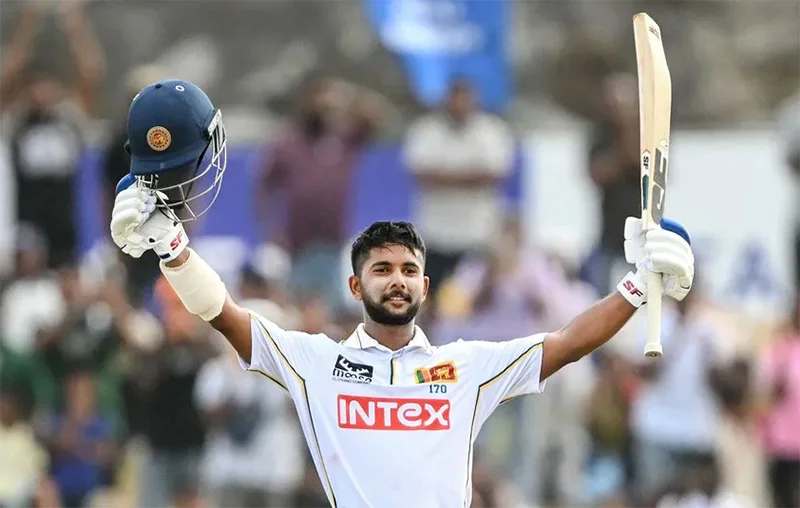
The just-concluded two Test series against strong Indian side has restored Sri Lanka’s pride and confidence, thanks largely to a remarkable display of fighting spirit. At the centre of this remarkable story is Sonal Dinusha, whose extraordinary batting performance turned what appeared to be certain defeat into an epic draw.
Sonal made headlines by scoring three centuries and a big half-century across the two Tests. In doing so, he joined an elite group of Sri Lankan batsmen who have scored three centuries in a two Test series, including Aravinda de Silva, Kumar Sangakkara and Kamindu Mendis.
There is an even more remarkable dimension to Sonal’s achievement. By scoring a century in both innings of a Test match, he joined another distinguished group of Sri Lankan batsmen who have accomplished this rare feat.
Yet, as with every great sporting story, there are several fascinating sub stories within the main story.
One of those sub stories is the emergence of Pasindu Sooryabandara, who became Sri Lanka’s first Test concussion substitute when he replaced Dinesh Chandimal in the first Test in Galle.
The concussion substitute rule is one of the significant innovations introduced by the ICC. It allows a player to replace a teammate who suffers a concussion or other head injury during a match, subject to the relevant medical assessment and the approval of the match referee. The substitute can then participate fully in the match, within the conditions governing concussion replacements.
Pasindu’s own concussion substitute story initially appeared far less glamorous. His first innings ended with the disappointment of a first ball golden duck. But that setback did not end his story.
Instead, the Sri Lankan selectors and team management showed faith in the young batsman by retaining him for the second Test at the Sinhalese Sports Club. That confidence was richly rewarded. Pasindu responded with a composed 80 in the first innings and a superb 92 in the second, providing the crucial foundation for Sri Lanka’s extraordinary resistance.
His batting displayed the qualities expected of a Test top order batsman: solid defence, controlled aggression, patience and above all, temperament. His First Class performances had been repeatedly knocking on the selectors’ door. This time, the door opened and Pasindu walked through it.
But the story does not end with Sonal and Pasindu.
The resilience of the Sri Lankan fast bowlers, led by Asitha Fernando, was another important chapter. Their persistence and discipline kept Sri Lanka in the contest when the match appeared to be slipping away.
The Sri Lankan batsmen then produced the kind of courageous resistance that Test cricket demands. Instead of surrendering to the pressure, they fought session by session, partnership by partnership, and run by run. Their collective determination transformed an apparently inevitable defeat into a memorable draw.
That fighting spirit may ultimately prove to be the most valuable outcome of the series.
Sonal Dinusha may rightly occupy the centre of the stage. His three centuries, his remarkable consistency and his role in rescuing Sri Lanka from the brink of defeat have made him the headline maker. Pasindu Sooryabandara, meanwhile, has shown what can happen when talent meets opportunity and confidence.
But behind these individual performances lies something even more encouraging: Sri Lanka have rediscovered the belief that they can compete, fight and survive against strong opposition even when the circumstances appear overwhelmingly against them.
That renewed belief could be extremely important as Sri Lanka face challenging Test assignments against New Zealand and Pakistan in the ongoing World Test Championship cycle.
For the newly appointed coach, this remarkable comeback must have brought a huge sigh of relief. More importantly, it provides evidence that this Sri Lankan Test side possesses the character and resilience required to compete with any opposition, in any conditions.
The epic draw was therefore more than just a result on the scoreboard. It was a statement of character.
Sonal Dinusha wrote the headline. Pasindu Sooryabandara provided one of the most inspiring subplots. The bowlers refused to surrender. And the entire Sri Lankan team reminded everyone of the fighting spirit that has long been associated with Sri Lankan cricket.
Ayampillai Dharmakulasingham
Retired Sri Lankan diplomat
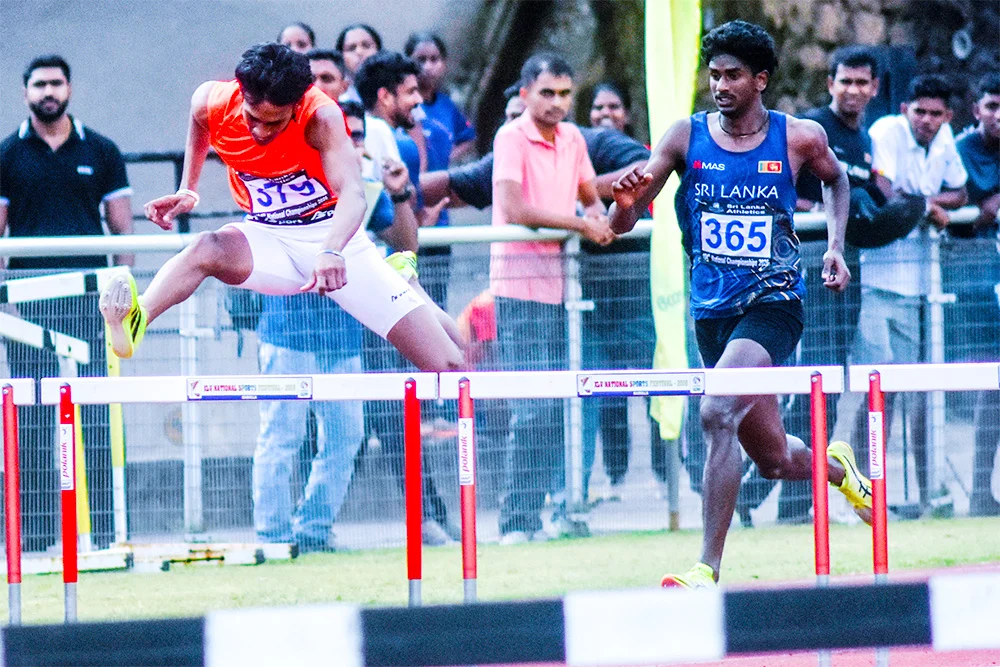
The 104th National Athletics Championship concluded at Diyagama on Sunday. Here are some action pictures form the final day. (Pix by Kamal Wanniarachchi)
-
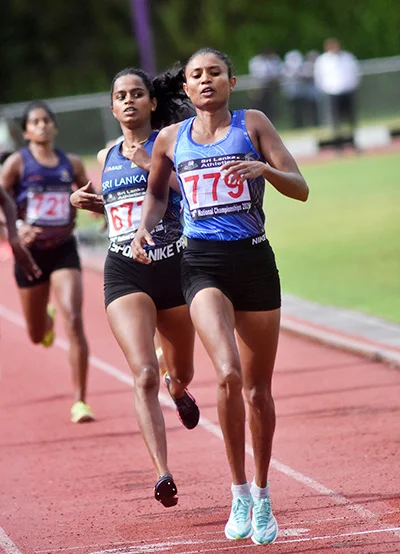
- Veteran Nimali Liyanarachchi won the women’s 800 metres with a time of 2:06.88 seconds.
-
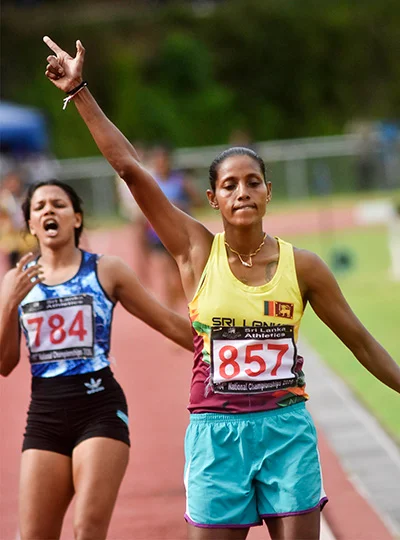
- Lakshika Sugandi was the winner of the heptathlon.
-
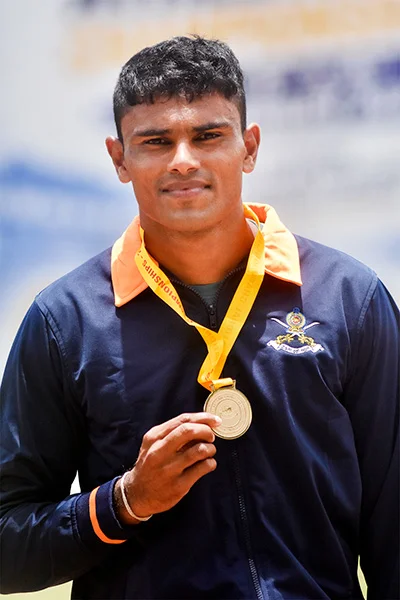
- MMR Lakmal the winner of the decathlon
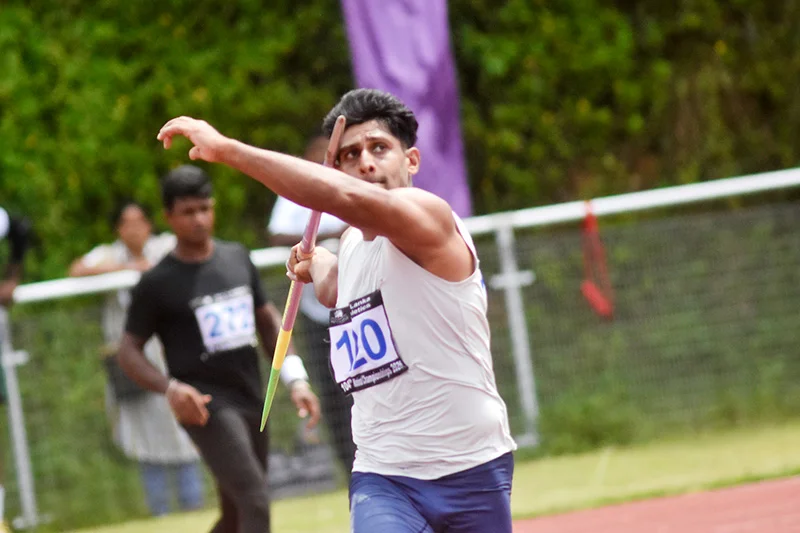
Olympian Sumedha Ranasinghe had little competition in the absence
of Rumesh Tharanga in the men’s javelin throw.
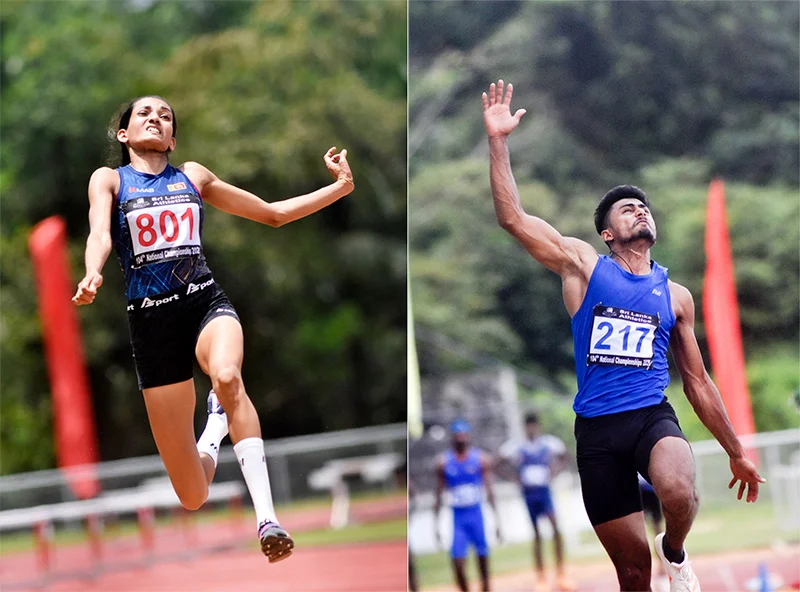
GIS Lankathilaka won the women’s long jump. / KMKC Karunaratne was the winner of the men’s long jump.
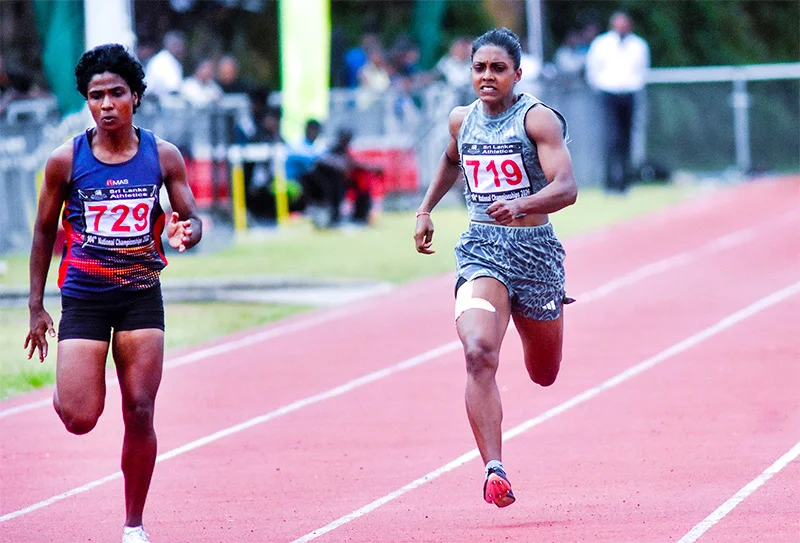
K.R. Hirupama (729) was the winner of the women’s 200m.
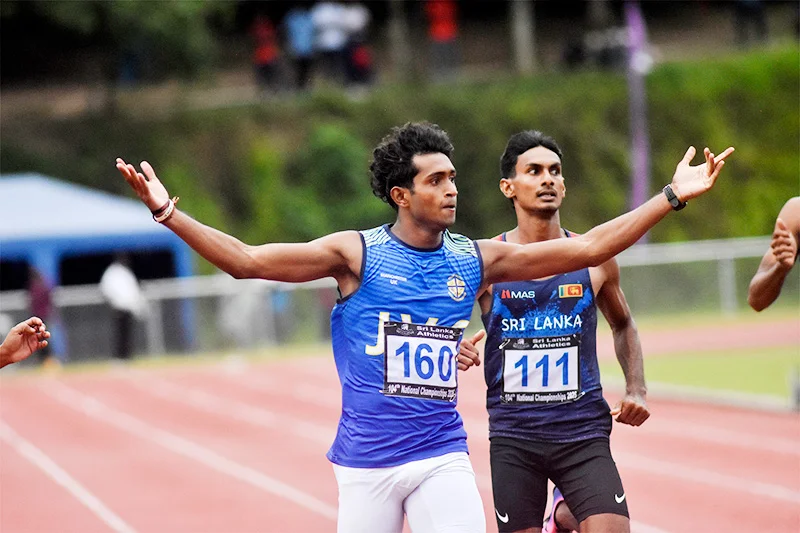
Sadew Rajakaruna won the men’s 200 metres.

Showers in the Uva, Central and Eastern provinces and in Polonnaruwa district

22A: Exclusion of 8 petitions questioned, action filed against SC Registrar, others

Thailand shuts door on undesirables from Sri Lanka

Expertise France and the EU launch media project to strengthen environmental journalism in Sri Lanka

CLA questions non-inclusion of senior judges on five-member SC bench hearing 22A petitions

Whatever on earth happened to meritocracy, pragmatism, and honesty in Sri Lanka?

‘Dates have the highest sugar content to fight Coronavirus’

Sunday Island 27 December – Headlines

#SundayIsland 17th December – Headlines

Sunday Island – 28th March

Sunday Island Headlines – 21 March

Sunday Island – 21st February – Headlines
-

 News5 days ago
Denied of promotion to SC despite vacancies, justice Gurusinghe retires
-

 Latest News6 days ago
Grade 5 scholarship exam results released
-

 News5 days ago
22A: SC urged to suspend hearing, appoint full bench
-

 Midweek Review6 days ago
The local and global dynamics of Sri Lanka’s 22nd Amendment
-

 Latest News2 days ago
Tharanga creates history with Diamond League crown in Brussels
-

 News3 days ago
Namal remanded until Sept. 18 over Airbus deal investigation
-

 News5 days ago
Govt. seeks NATO assistance
-

 News6 days ago
40 professional organisations and TU oppose proposed 22A