
Opinion
The Vision Splendid of D S Senanayake

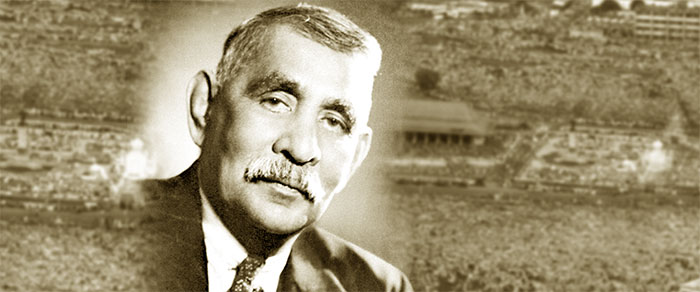
On 05 October, 2022, The Island carried an article by Dr C. S. Weeraratna with the title “Deteriorating rural economy, and food Security”. On reading this, I was motivated to send a chapter from the biography of D. S. Senanayake by H. A. J. Hulugalle titled ‘The Vision Splendid.’ The book has much more information on Senanayake’s plan for Sri Lanka’s Agricultural development. It deals with Senanayake’s passion for the subject, as well as his in-depth knowledge, acquired over half a century. Even today, one could be inspired by how he approached Food and Agriculture.
D.S.Senanayake’s
birthday falls on the 20th of October
– A.H.
In the book D. S. Senanayake published in 1935, he said: “It is a remarkable fact that we in Ceylon, while repeating in season and out, that ours is an agricultural country and that her prosperity is inextricably bound up with her agricultural progress, should yet be apparently content to pay a bill in a year of depression (1933) of nearly 87 million rupees for the imports of our food and drink”. Twenty years after his death, the cost of imports of ‘food exceed the figure of a thousand million.
Senanayake felt that the decline of food production in Ceylon in modern times was due to the fact that this form of agriculture was despised by the educated and well-to-do. The main burden of food production was borne by the land-starved and debt-ridden peasantry. “It is almost as if”, he wrote, “that some sense of inferiority that is sometimes seen to overwhelm a Ceylonese in the presence of his European brother has also attached itself to the native products. Rice and other grains, eggs, onions, chillies and ginger are humble, though useful, commodities. Fruit has a status only a trifle higher than these. To be engaged in their production is something to be ashamed of”.
The commercial and plantation crops were not only more respectable: they were more profitable in good times, and commanded credit from bankers and brokers. Senanayake had no illusions about the inevitable result of neglecting food production. He said that “the great attraction of the commercial crops, the dignity that seemed to attach to them, the comparative ease with large returns for outlay came in, blinded the wealthier Ceylonese to the dangers lying hidden beneath their glamour and drew them away from the essentially safer and sounder, though less splendid, cultivation of products to provide a direct means of sustenance to the home population. The middle classes emulated their wealthier brethren, and the peasant, left to his own devices, was content to scratch the soil and receive just whatever Nature provided”.
Today, the gravest problem in Ceylon as in some other developing countries is the rapid increase of population outstripping economic development. The Nobel Prize winner and Oxford Professor of Economics, Sir John Hicks, after making a study of the Ceylon problem, said that “with birth and death rates as they are at present, the population will go on increasing rapidly, and there is no possible development which could enable an unlimited population to support itself on the Island”.
Senanayake published his book before malaria was controlled during the second world war, causing a ‘population explosion’. But he foresaw the problem to which Sir John Hicks and other writers on the subject have drawn attention. He wrote: “By all laws relating to the growth of population formulated by competent statisticians, the rate of increase of the population of this Island will continue to be maintained. It is obvious, then, that the problem of how to sustain these increasing numbers cannot much longer be ignored: it has perforce to be fairly and squarely faced, and a solution urgently sought”.
For him, the development of agriculture was the highest form of patriotism in the conditions in which Ceylon found herself. He quoted with approval the following passage from the Businessmen’s Commission in the United States:
“Agriculture is not merely a way of making money by raising crops; it is not merely an industry or a business; it is essentially a public function or service performed by private individuals for the care and use of the land in the national interest: and the farmers in the course of securing a living and a private profit are the custodians of the basis of the national life. Agriculture is therefore affected with a clear and unquestionable public interest, and its status is a matter of national concern calling for deliberate and far-sighted policies, not only to conserve the national and human resources involved in it but to provide the national security, promote a well-rounded prosperity and secure social and political stability”.
The Land Bill, which Senanayake introduced in the State Council in 1933 was the direct result of a Report made by the Executive Committee of Agriculture of which he was the Chairman.
The Report said: “When one considers the economic condition of the Ceylonese people, no amount of optimism can conceal the gradual downward trend which has set in, or the signs of grave alarm for the future. The avenues of lucrative employment are rapidly getting filled up, and unless fresh avenues are explored we will soon be placed in a grave situation.
“The university and colleges and schools are turning out large numbers of young men with high educational qualifications, but one must be blind not to see that a large proportion of these young men can never hope to obtain lucrative employment of the kind which they expect. The future generation of middle class Ceylonese cannot all hope to find employment in the professions and clerical services. There is only one direction to which they can turn for their economic salvation: and that is the land. From ancient times the fruits of the soil have been almost the only source of the wealth of this country, and this will be true for many years to come. One remedy for the ills, which a continuance of the present state of affairs is bound to intensify, is to provide middleclass Ceylonese with land and the facilities for developing land, and thus foster the establishment of a class of rural gentry which did exist at one time but is now fast disappearing”.
In these days of socialist planning, it may be a heresy to talk of a landed gentry but the object of the land reforms now being implemented is not very different from those of the Executive Committee. Its Report was endorsed by the State Council, ratified by the Governor and approved by the Secretary of State. But we are as far as ever from the goal of a well-educated and resident farming class. Senanayake’s book was a blue-print for agricultural development. Had it been acted upon vigorously after his death, the Island’s economy would undoubtedly be in a better shape than it is today.
He did not expect the private agricultural sector to solve the country’s food problem without a massive contribution by the State. In the following passage from Agriculture and Patriotism he indicated how the State could help:
“As our present Governor, Sir Edward Stubbs, remarked on one occasion, it is not enough to recognise the fact that Ceylon is not self-sufficient, we must act upon it. The new land policy which Sir Hugh Clifford may be said to have inaugurated has settled the question as regards the proper functions of Government when dealing with what is known in Ceylon as ‘Crown Land’. It will always be one of the most primary and imperative duties to guard the land – this great asset of the people, of the taxpayers – from encroachment by individuals or groups of individuals; and further, to the, best of its ability, to see that it is alienated in the manner most nicely calculated to promote the prosperity of the Island and the highest interests of its inhabitants”.
An idea of the ground covered by Senanayake’s book can be gained by a glance at its chapter headings: Population and Food Supply, The New Land Policy, The New-Tenure and Colonization, The Tradition of Irrigation, Irrigation Policy, The State and Agricultural Credit, Debt Conciliation and Normal Financing, Intensive Cultivation, Dietetics and Husbandry, The Faith of Co-operation, The Practice of Co-operation, Marketing, Agricultural Labour.
The Co-operative Movement was very close to Senanayake’s heart. It was introduced to Ceylon by the Colonial Government but it was taken up by him arid expanded. A fuller account of the Co-operative movement in Ceylon will be found in a later chapter.
Senanayake recognized the need for giving financial assistance to the new colonists under irrigation schemes. He stressed the importance of intensive cultivation, especially in areas near towns, and drew attention to the ingenious system of agriculture practiced by the French small ‘maraicher’, with the knowledge and experience which only decades of careful thought, attention and experiment could have engendered. He also encouraged men like Dr. Lucius Nicholls, who was then in the Ceylon medical service, to carry out investigations on the food values of the diets of various classes of the population and suggest how they could be improved. Agricultural education was another subject which claimed his attention. “Few unofficials”, he wrote, “have done so much to advance the cause of agriculture in this country as Father LeGoc O.M.1. Quite apart from the work he is doing in promoting in the students of St. Joseph’s College a liking for agricultural activity, his researches in the field of biology have been of very great use to the officers of the Government Departments. It is perhaps little known, for instance, that a long step was made possible in the cultivation of suitable fodder grasses by the results achieved by the Rev. Father’s experimentation. Could we but have a few more in the Island who would, for the love of agriculture and in recognition of its importance in the scheme of our well- being, be prepared to assist us to build our prosperity on the firm basis of tilling and grazing, we should have reason to account ourselves a most fortunate people”.
It may be mentioned in this connection that Sir Geoffrey Butler’s reference, quoted in an earlier chapter of this book, to the Cambridge men he met in Ceylon, one of whom had worked in the Cavendish Laboratory, was to Father Le Goc who was a con- temporary there of Lord Rutherford.
Sir Arthur Ranasinha has disclosed in his memoirs the genesis of the book Agriculture and Patriotism. “As his agricultural policy became crystallized”, writes Ranasinha, “I suggested to him that it would be desirable to outline his ideas in a series of Press articles. The suggestion came to my mind when I saw in the Press some articles on the development of arid Palestine by men and money of the Zionist Movement. ‘D.S.’ accepted my suggestion with enthusiasm, and we began thinking out, discussing and writing a series of articles to be published in a newspaper. These articles were later collected and published as a booklet entitled “Agriculture and Patriotism”.
A series of articles was written by the present writer in the Ceylon Daily News after a visit of several weeks to Palestine at the beginning of 1935. I lived in the Jewish settlements such as Rehovath, Givat Brenner and Emek. During this trip I was sent to Golda Meir, who was then in charge of a labour office and she invited me to her home in Tel Aviv on the sand dunes. Later she was Prime Minister of Israel which was previously a part of the British Mandate of Palestine. I brought back to Ceylon a book in English called The Fellah’s Farm, by a Mr. Villeani, of the agicultural experts. He had taken an Arab farmer and put him to work on an allotment of land. A neighbouring land under the same conditions was cultivated by methods used in modern farming. The Arab’s Land was worked under the supervision of the Superintendent and all his work was indexed in detail. Villeani had gathered interesting material enabling him to compare both methods of agiculture. I gave this book to Senanayake who was attracted by this kind of research and I have been told by Sir Arthur Ranasinha, who helped Senanayake with the book entitled Agriculture and Patriotism, that the idea of writing it came from The Fellah’s Farm.









By Lalin I De Silva
Sri Lanka speaks constantly about hospitals, medicines, food imports, agricultural productivity and the rising cost of living. Yet there is one simple question we rarely ask:
Are we eating enough of the food that our own soil can naturally give us?
Fruit is perhaps one of the finest gifts of the earth to humankind. A ripe mango, banana, papaya, guava or avocado comes to us almost ready to eat. Sunlight, rain, soil, microorganisms, minerals and the labour of a farmer have already done most of the work.
That is why I like to describe fruit as the “cream of the earth.”
This is, of course, not an argument that fruit alone can prevent every disease, or guarantee longevity. Science does not support such exaggerated claims. But there is strong international evidence that regular consumption of fruits and vegetables forms an important part of a healthy diet and is associated with lower risks of several major non-communicable diseases.
Sri Lanka’s own dietary guidance encourages the daily consumption of fruit as part of a balanced diet.
The tragedy is that we live on an island capable of producing an extraordinary variety of fruits, while many families increasingly depend on highly processed foods, sugary drinks and imported snacks.
This deserves national attention.
We Produce — But Do We Connect?
Sri Lanka grows banana, mango, pineapple, papaya, avocado, rambutan, mangosteen, guava, woodapple, beli, pomegranate, durian and many lesser-known indigenous fruits.
Yet our fruit value chain remains fragmented.
The farmer often does not know the final consumer.
The consumer rarely knows the farmer.
Fruit travels through several intermediaries, sometimes suffering poor handling, unnecessary damage and price escalation along the way.
Consumers may not know where a fruit was grown, when it was harvested, whether it was naturally matured or what crop-protection practices were followed.
Meanwhile, a careful farmer, producing exceptional fruit, may receive almost the same farm-gate price as someone producing an inferior product.
That is not value-chain management.
It is precisely this disconnect that a new citizen-led initiative could begin to address.
25 Districts — 25 Consumer Societies
A proposal now emerging is to establish a Pure Sri Lankan Authentic Healthy Fruit Consumers Society in each of Sri Lanka’s 25 districts.
The concept should not become another organisation full of titles, meetings and ceremonial functions.
Its purpose must be practical.
Each district society could bring together consumers, growers, doctors, nutritionists, horticulturists, schools, universities, retailers, hotels, processors and young entrepreneurs.
The first task would be to understand the district itself.
What fruits are grown?
Where are they grown?
When are they available?
Which traditional varieties are disappearing?
Where can consumers purchase genuinely good fruits?
Where are the post-harvest losses?
What do farmers need?
What do consumers actually want?
From this information, each district could eventually develop its own Fruit Map.
Twenty-five district maps could then become a National Fruit Map of Sri Lanka.
From Anonymous Fruit to Traceable Fruit
Imagine buying a mango and scanning a QR code.
You could see the district, grower, variety, approximate harvest date and production information.
You could perhaps even provide feedback on taste.
That may sound futuristic, but the technology already exists.
The problem is not technology.
The problem is that our food system was never designed to connect the person who grows the fruit with the person who eats it.
Traceability could change that.
The principle is simple:
Know your farmer. Know your fruit.
Let the Consumer Lead
For decades, agriculture has largely been driven from the production side.
“How much can we produce?” has been the dominant question.
A healthier agricultural economy should begin with another question:
What does the consumer need, value and trust?
If thousands of consumers deliberately demand fresh, safe, flavorful and traceable Sri Lankan fruit, the message travels backwards through the entire value chain.
Retailers respond.
Farmers respond.
Nurseries respond.
Researchers respond.
Investors respond.
Government eventually has to respond.
That is the real power of an organised consumer movement.
Start With Children
Perhaps the most powerful campaign message could be remarkably simple:
Two Fruits a Day.
Imagine a Sri Lankan child coming home from school and asking:
“What are our fruits today?”
Imagine every school having a small fruit garden.
Imagine children being able to identify 10 Sri Lankan fruits, understand their seasons and know where they are grown.
Such behavioral change cannot be achieved merely by issuing circulars from Colombo.
It must become part of family culture.
Kandy Could Begin
Kandy would be a logical district in which to pilot the concept.
Its climatic diversity, surrounding agricultural communities, educational institutions, hotels, markets and strong plantation heritage provide an excellent testing ground.
A successful Kandy model could then be adapted—not blindly copied—across the other 24 districts.
The objective should ultimately be much larger than selling more fruit.
It is about reconnecting soil, farmer, food, consumer and health.
Sri Lanka does not need to invent every solution from outside.
Sometimes the answer may already be hanging from a tree beside us.
We simply have to recognise its value.
Know Your Farmer. Know Your Fruit. Live Well.
Review
by Colleen Figg, Editor
and Reviewer – Amazon, New Voices Publishing
“Fernando echoes Macbeth with the line, “There is judgment here.” It captures the question running through the novel: can anyone participate in corruption and remain untouched by it? Beneath this satire is a dark story about power and the danger of believing, that someone else will always pay the price.”
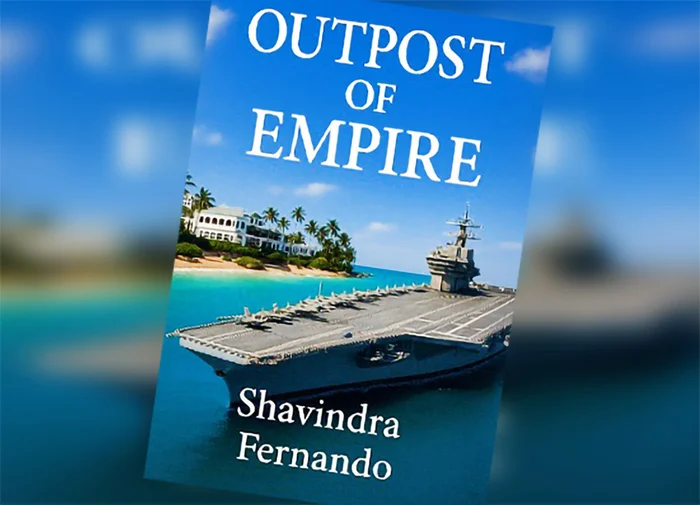
Shavindra Fernando’s Outpost of Empire is a political novel set in the fictional country of Lackadasia. At its heart is a strong idea: an exploration of world politics, terrorism and the ways in which powerful countries manipulate smaller ones. Fernando is clearly writing about political issues that matter deeply to him.
The names immediately establish the book’s satirical character. Lackadasia, Burgherbugaria and the various Klowns suggest a world in which the people and places are exaggerated, but the issues beneath the exaggeration are recognisable. The playful language allows Fernando to approach terrorism, religious conflict and political corruption from an unusual angle.
Henry Stockwell is a central character: an ambassador who arrives in Lackadasia presenting himself as a friend of the country. He believes he understands how power works and treats the country, its politicians and its people as pawns on his personal chessboard. In his arrogance, he never doubts that he controls events rather than being controlled by them. This confidence makes him a compelling figure and in him, we explore the workings of political influence and the potential traps contained therein.
As the story develops, Fernando reveals a political world where causes are adopted when they are useful, people are exploited and discarded, and the truth becomes whatever those in power need it to be. Ordinary people suffer the consequences of decisions made far beyond their reach or knowledge, while those making those decisions continue to justify their actions. Even the people who help keep this world running may not be as important or as safe as they imagine.
Stockwell brings this idea into focus. He recognises corruption in others and willingly takes part in it himself, yet he cannot see that he might also suffer its consequences. Ultimately, he thinks his position will keep him safe. He is intelligent enough to understand the game, but not insightful enough to grasp the limits of his place within it. This blindness gives the novel a strong sense of irony.
The satirical approach gives Fernando room to criticise political hypocrisy without turning the novel into a direct political argument. By using fictional countries and exaggerated names, he creates some distance from specific governments and events while still making the larger targets of the book clear. The humour does not take away from the seriousness of the subject; instead, it makes the cruelty and self-interest beneath the political performance stand out more sharply.
Near the end, Fernando echoes Macbeth with the line, “There is judgment here.” It captures the question running through the novel: can anyone participate in corruption and remain untouched by it? Beneath this satire is a dark story about power and the danger of believing that someone else will always pay the price.
I came away feeling that Outpost of Empire is a valuable and thought-provoking book, particularly in today’s political and social climate. It has a distinctive voice, and the questions it raises about power, responsibility and foreign interference remain relevant far beyond the fictional borders of Lackadasia.
About the Author
Shavindra Fernando has worked as a reporter. He read English & Classics at the University of Peradeniya in Sri Lanka, and took International Relations & Ethnic Politics as a Reuter Fellow at the University of Oxford in England. The Vague Poetess (1999)was his first novel.

The Opposition, in its wisdom (or perhaps stupidity), has submitted yet another No-Confidence Motion (NCM) against the Speaker of Parliament. Perhaps it hopes to score some brownie points in the eyes of the public, which is hardly indifferent to such developments. Yet, knowing full well that the motion is unlikely to succeed, the exercise may well prove futile — akin to banging one’s head against a solid rock.
Nevertheless, the nearly fifty allegations levelled against the Speaker, whether justified or mere mudslinging, cannot simply be brushed aside. Such allegations may well have a bearing on the individual concerned, particularly where it matters most — his conscience — and few would dispute that possibility.
From a protocol standpoint, the Speaker occupies one of the highest positions in the country, ranking third in the hierarchy of state. He consequently belongs to the uppermost echelons of public life, with acquaintances and associates extending across a wide spectrum of society, including diplomats and other distinguished personalities. Such a position carries with it not merely prestige and privilege, but also an onerous responsibility to uphold the dignity and integrity of the office.
As the guardian of Parliament, the Speaker is expected to maintain standards of conduct, impartiality and discipline that are beyond reproach.
Whether the allegations are justifiable or not may be of little consequence to members of the ruling party, who will undoubtedly defend their colleague to the hilt. Nevertheless, the stigma arising from such allegations may prove difficult to erase, particularly in the eyes of his family, close associates and, ultimately, the voters who placed their trust in him. Of course, it is common knowledge that politics can be a dirty game and that, as Lord Acton famously observed, “power tends to corrupt, and absolute power corrupts absolutely.”
Yet, nothing could be more devastating than a person losing his own soul in the process. On the one hand, stepping down could be construed as an admission of responsibility for the allegations levelled against him. On the other, allowing the No-Confidence Motion (NCM) to proceed could expose him to further public scrutiny and potentially inflict lasting damage on his character, dignity and reputation. Thus, he finds himself caught between two unenviable choices, each carrying consequences that may extend far beyond the immediate political fallout.
The Speaker is therefore confronted with a classic Hobson’s choice, with neither option likely to be without consequences. After all, in politics, there are no permanent friends or enemies—only permanent interests.
WILLIAM

Sri Lanka, India caught in US-Iran ship crisis

Namal further remanded

IMF projects Lankan economic growth to moderate amidst mounting global uncertainties

Major Gen Pushpakumara assumes command of 56 Infantry Division

Dickwella axed, Bandara earns maiden Test call up

President signals priority for domestic economic policy autonomy

‘Dates have the highest sugar content to fight Coronavirus’

Sunday Island 27 December – Headlines

#SundayIsland 17th December – Headlines

Sunday Island – 28th March

Sunday Island Headlines – 21 March

Sunday Island – 21st February – Headlines
-

 Features6 days ago
The Sri Lankan who made Scottish history
-

 Sports6 days ago
Nissanka absence opens door for Sri Lanka’s young guns
-

 News5 days ago
NDB fraud Rs 60mn more than reported
-

 News5 days ago
Removing monk’s robes matter for Sangha to decide: Mahanayake Theras
-
 News6 days ago
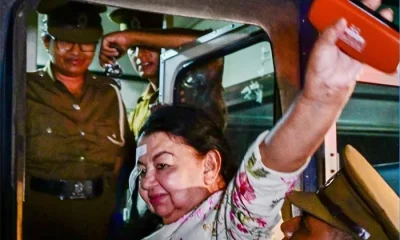
Shiranthi R remanded until 13 Oct.
-

 Features6 days ago
Future of Sri Lanka’s state university system: Should it be shut down and reopened?
-

 News3 days ago
Sri Lanka escalates anti-graft drive with Shiranthi’s jailing
-

 Latest News4 days ago
Farhan, Sadaqat help Pakistan ace 183 chase to go 1-0 up