
Features
The path to knowledge: Granduncle helps me to go to Peradeniya

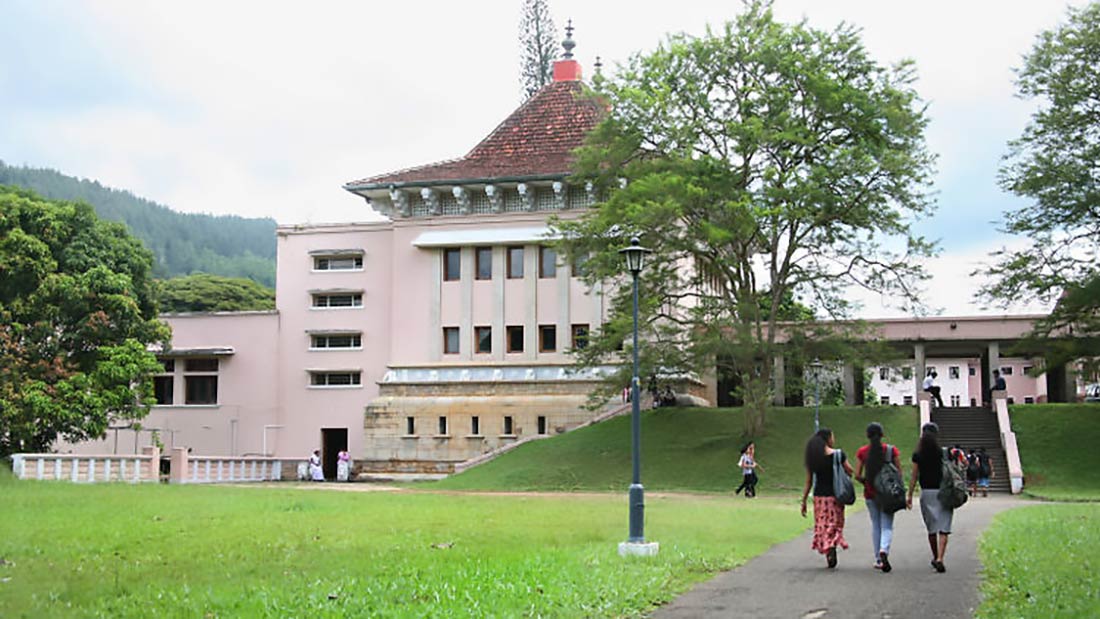
by Jayantha Perera
Nineteen sixty-seven was a momentous year for me. At the age of 47, Thaththa died of a heart attack. He was the sole breadwinner in the family. Overnight, Amma and her four sons found themselves in dire straits, as he did not leave any savings or life insurance. Amma, 40, had never earned an income. My elder brother, Nihal, 18, told me he would become a Catholic priest. My younger brothers, Gamini, 14, and Parakrama, 12, were too young to take over any family responsibility. At the age of 16, I became the head of our family.
We sold our two bicycles. When the mantel of our Aladine lamp burnt out, we lit a small kerosene lamp in the sitting room. The quality and quantity of our food changed rapidly. Breakfast became a slice of bread with a little jam. We could not afford to eat anything for dinner besides a piece of bread dipped in a watery lentil curry. Lunch was rice with a mallum (sauteed green leafy vegetable), half of a boiled egg, lunumiris (crushed chilly with onions), and kirihodi (coconut milk curry). Fortunately, we each got two kilos of rice free weekly from the Co-Operative Store. Occasionally, Amma cooked a fish curry and steamed string hoppers for dinner.
Several relatives and friends advised me to find a job, abandoning my plan to pursue undergraduate studies. They meant well, as there was no breadwinner in our family of five. My granduncle, Aachchi’s brother, promised Amma a monthly stipend of Rs.250 (US$25).
In April 1968, I sat the GCE Advanced Level examination. While trying to overcome the shock of thaththa’s death and financial difficulties, I studied hard for the examination. At the end of the examination, I knew I had done well. The Department of Education took three months to release the examination results. The college clerk told me I had scored the highest in the Arts stream. One month later, the department informed me that I was qualified to join the University of Peradeniya as an undergraduate.
I visited my granduncle, who lived in Kalutara, to tell him about my examination results. His dark blue Austin Cambridge car was parked in front of the house. He was in a white sarong and a short-sleeved vest. His long grey hair fell over his shoulder. He was happy to see me and asked me to sit on a comfortable chair. He sat on a chair with a straight back, complaining about his back pain. His son and daughter joined us. Next to me was a beautiful piano. A large painting of the ‘Last Supper’ decorated the wall behind it. A grandfather clock with a long pendulum announced every second with a constant sound. Every 15 minutes, it chimed a tune that I did not know. The floor was polished like a mirror, and I could inhale the strong smell of ‘Mansion polish.’
Granduncle was happy to hear my examination results and patted my shoulder with a broad smile. He called the housekeeper and told her to kill a chicken and prepare a biriyani meal to celebrate my success. A house helper served me cake and strong milk tea on a silver tray. While sipping tea, I thought about how to broach my university plan.
Granduncle waited until I had tea. He then asked me, “What will you do now?”
“I like to go to university.” I watched his face, unsure how he would react. He thought for a minute or two, started tapping the chair’s armrest with his right-hand fingertips, and then played with his long hair.
“How do you plan to find money to attend the university?” he inquired.
“I don’t know. But I would like to go to the university,” I told my granduncle in tears. I thought he might refuse to help me. Then I told him I had scored the highest marks on the examination. I was one of the youngest students to pass the Advanced Level examination.
“Can’t you get a “schoolship” (scholarship)?” He was interested to know.
“I don’t know,” I said. I thought my granduncle would not agree to help me as he had promised Amma Rs 250 a month for our subsistence. I made up my mind to continue higher studies as an external student at the university, if I could not raise money to go to Peradeniya.
“My businesses aren’t doing well nowadays. Now I need more money as at least one of my children might decide to do higher studies,” he lamented. “How much would it cost at the university for a year?” he queried.
“I guess about Rs 1500 a year,” I informed him. His daughter intervened by saying, “Thaththi, if you don’t help him, who is there to help?” He looked at her, smiled, and said, “Yes, you are right.” After a few seconds, he said, “Hondai (alright), I will give you money to complete your studies.”
Then I hesitantly told him I needed clothes, shoes, and a suitcase. He told me, “Go to Maha Kade (Grand Shop) at Padiyapallela (a bazaar town on the road to Nuwera Eliya from Kandy) and get whatever you want from there. I will tell the manager.” Amma cried when I told her my granduncle agreed to support me. She was sad to hear that I was going to live in Peradeniya. I consoled her by saying that Kandy is only three hours from home and that I would visit them at least once a month.
I travelled about 10 hours by bus to reach my granduncle’s shop at Padiyapelalla. The shop staff warmly welcomed me. The manager told me that my granduncle had informed him about our arrival. He smiled and told me, “You can take anything you want. That was the advice I got from your granduncle.” After a long time, I felt happy and empowered as I could see a clear path that would take me to the university and beyond.
I decided to spend some time at the shop, and at my request, I got the retail branch’s cashier post for two weeks. My job was to check invoices, collect customers’ payments, and, at the end of the day, tally the amount of money received with bills and invoices. I worked from 8.00 am to 8.00 pm with a 30-minute break for lunch. My granduncle heard about my new job and was happy that I offered to stay for two weeks. The smell of dried fish and the ink of newspaper reams engulfed me, but I got used to the odour after a few days.
Amma was elated to see my new clothes and the leather suitcase when I returned home. She went through my new possessions while shedding tears. She told me Thaththa would have bought all my necessities for the university had he been alive.
The day I left for the University of Ceylon, Peradeniya, with Gamini, Amma woke up early and cooked kiribath (milk rice). She wanted me to pray in front of Thaththa’s photo in the sitting room and request him to protect and guide me in my new life. I told him I was leaving home like a hingannek (beggar). Still, one day, I would return as a scholar and look after Amma. She gave me Rs.10. I knew that was all she could give me. She cried and advised me to contact my granduncle if I encountered any trouble. She did not forget to tell me that I should be careful with girls.
My granduncle was waiting for us at his shop. He took us upstairs for lunch. Gamini and I slept a few hours in his room. I felt happy to sleep on a bed after a long time. Uncle got a butter cake from a nearby bakery and came upstairs to have tea with us. He told me that he was proud of me. As my father was no more, he said, he gladly had taken the responsibility to look after his niece and her four children.
I brought a letter from the university that described various payments I should make to the university. For a term, the total cost, including registration, laundry, food, and accommodation, was Rs.267 (US$ 30). I showed the letter to my granduncle. He asked me when I should pay the university fees and how much. I told him I should pay the next day. He gave me Rs. 300. When I returned the balance, he said, “You keep it, and if you want more money, let me know. Please visit us often and don’t forget to tell me about interesting things you learn at the university. I’d love to listen to your stories.”
On the following day, my granduncle awoke early. He spent more than half an hour getting ready to accompany me to the university. He first wore a short, plain cotton sarong and a vest. Over the vest, he wore a long shirt with six buttonholes in its upper portion. He took a gold chain from a small cupboard with six small knob-like buttons and embedded them in the six holes. Then he wrapped a heavy tweed cloth around his waist over the sarong. He tied a long, heavy silver chain around his waist, with a small part of it hanging. Then he combed his hair and tied it in a small knot. Meanwhile, I wore my new clothes and shoes. I thought the shoes were too tight.
Gamini, my granduncle, and I travelled by bus to Kandy. He took us to a hotel in Kandy for breakfast. He was in a reflective mood. I asked him, “Are you okay?” He smiled, held my hand, and said, “I am very happy for you. If you do well in life, your mother and brothers will also do well.”
My granduncle took us to a business associate in Kandy who had a wholesale business outlet known as SK Stores. He introduced me to the businessman, saying, “Look, this is ape lameyek (our lad). Please give him whatever he wants and send me a chit for the total amount I owe you.”
We took a bus from Kandy to the university. The suitcase was heavy, and carrying it on my shoulder had crushed my new shirt. I was sweating and felt hungry. My granduncle decided to go to the university chapel first. At the church, we prayed silently, and after prayers, my granduncle dipped his finger in lamp oil at the altar and dropped a few drops onto my tongue. He said the holy oil would help me in my studies and protect me from evil forces.
The hall of residence — the Marcus Fernando Hall – was on the slope of a hill. We trudged along a winding road to the hall from the chapel. My granduncle was tired, and we had to break our walk several times so that he could catch his breath. While carrying all my possessions in the suitcase, I wondered why my granduncle did not bring his Austin Cambridge car for this journey or hire a private vehicle from Kandy. My father would have hired a car from Kandy to the university. I wondered how my father would have reacted to my joining Peradeniya University. He might have wanted me to join Colombo University so I could stay home and attend lectures as a dayscholar.
Registration at the hall took about 20 minutes. The polished corridors reminded me of my granduncle’s house. I walked to my room, touching the wall because I feared slipping on the polished floor. My granduncle wanted to see the shared facilities at the hall. He checked the toilets and bathing areas.
My assigned room was large and had a wash basin in a narrow passage. The room had three narrow spring beds, two large, heavy tables, three wooden chairs, and two table lamps. I spread my new bedsheet on one of the beds and took out the new pillow. The room’s balcony was spacious and overlooked the jungle behind the hall. There was a poorly maintained volleyball court just below the balcony. Granduncle spent some time on the balcony, viewing the Hantana mountains.
I walked with my granduncle and Gamini to the bus stand. While waiting for the bus, he advised Gamini to study well and enter the university as his brother did. Gamini listened but did not respond. Granduncle wanted to know whether I needed money for my meals. I told him that the university provides all meals. He took his large wallet, picked a one hundred rupees note from its inner pocket, and gave it to me without saying anything. The bus arrived; my granduncle kissed my head and left with Gamini.
When I entered my room, I saw my two roommates, Piyasena from Warakapola and Premaratne from Opanayaka. I was unfamiliar with their names, as all my friends had Christian names at college. We exchanged pleasantries and discussed dividing the room among the three of us. Then we heard a bell, and we went out. It was the invitation for lunch in the dining room. A minor staff member walked up and down the corridor shouting, “Please wear your trousers and shoes before coming to the dining room.”
Students sat on large benches fixed to heavy tables below the High Table. When we sat down, the chairman of the occasion got up from the High Table. He introduced himself as the Warden of the Hall and professor of modern history. He outlined university traditions, expectations from “freshers,” and their privileges. He was in his academic gown, and I was mesmerized by its colours and movements when he addressed us.
Another speaker from the High Table warned us that “ragging is prohibited on campus,” and we were responsible for informing the senior staff if someone tried to rag us. The lunch was like the one I had at my granduncle’s house. I remembered my brothers and mother and wished they were with me to share this experience and good food.



A prominent feature of the first year of the NPP government is that it has not engaged in the institutional reforms which was expected of it. This observation comes in the context of the extraordinary mandate with which the government was elected and the high expectations that accompanied its rise to power. When in opposition and in its election manifesto, the JVP and NPP took a prominent role in advocating good governance systems for the country. They insisted on constitutional reform that included the abolition of the executive presidency and the concentration of power it epitomises, the strengthening of independent institutions that overlook key state institutions such as the judiciary, public service and police, and the reform or repeal of repressive laws such as the PTA and the Online Safety Act.
The transformation of a political party that averaged between three to five percent of the popular vote into one that currently forms the government with a two thirds majority in parliament is a testament to the faith that the general population placed in the JVP/ NPP combine. This faith was the outcome of more than three decades of disciplined conduct in the aftermath of the bitter experience of the 1988 to 1990 period of JVP insurrection. The manner in which the handful of JVP parliamentarians engaged in debate with well researched critiques of government policy and actions, and their service in times of disaster such as the tsunami of 2004 won them the trust of the people. This faith was bolstered by the Aragalaya movement which galvanized the citizens against the ruling elites of the past.
In this context, the long delay to repeal the Prevention of Terrorism Act which has earned notoriety for its abuse especially against ethnic and religious minorities, has been a disappointment to those who value human rights. So has been the delay in appointing an Auditor General, so important in ensuring accountability for the money expended by the state. The PTA has a long history of being used without restraint against those deemed to be anti-state which, ironically enough, included the JVP in the period 1988 to 1990. The draft Protection of the State from Terrorism Act (PSTA), published in December 2025, is the latest attempt to repeal and replace the PTA. Unfortunately, the PSTA largely replicates the structure, logic and dangers of previous failed counter terrorism bills, including the Counter Terrorism Act of 2018 and the Anti Terrorism Act proposed in 2023.
Misguided Assumption
Despite its stated commitment to rule of law and fundamental rights, the draft PTSA reproduces many of the core defects of the PTA. In a preliminary statement, the Centre for Policy Alternatives has observed among other things that “if there is a Detention Order made against the person, then in combination, the period of remand and detention can extend up to two years. This means that a person can languish in detention for up to two years without being charged with a crime. Such a long period again raises questions of the power of the State to target individuals, exacerbated by Sri Lanka’s history of long periods of remand and detention, which has contributed to abuse and violence.” Human Rights lawyer Ermiza Tegal has warned against the broad definition of terrorism under the proposed law: “The definition empowers state officials to term acts of dissent and civil disobedience as ‘terrorism’ and will lawfully permit disproportionate and excessive responses.” The legitimate and peaceful protests against abuse of power by the authorities cannot be classified as acts of terror.
The willingness to retain such powers reflects the surmise that the government feels that keeping in place the structures that come from the past is to their benefit, as they can utilise those powers in a crisis. Due to the strict discipline that exists within the JVP/NPP at this time there may be an assumption that those the party appoints will not abuse their trust. However, the country’s experience with draconian laws designed for exceptional circumstances demonstrates that they tend to become tools of routine governance. On the plus side, the government has given two months for public comment which will become meaningful if the inputs from civil society actors are taken into consideration.
Worldwide experience has repeatedly demonstrated that integrity at the level of individual leaders, while necessary, is not sufficient to guarantee good governance over time. This is where the absence of institutional reform becomes significant. The aftermath of Cyclone Ditwah in particular has necessitated massive procurements of emergency relief which have to be disbursed at maximum speed. There are also significant amounts of foreign aid flowing into the country to help it deal with the relief and recovery phase. There are protocols in place that need to be followed and monitored so that a fiasco like the disappearance of tsunami aid in 2004 does not recur. To the government’s credit there are no such allegations at the present time. But precautions need to be in place, and those precautions depend less on trust in individuals than on the strength and independence of oversight institutions.
Inappropriate Appointments
It is in this context that the government’s efforts to appoint its own preferred nominees to the Auditor General’s Department has also come as a disappointment to civil society groups. The unsuitability of the latest presidential nominee has given rise to the surmise that this nomination was a time buying exercise to make an acting appointment. For the fourth time, the Constitutional Council refused to accept the president’s nominee. The term of the three independent civil society members of the Constitutional Council ends in January which would give the government the opportunity to appoint three new members of its choice and get its way in the future.
The failure to appoint a permanent Auditor General has created an institutional vacuum at a critical moment. The Auditor General acts as a watchdog, ensuring effective service delivery promoting integrity in public administration and providing an independent review of the performance and accountability. Transparency International has observed “The sequence of events following the retirement of the previous Auditor General points to a broader political inertia and a governance failure. Despite the clear constitutional importance of the role, the appointment process has remained protracted and opaque, raising serious questions about political will and commitment to accountability.”
It would appear that the government leadership takes the position they have been given the mandate to govern the country which requires implementation by those they have confidence in. This may explain their approach to the appointment (or non-appointment) at this time of the Auditor General. Yet this approach carries risks. Institutions are designed to function beyond the lifespan of any one government and to protect the public interest even when those in power are tempted to act otherwise. The challenge and opportunity for the NPP government is to safeguard independent institutions and enact just laws, so that the promise of system change endures beyond personalities and political cycles.
by Jehan Perera

 A new batch arrived at our Faculty again. Students representing almost all districts of the country remind me once again of the wonderful opportunity we have for promoting social and ethnic cohesion at our universities. Sadly, however, many students do not interact with each other during the first few semesters, not only because they do not speak each other’s language(s), but also because of the fear and distrust that still prevails among communities in our society.
General education reform presents an opportunity to explore ways to promote social and ethnic cohesion. A school curriculum could foster shared values, empathy, and critical thinking, through social studies and civics education, implement inclusive language policies, and raise critical awareness about our collective histories. Yet, the government’s new policy document, Transforming General Education in Sri Lanka 2025, leaves us little to look forward to in this regard.
The policy document points to several “salient” features within it, including: 1) a school credit system to quantify learning; 2) module-based formative and summative assessments to replace end-of-term tests; 3) skills assessment in Grade 9 consisting of a ‘literacy and numeracy test’ and a ‘career interest test’; 4) a comprehensive GPA-based reporting system spanning the various phases of education; 5) blended learning that combines online with classroom teaching; 6) learning units to guide students to select their preferred career pathways; 7) technology modules; 8) innovation labs; and 9) Early Childhood Education (ECE). Notably, social and ethnic cohesion does not appear in this list. Here, I explore how the proposed curriculum reforms align (or do not align) with the NPP’s pledge to inculcate “[s]afety, mutual understanding, trust and rights of all ethnicities and religious groups” (p.127), in their 2024 Election Manifesto.
Language/ethnicity in the present curriculum
The civil war ended over 15 years ago, but our general education system has done little to bring ethnic communities together. In fact, most students still cannot speak in the “second national language” (SNL) and textbooks continue to reinforce negative stereotyping of ethnic minorities, while leaving out crucial elements of our post-independence history.
Although SNL has been a compulsory subject since the 1990s, the hours dedicated to SNL are few, curricula poorly developed, and trained teachers few (Perera, 2025). Perhaps due to unconscious bias and for ideological reasons, SNL is not valued by parents and school communities more broadly. Most students, who enter our Faculty, only have basic reading/writing skills in SNL, apart from the few Muslim and Tamil students who schooled outside the North and the East; they pick up SNL by virtue of their environment, not the school curriculum.
Regardless of ethnic background, most undergraduates seem to be ignorant about crucial aspects of our country’s history of ethnic conflict. The Grade 11 history textbook, which contains the only chapter on the post-independence period, does not mention the civil war or the events that led up to it. While the textbook valourises ‘Sinhala Only’ as an anti-colonial policy (p.11), the material covering the period thereafter fails to mention the anti-Tamil riots, rise of rebel groups, escalation of civil war, and JVP insurrections. The words “Tamil” and “Muslim” appear most frequently in the chapter, ‘National Renaissance,’ which cursorily mentions “Sinhalese-Muslim riots” vis-à-vis the Temperance Movement (p.57). The disenfranchisement of the Malaiyaha Tamils and their history are completely left out.
Given the horrifying experiences of war and exclusion experienced by many of our peoples since independence, and because most students still learn in mono-ethnic schools having little interaction with the ‘Other’, it is not surprising that our undergraduates find it difficult to mix across language and ethnic communities. This environment also creates fertile ground for polarizing discourses that further divide and segregate students once they enter university.
More of the same?
How does Transforming General Education seek to address these problems? The introduction begins on a positive note: “The proposed reforms will create citizens with a critical consciousness who will respect and appreciate the diversity they see around them, along the lines of ethnicity, religion, gender, disability, and other areas of difference” (p.1). Although National Education Goal no. 8 somewhat problematically aims to “Develop a patriotic Sri Lankan citizen fostering national cohesion, national integrity, and national unity while respecting cultural diversity (p. 2), the curriculum reforms aim to embed values of “equity, inclusivity, and social justice” (p. 9) through education. Such buzzwords appear through the introduction, but are not reflected in the reforms.
Learning SNL is promoted under Language and Literacy (Learning Area no. 1) as “a critical means of reconciliation and co-existence”, but the number of hours assigned to SNL are minimal. For instance, at primary level (Grades 1 to 5), only 0.3 to 1 hour is allocated to SNL per week. Meanwhile, at junior secondary level (Grades 6 to 9), out of 35 credits (30 credits across 15 essential subjects that include SNL, history and civics; 3 credits of further learning modules; and 2 credits of transversal skills modules (p. 13, pp.18-19), SNL receives 1 credit (10 hours) per term. Like other essential subjects, SNL is to be assessed through formative and summative assessments within modules. As details of the Grade 9 skills assessment are not provided in the document, it is unclear whether SNL assessments will be included in the ‘Literacy and numeracy test’. At senior secondary level – phase 1 (Grades 10-11 – O/L equivalent), SNL is listed as an elective.
Refreshingly, the policy document does acknowledge the detrimental effects of funding cuts in the humanities and social sciences, and highlights their importance for creating knowledge that could help to “eradicate socioeconomic divisions and inequalities” (p.5-6). It goes on to point to the salience of the Humanities and Social Sciences Education under Learning Area no. 6 (p.12):
“Humanities and Social Sciences education is vital for students to develop as well as critique various forms of identities so that they have an awareness of their role in their immediate communities and nation. Such awareness will allow them to contribute towards the strengthening of democracy and intercommunal dialogue, which is necessary for peace and reconciliation. Furthermore, a strong grounding in the Humanities and Social Sciences will lead to equity and social justice concerning caste, disability, gender, and other features of social stratification.”
Sadly, the seemingly progressive philosophy guiding has not moulded the new curriculum. Subjects that could potentially address social/ethnic cohesion, such as environmental studies, history and civics, are not listed as learning areas at the primary level. History is allocated 20 hours (2 credits) across four years at junior secondary level (Grades 6 to 9), while only 10 hours (1 credit) are allocated to civics. Meanwhile, at the O/L, students will learn 5 compulsory subjects (Mother Tongue, English, Mathematics, Science, and Religion and Value Education), and 2 electives—SNL, history and civics are bunched together with the likes of entrepreneurship here. Unlike the compulsory subjects, which are allocated 140 hours (14 credits or 70 hours each) across two years, those who opt for history or civics as electives would only have 20 hours (2 credits) of learning in each. A further 14 credits per term are for further learning modules, which will allow students to explore their interests before committing to a A/L stream or career path.
With the distribution of credits across a large number of subjects, and the few credits available for SNL, history and civics, social/ethnic cohesion will likely remain on the back burner. It appears to be neglected at primary level, is dealt sparingly at junior secondary level, and relegated to electives in senior years. This means that students will be able to progress through their entire school years, like we did, with very basic competencies in SNL and little understanding of history.
Going forward
Whether the students who experience this curriculum will be able to “resist and respond to hegemonic, divisive forces that pose a threat to social harmony and multicultural coexistence” (p.9) as anticipated in the policy, is questionable. Education policymakers and others must call for more attention to social and ethnic cohesion in the curriculum. However, changes to the curriculum would only be meaningful if accompanied by constitutional reform, abolition of policies, such as the Prevention of Terrorism Act (and its proxies), and other political changes.
For now, our school system remains divided by ethnicity and religion. Research from conflict-ridden societies suggests that lack of intercultural exposure in mono-ethnic schools leads to ignorance, prejudice, and polarized positions on politics and national identity. While such problems must be addressed in broader education reform efforts that also safeguard minority identities, the new curriculum revision presents an opportune moment to move this agenda forward.
(Ramya Kumar is attached to the Department of Community and Family Medicine, Faculty of Medicine, University of Jaffna).
Kuppi is a politics and pedagogy happening on the margins of the lecture hall that parodies, subverts, and simultaneously reaffirms social hierarchies.
by Ramya Kumar

Certain songs become ever-present every December, and with Christmas just two days away, I thought of highlighting the Top 10 Most Popular Festive Songs.
The famous festive songs usually feature timeless classics like ‘White Christmas,’ ‘Silent Night,’ and ‘Jingle Bells,’ alongside modern staples like Mariah Carey’s ‘All I Want for Christmas Is You,’ Wham’s ‘Last Christmas,’ and Brenda Lee’s ‘Rockin’ Around the Christmas Tree.’
The following renowned Christmas songs are celebrated for their lasting impact and festive spirit:
* ‘White Christmas’ — Bing Crosby
The most famous holiday song ever recorded, with estimated worldwide sales exceeding 50 million copies. It remains the best-selling single of all time.
* ‘All I Want for Christmas Is You’ — Mariah Carey
A modern anthem that dominates global charts every December. As of late 2025, it holds an 18x Platinum certification in the US and is often ranked as the No. 1 popular holiday track.

Mariah Carey: ‘All I Want for Christmas Is You’
* ‘Silent Night’ — Traditional
Widely considered the quintessential Christmas carol, it is valued for its peaceful melody and has been recorded by hundreds of artistes, most famously by Bing Crosby.
* ‘Jingle Bells’ — Traditional
One of the most universally recognised and widely sung songs globally, making it a staple for children and festive gatherings.
* ‘Rockin’ Around the Christmas Tree’ — Brenda Lee
Recorded when Lee was just 13, this rock ‘n’ roll favourite has seen a massive resurgence in the 2020s, often rivaling Mariah Carey for the top spot on the Billboard Hot 100.
* ‘Last Christmas’ — Wham!
A bittersweet ’80s pop classic that has spent decades in the top 10 during the holiday season. It recently achieved 7x Platinum status in the UK.
* ‘Jingle Bell Rock’ — Bobby Helms
A festive rockabilly standard released in 1957 that remains a staple of holiday radio and playlists.
* ‘The Christmas Song (Chestnuts Roasting on an Open Fire)’— Nat King Cole
Known for its smooth, warm vocals, this track is frequently cited as the ultimate Christmas jazz standard.

Wham! ‘Last Christmas’
* ‘It’s the Most Wonderful Time of the Year’ — Andy Williams
Released in 1963, this high-energy big band track is famous for capturing the “hectic merriment” of the season.
* ‘Rudolph the Red-Nosed Reindeer’ — Gene Autry
A beloved narrative song that has sold approximately 25 million copies worldwide, cementing the character’s place in Christmas folklore.
Other perennial favourites often in the mix:
* ‘Feliz Navidad’ – José Feliciano
* ‘A Holly Jolly Christmas’ – Burl Ives
* ‘Let It Snow! Let It Snow! Let It Snow!’ – Frank Sinatra
Let me also add that this Thursday’s ‘SceneAround’ feature (25th December) will be a Christmas edition, highlighting special Christmas and New Year messages put together by well-known personalities for readers of The Island.
-

 Midweek Review7 days ago
How massive Akuregoda defence complex was built with proceeds from sale of Galle Face land to Shangri-La
-
 News6 days ago
Pope fires broadside: ‘The Holy See won’t be a silent bystander to the grave disparities, injustices, and fundamental human rights violations’
-

 News14 hours ago
Members of Lankan Community in Washington D.C. donates to ‘Rebuilding Sri Lanka’ Flood Relief Fund
-

 News6 days ago
Pakistan hands over 200 tonnes of humanitarian aid to Lanka
-

 Business5 days ago
Unlocking Sri Lanka’s hidden wealth: A $2 billion mineral opportunity awaits
-
 News7 days ago
Burnt elephant dies after delayed rescue; activists demand arrests
-

 Editorial7 days ago
Colombo Port facing strategic neglect
-

 News5 days ago
Army engineers set up new Nayaru emergency bridge