
Features
R. Premadasa: Self-made politician and first ‘commoner’ to lead nation


By. LaLin i De SiLva
Today (June23) is the 100th birth anniversary of former Prime Minister and President Ranasinghe Premadasa who was born on this day in 1924 at Dias Place, Keselwatte in Colombo Central. He had his primary education at Harvard Methodist Girl’s School and Lorenz’s College and his secondary education at St. Joseph’s College, Colombo where he studied up to his Cambridge senior exam. He also received Buddhist instuction at Hewavitarana Daham Pasala in Pitakotuwa (Pettah).
It is a pleasure for me to write a few lines on this occasion about a leader who stood by ordinary people through thick and thin. I had the good fortune of meeting him long before he had reached the acme of his career as President Premadasa was a long-time friend of my father, late E.P.De. Silva, who was a well-informed political reporter before he became the Editor of the Daily Mirror.
President Premadasa began his political career in 1950 as a member of Labour Party under A.E. Goonasinha, was elected a member of the Colombo Municipal Council from the San Sebqastian ward. In 1956, he joined the United National Party running unsuccessfully against Dr. NM Perera at Ruwanwella.
In March 1960 he was elected as a Member of Parliament from Colombo Central but failed to retain the seat at the election which followed in July the same year. In 1965, he was first appointed Parliamentary Secretary to the Ministry of Local Government, Housing and Construction and the Minister when late Senator M. Tiruchelvam who held the portfolio resigned in 1968. After 1977, when J.R. Jayewardene became the first President of Sri Lanka, Premadasa was appointed Prime Minister. After more than four decades of active politics, in 1988, he became the second Executive President of Sri Lanka up to 1993 when he was assassinated.
Sadly the country lost a dynamic leader who was action and result oriented and had the vision to developing the economy island wide by taking industries to the rural areas and providing employments to rural youth helping to alleviate poverty in the villages. His Janasaviya poverty alleviation and 200 garment factories programs stand out in this regard.
The late President had the common touch, always believing in that ordinary people should share the responsibility of finding solutions to their problems. He was convinced that major problems including the lack of foreign exchange could be overcome by harnessing our own resources.
President Premadasa, due to his friendship with my father, never forgot to visit me whenever he visited the Badulla District where I worked as Assistant Superintendent at Downside Estate, Welimada and Superintendent at Shawlands Estate, Lunugala. He was most concerned about the living conditions of the estate workers such as housing, drinking water1}, electricity, sanitation etc.
Despite the then unsettled domestic situation in the country with twin insurrections in the north and south led by the LTTE and JVP during his tenure, he continued with the implementation of his schemes and programs for economic and social reconstruction. The thrust of his approach was the launching of the village awakening movement Gam Udawa (village reawakening) and Janasaviya (strength of the people). He had feeling for and empathy with the common man and reached out to uplift their living conditions in most of his programs.
The object of these, as stated by him, was whatever development the country achieved must benefit the poor and be focused on eliminating the gap between the haves and have nots. He looked for officials with a “Must and Can Do” attitude to carry forward his programs. There’s a wide perception that had President Premadasa’s life not been prematurely cut down, he would have led the country to a progressive and disciplined future similar to many other developed countries. Such leadership is badly needed today.
Though sometimes controversial he remains an iconic figure in politics today. Hopefully, present political leaders would learn from his mistakes and follow his good example and pave the way for a better Sri Lanka.
(The writer is a retired planter and freelance journalist)


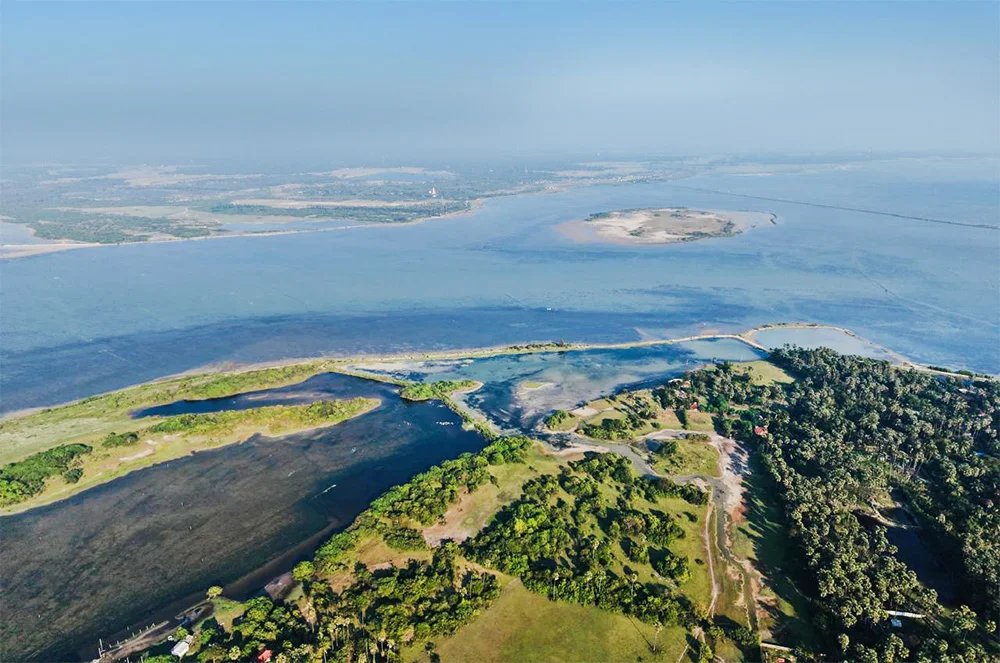
Rediscovery highlights rich, unexplored aquatic biodiversity in Northern Province
By Ifham Nizam
A small fish that vanished from Sri Lanka’s scientific records for nearly 90 years has resurfaced in the waters of Jaffna, providing researchers with a remarkable rediscovery and fresh evidence that the Northern Province still holds significant, unexplored aquatic biodiversity.
The Yellow-stripe Goby, Mugilogobius chulae (Smith, 1932), was recently found in the Karainagar area of Karaitivu Island during a biodiversity survey, almost nine decades after it was last scientifically recorded from Sri Lanka.
The discovery is particularly significant because the species had previously been known from the country only through a single historical specimen collected from Pedduru Thuduwa, Jaffna.
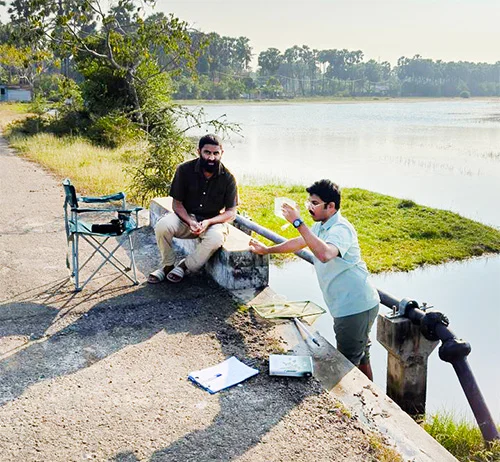
Discovery moment
Research scientist Janamina Bandara, a member of the team that made the discovery, told The Island that the fish was not initially identified as the long-lost species.
“We came across an unidentified Goby during our fieldwork, and it was only after a detailed examination of its external morphology that we were able to establish its identity as Mugilogobius chulae,” Bandara said.
“For us, it was an exciting moment because this species had not been confirmed from Sri Lanka for almost 90 years.”
The fish has a particularly interesting history in Sri Lankan ichthyology.
In 1936, renowned Sri Lankan zoologist P. E. P. Deraniyagala described a new fish from Pedduru Thuduwa in Jaffna in his paper,
“Two New Fishes from Ceylon”, published in The Ceylon Journal of Science.
He named the species Vaimosa valigouva. Subsequent taxonomic revisions established that Vaimosa valigouva was a synonym of Mugilogobius chulae, the currently accepted scientific name of the Yellow-stripe Goby.
However, no further confirmed records emerged from Sri Lanka for decades.
With the species absent from subsequent surveys and inventories, it eventually disappeared from the country’s national fish lists and from much of the scientific literature relating to Sri Lankan fishes.
The prolonged lack of records was also closely linked to the difficulties of conducting biological research in northern Sri Lanka.
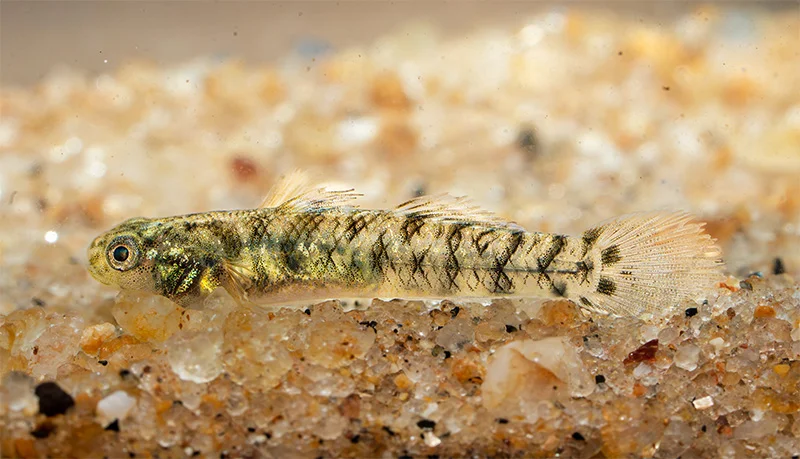
Yellow-stripe Goby, Mugilogobius chulae
For decades, the civil conflict, restricted access, security concerns and limited opportunities for field surveys prevented scientists from systematically investigating many of the region’s aquatic habitats.
Consequently, while considerable advances were made in documenting biodiversity elsewhere in the island, northern Sri Lanka remained comparatively poorly explored.
Bandara said the rediscovery should, therefore, be viewed in a much wider context than the finding of a single fish.
He told The Island: “An absence of records does not necessarily mean that a species is absent. In the case of northern Sri Lanka, there have been enormous gaps in field data because large areas could not be studied systematically for many years.”
“This finding demonstrates how important it is to return to these habitats and carry out detailed surveys. There could be many more species, range extensions and rediscoveries waiting to be documented.”
The research team’s findings did not end with the Yellow-stripe Goby.
During the same study, the researchers also documented the Black-spotted Snubnose Goby, Pseudogobius melanostictus (Day, 1876), providing what they describe as the first confirmed northernmost record of the species in Sri Lanka.
The species had previously been reported mainly from lagoonal and brackish coastal environments in the western part of the country, while recent verified records were limited.
The new finding consequently extends the known geographical range of Pseudogobius melanostictus and adds an important northern record to Sri Lanka’s fish fauna.
Together, the two findings significantly expand the known distribution of both Goby species within Sri Lanka.
They also highlight the importance of small and often overlooked coastal, tidal and inland aquatic habitats in documenting the island’s biodiversity.
Goby species are generally small fishes that occupy a variety of marine, brackish and freshwater environments. Their habitats can include rocky shores, tidal pools, lagoons, estuaries, mangroves and other transitional aquatic ecosystems.
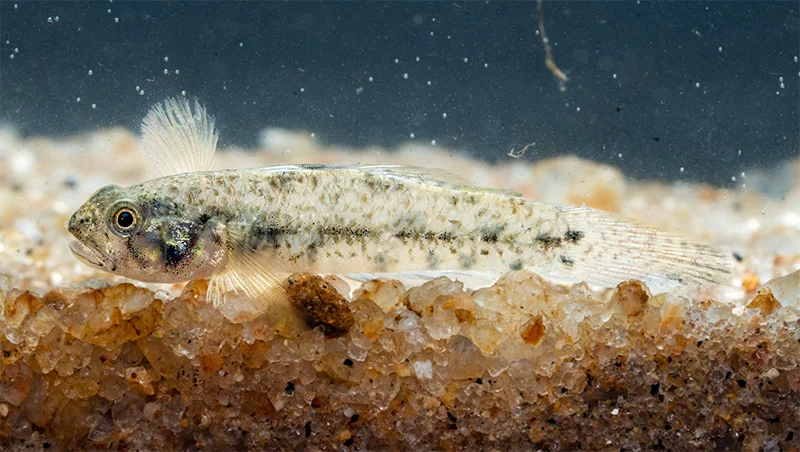
Black-spotted Snubnose Goby, Pseudogobius melanostictus
Because of their small size and preference for habitats that are often overlooked during large-scale biodiversity surveys, some Goby species can remain undocumented for long periods.
The latest research is, therefore, particularly relevant to understanding the aquatic biodiversity of the Jaffna Peninsula and surrounding islands.
According to Bandara, the discovery also demonstrates the importance of combining historical scientific literature with modern field research.
“The old records gave us an important historical reference, while the current fieldwork allowed us to connect that history with what is actually present in these habitats today,” he said.
The rediscovery of Mugilogobius chulae effectively reconnects modern Sri Lankan ichthyological research with Deraniyagala’s 1936 record.
It also establishes the new finding as the westernmost known occurrence of the species in the Indian Ocean, according to the researchers.
The study’s authors — Janamina Bandara, Sahan Randeniya and Aravind Manoj — say their findings underline the need for continued biological surveys in northern Sri Lanka.
The region’s aquatic ecosystems remain insufficiently studied, particularly in areas that were inaccessible or difficult to investigate for extended periods.
Bandara said the team expected that further exploration could produce more unexpected findings.
“We should not assume that we have a complete picture of Sri Lanka’s fish diversity. Particularly in the north, there are habitats that have received very little scientific attention,” he said.
“Every field survey can potentially change what we know about the distribution of a species. That is why continued exploration and proper documentation are so important.
The researchers have expressed particular concern about the need to document such species before changes to their habitats make future identification more difficult.
Coastal development, changes in water quality, habitat degradation and other pressures can affect small aquatic ecosystems, making baseline biodiversity information increasingly important for conservation planning.
The latest study, therefore, provides not merely two new distribution records but also a reminder of the value of maintaining and updating national biodiversity inventories.
The researchers thanked Dr. Helen Larson, Rohan Pethiyagoda, Madhura de Silva, Dr. Kasun Bandara and Neluka Fernando for their assistance with various aspects of the study.
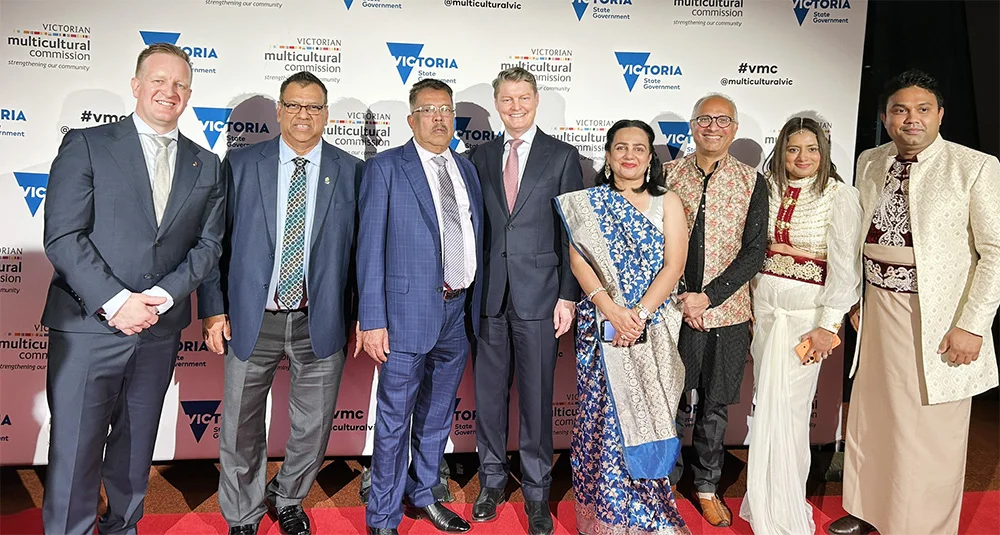
 The Victorian Premier’s Multicultural Gala Dinner 2026, held annually to celebrate the incredible strength and pride found within the multicultural and multifaith communities, in Victoria, Australia, turned out to be a wonderful evening of culture, connection, friendship and celebration.
Hosted by the Premier of Victoria, Ben Carroll MP, Minister for Multicultural Affairs, Paul Edbrooke MP, and Victorian Multicultural Commission (VMC) Interim Chairperson Louise Perry, the night honoured the inspiring community stories that strengthen and define Victoria.
Held at the Melbourne Convention and Exhibition Centre (MCEC), I’m told it was a truly special evening, bringing together Parliamentarians, Diplomats, Consular Corps, community leaders and multicultural communities from across Victoria.
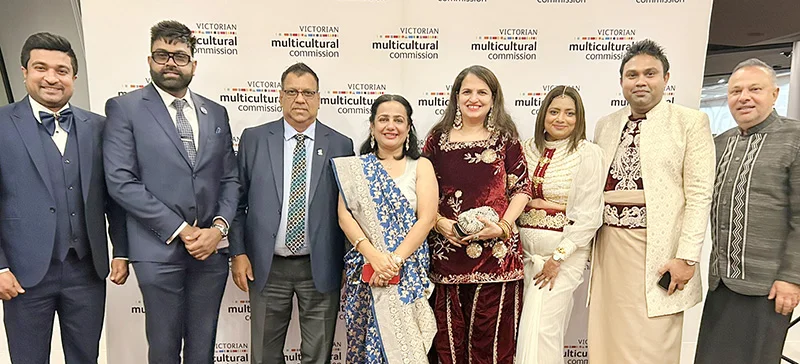
Culture Nest Australia team at Victorian Premier’s Multicultural Gala Dinner
This year’s theme, ‘Stories of Us,’ reflected the many individual journeys, cultures, traditions and migration stories that come together to create a shared identity and make Victoria such a vibrant and inclusive place.
Sri Lanka was in the scene, as well, as part of the Culture Nest Australia team, and included Shawn Mendis, Chamila Diwakara Dissanayake, Nayoma Ranawaka, Sachintha Abeysuriya, Nildhara Nayak Gadani, Dheepa Awtani, Fairlo Wijesinghe, Alice Wijesinghe, Joane and Johann Dias Jayasinha, Chris Perera, Sidney Mendis and Allan Al.
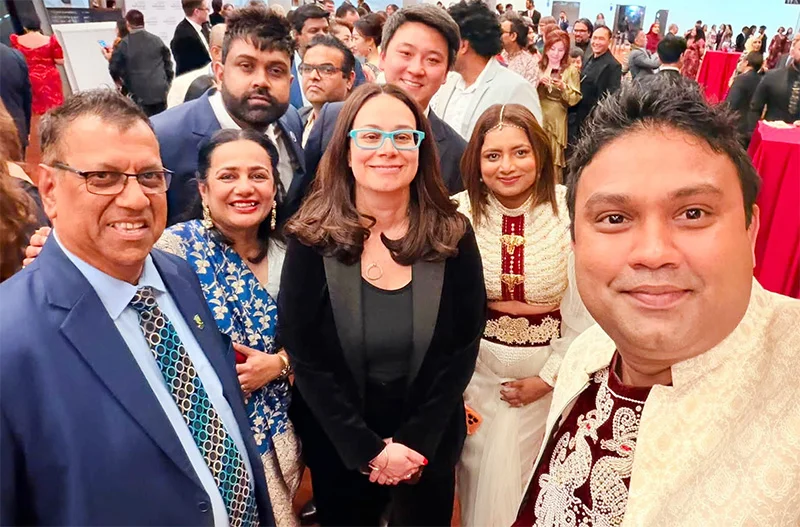
Culture Nest Australia team with Victorian Multicultural Commission Interim Chairperson Louise Perry (centre)
“We were proud to be part of an inspiring evening, celebrating Victoria’s incredible cultural diversity,” said the Sri Lankans.
“It was an evening to celebrate diversity, embrace unity, build connections and recognise our differences as one of our greatest strengths.”
Australia’s multicultural community is a powerful example to the world of how people from different backgrounds, cultures, faiths and traditions can come together with respect, friendship and a shared vision for a stronger future.
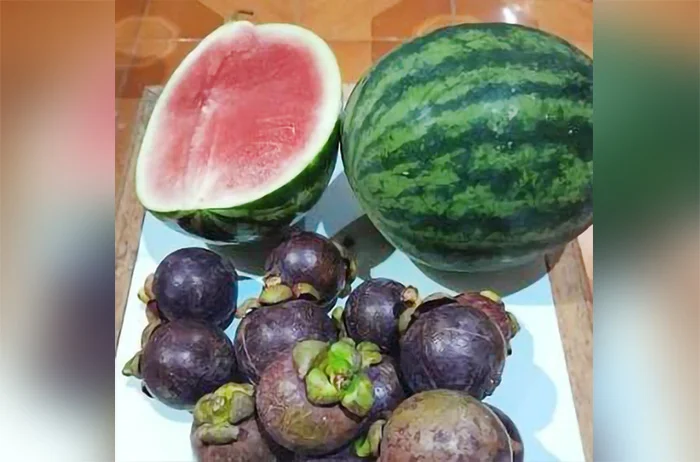
 Mangosteen and Watermelon are both PERFECT for this heat, so this week the spotlight is on both these items:
* Watermelon Cooling Face Mist:
For: Instant refresh and dehydration
Blend ½ cup seedless watermelon, strain juice, and mix with 01 tablespoon rose water. Pour into spray bottle, and keep in fridge. Spray on face and neck anytime you feel hot.
* Mangosteen Peel and Yoghurt Brightening Mask:
For: Dull skin, dark spots, and pigmentation
Dry 02-03 mangosteen peels in the sun, grind to powder, and then mix 01 tablespoon of this powder with 02 tablespoons of plain yoghurt. Apply on face but avoid the eye area. Wash off with cool water after 15 minutes.
* Watermelon and Aloe Vera Soothing Gel:
For: Sunburn, prickly heat, and oily skin
Mix 03 tablespoons of fresh watermelon juice with 02 tablespoons of aloe vera gel and 03 drops of lemon. Chill. Apply on face and neck, even sunburned arms. Rinse after 20 minutes.
* Mangosteen and Honey Anti-Acne Spot Treatment:
For: Sweat pimples and clogged pores
Mix ½ teaspoon of mangosteen peel powder and 01 teaspoon honey. Dab only on pimples/spots and not the whole face. Leave for 10 minutes, and then wash.
* Watermelon and Mangosteen Ice Cube Toner:
For: Open pores, puffiness, and glow
Blend ¼ cup watermelon with 02 teaspoons of mangosteen juice. Pour into ice tray and freeze. Wrap cube in cotton fabric and glide only on face, in upward strokes, in the mornings.
Important:
Patch test first, especially with mangosteen peel — it’s strong!
Clean face first always. Wash with mild cleanser, and pat dry.
Use fresh fruit only and store mixes in fridge, for maximum 03 days.

Lost for 90 years: Rare Goby resurfaces in Jaffna

Sri Lanka … at Victoria Premier’s Multicultural Gala Dinner

Avindu makes history with first World University gold for Sri Lanka

Port City Colombo strengthens Gulf investment ties at Dubai diplomatic engagement

Cool, clear, glowing skin in excessive heat

American Premium Water strikes Gold at Dragons of Sri Lanka 2026

‘Dates have the highest sugar content to fight Coronavirus’

Sunday Island 27 December – Headlines

#SundayIsland 17th December – Headlines

Sunday Island – 28th March

Sunday Island Headlines – 21 March

Sunday Island – 21st February – Headlines
-

 News7 days ago
Denied of promotion to SC despite vacancies, justice Gurusinghe retires
-

 News7 days ago
22A: SC urged to suspend hearing, appoint full bench
-

 News5 days ago
Namal remanded until Sept. 18 over Airbus deal investigation
-

 Latest News4 days ago
Tharanga creates history with Diamond League crown in Brussels
-

 News7 days ago
Govt. seeks NATO assistance
-

 News4 days ago
Dispute which triggered listed company director being detained at BIA resolved
-

 Editorial7 days ago
Strange arithmetic goes unchallenged
-

 Features3 days ago
After the parade: What a traffic OIC’s walk-out tells us