
News
Tamils’ struggle for political rights reasonable, says Sumanthiran


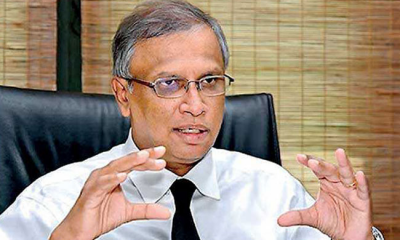
TNA MP M.A.Sumanthiran told Parliament yesterday that the Tamils’ struggle was a struggle for justice.
“It is a reasonable struggle for political rights. Our struggle may be too long and hazardous. But we will attain a just solution if we continue in the non-violent path without deviating from it,” he said, making a statement to the House.
Full text of Sumanthiran’s statement: “This week we commemorate the 15th anniversary of the Mullivaikkal killings and other atrocities. It was a time when our people were locked into a narrow strip of land with no avenue for escape and had to survive only on kanji, while losing many loved ones and seeing many others maimed due to heavy shelling and shootings.
When the sound of guns and bombs eventually ceased, many were shot dead by the Army as they emerged from the war zone. Men and women of a certain age were forced to surrender to the security forces, never to be seen again. The others were forcibly herded into camps, surrounded by barbed wires, and kept as prisoners for over one and a half years, unlawfully. No one has been prosecuted or found guilty for any of these serious international crimes to date.
In the reports of the Panel Of Experts, dated 31st March 2012, handed over to UN Secretary General and the OISL international inquiry released in September 2015, the fact that several internal crimes were committed during the last stages of the war and that persons responsible should be prosecuted and punished have been strongly recommended.
The Sri Lankan government co-sponsored Resolution HRC/30/1 on the 1st of October 2015, at the UNHRC which underline the importance of the participation of investigators, prosecutors, defence attorneys and judges in a judicial mechanism. However, the Sri Lankan government later resiled from that commitment.
I consider this moment, 15 years after the end of the armed struggle, as the opportune time to reflect and act on the changes that had happened in the political, social and economic positions of the Tamils.
An armed struggle was waged for our political liberation. Although it is my personal belief that a just political liberation cannot be achieved at the point of a gun, I have repeatedly stated that we cannot today decry or judge the decision taken by the Tamil youth who saw no other option at a time when oppression and military suppression was enforced on our people. I have also consistently emphasised that the commitment and sacrifices unselfishly made by those who took up arms on our behalf should be regarded very highly. However, there is not one Tamil who would even dream of another armed struggle as an option after this sacrificial struggle was silenced 15 years ago.
It is in this background that I suggest, as an important step, an introspection as to whether the strategies we have adopted in the last 15 years have been successful or not.
If we keep aside the struggle for political liberation for a moment, and look at our social and economic life, it’ll be apparent that we have continuously regressed. The evidence of this is found in the increase in drug abuse and violent gang warfare among our youth. These are efforts to weaken our youth and although it may be true that the rulers are encouraging this, still the primary responsibility to contain these trends rests with our political and community leaders.
Although extraneous factors such as cinema contribute towards violence and drug abuse, we have failed to take effective action to counter such forces. If this regression continues our youth will be rendered as persons who are ill-equipped to handle responsibilities even if we attain political freedom. It is a matter of pride that our youths have excelled at National, Regional and International levels in the fields of arts, culture and sports. This underscores the importance of investing effectively in developing the abilities and talents of our youth.
Similarly, although several projects have been undertaken with the help of our diaspora in order to uplift the lives of our people whose economic status has been severely weakened, we have not done anything to create job opportunities in a big way in order that our youth may continue to live here with dignity and self-respect and dissuade them from leaving the country. This fact was exposed by the way the youth voted in the Jaffna district in the last general elections.
The two factors referred to above are not unconnected to our political rights. On the contrary they are intrinsically interwoven. Our path to political freedom must have a holistic approach. The bitter truth is that we have failed in the last 15 years to follow such a path.
One slight exception is the period of the last Parliament, 2015 – 2019. During that time large areas of land under military control were released and significant sums of money were allocated for the development of our areas which were neglected for several decades. But subsequently we are aware that land grab efforts have been accelerated and several acts of oppression are imposed on our people. These trends must be arrested and reversed if we are to protect “Tamil Nationalism” and continue to live on this Island as a Nation. We cannot move our freedom struggle even an inch by mere rhetoric or speeches that ignite feelings of a war mentality or by passing resolutions that have no practical value. While we loudly proclaim our status as a nation, we must also engage in strategies that would enable us to continue to live as a nation.
We who are committed to follow the path set by our founder Chelvanayakam, must eschew violence and all different manifestations of the same. If the life sacrifices made by our youth are not to be in vain, there must be clarity in our thinking and speech with regard to our approaches that do not instigate violence. The warning given by Mr. Chenlanayakam: “We who set out to do good for our people, ourselves would have brought about their annihilation” to the youth who started acts of violence in 1957 is relevant to today’s context too.
While we remain steadfast in our policy and fight for a change in the governance systems that would enable us to live with dignity and self-respect, we must handle the opportunities that arise at elections and other times with sharp diplomatic acumen.
This is the approach that must necessarily be adopted by those numerically in the minority in any democratic set up. We must explain in appropriate ways to the other communities also that the Tamil National Question is the most important national question in the country. We must make them realise that acknowledging us as a nation will do no harm to their own status in the country.
Our struggle is a struggle for Justice; it is a reasonable struggle for political rights. Our struggle may be too long and hazardous. But we will attain a just solution if we continue in the non-violent path without deviating from it. I call on everyone to join us in such a pure and just struggle. Let us march towards a future with hope and confidence.”



Latest News
Heat index likely to increase up to ‘Caution level’ at some places in the Northern, North-central, North-western, Western, Sabaragamuwa, Southern and Eastern provinces and Monaragala district


Warm Weather Advisory
Issued by the Natural Hazards Early Warning Centre at 3.30 p.m. on 11 April 2026, valid for 12 April 2026
The Heat index, the temperature felt on the human body is likely to increase up to ‘Caution level’ at some places in the Northern, North-central, North-western, Western, Sabaragamuwa, Southern and Eastern provinces and Monaragala district.
The Heat Index Forecast is calculated by using relative humidity and maximum temperature and this is the condition that is felt on your body. This is not the forecast of maximum temperature. It is generated by the Department of Meteorology for the next day period and prepared by using global numerical weather prediction model data.

Effect of the heat index on human body is mentioned in the above table and it is prepared on the advice of the Ministry of Health and Indigenous Medical Services.
ACTION REQUIRED
Job sites: Stay hydrated and takes breaks in the shade as often as possible.
Indoors: Check up on the elderly and the sick.
Vehicles: Never leave children unattended.
Outdoors: Limit strenuous outdoor activities, find shade and stay hydrated.
Dress: Wear lightweight and white or light-colored clothing.
Note: In addition, please refer to advisories issued by the Disaster Preparedness & Response Division, Ministry of Health in this regard as well. For further clarifications please contact 011-7446491.
Latest News
Sun directly overhead Cheddikulam, Kebithigollewa, Gomarankadawala and Nilaveli about 12:11 noon. today [12]

On the apparent northward relative motion of the sun, it is going to be directly over the latitudes of Sri Lanka from 05th to 15th of April in this year.
The nearest areas of Sri Lanka over which the sun is overhead today (12th) are Cheddikulam, Kebithigollewa, Gomarankadawala and Nilaveli about 12:11 noon.


The Ceylon Electricity Board (CEB) has directed owners of large-scale rooftop solar systems to temporarily disconnect their installations for a 10-day period beginning from Friday (April 10), citing growing concerns over grid stability amid low electricity demand and high solar generation.
The directive applies to rooftop solar systems exceeding 300 kW capacity, which are required to remain switched off until April 20. The move coincides with the extended holiday season, during which national electricity demand typically declines, alongside prevailing sunny weather conditions that significantly increase solar output.
Senior electrical engineers told The Island that the decision, though exceptional, was necessitated by operational risks posed to the national grid.
“We are seeing a pronounced imbalance between supply and demand,” a senior CEB system control engineer said. “With industries and commercial establishments operating at reduced levels during the holidays, demand drops. At the same time, solar generation remains high, creating excess power that the grid struggles to absorb.”
He explained that such imbalances could lead to fluctuations in system frequency, potentially threatening the stability of the grid. “If generation exceeds demand, frequency rises beyond acceptable limits.
This can trigger automatic protection mechanisms or, in extreme cases, lead to partial outages.”Another senior engineer attached to the transmission division noted that managing distributed solar generation remains a technical challenge.
“Unlike conventional power plants, rooftop solar systems are not centrally dispatchable. We cannot directly control their output in real time. This limits our ability to balance the system during periods of excess generation,” he said.
He added that the country’s grid infrastructure is still adapting to the rapid growth of renewable energy. “We lack sufficient large-scale battery storage and advanced grid management systems to effectively handle these fluctuations. Until such capabilities are enhanced, temporary curtailment becomes necessary.”
Engineers also pointed out that conventional thermal plants cannot be abruptly shut down or adjusted to compensate for sudden surges in solar generation.
“These plants require minimum stable operating levels. When solar floods the grid during low demand, it creates operational constraints that are not easy to manage,” one official said.
The CEB, in its statement, expressed appreciation for the cooperation of solar system owners affected by the measure, stressing that it is a short-term intervention aimed at ensuring uninterrupted and stable electricity supply across the country.
Energy experts say the development underscores the urgent need for grid modernization, including investment in battery energy storage systems, smart grid technologies, and improved demand-side management.
“This is part of the transition challenge,” an independent analyst noted. “As solar penetration increases, the grid must evolve to become more flexible. Otherwise, curtailment will remain a recurring necessity.”
Despite the temporary shutdown, CEB engineers reaffirmed their commitment to expanding renewable energy.
“Solar power is a key pillar of Sri Lanka’s future energy mix,” a senior engineer said. “But integration must be carefully managed. Grid stability cannot be compromised.”
The temporary disconnection order, which took effect yesterday, marks a critical moment in Sri Lanka’s energy transition—highlighting both the progress made in renewable energy adoption and the technical hurdles that remain.
By Ifham Nizam

Sanju Samson and Jamie Overton deliver first points for Chennai Super Kings

Arya, Prabhsimran and Shreyas help Punjab Kings ace another 200-plus chase

Beauty of Sri Lanka in focus: Global showcase blends art, diplomacy and conservation

Showers expected in the Western, Sabaragamuwa, Central, Southern, North-western and Uva provinces and in Ampara, Batticaloa and Polonnaruwa districts after 1.00 p.m.

Heat index likely to increase up to ‘Caution level’ at some places in the Northern, North-central, North-western, Western, Sabaragamuwa, Southern and Eastern provinces and Monaragala district

Sun directly overhead Cheddikulam, Kebithigollewa, Gomarankadawala and Nilaveli about 12:11 noon. today [12]

‘Dates have the highest sugar content to fight Coronavirus’

Sunday Island 27 December – Headlines

#SundayIsland 17th December – Headlines

Sunday Island – 28th March

Sunday Island Headlines – 21 March

Sunday Island – 21st February – Headlines
-

 News5 days ago
Lankan-origin actress Subashini found dead in India
-

 News3 days ago
AG: Coal procurement full of irregularities
-

 Business2 days ago
Israeli attack on Lebanon triggers local stock market volatility
-

 Business3 days ago
Hayleys Mobility introduces Premium OMODA C9 PHEV
-

 Business2 days ago
HNB Assurance marks 25 years with strategic transformation to ‘HNB Life’
-

 Sports3 days ago
DS to face St. Anthony’s in ‘Bridges of Brotherhood’ cricket encounter
-

 News5 days ago
UN Regional Director launches SL’s first Country Gender Equality Profile during official visit
-
 News4 days ago
AKD admits import of substandard coal, blames technicalities and supplier