
Features
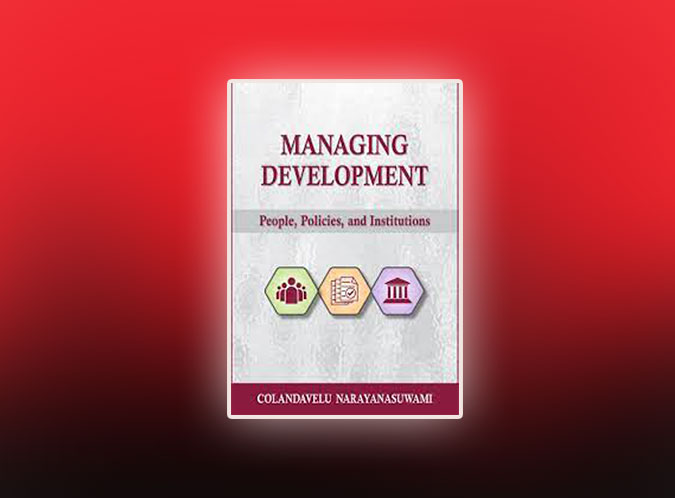
Taking Sri Lanka Forward- Excerpts from C. Narayanasuwami’s “Managing Development: People, Policies and Institutions

Confronting issues of debt restructuring, economic stability and sustainability- a long-term perspective
Sri Lanka’s financial crisis has created greater awareness of the need for financial, economic and institutional reform and the development of a holistic approach to the planning, implementation and monitoring of economic and social policies and programs. Substantial efforts have been made in Sri Lanka for over one year or so to restructure debt and increase revenues but the conditions for long-term economic stability are yet to be fully addressed as these require multi-faceted initiatives at different levels. Reform measures are unlikely to be implemented expeditiously given the current socioeconomic pressures. Any reform initiatives will be time consuming and will require political cohesion and commitment.
The visit of the IMF team this month will throw some light on measures to be adopted with immediate and long-term results orientation.It would be prudent to think in terms of overall structural changes, some requiring immediate attention and others planned for a longer-term intervention. Looking at similar emergencies encountered in South America, South Africa and Asian countries such as Pakistan a number of short and long-term structural changes are warranted. Do the current programs, policies and the institutional framework provide adequate flexibility to enhance public sector performance, governance mechanisms and institutional capacity to address stabilisation issues? We had reviewed a few books and reports on economic management and found that considerable efforts need to be made to bring the country to sustainable levels of economic performance.
We reviewed, among others, a recent publication authored by a Sri Lankan Asian Development Bank Professional, Mr. C. Narayanasuwami, previously of the Ceylon Civil Service who last headed the then Agrarian Research and Training Institute (now known as Hector Kobbekaduwa Agrarian Research and Training Institute) prior to joining the international civil service.
The book was released simultaneously in Colombo, Manila and Sydney. Some of the key aspects covered in the book entitled, ‘Managing Development: People, Policies and Institutions’ apply to the situation in several developing countries in the Asia-Pacific region with a few areas specifically addressing issues of particular relevance to Sri Lanka. Governance. The section on Governance, for example, deals primarily with the Sri Lankan situation and acknowledges that ‘sound governance would require (i) an effective policy framework, (ii) a qualified, competent, trained, and skilled workforce at different levels, (iii) an appropriate emoluments and salary structure that takes into account differences in performance levels, (v) a corruption free management system, and (vi) an overall politico-legal framework that supports non-discriminatory policies and promotes initiative and dynamism in project and program execution.
Evidently, transparency, predictability, accountability, stakeholder participation, rule of law, an efficient and uncorrupted public service, independence of judiciary, and media freedom, among others, are vital components of good governance. Sri Lanka has suffered substantially in upholding many of these values largely due to the adoption of undemocratic and often ill-conceived policies and practices in implementing varied development programs. No significant changes have occurred to reverse the culture of corruption and public sector inefficiencies and instil discipline in the maintenance of law and order’.
Public Sector Performance. Reference is made to the deterioration of public service standards in Sri Lanka and the following excerpt captures the current weaknesses that impede development performance.‘Over the past 30 years, about 40 percent of development projects failed to achieve their intended objectives within the stipulated time frames or within the expected budgetary allocations because of the lack of capacity to plan, implement, and deliver in a coordinated and integrated manner.
Some of the major factors that contributed to this situation are identified as follows; (i) politicization of the public service, (ii) lack of an enabling environment for improving performance, (iii) inadequate punitive strategies, (iv) inconsistent recruitment standards for public services, (v) inadequacies in the compensation and benefit packages, (vi) disproportionate expansion in the public sector-at present at least one-third of the public sector personnel are considered as superfluous and (vii) ethnic conflict and its debilitating impact on public sector morale’.
‘The politicization of the public service initially arose out of a felt need, largely driven by the desire to transform a highly elitist pro-western bureaucracy to meet the demands of a nation that had emerged from the shackles of colonialism. However, when public servants used this opportunity to seek favours and ignore tradition-bound value systems and ethical conduct, a service that built its reputation on its ability to withstand political pressures, maintain impartiality, objectivity and transparency in its dealings since the time of the British rule, began to crumble.
Loyalty was linked to political parties and individuals rather than to institutions and programs’. We consider the situation a major impediment to implementation of vital development projects. Capacity for decision-making is virtually non-existent due to the politicisation of the public sector. A radical transformation of the public sector is called for. Capacity Constraints. The book identifies capacity constraints as a major impediment to project/program implementation and provides some insights based on ADB experience in developing countries.
ADB has defined capacity as ‘strengthening the national framework within a developing member country (DMC) that affects the direction, management, and sustenance of the development process in a sector and the economy as a whole’. ‘In recent years ADB has linked capacity building closely with governance and has emphasized that good governance implies the capacity to provide citizens with an acceptable level of public services in an effective and efficient manner. Despite efforts made by multilateral agencies capacity constraints continue to pose challenges to development initiatives, as proven in Sri Lanka.
The limited success is attributable to shortcomings in the approaches adopted and the inability of countries like Sri Lanka to change, adapt, adjust and learn from lessons of experience’. The book refers to the efforts made and states as follows; ‘Over the years, a substantial number of development projects in most of the sectors failed to realise their full potential due to inadequate implementation capacities.
Evidence suggests that funds allocated by multilateral agencies lapsed on several occasions due to less than satisfactory disbursement processes, The factors that impeded more effective utilization of foreign aid is summarised as follows;(i)inadequate understanding of management systems, including a thorough understanding of the broad based objectives and goals of projects/programs, (ii) rigidity of policy structures that were bound by archaic regulations irrelevant to modern concepts of management, (iii) presence of multiple institutions whose roles overlapped with one another making decision making difficult because of conflicts that had political undertones, (iv) inadequate monitoring of development operations that had high foreign equity and funding support, and (v) weak public accountability and transparency that raised concerns among donors, and inadequate counterpart budget provisions.
Overall, lack of a results-based management system, complex administrative procedures, poor policy and institutional environment, weak procurement systems, and inadequate counterpart budget provisions contributed to the slow absorption of aid resources’.
The above excerpts coincide with some of the management shortcomings identified by the World Bank and the IMF in their deliberations with the Government in recent months.A major area identified as a constraint to development operations by international donors is the weak institutional capacity of implementing agencies. The book has a lot to offer in this regard and some useful excerpts are provided below;
Institution Building
. ‘institution building is aimed at strengthening capabilities for planning, organising, implementing, monitoring and evaluating development projects and programs sponsored by public, private, or grassroots level organisations. The major focus of governments should be on the approaches and issues related to increasing the capability of development institutions to make effective use of available human, physical, and financial resources.
The strengths and weaknesses of institutions as well as behavioural factors have often influenced the nature and pace of the development process. Many failures in development projects are not only due to production or technological inadequacies but also to institutional deficiencies, largely because self-sustaining capacity to implement projects is not emphasized at the time of project formulation. Studies of rural development in Asia have confirmed that inadequacies in the institutional framework have hindered the effective implementation of rural development programs’.
‘Institutional development has been impeded by shortages of trained staff, including competent middle-level managers who could provide the leadership to manage development projects. The available key staff are often burdened with multiple assignments and are denied the opportunity to provide the required focus and direction for project implementation.
The designers of complex projects do not examine thoroughly the capacities of each agency to implement complex components. Programs that depend on key individuals had collapsed when they left and equivalent replacements were not found. This raises the question of leadership and the importance of formulating appropriate policies and procedures for attracting and retaining staff in developing countries’.
The foregoing analysis covers a large number of countries in the Asia-Pacific region. It applies to the situation in Sri Lanka as well and though senior politicians and administrators are aware of the issues highlighted, very little has been done to address the issues primarily due to the lack of political will to institute radical change in the approaches to institutional reform. Little has been done up to date to transform the overall institutional framework. It is realised that the most important element in institution building is leadership but the efforts made to redress this inadequacy have had disastrous results. Nothing short of a substantial change to the institutional framework will remedy this situation’.
Leadership.
The book provides some insights into the role of leadership to provide the right impetus to improve managerial capability and to eventual success in project/program delivery. We quote some extracts below;
‘The most important element in institution building is leadership because change processes require intensive, skilful, and highly committed management, both of internal and of environmental relationships.
Managing uncertainty is part of the process of leadership and this requires immense skills and capacity for organisational learning. It is said that leadership is many things. It is meticulously shifting the attention of the institution through the mundane language of management systems. It is altering agenda so that new priorities get enough attention. It is being visible when things are going awry and invisible when they are working well. It is building a loyal team at the top that speaks more or less with one voice. Leadership does not refer to mere exercise of power but motivating, mobilizing, and transforming a group of individuals engaged in a common task to deliver effectively and efficiently the overall output expected of the agency.
Project completion reports and audits of completed projects undertaken by multilateral agencies have documented the success and failure of projects that have benefitted or suffered from competent or incompetent leadership. Similarly, the success stories of big private corporations in the developed world lend support to the spectacular achievement of leaders who were able to work within the framework of approved budgets and staff and yet motivate staff to achieve higher goals’
The above excerpt illustrates the significance of leadership in delivering successful outcomes. Sri Lanka has many examples which have proven that the right leadership stimulated progress and achieved expected successes. However, in recent years this has been an issue which even the President has had to lament on. There are key areas under the IMF/ World Bank assistance programs that envisage quick and methodical implementation of reform measures and development initiatives.
The lack of an institutional arrangement where a capable, experienced and proven leader assumes responsibility for the total implementation of key reform initiatives, including management of development projects, supported by a team of chosen set of administrative and professional staff is the need of the hour. It is important that the organisational structure provides for freedom of action within stipulated limits and concedes considerable authority to implement processes without reference to multiple sources. The political head of this organisational entity should ideally be the Finance Minister or the President himself who would ensure the independence of the entity to work diligently to deliver expected outputs on time and within budget.
Reviewing the book further we found some interesting thoughts and ideas that are relevant to many countries in the region, including Sri Lanka. The book covers a wide ground on the subjects of monitoring and evaluation and their relevance and significance for project development, management and evaluation. An interesting observation is ‘that in most countries of the developing world, monitoring is often conceived as collection of information and development of reporting systems, with little attention paid to using the information and reporting systems as effective management tools for controlling financial and physical performance. Management controls provide the project implementors the tools for determining whether or not the organisation is proceeding toward the objective as planned. Control has to do with making events conform to plans. It is an organic function of management which coordinates the project affairs so that project objectives are achieved’.
Control is exercised through various tools and one such tool is performance indicators which are identified at the design stage of a project as they are key variables in determining whether a project is progressing as envisaged during design. Performance indicators have to be specific, measurable, attainable, reliable and time-bound (SMART). Indicators are the quantitative or qualitative variables that provide a simple and reliable means to measure achievement, to reflect the changes connected to an intervention, or to help assess the performance of an organisation against the stated outcome. A comprehensive monitoring system postulates the need for good performance indicators, realistic target setting and collection of appropriate baseline data that would provide a comparison to gauge results during and after implementation’.
These are tools that are essential for project management and such systems have been established and are operational in Sri Lanka. There are however doubts whether the systems are being put to effective use for project management. There have been reports that lack of competent staff have often hampered the execution of appropriate strategies for implementation of a sound monitoring program. In the context of the current economic crisis it would be absolutely crucial to fine tune these tools for better collection, analysis and reporting of progress in the achievement of targets.
Evaluation
The role of evaluation in development management is being increasingly appreciated by developing countries due to continued interactions and emphasis by donors on accountability and performance management issues. There is however, a long way to go to institutionalise evaluation infrastructure in the context of emerging need to improve the quality of decision making. Some excerpts from the book under review provide interesting insights into the role and function of evaluation in improving policy formulation.’ The OECD defines evaluation as the systematic and objective assessment of an ongoing or completed project, program, or policy, including its design, implementation and results.
The aim is to determine the relevance and fulfillment of objectives, development efficiency, effectiveness, impact and sustainability. ‘An evaluation should provide information that is credible and useful, enabling the incorporation of lessons learned into the decision-making process of both recipients and donors’ Evaluation differs from monitoring-monitoring is essentially a management activity confining its concerns to the implementation cycle of program/project. Monitoring is concerned with day-to-day management aspects whereas evaluation deals with ongoing and post-project impact and effectiveness of a project. Evaluation ascertains the relevance of the project, challenges all aspects of the project design, examines performance of inputs and implementing agents against targets and may even enable redesigning or re-planning of project activities’.
‘Evaluation also uses performance indicators formulated at the design stage of a project to measure outputs, outcomes and impact. The selection of indicators is governed by the changes that are sought or anticipated. In general terms, performance indicators are included under three broad categories-economic, social and environmental’.
The above references to monitoring and evaluation are intended to highlight their relevance in the context of ongoing efforts to resuscitate the economy. It is important to ascertain whether these tools of management are currently being used to assess development operations to obtain sufficient and acceptable outcomes demanded by donors and investment partners.
The current crisis calls for the establishment of an appropriate mechanism to continuously measure results and take remedial measures, when required, to improve outcomes. For projects to succeed and improve incomes and revenues anticipated at the outset, closer supervision, monitoring and evaluation would be a prerequisite and will be demanded by donors whether it is the world Bank, IMF or ADB.
Our review of the book was intended to ascertain areas that could provide information on lessons learned to improve performance, particularly to removing the constraints to progress and economic advancement in the context of the serious economic and financial issues faced by Sri Lanka leading to bankruptcy announcement.
Though no immediate solutions could be discerned due to the nature of the subjects covered, considerable insights were gained on the long-term public sector management issues that require prompt remedial initiatives. The issues discussed herein such as removing the constraints to capacity development, improving implementation capacities of agencies, public sector performance and enhancing the approaches to management of investment projects, including greater emphasis to the establishment of a sound institutional framework are valid and require closer attention.
Overall, the need of the hour is to institutionalise the implementation machinery that could serve as a catalyst to produce results. Malaysia and Singapore introduced super implementation frameworks to achieve success in project and program delivery. Sri Lanka needs a super implementation department or ministry under the overall supervision of the President to initiate constant project reviews, alter strategies of implementation when needed, and set up effective small units under competent leaders for physical, social, environmental and procurement related aspects of implementation. Leadership is the primary component that will orchestrate delivery. Consequently, the appointment of a highly competent head/leader to organise, manage and deliver becomes crucial. If such a leader is appointed there will definitely be greater success in achieving the goals of recovery faster.






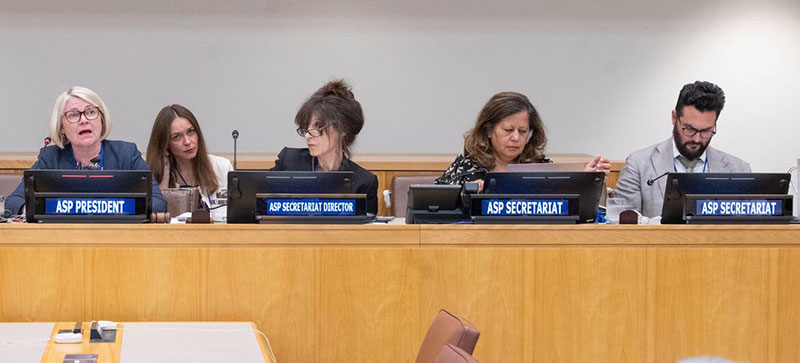
 US Secretary of State Marco Rubio’s warning to the International Criminal Court (ICC) was stark: ‘Either the ICC will end its threats, or we will end the ICC.’ It followed US central administration accusations that the court was unfairly targeting Americans on the basis of trumped-up war crimes charges.
However, a new plethora of sanctions has been clamped on the ICC by the US, which in turn has spurred accusations by sections of the world that the latter has unleashed an ‘assault’ on the international legal order.
What some of the sanctions would mean for the ICC was outlined by Rubio: ‘We will ban transactions with this rogue court, cutting off their resources and crippling their ability to operate against us.’
The ICC has shown consistency of purpose over the years. Despite some operational constraints it has indicted a large number of political strongmen from around the world, accused of war crimes and other governance excesses that come under its purview. Two such recent figures are: Russian President Vladimir Putin and Israeli Prime Minister Benjamin Netanyahu.
Rather than enjoy a mere nominal presence in the world community, the ICC has proved its effectiveness by detaining and bringing to justice scores of VIP politicians and others of their ilk who have been found guilty of human rights abuses and kindred excesses that come within the terms of reference of the ICC.
Accordingly, the international justice system would be stymied considerably as a result of the ICC being dis-empowered, particularly financially. Needless to say, potential and real perpetrators of the species of crime coming under the jurisdiction of the ICC would stand to gain most from such anarchic tendencies. That is, political repression globally would be enabled to enjoy a new lease of life.
A detailing of the types of crime coming under the purview of the ICC provides an idea of what it would cost the international community if the ICC’s operations are gravely hampered. They are mainly: genocide, war crimes, crimes against humanity and the crime of aggression.
That is, the part of the world to be worst affected would be the global South, since the latter is awash with the mentioned crimes. Needless to say, a chronically-disaffected South will sooner rather than later undermine the well being of the world dangerously. The world is already being put through these paces.
At the time of writing, ‘illegal migrants’ from the South, for example, are aggravating many a Western economy’s woes, besides creating for them acute law and order issues. The fact that these migrants’ presence goes on to become a virtual test of the migrant receiving states’ ability to forge domestic social inclusion in the face of jingoistic protests by mainly white supremacist groups is evidence of the latter. As is known, the US, to take just one example, has been up against this crisis for quite a while.
Accordingly, it will be in the best interests of the West if ‘illegal’ migrant arrivals on their shores are stemmed. If the socio-political and economic problems assailing the South are effectively managed through North-South collaborative, ‘trouble-shooting’ efforts the causes leading to ‘illegal’ migration and connected issues could be resolved at source as it were. For, it is the aggravation of the South’s material questions that lays the basis for the emergence of repressive and anti-democratic regimes in the hemisphere.
Until such time that the aforementioned issues in North-South relations are visited afresh and addressed urgently, a vibrantly functioning ICC would be needed. For, the latter would prove a deterrent to Southern political and military strongmen, highly prone to power abuse and like excesses, from coming into being in the wake of the South’s chronic material woes and the wars and conflicts that result from them.
It stands to reason then that the US would be acting in its own interests by enabling the ICC to perpetuate its mandate without hindrance. For a crop of issues that impinges negatively on internal law and order would be defused.
Meanwhile, there needs to be a meeting of minds among the rest of the West to put back in place a North-South dialogue process aimed at reducing some of the economic pressures that are weighing on the South.
Since economics usually drives politics it will be in the interests of the world community to scrutinizingly re-visit North-South issues of the past and put in place economic relief packages for Southern publics that would enable them to tide over their material hardships rather than permit the latter to aggravate into social disaffection and eventually armed militancy. It is the latter juncture that paves the way for the emergence of authoritarian rulers in the South who then go on to be a blight on their publics.
Accordingly, the Southern-based global development thinking of the past that envisaged a more equitable world economic order needs to be seen as an urgent need. That is, NAM’s international development paradigms need to be resuscitated to the extent possible.
It is unlikely that rightist governments of the West, such as the current Republican administration in the US, would find these projects feasible, but democratic states of Europe, led by perhaps the UK, are likely to think otherwise. For it would not be beneficial for the democratic world to be having on their hands repressive governments in the South who would be gravitating towards the major military and economic actors of the South, such as Iran and North Korea, who tend to be in constant power struggles with the West.
However, until such time that the mentioned, pro-people initiatives are given serious thought the ICC would need to be enabled by the international community to be in place comfortably and carry on with its mandate of bringing repressive rulers to book. Besides the ICC should pave the way for the peoples of the developing world to enjoy some substantial respite from the political repression and even terror which tend to be their lot.
Meanwhile, the wars of West Asia are relentlessly aggravating the economic hardships of people everywhere, driving the point home to enlightened sections that there is no alternative to peacemaking. A challenge is to convert the US under President Trump to this line of thinking.

 This week, I give you five simple, time-tested homemade remedies that help reduce the appearance of blemishes, control excess shine and leave your skin feeling softer and smoother.
The Honey and Lemon Brightening Dab:
For stubborn blemish marks, this is a classic. Mix one teaspoon of pure bee honey with three to four drops of fresh lemon juice. Apply gently, only on the affected spots, and leave for 10 minutes before rinsing with lukewarm water. While honey soothes and softens, lemon helps to brighten naturally. Use twice a week in the evening.
Besan and Rose Water Oil-Control Pack:
An ideal remedy to combat shine, especially on the T-zone. Take two teaspoons of besan (gram flour) and mix with sufficient rose water to form a smooth paste. Add a pinch of turmeric for its antiseptic goodness. Apply evenly, keep for 15 minutes and wash off. It absorbs excess oil without over-drying, leaving a beautiful matte finish.
Aloe Vera and Cucumber Ice Soother:
Blend fresh aloe vera gel with the juice of a grated cucumber and freeze the mixture in an ice tray. Each morning, wrap one cube in a soft muslin cloth and gently rub over a cleansed face for 30 seconds. It calms, tightens pores and imparts a baby-soft smoothness.
Oatmeal and Curd Gentle Polish:
Roughness and old blemish marks need gentle exfoliation. Combine one tablespoon of finely powdered oatmeal with one tablespoon of fresh curd (yoghurt). Massage very gently, in circular motions, for one minute, leave for five minutes and rinse. It removes dead cells and unveils softer, clearer skin.
Multani Mitti and Green Tea Magic Mask:
Brew some green tea and allow it to cool completely. Mix one and a half teaspoons of Multani Mitti (Fuller’s Earth) with the tea water to make a fine paste. Apply for 10 to 12 minutes – do not let it dry and crack completely – and wash off. It draws out impurities, fades blemishes and bestows a fresh, shine-free glow.
A Gentle Reminder:
As with any natural remedy, always do a patch test on your inner arm first. For those with oily or combination skin, avoid heavy coconut oil application and harsh scrubbing, as they tend to aggravate shine and blemishes.

 Dream of performing on a world stage? Well, here is your unique, golden opportunity!
The World Championships of Performing Arts (WCOPA) — the one and only official “Talent Olympics” — is the world’s premier global platform for aspiring singers, dancers, actors, models, instrumentalists, etc., to compete, shine and be discovered!
And, yes, this world stage is open to YOU, Sri Lankans living in Sri Lanka and overseas!
Held annually in glittering Las Vegas, WCOPA brings together over 70 countries, all competing for Gold, Silver and Bronze Medals, just like the traditional Olympics.

Lakisha Bernard: Will represent Team Sri Lanka at WCOPA 2027
Outstanding performers vie for the coveted titles of Junior and Senior Grand Champion Performer of the World, with winners and standout participants awarded over $500,000 in scholarships, cash awards and prizes to catapult their education and careers!
Sri Lanka is already making waves! At WCOPA 2026, Natharie Wickramasinghe, representing Team Sri Lanka, made the nation proud by winning a Bronze Medal in the Ethnic/Folklore Dance category!

Lakisha: Accomplished freelance Model and Fashion Design graduate
Recruitment for this prestigious competition is handled through a system of scouts and licensed National Directors — and this is where our very own Chris Rajendra, now based in Las Vegas, and National Director for Team Sri Lanka, comes into the scene.
If you are a singer, dancer, actor, model, instrumentalist — if you have talent burning inside you — contact Chris Rajendra today for registration and, who knows, you may find yourself in Las Vegas, and proudly draped in the Sri Lankan flag, at WCOPA 2027!
The contact address is: Chris Rajendra, wcopa.nationaldirector.sl@gmail.com
or chris.rajendra@gmail.com
Meanwhile, a star is born for 2027, in the form of Lakisha Bernard who is all set to represent Team Sri Lanka at WCOPA 2027.
Originally hailing from the sun-drenched coastal city of Colombo and now carving out her creative career in Canada, 22-year-old Lakisha is stepping into the international spotlight.
This accomplished freelance Model and Fashion Design graduate has officially been appointed as the Team Sri Lanka Promoter for Canada as she prepares to represent Team Sri Lanka at WCOPA in Las Vegas.
Lakisha brings a unique blend of high-fashion sensibility, captivating camera presence and expert garment design to the Team.
Having built her career, from local college shoots to high-glamour concepts, Lakisha’s inspiring journey embodies the true spirit of cultural bridge-building and creative resilience, bringing immense pride and recognition to Sri Lanka on the global stage.
WCOPA 2027 will be held at the legendary Westgate Hotel & Casino, Las Vegas, from 12th to 20th July – the very same iconic arena where the late, great Elvis Presley himself performed!
Your moment is now. Your stage is Las Vegas, so hurry and contact Chris Rajendra.

Showers or thundershowers will occur at most parts of the island

Prison rules to be revised over monks’ attire

AC President recuses himself from hearing prison attire case pertaining to Gnanasara Thera

Court orders steps to obtain INTERPOL Red Notice against Basil

CID informs Fort Magistrate’s Court investigation into money laundering case against Namal completed

No force used to make Gnanasara Thera wear prison garb – Prisons

‘Dates have the highest sugar content to fight Coronavirus’

Sunday Island 27 December – Headlines

#SundayIsland 17th December – Headlines

Sunday Island – 28th March

Sunday Island Headlines – 21 March

Sunday Island – 21st February – Headlines
-

 News6 days ago
NDB fraud Rs 60mn more than reported
-

 News6 days ago
Removing monk’s robes matter for Sangha to decide: Mahanayake Theras
-

 News4 days ago
Sri Lanka escalates anti-graft drive with Shiranthi’s jailing
-

 News5 days ago
NPP govt. reminded of its responsibilities as US warship leaves Colombo
-

 Latest News5 days ago
Farhan, Sadaqat help Pakistan ace 183 chase to go 1-0 up
-
 News6 days ago
BHC, Colombo: “LTTE remains a proscribed org. in the UK”
-

 Latest News3 days ago
Farhan and Sadaqat help Pakistan seal series in style
-
 News4 days ago
Iranian ships stranded, Lanka fears US sanctions