
Business
Stop Child Cruelty Trust stands up for Sri Lankan children at UNHRC

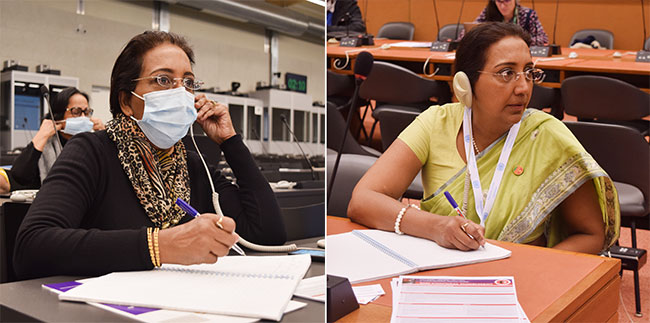
Stop Child Cruelty Trust submitted to the UNHRC, 42nd session of Universal Periodic Review, urging the International Community to hold the GOSL accountable to fulfil its obligations to protect our children
Child protection is a national crisis in Sri Lanka, with over 17 children being physically or sexually abused and murdered in the past 24 months. The relevant authorities have taken little or no action to do anything meaningful to resolve the crisis. Therefore, Stop Child Cruelty Trust (SSC) reached out to the International community to protect and promote the rights of 25% of our citizens, 5.2 million children. SCC, a registered Civil Society Organization committed to child rights submitted a proposal to the 42nd Session of the fourth cycle of the Universal Period Review (UPR) of UNHRC which is scheduled in January/February 2023 in Geneva.
SCC highlighted six key focus areas, which included:
Failure to implement a National Human Rights Action Plan
Failure to end corporal punishment in schools and in homes
Failure to protect the Human Rights Of Children Attending International Schools
Failure to recognize the child as a rights holder
Failure to implement the Juvenile Justice System
Failure of the Police, Probation And Childcare Departments to protect children
Among the ten key recommendations, implementing the historic Supreme Court directive of 2021 to ban corporal punishment unequivocally, concluding the ‘Child Protection and Justice Bill and regularising international schools by the Ministry of Education to provide the same non-discriminatory Constitutional Protection to them.
Dr Tush Wickramanayaka, Founder and Chairperson of Stop Child Cruelty Trust and Co-convener of Sri Lanka’s FIRST Child Protection Alliance speaking about their submission to UNHCR said, “As a nation, we have failed our children. At the conclusion of the third UPR review of Sri Lanka in 2017, The High Commissioner of UNHRC encouraged the State party to achieve concrete results in implementing the National Action Plan on Human Rights. In endorsing the rights of children, the High Commissioner recommended putting an end to corporal punishment in all settings and taking measures to promote positive non-violent forms of discipline and end child labour. However, the emphasis to protect and promote the rights of children has been diminished in the National Action Plan of 2017-2021. The section on the elimination of corporal punishment that was applauded in the Plan from 2011-1016 was removed from the Plan from 2017-2021. As a consequence, the severity of abuse has got worse with children being beaten to death.”
“SCC has made recommendations on ways to reduce and mitigate these atrocities. Our main focus is to end violence against children, especially corporal punishment. We have a multi-pronged sustainable national action plan, the ‘Pentagon Proposal’, we have created advocacy on all issues relating to child rights/legal reforms with National and International authorities. For the first time, we have obtained the signatories in agreement from all party leaders to include child protection to the heart of the National Security Agenda. During a special debate on child protection in Parliament on 8 November 2022, school children delivered an appeal signed by over 5000 citizens to all MP’s #225maona urging the public representatives to prioritize child protection in every political agenda. “
Dr Wickramanayaka has just returned from Geneva where she attended a four-day conference of the Pre-Sessions of the UPR, a platform dedicated to CSO’s of States Under Review in 2023. “It was an amazing experience and a lot of exhausting individual discussions with Permanent Representatives of State parties to present facts and gain support for our children as we were the only dedicated child rights organization from Sri Lanka. With the overwhelming responses, I am confident we can change the path of our country to create an environment without violence for the true beneficiaries of the future, our children. I wish to thank the indefatigable efforts of my team”, declared a jubilant child rights defendant.
Those interested in getting involved in the #Noguti campaign can visit the website at www.stopchildcruelty.com and the Facebook page at www.facebook.com/stopchildcruelty or email info@stopchildcruelty.com.





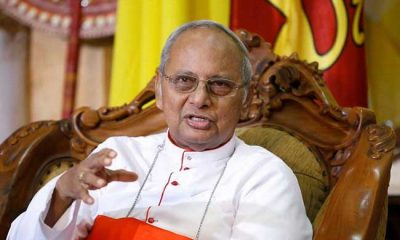


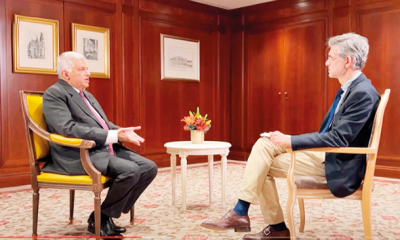


‘Sri Lanka recorded a growth of five percent or more but due to the Middle East crisis this growth rate could be expected to drop. However, this decline could be managed effectively through the adoption of prudent policy adjustments, Central Bank Governor Dr. Nandalal Weerasinghe said at the monthly CBSL monetary policy review meeting. The meet was held at the CBSL head office in Colombo yesterday.
The Governor said that the CBSL had decided to increase the Overnight Policy Rate (OPR) by 100 basis points, bringing it to 8.75 percent.
Following this adjustment, the Standing Deposit Facility Rate (SDFR) and the Standing Lending Facility Rate (SLFR), which are linked to the OPR, have been increased to 8.25 percent and 9.25 percent, respectively. The decision comes after a careful evaluation of evolving domestic and global macroeconomic conditions, Dr Weerasinghe explained.
Dr. Weerasinghe added: ‘The tightening of the monetary policy stance is primarily driven by mounting inflationary pressures. Heightened geopolitical tensions in the Middle East have kept global commodity prices, especially petroleum, elevated.
‘This has led to sharp upward adjustments in domestic energy prices, pushing Sri Lanka’s year-on-year headline inflation to 5.4 percent in April 2026.
‘While the recent spike is largely supply-driven, strengthening domestic demand, evidenced by continued credit expansion, credit-driven imports and robust economic activity—has further accelerated short-term inflation expectations.
‘The external sector has also faced amplified headwinds in recent weeks. A widening merchandise trade deficit, driven by increased fuel import costs and a slowdown in tourism earnings, resulted in a modest external current account surplus for the first quarter of 2026.
‘Additionally, speculative activities led to notable depreciation pressures on the Sri Lankan rupee, though conditions have since stabilized. Despite these pressures and ongoing foreign debt servicing, Sri Lanka’s Gross Official Reserves stood at a resilient USD 6.8 billion by the end of April 2026, a figure that includes a swap facility from the People’s Bank of China.
‘Looking ahead, headline inflation is projected to remain above the Central Bank’s target of 5 percent in the near term before stabilizing.
‘To counter potential second-round effects on inflation from energy price hikes and unchecked private sector credit growth, the Board deemed a restrictive policy stance necessary to maintain long-term domestic price stability. Upcoming multilateral inflows and government stabilization measures are expected to support the external sector and we will continue to monitor incoming data ahead of the next scheduled monetary policy review on July 22, 2026.’
By Hiran H Senewiratne

A new tilapia culture-based production and semi-processing centre launched in Iranamadu, Kilinochchi, is expected to boost climate-resilient aquaculture, strengthen rural livelihoods and create sustainable employment opportunities for women in Sri Lanka’s Northern Province.
The facility, launched by the International Labour Organization in partnership with Cargills (Ceylon) PLC and supported by the Government of Norway, is being hailed as a significant milestone in inclusive economic development and inland fisheries advancement.
Located in the Iranamadu freshwater fisheries hub, the centre has been established under the ILO’s Promoting Advancement of Vulnerable Persons and Enterprises (PAVE) Project, aimed at promoting climate-resilient livelihoods among vulnerable communities, particularly women and persons with disabilities.
Speaking at the launch, ILO Country Director for Sri Lanka and the Maldives, Joni Simpson, said the initiative demonstrated the power of partnerships in advancing social justice and decent employment.
“This processing centre represents what can be achieved when communities, government, development partners and the private sector work together. It contributes not only to strengthening aquaculture value chains but also to expanding access to decent and productive employment, especially for women and marginalized groups,” she said.
The centre is expected to generate new jobs in fish handling, processing and quality assurance while providing training in food safety standards, value addition and enterprise development. Officials said this would significantly increase women’s participation in the aquaculture value chain in the Northern Province.
Representing the Norwegian Government, Tormod Nuland said Norway’s continued support for livelihood projects in the North reflected its commitment to gender equality, inclusivity and climate resilience.
“Illustrating the success of long-standing cooperation with the ILO, the new tilapia processing unit is a key initiative that will help strengthen socio-economic conditions for communities in the Northern Province,” he said.
Cargills officials noted that the project marked the company’s first major venture into inland fisheries development after years of engagement with agricultural and dairy farming communities in the North.
Group Manager Agribusiness at Cargills, Haridas Fernando, said the company saw immense potential in developing the tilapia industry as an affordable and nutritious protein source for Sri Lankan consumers.
“We are pleased to partner with the ILO on this important initiative to support the inland fisheries sector while strengthening livelihoods for small-scale fishing communities,” he said.
The initiative also strengthens market access for the Iranamadu Freshwater Fishermen’s Cooperative Society by linking smallholder fisher communities with private sector markets and national retail networks.
Officials said the project would continue under the ILO’s Generating Resilient Opportunities for Work (GROW) programme, funded by the Governments of Australia and Norway, with the aim of expanding climate-resilient and market-oriented livelihood systems across the Northern Province.
The GROW project builds on more than a decade of interventions under the ILO’s Jobs for Peace and Resilience Programme and focuses on sustainable employment creation, private sector partnerships and social empowerment for vulnerable communities.
By Ifham Nizam

As West Asian tensions continued to simmer, the All Share Price Index moved down by 189.63 points, while the more liquid S&P SL20 went down by 36.97 points.
Turnover stood at Rs 4.93 billion with four crossings. Those crossings were: Softlogic Life Insurance 33.8 million shares crossed to the tune of Rs 3 billion at a per share value of Rs 92, HNB 316,889 shares crossed for Rs 125.2 million; its shares traded at Rs 395, HNB (Non-Voting) 318,199 shares crossed to the tune of Rs 105 million; its shares sold at Rs 330 and Lanka IOC 200,000 shares crossed for Rs 27.7 million; its shares traded at Rs 138.50.
In the retail market companies that mainly contributed to the turnover were; LOLC Holdings Rs 116.5 million (207 900 shares traded), Softlogic Life Insurance Rs 112.3 million (1.2 million shares traded), Commercial Bank 78.2 million (380,000 shares traded), Overseas Reality Rs 64 million (1.3 million shares traded), Sampath Bank Rs 48.9 million (340,000 shares traded), CIC Holdings (Non-Voting) Rs 46.5 million (1.7 million shares traded) and JKH Rs 46 million (2.3 million shares traded). During the day 94.3 million share volumes changed hands in 22097 transactions.
It is said that 75 percent of the turnover came from Softlogic Life Insurance which amounted to more than Rs 3 billion. Therefore, the Insurance sector led the market while the banking sector, especially Commercial Bank and HNB, performed well.
Main contributors to the ASPI were DFCC Bank (up 0.75 percent at Rs 135.00 ), Lanka Ashok Leyland (up 7.38 percent at Rs 3,050.00 ), and Tokyo Cement Company (Lanka) (up 2.00 percent at Rs 92.00 ).
Hayleys (down 1.78 percent at 234.00 rupees), Melstacorp (down 0.53 percent at Rs 186.25 ), Sunshine Holdings (down 3.49 percent at Rs 30.40), LB Finance (down 3.44 percent at Rs 161.25 ), and Dialog Axiata (down 1.25 percent at Rs 39.40 ) were top negative contributors.
Lanka Ashok Leyland announced a first and final proposed dividend of Rs 30 per share for the financial year ended March 31, 2026.
The Lighthouse Hotel has also declared a final dividend of Rs 3 per share for the financial year ended March 31, 2026, subject to shareholder approval at its Annual General Meeting on June 30, 2026.
Yesterday the rupee was quoted at Rs322.00/323.50 to the US dollar in the spot market , stronger from Rs 325.50/327.00 the previous day, dealers said, while bond yields were quoted higher following the rate hike.
The telegraphic transfer rate for Sri Lanka’s rupee against the US dollar was 321.50 buying, 330.50 selling.
By Hiran H Senewiratne

Peace deal to fully reopen Hormuz as US military pulls out

World Cup contenders England and India hope to get their combinations right

Do not be misled by Fake news created using the PM’s name, photographs, and video footage – Prime Minister’s Media Division

Israeli strike in Gaza City kills new head of Hamas’s military wing

Sri Lanka Cricket launch a program to enhance coaching standards of school cricket

Explosive top orders in focus as Rajasthan Royals face bogey team Sunrisers Hyderabad

‘Dates have the highest sugar content to fight Coronavirus’

Sunday Island 27 December – Headlines

#SundayIsland 17th December – Headlines

Sunday Island – 28th March

Sunday Island Headlines – 21 March

Sunday Island – 21st February – Headlines
-

 Business6 days ago
Historic launch of CCWE Fashion Week & International Summit 2026
-
 Opinion7 days ago
Murder of Ehelepola family, Bogambara Wewa and Sightings of Wangediya
-
 News7 days ago
Steps underway to safeguard Sri Lanka’s maritime heritage
-

 News3 days ago
Police probe underway to ascertain links between criminals deported from UAE and local politicians
-

 News4 days ago
All-New GRAVITE launches at LKR 6.99 Mn
-

 Features4 days ago
The NPP’s pivot to the past
-

 Opinion6 days ago
The need to reform Buddhist ecclesiastical order
-

 Editorial7 days ago
A play without its protagonist