
Features
Stanley Tambiah and my time at Harvard

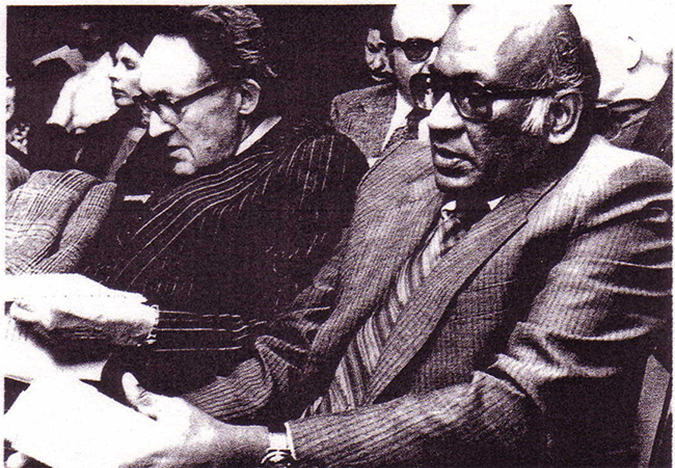
(Excerpted from volume ii of Sarath Amunugama autobiograph
With the ascent of Premadasa who together with Ranjan Wijeratne made a determined effort to negotiate with the JVP and LTTE, I got back to my work with the Worldview International Foundation (WIF) and academic institutions. WIF work took me to parts of Asia and Europe where we had links with donors as well as social and media institutions like the International Planned Parenthood Federation (IPPF), International Program for Development Communication (IPDC), Asian Media Information and Communication Center (AMIC) and the International Broadcasting Union [IBU].
Many of these institutions were feeling the pinch of reduced funding particularly from the US government. This meant that we had to plan joint operations in order to cut costs. I had a head start as the former Director of IPDC who had interacted with them during my UNESCO days. But we could not make much headway with the local Ministry of Media as it was now in the charge of A.J. Ranasinghe who was a Premadasa loyalist.
Ranasinghe had been recruited by me in the early seventies to be the manager of the national exhibition of the Department of Information. Thanks to Premadasa he had entered a select circle of cronies and was placed in charge of the media. By now he was all powerful and had even banned his minister Loku Bandara from entering the TV studios which were in his charge. In this context I thought of moving back to my main sphere of interest academia and sociological research.
I had told my teacher Stanley Tambiah of this wish and he arranged for me to be awarded a visiting fellowship at Harvard University where he was a Professor of Social Anthropology. Another close friend on the faculty of the Anthropology department of Harvard was Nur Yalman who as a young scholar, tutored by Edmund Leach, had done field work in Teripahe in the Kandyan highlands. With such strong support I obtained a good position in the Centre for Comparative Religions in Harvard, with plenty of time for research and writing in return for which I had to deliver a few lectures on modern Buddhism in several departments in the University.
Harvard
Nothing could be more peaceful than this beautiful university and town for me, coming from a war torn country with my name on the ‘hit list’ of the military wing of the JVP. It was a cold day when I flew into Logan airport in Boston from Paris. Tambi was there to meet me and take me to his home in a salubrious part of Cambridge. I had met his wife and children back in Sri Lanka when Tambi had brought his family to meet his relatives and friends.
I had arranged a visit to Yala where his two young children were fascinated by the elephant which appeared daily close to our circuit bungalow. We also visited George Keyt in Kandy and some local paintings that they bought on that tour adorned his house. He had also arranged for a room in the anthropology department building adjoining his and we would go out for lunch to the department canteen and occasionally to the well-appointed senior common room or Faculty club.
I was free to use the Widener Library facing the Harvard yard. The Widener was a revelation. It was perhaps the best University library in the country and had fabulous collections of books, diaries, papers and photographs on every type of culture and society. Naturally I was interested in the Sri Lankan collections which included photos and papers on the Theosophists and the Buddhist revival. The US had established a consulate in Galle around the 1880s, because trade and travel by schooner and sailing ship had Galle harbour as their port of call. Diaries and other writings of the Americans and their visitors were in the Widener and I spent much time studying those papers and also the photographs which have not been published before. The Peabody Museum in which Nur Yalman’s office was located also had a collection of photographs, some of which were published to illustrate Tambi’s books on the ethnic conflict in Sri Lanka.
At that time Galle was famous for its gem trade and there were many photographs of gems and Muslim merchants. Ananda Guruge and I have used some of these photos in our books on Anagarika Dharmapala. Ian Goonetileke has published some of this information in his book ‘Sri Lanka through American eyes’, marking the American bi-centennial.
After I found my bearings in Cambridge I moved to a spacious room in Porter Square which was rented to me by a kind patrician lady on a ‘bed and breakfast’ basis. This room was overlooking Radcliffe, the residences of the young female undergraduates of Harvard. There was a constant flow of their young swains to our square and parties would go on in their dorms late into the night. This was the time of the permissive society and the young students, mostly from the super-rich of the US, worked and played hard with equal enthusiasm.
A useful aspect of Harvard for me was the galaxy of top flight intellectuals who taught there. At any given time there were dozens of Nobel Prize laureates, especially in scientific research. In the social sciences too teachers won many prizes and awards and there were regular announcements on our bulletin boards of their achievements. Tambi was outstanding in that respect. He was the recipient of virtually all the awards made to anthropologists including one with a big cash prize given by a Japanese academic institution.
In addition there were many distinguished scholars who gave invitation lectures which were open to the public. I remember Ernest Gellner, Diana Eck, Clifford Geertz, Marshall Sahlins and many others speaking on their latest research. In addition there were young scholars like John Rogers, Alan Trewithick and Norbert Peabody who gravitated round Tambi who had a fatherly relationship with them.
Tambi had been commissioned by the editorial board of the Journal of Asian Studies (JAS) to look out for suitable articles for publication. Accordingly a special symposium on the 1915 riots was published in the JAS about this time, as were several essays on Theravada Buddhism. Tambi was at the height of his fame as an anthropologist of religion, particularly of Thai Buddhism, and his office in Harvard was a hive of activity.
I observed the diligence with which he worked every day in a consistent manner, which was the secret of his impressive list of publications. He would write in long hand and pass over the draft to his secretary who would type it for correction the following day. He was meticulous in checking out references and would consult other scholars, in writing or over the phone.
Fortunately for him Harvard had such a vast array of experts, that he could always talk to them over a cup of coffee. On occasion we would walk across to the Peabody Museum to meet Nur Yalman. I recall one such day when HL Seneviratne telephoned from Charlottesville to convey the sad news that Ralph Peiris had passed away in Colombo. Both Tambi and Nur who had had misunderstandings with Ralph many years earlier, were genuinely distressed by the news.
The three of us once went out to dinner in an old restaurant in Boston harbour overlooking the ship `Mayflower’ which had figured in the ‘Boston tea party’ an incident which played a significant role in modern American history. The Bostonians – ‘The Boston Brahmins’ – were considered the aristocracy of US society wherein ‘Cabots spoke to the Lodges and the Lodges spoke only to god’. However with the later arrival of the Irish to American shores after the ‘Potato famine,’ the poorer areas of Boston were populated by Irishmen who progressively dominated city politics and eventually took over the Democratic party machine, leaving the old patricians to find refuge in the Republican party.
The apotheosis of this development was the rise of the Kennedys whose ‘godfather’ was Joseph Kennedy, liquor baron and right hand man of President Franklin Roosevelt, who paid off his political debts by appointing Kennedy senior as his Ambassador to the UK. It was Joe Kennedy who plotted the rise of JFK to the US Presidency.
The Kennedy’s reveled in their Boston Irish heritage .Their control of the Democratic Party machine, won in the smoke filled bars and liquor dens in the seedier parts of the Irish catholic dominated Boston was the spring board for their ambitions. JFK’s favourite song, Bee Gee’s ‘Massachusetts’ was the most popular song in Boston at that time, and with its haunting lyrics “I will remember Massachusetts”, still remains as one of my favourite songs.
Tambi and I once drove over to Boston to spend a morning in the museum to see the Ananda Coomaraswamy collection of Indian art. The savant had spent his last years as a Curator of the Boston Museum and established a valuable collection of Asian memorabilia and relevant books and papers. His son Rama Coomaraswamy, by an Argentinian wife, lived in New England and we planned to pay him a visit. But he was ailing and our planned drive to the nearby beautiful State of Connecticut did not take place.
I enjoyed my stay at Harvard where I could resume my academic work in stimulating surroundings, after the hectic and dangerous adventures in Sri Lanka. While the food in Cambridge was excellent, particularly the fish, clam and lobster – with the signature clam chowder being irresistible – I hankered for rice and curry which was not available except at the weekly meal at Tambis. I found a Chinese restaurant which served fried rice, but it was not a substitute for the real thing.
However, I was in luck. One day by accident I met my Kandy and Peradeniya friend Gaya Gunawardene who was on scholarship to the Kennedy Centre for Public Administration. He was living in a flat in Cambridge with his wife Sushila and son Kosiya. Sushila – a girl from Kandy, was a great friend of my sister at Peradeniya University. Later when my brother-in-law Tennekoon was Government Agent of Kandy district, Gaya had been the Deputy Inspector General of Police there and the two Dharmarajans had formed a good team during the height of JVP violence.
So the Gunawardenes invited me often to their flat for lovely rice and curry dinners and I even became a regular invitee to their flat when Sri Lankans visiting Harvard were entertained by them. I particularly remember a visit by Carlo Fonseka who spent a few days with them. By a stroke of luck, the University bus which circulated through the campus at all hours began its journey from near Gaya’s apartment and had Porter Street (where I lodged) as a point of call. So, I could conveniently get back to my room even after a late night when the underground was not available.
We also visited Boston for sightseeing. The Gunawardenes were great travelers who arranged visits to nearby States on holidays. Unfortunately, I could not join them as much as I wished because I had travelled extensively in the US by then and had to save time for my academic work.
My time in Cambridge was very productive. With the facilities of the Widener library and the assistance of many academic colleagues I was able to complete several articles in the field of sociology. One was a study of the changes in the Sri Lankan Sangha, particularly after analyzing the responses of young monks to the siren call of the JVP. Much later in time the leader of the JVP in Parliament told me that one of the great contributions of Wijeweera was that he saw the potential of young Buddhist monks as the soldiers of their revolution.
Indeed several of the JVP front rankers were monks who had disrobed to follow party orders. Correspondingly many of them had been killed by the security forces. The editor of the journal ‘Religion’ published by University of California, whom I had met in Paris with Jean Claude Galay, was happy to immediately publish my article under the title `Buddhaputra and Bhumiputra; dilemmas of modern Sinhala Buddhist monks in relation to ethnic and political conflict’.
This article has drawn much attention in academic circles. I also used the Widener library material to write a long essay on the role of the Theosophists in the Sinhala Buddhist revival of the late 19th and 20th century. This was published in the Journal of Social Sciences of the EHESS of Paris. I also gave lectures on the Buddhist revival at many Harvard academic meetings.
Towards the end of 1990 1 came back to Colombo from Boston, after several days in Paris to arrange for my family to relocate in Sri Lanka. Ramanika had obtained a degree in business administration and was invited by N.U. Jayawardene who was my friend and mentor, to join the staff of his newly formed Sampath Bank. She was a pioneer staffer in Sampath Bank though she later joined the senior staff of other commercial Banks after the departure of NUJ. Varuni entered the law faculty of the University of Colombo. We were all back in familiar surroundings in Siripa Road to pick up the threads of Sri Lankan life, after a long sojourn abroad.


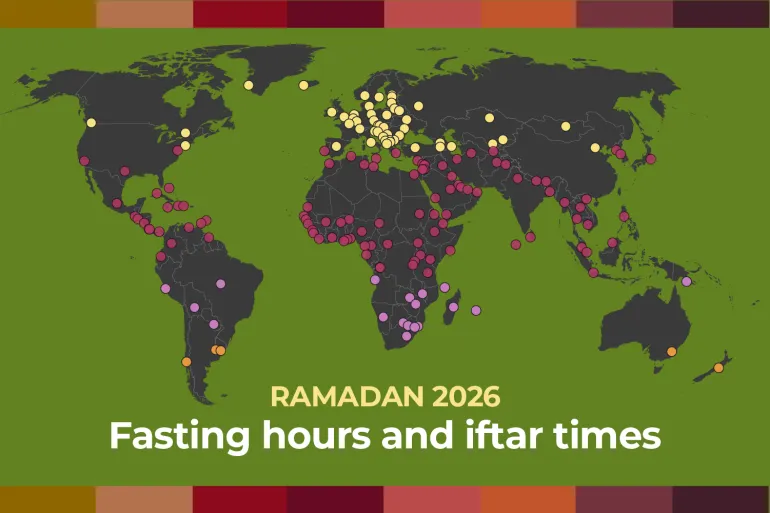
The Muslim holy month of Ramadan is set to begin on February 18 or 19, depending on the sighting of the crescent moon.
During the month, which lasts 29 or 30 days, Muslims observing the fast will refrain from eating and drinking from dawn to dusk, typically for a period of 12 to 15 hours, depending on their location.
Muslims believe Ramadan is the month when the first verses of the Quran were revealed to the Prophet Muhammad more than 1,400 years ago.
The fast entails abstinence from eating, drinking, smoking and sexual relations during daylight hours to achieve greater “taqwa”, or consciousness of God.
Why does Ramadan start on different dates every year?
Ramadan begins 10 to 12 days earlier each year. This is because the Islamic calendar is based on the lunar Hijri calendar, with months that are 29 or 30 days long.
For nearly 90 percent of the world’s population living in the Northern Hemisphere, the number of fasting hours will be a bit shorter this year and will continue to decrease until 2031, when Ramadan will encompass the winter solstice, the shortest day of the year.
For fasting Muslims living south of the equator, the number of fasting hours will be longer than last year.
Because the lunar year is shorter than the solar year by 11 days, Ramadan will be observed twice in the year 2030 – first beginning on January 5 and then starting on December 26.

Fasting hours around the world
The number of daylight hours varies across the world.
Since it is winter in the Northern Hemisphere, this Ramadan, people living there will have the shortest fasts, lasting about 12 to 13 hours on the first day, with the duration increasing throughout the month.
People in southern countries like Chile, New Zealand, and South Africa will have the longest fasts, lasting about 14 to 15 hours on the first day. However, the number of fasting hours will decrease throughout the month.

[Aljazeera]
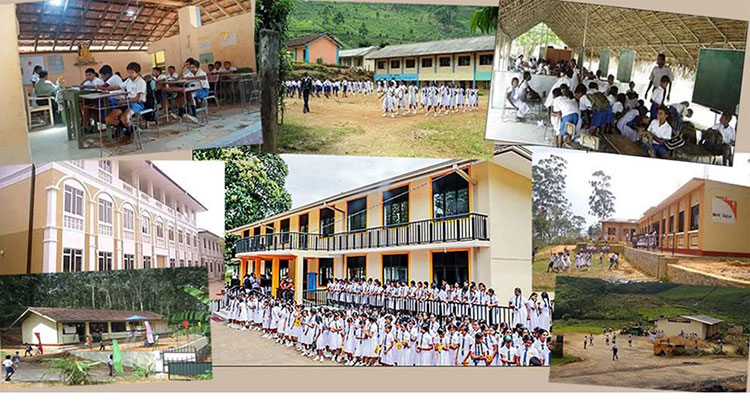
Education reforms have triggered a national debate, and it is time to shift our focus from the mantra of memorising facts to mastering the art of thinking as an educational tool for the children of our land: the glorious future of Sri Lanka.
The 2026 National Education Reform Agenda is an ambitious attempt to transform a century-old colonial relic of rote-learning into a modern, competency-based system. Yet for all that, as the headlines oscillate between the “smooth rollout” of Grade 01 reforms and the “suspension of Grade 06 modules,” due to various mishaps, a deeper question remains: Do we truly and clearly understand how a human being learns?
Education is ever so often mistaken for the volume of facts a student can carry in his or her head until the day of an examination. In Sri Lanka the “Scholarship Exam” (Grade 05) and the O-Level/A-Level hurdles have created a culture where the brain is treated as a computer hard drive that stores data, rather than a superbly competent processor of information.
However, neuroscience and global success stories clearly project a different perspective. To reform our schools, we must first understand the journey of the human mind, from the first breath of infancy to the complex thresholds of adulthood.
The Architecture of the Early Mind: Infancy to Age 05
The journey begins not with a textbook, but with, in tennis jargon, a “serve and return” interaction. When a little infant babbles, and a parent responds with a smile or a word or a sentence, neural connections are forged at a rate of over one million per second. This is the foundation of cognitive architecture, the basis of learning. The baby learns that the parent is responsive to his or her antics and it is stored in his or her brain.
In Scandinavian countries like Finland and Norway, globally recognised and appreciated for their fantastic educational facilities, formal schooling does not even begin until age seven. Instead, the early years are dedicated to play-based learning. One might ask why? It is because neuroscience has clearly shown that play is the “work” of the child. Through play, children develop executive functions, responsiveness, impulse control, working memory, and mental flexibility.
In Sri Lanka, we often rush like the blazes on earth to put a pencil in the hand of a three-year-old, and then firmly demanding the child writes the alphabet. Contrast this with the United Kingdom’s “Birth to 5 Matters” framework. That initiative prioritises “self-regulation”, the ability to manage emotions and focus. A child who can regulate their emotions is a child who can eventually solve a quadratic equation. However, a child who is forced to memorise before they can play, often develops “school burnout” even before they hit puberty.
The Primary Years: Discovery vs. Dictation
As children move into the primary years (ages 06 to 12), the brain’s “neuroplasticity” is at its peak. Neuroplasticity refers to the malleability of the human brain. It is the brain’s ability to physically rewire its neural pathways in response to new information or the environment. This is the window where the “how” of learning becomes a lot more important than the “what” that the child should learn.
Singapore is often ranked number one in the Programme for International Student Assessment (PISA) scores. It is a worldwide study conducted by the Organisation for Economic Co-operation and Development (OECD) that measures the scholastic performance of 15-year-old students in mathematics, science, and reading. It is considered to be the gold standard for measuring “education” because it does not test whether students can remember facts. Instead, it tests whether they can apply what they have learned to solve real-world problems; a truism that perfectly aligns with the argument that memorisation is not true or even valuable education. Singapore has moved away from its old reputation for “pressure-cooker” education. Their current mantra is “Teach Less, Learn More.” They have reduced the syllabus to give teachers room to facilitate inquiry. They use the “Concrete-Pictorial-Abstract” approach to mathematics, ensuring children understand the logic of numbers before they are asked to memorise formulae.
In Japan, the primary curriculum emphasises Moral Education (dotoku) and Special Activities (tokkatsu). Children learn to clean their own classrooms and serve lunch. This is not just about performing routine chores; it really is as far as you can get away from it. It is about learning collaboration and social responsibility. The Japanese are wise enough to understand that even an absolutely brilliant scientist who cannot work in a team is a liability to society.
In Sri Lanka, the current debate over the 2026 reforms centres on the “ABCDE” framework: Attendance, Belongingness, Cleanliness, Discipline, and English. While these are noble goals, we must be careful not to turn “Belongingness” into just another checkbox. True learning in the primary years happens when a child feels safe enough to ask “Why?” without the fear of being told “Because it is in the syllabus” or, in extreme cases, “It is not your job to question it.” Those who perpetrate such remarks need to have their heads examined, because in the developed world, the word “Why” is considered to be a very powerful expression, as it demands answers that involve human reasoning.
The Adolescent Brain: The Search for Meaning
Between ages 12 and 18, the brain undergoes a massive refashioning or “pruning” process. The prefrontal cortex of the human brain, the seat of reasoning, is still under construction. This is why teenagers are often impulsive but also capable of profound idealism. However, with prudent and gentle guiding, the very same prefrontal cortex can be stimulated to reach much higher levels of reasoning.
The USA and UK models, despite their flaws, have pioneered “Project-Based Learning” (PBL). Instead of sitting for a history lecture, students might be tasked with creating a documentary or debating a mock trial. This forces them to use 21st-century skills, like critical thinking, communication, and digital literacy. For example, memorising the date of the Battle of Danture is a low-level cognitive task. Google can do it in 0.02 seconds or less. However, analysing why the battle was fought, and its impact on modern Sri Lankan identity, is a high-level cognitive task. The Battle of Danture in 1594 is one of the most significant military victories in Sri Lankan history. It was a decisive clash between the forces of the Kingdom of Kandy, led by King Vimaladharmasuriya 1, and the Portuguese Empire, led by Captain-General Pedro Lopes de Sousa. It proved that a smaller but highly motivated force with a deep understanding of its environment could defeat a globally dominant superpower. It ensured that the Kingdom of Kandy remained independent for another 221 years, until 1815. Without this victory, Sri Lanka might have become a full Portuguese colony much earlier. Children who are guided to appreciate the underlying reasons for the victory will remember it and appreciate it forever. Education must move from the “What” to the “So What about it?“
The Great Fallacy: Why Memorisation is Not Education
The most dangerous myth in Sri Lankan education is that a “good memory” equals a “good education.” A good memory that remembers information is a good thing. However, it is vital to come to terms with the concept that understanding allows children to link concepts, reason, and solve problems. Memorisation alone just results in superficial learning that does not last.
Neuroscience shows that when we learn through rote recall, the information is stored in “silos.” It stays put in a store but cannot be applied to new contexts. However, when we learn through understanding, we build a web of associations, an omnipotent ability to apply it to many a variegated circumstance.
Interestingly, a hybrid approach exists in some countries. In East Asian systems, as found in South Korea and China, “repetitive practice” is often used, not for mindless rote, but to achieve “fluency.” Just as a pianist practices scales to eventually play a concerto with soul sounds incorporated into it, a student might practice basic arithmetic to free up “working memory” for complex physics. The key is that the repetition must lead to a “deep” approach, not a superficial or “surface” one.
Some Suggestions for Sri Lanka’s Reform Initiatives
The “hullabaloo” in Sri Lanka regarding the 2026 reforms is, in many ways, a healthy sign. It shows that the country cares. That is a very good thing. However, the critics have valid points.
* The Digital Divide: Moving towards “digital integration” is progressive, but if the burden of buying digital tablets and computers falls on parents in rural villages, we are only deepening the inequality and iniquity gap. It is our responsibility to ensure that no child is left behind, especially because of poverty. Who knows? That child might turn out to be the greatest scientist of all time.
* Teacher Empowerment: You cannot have “learner-centred education” without “independent-thinking teachers.” If our teachers are treated as “cogs in a machine” following rigid manuals from the National Institute of Education (NIE), the students will never learn to think for themselves. We need to train teachers to be the stars of guidance. Mistakes do not require punishments; they simply require gentle corrections.
* Breadth vs. Depth: The current reform’s tendency to increase the number of “essential subjects”, even up to 15 in some modules, ever so clearly risks overwhelming the cognitive and neural capacities of students. The result would be an “academic burnout.” We should follow the Scandinavian model of depth over breadth: mastering a few things deeply is much better than skimming the surface of many.
The Road to Adulthood
By the time a young adult reaches 21, his or her brain is almost fully formed. The goal of the previous 20 years should not have been to fill a “vessel” with facts, but to “kindle a fire” of curiosity.
The most successful adults in the 2026 global economy or science are not those who can recite the periodic table from memory. They are those who possess grit, persistence, adaptability, reasoning, and empathy. These are “soft skills” that are actually the hardest to teach. More importantly, they are the ones that cannot be tested in a three-hour hall examination with a pen and paper.
A personal addendum
As a Consultant Paediatrician with over half a century of experience treating children, including kids struggling with physical ailments as well as those enduring mental health crises in many areas of our Motherland, I have seen the invisible scars of our education system. My work has often been the unintended ‘landing pad’ for students broken by the relentless stresses of rote-heavy curricula and the rigid, unforgiving and even violently exhibited expectations of teachers. We are currently operating a system that prioritises the ‘average’ while failing the individual. This is a catastrophe that needs to be addressed.
In addition, and most critically, we lack a formal mechanism to identify and nurture our “intellectually gifted” children. Unlike Singapore’s dedicated Gifted Education Programme (GEP), which identifies and provides specialised care for high-potential learners from a very young age, our system leaves these bright minds to wither in the boredom of standard classrooms or, worse, treats their brilliance as a behavioural problem to be suppressed. Please believe me, we do have equivalent numbers of gifted child intellectuals as any other nation on Mother Earth. They need to be found and carefully nurtured, even with kid gloves at times.
All these concerns really break my heart as I am a humble product of a fantastic free education system that nurtured me all those years ago. This Motherland of mine gave me everything that I have today, and I have never forgotten that. It is the main reason why I have elected to remain and work in this country, despite many opportunities offered to me from many other realms. I decided to write this piece in a supposedly valiant effort to anticipate that saner counsel would prevail finally, and all the children of tomorrow will be provided with the very same facilities that were afforded to me, right throughout my career. Ever so sadly, the current system falls ever so far from it.
Conclusion: A Fervent Call to Action
If we want Sri Lanka to thrive, we must stop asking our children, “What did you learn today?” and start asking, “What did you learn to question today?“
Education reform is not just about changing textbooks or introducing modules. It is, very definitely, about changing our national mindset. We must learn to equally value the artist as much as the doctor, and the critical thinker as much as the top scorer in exams. Let us look to the world, to the play of the Finns, the discipline of the Japanese, and the inquiry of the British, and learn from them. But, and this is a BIG BUT…, let us build a system that is uniquely Sri Lankan. We need a system that makes absolutely sure that our children enjoy learning. We must ensure that it is one where every child, without leaving even one of them behind, from the cradle to the graduation cap, is seen not as a memory bank, but as a mind waiting to be set free.
by Dr B. J. C. Perera
MBBS(Cey), DCH(Cey), DCH(Eng), MD(Paed), MRCP(UK), FRCP(Edin), FRCP(Lond), FRCPCH(UK), FSLCPaed, FCCP, Hony. FRCPCH(UK), Hony. FCGP(SL)
Specialist Consultant Paediatrician and Honorary Senior Fellow, Postgraduate Institute of Medicine, University of Colombo, Sri Lanka.
Joint Editor, Sri Lanka
Journal of Child Health]
Section Editor, Ceylon Medical Journal
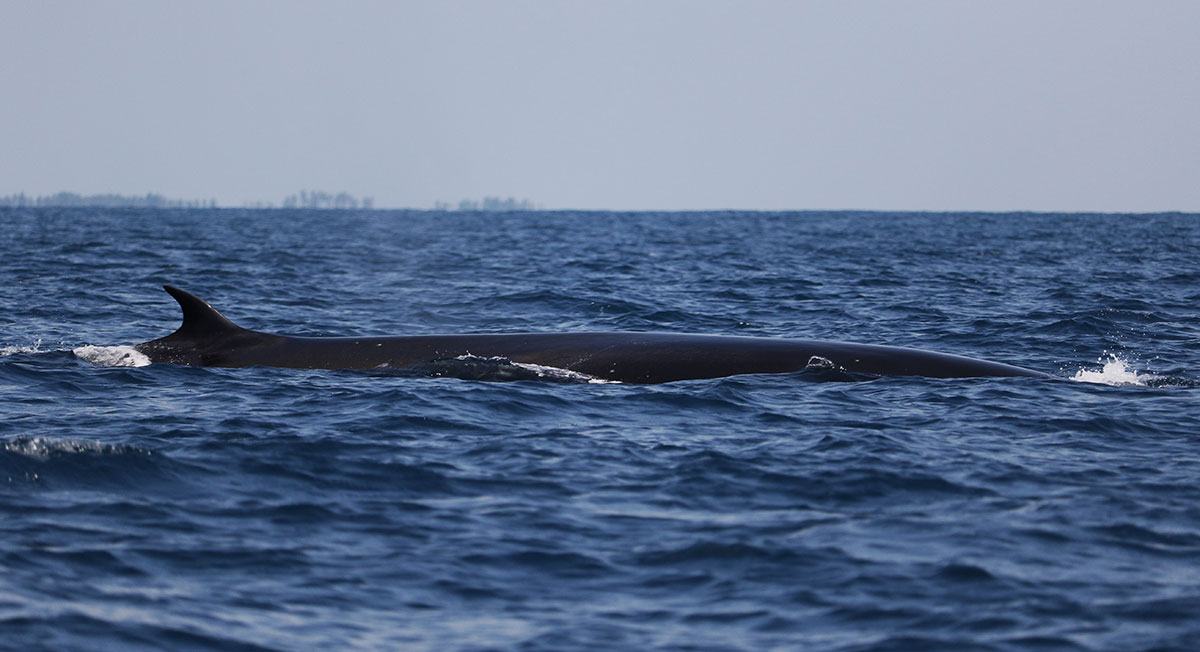
Standing on the southern tip of the island at Dondra Head, where the Indian Ocean stretches endlessly in every direction, it is difficult to imagine that beneath those restless blue waves lies one of the greatest wildlife spectacles on Earth.
Yet, according to Dr. Ranil Nanayakkara, Sri Lanka today is not just another tropical island with pretty beaches – it is one of the best places in the world to see blue whales, the largest animals ever to have lived on this planet.
“The waters around Sri Lanka are particularly good for blue whales due to a unique combination of geography and oceanographic conditions,” Dr. Nanayakkara told The Island. “We have a reliable and rich food source, and most importantly, a unique, year-round resident population.”
In a world where blue whales usually migrate thousands of kilometres between polar feeding grounds and tropical breeding areas, Sri Lanka offers something extraordinary – a non-migratory population of pygmy blue whales (Balaenoptera musculus indica) that stay around the island throughout the year. Instead of travelling to Antarctica, these giants simply shift their feeding grounds around the island, moving between the south and east coasts with the monsoons.
The secret lies beneath the surface. Seasonal monsoonal currents trigger upwelling of cold, nutrient-rich water, which fuels massive blooms of phytoplankton. This, in turn, supports dense swarms of Sergestidae shrimps – tiny creatures that form the primary diet of Sri Lanka’s blue whales.
-
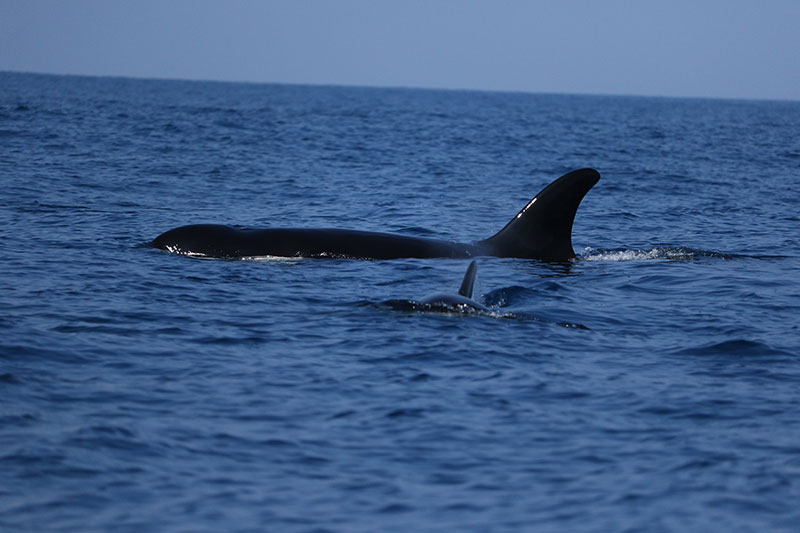
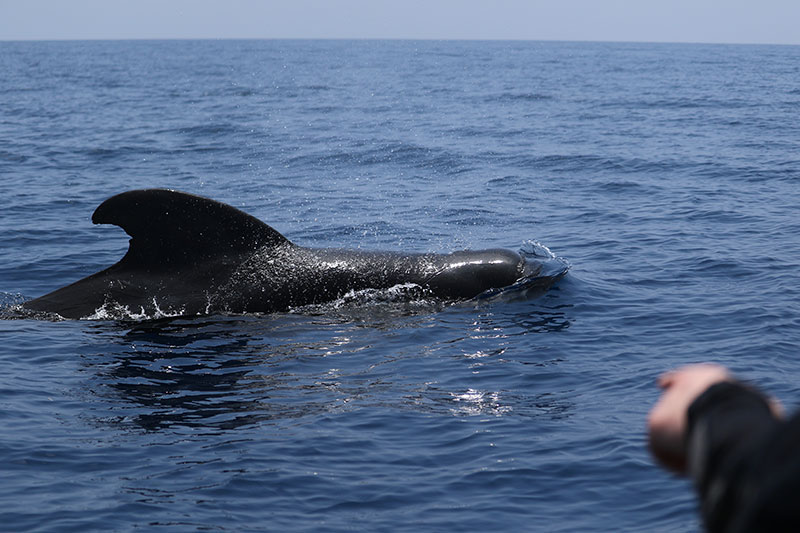
- “Engineers of the ocean system”
“Blue whales require dense aggregations of these shrimps to meet their massive energy needs,” Dr. Nanayakkara explained. “And the waters around Dondra Head and Trincomalee provide exactly that.”
Adding to this natural advantage is Sri Lanka’s narrow continental shelf. The seabed drops sharply into deep oceanic canyons just a few kilometres from the shore. This allows whales to feed in deep waters while remaining close enough to land to be observed from places like Mirissa and Trincomalee – a rare phenomenon anywhere in the world.
Dr. Nanayakkara’s journey into marine research began not in a laboratory, but in front of a television screen. As a child, he was captivated by the documentary Whales Weep Not by James R. Donaldson III – the first visual documentation of sperm and blue whales in Sri Lankan waters.
“That documentary planted the seed,” he recalled. “But what truly set my path was my first encounter with a sperm whale off Trincomalee. Seeing that animal surface just metres away was humbling. It made me realise that despite decades of conflict on land, Sri Lanka harbours globally significant marine treasures.”
Since then, his work has focused on cetaceans – from blue whales and sperm whales to tropical killer whales and elusive beaked whales. What continues to inspire him is both the scientific mystery and the human connection.
“These blue whales do not follow typical migration patterns. Their life cycles, communication and adaptability are still not fully understood,” he said. “And at the same time, seeing the awe in people’s eyes during whale watching trips reminds me why this work matters.”
Whale watching has become one of Sri Lanka’s fastest-growing tourism industries. On the south coast alone, thousands of tourists head out to sea every year in search of a glimpse of the giants. But Dr. Nanayakkara warned that without strict regulation, this boom could become a curse.
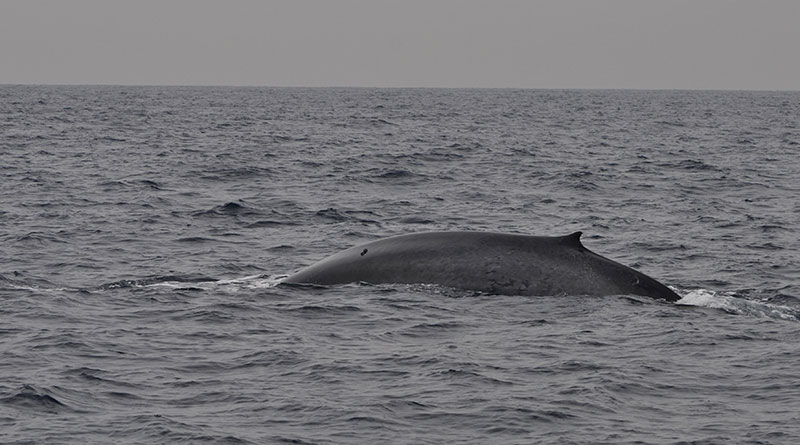
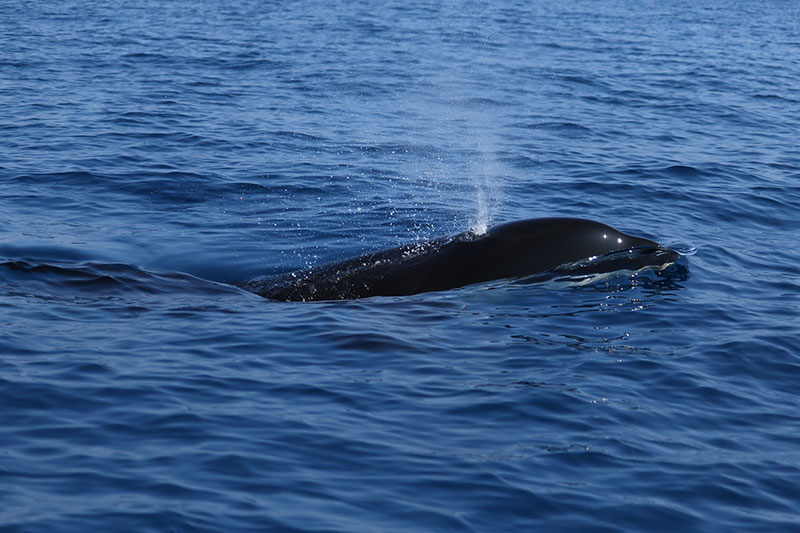
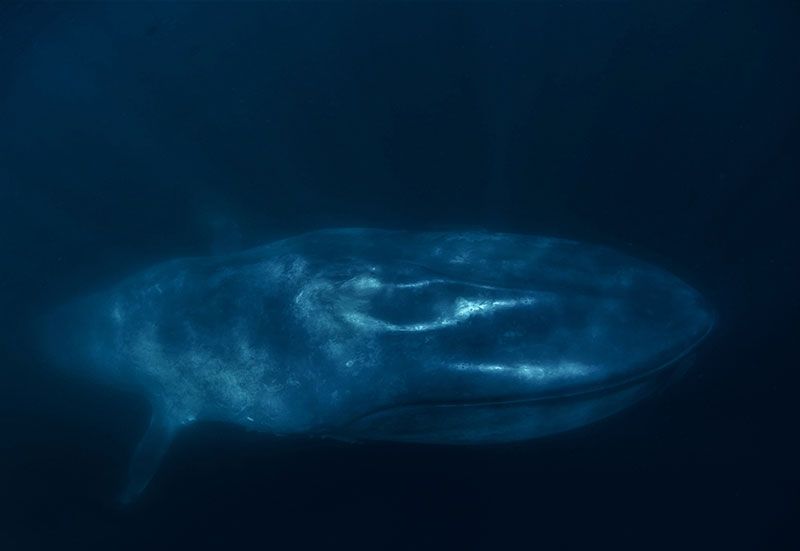
“We already have good guidelines – vessels must stay at least 100 metres away and maintain slow speeds,” he noted. “The problem is enforcement.”
Speaking to The Island, he stressed that Sri Lanka stands at a critical crossroads. “We can either become a global model for responsible ocean stewardship, or we can allow short-term economic interests to erode one of the most extraordinary marine ecosystems on the planet. The choice we make today will determine whether these giants continue to swim in our waters tomorrow.”
Beyond tourism, a far more dangerous threat looms over Sri Lanka’s whales – commercial shipping traffic. The main east-west shipping lanes pass directly through key blue whale habitats off the southern coast.
“The science is very clear,” Dr. Nanayakkara told The Island. “If we move the shipping lanes just 15 nautical miles south, we can reduce the risk of collisions by up to 95 percent.”
Such a move, however, requires political will and international cooperation through bodies like the International Maritime Organization and the International Whaling Commission.
“Ships travelling faster than 14 knots are far more likely to cause fatal injuries,” he added. “Reducing speeds to 10 knots in high-risk areas can cut fatal strikes by up to 90 percent. This is not guesswork – it is solid science.”
To most people, whales are simply majestic animals. But in ecological terms, they are far more than that – they are engineers of the ocean system itself.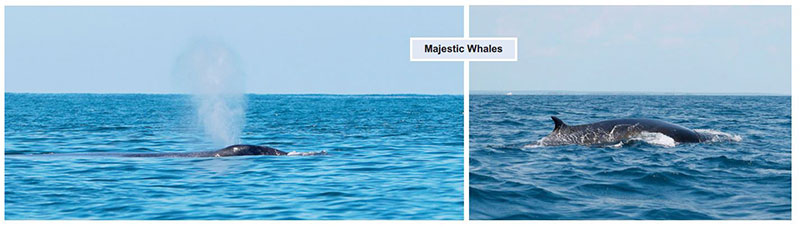
Through a process known as the “whale pump”, whales bring nutrients from deep waters to the surface through their faeces, fertilising phytoplankton. These microscopic plants absorb vast amounts of carbon dioxide, making whales indirect allies in the fight against climate change.
“When whales die and sink, they take all that carbon with them to the deep sea,” Dr. Nanayakkara said. “They literally lock carbon away for centuries.”
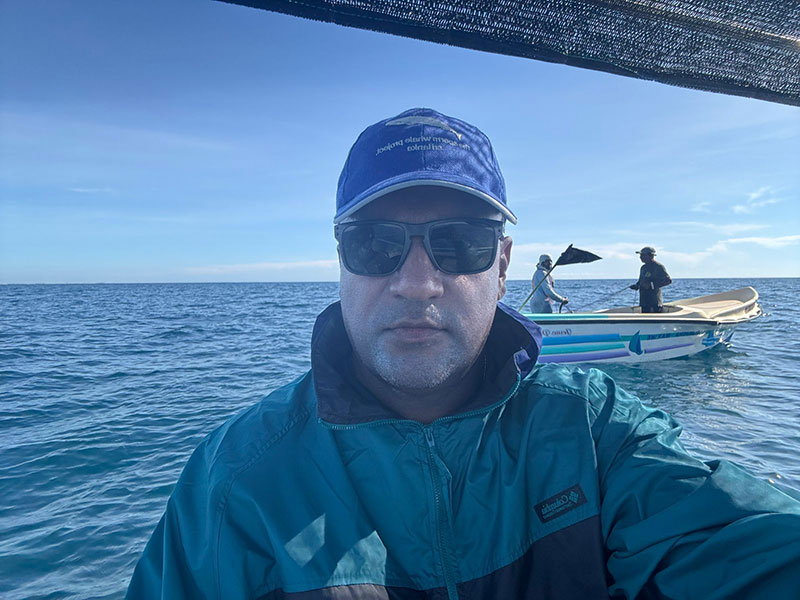
Dr. Ranil Nanayakkara
Even in death, whales create life. “Whale falls” – carcasses on the ocean floor – support unique deep-sea communities for decades.
“Protecting whales is not just about saving a species,” he said. “It is about protecting the ocean’s ability to function as a life-support system for the planet.”
For Dr. Nanayakkara, whales are not abstract data points – they are individuals with personalities and histories.
One of his most memorable encounters was with a female sperm whale nicknamed “Jaw”, missing part of her lower jaw.
“She surfaced right beside our boat, her massive eye level with mine,” he recalled. “In that moment, the line between observer and observed blurred. It was a reminder that these are sentient beings, not just research subjects.”
Another was with a tropical killer whale matriarch called “Notch”, who surfaced with her calf after a hunt.
“It felt like she was showing her offspring to us,” he said softly. “There was pride in her movement. It was extraordinary.”
Looking ahead, Dr. Nanayakkara envisions Sri Lanka as a global leader in a sustainable blue economy – where conservation and development go hand in hand.
“The ultimate goal is shared stewardship,” he told The Island. “When fishermen see healthy reefs as future income, and tour operators see protected whales as their greatest asset, conservation becomes everyone’s business.”
In the end, Sri Lanka’s greatest natural inheritance may not be its forests or mountains, but the silent giants gliding through its surrounding seas.
“Our ocean health is our greatest asset,” Dr. Nanayakkara said in conclusion. “If we protect it wisely, these whales will not just survive – they will define Sri Lanka’s place in the world.”
By Ifham Nizam

Nissanka ton stuns Australia, puts Sri Lanka in Super Eights

New Zealand eye Super Eight spot against Canada

Pathirana under injury cloud as he leaves the field early

Raza: Win over Australia ‘will count for nothing if we slip up now’

Kusal Perera in as Sri Lanka bowl; Marsh returns for Australia

Jacks the star as England qualify for Super Eights with nervy win

‘Dates have the highest sugar content to fight Coronavirus’

Sunday Island 27 December – Headlines

#SundayIsland 17th December – Headlines

Sunday Island – 28th March

Sunday Island Headlines – 21 March

Sunday Island – 21st February – Headlines
-
 Life style2 days ago
Marriot new GM Suranga
-
 Features2 days ago
Monks’ march, in America and Sri Lanka
-
 Midweek Review6 days ago
A question of national pride
-

 Business6 days ago
Autodoc 360 relocates to reinforce commitment to premium auto care
-
 Opinion5 days ago
Will computers ever be intelligent?
-

 Business19 hours ago
Ministry of Brands to launch Sri Lanka’s first off-price retail destination
-

 Features2 days ago
The Rise of Takaichi
-
 Features2 days ago
Wetlands of Sri Lanka: