
Life style
Sri Lanka’s most beautiful train journey

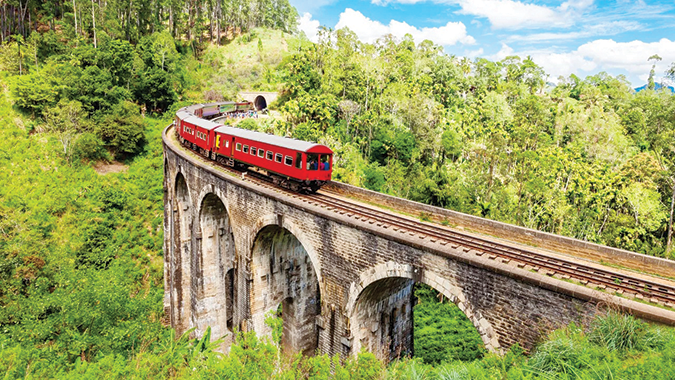
By Zinara Rathnayake
I was woken by the long, forlorn sound of the siren. The brakes hissed and screeched as our train chugged up the hill and pulled into Radella, a station along one of the most beautiful train journeys in the world: the Colombo to Badulla railway.
“The journey is so enthralling that you don’t want to take your head out of the window,” said Dayawathie Ekanayake, who has travelled extensively by train across the island during her career as a finance consultant. “It makes you feel constantly in awe. You wonder about what comes next – is it a waterfall? A stupa-like tea garden? Or is it mist-clouded peaks? You never know. You just have to keep looking.”
Since my first journey along this route seven years ago, I have returned numerous times, eagerly jumping off the train to explore towns and hamlets flanked by tea estates. The 291km track takes in a mix of deep gorges, craggy cliffs, cascading falls, lakes and rivers from Sri Lanka’s west coast into its mountainous interior. It twists and turns through 46 tunnels, snaking past high montane canopy with bright red rhododendrons and wild ferns, a fragment of the native hill country forest cover left untouched by British colonisers. On a bright day, sun-drenched hills stretch down to the glistening southern coastline from the train window as far as the eye can see.
This slow, 10-hour long journey might be inconvenient for the modern-day traveller, but it’s so enchantingly scenic that it’s become a bucket list adventure for many visitors.
It’s not just the views that has travellers in awe. The train journey itself has become an Instagram sensation in recent years, with travel bloggers risking their lives to take photos of themselves hanging off the door as the train rumbles past rickety bridges (some of them have been criticised for their dramatic poses). Yet, the journey is also tied to Sri Lanka’s colonial history and gives passengers a deeper understanding of the island-nation.
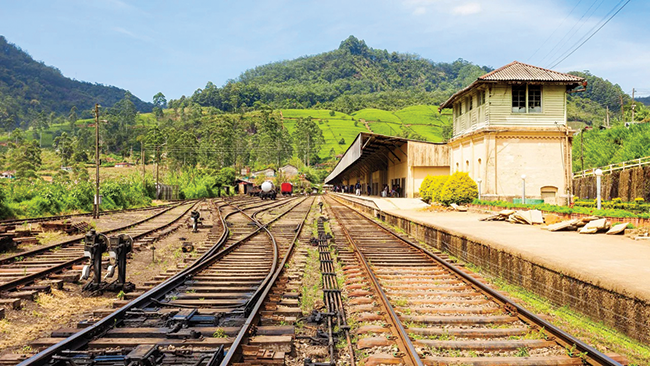
During British colonisation in the 19th Century, Sri Lanka was the third-largest coffee exporter in the world. As demand rose, it became expensive to ferry coffee on bullock carts from the central mountains to Colombo for shipment, especially with road conditions deteriorating during the monsoon months. Estates had to therefore store their coffee for long periods of time, causing the quality and value to deteriorate. So British estate owners pushed for a rail system to transport coffee. In 1867, the British completed a railway from the city of Kandy in central Sri Lanka to the coastal city of Colombo.
“The British didn’t build railways to help locals travel,” explained Sanka Abeysinghe, naturalist at the luxury boutique hotel chain Teardrop Hotels, who also conducts railway hikes for resort guests. “They designed railways to transport estate produce.”
I boarded the train in Colombo, leaving the muggy heat and low country farmlands to slowly ascend towards the rocky mountains surrounding Kandy. Cutting through rugged terrain, the train climbed 426m over a 21km stretch, passing through 12 tunnels, hugging treacherous curves along the mountains and soaring above thick tropical jungle.
After leaving Kandy, we passed fertile riverine valleys, and entered Sri Lanka’s hill country. Tea flourishes in these damp, wet highlands, so, “when tea became prominent, after the coffee rust epidemic – a fungi disease that hindered the coffee trade [in 1869] – the British wanted to extend the railways to transport tea from the mountains to Colombo,” Abeysinghe explained.

In the 1870s, the British began to expand the railway from Peradeniya, a railway junction near Kandy, extending the route to the terminal station Badulla in 1924. This 178km-long stretch involved navigating through rainy, forested mountains, steep ridges and a series of sharp twists and turns by building an impressive mix of bridges, viaducts, tunnels and embankments. It took 52 years to complete.
We pushed out of the mountains, and over the next three hours we passed small and well-kept British-era railway stations like Galboda and Watawala, which were built solely for the purpose of transporting tea from each estate. We sluggishly ascended past Hindu temples tucked in tea gardens, small housing settlements where the tea estate labourers live, and turpentine forests shrouded in swirling mist. Sometime after leaving Hatton – the gateway town to Adam’s Peak, a holy mountain for pilgrims of all faiths – we entered the Poolbank Tunnel, the longest of the 46 tunnels at more than half a kilometre in length.
“You cannot really see the light at the end of the tunnel here,” Abyesinghe said, chuckling.
From here, young passengers eagerly hung from the door to see the gushing cascades of the spectacular St Clair’s Falls through tea bushes. Cold air drifted in from the open windows and rising mist cloaked the towering Great Western mountain range. Many passengers got off the train at Nanu Oya, a tea-country town where visitors can tour the plantations and learn about the history of tea on the island; but I stayed on board, climbing up to Pattipola, the highest broad gauge railway station in the world. From here, we finally left the cold central hills, travelling past dairy farms towards the sun-drenched south-eastern mountains.
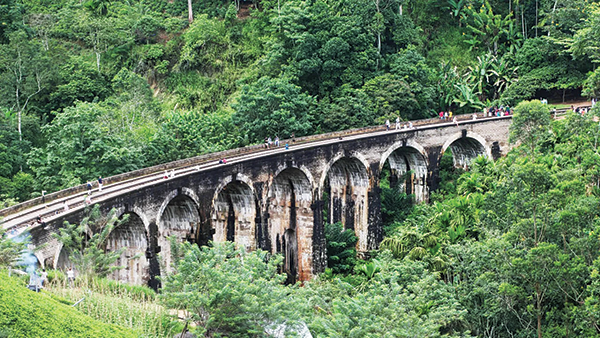
After a couple of hours later, we pulled in at Ella. Over the last decade, this once-sleepy village has turned into a lively tourist hub with cafes and bars lining the streets and people posing for photos in front of the picturesque Nine Arch Bridge, a viaduct with nine arches that soars over tropical jungles of plantain trees and areca nut palms and has become one of the most photographed spots on the island.
Flanked by thick jungle and tea plantations, the bridge was designed by British engineer Harold Marwood, but according to folklore, it never would have been built were it not for local knowledge.
It’s said that during World War One, when it was difficult to source steel from Europe, British engineers had to rethink the bridge design. Since colonial rulers had little to no knowledge about local construction materials, a Sri Lankan builder chipped in to help. Locals completed the engineering marvel using only bricks, stone and cement.
Looking out of the train window, I gazed at the 90m-long viaduct rising through the trees, connecting Ella to the highland town of Demodara. The British also needed a way to manage the steep incline of the terrain from here. “The climb was too abrupt to handle for the engines,” Abeysinghe said.
Again, folklore gives credit to locals who found a way to solve the problem by creating a spiralling track. As we reached Demodara Loop, the train halted at Demodara for passengers to deboard, snaked around a hillock and re-appeared from a 134m-long tunnel right beneath the station.
According to legend, local engineer DW Wimalasurendra worked at the site and thought of this spiral design after seeing a kankami (a tea estate worker who manages South Indian labourers) tying and re-tying his turban. The cutting-edge engineering allowed the train to avoid the steep climb.
We were nearing the end of the journey, and the train slowly descended to the sleepy, terracotta-roofed town of Hali Ela to terminate at the city of Badulla in the lower central hills.
As we pulled into the station, I realised that despite having travelled extensively around the world, I’ve often felt happiest during this slow journey through my own country. In many ways, as the train snakes past the century-old tea bushes, British stations and settlements of tea-estate communities, it quietly reveals the story of an island to those willing to put down their phones and look for it.
Rail Journeys is a BBC Travel series that celebrates the world’s most interesting train rides and inspires readers to travel overland.– BBC

by Ifham Nizam
Sri Lanka risks losing a critical opportunity to sustain economic growth as its population ages, fertility declines and skilled workers migrate overseas, with low female labour-force participation further limiting the country’s ability to respond to a shrinking workforce. The United Nations Population Fund (UNFPA) Sri Lanka says the challenge calls for a fundamental rethink of the country’s economic and social policies, including how women’s unpaid care responsibilities, young people’s family aspirations and the financial security of older citizens are addressed.
With women accounting for 70.6 percent of Sri Lanka’s economically inactive population in 2024, the country cannot afford to leave such a substantial pool of potential workers outside productive employment while demographic pressures intensify. Only 28.9 percent of women participated in the labour force that year, compared with 67.4 percent of men.
In responses to questions from the Sunday Island, UNFPA emphasised that Sri Lanka’s changing population structure should not be treated as a crisis in itself. Rather, it reflects decades of progress in healthcare, education, life expectancy and access to voluntary family planning. The real test is whether the country can adapt its economic model, labour market, social protection systems and care infrastructure to these new realities.
The implications extend well beyond employment and economic growth. Rising demand for healthcare and long-term care, inadequate retirement protection, outward migration and the growing difficulty young people face in starting families are interconnected challenges that require a coordinated policy response.
Sri Lanka is still benefiting from a demographic bonus, with its working-age population larger than the dependent population of children and older people. But this window of opportunity will not remain open indefinitely. UNFPA argues that the country must use it to strengthen productivity, widen women’s access to decent employment and prepare institutions for a society in which people live longer and family structures continue to change.
The challenge of an ageing population
Sri Lanka’s demographic transition is gathering pace. Around 18 percent of the population is now aged 60 or above, while the country’s fertility rate has fallen to approximately 1.3 children per woman. Together, these trends point towards a future in which the proportion of older people rises while the relative size of the working-age population gradually declines.
The transition is not unique to Sri Lanka. Countries across the world are experiencing longer life expectancy and smaller families. However, the speed of change and the country’s economic circumstances make preparation particularly important.
An ageing population can place increasing pressure on public expenditure, healthcare services, pension arrangements and families caring for older relatives. At the same time, a smaller workforce could make it more difficult to sustain economic growth unless productivity improves and more people are able to participate in productive employment.
UNFPA’s position is that population ageing should not be approached simply as a problem of numbers. The central issue is whether institutions are equipped to support people throughout longer lives while ensuring that the economy can generate sufficient income and public revenue.
Sri Lanka’s demographic bonus provides an opportunity to prepare. A relatively large working-age population can contribute to growth, savings and investment, but only if people have access to productive work and the skills required by a changing economy.
The challenge is to convert that opportunity into lasting economic gains before the age structure changes further.
An analysis using National Transfer Accounts data from 2016 estimated that demographic change alone could require an additional Rs. 76 billion in public consumption expenditure by 2037. The same analysis indicated that higher labour productivity could increase aggregate labour income by Rs. 872 billion by 2037 compared with a scenario in which demographic change was considered without those productivity gains.
These estimates illustrate the importance of productivity in responding to demographic pressures. They also suggest that Sri Lanka’s policy response should go beyond simply encouraging people to have more children. Investment in skills, technology, healthcare, education and decent employment can help the country make better use of its available workforce.

Women and the untapped workforce
One of Sri Lanka’s most immediate opportunities lies in increasing women’s participation in paid employment.
In 2024, female labour-force participation stood at 28.9 percent, compared with 67.4 percent for men. Women represented 70.6 percent of the economically inactive population, and 50.6 percent of economically inactive women identified household responsibilities, including childcare and elder care, as a reason for not participating in the labour force.
These figures point to a major economic challenge that is closely connected to social policy. Many women who could contribute to the economy remain outside paid employment because the demands of caring for children, older relatives and other family members are difficult to reconcile with formal work.
Increasing female labour-force participation is, therefore, not merely a question of equality. It is also an economic necessity as the population ages and the working-age population comes under pressure.
UNFPA’s approach highlights the need to recognise unpaid care work and reduce the barriers that prevent women from entering or remaining in employment. Affordable childcare, accessible elder-care services, flexible working arrangements and workplaces that accommodate family responsibilities could help more women pursue paid work.
Employers also have a role to play by improving workplace conditions, strengthening protection against discrimination and making it easier for women to return to employment after childbirth or periods spent caring for family members.
The issue is especially significant for young women. Unemployment among women, aged 15–24, has been recorded at 30.6 percent, indicating that many young women face substantial obstacles even before family responsibilities become a factor.
Better access to education, vocational training, digital skills and employment opportunities could help address this problem. However, training alone will not be sufficient if workplaces remain difficult to access or if women continue to carry a disproportionate share of unpaid care responsibilities.
Sri Lanka must also reconsider the way it measures economic contribution. Unpaid household work is essential to the functioning of society, yet it is often overlooked in conventional measures of economic activity. Recognising its value would help policymakers design more realistic employment, social protection and care policies.
The objective should not be to force women into paid work, but to ensure that those who want to work have a genuine opportunity to do so without being constrained by inadequate services or unequal family responsibilities.
Migration and the future of economic growth
Outward migration presents another challenge to Sri Lanka’s demographic and economic outlook.
The departure of skilled and working-age people can reduce the domestic labour supply, weaken particular professional sectors and place additional pressure on those who remain. The consequences can be especially serious when trained professionals leave sectors already facing shortages.
Migration, however, is not inherently negative. Sri Lankans working overseas contribute through remittances, international networks, new skills and experience. Migration can also provide individuals and families with opportunities that may not be available at home.

The policy challenge is to ensure that migration takes place through safe and fair channels while making Sri Lanka a country in which people have compelling reasons to build their futures.
That requires more than discouraging people from leaving. Decent employment, competitive career prospects, reliable public services, opportunities for professional advancement and confidence in the economy all influence decisions about whether to remain in the country.
For young people, the ability to find stable employment and plan for the future can be as important as the availability of jobs themselves. Uncertainty over income, housing costs and family responsibilities can make long-term decisions increasingly difficult.
Sri Lanka must, therefore, connect its migration policies with broader strategies for economic development, skills retention and employment creation. At the same time, it should maintain links with its overseas workforce and create opportunities for returning migrants to contribute their experience and expertise.
A sustainable response would recognise migration as part of a wider global labour market while addressing the domestic conditions that encourage skilled workers to seek opportunities elsewhere.
Why young people hesitate to start families
Falling fertility is often discussed as though it were simply a matter of changing personal preferences. In reality, decisions about whether to have children are shaped by economic circumstances, relationships, housing, employment security and access to childcare.

UN repcaption: UNFPA Country Representative Phuntsho Wangyel
Many young adults may want to start families but feel unable to do so. High living costs, uncertain employment, the expense of raising children and difficulties balancing work with family life can all influence reproductive decisions.
UNFPA’s Demographic Futures Survey, which reached 108,926 internet-connected young adults, aged 18–19, across 73 countries and territories, including Sri Lanka, found a general desire for two children. Such findings underline the importance of distinguishing between the number of children people would like to have and the number they ultimately feel able to raise.
Sri Lanka’s experience must be understood within this broader context. A low fertility rate does not necessarily mean that young people no longer value family life. It may also reflect the practical barriers they encounter when considering parenthood.
UNFPA and the University of Colombo are conducting a study, examining fertility desires, intentions and behaviours in Sri Lanka. The research is expected to contribute to a better understanding of the factors shaping family decisions and the gap that can emerge between aspirations and outcomes.
The findings could help policymakers move beyond assumptions and design measures that respond to the actual concerns of young people.
Policies that support families need to address the conditions in which decisions are made. Affordable childcare, parental leave, secure employment, housing opportunities and a more equitable distribution of care responsibilities can help people reconcile their family aspirations with their economic circumstances.
Such measures can also benefit the wider economy by enabling parents, particularly women, to remain in employment and by reducing the pressure on families to choose between earning an income and caring for children.
The goal should not be to prescribe a particular family size. It should be to create conditions in which people can make decisions about parenthood freely and realistically.
Retirement security and the cost of longer lives
As life expectancy increases, ensuring financial security in old age becomes a more pressing concern.
Only about 30 percent of Sri Lanka’s workforce is covered by a formal pension arrangement. Many workers, therefore, face the prospect of financing a lengthy retirement with limited savings or without a regular pension income.
For some employees, provident fund benefits provide an important source of retirement savings. However, a one-off payment may not be sufficient to meet living expenses, healthcare costs and other needs over a retirement that could last many years.
The situation is particularly challenging for people who have spent much of their working lives in informal employment, where access to structured pension contributions and other employment benefits may be limited.
As the older population grows, the country will need to examine how retirement income can be made more secure without placing unsustainable pressure on public finances.
This includes strengthening social protection, improving access to suitable savings arrangements and considering how workers in informal employment can be better covered. Financial literacy and advice on managing retirement savings could also help people prepare for longer lives.
Healthcare and long-term care must form part of the same discussion. Older people may require continuing medical treatment, rehabilitation, assistance with daily activities or specialised residential care. When formal services are limited, these responsibilities frequently fall on family members, particularly women.
A stronger care system would help older people maintain dignity and independence while reducing the burden on families. It could also create employment opportunities in healthcare, community support and professional care services.
Ageing should not be treated only as a fiscal burden. Older people possess knowledge, experience and skills that can continue to benefit society. Policies that support healthy ageing, lifelong learning and opportunities for older people to remain economically or socially active can help make longer lives a source of strength.
Reproductive choice must remain central
Debates about low fertility can sometimes lead to calls for governments to encourage or pressure people to have more children. UNFPA’s approach places individual rights and reproductive choice at the centre of the discussion.
Demographic policy, the organisation argues, should not undermine people’s freedom to decide whether and when to have children or how many children to have. Efforts to address fertility decline must, therefore, avoid coercive measures and instead focus on removing the barriers that prevent people from realising their reproductive intentions.
This distinction is important for Sri Lanka. A policy that concentrates exclusively on increasing birth rates may overlook the economic and social reasons people delay or forgo parenthood. It may also fail to address the needs of those who choose to remain child-free or who cannot have children.
A rights-based approach recognises that individuals and couples should have access to accurate information, appropriate healthcare and voluntary family-planning services. It also recognises that decisions about parenthood are personal and cannot be reduced to targets set by the state.
At the same time, governments have a legitimate role in creating an environment in which families can thrive. Affordable childcare, parental support, decent work, healthcare access and social protection can help people make choices without being driven by financial insecurity or inadequate services.
The challenge is to support people rather than dictate their decisions.
Preparing for a different demographic future
Sri Lanka’s demographic transition requires a coordinated response across economic planning, labour policy, healthcare, education, migration and social protection.
Increasing productivity will be essential, but productivity gains must be accompanied by measures that enable more people to participate in the economy. Women need fair access to decent employment, young people need realistic opportunities to build secure lives, and older citizens need protection that reflects the prospect of longer retirements.
The country must also recognise that demographic change affects regions and communities differently. Rural areas, urban centres and sectors facing labour shortages may have distinct needs. Reliable population data and research into family intentions, migration patterns and labour-market participation will, therefore, be important in shaping effective policies.
The findings of the UNFPA–University of Colombo study could help inform this process by identifying the factors that influence reproductive decisions in Sri Lanka. Such evidence should be considered alongside labour-market data, pension coverage, healthcare requirements and the changing distribution of unpaid care work.
Equally important is the need to bring demographic considerations into long-term development planning. Policies should not be designed in isolation, with employment measures separated from childcare, retirement arrangements disconnected from healthcare, or migration strategies divorced from the availability of decent jobs.
Sri Lanka’s demographic transition is neither an automatic economic disaster nor a challenge that can be solved by increasing births alone. It is a structural change that calls for institutions to adapt.
The country still has an opportunity to benefit from its working-age population, improve productivity and build stronger systems of care and social protection. But that opportunity depends on decisions taken now.
The central question is not simply how many people Sri Lanka will have in the future. It is whether the country can create an economy and society in which people of all ages can contribute, families can make their own choices, women have equal opportunities and older citizens can live with dignity and financial security.

By Zanita Careem
A glamorous celebration of South Asean hospitality took place with Sri Lanka taking centre age. at the vibrant capital of the Maldives, Male. It became the centre of attention for South Asia’s Tourism and Hospitality fraternity as industry leaders, hoteliers, travel professionals and other invited guests gathered for the 10th editiom of the South Asian Travel Awards (SATA). Hosted at the stylish ambience of Barcelo Nasandhura Male, the glittering gala brought together the region’s leading tourist destination for an evening of celebration, recognition and camaraderie, with the Maldives providing a fitting backdrop for this prestigious gathering.
Amid the elegance and exitement of the occasion, Sri Lanka emerged as one of the evening’s standout performers, collecting an impressive array of awards that reflected the island’s strength in hospitality, travel luxury wellness and personalised guest experiences. The accoladesss were a proud endorcement of talent, dedication and service excellence that continue to distinguish Sri Lanka’s tourism industry across the South Asian region.
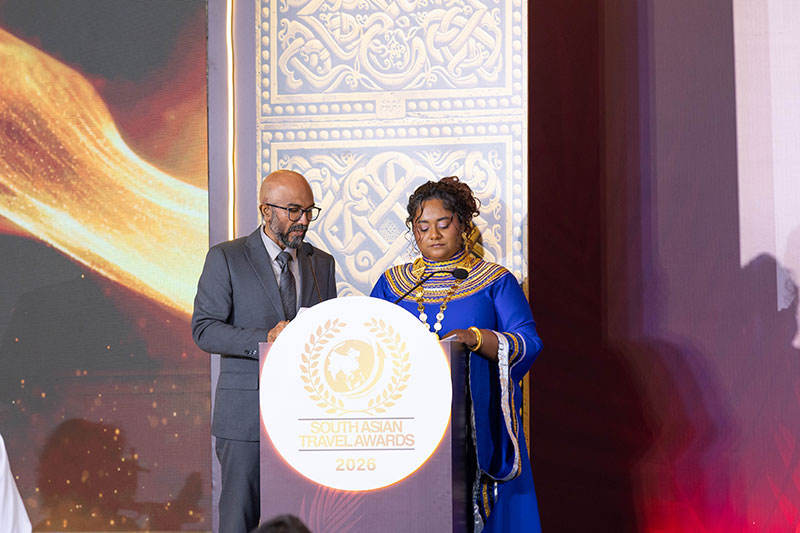
Adding vibrancy and energy
The key highlight was the address by the SATA President, Ismail Hameed, who stressed the importance of strengthening regional co-operation, maintaining hospitality standards and preparing the industry for a rapidly evolving tourism environment. His speech underscored the need for South Asian destination to work together to embrace innovation and build a more competitive and sustainable tourism sector. Artificial Intelligence and the future of hospitality took centre stage at (SATA) where panel discussions brought together industry professionals to examine how technology is transforming the travel and tourism landscape. Moderated by Dinuksha Chandrasena, Editor in Chief and publisher of Travel Talk Asia and Managing Director of Double Dee publication, who explored the growing role of artificial intelligence in enhancing guest experiences, streamlining hotel operations and helping the industry respond to the changing expectation of modern travellers.
-
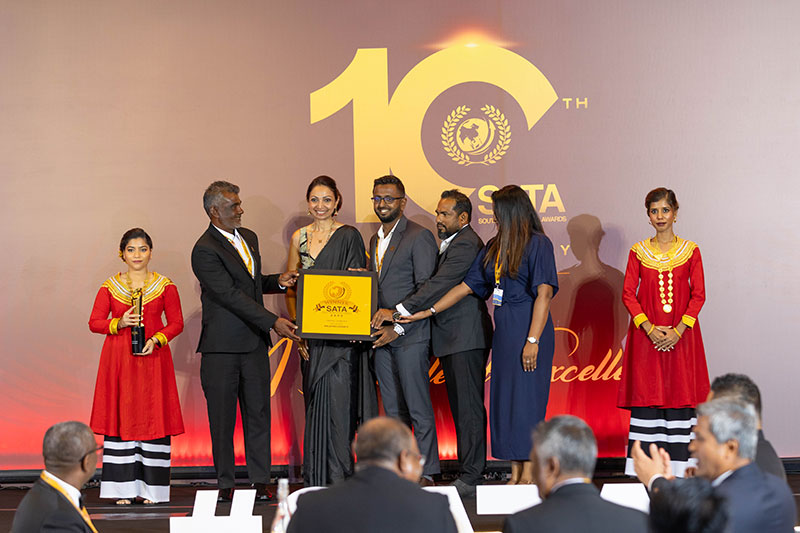
- Dinuksha in the spotlight: Recognition from the President of SAFTA
-
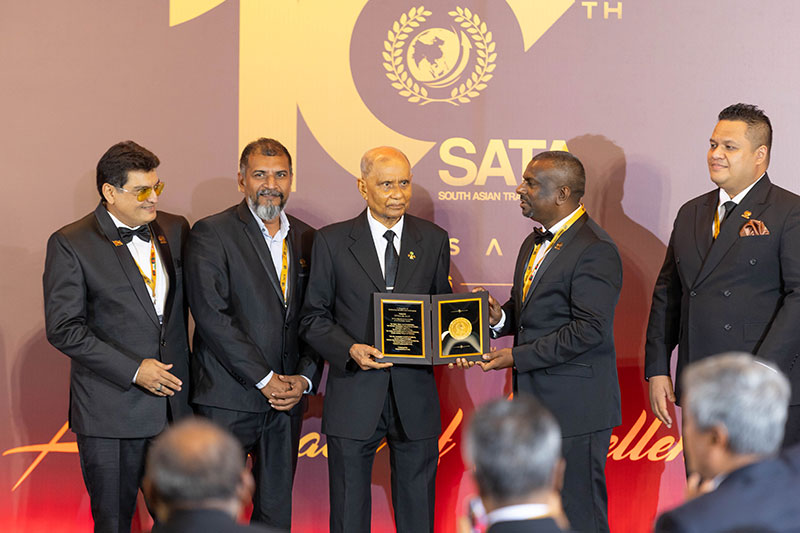
- Sri Lanka SATA members with President of SATA Ismail Hameed and the iconic award winner Mohamed Salih (centre)
-

- Grand triumph for Cinnamon Grand: The hotel brings pride to Sri Lanka, with the General Manager receiving a prestigious accolade – Best General Manager
The conservation also raised an important question how hotels embrace technological innovation without losing the personal touch that remains at the heart of genuine hospitality,
The discussions reflected a wider transformation taking place across the hospitalality industry, where digital solutions are becoming increasingly important in everything, from personalised guest services to efficient management.
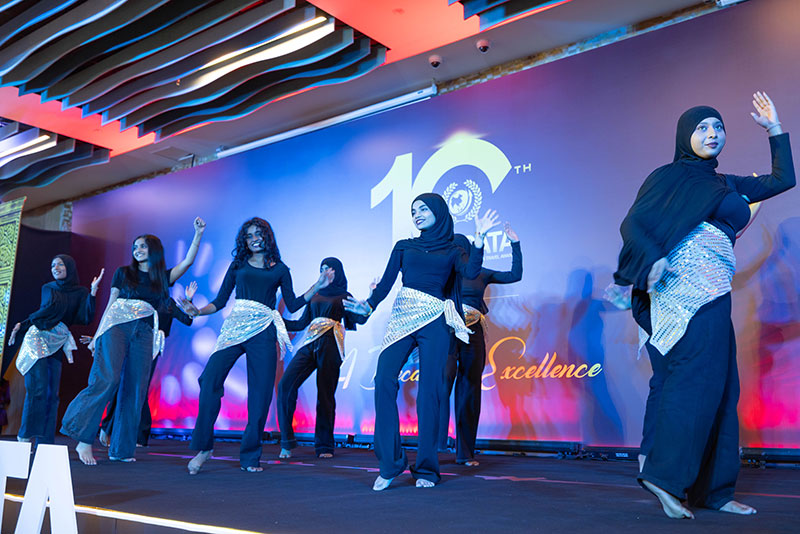
Cultural extravaganza: Colour,rhythm and tradition
Cinnamon Grand Colombo made a notable impact at the South Asian Travel Awards 2016 held in the Maldives with its achievements reflecting the strength of Sri Lanka’s hospitality industry. The hotel struck gold for Best General Manager Nazoomi Azhar, while young achiever Gayani Punchihewa won gold in the Best Young Hotelier category. Cinnamon Grand also achieved Silver for Best Food and Beverage Hotel in South Asia.
The 10th South Asian Travel Awards celebrated not only the regions finest in travel and hospitalitybut also the spirit of partnership that continues to strengthen South Asian Tourism. A special highlight was the presentation of the prestigious Face of South Asia award to Mohamed Salih, Chairman of Damas Company, in recognition of his contribution to the tourism industry. A total of 52 gold and 98 silver awards were presented across various categories recognising achievements in the hospitality industry, with Bhutan, Bangladesh, India, Nepal, Sri Lanka and the Maldives in the scene.
Sri Lanka also made a strong impression at the South Asian Travel Awards held in Male.
The iconic Galle Face Hotel has been ranked No 1 in the Best Heritage Hotel category. It is the first time the iconic Galle Face Hotel has claimed the top honour, making it a significant milestone in a history that go back to 1864. Cinnamon Lakeside won the award as a leading meeting and conference hotel.
Other award winners included Kingsbury Hotel, Amaya hotels Kandy, leading Hill Resort/hotel, Anantara Peace Haven, leading luxury resort – Amaya Lake Dambulla, New Burgh Ella, Royal Beach, Beruwela, Marine Bay Hotel, Marine Drive, South Asia’s best new hotel, Auygiri Aurveda, Wellness and Spa Resort.
Most romantic resort The Fortress Resort and spa. Fox resorts silver winner, leading hospitality development company, Sri Lankan Airlines leading international airline, Aitken Spence Travels – leading travel Agent.
Amari Hotel won an award for Sri Lanka’s leading business hotel.
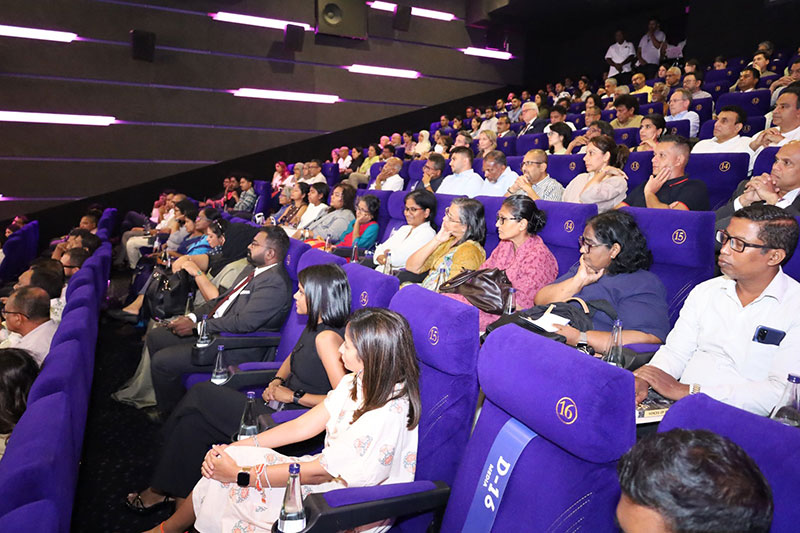
Teardrop Nation, a four-part documentary series examining Sri Lanka’s post-independence political and conflict history, was formally launched at Scope Cinemas Multiplex at Colombo City Centre recently, with Leader of the House and Minister Bimal Rathnayake attending as Chief Guest. Developed over six years by Project 72, with Sarah Kabir as Project Director, the series brings together historical accounts, expert perspectives and lived experiences to explore the events and decisions that have shaped Sri Lanka since independence.

Sarah Kabir, Project Director of Teardrop Nation, addresses the audience at the premiere in Colombo.
Created for a broad public audience, with a particular focus on younger generations, Teardrop Nation seeks to make Sri Lanka’s recent history more accessible and encourage greater engagement with the factors that contributed to discrimination, violence and conflict. The project was conceived not simply as a record of the past, but as an educational resource that can help audiences better understand how earlier choices and events continue to inform the country today.
Speaking at the launch, Sarah Kabir, Project Director of Teardrop Nation, said her decade of work on reconciliation had shaped the project. “Understanding our past is essential to building positive and lasting peace in Sri Lanka. We created Teardrop Nation to make this history more accessible, especially to younger people, and to encourage them to engage with it thoughtfully and critically. After six years of research and production, we hope the series creates space for informed conversation and a shared understanding of the experiences and decisions that shaped our country,” she said.
The series unfolds chronologically across four episodes: Foundations of Conflict (1930s–1970s), The Trigger (1970s–1980s), Battle for Peace (1980s–late 1990s) and War in Paradise (1990s–2009). Together, the episodes examine political and social developments across different periods and explore tensions linked to ethnicity, religion, class and caste.

Record 1,600 students take Russian Classical Ballet examination in Sri Lanka

Half a million people join protests in France, but some turn violent

Deadly fire breaks out at Canada military base

Showers or thundershowers will occur in most parts of the island after 1.00 p.m.

Buddhist hierarchy demands prison perks for monk convicts

Debate on NCM against Speaker postponed indefinitely

‘Dates have the highest sugar content to fight Coronavirus’

Sunday Island 27 December – Headlines

#SundayIsland 17th December – Headlines

Sunday Island – 28th March

Sunday Island Headlines – 21 March

Sunday Island – 21st February – Headlines
-

 Latest News5 days ago
Nissanka’s return headlines Sri Lanka’s Test squad against Pakistan
-

 Latest News6 days ago
Farhan and Sadaqat help Pakistan seal series in style
-
 Features6 days ago
Intake 16: 45 years of duty and honour
-
 News6 days ago
Malwathu Chapter issues statement on talks with President over Gnanasara Thera’s robes
-
 News6 days ago
CP alleges NPP has taken the blame for illegal US sanctions on Iranian vessels
-

 News4 days ago
Sri Lanka, India caught in US-Iran ship crisis
-

 Opinion6 days ago
How long can Sri Lanka remain silent on its demographic crisis?
-

 Latest News4 days ago
Kusal Mendis’ unbeaten 87 hands Sri Lanka consolation win