
News
AKD admits import of substandard coal, blames technicalities and supplier

… announces temporary relief package
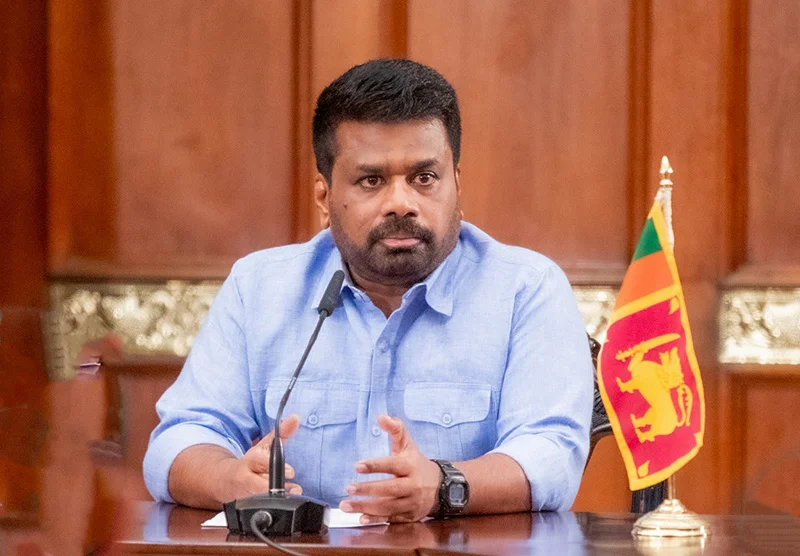
President Anura Kumara Dissanayake yesterday acknowledged in Parliament that the import of substandard coal had adversely impacted electricity generation.
“There’s an issue with the coal. That’s true,” the President said, addressing the House.
President Dissanayake maintained that the problem had not arisen from the tender process but from the failure of the supplier to deliver coal that met the required standards. “The issue did not arise from the tender process. It resulted from the supplier’s failure to deliver coal that met the required standards. I would also like to point out that coal is not tested by individuals through simple inspection or personal judgment; it is examined in certified laboratories,” he said.
The President went on to say that coal shipments are tested through certified laboratories before dispatch, and an initial payment of 80 percent was made after receiving laboratory certification confirming that the coal meets stipulated specifications.
The President said the balance 20 percent was released only after a second verification carried out by an Indian laboratory selected for the purpose in 2023. Tests had revealed that three shipments failed to meet the required specifications.
The President added that although some shipments had passed laboratory tests, operational assessments at the power plant indicated that the coal was not performing to the expected standard. As a result, the government had withheld the remaining payments for certain consignments, imposed penalties on some suppliers, and in a few instances suspended even the initial 80 percent payment.
He said the use of substandard coal would increase electricity generation costs as the shortfall would have to be compensated by alternative sources, such as diesel. However, he assured Parliament that the additional costs would be recovered from the coal suppliers and would not be passed on to consumers.
The President also said the government expected to receive the fourth and fifth tranches of financial assistance from the International Monetary Fund by the end of May. He told Parliament that Sri Lanka hoped to reach a staff-level agreement with the IMF by Thursday, which would enable the country to secure about USD 700 million in funding.
Meanwhile, the President announced a temporary increase in cash assistance under the Aswesuma welfare programme to provide relief to low-income households during the April festive season.
He said the government continued to face challenges in accurately identifying eligible beneficiaries but noted that Aswesuma remained the only available framework to determine eligibility. Under the scheme, current benefit categories include payments of Rs. 17,500, Rs. 10,000 and Rs. 5,000.
For April, the Rs. 17,500 allowance will be increased by Rs. 7,500 to Rs. 25,000, while the Rs. 10,000 payment will rise by Rs. 5,000 to Rs. 15,000. Beneficiaries in the transitional category will receive an additional Rs. 2,500. The temporary increases are expected to cost the Treasury about Rs. 8.5 billion and will apply only for the month of April.
Addressing electricity tariffs, the President said the adjustment that came into effect on April 1 had been determined earlier and was not linked to the present crisis. According to him, the increase for households consuming less than 30 units amounts to about Rs. 15 per month, while other tier increases translate to approximately Rs. 1 to Rs. 1.50 per day.
He said the government had considered three options to manage rising electricity costs: requiring the Ceylon Electricity Board to absorb the losses, transferring the burden entirely to the Treasury, or passing the cost on to consumers. Instead, the government opted for a shared approach involving the State, the public and the national power system operator.
Under this arrangement, consumers using less than 90 units of electricity will receive a subsidy during the next tariff revision. The government has allocated Rs. 5 billion per month for the programme, amounting to Rs. 15 billion over three months. The President said losses in the electricity sector during the same period were estimated at about Rs. 32 billion.
Turning to agriculture, the President outlined measures to stabilise fertiliser supply amid rising global prices. He said the Department of Agriculture currently held about 14,000 metric tonnes of urea imported at the previous price, while private companies also possessed stocks.
Following discussions with fertiliser suppliers, companies had agreed to release all remaining stocks purchased at the old price to Agrarian Service Centres. These quantities, together with government stocks, are expected to be sufficient for two paddy cultivation seasons.
However, fertiliser required for the third season would have to be imported at higher prices. The President said recent offers for urea ranged from USD 680 to USD 850 per metric tonne.
To cushion farmers from price increases, the government has decided to sell fertiliser for the third season at a fixed price of Rs. 10,200 per bag despite the estimated market price ranging between Rs. 13,500 and Rs. 14,000. The Treasury will absorb the difference, amounting to roughly Rs. 3,000 per bag, at a total estimated cost of about Rs. 1.7 billion.
The President also announced increases in fertiliser subsidies. Farmers cultivating paddy will receive Rs. 30,000 per hectare, up from Rs. 25,000, while subsidies for subsidiary crops during the Yala season will increase from Rs. 15,000 to Rs. 18,000. Small tea holders will receive a one-time additional payment of Rs. 5,000 per fertiliser bag in addition to the existing Rs. 4,000 subsidy.
He said the expanded fertiliser support programme would cost the government about Rs. 6.5 billion, with an additional Rs. 600 million allocated specifically for fertiliser subsidies.
The President also outlined plans to manage rising energy costs, particularly in the fuel sector. He said the government had considered allowing fuel prices to fully reflect market costs or introducing a subsidy mechanism.
According to current estimates, he said, diesel would exceed Rs. 600 per litre if sold strictly at cost. Instead, the government has decided to maintain the existing tax structure and provide Treasury-funded subsidies.
Under the proposed scheme, diesel will receive a subsidy of up to Rs. 100 per litre, while petrol will receive up to Rs. 20 per litre. Fuel prices will continue to be adjusted based on monthly cost calculations, with the next revision scheduled for May 1.
The subsidy programme is expected to cost around Rs. 20 billion per month and will operate for three months at an estimated total cost of Rs. 60 billion.
In addition, fishermen will receive targeted assistance. Small fishing boats will qualify for an extra Rs. 50 per litre fuel subsidy for up to 625 litres per month, credited directly to bank accounts. This will provide a monthly benefit of Rs. 31,250 per boat.
Multi-day fishing vessels will receive a fuel allowance of Rs. 150,000 per vessel during the three-month subsidy period, the President said.
By Saman Indrajith



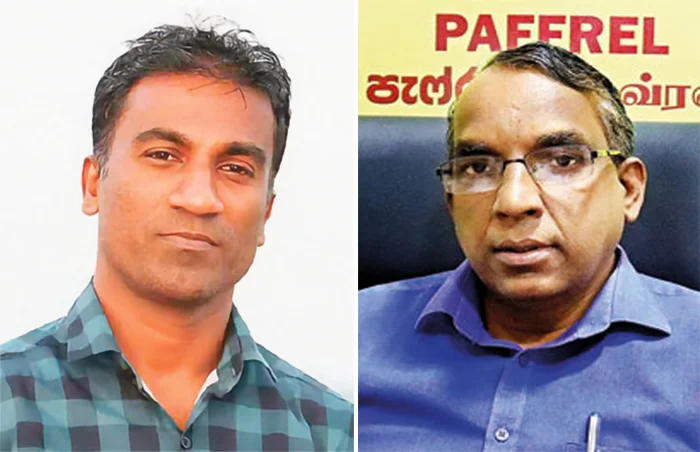
Election monitors have strongly condemned JVP General Secretary Tilvin Silva’s Jaffna declaration that the long-delayed Provincial Council polls couldn’t be held this year due to financial and legal impediments. Silva said so after declaring open a new NPP coordination office, in Jaffna, over the last weekend.
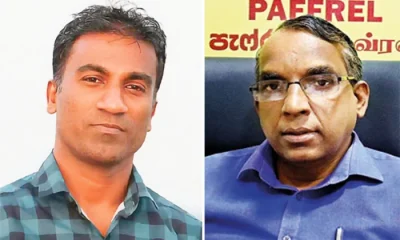
People’s Action for Free and Fair Elections (PAFFREL), and the Institute for Democratic Reforms and Electoral Studies (IRES), said that Tilvin Silva, in his capacity as the General Secretary of the main constituent of the National People’s Power (NPP), couldn’t make such a declaration under any circumstances.
PAFFREL head Rohana Hettiarachchi and IRES Chief Manjula Gajanayake emphasised that the JVP-led NPP government should be ashamed of the developing situation.
Hettiarachchi said that Tilvin Silva’s statement has to be examined against the backdrop of a parliamentary committee, headed by Foreign Minister Vijitha Herath, tasked to determine the electoral system under which PC polls should be conducted.
Alleging that the JVPer had made the parliamentary committee irrelevant, the civil society activist said that the whole exercise of appointing the Herath-led committee now seemed a farce. The JVP’s ruse to put off PC polls further reminded the country of a similar bid made by President Ranil Wickremesinghe, Hettiarachchi said, asserting that a government couldn’t postpone any poll, claiming it didn’t have the wherewithal.
Hettiarachchi emphasised that conducting elections was the responsibility of the government of the day. PC polls have been delayed for nearly one and half decades. Hettiarachchi said that as the NPP won the parliamentary election in November, 2024, it should be held accountable for further delaying the PC polls since then.
Responding to The Island queries, Hettiarachchi said that the JVP’s move couldn’t be justified, under any circumstances. If the NPP felt that the PC system was not required then urgent action must be taken to initiate a dialogue regarding the PC system and remove it through necessary constitutional means, he said.
Hettiarachchi alleged that the JVP, having gained political power, was now following the despicable agenda of the previous political parties which sought to hold onto power at the expense of the democratic rights of the people. The JVP proved that they were not different from those who were routed at the last presidential and parliamentary polls, the PAFFREL chief said.
Tilvin Silva’s unexpected Jaffna statement contradicted their election manifesto that promised to conduct both Local Government and PC polls in 2025.
Gajanayaka said since 1998 there had been several Supreme Court and Court of Appeal rulings regarding the PC polls due to reluctance on the part of some governments to conduct polls for obvious reasons. Referring to Tilvin Silva’s declaration that money allocated for the conduct of elections were utilised for Ditwah relief, Gajanayake emphasised the need to verify such claims. Gajanayake suggested that there should be provision to conduct a forensic study to find out whether Treasury had the required funds or the government lied.
Gajanayaka said that though the JVP was the dominant party, it would be interesting to know the opinion of Dr. Nihal Abeysinghe, General Secretary of the NPP. President Anura Kumara Dissanayake is the leader of both the JVP and the NPP.
The JVP Jaffna declaration couldn’t be accepted, Gajanayake said, adding that the JVP never really backed the PC system, though it contested them later after having waged a bloody insurgency against the Indian introduced set-up. Gajanayaka recalled the violence unleashed by the JVP in the wake of the Indo-Lanka accord of July 29, 1987, under which the then Congress government forced Sri Lanka to enact the 13th Amendment to the Constitution.
By Shamindra Ferdinando
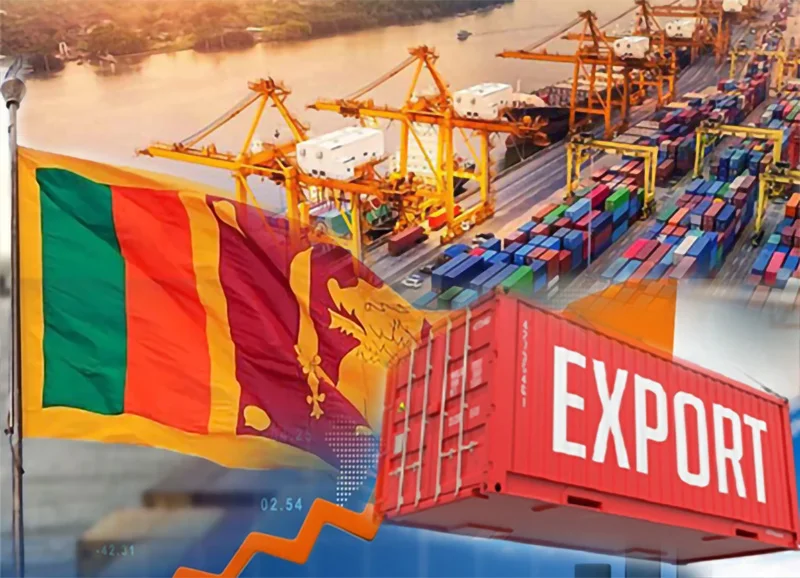
The Sri Lanka Export Development Board (EDB) says Sri Lanka’s total exports, comprising merchandise and services, reached US$ 1,380.93 million in April 2026, recording a year-on-year growth of 6 % compared to the previous year.
The EDB in a statement has said that the positive export performance recorded during the first four months of 2026 highlights the resilience of Sri Lanka’s external sector. Sustained export earnings, supported by stable merchandise trade and the growing contribution of services exports, indicate a steady and encouraging recovery trajectory for the Sri Lankan economy in 2026.
Commenting on the export performance in April 2026, Mangala Wijesinghe, Chairman and Chief Executive Officer of the Sri Lanka Export Development Board (EDB), has said: “Sri Lanka’s export sector continued to demonstrate resilience in April 2026, with total exports reaching US$ 1,380.93 million, recording a year-on-year growth of 6 % compared to April 2025. Merchandise exports recorded a notable increase of 9.87%, while services exports continued to make a significant contribution to overall export earnings, reflecting the growing importance of the services sector within the country’s export portfolio.
News
Easter Sunday carnage: Court told Maulana’s statement cannot be accepted without cross-examination
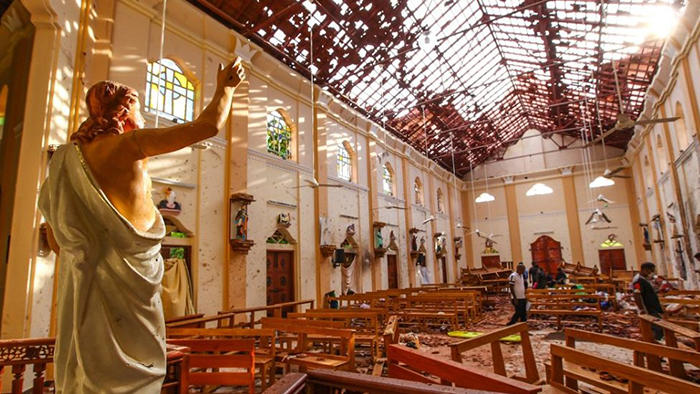
Retired Maj. Gen. Suresh Sallay’s Counsel Shavendra Fernando, PC, recently told Colombo Fort Magistrate Pasan Amarasena that Mohammed Milhilar Mohammed Hanzeer alias Azad Maulana’s statement that implicated his client in the 2019 Easter Sunday carnage couldn’t be accepted as evidence in a court of law without cross-examination.
Fernando also reminded the court that a warrant had been issued in respect of Maulana, one-time aide to Sivanesathureyai Chandrakanthan, alias Pilleyan, over a case of bigamy.
The Criminal Investigation Department (CID) in late February this year arrested Sallay, who served as the Director of State Intelligence Service (SIS)s from Nov. 2019 to early Oct. 2024, just weeks after the National People’s Power (NPP) won a 2/3 majority at the parliamentary election. President Anura Kumara Dissanayake brought in DIG Dhammika Kumara as Sallay’s successor. Sallay previously served as the head of the Directorate of Military Intelligence (DMI) from 2012 to 2016.
Making submissions to the court after Additional Solicitor General (ASG) Dileepa Peiris, Fernando emphasised that a court of law couldn’t act on a statement submitted through a third party as it couldn’t be relied upon.
At the onset of his submissions, the retired officer’s Counsel declared that he was making submissions before the court and not for the media.
The crux of the matter was whether Maulana, a fugitive from Sri Lanka law, whose statement, recorded by a team of CID officers, led by its Director SSP Shanie Abeysekera, at the Sri Lankan mission, in Paris, could be accepted without cross-examination.
The Attorney General’s Department and the suspect’s Counsel explained their position with regard to producing Sallay, detained under the Prevention of Terrorism Act (PTA) in court.
The ASG requested that an order, issued by the Colombo Fort Magistrate court to produce Sallay in court, be vacated. Responding to the ASG’s statement that there was no provision to produce a person detained under PTA, in court, the President’s Counsel pointed out that no existing provision denied such an opportunity. The retired officer’s Counsel said that it was the Magistrate’s prerogative.
Alleging that there was an ongoing attempt to derail the Easter Sunday investigation, the ASG opposed an opportunity for Sallay to make a statement in court in terms of the Section 127 of the Code of Criminal Procedure. Fernando emphasised that Salley should be given the opportunity.
Fernando also strongly opposed the ASG’s move, on behalf of the Attorney General, to have an earlier order issued by court, to ensure Sallay received unhindered access to his lawyers, vacated. He questioned how the Attorney General, who heads the Bar, could deny the right of lawyers to have free access to their clients.
Magistrate Amaraseena told the court that a report on Sallay’s health has been received by the court. Fernando has said that he would respond once he received a copy.
During cross talk among lawyers, President’s Counsel Fernando has asked Rienzie Arsularatne, PC, who appeared for the Archbishop of Colombo, Malcolm Cardinal Ranjith, whether the Cardinal had approved and condoned the inhuman conditions in which Sallay was held in a 6X4 rat-infested cell.
ASG Peiris responded jokingly that Fernando might be excommunicated by the Cardinal. Fernando has pointed out that only the Pope could excommunicate and that the Cardinal administered the churches and priests and that, too, only in Colombo.
Based on the statement recorded from Maulana, the CID submitted a 14-page report to the Colombo Magistrate’s court, declaring Sallay as the 2019 Easter Sunday terror mastermind.
Maulana repeated accusations, aired by Channel 4 TV in a documentary “Sri Lanka’s Easter bombings” in its “Dispatches” programme on Tuesday 05, September ,2023.
According to Maulana’s statement recorded in Paris, Seyani Maulavi, an associate of Zahran Hashim, had got in touch with former Eastern Province Chief Minister Pilleyan, in the Batticaloa Prison, where both were held.
Pilleyan had been arrested in connection with the alleged involvement in the assassination of ITAK MP Joseph Pararajasingham on Christmas Eve, in 2005, in Batticaloa, while Maulavi was apprehended over a clash at Aliyar junction, in the east.
Maulavi has reiterated that Sallay met six persons, including Zahran Hashim, at Karadippooval, in Puttalam, in 2018.
The statement claimed that immediately after the Easter suicide blasts, Sallay directed Maulana to pick Jameel, who had been assigned to bomb Taj Samudra, but didn’t do so, and to collect his hand phone. Visits by Mahinda Rajapaksa, Basil Rajapaksa and Namal Rajapaksa to the Batticaloa Prison to meet Pilleyan, too, had been mentioned with Maulana claiming that the visitors gave Pilleyan an assurance he would be released within six months from Gotabaya Rajapaksa’s victory at the 2019 November presidential election.
The CID told court that Gotabaya Rajapaksa, soon after winning the election, appointed Sallay as SIS head to protect the secrets, and the DMI paid Rs 250,000 bail for Maulavi. The CID also alleged direct DMI-Pilleyan link in the abduction of journalist Keith Noyahr, in May 2008, Lasantha Wickrematunga assassination, in January, 2009, attack on Rivira Editor Upali Tennakoon, in January, 2000, and in the disappearance of Prageeth Ekneligoda, on the eve of the 2010 January presidential election.
Another major allegation was that approximately 2,000 men, under Pilleyan’s command, were paid a monthly salary.
The Magistrate, at the end of the proceedings, declared that a decision regarding Sallay being brought to court and an opportunity for him to make a statement would be announced on July 1.
By Shamindra Ferdinando

US military launches strikes on southern Iran amid talks in Qatar

Pope says AI must be ‘disarmed’ to prevent domination, exclusion, and death

Showers will occur at times in the Western, Sabaragamuwa and North-western provinces and in Galle, Matara, Kandy and Nuwara-Eliya districts.

Election monitors flay JVP for postponing PC polls

SL exports exceed USD 5.7 bn in first four months of 2026

Easter Sunday carnage: Court told Maulana’s statement cannot be accepted without cross-examination

‘Dates have the highest sugar content to fight Coronavirus’

Sunday Island 27 December – Headlines

#SundayIsland 17th December – Headlines

Sunday Island – 28th March

Sunday Island Headlines – 21 March

Sunday Island – 21st February – Headlines
-
 Features6 days ago
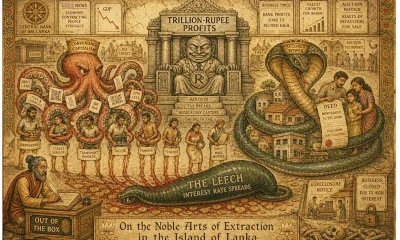
Octopus, Leech, and Snake: How Sri Lanka’s banks feast while the nation starves
-
 Sports6 days ago
Sri Lanka women’s volleyball team ready for Central Asian challenge
-
 Opinion5 days ago
Murder of Ehelepola family, Bogambara Wewa and Sightings of Wangediya
-

 Business4 days ago
Historic launch of CCWE Fashion Week & International Summit 2026
-
 News5 days ago
Steps underway to safeguard Sri Lanka’s maritime heritage
-
 Features2 days ago
The NPP’s pivot to the past
-
 News1 day ago
Police probe underway to ascertain links between criminals deported from UAE and local politicians
-

 Editorial5 days ago
A play without its protagonist