
Latest News
Trump announces two-week ceasefire as Iran agrees to reopen Hormuz Strait

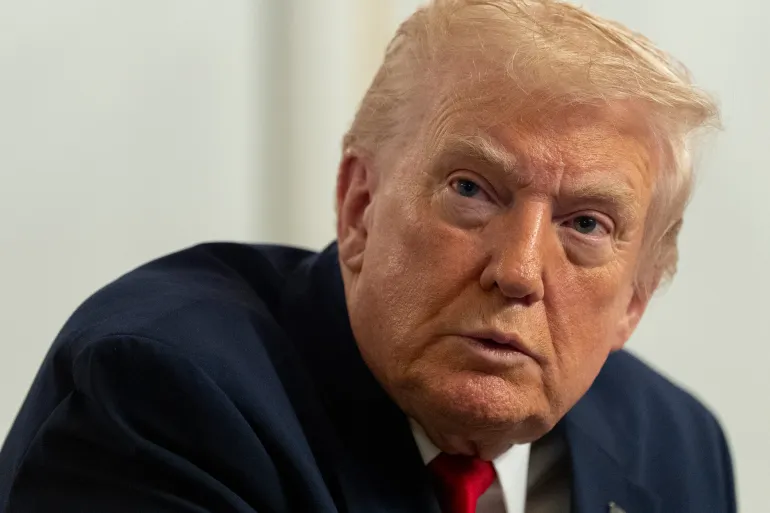
United States President Donald Trump has agreed to suspend his planned bombing of Iran for two weeks, following his threat that “a whole civilization will die tonight” if Tehran did not comply with his demands.
On Tuesday evening, within hours of the planned attack, Trump took to his platform Truth Social to announce he had reversed course.
He credited Pakistan for mediating the settlement, but warned it came with conditions – namely that Iran reopen the Strait of Hormuz.
“Based on conversations with Prime Minister Shehbaz Sharif and Field Marshal Asim Munir, of Pakistan, and wherein they requested that I hold off the destructive force being sent tonight to Iran, and subject to the Islamic Republic of Iran agreeing to the COMPLETE, IMMEDIATE, and SAFE OPENING of the Strait of Hormuz, I agree to suspend the bombing and attack of Iran for a period of two weeks,” Trump wrote.
The message was posted online at 6:32pm US Eastern time (22:32 GMT), just under one and a half hours before Trump’s 8pm (00:00 GMT) deadline for the attack.
Shortly after Trump’s message, Iran’s Minister of Foreign Affairs Abbas Araghchi confirmed that a tentative agreement had been reached.
“If attacks against Iran are halted, our Powerful Armed Forces will cease their defensive operations,” Araghchi wrote.
“For a period of two weeks, safe passage through the Strait of Hormuz will be possible via coordination with Iran’s Armed Forces and with due consideration of technical limitations.”
Araghchi likewise thanked Pakistan for its last-minute appeal to suspend the US bombing campaign. Iran’s Supreme National Security Council also hinted in a separate statement that the ceasefire could be extended beyond its initial two weeks if negotiations proceed favourably.
Further talks are expected to take place in Islamabad over the coming weeks
In the lead-up to the Thursday evening announcement, there had been speculation that Trump might extend the deadline, as he has multiple times in recent weeks.
But tensions had mushroomed on Tuesday as the deadline inched closer – and after Trump himself posted a menacing message on social media that morning.
“A whole civilization will die tonight, never to be brought back again,” Trump had written. “I don’t want that to happen, but it probably will.”
He added that the evening deadline would mark “one of the most important moments in the long and complex history of the World”.
Trump had previously threatened to blow up power plants, bridges and other civilian infrastructure, actions that many legal experts said would amount to a war crime.
In his Tuesday evening message, the US president once again claimed victory over Iran and said that Tehran had delivered a feasible ceasefire proposal.
“This will be a double sided CEASEFIRE,” Trump wrote.
“The reason for doing so is that we have already met and exceeded all Military objectives, and are very far along with a definitive Agreement concerning Long term PEACE with Iran, and PEACE in the Middle East. We received a 10 point proposal from Iran, and believe it is a workable basis on which to negotiate.”
Trump explained that the next two weeks would be spent finalising the agreement with Iran. But he voiced optimism that any past disagreements had been resolved.
“Almost all of the various points of past contention have been agreed to between the United States and Iran,” Trump said.
“It is an Honor to have this Long term problem close to resolution,” he added.
Al Jazeera correspondent Osama Bin Javaid noted that Trump’s latest announcement was likely to be welcomed by US allies in the Middle East, who had been bracing for a heavy attack on Iran and the possibility of counterattacks.
“That is going to be a big sigh of relief, collectively from the region and beyond, because the alternative was so horrific,” Bin Javaid said.
“The level of anxiety around the region was extraordinary, and Donald Trump was the only person who could defuse it, because he’s the one who lit the fuse in the first place.”
Trump’s announcement was initially met with scepticism and confusion on the ground in Tehran, where some questioned how much of the conflict would be paused under the ceasefire.
“It’s not clear, at least not to me, whether he’s suspending what is already going on since the beginning of the war entirely, or he’s extending the deadline for that ultimate destruction of the power plants,” Al Jazeera correspondent Mohamed Vall said from Tehran.
The war has been raging for more than five weeks, since Israel and the US launched a joint military offensive against Iran on February 28.
Trump and Israeli Prime Minister Benjamin Netanyahu have argued that the offensive was necessary to eliminate Iran as a regional threat and prevent it from obtaining a nuclear weapon.
But legal experts have described the offensive as an unprovoked attack, in violation of international law.
Already, nearly 2,076 people have been killed in Iran since the start of the war. Another 28 people have been killed in nearby Gulf states.
The US, meanwhile, has lost 13 military members, while 26 people have been killed in Israel.
[Aljazeera]

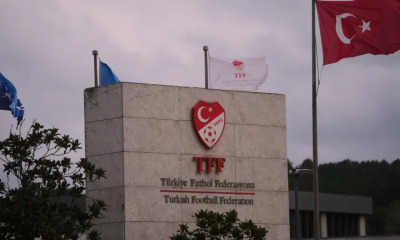

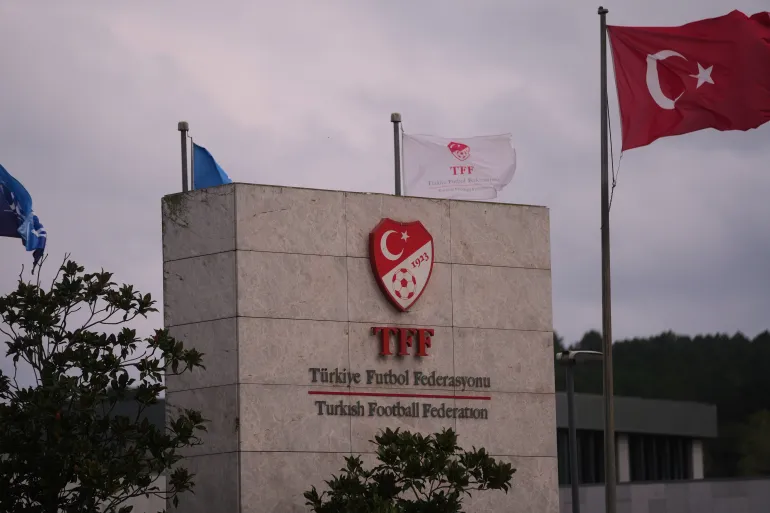
The head of Turkiye’s football refereeing body and four other officials have been placed in pretrial detention by a court as part of a corruption investigation, the state news agency Anadolu reports.
Ferhat Gundogdu, head of the Central Referees Committee, and six others appeared before a judge over allegations of manipulation of the referee administration process, Anadolu said on Saturday.
They appeared on Friday before a judge at Istanbul’s Caglayan courthouse on several charges, including forgery of official documents, breach of trust and illegal acquisition of personal data, the report said.
The judge remanded five people in custody and granted the other two conditional release, Anadolu said.
It was the latest scandal to shake football in Turkiye, coming exactly a year after the Turkish Football Federation (TFF) suspended 149 referees on charges of illegal betting.
On Thursday night, police from the illegal betting and sports crime unit also detained Yasin Kol, a referee from Turkiye’s top-flight Super Lig, as well as an assistant referee, media reports said.
Justice Minister Akin Gurlek said prosecutors are examining claims about “interference in the processes of referee classification, assignments, scoring and appointments as well as the exams on rules”.
During raids on Tuesday, police searched the VAR room at TFF’s headquarters in Istanbul. Observers said the investigation was likely linked to last year’s betting scandal and would have implications for the federation.
“It does seem to be a continuation of 2025, and it looks like it will continue further,” sports journalist Ayhan Sensoy told the AFP news agency.
Sensoy, who wrote a 2024 book on the issue called The Gambling Pit, said it was unlikely that federation bosses “have any chance of staying in office”.
So far, the TFF has not directly addressed the arrests as its top officials are due to fly home on Saturday after attending Friday night’s Belgium-Turkiye UEFA Nations League clash in Liege, which Turkiye lost 3-0.
[Aljazeera]
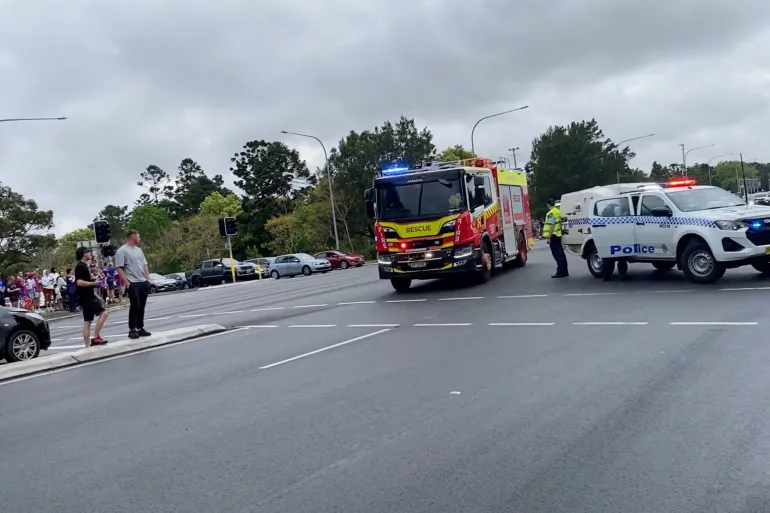
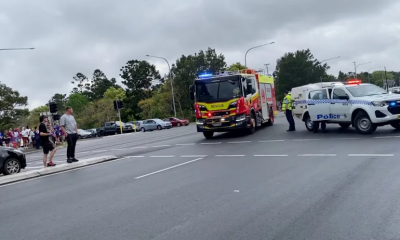
A car has crashed into a crowd of rugby league supporters in the eastern Australian city of Newcastle, injuring 10 people, including three children.
New South Wales police said on Saturday that two of the injured – a five-year-old girl and a 67-year-old man – were in a critical condition and the other eight were in stable condition in hospital.
Police said they had arrested the 18-year-old man driving the vehicle and were investigating what happened. They said the crash was not believed to be related to “terrorism”.
The crowd had gathered to farewell the local rugby league side, the Newcastle Knights, ahead of their grand final against the Sydney Roosters on Sunday.
Newcastle Lord Mayor Gavin Morris said the driver, a rugby league fan, had lost control of his vehicle and had been taken into custody.
“He was revving the car, he was excited, he was a supporter, he was there for the joy of the moment,” Morris told the national broadcaster ABC.
“Somehow he lost control of the car … and he’s gone into the crowd,” he added.
Prime Minister Anthony Albanese said: “My thoughts are with everyone injured or involved in the horrible incident this morning in Newcastle.”
“Rugby league brings people together, and this should have been a weekend of excitement and pride for Newcastle fans,” he wrote in a social media post.
[Aljazeera]
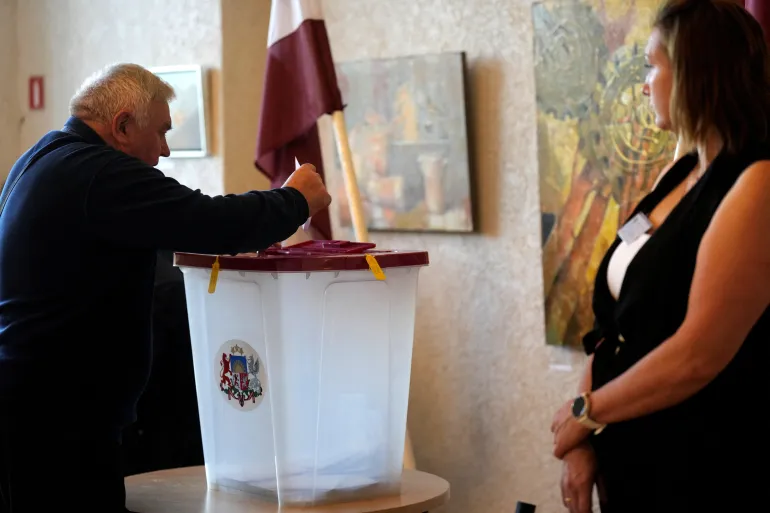
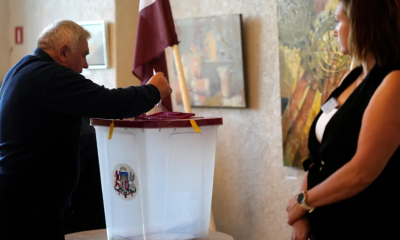
Polls have opened in Latvia for an election taking place against the backdrop of perceived security threats from Russia and a nationwide cost-of-living squeeze.
Saturday’s vote is the first electoral test for Prime Minister Andris Kulbergs after coming to power in May this year when his predecessor resigned due to a backlash from stray drone incursions from Ukraine.
Kulbergs, whose right-wing United List party is currently polling at about 20 percent, is expected to hold onto his position, but the decline of two allies in his current coalition means he is set for a complicated negotiation over the makeup of any future government.
Polls opened at 05:00 GMT and will close at 17:00 GMT. The results are not expected to change Latvia’s pro-European and pro-Ukrainian course.

About 1.5 million people are eligible to vote in the country’s 11th parliamentary election since independence from the Soviet Union in 1991.
Latvian politics are highly fragmented, with parties rarely seeing above 20 percent vote share and coalitions being the norm.
This year, 14 electoral lists are contesting the election, but polls indicate only seven are likely to enter parliament, with the rest expected to fail to meet the minimum 5 percent vote threshold.
Rising living costs, low wages, strains on the healthcare system and long-term population decline have all featured prominently in campaign debates.
Most parties in Latvia are pro-Ukraine; however, the populist Sovereign Power party – which says it wants Ukraine to win but argues money spent supporting Kyiv would be better spent at home – looks likely to become the country’s second-biggest party, with more than 9 percent of the vote. Most other parties have ruled out forming a coalition with Sovereign Power.
Latvia First, a pro-Ukraine and populist nationalist party currently polling at about 9 percent, could be a potential coalition partner for PM Kulbergs.
The Progressives, a pro-European social democratic party, are polling at 6 percent.
Ethnic Russians make up roughly one in four Latvian citizens, but their vote, which has traditionally been cast along identity-based lines, looks set to be made according to economic and social issues.
Latvia is the poorest of the Baltic states, and it has sharply increased its defence spending since Russia invaded Ukraine, now allocating nearly 5 percent of its gross domestic product (GDP) to defence.
[Aljazeera]

Turkish court detains football refereeing chief pending corruption trial

Ten injured after car crashes into rugby supporters in Australia

Polls open in Latvia against backdrop of perceived Russia threat

Abhishek, Tilak and spinners secure gold for India at Asian Games again

Tharindu Rathnayake, bowlers secure Asian Games Bronze for Sri Lanka

G7 to release 100 million barrels of oil and diesel after Trump export ban threat

‘Dates have the highest sugar content to fight Coronavirus’

Sunday Island 27 December – Headlines

#SundayIsland 17th December – Headlines

Sunday Island – 28th March

Sunday Island Headlines – 21 March

Sunday Island – 21st February – Headlines
-

 News6 days ago
Police remove Thileepan statue in Jaffna
-

 Features6 days ago
The 22nd Amendment, constitutional recovery and illiberal slippage
-

 Features6 days ago
Of foreigners as CEOs of Lankan ventures
-

 Latest News4 days ago
Gold winner Tharanga gets brand-new Honda Vezel from SLAAJ
-

 News6 days ago
Sajith rejects Jt. Opp. protest sabotage claim; SJB TU chief demands remedial action
-

 Features4 days ago
Why Sri Lanka needs an Inclusive Civic Nationalism – urgently
-

 Features5 days ago
Thailand’s biggest new global star …
-

 News3 days ago
US-assisted ‘Ice’ detection: NPC to examine IGP’s move to transfer drug-busting team