
Business
Sri Lanka’s crisis seen as highlighting lessons from Greece


‘In some of the key metrics, such as debt/GDP, fiscal and current account deficit, you can see a lot of similarities between the crisis in Greece and that in Sri Lanka, which also has a lot to do with the actual incidents of the crisis, including accumulating of early warning signals and the failure to see the signals, rising deficits and debt to around 10% of GDP and triple deficits in 2009, in the case of Greece, former Finance Minister of Greece, Dr. George Papaconstantinou said at a Sri Lanka Institute of Directors (SLID)-initiated webinar recently.
‘The deeper causes behind the crisis was a combination of clientelism, a dysfunctional political system and weak institutions that could not act as a counterbalance to check political decision-making, Dr. Papaconstantinou added.
A SLID press release said: ‘The Sri Lanka Institute of Directors recently held a webinar titled Sri Lanka’s Economic Crisis: Lessons from Greece, featuring Dr George Papaconstantinou, the former Finance Minister of Greece. The session drew several pertinent lessons from Greece’s own experience through its tumultuous period of unprecedented economic crisis in 2009-2018 and its road to recovery. The session was moderated by Faizal Salieh, chairman of SLID. It had a 30-minute keynote speech by Dr Papaconstantinou followed by a 30-minute Q & A discussion.
‘Dr Papaconstantinou in his keynote said; “No two crises are the same. but there are many similarities such as warning signals, incidents, and unfortunately the same long and painful recovery periods.” He spoke about the key learnings from the Greek experience, critical actions that are required from a political and economic sense, the roles of business, government, and citizens in trying to find right solutions, short term quick fixes vs long term sustainability, and gave some broad recommendations that can be considered as Sri Lanka moves forward.
‘Greece had three bail outs, by far the biggest in any country. Unsustainable debt levels, excessive public expenditure, massive tax evasion, huge credit expansion and wages outstripping productivity gains contributed to the decline in the economy’s competitiveness.
‘He said that the Greek crisis was longer than it should have been due to mistakes that were made which need to be avoided in Sri Lanka, and that it is important to focus on the logic of the IMF bailout which is to provide funds until Sri Lanka regains access to international financial markets. In order to continue getting these funds, a combination of fiscal consolidation, monetary and exchange rate policies, and reforms in product, labour, and financial markets must be implemented which can be extremely unpleasant. He pointed out that fiscal consolidation would lead to recession but would eventually restore investor confidence and enable the return of long-term investors. He stressed the importance of long-term investors over the short-term opportunity-seekers for the economy’s long-term sustainability.’
‘Dr. Papaconstantinou cautioned that the country risk immediately spilled over to the corporate sector and had stayed over a long period in Greece, and they had a hard time tapping into international markets and had to grapple with issues such as acute forex shortages, and flight of highly skilled human capital that was essential for rebuilding the economy. He said the Greek economy was still carrying the cost of lost human talent.
“A lesson that we learnt was that one should not delay taking painful decisions, which is important for politics as well, because the longer it waits the tougher it becomes.” He stressed the need to move fast on the restructuring of debt. “Delay entails costs and typically, time is not in your favour. There is also a trade-off between short and long-term transformation with IMF asking for a lot of short-term measures which makes it harder to have long-term reforms. It is important to push for long-term transformation and growth potential of the country. In the private sector, when the bubble bursts there will be many losses and very few wins,” he added. “The crisis inevitably entails political polarisation, and even good companies can go bust. That’s where the Government should step in and support them.”
‘Speaking of the role of the citizens, business, and government, he said “Crises are transformative, dramatic and tend to completely upend a society, politics and business and often go through the 5 stages of grief – denial, anger, bargaining (Sri Lanka’s current stage), depression, and acceptance. Crises consume governments. It is important to keep the political climate non-toxic helping to keep the crisis duration shorter as in Portugal and Ireland and elites must also take the pain. If they are sheltered it is going to prolong the crisis. Social partners need to be part of the solution and should have a seat at the table even with IMF discussions on what needs to be done, and often IMF also gets it wrong as their recipes are not necessarily useful for every country.”
“The pain which accompanies every crisis needs to be apportioned in a socially fair manner. Everyone will suffer but the vulnerable will suffer more. If it is seen that business and political elites were carving out a secure environment, it will backfire. The government needs to be fully accountable with maximum publicity, honesty, and openness. Greece passed a law where every government expense is published on the web, if it is not, then it is not legal. Also, a realistic fiscal path needs to be determined, if not it could lead to a vicious circle and lead to economic collapse which happened in Greece. Embrace the necessary reforms whether they are public sector, product/market reforms, opening up markets, professions or reforming SOEs, and privatisation. It is important for the government to stand firmly behind these rather than as an afterthought to fiscal consolidation. Finally, it is important to get the narrative right, and recognize the reasons how you got to this situation, and who is accountable. In Greece, we blamed the IMF, the Germans for being too tough, and blamed everyone else except for ourselves, the government and the business community for making some wrong decisions like relying too much on the government and not standing on its own feet,” he concluded.
‘In response to a question from the moderator that the usual criticism levelled against IMF was that it has a “one-size-fits-all” prescription for remedy and how it was managed in Greece, Dr George explained that the IMF is now different from the Asian crisis times, “it is a different beast, they do actively try to be more understanding of the social situation and they are open to keeping a recipe of measures that is balanced and protects the vulnerable, and they are open as long as you got the data to back it up, and arguments to exchange some measures for others if you can show them that a specific measure is detrimental. At the end of the day, they have the money and therefore the veto rights, so it’s a delicate situation and they have to be convinced of your sincerity and competence. The conversation with the IMF does not finish with the signing of the agreement.”





By Hiran H. Senewiratne
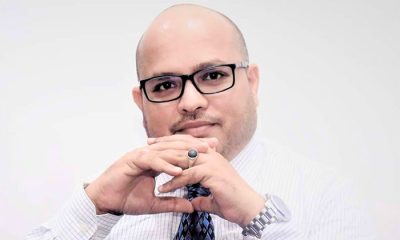
Sri Lanka’s financial literacy rate is approximately 58 percent. Such literacy is absolutely necessary for the inclusion of people in the country’s financial system which in turn is central to overall economic development, Central Bank Governor Dr. Nandalal Weerasinghe said.
‘One needs to have knowledge and skills of a financial nature to figure in financial inclusiveness. While 86 percent of Sri Lanka’s population has access to the country’s financial system, 82 percent of the public has at least a savings account in the country’s banking system, Dr Weerasinghe said.
The Governor made these comments recently at the inauguration of Financial Literacy Month 2026 at the Central Bank’s Centre for Banking Studies, Rajagiriya.
Dr. Weerasinghe added: ‘Suitable, affordable and quality financial instruments are needed to enhance financial literacy in the country.
‘Financial information has to be accurate, risk-free and accountable, thus creating confidentiality in the financial system, which would enable the sector to reach greater heights’.
Meanwhile CBSL sources said: ‘The Literacy Month opened with the two-day ‘FinLit Expo Colombo’. The expo gives the public the opportunity to engage with institutions, better understand financial services, gain practical insights into managing their finances and learn how to protect themselves from financial fraud and scams.
‘The CBSL is leading the program in collaboration with stakeholder institutions. It forms part of the Financial Literacy Roadmap for Sri Lanka, which is implemented under the National Financial Inclusion Strategy (NFIS), the national framework for widening access to and use of formal financial services.
‘The Colombo event will be followed by six regional ‘FinLit Expos’ aimed at direct engagement with local communities. Partner institutions will also run awareness activities. Together, the events are intended to provide financial education to communities and encourage people to apply financial knowledge in everyday life.
‘A public awareness campaign on television, radio, newspapers and social media will extend the program’s reach. The program also includes digital financial literacy activities and the promotion of QR codes and other online payment methods.
‘The public and stakeholder institutions are encouraged to take part in the month’s activities under the theme, “Towards a Financially Literate Sri Lanka”.
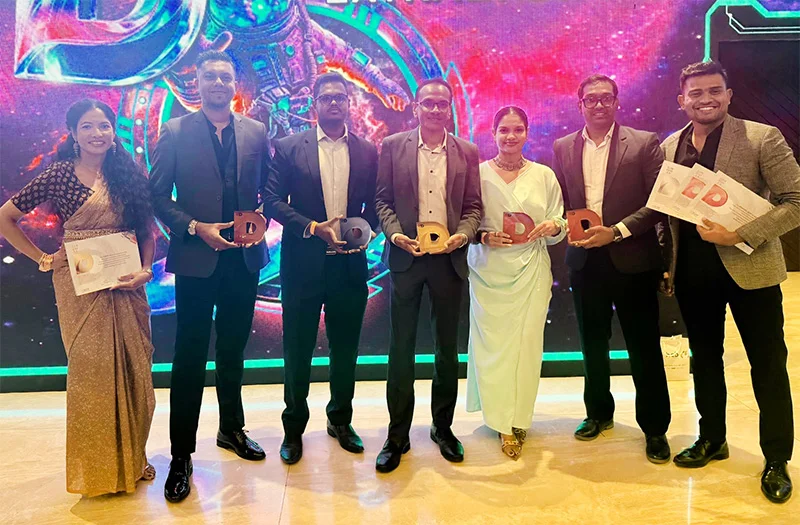
HUTCH Sri Lanka strengthened its position as a leader in digital engagement by securing five accolades at SLIM Digis 2.6, emerging as one of the most recognized brands at this year’s digital excellence awards. The achievement was further highlighted by HUTCH being the only telecom operator to be recognized at the event.
Organized by the Sri Lanka Institute of Marketing (SLIM), SLIM Digis is Sri Lanka’s premier platform celebrating excellence, innovation, and outstanding achievements in the digital marketing industry. The recognition highlights HUTCH’s growing strength in digital-first, agile, and creative marketing, and its ability to respond to everyday moments, engage audiences, and deliver impactful digital campaigns.
The Gold Award for Best Use of Agile and Moment Marketing, a Silver for Best Use of Digital in a Marketing Campaign, and a Bronze for Best Performance Marketing were all awarded for “Keeping Sri Lanka Connected Through Ditwah,” HUTCH’s response to the cyclone that struck Sri Lanka in November 2025, recognised for the speed and relevance with which HUTCH kept customers better connected and informed.
HUTCH Roaming also earned two further Bronze awards for Best Use of Digital in a Marketing Campaign and Best Use of Creative Content. Bringing together AI-led storytelling, the campaign was designed around distinct customer clusters, each characterized by unique travel behaviours, needs, and perceptions, delivering relevant content for different audiences within a single overarching campaign.
“These wins are a strong reflection of how HUTCH approaches marketing today, staying close to the moments that matter to our customers and responding with speed, relevance, and creativity. Being the only telco recognised at SLIM DIGIS 2.6, and across five categories, is proof that agility and thoughtful storytelling can go hand in hand. This recognition reflects the collective efforts with our strategic partners, whose collaboration, expertise, and shared commitment brought great campaigns to life,” said Hamdhy Hassen, Chief Marketing Officer, HUTCH Sri Lanka.
Sri Lanka’s Smart Luxury Business Hotel to Host Delegates and Contestants from Over 40 Countries as the Island Nation Hosts Its First-Ever Global Pageant of This Scale
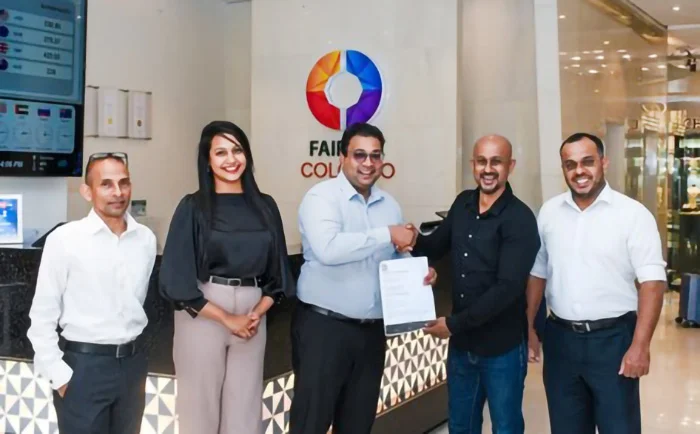
Fairway Colombo, a subsidiary of Fairway Holdings (Pvt) Ltd, has been appointed as the Official Accommodation Partner for Manhunt International 2026, one of the world’s most prestigious male pageants, scheduled to take place in Sri Lanka.
The event marks a historic milestone for Sri Lanka, as the country prepares to host a global pageant of this scale for the very first time. More than 40 contestants representing countries from across the world will arrive in Colombo, bringing together diverse cultures, international media attention, and a global audience — further strengthening Sri Lanka’s position as a premier destination for tourism, culture, and hospitality.
As the official accommodation partner, Fairway Colombo will welcome and host international delegates and contestants throughout their stay in Colombo, delivering the exceptional hospitality experience and personalized service that the hotel is recognized for.
A Landmark Partnership for Sri Lankan Tourism
“We are truly honored to be selected as the Official Accommodation Partner for Manhunt International 2026. This partnership is a proud moment not only for Fairway Colombo but also for Sri Lanka as a whole. Hosting an event of this global stature provides us with an opportunity to showcase our commitment to smart luxury, innovation, and authentic Sri Lankan hospitality to an international audience. We look forward to creating a memorable and seamless experience for all delegates and guests,” said Avinga Wanigasekara, General Manager of Fairway Colombo.
Strategically located in the heart of Colombo’s historic Fort district, Fairway Colombo is recognized as a Smart Luxury Business Hotel, combining modern comfort, advanced technology, and exceptional service. As part of Fairway Holdings (Pvt) Ltd, the property represents the group’s vision of delivering innovative, world-class experiences across the hospitality and leisure sectors.

Missiles intercepted near Riyadh after Saudi coalition hits Yemen fuel depot

MI5 chief warns of threats to UK from Russia, Iran and AI

Pope diagnosed with lung cancer but had successful surgery, Vatican says

Expedite the cleaning of Colombo’s canals and drainage systems within the next two weeks – PM instructs officials

Kusal Mendis’ unbeaten 87 hands Sri Lanka consolation win

Cabinet approves redrafting of State Assets Management Act

‘Dates have the highest sugar content to fight Coronavirus’

Sunday Island 27 December – Headlines

#SundayIsland 17th December – Headlines

Sunday Island – 28th March

Sunday Island Headlines – 21 March

Sunday Island – 21st February – Headlines
-

 Features6 days ago
The Sri Lankan who made Scottish history
-

 Sports6 days ago
Nissanka absence opens door for Sri Lanka’s young guns
-

 News5 days ago
NDB fraud Rs 60mn more than reported
-

 News7 days ago
Gnansara Thera to be assigned to prison printing section: Officials
-

 News5 days ago
Removing monk’s robes matter for Sangha to decide: Mahanayake Theras
-
 News7 days ago
OIC of FCID summoned before Maligakanda Magistrate
-
 News6 days ago
Shiranthi R remanded until 13 Oct.
-

 Features6 days ago
Future of Sri Lanka’s state university system: Should it be shut down and reopened?