
News
Sri Lankan farmers raise concerns over govt.’s agricultural policies


The Sri Lankan government has held the 37th Session of the Regional Conference for Asia and the Pacific (APRC) organized by the Food and Agriculture Organisation, yet it appears to be unaware of the challenges faced by local farmers, says the Movement for Land and Agricultural Reform (MONLAR).
The APRC was held in Colombo from February 19 to 22. Participants include policymakers, government officials, and representatives from civil society organisations, MONLAR has said, issuing a media statement.
Excerpts: “As the Maha harvesting season unfolds, Sri Lankan farmers are urging the government to establish a guaranteed price for their produce and strengthen the role of the state-owned Paddy Marketing Board. Their demands also include a plea for the cessation of subsidies to large-scale rice millers, viewed as a monopoly exploiting the farmers. Furthermore, these farmers are calling on the government to address longstanding issues, such as the renovation of state-owned paddy storage facilities. Despite persistent demands over decades, successive governments have yet to address these concerns raised by Sri Lankan farmers.
“The government is distributing freehold land titles to farmers and making amendments to land laws, aiming to establish a new land market within the country. However, alongside these initiatives which allow farmers to use their lands as collateral, there are many other actions being taken that threaten the well-being and livelihoods of small-scale farmers and food producers. Despite facing an economic crisis, the government has allocated substantial funds for importing food items with low nutritional value, all the while neglecting the legitimate concerns raised by farmers within the country.
“Moreover, the government lacks the capacity to regulate prices, with successive administrations endorsing the dismantling of established mechanisms designed for price control. As a consequence, the average Sri Lankan consumer is now confronted with the challenge of accessing both nutritious and affordable food. Alarming statistics from the World Food Program (WFP) indicate that 6.3 million Sri Lankans are currently grappling with food insecurity, urgently requiring humanitarian assistance. The WFP also notes that 5.3 million Sri Lankans are forced to skip meals, a trend that poses a significant setback to the strides previously made in human development.
“In 2018, the Food and Agriculture Organization (FAO) released a publication titled ‘Leaving no one behind: How Blue Growth can benefit women, youth, indigenous groups, and migrants.’ This document emphasises the goal of promoting the sustainable development of aquatic resources to benefit communities dependent on these resources for their livelihoods and food security. However, it appears that the FAO is advocating for certain policies, such as agricultural modernisation, commercialisation, Private Public Partnerships for food production, digitisation, and the promotion of one country, one crop. These initiatives tend to overlook the concerns and needs of rural farmers, small-scale fishermen, milch farmers, and other small-scale food producers.
“As farmers, we seek clarity on how the aforementioned policies are positively impacting our well-being. The implementation of these policies often requires a level of harshness that raises questions about the Food and Agriculture Organization’s (FAO) commitment to upholding human rights, as outlined in the UN declaration.
“The United Nations should ideally function as a platform for mitigating and preventing climate change. However, certain UN institutions are now endorsing the financialisation of climate change. Additionally, we strongly oppose the push for agriculture modernisation and private sector investments in agriculture, as these initiatives appear to primarily benefit the corrupt elite rather than providing tangible advantages for farmers and consumers.
Fundamentally, we reject false solutions that fail to tackle the underlying issues confronting food producers. Our demand is for a transformation of agriculture towards agroecology, an approach that addresses global warming, upholds the dignity of all communities, and fosters food sovereignty. We call upon the Food and Agriculture Organization (FAO) to play a proactive role in encouraging nations worldwide to endorse and ratify the United Nations Declaration on the Rights of Peasants and Other People Working in Rural Areas, a declaration approved by the United Nations Human Rights Council.”











News
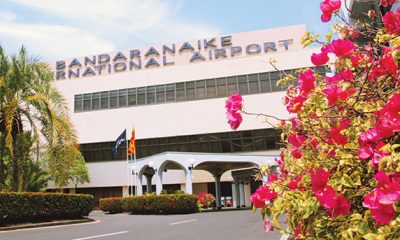
Cabinet nod to increase the number of new automated passenger clearance gates at the Bandaranayake International Airport to 12


Approval of the Cabinet of Ministers was granted at their meeting held on 19.05.2025 to purchase four (04) automated passenger clearance gates for Bandaranayake International Airport.
In addition, it is expected to extend the automated passenger clearance gates facility so far given only to the Sri Lankans
parallel to the e – passport issuance system to be introduced in the year 2027 also to the foreigners who travel to and from this country.
Furthermore, considering also the number of air passengers rapidly increasing with the fast – forwarding business and tourism field, the appropriateness to increase the total automated passenger clearance gates up to twelve (12) in number has been recognized.
Accordingly, the Cabinet of Ministers, approved the resolution furnished by the Minister of Public Security and Parliamentary Affairs to initiate the procurement and installation of 12
automated passenger clearance gates altogether with the already approved four (04) and another eight (08) automated passenger clearance gates adhering to the formal procurement procedure
Based on the observations submitted by the Task Force on Prevention of Money Laundering and Financing for Terrorism, approval of the Cabinet of Ministers was granted at their meeting held on 18.12.2024 to amend the Trust Ordinance No. 9 of 1917 including amendments proposed by the Financial
Intelligence Unit of the Central Bank of Sri Lanka.
Accordingly, clearance of the Attorney General has been granted for the Trust (Amendment) Draft Bill formulated by the Legal Draftsman.
Therefore, the Cabinet of Ministers approved the resolution furnished by the Minister of Justice and National Integration
to publish the said draft bill in the government gazette notification and thereby, submit the same to the Parliament for its concurrence.
Action was taken to provide a fuel relief for the fuel consumers during the months of April, May and June of 2026 to redress by minimizing the impact caused to the day today life of the citizens of this country as well as the entire economy due to the price hike of petroleum fuel in the global market resulting from the war situation in the Middle East.
Government mediation is essential for minimizing the impact on the day to today life of citizens in this country due to that war situation not being ended further. Therefore, it has been planned to redress on the sale price for Auto Diesel and Industrial Diesel for a period of 03 months by the Government to provide relief to the public as well as to maintain the prices at a bearable level to the consumers without escalating the fuel prices in this country compared to the escalation of fuel prices
in the international market.
Therefore, the Cabinet of Ministers granted approval for the resolution furnished by the President in his capacity as the Minister of Finance, Planning and Economic Development to
allocate provisions subject to the monthly limitations respectively as rupees 15 billion for the month of October, rupees 13.5 billion for the month of November and rupees 12.15 billion for the month of December to provide the said relief

Cabinet nod to increase the number of new automated passenger clearance gates at the Bandaranayake International Airport to 12
Draft Bill for amending the Trust Ordinance
Implementing further relief programme to Public sffected by the Middle East conflict situation
Establishment of a Spectrum Management and Monitoring System and a Quality of Service and Quality of Experience System for the Telecommunications Regulatory Commission of Sri Lanka
Appointment of a Committee for the Restitution of Sri Lankan Cultural Heritage Held Abroad
Ten-Year National Action Plan on the Social Protection Sector (2026–2035)

‘Dates have the highest sugar content to fight Coronavirus’

Sunday Island 27 December – Headlines

#SundayIsland 17th December – Headlines

Sunday Island – 28th March

Sunday Island Headlines – 21 March

Sunday Island – 21st February – Headlines
-

 News7 days ago
Mastermind Naufer Moulavi among 15 found guilty
-
 Midweek Review7 days ago
Thileepan’s fast unto death: An authentic narrative that many missed
-

 Latest News6 days ago
Showers above 100 mm are likely at some places in the Western, Sabaragamuwa, Central and North-western provinces and in Galle and Matara Districts
-

 Editorial7 days ago
Big Bad Bills
-
Editorial6 days ago
Crimes punished and unpunished
-

 Features5 days ago
Beyond traditional jobs: Why Sri Lanka needs to facilitate the gig economy
-

 News7 days ago
No referendum needed for passage of 22 A: SC
-

 News7 days ago
One clause in Anti-Corruption (Amendment) Bill requires referendu: SC