
News
Sri Lanka stokes Muslim and Christian ire with COVID burial rules


Rajapaksa’s forced cremations of minority victims worsen human rights record
MARWAAN MACAN-MARKAR, Asia regional correspondent
COLOMBO — Predominantly Buddhist Sri Lanka’s ultranationalist government is forcing families of the country’s Muslim and Christian minorities to abandon their faith-based burial rites for relatives who die of COVID-19 — consequently inviting fresh international scrutiny of the nation’s already troubled human rights record.
As the country’s death toll from the pandemic inches toward 200, the government of the hawkish President Gotabaya Rajapaksa is sticking to a policy backed by hard-line allies from the majority Sinhala-Buddhists, the political constituency that helped Rajapaksa secure two thumping electoral mandates over the past year. The official policy is for COVID-19 victims to be swiftly cremated. It has sent religious minorities already grieving for lost kin into deeper anguish.
The youngest victim was a 20-day-old Muslim baby who was forcibly cremated against the parents’ wishes. An estimated 80 Muslims have died of the coronavirus, with their surviving family members suffering the same indignity. The pandemic has infected close to 40,000 people since the first case was detected on the Indian Ocean island early this year.
The policy “has led to so much agony within the community at a time when they have to grieve for someone who has died,” said Shreen Saroor, a leading Muslim women’s rights activist. “The relatives are caught in a dilemma of having to sin and having so much guilt for being part of the sin because of the cremation.”
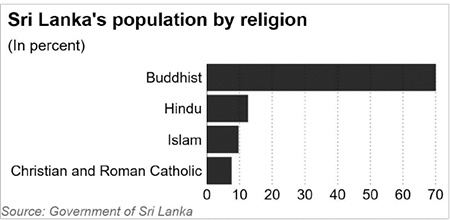 The anti-burial measures endorsed by Rajapaksa, who enjoys autocratic powers following a constitutional amendment, have been defended on two grounds that have made Sri Lanka an outlier in the global response to the deadly pandemic. One rationale is that burying COVID victims could result in the virus spreading in the soil and contaminating the country’s water table. The other: Muslims will use the dead bodies in graves as a “biological weapon.”
Prime Minister Mahinda Rajapaksa, left, and President Gotabaya Rajapaksa. The Rajapaksa government’s forced cremations appear to have touched off a sense of solidarity in a deeply polarized nation. © Reuters
Sri Lanka’s stance flies in the face of the international consensus among medical scientists and virologists regarding the last rites of COVID victims. The World Health Organization, the Geneva-based U.N. body, has shaped international opinion with guidelines that state the choice of cremation or burial of a COVID victim is a cultural decision. Over 180 of its members have endorsed this.
Not surprisingly, there are emerging signs that Sri Lanka will pay a diplomatic price for Rajapaksa’s efforts to weaponize COVID. Colombo-based embassies from the world’s Muslim countries “are monitoring the burial ban closely and gathering information,” said a diplomatic source from an Asian mission in the Sri Lankan capital.
The embassies have taken a cue from the Organization of Islamic Cooperation, a Saudi Arabia-based 57-member bloc that has issued three statements condemning Sri Lanka’s forced cremation policy.
Likewise, Western diplomatic missions have stood behind statements issued by U.N. officials about the Rajapaksa government hounding religious minorities in their hour of grief. “I fear that not allowing burials is having a negative effect on social cohesion and, more importantly, could also adversely impact the measures for containing the spread of the virus as it may discourage people to access medical care when they have symptoms or history of contact,” wrote Hanaa Singer, the U.N. Resident Coordinator in Sri Lanka, in a letter to the Rajapaksa government in November.
The international scrutiny Sri Lanka is now under adds to the diplomatic pressure it is expected to face in early 2021, when its postwar record will be in the spotlight at the United Nations Human Rights Council in Geneva. “The members of the OIC have traditionally backed Sri Lanka or abstained when there were resolutions critical of the country at the UNHRC,” said Hilmy Ahamed, vice president of the Muslim Council of Sri Lanka, a civil society network. “But Sri Lanka may not be assured of such support in Geneva next year because of the enforced cremations.”
The nearly 30-year civil war, which ended in May 2009, pitted government troops against the separatist Tamil Tigers. The conflict’s grim numbers include more than 100,000 people killed and over 23,000 missing, according to estimates.
For years, an international push for accountability — including in regard to grisly accounts of alleged war crimes committed by government troops and the separatists — has cast a shadow over Sri Lanka. Now the public backlash against the enforced cremations has laid bare a new layer of pain to the still unhealed wounds of Sri Lanka’s fragile, postwar peace.
The protests that have spread locally as well as in Western cities suggest the government’s forced cremations have kindled a sense of solidarity in a deeply polarized country. The participants come from across the country’s religious communities — Buddhists, Hindus, Catholics, other Christians and Muslims. Their banners decry the country for being a graveyard for human rights.
A family member of a soldier who died in Sri Lanka’s civil war cries. The country, still grieving from its long conflict, is now dealing with a new layer of pain inflicted in the name of caution. © Reuters
Symbols of the interreligious solidarity that has taken shape against Rajapaksa are appearing. One is a small white cloth that protesters have begun to tie to the poles that surround the main cemetery in Colombo, where the body of the 20-day-old Muslim baby was forcefully cremated. The white cloths symbolize the white shrouds that the bodies of dead Muslims are buried in. White is also the color of the clothing people wear at non-Muslim funerals.
Some demonstrators wear strips of white cloth around a wrist. The idea of the white-cloth protests was conceived by a Christian and Hindu, both in their 20s.
“This issue has grown beyond Muslim circles,” said Ruki Fernando, a prominent Catholic human rights activist. “There is more solidarity and consciousness, and this discontent will add to the fire the government may face at the U.N. in Geneva.”

Latest News
Flood warning issued to the Divisional Secretariat Divisions of Ganga Ihala Korale, Udapalatha, Doluwa, Udunuwara, Yatinuwara, Gangawata Korale, Harispattuwa, and Pathadumbara


Due to heavy rainfall received in the upper catchment areas of the Mahaweli River over the past few hours, there is a risk of minor flooding in the low-lying areas surrounding the Mahaweli River within the Divisional Secretariat Divisions of Ganga Ihala Korale, Udapalatha, Doluwa, Udunuwara, Yatinuwara, Gangawata Korale, Harispattuwa, and Pathadumbara.Residents living in the above mentioned areas and motorists using roads passing through these areas are urged to exercise extreme caution and remain highly vigilant regarding the prevailing situation.
Furthermore, residents living in close proximity to the Mahaweli River in these areas are advised to remain highly alert to the situation and take all necessary precautions to protect themselves from any potential flooding.The relevant disaster management authorities are requested to take all necessary measures in response to this situation.
The National Building Research Organisation [NBRO] has issued landslide Red Alerts to the districts of Kandy, Kegalle and Nuwara Eliya effective from 14:00 hrs on 20.09.2026 To 14:00 hrs on 21.09.2026
Accordingly,
LEVEL III [RED] Land Slide early warnings have been issued to the Divisional Secretaries Divisions and surrounding areas of Pasbage Korale in the Kandy district, Dehiowita, Aranayake, Deraniyagala, Mawanella and Yatiyanthota in the Kegalle district and Kothmale West, Kotmale East, Ambagamuwa and Norwood in the Nuwara Eliya district
LEVEL II [AMBER] Land Slide early warnings have been issued to the Divisional Secretaries Divisions and surrounding areas of Padukka in the Colombo district, Nagoda, Thawalama and Neluwa in the Galle district, Bulathsinhala, Palindanuwara, Walallawita and Agalawatta in the Kalutara district, Ganga Ihala Korale in the Kandy district, Bulathkohupitiya and Kegalle in the Kegalle district, Akuressa and Pitabeddara in the Matara district, Thalawakele in the Nuwara Eliya district and Pelmadulla, Ratnapura, Ayagama, Kuruwita and Ratnapura in the Ratnapura district.
LEVEL I [YELLOW] Land Slide early warnings have been issued to the Divisional Secretaries Divisions and surrounding areas of Seethawaka in the Colombo district, Niyagama and Baddegama in the Galle district, Mirigama in the Gampaha district, Ingiriya in the Kalutara district, Udapalatha and Yatinuwara in the Kandy district, Galigamuwa, Warakapola and Ruwanwella in the Kegalle district, Kotapola, Pasgoda and Athuraliya in the Matara district, and Eheliyagoda, Kalawana and Elapatha in the Ratnapura district.
News
Development projects can deliver results to the people more quickly when the political authority and the public service work together towards a common goal – PM
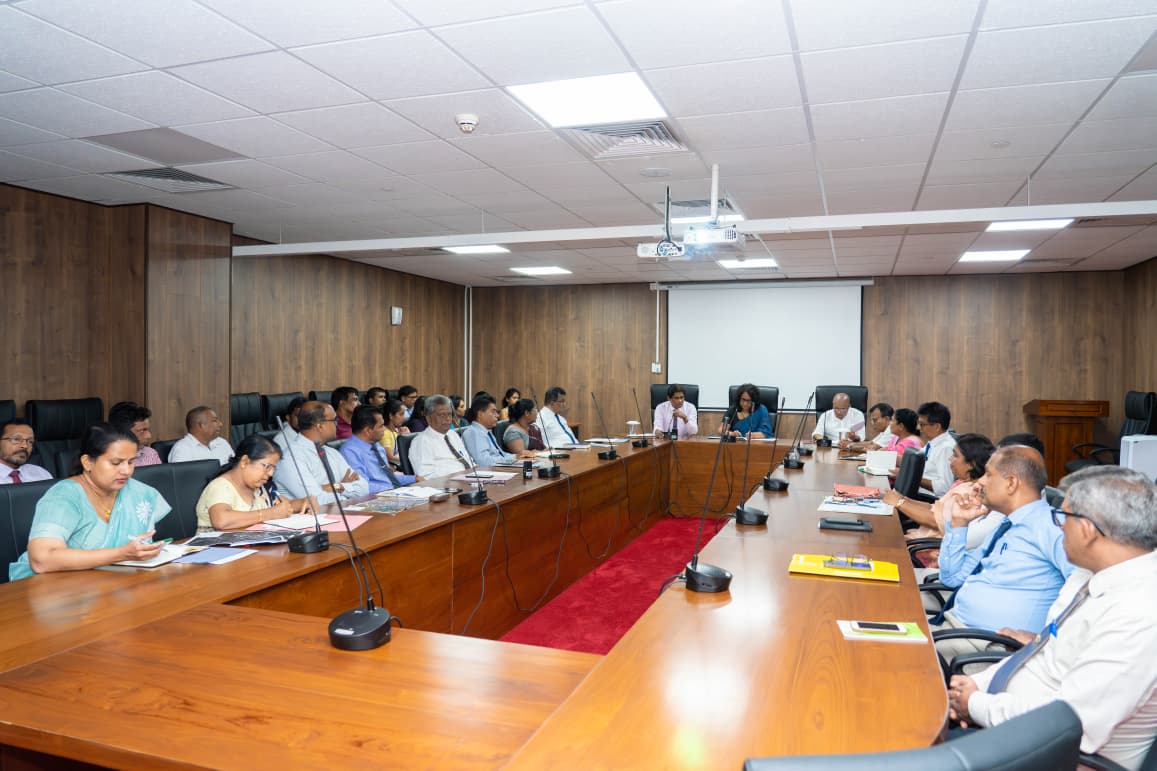
Prime Minister Dr. Harini Amarasuriya stated that development projects can deliver results to the people more quickly when the political authority and the public service work together towards a common, people-oriented objective.
The Prime Minister made these remarks while participating in a discussion held on Friday [September 18] at the Western Province Council Auditorium to review the progress of the development project to rehabilitate Rathmalana Kandawala Road and the drainage system on either side of the road, within the Dehiwala–Mount Lavinia Municipal Council limits in the Colombo District.
The project, which commenced on September 10, 2026, is scheduled to be completed before June 30, 2027. Implemented by the Provincial Road Development Authority (PRDA), the project includes the construction of a bridge at a cost of Rs. 64 million, the rehabilitation of the drainage system at a cost of Rs. 930 million, and the rehabilitation of the road at a cost of Rs. 115 million.
The Prime Minister also paid special attention to the progress of the responsibilities assigned to the Western Province Council, the Irrigation Department and the Ratmalana Divisional Secretariat in accordance with decisions taken at the previous committee meeting. Attention was also given to the current status of the plans being carried out by the Sri Lanka Land Development Corporation (SLLRDC), as well as the construction and maintenance activities being undertaken by the Provincial Road Development Authority (PRDA).
Commending the expedite and commendable progress of the project, the Prime Minister particularly appreciated the commitment demonstrated by officials of the relevant government institutions to work in close coordination with one another and in collaboration with the political authority.
The Prime Minister also emphasised the importance of taking measures well in advance to control flooding and minimise its impact on Colombo and several other districts in view of the rainy weather that may affect the Western Province during the latter part of this year.
The meeting was attended by the Chairman of the Colombo District Coordinating Committee and Member of Parliament Lakshman Nipuna Arachchi, Chairperson of the Ratmalana Divisional Coordinating Committee and Member of Parliament Samanmalee Gunasinghe, Chairman of the Roads Sub-Committee of the Colombo District Coordinating Committee Dewananda Suraweera, Mayor of the Dehiwala–Mount Lavinia Municipal Council Parakum Shantha, Chief Secretary of the Western Province K.G. Pradeep Pushpakumara, along with a number of government officials.
[Prime Minister’s Media Division]

Flood warning issued to the Divisional Secretariat Divisions of Ganga Ihala Korale, Udapalatha, Doluwa, Udunuwara, Yatinuwara, Gangawata Korale, Harispattuwa, and Pathadumbara

Landslide Red Alerts issued to the districts of Kandy, Kegalle and Nuwara Eliya

Shafali dazzles with 49-ball unbeaten 100 and India march into Asian Games final

Development projects can deliver results to the people more quickly when the political authority and the public service work together towards a common goal – PM

Landslide Early Warnings issued to the Districts of Colombo, Galle, Kalutara, Kandy, Kegalle, Matara, Nuwara Eliya and Ratnapura

Chamari Athapaththu’s unbeaten 83 leads Sri Lanka into final

‘Dates have the highest sugar content to fight Coronavirus’

Sunday Island 27 December – Headlines

#SundayIsland 17th December – Headlines

Sunday Island – 28th March

Sunday Island Headlines – 21 March

Sunday Island – 21st February – Headlines
-

 Opinion7 days ago
From Galkissa (Mount Lavinia) to Tambuttegama
-

 News4 days ago
US embassy won’t comment on IGP’s probe into joint drug raid
-

 Features6 days ago
The emptying university: why are academics leaving?
-

 Features7 days ago
Sri Lanka’s university crisis: Brain drain and union action demand urgent reform
-

 News3 days ago
Bid for Basil’s extradition nears final stage: Police
-

 Business4 days ago
All-new Bolero MaXX unveiled in Sri Lanka
-

 Opinion7 days ago
Ashraff: From the SLMC towards the National Unity Alliance
-

 Editorial7 days ago
Muscle flexing, astroturfing and dog-and-pony shows