
Business
Sri Lanka slips in Economic Freedom

Sri Lanka ranks 116 out of 165 jurisdictions included in the Economic Freedom of the World: 2023 Annual Report, released by Advocata Institute in conjunction with Canada’s Fraser Institute. The current ranking represents a decline in the economic freedom of the country which ranked 104th during 2020.
The report measures the economic freedom of individuals—their ability to make their own economic decisions—by analyzing the policies and institutions of 165 jurisdictions. The policies examined include regulation, freedom to trade internationally, size of government, legal system and property rights, and sound monetary policy. The 2023 report is based on data from 2021, the last year with available comparable statistics across jurisdictions.
Sri Lanka’s decline in score was driven by 4 out of the 5 sub indicators of economic freedom registering declines in their respective individual scores. These indicators are the size of government, access to sound money, freedom to trade internationally, and the regulation of credit, labour, and business. The only indicators that registered an improvement in its score is the indicator of legal system and property rights.
“The report captured a stark warning: Sri Lanka’s economic freedom declined prior to the economic crisis of 2022, a testament to the vulnerability of nations with limited economic freedom in the face of economic turmoil. If the country is to recover, Sri Lanka must prioritize economic growth within the framework of maximising economic freedom for its citizens to trade, work, and transact freely in a stable monetary and fiscal environment” said Dhananath Fernando, Chief Executive Officer at the Advocata Institute.
The number one spot is now occupied by Singapore, followed by Hong Kong, Switzerland, New Zealand, the United States, Ireland, Denmark, Australia, the United Kingdom, and Canada. Other notable countries include Japan (20th), Germany (23th), France (47th) and Russia (104th).
Venezuela once again ranks last. Some countries such as North Korea and Cuba can’t be ranked due to lack of data.
The Fraser Institute produces the annual Economic Freedom of the World report in cooperation with the Economic Freedom Network, a group of independent research and educational institutes in nearly 100 countries and territories. It’s the world’s premier measure of economic freedom.
The report was prepared by Professor James Gwartney of Florida State University and Professors Robert A. Lawson and Ryan Murphy of Southern Methodist University.
According to research in top peer-reviewed academic journals, people living in countries with high levels of economic freedom enjoy greater prosperity, more political and civil liberties, and longer lives.
For example, countries in the top quartile of economic freedom had an average per-capita GDP of US$48,569, compared to US$6,324 for bottom quartile countries. Poverty rates are lower. In the top quartile, less than one per cent of the population experienced extreme poverty (US$1.90 a day) compared to 32 per cent in the lowest quartile. Finally, life expectancy is 81.1 years in the top quartile of countries compared to 65 years in the bottom quartile.
“Where people are free to pursue their own opportunities and make their own choices, they lead more prosperous, happier and healthier lives,” Fred McMahon, Dr. Michael A. Walker Research Chair in Economic Freedom with the Fraser Institute said.
See the full report at www.fraserinstitute.org/economic-freedom.








Strategic Rs. 1.5 billion project by Browns Hotels & Resorts under LOLC Group
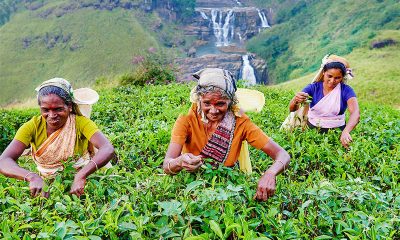
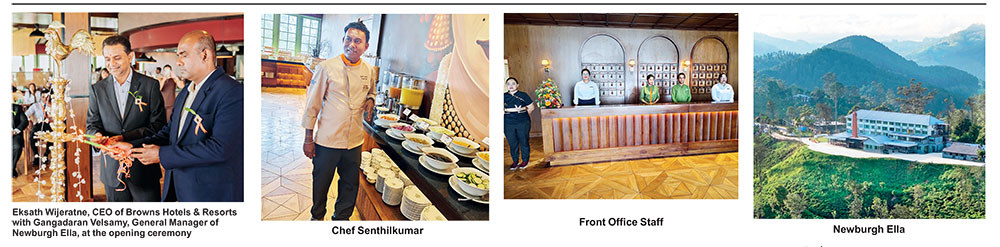
The Sri Lankan leisure landscape saw a significant addition on January 30, 2026, with the official opening of Newburgh Ella – The Tea Factory Resort. This Rs. 1.5 billion project, a strategic diversification by Browns Hotels & Resorts under the LOLC Group, transforms a 123-year-old tea factory into a luxury destination designed to capture the growing global interest in Ella.
The resort is housed in a structure originally established in 1903 by Scottish planter George Thomson. During the conversion, LOLC ensured the core structure was preserved, even reusing steel and other structural raw materials to maintain the factory’s industrial soul.
“We decided to transform it into a hotel without harming the core structure, ensuring the prevention of nature,” noted Gangadaran Velsamy, General Manager of Newburgh Ella. This commitment to sustainability extends to the resort’s operations, which follow a fully paperless concept and are currently undergoing LEED and green certification processes.
At the helm of the hotel’s operations is Gangadaran Velsamy, the seasoned professional with over 25 years of experience across 10 international and local hotel brands, including Dubai One and Only and Taj Samudra. A graduate of the Ceylon Hotel School, Velsamy brings a mission-driven approach to the property.
“My mission is to make Newburgh Ella the best hotel in Ella that offers nothing but the best for the guests that Ella couldn’t offer ever before in its history,” Velsamy told The Island Financial Review. His management style is notably people-centric, utilising multiple management approaches to maximise the potential of his human resource.
A key highlight of the project’s “human side” was the absorption of the original Finlays tea factory staff. These employees underwent six months of intensive theoretical and on-the-job training at 5-star properties to transition into the hospitality sector.
Further supporting the local economy, 50% of the hotel’s workforce is recruited from the immediate neighborhood. This integration is reflected in the resort’s service culture; for instance, pre-booked restaurant tables are marked with “Promised” tags rather than the standard “Reserved,” signaling a deeper level of commitment to the guest.
Newburgh Ella features 41 rooms categorised as Silver, Gold, and Bronze – a naming convention inspired by tea tips. Room rates range from USD 250 to 350 per day (approximately LKR 75,000 to 100,000).
Key Facilities Include:
1903 – The Dining Room: An all-day dining venue.
Eastern Valley: An open-air restaurant specialising in Asian fusion.
George Thomson – The Founder’s Tavern: A bar named in honour of the factory’s founder.
Three Tips Tea Lounge: A dedicated space for tea tasting and the “living tea experience”.
SKY Observation Deck: Offering views of Ella Rock and Little Adam’s Peak.
From a business perspective, the resort addresses a critical need for high-end infrastructure in Ella, a destination famed for its “exhilarating vibes” but often underserved in the premium segment.
Eksath Wijeratne, CEO of Browns Hotels & Resorts, expressed confidence in the property’s financial trajectory, estimating a breakeven point within five to six years.
“If we see Sri Lanka achieving more arrivals in correlation with increased revenue inflows, we should be able to reach a breakeven within a shorter period,” Wijeratne stated. He emphasised that the resort is a key piece of infrastructure to boost foreign currency earnings, attracting discerning travelers whose spending directly bolsters the country’s economy.
Ultimately, the success of Newburgh Ella lies in its details – such as the “Promised” tags on restaurant tables that replace the cold, standard “Reserved” signs. This subtle shift in language, championed by Velsamy’s team, encapsulates the resort’s mission: to honour a century of history while delivering a standard of service that Ella has never before hosted.
The “gastronomical delights” of Newburgh Ella are presented perfectly with the seasoned artistry of Chef Senthilkumar. Having spent over 18 years refining his craft across the luxury landscapes of Dubai, Kuwait, and the Maldives, the Chef transforms world-class techniques into unforgettable dining experiences, redefining the art of the meal in the heart of Ella.
In addition to Newburgh Ella’s refined hospitality and “yummy” gastronomy, guests have easy access to the region’s crown jewels such as Ella Gap and Ravana Cave to the thundering beauty of Ravana Falls.
By Sanath Nanayakkare
The domestic credit landscape is currently anchored by a handful of high-performing institutions that have displayed significant resilience through the nation’s most turbulent years, a deep dive into the latest monthly report of Fitch Lanka shows.
While the public often equates the often-adulated private sector credit growth with widespread business expansion, the Fitch Lanka data shows a concentration of capital among the country’s elite ‘blue-chip’ firms.
This latest assessment from Fitch Ratings (Lanka) Ltd. is being hailed by experts as a vital assessment for the country’s financial system. While the technical details of credit ratings can seem dense, an independent economic analyst told The Island Financial Review that these reports act as a ‘global report card,’ fundamentally demonstrating how much international trust is placed in Sri Lankan enterprises.
According to the analyst, the ratings issued as of January 31, 2026, serve as more than just corporate scores; they are the primary benchmark used by global investors to determine the safety of bringing capital into the country.
“High ratings are essential for attracting Foreign Direct Investment (FDI), which is the engine for job creation and infrastructure development. These scores are critical for trade finance, allowing local businesses to import essential goods and export products without friction. The ratings provide a real-time snapshot of how Sri Lankan entities are viewed within the highly competitive global capital markets,” he said.
“Banking sector stability is crucial here. Major institutions like Commercial Bank and HNB maintain strong long-term positions. Meanwhile, blue-chip firms including Dialog Axiata PLC and Hemas Plc continue to operate within the elite AAA(lka) to AA(lka) range.The presence of top-tier firms in the ‘AAA’ to ‘AA’ range indicates a robust internal capacity to meet debt obligations, providing a buffer even when the global economy is unpredictable,” the analyst noted.
When asked if the contents of the report may encourage investors to pay close attention to entities appearing in Red font, the analyst said that he views it as a ‘vital signal’ of a dynamic and transparent market rather than a sign of crisis,
“Entities such as JAT Holdings and CIC Holdings PLC have recently undergone rigorous reviews. This scrutiny is largely centred on the manufacturing and agricultural sectors, which are currently adapting to volatile global supply chain trends.
Looking forward, the ability of these ‘Red font’ companies to stabilise their outlooks will serve as the ultimate litmus test for the national economy.If these key players can maintain their scores and stabilise their trajectories through the middle of the year, it will be a definitive indicator that Sri Lanka’s broader economic path is secure,” the analyst said.
When asked if this was the case across the board including SMEs, he replied,” In fact, a deeper dive into the latest assessments by Fitch Ratings Lanka reveals a different reality: the engine of this credit growth is not the average entrepreneur, but a select group of ‘big ticket’ corporate giants.
” A superficial glance at the financial headlines might suggest a private sector in the midst of a borrowing spree. With the Central Bank reporting a notable 25.2% year-on-year growth in private sector credit as of December 2025, the outlook of a broad-based economic awakening is tempting. However, the Fitch Ratings Lanka monthly report reveals a different reality: the engine of this credit growth is not the average entrepreneur, but a select group of ‘big ticket’ corporate giants. In essence, these are the ‘safe harbours; where capital is currently docking.
“The data provided by Fitch Ratings Lanka underscores a critical distinction in the 2026 economy that credit is indeed flowing. And the authorities are rightly encouraged by private sector growth. Yet, this is not a tide lifting all boats; it is a strategic fortification of the nation’s most resilient pillars. As the year unfolds, the strength of these ‘big ticket’ borrowers will determine whether the rest of the private sector can eventually follow their lead into a more prosperous era or not,” he noted in conclusion.
By Sanath Nanayakkare
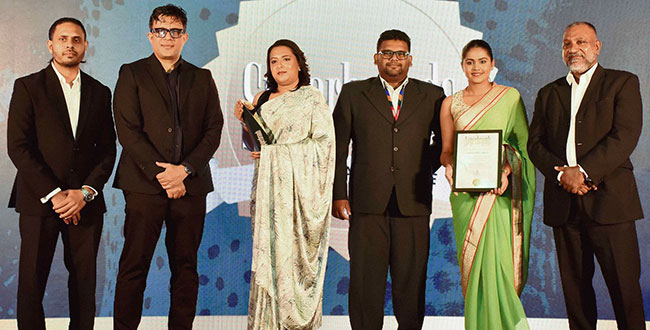
Moose Clothing Company has been recognised as a Superbrand for 2026, a proud milestone for a young Sri Lankan brand that has grown steadily through trust, consistency, and a strong connection with its customers. The award ceremony was held on 12 January 2026 at the Hilton, celebrating brands that have earned lasting respect and loyalty.
Superbrand status is not awarded lightly. It is reserved for brands that demonstrate excellence beyond numbers, brands known for quality, reliability, emotional connection, and long-term relevance. Selection is based on independent research, expert evaluation, and consumer perception, making it one of the most respected recognitions a brand can receive.
For Moose Clothing Company, this honour is especially meaningful. Founded with a simple belief that Sri Lankans deserve well-made, thoughtfully designed clothing at honest prices the brand has grown by listening closely to its customers and improving with every season. From everyday essentials to performance wear, Moose has focused on getting the fundamentals right: fit, comfort, durability, and value for money.
Commenting on the achievement, Hasib Omar, CEO of Moose Clothing Company, said:
“Being named a Superbrand is deeply meaningful for us because it comes from trust. Moose is still a young brand, and this recognition belongs to our customers who believed in us from the beginning, our teams who work with care and purpose, and everyone who chose Moose Clothing Company as part of their everyday life. It reminds us why we started and encourages us to keep building with integrity.”

Canada bowl against pace-heavy South Africa

Hong Kong court jails media tycoon and British citizen Jimmy Lai for 20 years

Muzarabani returns as Zimbabwe opt to bowl against Oman

Munsey and Leask spoil Italy’s T20 World Cup debut2

Italy captain Wayne Madsen injures shoulder in T20 World Cup opener

Canada look for early splash against favourites South Africa

‘Dates have the highest sugar content to fight Coronavirus’

Sunday Island 27 December – Headlines

#SundayIsland 17th December – Headlines

Sunday Island – 28th March

Sunday Island Headlines – 21 March

Sunday Island – 21st February – Headlines
-

 Features2 days ago
My experience in turning around the Merchant Bank of Sri Lanka (MBSL) – Episode 3
-

 Business3 days ago
Zone24x7 enters 2026 with strong momentum, reinforcing its role as an enterprise AI and automation partner
-
 Business7 days ago
SLIM-Kantar People’s Awards 2026 to recognise Sri Lanka’s most trusted brands and personalities
-

 Business2 days ago
Remotely conducted Business Forum in Paris attracts reputed French companies
-

 Business2 days ago
Four runs, a thousand dreams: How a small-town school bowled its way into the record books
-
 Business2 days ago
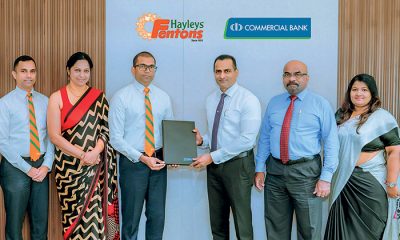
ComBank and Hayleys Mobility redefine sustainable mobility with flexible leasing solutions
-
 Business7 days ago
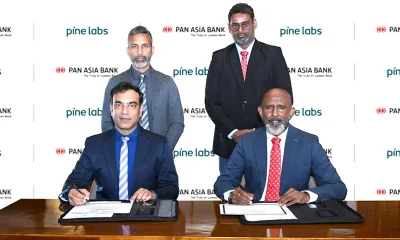
API-first card issuing and processing platform for Pan Asia Bank
-
 Business3 days ago
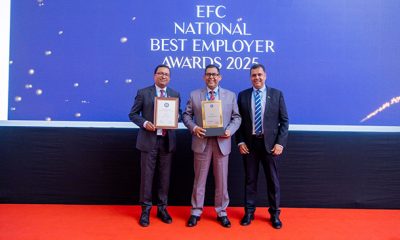
HNB recognized among Top 10 Best Employers of 2025 at the EFC National Best Employer Awards