
Business
‘South Asia, key region for Japanese cooperation in disaster prevention’


By Lynn Ockersz
Japan has identified South Asia as a key region for the extension of its cooperation in disaster prevention. As a matter of policy, Japan is in the process of strengthening the disaster prevention and response capabilities of countries vulnerable to natural disasters all over the world, Komura Masahiro, Parliamentary Vice Minister for Foreign Affairs of Japan said.
‘Through such cooperation, Japan is contributing towards firming a rules-based and free and open Indian Ocean region. Right now, it is sharing its know-how on environmental management with countries vulnerable to environmental destruction. For example, Japan has provided such countries with a weather information system. It is also bolstering the capabilities of the environment management authorities of these countries. Patrol vessels provided to Sri Lanka at the height of its X-Press Pearl disaster, are a proof of this, Masahiro said.
Among other things, Masahiro explained that environmental disasters are occurring all over the world although some parts of the Indian Ocean region are experiencing growth. He added that environmental issues need to be identified and resolved early.
The Japanese Parliamentary Vice Minister for Foreign Affairs was speaking at the forum, ‘Disaster Risk Management and Japan’s Role in the Indian Ocean Rim Association’, conducted under the aegis of The Lakshman Kadirgamar Institute of International Relations and Strategic Studies’, Colombo (LKI) in collaboration with the embassy of Japan in Sri Lanka, on October 13th at the LKI auditorium. He, along with State Minister for Defence Pramitha Bandara Tennakoon, were Guests of Honour at the forum, which was moderated by Dr. Harinda Vidanage, Director, International Relations and Founding Director, Centre for Strategic Assessment of the General Sir John Kotelawala Defence University.
Kicking-off the forum, LKI’s Executive Director, Ambassador Ravinatha Aryasinghe thanked Japan for her continued support for Sri Lanka as the latter builds disaster resilience through investments and capacity building. He added: “As Sri Lanka assumes the chair of the Indian Ocean Rim Association, this event was the first in a series of IORA-related conferences and panel discussions being hosted by the LKI, which will bring together a foreign policy-concerned community to discuss several issues on the IORA agenda, including ‘Biodiversity Beyond National Jurisdictions’, with the EU, ‘Blue Economy, the Way Forward’, with the UNDP and ‘Maritime Safety and Security in the Indian Ocean Region’, with UNODC.”
State Minister for Defence Tennekoon pointed to the importance of preventing smuggling operations by criminal elements in the Indian Ocean region. Some salient points made by him were: ‘Japan has taken a lead role in taking risk-management initiatives in the Indian Ocean Region (IOR). With security cooperation in mind, Japan is working along with Sri Lanka’s Coast Guard.
‘We need to be proactive in managing environmental disasters. Even though Sri Lanka did not face any major environmental disasters between 2016 and 2021, Rs. 60 billion by way of relief assistance was provided by the government. But mitigation measures are important. Japan has made valuable contributions in the area of disaster resilience. Japan’s assistance to Sri Lanka during the 2004 tsunami tragedy was most valuable.’
Director General, Disaster Management Centre, Sri Lanka, Maj. Gen. Sudantha Ranasinghe, among other matters, reiterated the need for Sri Lanka to be constantly vigilant about oceanic disasters. Sri Lanka, he said, has already conducted a comprehensive study on disaster risk reduction with Japan. Six other such projects with Japan are ongoing and we need to consistently collaborate with IORA, he added.
Prof. Nagami Kozo, Specially Appointed Professor, International Research Institute of the Disaster Science, Green Goals Initiative, Tohoku University, highlighted the importance of shifting from managing disasters to managing disaster risk. He explained that disaster risk could be controlled. There is also little discussion on what to invest in, in this context.
Chief Representative of the Japan International Coordination Agency in Sri Lanka (JICA), Yamada Tetsuya said that over the past 50 years, 2 million people had died the world over in natural disasters. The resulting economic loss was 3 trillion USD. He stressed the importance of the Sendai Framework for Disaster Risk Reduction in Japan’s efforts at managing environmental issues and pointed out that JICA’s approaches to disaster risk management were in accordance with this framework.
A.J.M. Gunasekera, Gen. Manager (Actg.), Marine Environment Protection Authority, pointed out that, going forward, there is a big likelihood of environmental issues escalating the world over. He said that Sri Lanka’s X-Press Pearl disaster should be regarded as an eye opener. ‘We have to put in place mechanisms to contain such accidents. However, finger-pointing among our agencies has been the order of the day.’
He added: ‘Sixty percent of environmental disasters are caused by human error and there has been an increase in ship-related accidents in our waters over the last five years. But there is no sufficiently effective response mechanism locally on marine disasters. Nor is there any mechanism for information-sharing among regional states. Locally, there needs to be clear procedures and chains of command to manage environmental disasters. There also needs to be more financial investments, with adequate private sector participation, to manage issues in this field. ‘
‘Sri Lanka is currently faced with considerable marine disaster preparedness challenges that are going inadequately addressed. It is of note that there is no mechanism to respond to the prevalence of hazardous material in our waters. We lack sufficiently trained manpower to tackle major sea disasters in our region as well. We also possess very little equipment to respond effectively to sea-related accidents and disasters. There is also very little legal provision in our laws to enable us to win adequate compensation for disasters occurring in our seas caused by external quarters. Sri Lanka could address such challenges to a degree through effective regional mechanisms coming under IORA.’


Spanish Israeli entrepreneur Simon Max Astandoust, a fourth-generation member of the renowned Astan fishing family, has endured years of legal battles, business setbacks and the loss of millions of dollars after investing in Sri Lanka’s fishing industry. Yet, despite the challenges, he has chosen to stay and rebuild.
In an interview with the Sunday Island, the founder and CEO of Seamax Ceylon (Pvt) Ltd speaks about his struggle, the restoration of his state-of-the-art factory vessel Astan II, and his plans to introduce cutting-edge seafood technology to Sri Lanka.
Q: You began operations in Sri Lanka in 2018. What was your original vision and investment?
A: We started operations in 2018 with an initial investment of around US$1 million. Over time, that investment grew into several million dollars because we believed Sri Lanka had enormous potential in the fishing industry.
My original intention was to develop a project through the Board of Investment (BOI) and introduce new technology to the country. However, the Government at the time encouraged us to work directly with it instead. We believed that this partnership would help us move forward faster and create something unique for Sri Lanka.
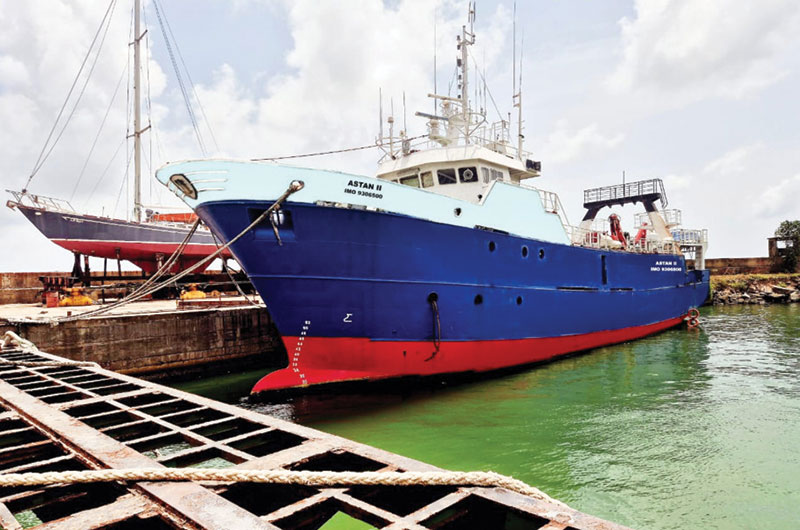
Overhauled Astan II
Our goal was to operate within the harbour and establish a modern fishing operation centred around advanced technology and sustainable seafood processing.
Q: What challenges did you face after starting operations?
A: Around eight to 18 months after we began our investment, COVID-19 hit. The pandemic created enormous difficulties. In countries such as Spain and the United States, governments provided financial support to help businesses survive. Here, the Government itself was facing a difficult economic situation and was unable to provide similar assistance.
Initially, we were told that there would be a grace period and that we would not be pressured for payments as long as we maintained our workforce and kept the operation alive. But later, that understanding changed, and demands for payments began despite the fact that we had a 15-year agreement.
That was the beginning of the major conflict.
Q: How did the change of Government affect your operations?
A: When a new Government came into power, the 15-year agreement signed with the previous administration was not recognized. The factory was closed and legal action was initiated against us.
This was extremely difficult because we had invested heavily based on a long-term agreement. We had built infrastructure, brought in technology and created employment opportunities.
During this period, while the vessel was caught up in legal disputes, a group of people attempted to take control of the ship. One of the most painful experiences was that some lawyers who had been working for us changed sides and supported those attempting to take the vessel.
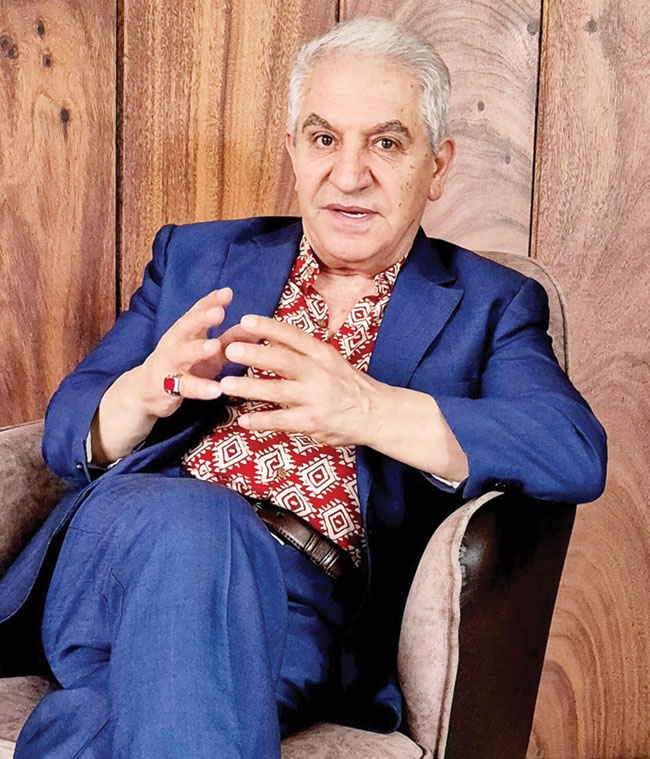
Simon Max Astandoust
The legal battle continued for years and only concluded in 2025.
Q: Your vessel, Astan II, is central to your investment. What happened to it during this period?
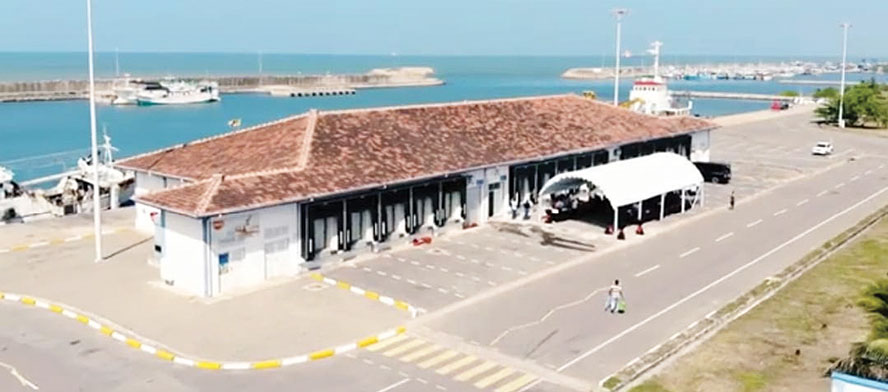
A: Astan II is not just a fishing vessel. It is a huge factory vessel with a complete processing facility inside. It was designed to bring a completely new level of technology to Sri Lanka’s fishing industry.
Unfortunately, because it remained idle during the legal proceedings, it suffered significant damage. Ships cannot simply sit in a harbour for months or years without proper operation and maintenance. The Sri Lankan weather conditions are particularly harsh on vessels.
The vessel deteriorated badly, but after we regained control, we decided to completely restore it. It was overhauled.
Q: How much did the restoration cost and what work was involved?
A: The restoration cost approximately US$1.5 million and took about one year, beginning in 2025. The vessel was almost a complete rebuild. One of the biggest technical challenges was repairing the three generators. Because the harbour did not provide electricity, these generators had been running continuously to maintain the vessel. Over time, this caused significant wear and tear.
Finding replacement parts was another major challenge. Many of these parts are not imported into Sri Lanka, so every component had to be sourced from different countries and brought in individually.
A team of around 14 to 20 people worked on the restoration, including a Sri Lankan chief engineer and local professional deck crew. Their expertise and dedication were extremely important.
Today, the vessel is in brand-new condition.
Q: You mentioned that the absence of diplomatic representation made your struggle more difficult. Why?
A: I hold Spanish and Israeli citizenship, and neither Spain nor Israel has an embassy in Sri Lanka. Normally, when a foreign investor faces serious difficulties, an ambassador can engage with authorities and help protect the investor’s interests.
In my case, I had to face everything alone. I had to deal directly with government institutions and the legal system through my lawyers. Having diplomatic support would have made a significant difference. But ultimately, I had to rely on the courts and the legal process.
Fortunately, the maritime judges understood the complexity of the situation and the importance of maritime law. Their fair approach restored some of my confidence.
Q: Your vessel uses unique -70°C “Ultra-Fresh” technology. Can you explain how it works?
A: This is one of the most exciting parts of our project. The technology comes from Japan and is only about two years old. Traditional freezing methods often affect the quality of fish because the freezing process is slower and damages the texture. This technology works differently. It uses a glazing process where the fish is frozen from the outside, creating a protective layer.
Within approximately two hours, the fish is completely frozen. This process eliminates bacteria and preserves the quality of the fish.
When the fish is later defrosted using the correct method, it is almost exactly like fresh-caught fish from the ocean. The taste, texture and quality are preserved. At present, nobody else in Sri Lanka is carrying out this type of ultra-fresh freezing technology onboard a fishing vessel.
Q: What advantage will this technology give Sri Lanka?
A: Sri Lanka has excellent fishing resources, but we need to move beyond simply catching fish. The future is about value addition, quality control and accessing premium international markets.
With this technology, Sri Lanka can export seafood at a much higher value because customers will receive a product that maintains the quality of freshly caught fish.
This is not just about one company. It is about introducing a new concept to the country’s fishing industry.
Q: After everything you have experienced, why did you decide to continue investing in Sri Lanka?
A: I come from a family of fishermen. This is my fourth generation, and my son represents the fifth generation. Fishermen are not people who give up easily. The sea teaches you resilience. You face storms, difficulties and uncertainty, but you continue. Of course, there were moments when I lost faith. Losing millions of dollars and spending years in court is not easy for anyone.
But eventually, the justice system gave me confidence again. The maritime judges understood the situation and treated the case fairly. That showed me that there are people in Sri Lanka who understand the importance of protecting investment and respecting the law. That is why I decided to continue.
Many people told me that, despite the difficulties, the Sri Lankan judiciary would ultimately deliver justice. At the time, after years of uncertainty, it was difficult to know what the outcome would be. But in the end, that is exactly what happened. The courts examined the facts and delivered a fair judgment.
The maritime judges understood the complexity of the situation and the importance of maritime law. Their fair approach restored my confidence—not only in the legal system but also in Sri Lanka itself.
Q: What are your future plans for Seamax Ceylon?
A: Our plan is to expand significantly. We intend to bring two or three more large factory vessels to Sri Lanka, along with five local fishing vessels. We also plan to establish a new processing factory near the beach. However, this time we will work through the Board of Investment rather than entering into a direct agreement with the Government.
The BOI provides a structured framework for investors, and we believe this is the right way forward. My son Sam, who is the CEO of our US-based company, will also return to Sri Lanka to help introduce successful business concepts and support the next stage of development.
Q: What keeps you motivated after such a difficult journey?
A:The answer is simple: we do not give up. I come from a family of fishermen. This is my fourth generation, and my son represents the fifth generation. Fishermen understand struggle. You cannot control the ocean, but you learn how to survive. You face storms, difficulties and uncertainty, but you continue moving forward.
I have lost money, faced difficult times and experienced moments of disappointment. But I never stopped believing in the potential of Sri Lanka. One thing that gave me strength was the faith many people placed in the country’s judiciary. I was repeatedly told that the courts in Sri Lanka would deliver justice, and ultimately that belief was proven right. The maritime judges understood the situation and gave a fair decision based on the law.
That experience reminded me that, despite challenges, Sri Lanka has institutions and people who respect justice. That is why I decided not only to stay but also to invest again.
For me, this is not merely a business project. It is about resilience, trust and proving that when you believe in something, you continue fighting until you succeed.
by Saman Indrajith ✍️
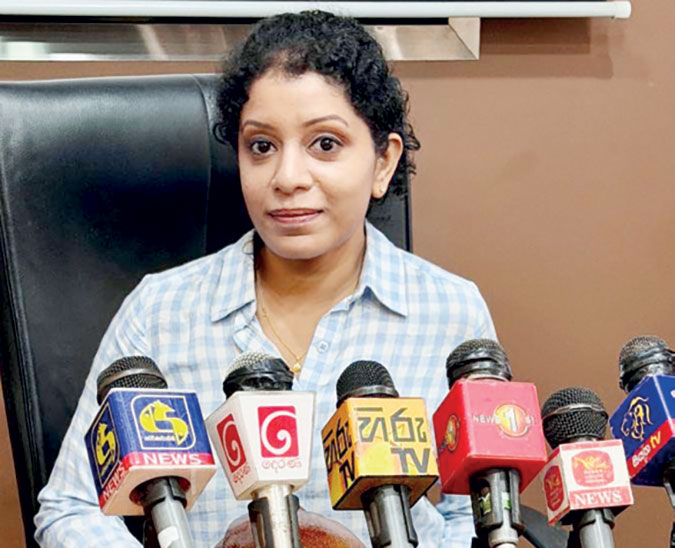
A Sri Lankan-developed natural fibre industrial safety helmet has successfully met internationally recognised safety standards, marking a milestone in sustainable product innovation and value-added manufacturing.
The Tortoise Natural Fibre Industrial Safety Helmet, developed by Kohu Kreations (Pvt) Ltd., has passed testing requirements under the European safety standard EN 397:2012 + A1:2012, which governs industrial safety helmets.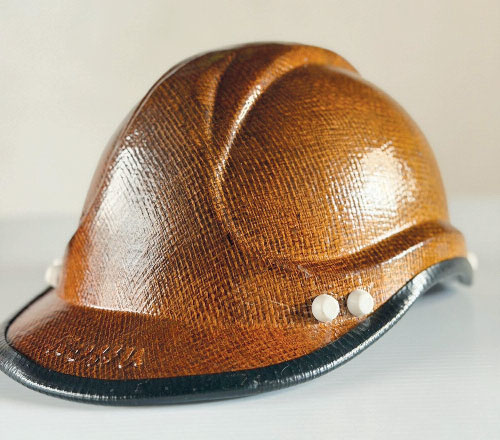
The independent tests were conducted by INSPEC Testing Services in the United Kingdom, an ISO/IEC 17025-accredited laboratory specialising in personal protective equipment. The testing programme assessed key safety features, including impact absorption, penetration resistance, flame resistance, chinstrap strength, harness performance, internal clearance and dimensional compliance.
The company said the results demonstrated that a helmet manufactured using a specially engineered natural fibre composite could achieve internationally accepted safety performance levels.
Unlike conventional industrial helmets largely produced using petroleum-based plastics, the Tortoise helmet uses a coconut coir-based natural fibre composite, combining safety performance with environmental sustainability.
Kohu Kreations Chief Executive Officer Kavi Dharshi said the achievement represented an important milestone for both the company and Sri Lankan manufacturing.
“Sri Lanka has always been recognised for producing high-quality coconut fibre. Our vision is to take that resource beyond traditional products and transform it into advanced engineering solutions that can compete internationally,” she said.
She added that safety remained the company’s primary focus, with comfort and sustainability being additional benefits. The natural fibre composite helps reduce heat transfer and improve ventilation, making the helmet more comfortable for workers operating in tropical conditions.
Text and Pix by SK Samaranayake ✍️
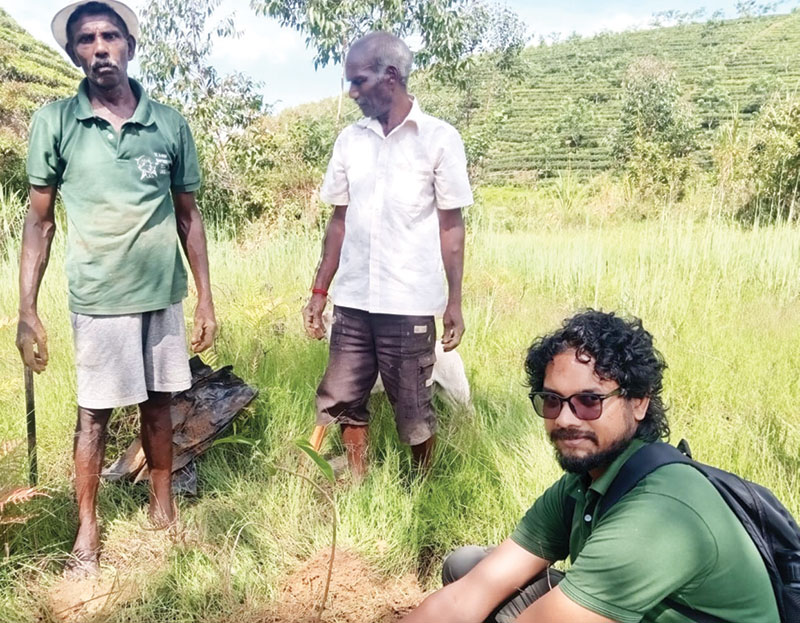
Protecting headwaters of the Kelani and Mahaweli
Hemas Holdings PLC is leading one of the largest private-sector-supported forest corridor restoration efforts in Sri Lanka’s hill country, strengthening ecological connectivity across some of the nation’s most fragile landscapes. Through its partnership with WNPS PLANT- Preserving Land and Nature (Guarantee) Limited, Hemas is supporting restoration at the headwaters of both the Kelani and Mahaweli rivers, marking a decisive expansion of corridor-based conservation in the central highlands.
The new collaboration focuses on the Hatton Oya landscape, managed by Hatton Plantations PLC, who joined hands with PLANT as the crucial land partner for this restoration journey. In this landscape, degraded riparian forests intersect with urgent reforestation needs and national water security priorities. By restoring native forest buffers along streams and reconnecting fragmented habitats across plantation-managed terrain, the initiative targets the active rebuilding of forest structure and function- restoring canopy, soil health, and waterway integrity, for the benefit of millions who depend on these river systems downstream.
Why Headwater Corridors Matter
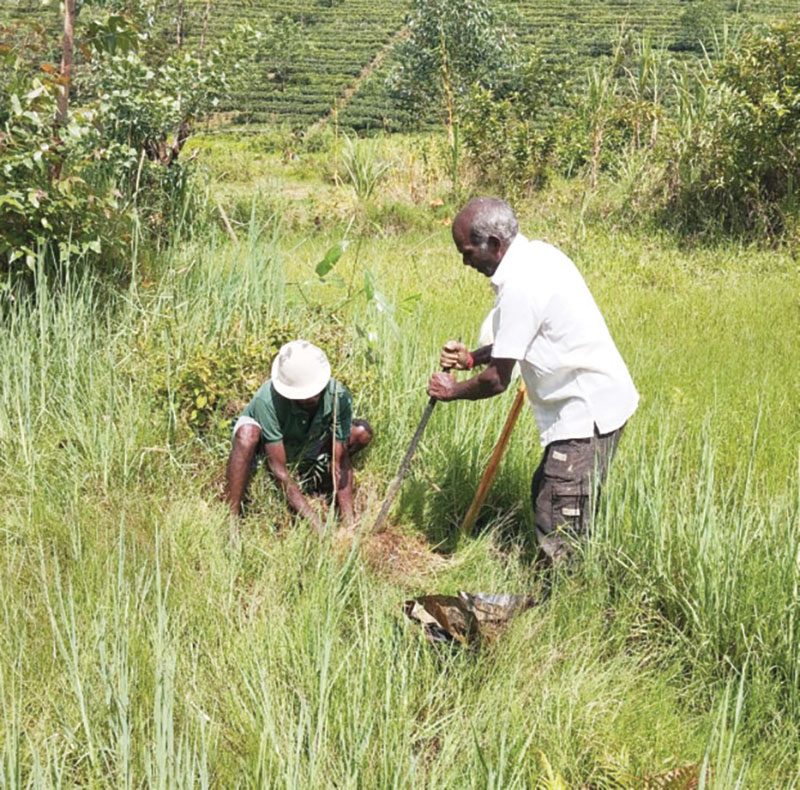
Community members during the planting activities
In Sri Lanka’s hill country, forest loss does not stop at degradation; it fragments landscapes, exposes rivers, and destabilizes slopes, putting downstream communities at risk. PLANT’s Rapid Biodiversity Assessments across the central highlands show a clear pattern: where riparian cover is intact, waterways stay buffered and forests regenerate naturally; where it is lost, streams warm, banks erode, and recovery stalls. Hatton is especially critical, sitting at the headwaters of two of Sri Lanka’s most vital rivers- Mahaweli and Kelani, meaning forest loss here threatens thousands of livelihoods far beyond estate boundaries. By restoring along watercourses and natural recovery gradients, corridor restoration protects entire downstream ecosystems from erosion, flash floods, and further forest loss.
Scaling What Works
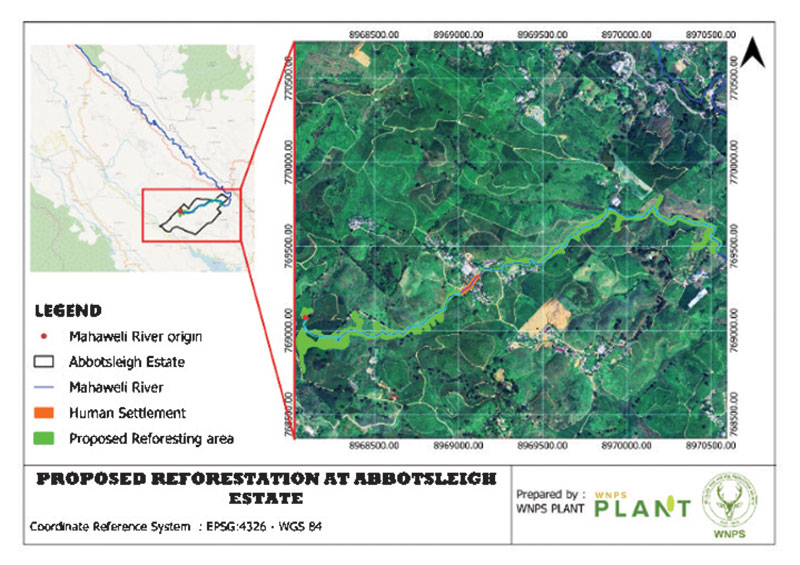
Abbotsleigh Corridor
The Hatton initiative builds on a foundation of corridor restoration already underway by PLANT in Maskeliya and Talawakelle. Hemas has already supported key restoration segments, including on Dessford in Talawakelle and on Alton along the Maskeliya Oya, and now extends its commitment through restoration at Abbotsleigh in the Hatton Oya corridor. Hatton represents a strategic escalation, to restoring forests where national river systems are born. Over 12,500 native plants will help line over five kilometers of waterway, with around 15 acres of entirely new forest being created. With this expansion, Hemas is now supporting corridor restoration across three major hill-country landscapes, covering critical headwater systems that feed some of Sri Lanka’s most important rivers.
Envisioning and Acting Before Collapse
WNPS PLANT created a totally new thinking by engaging private sector partners and pioneering the building of new forest corridors in a scalable manner in the hill country. Already working on the largest network of corridor development through a range of partners and nurseries, its corridor creation approach was conceived well before the recent climate-related crises in the hills. The Ditwah flood and landslide impacts served as a stark national reminder of what happens when headwater riparian systems are stripped of forest cover. Had these habitats remained intact, the severity of damage would have been significantly lower.
“Hill-country forests are resilient, but only where the conditions for recovery exist,” notes, Sriyan de Silva Wijeyeratne, Chairman of WNPS PLANT. “When riparian shade and forest connections are broken, regeneration stops. Creating entirely new forest corridors from scratch- replanting native species, restoring canopy, and reconnecting fragmented landscapes, is how we rebuild those conditions within working landscapes, without compromising productive land use.”
A LandscapeScale Commitment
Through its partnership with PLANT, Hemas is advancing its commitment to landscape-scale forest restoration and reforestation. The work aligns with PLANT’s Emerald Trails vision, which focuses on reconnecting fragmented privately owned spaces across Sri Lanka’s biodiversity-rich southwestern and central regions.
“Meaningful restoration means looking beyond isolated planting sites,” Ishani Ranasinghe Head of Sustainability and Corporate Communications from Hemas Holdings PLC said. “By supporting forest corridors at the origins of major river systems, we are contributing to forest recovery, water security, and climate resilience. We also believe lasting environmental impact can only be achieved when local communities are actively engaged, which is why community participation and shared stewardship are integral to this initiative.”
In Sri Lanka’s hill country, restoration is no longer just about protection. It is about active rebuilding. By replanting native forests at the sources of the nation’s major rivers, Hemas and WNPS PLANT, with the support of Hatton Plantations, are ensuring that degraded landscapes are not left to further decline, but are given the native forest cover, canopy structure, and ecological connectivity they need to recover and regenerate. In landscapes where Sri Lanka’s rivers are born, these reforestation corridors are no longer optional interventions. They are living lifelines, rebuilding forest cover, sustaining water systems, and strengthening the resilience of the hill country for generations to come. As a nation, Sri Lanka cannot remain exposed to more Ditwah-scale impacts. Proactive reforestation initiatives will be critical in future against these changing climatic conditions. Time is not on our side.

Showers will occur in the Western, Sabaragamuwa and North-western provinces and in Kandy, Nuwara-Eliya, Galle and Matara districts

Former IGP’s death likely due to an accidental weapon discharge

Rosy Senanayake appears before CMC corruption probe commission

Cop suspended after sitting on female cop’s lap

Arrest warrants issued for Deputy Minister Eranga Gunasekara, MP Jagath Manuwarna

America at 250: Most unfitting President, Biggest World Cup Tournament

‘Dates have the highest sugar content to fight Coronavirus’

Sunday Island 27 December – Headlines

#SundayIsland 17th December – Headlines

Sunday Island – 28th March

Sunday Island Headlines – 21 March

Sunday Island – 21st February – Headlines
-
 Features4 days ago
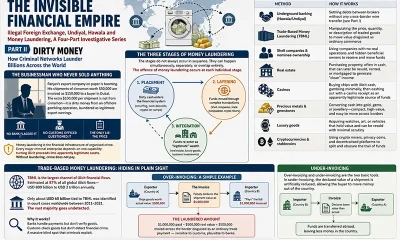
Dirty Money
-
 News1 day ago
Dengue outbreak gallops ahead: Infections surpasses 73,455, leaving 50 dead
-
 News1 day ago
Evidence recorded in money laundering case against Yoshitha Rajapaksa
-

 News2 days ago
Money laundering case against Yoshitha, fixed for pre-trial conference
-

 Midweek Review4 days ago
The sordid tale of theft and tragedy at Finance Ministry
-
 Latest News5 days ago
Oil prices hit 1-month high as US-Iran attacks dim Strait of Hormuz outlook
-

 Editorial2 days ago
Overwhelming fire power and stubborn resilience
-

 Features6 days ago
Deepening Democracy – Constitutions and Constitutionalism