
News
So-called experts blind to what is exacerbating human-elephant conflict


By Rathindra Kuruwita
Given that abusive land use patterns are the main reason for human-elephant conflict, one of the best ways to address this issue is the establishment of the National Land Commission, as stipulated by the 13th Amendment to the Constitution, environmentalist Sajeewa Chamikara told The Island.
The establishment of the Commission will minimize the ability of the governments to misuse land to benefit their political and business allies, at the expense of public welfare and the environment, he said.
“There is a lot of talk about full implementation of the 13A. However, no one talks about the Land Commission because this will be politically inconvenient,” he said.
Addendum II of the 9th schedule of the 13th Amendment states that a National Land Commission must be established. One of the main tasks of the National Land Commission is the preparation of a National Land Policy. However, the National Land Commission has not been established yet, although the 13th Amendment was passed in 1987, he said.
“The law states that the government must establish a National Land Commission, that it must prepare a National Land Policy and that representatives from all provinces must be represented in this Commission. The Commission needs a secretariat that has the technical capacity to analyze the social, economic and physical aspects of land use. The law also states that the National Land Policy must be based on science and not on political or ethnic factors. The Commission must look at soil, weather, rainfall, soil erosion, forest cover, environmental and economic factors and come up with general principles on land use. The Provincial Councils must implement their policies, based on the National Land Policy,” he said.
None of the governments have been interested in implementing this because it can prevent land grabbing and deforestation to the benefit of the rich and powerful, he said.
Chamikara said that even the biggest proponents of 13A ignore this provision because almost everyone is tied to big business.He pointed out that there are several bad land use practices that are intensifying the human-elephant conflict.
One of the main reasons for increasing the human-elephant conflict is that the elephants are running out of food, inside the forests, due to human activities, the environmentalist said.
He said that in Hambantota a large number of cattle are let loose in Lunugamvehera, Udawalawa, Madura Oya and Gal Oya national parks due to the influence of parliamentarians. The cows eat plants that are usually consumed by elephants, and other wild animals, and this has resulted in elephants entering human settlements in search of fodder.
“Some people, who live close to the forests, expand their farmlands and build new houses, after cutting down trees. In the past few decades, several invasive plant species, too, have spread into forests, replacing plants that were consumed by animals. Moreover, forests are increasingly getting fragmented, and the government has no plans to control these developments. All these compel elephants to enter villages,” he said commenting on the increased human- elephant conflict in Hambantota.
Chamikara said that the attempts to regrow forests with trees that only have value as timber, i.e., teak, also contribute to the human-elephant conflict because these trees do not provide food for animals. Another factor that attracts elephants to these villages is the establishment of garbage dumps. Elephants and other animals who have been starved are attracted to these garbage dumps.
“The Cabinet paper, titled ‘Taking action to prevent elephants from being attracted to garbage dumps,‘ which was approved by the Cabinet of Ministers, on 30 May, 2017, stated that there are 54 such garbage dumps that are attracting elephants. These sites are located in the dry and intermediate zones of Sri Lanka,” he said.
In addition, some people, who live in the dry and intermediate zones, set fire to forests during the dry season (July/September). This is another reason for elephants to come into villages. The recent forest fire that destroyed over 2,000 palmyrah trees in Kilinochchi can be one such fire, he said.
“There are a large number of forests, where elephants live, that come under the purview of the Mahaweli Authority and the Forest Conservation Department. However, when electric fences are established,the above-mentioned forests are ignored often and only forests that come under the Wildlife Conservation Department are fenced. Moreover, some of these fences are erected, obstructing the paths elephants use to reach tanks during the dry season. In recent years, a number of human settlements have been established, covering the above-mentioned paths,” he said.
In recent times, companies and powerful businessmen, who run large scale commercial agricultural projects and other development projects, have started erecting electric fences without considering how these would affect the human-elephant conflict, Chamikara said. These leave villages, and the farms of small scale farmers, more exposed to elephants.
“Most of the electric fences are substandard, are not properly maintained, and bio barriers have not been established along the fences. These make these fences ineffective,” he said.








News
Prime Minister of Sri Lanka holds a bilateral meeting with Minister for Education and Skills Development of Bhutan

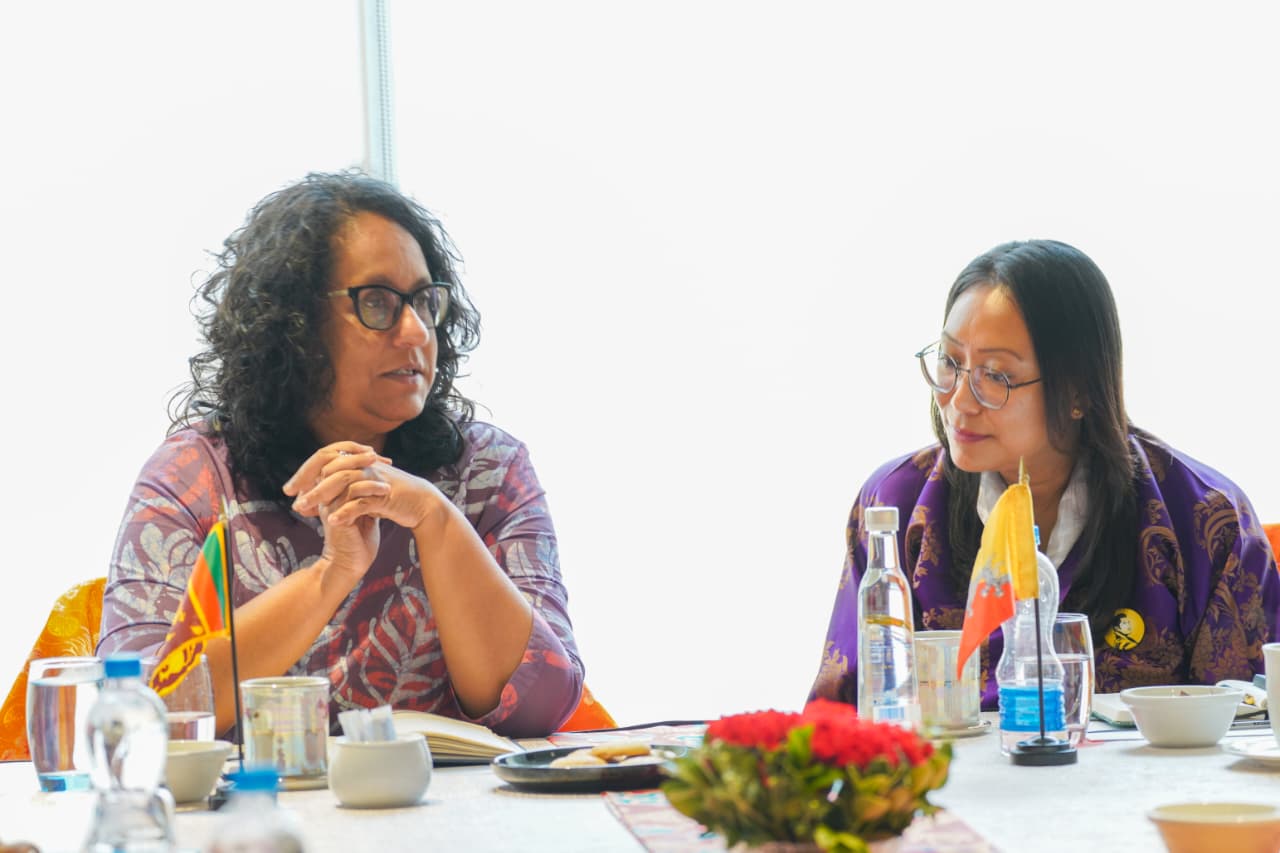
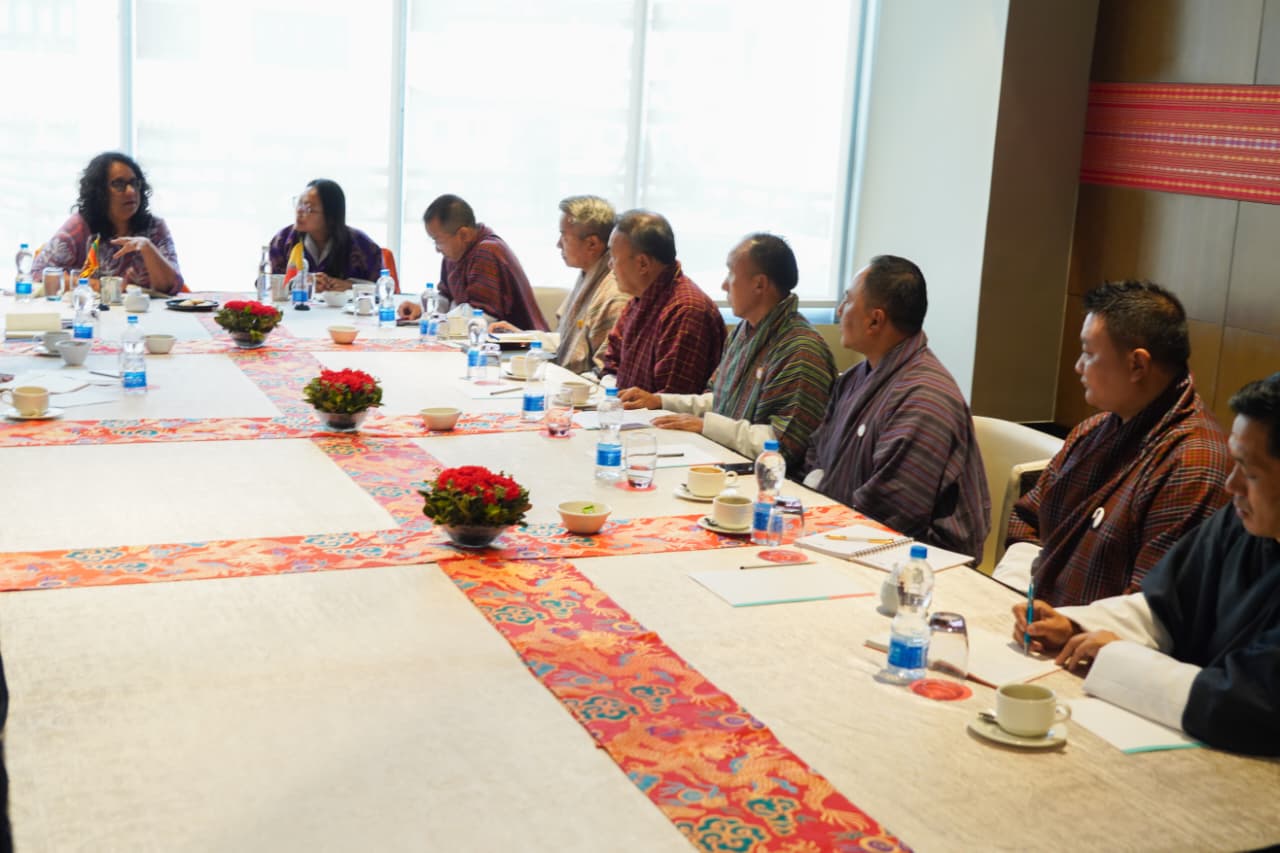
On the sidelines of the inaugural Global Conscious Food Systems Summit 2026, being held in Bhutan from 31 August to 4 September 2026, Prime Minister of Sri Lanka, Dr. Harini Amarasuriya, in her capacity as Minister of Education, Higher Education and Vocational Education, held a productive bilateral meeting with Yeezang De Thapa, Minister for Education and Skills Development of Bhutan, on 03 September 2026.
The discussions focused on further strengthening and expanding Sri Lanka-Bhutan cooperation in the education sector, with particular emphasis on developing mutually beneficial initiatives through enhanced Government-to-Government engagement.
Both sides underscored the importance of deepening institutional cooperation and exploring new avenues for collaboration in education, higher education and vocational training, with a view to creating greater opportunities for students, educators and academic institutions of both countries.
During the meeting, both sides agreed to initiate discussions towards the finalization and signing of a Memorandum of Understanding (MoU) on cooperation in the fields of education and vocational training. It was also agreed that the implementation of the MoU could be facilitated through the establishment of a Joint Working Group, headed at the Secretary level, with meetings to be convened annually to review progress, identify new areas of cooperation, and facilitate the effective implementation of agreed activities.
The major areas of cooperation discussed included enhancing collaboration among universities and academic institutions, promoting academic and faculty exchanges, joint research and university programmes, strengthening training and capacity-building opportunities for educators and teachers, and sharing expertise and best practices in the education and vocational training sectors.
The two sides also discussed strengthening child protection and safeguarding mechanisms, promoting ethical values among students, and addressing violence against children while ensuring their safety, protection, well-being and access to quality education.
Opportunities for Bhutanese students to pursue undergraduate studies at universities in Sri Lanka were also discussed, with particular emphasis on Dentistry, Medicine (MBBS), and allied health disciplines such as Physiotherapy. The discussions further covered opportunities for postgraduate studies in medical and health sciences at Sri Lankan universities, as well as enhanced collaboration among universities and other academic institutions of the two countries.
The meeting provided a valuable opportunity for Sri Lanka and Bhutan to advance cooperation in education and vocational training and explore new avenues for long-term collaboration for the mutual benefit of students, educators and academic institutions of both countries.
(Prime Minister’s Media Division)
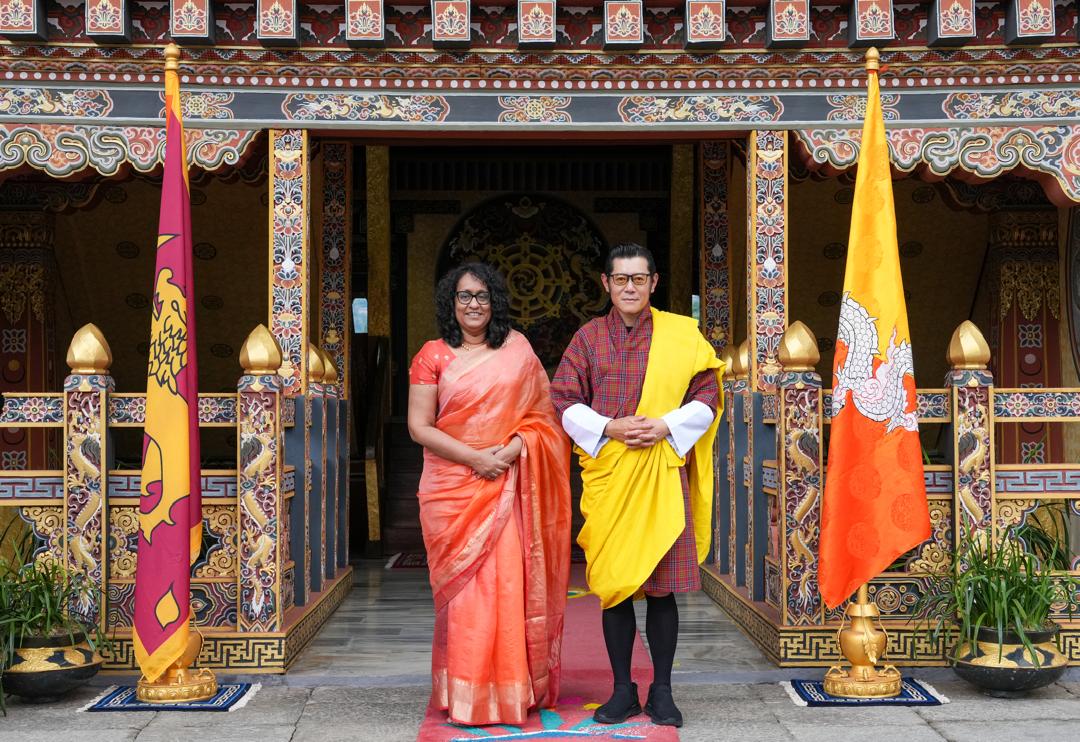
Prime Minister Dr. Harini Amarasuriya had an audience with His Majesty King Jigme Khesar Namgyel Wangchuck at the Tashichhodzong in Thimphu on September 02, during her official visit to the Kingdom of Bhutan.
The cordial discussion focused on Bhutan’s future development priorities and opportunities for cooperation between the two countries.
His Majesty expressed Bhutan’s interest in drawing on Sri Lanka’s experiences and expertise in areas relevant to its development plans. The discussion also focused on promoting investment between the two countries, including the possibility of establishing an investment zone in Bhutan.
The two sides also exchanged views on demographic challenges facing Bhutan, including the increasing migration of young people and its impact on the country’s population and future workforce.
The meeting highlighted the importance of strengthening bilateral cooperation and sharing experiences and best practices in support of the sustainable development of both countries.
(Prime Minister’s Media Division)
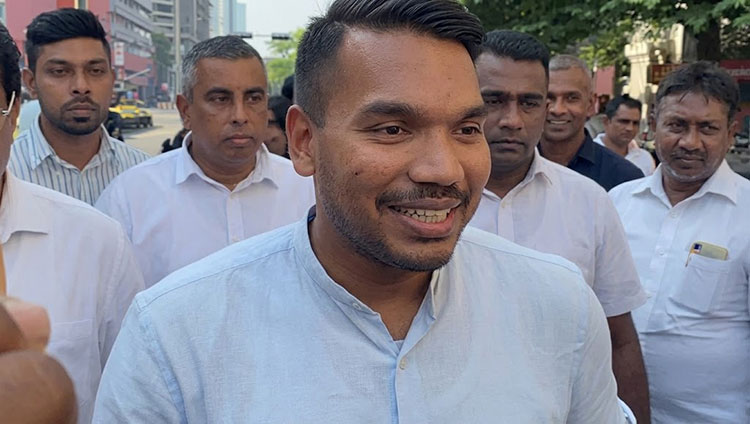
Sri Lanka Podujana Peramuna (SLPP) Member of Parliament Namal Rajapaksa has been arrested by the Commission to Investigate Allegations of Bribery or Corruption (CIABOC).
Namal Rajapaksa had been summoned by CIABOC to provide a statement in connection with investigations into the controversial Airbus deal. He was subsequently arrested by CIABOC after recording his statement for over 5 hours.

Prime Minister of Sri Lanka holds a bilateral meeting with Minister for Education and Skills Development of Bhutan

Prime Minister Meets His Majesty the King of Bhutan

Kusal Mendis, Binura Fernando ruled out of T20I series in England

SLPP MP Namal Rajapaksa arrested by CIABOC

Devapathiraja clinch U15 Division I title with 33-run win over Royal

Mandhana’s record ton powers India into semi-finals

‘Dates have the highest sugar content to fight Coronavirus’

Sunday Island 27 December – Headlines

#SundayIsland 17th December – Headlines

Sunday Island – 28th March

Sunday Island Headlines – 21 March

Sunday Island – 21st February – Headlines
-

 Features6 days ago
“Wrap Me Up in My Blazer”— A Gentlemanly Bradby Reminiscence
-

 Features5 days ago
When Sri Lankan stories find their own voice
-
 Features6 days ago
JVP/NPP government as seen from outside by Lionel Bopage now domiciled in Australia
-

 News5 days ago
BASL takes exception to Justice Ganepola being denied a place in SC
-

 Editorial7 days ago
Govt. trying to dupe UN Rapporteur?
-
 Features6 days ago
Prof. Savitri Goonesekere: What has she done?
-

 News2 days ago
Denied of promotion to SC despite vacancies, justice Gurusinghe retires
-

 Latest News2 days ago
Grade 5 scholarship exam results released