
Life style
“Selling the Family Silver” and India-SL bilateral relations


by Dr Sarala Fernando
A remark attributed to the US Congress that “Sri Lanka is a valuable piece of real estate” had made the news here hinting at the strategic value of our island location while some had connected the remark to the MCC, an economic project integral to the US pivot to the Indo Pacific.
This sudden interest in Sri Lanka’s land assets made the headlines after Harvard economists in 2016 advised on the incorporation of a land project under the MCC to address constraints to national growth by a re-survey, re-valuation and deed grants on lands around the country. Local experts argued that such a programme would lead to pressure on smallholders to sell land to more powerful entities for commercial exploitation increasing rural poverty, environmental and wild life destruction and water scarcity.
 The Harvard economists and the MCC have come and gone. However, it seems the spirit of their view of land as a commodity is still alive judging by recent government decision to release nearly 1.5 million acres of other state forests to be repurposed for development work. This has become a hot topic of discussion and environmentalists have filed court cases to revert to the previous protection provided to unrecognized forest covers.
The silent constituents, the trees and the animals have felt the brunt of this decision with the increased deforestation and destruction of mangroves, the killing of large mammals like elephants and even our prized leopards and most recently hundreds of birds found dead, probably poisoned, off Wilpattu. Are there criminal gangs behind the sudden spate of shooting of tuskers and snaring of leopards, questions still not answered by the authorities? The government focus on land has extended to the urban areas where long standing wholesale markets, social and sports clubs have been taken over by the UDA with scant explanation of the reasons behind the seizures and plans for redevelopment of these valuable lands (urban housing/recreation for the public?). Selling lands, the equivalent of the proverbial “family silver” is to be expected in these extraordinary times where Sri Lanka has heavy foreign debt obligations.
However since the government land acquisition strategy remains opaque, without consultation or explanation of any business plan, public protests are now spreading even to non-agricultural foreign investment proposals ranging from allocating the ECT terminal in Colombo port and the KKS port to India, to mining of titanium from sands in Mannar – a water scarce area – to an Australian company . Land issues came to the fore early when the Tourism authorities set up a one-stop shop for new hotel construction despite the crisis in the hotel industry with the Covid epidemic and drying up of tourist flows. In other countries, empty hotels are being taken over by the government and converted to new uses like urban housing; however our authorities seem more concerned about allocating land in water shortage areas like Kalpitiya and Mirissa for 600 room hotels, so called “foreign” investments promoted by local barons.
In Yala, a new foreign managed hotel has suddenly emerged and is said to be destined for those “high spending” East European tourists irrespective that Yala is suffering from over-tourism and the animals are more in need of food and water. Added to the confusion, in parliament it was announced that the source of the second wave of Covid infection had been traced to a Ukrainian pilot and now the public is in a panic over the pilot project to bring in hundreds of Ukrainian tourists.
Public protests are spreading in agriculture areas with the Mahaweli authorities demarcating lands for large scale foreign investment taking from forest reservations and commons, dislocating animal feeding grounds and overriding even the demands of the local villagers for protection of their rights to customary land and forest use.
A recent news item featured the Agriculture Ministry offering Rs 700 million to local farmers to grow fruit for a foreign multinational company which will provide the plants and drip technology and presumably buy the fruit cheap and retain the export earnings for its own profit! What will be the value addition for the government if they have also provided tax concessions for the foreign investor? Even more serious, what will be the negative impact of these tasteless new hybrids on our heritage varieties of delicious local pineapple and bananas? Once the valuable land is allocated, the promised foreign money transfer may not even take place, the foreign investor’s preference usually being to bring in little foreign exchange and to borrow from local banks. Thus, when there is trouble, the “footloose” foreign investor gets away leaving local banks and insurances saddled with non-performing loans.
From the time of the Greek civilization, people have been lamenting over the vagaries of weather and other threats invariably faced by agriculture, which makes large scale operations a risky business. The problem is that tax concessions are being offered today to promote large- scale agriculture without the safeguards to prevent expensive failures. Even local large plantation companies are finding it difficult to operate today with all their experience, given the issues of soil depletion, non use of chemical pesticides and fertilizer and rising labour costs. Yet it seems an intrepid developer with more experience in seafaring than agriculture had demanded 40,000 acres to grow maize – (mind you he may not have heard about the fallworm crisis). Fortunately those in charge of the Mahaweli lands had allocated only 5,000 acres for a trial project but still this is hardly a good example of due diligence which should look for experience in agriculture rather than the usage of prison labour, as announced by the entrepreneur.
Before it is too late, we should learn from the experience of our neighbour India. I recall a lecture by the eminent Dr M. S. Swaminathan many years ago at the Lakshman Kadirgamar Institute (then Sri Lanka Institute of International Relations) where he prophesied that the intensive agriculture “green revolution” would eventually render barren productive areas of their country due to heavy chemical applications degrading the soil. In India today, they are returning to traditional farming practices to revive the soil, re-foresting and trying to connect the farmer to the markets.
Instead of cattle grazing on open land, sheds are being constructed within the village and herders encouraged to bring feed to the cattle. Should we not even now look to small, smart and more sustainable practices to make small farmers more independent? Talking with farmers growing organic high value rice varieties on their lands in Wellawaya with support from Jetwing, it seems they still have faith in traditional practices, calling the mechanical harvester “boothaya” and preferring to bring down buffaloes from Bandarawela to the tractor! Bangladesh is tapping the Indian experience in elephant conservation which is a new area of their bilateral cooperation. Private sector investors in India have recently set up a hospital for treatment of sick domesticated elephants with ultra modern equipment.
Here in Sri Lanka, despite the interest of private philanthropists, the government appears unwilling to give land for an elephant sanctuary or “soft” release area for translocated bull elephants. A central question is why, as a Buddhist nation, Sri Lankans have not included into the Constitution, the protection of animals and living creatures as illustrated in every step of the Gautama Buddha’s life journey and his preachings? Even today, many proposals to strengthen the environmental safeguards and ethical treatment for animals have been sent to the Committee to prepare a new Constitution, but no one has even received an acknowledgement! By contrast, the Indian Constitution is way ahead of us, Article 51-A (g) which deals with Fundamental Duties of the citizens states: “It shall be the duty of every citizen of India to protect and improve the natural environment including forests, lakes, rivers and wildlife and to have compassion for living creatures.”
Our land endowment also includes the small islands, over 100 around the mainland, enabling extension over expanses of territorial seas. Instead of pushing only commercial fisheries, should the government not think about declaring a marine sanctuary zone all around our island, a domestic security Zone of Peace with proper management safeguards for national land and maritime resources? Sri Lanka received too many multi-day boats after the tsunami, several of which have been converted to nefarious purposes like illicit immigration and smuggling.
Furthermore, why prioritize investment in commercial fisheries at a time when global attention is being called to clean
ing the oceans, replenishing fish stocks, restoring coral reefs and mangroves affected by rising sea waters and ocean temperature rise? Protecting our seas and coastline should be given high priority since our island is in the vicinity of some of the busiest sea lanes in the world and vulnerable to disasters such as New Diamond oil tanker which caught fire off the East Coast.
Cooperation with India has been vital in this regard throughout the years as they have access to both expertise and stocks of fire fighting foam which can be quickly deployed.
While enhancing cooperation with India in addressing marine disasters and security issues such as smuggling, illicit immigration and terrorism/criminal related activities of mutual concern, as a small state with no pretensions for offensive power projection, we should feel free to disagree with India on the imperatives of high defence spending and partnering with the US on security manoeuvres in the Indian Ocean with their latest weaponry.
The recent Malabar naval exercises by the Quad in the Bay of Bengal and naval sonars are believed to have impacted the unprecedented beaching of some 100 pilot whales in Kalutara around the same time, rescued after a marathon effort by our navy and volunteers.
(Sarala Fernando, retired from the Foreign Ministry as Additional Secretary and her last Ambassadorial appointment was as Permanent Representative to the UN in Geneva. Her Ph.D was on India-Sri Lanka relations and she writes now on foreign policy, diplomacy and protection of heritage).


By Zanita Careem
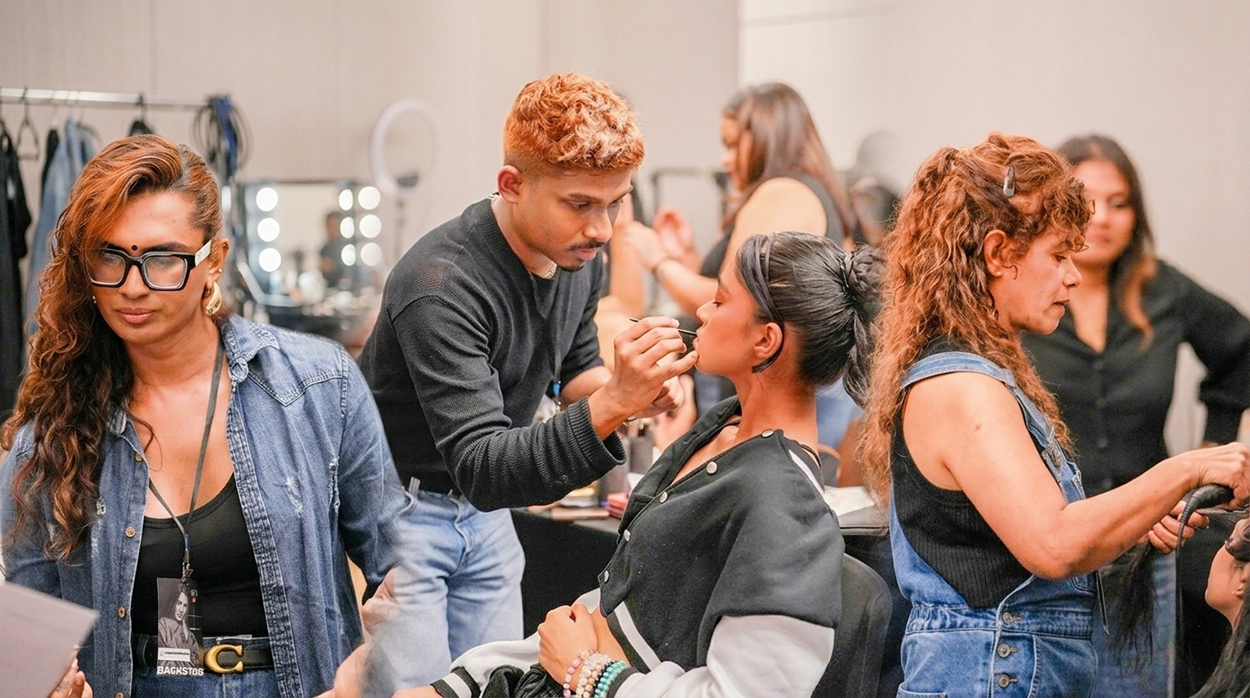
While the spotlight at Colombo Fashion Week shines brightly, dazzling couture and celebrated designers, the true heartbeat of the event often lies behind the curtains. Backstage is where creativity meets pressure, precision and passion, a world powered by hairstylists, makeup artists, dress designers, choroegraphers and production teams work tirelessly against the clock.
At Colombo Fashion Week, the spotlight may belong to designers, but just behind the runway lights, another story unfolds – one of precession, pace and transformative artistry.
At the heart of it all stands Ramani Fernando, the quiet force who has shaped the face of fashion in Sri Lanka for decades. Long before the first model takes her stride, Ramani Fernando and her team are already at work. Backstage is a flurry of motion, hair dryers humming, brushes sweeping, palettes opening and closing in rhythm. Yet amid the chaos there is a remarkable sense of order. That order is Ramani. For years, she has been the official hair and beauty partner of Colombo Fashion Week, curating looks that not only complement but elevate each designer’s vision. Whether it is sleek, pulled back aesthetic for a structured collection or wild textured volume for a more experimental line her work ensures that beauty becomes an extension of fashion.
The crew of CFW is more than a just a team comprising some of the country’s most skilled stylists and make up artistry. Many of them trained in her own academy, the crew operates under intense pressure with seamless co-ordination.
“A single show can demand dozens of looks in a matter of hours. Multiple designers each with a distinct creative direction, rely on the team to interpret and excute their vision and precision. Timing is everything. There are no second takes. Every strand of hour, every stroke of make up must be fearless before the model steps onto the runway. And yet what stands out is not finish , nor the speed, but the consistency said Ramani. Colombo Fashion Week has increasingly positioned itself on the global fashion map, and beauty plays a crucial role in that evolution. Each season, Ramani Fernando’s team introduces looks that are not only trends driven but often trend-setting within the local industry.
In the end, the curtain does not just hide preparation,it protects the chaos,creativity,and colloboration that make the final moment possible.
-

- Crafting confidence behind the curtain

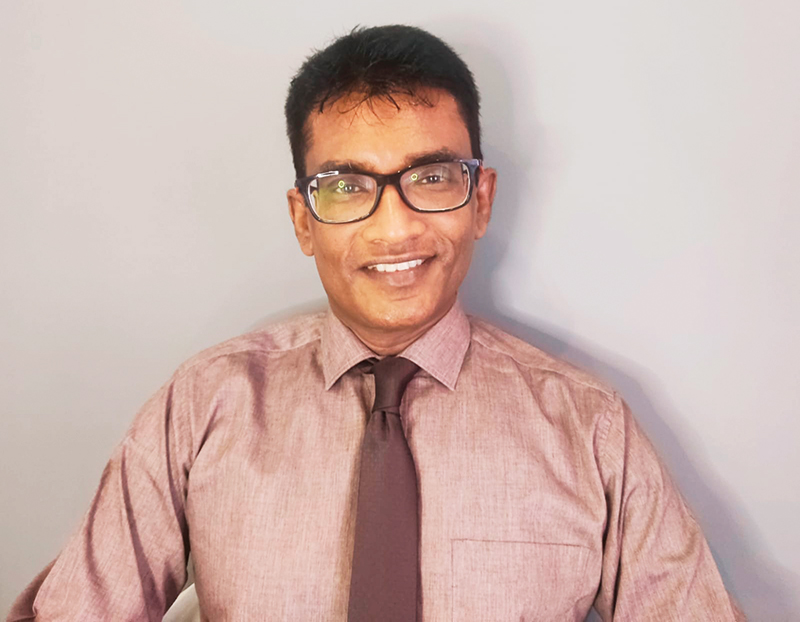
Senior Consultant Cancer Surgeon Dr Anuruddha Thewarapperuma on…
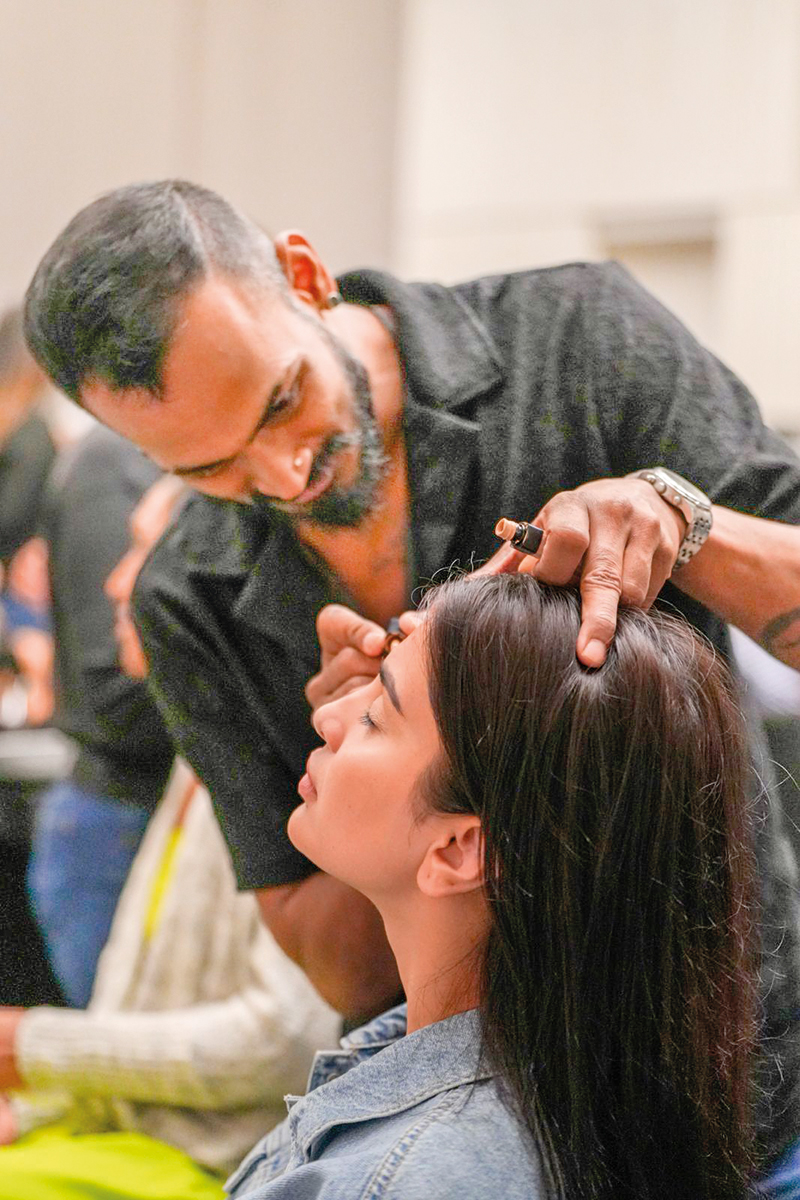
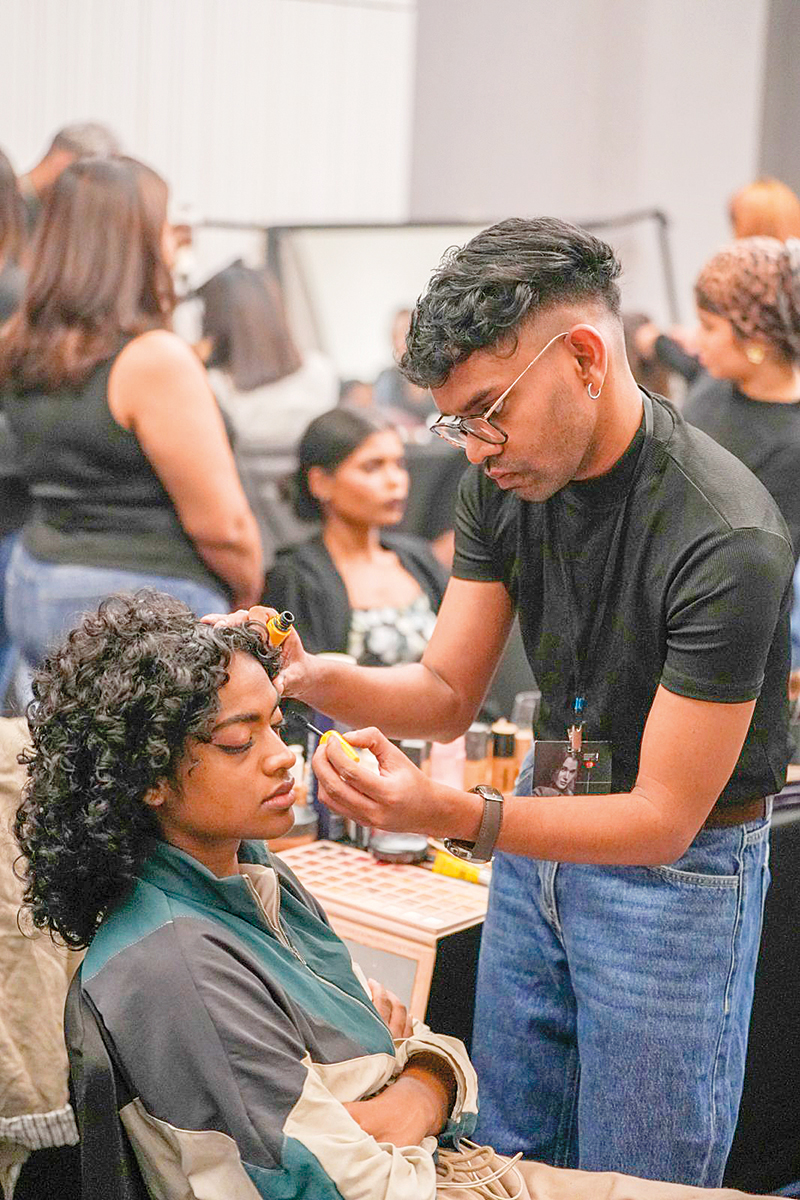
 In a timely and though-provoking session held at Apeksha Hospital, Senior Consultant Cancer Surgeon Dr. Anuruddha Thewarapperuma addressed one of the most pressing health concerns facing modern society, the growing prevalence of cancers and the importance of early detection.
Speaking to the ‘ Sunday Island,’ Dr Anuruddha stressed that awareness and timely medical intervention continue to be the strongest weapon in the fight against cancer. In Sri Lanka many cancer patients still arrive at hospitals during the advanced stages of illness, but the role of awareness, early detection and compassionate medical care has never been more vital to most patients.
Speaking on the growing burden of cancer in Sr Lanka, Dr Anuruddha stressed that one of the biggest challenges we face is delayed diagnosis. Many patients first seek treatment from family doctors, or attempt to ignore symptoms, often believing they are a minor health issue. By the time they meet a specialist, the disease may already be in an advanced stage
Cancer is no longer a disease affecting the old, he explained. Today we see younger patients, as well, especially with breast cancer, colorectal cancer, and lung and oral cancer
Dr Thewarapperuma, who specialises in complex cancer surgeries, including breast, colorectal, pancreatic and lung cancers, highlighted that breast cancer remains one of the most common cancer among women in Sri Lanka. He urged women to undergo regular screenings and immediately seek medical advice if they notice unusual lumps, skin changes or discharges. Colorectal cancer, another rapidly rising concern, often begins with silent symptoms. He pointed out that warnings signs, such as changes in bowel habits, rectal bleeding, unexplained weight loss and persistent abdominal discomfort, should never be ignored. Lifestyle changes, unhealthy diets, and lack of excercise, are among the contributing factors behind the increasing numbers.
With Sri Lanka witnessing a steady rise in cases of breast cancer, colorectal lung and oral cancers, he noted many lives could be saved through routine screenings and greater public education. He said that we must not only be aware of medical facts but also on changing attitudes towards cancer.
He explained that fear, stigma and misinformation often prevent patients from seeking treatment early.
Cancer, detected early, can often be treated successfully, he emphasised, encouraging the public to pay attention to warning signs and prioritise regular health check-ups.
According to the veteran surgeon, the impact of modern lifestyles specially fast foods, smoking, dietary habits and environment influences are contributory factors. Many patients walk into my room frightened, not knowing what the future holds. Dr Thewarapperuma explained, some men and women worry about their children, some fear of losing thier identity, while others are terrified simply because of the word cancer itself. He stressed the emotional healing is just as important as medical treatment. Dr Thewarapperuma noted that not only the patient even families also experience emotional strain .
He said different cancers affect patients emotionally in different ways, yet fear and uncertainty remains common to all.
Speaking further on breast cancer, he said it remains one of the most common cancers affecting women worldwide and in Sri Lanka. Many women initially struggle with shock and insecurity. They are emotinally shattered, He maintained with early diagnosis and medical treatment many cancer patients go on to lead healthy and confident lives.
He always focussed on the fact that early detection and timely treatment are crucial in improving survival rates and ensuring better quality of life for the patient. Breast cancer can often be treated successfully if detected early, he noted. Women should never ignore changes in their breasts, even if there is no pain
He encouraged women to become familiar with their own bodies, through regular self examinations. Common warning signs are a lump, changes in breast shape or size,,nipple discharge, a lump under the arm are a few symptoms women should be aware of.
He noted awareness, education and regular screenings and mammograms continue to play a vital role in reducing risks and improving survival rates.
Dr Thewarapperum also highlighted the growing incidence of colon cancer which is becoming increasingly common in Sri Lanka, yet many people are unaware of its early warning signs. This cancer is common among middle aged and older adults.
Symptoms such as persistent abnominal pain, changes in bowel habits, unexplained weight loss, blood in stools and ongoing fatigue should never be ignored
According to the Senior Consultant, many patients delay in seeking medical attention; they panic only after the disease reaches an advanced stage.
Talking about oral cancers, it continues to be one of the most common cancers in Sri Lanka, largely due to lifestyle habits, such as smoking, betel chewing and excessive alcohol consumption.
Colon cancer, is more frequently diagnosed in individuals above the age of 50.
Nevertheless youngest individuals, with unhealthy lifestyle habits, are also increasingly at risk
Also speaking about lung cancers Dr Thewarapperuma said this cancer affects both men and women and remains one of the leading causes of cancer-related deaths.
He warned that even non-smokers are now at risk due to increasing exposure to harmful pollution.
According to him, many cancer patients seek medical attention, only at the advanced stage, because early symptoms are often overlooked by most people.
Despite these challenges, he expressed confidence in the advances made in cancer treatment in Sri lanka. Modern technology, improved surgical techniques,and multi disciplinary care have significantly improved patient outcomes and survival rates
However, delayed diagnosis among patients in Sr Lanka continues to remain one of the biggest challenges in cancer management.
Dr Anuruddha highlighted throughout our discussion the importance of early diagnosis significantly have higher success rates and better quality of life, after treatment.
Apeksha Hospital’s multi disciplinary approval to cancer management combining experienced consultants, advanced surgical procedures, diagnostic facilities and personalised patient care, has contributed positive treatment outcome across several common cancers including breast, colon, oral, lung and other cancers.
Dr Thewarapperuma explained that modern cancer care are not limited to surgery alone.
Timely screening, accurate diagnosis, coordinated specialist care and emotional support, all play a major role in successfull recovery.
“We at Apeksha Hospital continues to focus on patient centred treatments while creating awareness on prevention and early detection through educational programmes and medical discussions.
We remain committed to offer hope, confidence and quality healthcare to patients facing cancer diagnosis.
His message to the public was clear – awareness, early screening, and timely medical attention remains the strongest weapons in the fight against all kinds of cancer. He says cancer, when detected early, is no longer a battle that must be faced without hope and this disease is not the end of life either. Early detection saves lives and emotional strength gives patients the courage to continue their journey, said this well known Senior Consultant Cancer Surgeon. He is attached to several leading hospitals, including the istitute at Maharagama (Apeksha Hospital) and also Hemas and Asiri Surgical hospitals.
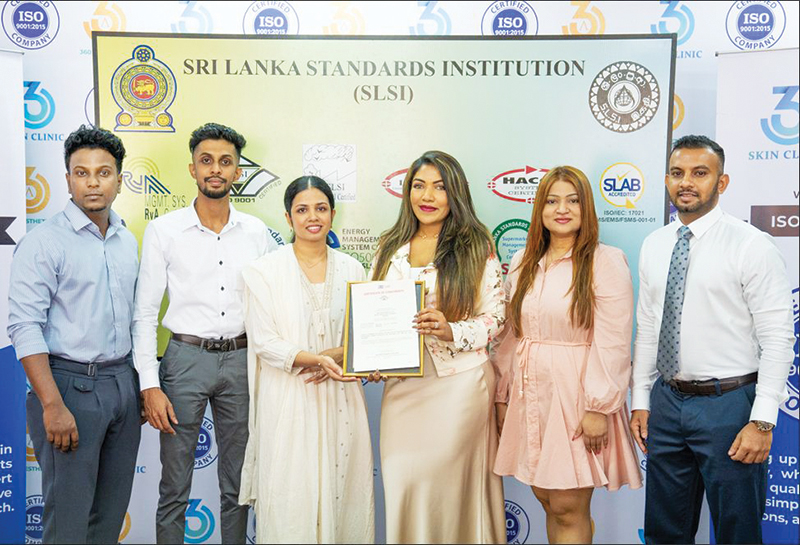
Dr Sarah Fazy, also known as Dr Cherry, recently marked a major professional milestone by recieving the ISO certification. It is more than a professional achievement – it is a statement of discipline, vision and modern excellence in aesthetic medicine.
360 Skin Clinic & 360 Aesthetics has achieved a significant milestone in its journey of clinical excellence and service innovation after being awarded the prestigious ISO 9001:2015 / SLS ISO 9001:2015 certification, reinforcing its position as one of Sri Lanka’s leading providers of cosmetic, aesthetic and wellness care.
Issued by the Sri Lanka Standards Institution (SLSI), the certificate of conformity recognises that 360 Wellness Centre (Pvt) Ltd., has successfully implemented a Quality Management System that meets the rigorous international standards of ISO 9001:2015, one of the world’s most respected benchmarks for quality assurance and continual improvement.
Founded by renowned cosmetic and aesthetic physician Dr Sarah Fazy, widely known as Dr Cherry, the 360 brand has built a reputation for combining medical expertise with personalised care, advanced technology and a strong commitment to client wellbeing. Over the years, the clinic has expanded its services while maintaining a steadfast focus on ethical practice, innovation and trusted results.
Commenting on the certification, Dr. Sarah Fazy, Founder of 360 Skin Clinic & 360 Aesthetics, said “This certification is a proud moment for our entire team and a reflection of the standards we strive to uphold every day. Quality care, patient safety and professional excellence have always been at the heart of our vision. Achieving ISO 9001:2015 recognition validates our commitment to delivering world-class services to every client who places their trust in us.”
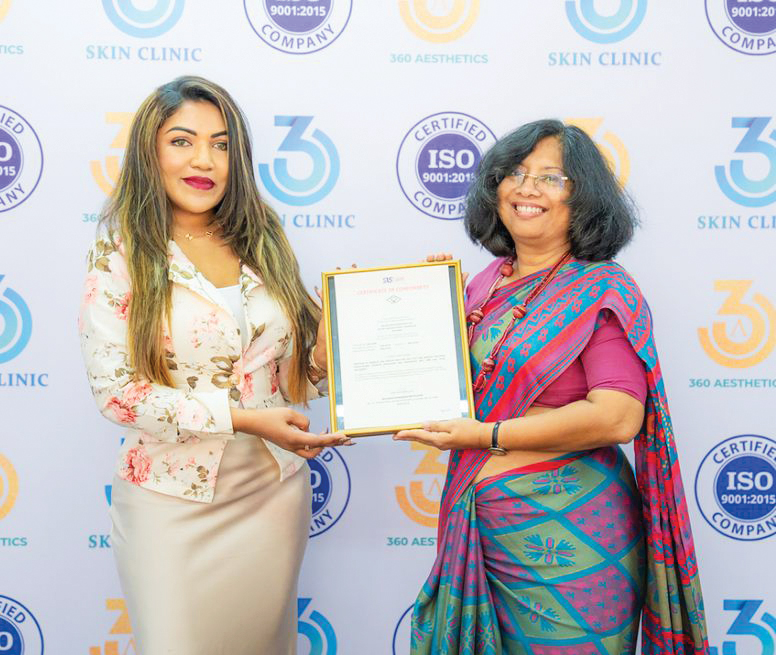
Dr. Sarah Fazy receiving the ISO 9001:2015 certification
The achievement marks a new chapter for 360 Skin Clinic & 360 Aesthetics, ensuring that every treatment, consultation and customer interaction is guided by internationally recognised processes focused on consistency, safety, efficiency and patient satisfaction.
ISO 9001:2015 is a globally recognised framework developed by the International Organisation for Standardisation (ISO). It provides organisations with a structured model to enhance operational efficiency, maintain consistent service quality and continually improve customer experiences.
Dr. Sarah further stated, “At 360 Skin Clinic & 360 Aesthetics, we believe beauty and wellness should be approached with responsibility, precision and compassion. This milestone motivates us to continue raising the bar in aesthetic medicine and wellness care in Sri Lanka.”
For 360 Skin Clinic & 360 Aesthetics, the certification demonstrates its commitment to delivering dependable, high-quality services, maintaining robust quality control systems, continuously improving internal processes, ensuring transparency, accountability and professionalism, and prioritising patient safety and satisfaction.
The certification scope covers a broad portfolio of services, including medical and cosmetic skincare, haircare solutions, aesthetic consultations, facial treatments, cosmetic procedures, nail care, surgical enhancements and hair transplantation services.
This recognition provides customers with added confidence that they are receiving care aligned with internationally accepted standards, delivered by trained professionals using advanced techniques and modern technology.
Since its inception, 360 Skin Clinic has been driven by a mission to redefine beauty, wellness and self-care in Sri Lanka. What began as a visionary concept has evolved into a trusted brand supported by a multidisciplinary team of specialists dedicated to helping clients look and feel their best.
The clinic is known for conducting detailed consultations and personalised assessments to create bespoke treatment plans tailored to individual skincare and wellness goals. Its medical aesthetic team continues to invest in state-of-the-art technology and evidence-based treatments to remain at the forefront of the industry.
With the attainment of ISO 9001:2015 / SLS ISO 9001:2015 certification, 360 Skin Clinic & 360 Aesthetics strengthens its promise to deliver elevated care, trusted results and a standard of excellence clients can feel confident in.

Kohli refuses Head handshake after heated Hyderabad-Bengaluru clash in IPL

Ampara District special Coordination Committee meeting chaired by the President

Landslide Early Warnings issued to the districts of Colombo, Gampaha, Kalutara, Kegalle, Nuwara Eliya and Ratnapura

Most people seeking green cards must now apply from outside US

Tulsi Gabbard to resign as US director of national intelligence

SpaceX launches massive Starship V3 rocket on test flight

‘Dates have the highest sugar content to fight Coronavirus’

Sunday Island 27 December – Headlines

#SundayIsland 17th December – Headlines

Sunday Island – 28th March

Sunday Island Headlines – 21 March

Sunday Island – 21st February – Headlines
-

 Features7 days ago
Sri Lankan Airlines Airbus Scandal and the Death of Kapila Chandrasena and my Brother Rajeewa
-

 News7 days ago
Kapila Chandrasena case: GN phone records under court scrutiny
-
 Features4 days ago
Octopus, Leech, and Snake: How Sri Lanka’s banks feast while the nation starves
-

 News7 days ago
Rupee slide rekindles 2022 crisis fears as inflation risks mount
-
 Business7 days ago
Expansion of PayPal services in Sri Lanka officially announced
-
 News3 days ago
Steps underway to safeguard Sri Lanka’s maritime heritage
-

 News7 days ago
Court orders further arrests in alleged USD 42 Mn NDB fraud case
-
 Opinion3 days ago
Murder of Ehelepola family, Bogambara Wewa and Sightings of Wangediya