
News
Sajith accepts far-reaching legal reforms, vows to thwart Ranil’s strategy

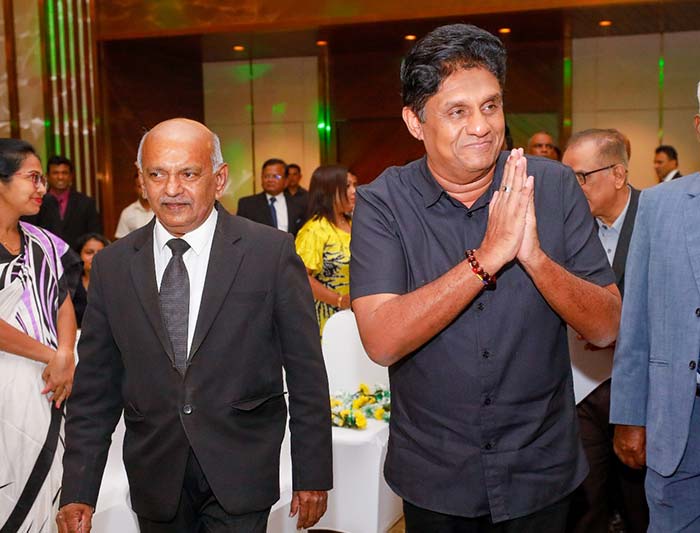
SJB and Opposition Leader Sajith Premadasa, MP, has accepted a set of far reaching and comprehensive legal reforms proposed by SJB Lawyers’ Association.Speaking at a well-attended event in Colombo this week, Premadasa, having received the proposals, vowed that President Ranil Wickremesinghe’s efforts to keep the Constitutional Council under his thumb would be thwarted.
MP Premadasa said that as a member of the CC he would along with other members stand up against Wickremesinghe’s agenda to put off the scheduled presidential poll in the guise of doing away with the executive presidency through constitutional means.
One of the most important proposals was to establish a truly independent Public Prosecutor (independent of the Attorney General) to facilitate prosecution of crimes that take place within such areas to be dealt with expeditiously and in an effective manner. Also consider optimal decentralisation of the prosecution function. There were altogether 116 proposals.
The following are some of the key proposals: 1) President to be required to engage in a consultative process with stakeholders prior to making judicial appointments. Views emerging through such consultative process to be conveyed to the Constitutional Council along with the name/s nominated for the approval.
2) There shall be a Constitutional Court. Retirement age of the judges shall be higher than the Judges of the Supreme Court. All appointments to the Constitutional Court, Supreme Court and Court of Appeal the Members of the Judicial Service Commission other than the Chairman shall be made by the President on the recommendation of the Constitutional Council.
3) In the discharge of its function relating to the appointment of the President and Judges of the Constitutional Court, Judges of the Supreme Court and the President and Judges of the Court of Appeal, the Council shall obtain the views of the Chief Justice and the two senior-most Judges of the Supreme Court.
4) A more transparent criterion will be proposed for judicial appointments. Including a collegiate system to recommend, based on transparent criteria.
Selection of such High Court Judges should be by a mixed and eminent panel consisting of most senior President’s Counsel, Attorney General, President BASL, President Court of Appeal and presided by the Chief Justice. Under normal circumstances the age limits will be as stipulated.
5) Allegations of misbehavior or incapacity contained in a resolution in the House of Representatives for the presentation of an address for the removal of a Judge of the Constitutional Court, Supreme Court or Court of Appeal shall be inquired into by a panel consisting of three retired Judges of the Constitutional Court or the Supreme Court. Such a panel shall be appointed by the Speaker on the recommendation of the Constitutional Council.
Parliament shall by law provide for all matters relating to the presentation of such an address, including the procedure for the passing of such resolution, the investigation and proof of the alleged misbehavior or incapacity and the right of such Judge to appear and to be heard in person or by a representative. Where the panel determines that the allegations of misbehavior or incapacity contained in the resolution are not proved, the resolution shall lapse.
6) There shall be a Code of Conduct applicable to Judges of the Constitutional Court, Supreme Court and Court of Appeal. Allegations of serious infractions of the Code of Conduct with negative implications for the Judiciary’s independence, integrity and public trust shall be inquired into by a panel consisting of three retired Judges of the Constitutional Court or the Supreme Court appointed by the President on the recommendation of the Constitutional Council. The panel shall submit its report to the President and the Constitutional Council for appropriate action.
7) All judges of the Court of Appeal and the Supreme Court shall be entitled to enjoy the same salary, same facilities and benefits until death, maintaining total independence of the Judiciary, economically and otherwise. However they shall not hold other offices except that are prescribed by Law.
8) The Court of Appeal to be decentralized (to sit like the Courts of Assize) to take the Appeal Court closer to the people. Senior President’s counsel and President BASL to be consulted in appointing temporary judges
9) The Court of Appeal shall conduct its sittings in each Province. It shall have an original fundamental rights and language rights jurisdiction. An appeal shall lie to the Supreme Court with leave from the Court of Appeal or special leave from the Supreme Court. The civil appellate jurisdiction of the Provincial High Courts shall be transferred to the Court of Appeal sitting in the provinces.
10) In the case of special courts such selected persons should be over the age of 62 years and below the age of 75 years. They should be selected from among retired High Court Judges with a proven track record. Only thereafter the President shall recommend such names to the Constitutional Council.
11) All judicial promotions shall be considered on the basis of completion of the ongoing cases and the delivery of orders and judgements and number of such cases sustained in the appellate court.
12) All judgments of court shall be complied immediately. In instances wherein frivolous appeals have been lodged by the state and damages along with legal interest has accumulated unconscionably, such officers shall be held personally liable for such enhanced damages.
13) A law relating to contempt of courts on the lines of Indian statute shall be passed.
14) The Office of the Attorney-General shall be an independent entity. The Attorney-General shall be the Chief Legal Officer of the Republic and shall uphold and safeguard the sovereignty of the People. It should be ensured that the Attorney General will hold the scales of justice evenly maintaining the highest traditions of the office of Attorney General without being a mouthpiece of the regime in power, in particular issuing certificates on draft legislation.
15) An independent Office of Public Prosecutor shall be set up by law.
16) An independent Office of the Public Defender shall be set up by law.
17) The Attorney-General, Chief Public Prosecutor and Public Defender shall be appointed by the President on the recommendation of the Constitutional Council.
18) Consider the feasibility and scope to recruit external lawyers to the AG’s Department at all levels based on objective criteria calculated to promote better competence and integrity. However, those internal candidates would be given due consideration.
19) Any appointee to the post of Attorney General or the Solicitor General shall not hold office in excess of three years.
20) Delays in serving indictments should be curtailed. All indictments should be filed within three months or the most 6 months of the alleged crime. In order to complete the backlog private Lawyers should be hired under the supervision of the AG. Allocation and coordination of such cases will be conducted by a decentralised public prosecutor.
21) In order to curtail delays in trials no postponement shall be granted on the basis that the Lawyer is in another court as is the practice in Indian Courts. This will also give more opportunities to younger Lawyers.
22) Consider timeframes for expeditious conclusion, such as if a criminal trial isn’t completed within a given time span, day to day trials should be held. The right to bail to be enhanced where prosecution isn’t commenced within a determinate time frame.








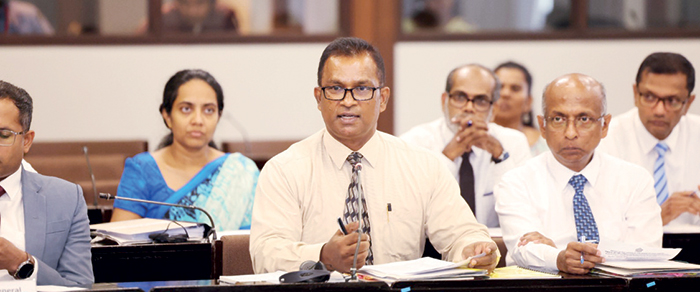
The Parliamentary complex is to be subjected to a special security inspection in the coming days in view of the official visit of the President of the Socialist Republic of Vietnam and General Secretary of the Communist Party, To Lam, who is scheduled to address the House on May 8, parliamentary sources said.
Sources said that the inspection would cover the entire Parliamentary complex, including Members’ lounges and wardrobes, as part of heightened security arrangements for the high-level visit. The high-security zone within Parliament will also be inspected, while access to the public galleries will be restricted to invited guests only.
The arrangements come as Parliament is set to convene from May 5 to 8, following decisions taken at the Committee on Parliamentary Business meeting held recently under the chairmanship of Speaker Jagath Wickramaratne, Parliament Media Division said quoting Secretary General Kushani Rohanadeera.
According to the approved schedule, the House will meet daily from May 5 to May 8, with time allocated for oral questions, ministerial questions, legislative business and multiple debates on financial and regulatory matters.
On May 5, Parliament will take up a series of Orders and Regulations under the Colombo Port City Economic Commission Act, followed by adjournment-time questions. On May 6, Members will debate the Second Reading of the Rescue, Rehabilitation and Insolvency (Corporate and Personal) Bill.
On May 7, the House is scheduled to consider regulations under the National Transport Commission Act, the Motor Traffic Act, and the Immigration and Emigration Act, followed by debates on resolutions under the Public Security Ordinance and the Essential Public Services Act.
The highlight of the sittings will take place on May 8, when President To Lam is scheduled to arrive at Parliament at around 11.05 am and address the House.
Following the address, Parliament will resume proceedings in the afternoon with a series of Private Members’ Motions covering issues including sports education pathways, vocational training awareness, migrant worker welfare, local government governance, misuse of professional titles, and regulatory oversight of utilities and petroleum-related industries.
Security authorities are expected to implement additional access controls and screening procedures throughout the visit period, given the presence of a foreign head of state within the Parliamentary precincts, sources added.
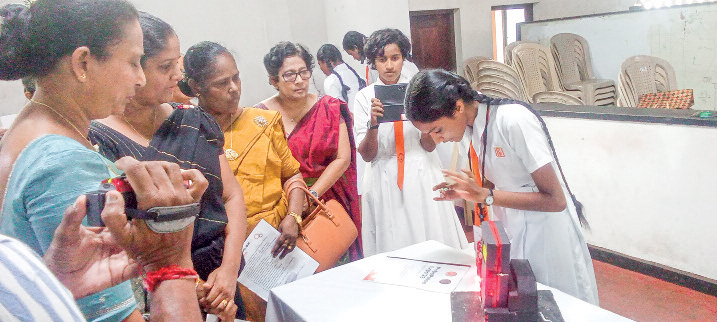
The Panadura Balika Maha Vidyalaya held its “RoboPulse Expo ’26” robotics and information technology exhibition at the school’s main hall on Thursday (30), showcasing student-built innovations aimed at promoting technology-driven education.
Organised by the school’s Robotics Club under the guidance of Robotics Technology Instructor and ICT teacher-in-charge Renuka Kulathunga, the exhibition was designed to expose students to emerging technological trends and applications.
School officials said the initiative was intended to prepare students for a future increasingly shaped by automation and digital systems.
Students from the Robotics Club demonstrated a range of self-developed prototypes, including an obstacle-avoiding vacuum cleaner, automated clothesline system, automated traffic light system, automated car park system, remote-controlled robot car, accelerometer-based line-following robot car, automated door lock system, smart wireless robot car operated via joystick, voice-controlled Bluetooth robot car, and an automated plant watering system.
The exhibition formed part of a series of events marking the 50th anniversary celebrations of Panadura Balika Maha Vidyalaya, coordinated under the leadership of Principal, S. I. Subasinghe.
The one-day event attracted a large number of visitors, including academics from the University of Moratuwa and University of Kelaniya, along with students, teachers and principals from schools across the Panadura education division.
Organisers said the event reflected growing interest among school students in robotics and applied technology, with emphasis on practical innovation and problem-solving.
Text and Pic BY HL Sunil Shantha
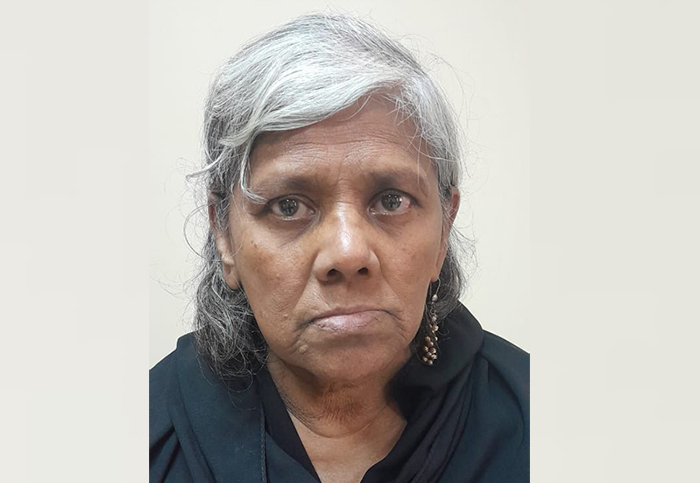
The Ministry of Foreign Affairs, Foreign Employment and Tourism has appealed to the public for assistance in tracing the family members of a Sri Lankan woman currently residing in the Kingdom of Saudi Arabia.
In an urgent public notice, the Ministry said Ms Rahima Sahabdeen requires assistance to facilitate her return to Sri Lanka and efforts are underway to establish contact with her next of kin. Due to a memory loss, Ms. Rahima is unable to provide documentary proof on her identity. Establishing her identity is essential in order to facilitate her repatriation to Sri Lanka.
According to official records, her last known residence was in Bambalapitiya. She is identified as the daughter of Sahabdeen and Madina.
The Ministry further stated that her children are believed to be Ms F. Rihana, Ms F. Rimsani and Ms Fahima.
Despite repeated attempts, authorities have so far been unable to trace her relatives or family members.
The Ministry has therefore requested members of the public with any information regarding the whereabouts of her family or next of kin to immediately contact the Consular Affairs Division.
Officials said the matter is being treated on humanitarian grounds and assured that any information provided would be treated with strict confidentiality.
Those with relevant information may contact the Consular Affairs Division via telephone on +94 11 2275 530 or through email at consular@mfa.gov.lk.

Treasury Fraud turns into Personal Tragedy

A worker watches May Day circuses

A nation comes together: Business, compassion and public service unite to protect Sri Lankan women from cervical cancer

Rheumatoid Arthritis doesn’t stop at your joints; And neither should your treatment

Parliament to undergo tight security sweep ahead of Vietnamese President’s address

Twenty-Five Years of Not Looking Away

‘Dates have the highest sugar content to fight Coronavirus’

Sunday Island 27 December – Headlines

#SundayIsland 17th December – Headlines

Sunday Island – 28th March

Sunday Island Headlines – 21 March

Sunday Island – 21st February – Headlines
-
 News4 days ago
Treasury chief’s citizenship details sought from Australia
-

 News6 days ago
BIA drug bust: 25 monks including three masterminds arrested
-
 News7 days ago
Hackers steal $3.2 Mn from Finance Ministry
-

 News3 days ago
Rooftop Solar at Crossroads as Sri Lanka Shifts to Distributed Energy Future
-

 News6 days ago
Banks alert customers to phishing attacks
-
 News5 days ago
Govt. assures UN of readiness to introduce ‘vetting process’ for troops on overseas missions
-
 News2 days ago
“Three-in-one blood pressure pill can significantly reduce risk of recurrent strokes”
-

 Business5 days ago
ADB-backed grid upgrade tender signals next phase of Sri Lanka’s energy transition