
Sports
On Eran’s watch, cricket seeks redemption

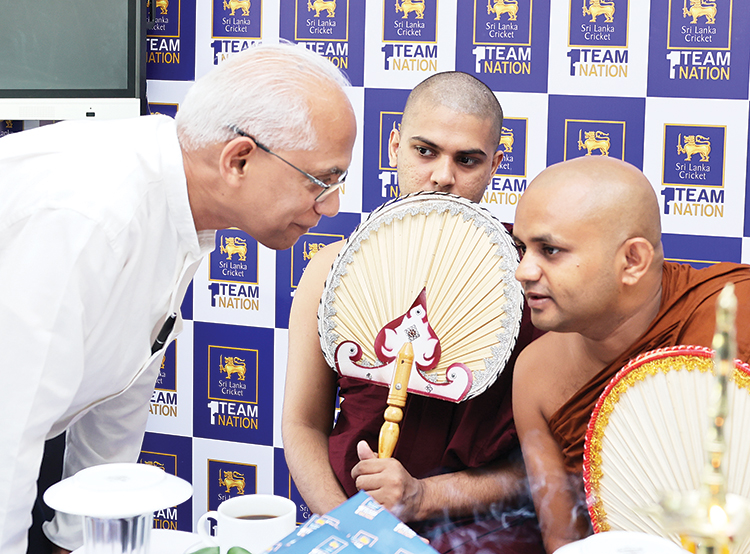
Sri Lanka’s new Interim Committee, helmed by Eran Wickramaratne, has walked out to bat amid a swell of cautious optimism, with cricket lovers hoping the ship can finally be steadied after years of choppy waters. Yet even before the ink has dried, the rumour mill has gone into overdrive, peddling the tired line that failure to hold elections within three months will invite an ICC suspension. That, to put it mildly, is a cock and bull story.
Interim Committees are not alien to Sri Lankan cricket, nor are they frowned upon by the International Cricket Council. In fact, many of the earlier ones, led by men of standing, came in, rolled up their sleeves and put the house in order.
The rot, as many would argue, set in during the era of Mahinda Rajapaksa, when such Interim Committees were used less as repair kits and more as patronage platforms. Mahinda used the cricket board to give positions to his friends. He was always loyal to his friends. In turn, his friends showed their loyalty back to Mahinda by awarding the lucrative television deal of SLC to his second son’s company.
This current Interim Committee, however, reads like a team sheet you wouldn’t mind backing. When you have a former Marylebone Cricket Club President in Kumar Sangakkara, a seasoned ICC match referee in Roshan Mahanama and a respected elder statesman in Sidath Wettimuny, you’re hardly short on cricketing brains trust. Add to that the corporate acumen of Prakash Schaffter and the legal nous of Dinal Phillips, and it’s an all-round side with depth in every department. As Tony Greig once said during a game in Sharjah, ‘Don’t tell anything nasty about Sri Lankan cricket to Dinal Phillips.’
They hardly need advice from the cheap seats, but anyway, here’s our two cents.
First, selection; the engine room of any successful side. Get that wrong and you’re forever chasing the game. Whether it’s Sangakkara, Wettimuny or Mahanama taking the reins, or someone cut from similar cloth, the message is simple: pick a selector who knows his onions. A bull in a China shop is less troublesome than the man heading selections at the moment.
Then there’s the elephant in the pavilion – Test cricket. Between July 2025 and June 2026, Sri Lanka hasn’t got a single Test match. Not one. For a nation that once fought tooth and nail for Test status under the stewardship of Gamini Dissanayake, this is sacrilege. The great man must be turning in his grave.
While the Executive Committee has packed its bags, the top executives still loiter at Maitland Place like a night watchman that refuses to vacate after a collapse. Expect the usual stock responses – Test cricket isn’t profitable, or the calendar is dictated by the World Test Championship. But such thinking is as outdated as playing timeless Tests. Institutions don’t move forward by blocking on the back foot forever. Fresh ideas are needed and perhaps a few long-standing occupants need to walk before they’re shown the pavilion.
Schedule more Test matches, even against sides that are not part of the World Test Championship. Don’t believe in the lies your top executives dish out. Tell them, if there’s a will, there’s a way.
Women’s cricket is another area crying out for attention. While other nations have moved the field up and attacked, Sri Lanka has been content to play defensively. At present, cricket hasn’t been able to appeal to the girls in schools. The chosen sports by girls at school level are netball, basketball, swimming, badminton and athletics. Cricket, sadly doesn’t come among the top ten sports of girls schools be it at Holy Family Convent in Colombo or Marjan Muslim Ladies College in Sammanthurai.
The remedy isn’t rocket science. Invest in schools, provide equipment, open doors. Set a target; say 500 schools playing the game within three years and chase it with intent. Provincial academies could serve as nurseries, turning raw talent into finished products. Cricket, after all, is an expensive sport; without support, many promising players are run out before they reach the crease.
Other sports have shown the way. Basketball, for instance, cast its net wide post-war, tapping into regions like Jaffna and reaping the rewards. Cricket, meanwhile, has been guilty of too much talk about infrastructure and not enough about grassroots. Forget the grandstands for a moment, it’s the nets that matter. Take the game to the people, coach the coaches and give emerging regions a crack at competitive cricket.
The Lanka Premier League, too, has promised much but delivered in fits and starts. Like a flashy opener who flatters to deceive, it has struggled for consistency. Questionable ownerships and off-field controversies haven’t helped. Perhaps it’s time for Sri Lanka Cricket to play the long game – trim profits, bring in credible local investors and build a tournament that can stand the test of time rather than chasing quick bucks.
Then there’s a small but telling symbol of excess – the Minister’s Box at major cricket venues. For years, it has served as a cosy enclosure for the high and mighty. Why not flip the script? Open it up for the disabled, give them a chance to watch the game in comfort. Cricket, after all, belongs to the people, not just those in high office. (Credit to the current Minister of Sports for not using the facility).
The ball now is on Eran’s court.
by Rex Clementine



Women having to choose between motherhood and representing their country should become entirely a thing of the past after the ICC introduced guidelines for players returning to elite-level cricket post-pregnancy.
During a rest day in the T20 Women’s World Cup being played in England, the ICC launched its ‘Return to Play Post-Pregnancy Guidelines’ on Monday, aimed at providing female players, national boards, medical staff, and coaches with a practical reference to support mothers returning to cricket after pregnancy and childbirth.
They are designed to help Member nations develop their own pregnancy and return-to-play policies, in line with local legislation, while supporting player welfare in practical, physical and psychological terms.
Dr Philippa Inge, the Australia team doctor and ICC medical advisory committee member who led the drafting of the guidelines, said the initiative was “designed to show players that having a baby doesn’t need to be the end of their career”.
“What we’re aiming to do with this policy is allow Member nations to facilitate the return to cricket for their players,” Dr Inge said. “We know that many Members haven’t necessarily had these in the past, and the aim has been to make them adaptable for the unique environments in which our Members need to use them.”
Increased professionalisation has led to a rise in the number of women choosing to start families during their playing careers and returning to elite cricket after giving birth. While a number of countries have maternity policies in place and several players have returned to the international stage after giving birth, the guidelines are an attempt to provide ICC Members with a template to help their players.
Afy Fletcher, West Indies’ 39-year-old legspinner currently playing at the T20 World Cup, gave birth to her son in 2021, and B8smah Maroof took her baby daughter, Fatima, to the 2022 World Cup after making her return to the Pakistan side. Bismah retired in 2024 and has since given birth to a son.
New Zealand allrounder Amy Satterthwaite announced her international retirement in 2022 after being overlooked for a central contract, nearly two years after making her comeback for New Zealand after maternity leave.
Batter Lauren Down retired earlier this year after touring with New Zealand in 2024, six months after having a baby. Masabata Klaas, the South Africa seam bowler, isn’t part of their T20 World Cup squad but has played the majority of her international career as a mother to a daughter born in 2013.
India’s Sneha Deepthi was a mother to a toddler when she was picked up by Delhi Capitals for the inaugural WPL in 2023 and, while she was retained by them for the 2024 season, she didn’t play a game in the tournament.
Fletcher, who last year told Powerplay about the challenges of juggling an international career with motherhood, described the move as “one of the best things they could have done for women’s cricket”.
“Physical recovery was challenging but, more than that, I struggled to leave my child and miss creating precious moments,” Fletcher said. “That’s why every moment I play on the field is driven by him. Every player’s journey is different, but you have to have strong support, get healthy and trust the process.”
The ICC guidelines are based on a framework called “the 6 Rs” for “Ready, Review, Restore, Recondition, Return and Refine” covering early recovery after birth, medical and wellbeing reviews, gradual return to structured training, cricket-specific conditioning, return to play and ongoing monitoring.
These include flexible training environments, continued access to facilities and services, childcare advice, suitable spaces for feeding or caring for babies at playing venues, and travel support, where possible.
(Cricinfo)
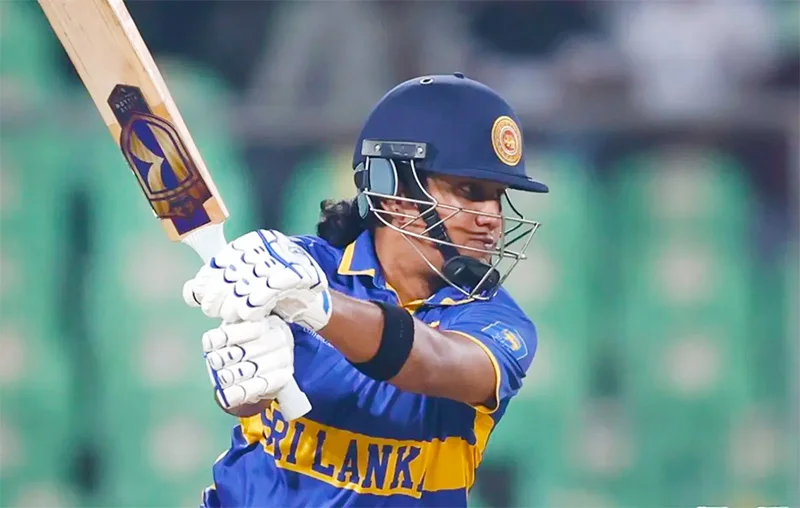
Chamari Athapaththu has said she feels like “a failure as a captain” after Sri Lanka’s defeat to West Indies in Bristol, which has left them fifth out of six teams in Group 2 and poorly placed to push for a spot in the semi-finals of the 2026 Women’s T20 World Cup.
Athapaththu made just 2 as Sri Lanka collapsed for 98, a total that West Indies overhauled with five wickets and 23 balls to spare. Sri Lanka have two losses in three games, but with England and West Indies having won all three of their matches so far, and New Zealand and Scotland ahead on net run rate, Athapaththu’s side need a dramatic upswing in fortunes to make it out of their group.
“Actually, it’s a sadness beyond words,” Athapaththu, who is playing her tenth T20 World Cup, said after the defeat. “I think I played around 18 years for the national team and I could never get a chance to take my team into a semi-final of a World Cup.
“Even though I have achieved many things personally, I think I’m a failure as a captain, because I think that’s big pain for a player. Actually, now I have to be with that pain.
“I think I tried my best, I think I should have played more responsible than this and if I have played more responsible than this today, we could have won this match today. So, I regret that. Especially I don’t like to blame anyone and I think I have more responsibility as a player, as the captain of the team and as a player with more experience.
“So, I’m very sad, I feel like I lost my last chance.”
Athapaththu is 36 and has played every T20 World Cup so far. The 11th edition will be in Pakistan in 2028. “For now, I can’t give any explanation about that, because with my age, now I’m 36 years old,” Chamari said about her playing the next T20 World Cup. “So, with fitness and all, that’s being decided. So, I try my best to keep my physical fitness in a good level, and to keep my skills in a high level.
“If the team wants, I will play in the future, but with my performance level and fitness level, it will be decided if I play or not.”
Sri Lanka’s last two Group 2 fixtures are against Ireland in Bristol on June 23 and against Scotland in Manchester on June 26.
(Cricinfo)

Liverpool star Mohamed Salah scored his first goal of the tournament as part of a second-half flurry to deliver Egypt their first-ever World Cup victory, 3-1, over New Zealand in Vancouver.
Both Salah and Mostafa Zico bagged a goal and an assist apiece as Egypt rallied from a 1-0 half-time deficit and took over first place in Group G on Sunday. Trezeguet scored Egypt’s third goal for late insurance.
Salah celebrated his 68th international goal by pumping his fist before he was mobbed by his teammates in the 67th minute to the delight of the red-clad Pharaohs fans in the sellout crowd at BC Place, Vancouver.
When Salah was substituted in the 85th minute, he was treated to a standing ovation.
The first three matches of Group G ended in draws, including Belgium and Iran posting a scoreless tie earlier on Sunday, leaving the group open for the taking. New Zealand (0-1-1, 1 point) thought they were on that path after Finn Surman’s headed goal off a 15th-minute set piece gave them a lead they held for nearly half the match.
Egypt will finish the group stage against Iran on Friday, all but assured of advancing to the knockouts no matter the result. New Zealand, still seeking their own first World Cup win, will take aim at Belgium on the same day in their hopes of advancing.
Mostafa Shoubir made four saves for Egypt, while Max Crocombe recorded four for New Zealand.
New Zealand earned their go-ahead corner kick when Elijah Just had a strong effort on target, and Shoubir sent it out of bounds.
Tim Payne’s ensuing corner found Surman in space. Surman’s jumping header went past a helpless Shoubir to give the All Whites the lead.
Egypt had a promising look in the 35th minute on a free kick from the edge of the box after Callum McCowatt picked up a yellow card for a poor tackle. A teammate laid the ball off for Salah, whose attempt on goal missed to the left.
Egypt had more control and more of the chances in the second half, starting immediately when Salah pressured Crocombe into a save less than 40 seconds in.
But the Pharaohs finally broke through in the 58th minute. Mohamed Hany landed a perfect cross for Zico, whose header near the 6-yard line struck Crocombe’s glove on its way in.
Salah’s turn came nine minutes later. Zico connected with Salah up the right side on a transition play. He dribbled around his man into the box and tapped a pass ahead to Zico, who back-heeled it into a pocket of space for Salah to finish with a left-footed shot to the bottom-left corner.
Trezeguet wrapped up the match in the 82nd minute on another header from a corner kick. Salah sent in a low offering, and Trezeguet was unmarked as his diving header bounded in. It was Trezeguet’s 24th career goal in an international competition and his first at a World Cup.
“In years to come, we will remember that this was one of the achievements in history,” Salah said.
He praised the large Egyptian contingent in the crowd, saying: “It feels like we are playing in Egypt. It’s a great win and great vibe.”
[Aljazeera]

ICC launches post-pregnancy return-to-play guidelines

Chamari Athapaththu: ‘I think I’m a failure as a captain’

Navy’s prompt search and rescue mission saves lives at sea

UK’s Starmer resigns as prime minister

President chairs discussion on providing swift solutions to challenges in apparel sector

Schools close as more than half of France under red heat alerts

‘Dates have the highest sugar content to fight Coronavirus’

Sunday Island 27 December – Headlines

#SundayIsland 17th December – Headlines

Sunday Island – 28th March

Sunday Island Headlines – 21 March

Sunday Island – 21st February – Headlines
-

 News7 days ago
Beijing Capital Airlines to resume flights to Colombo signalling boost to tourism
-

 Features6 days ago
Killing of Colombo’s ancient trees — a warning on UN’s World Desertification Day – 17 June
-

 News4 days ago
Creditor receives USD 2.5 mn as Lankan public bears loss from theft of Treasury funds
-

 News3 days ago
Creditor not yet paid
-
 News3 days ago
Consumers bearing 22% tax burden despite 18% VAT claim: Dr. Harsha de Silva
-

 Opinion5 days ago
Beyond diagnosis: A strategic design for 7% growth by 2029 (Part I)
-

 Opinion7 days ago
Fifty years after Soweto uprising
-

 Sports7 days ago
Catch every moment of the 2026 FIFA World Cup free on the Dialog PLAY App