
News
RW’s Japan visit signals Sri Lanka’s tilt towards Asia for enhanced cooperation and economic recovery

By Rose Kenny
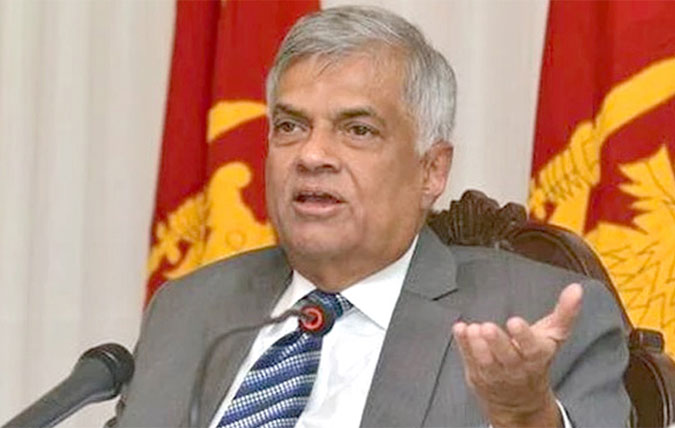
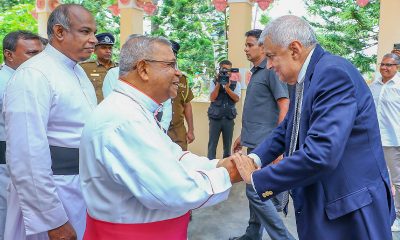
During his recent visit to Japan, President Ranil Wickremesinghe highlighted the country’s resolute tilt towards Asia, signalling a strategic shift in its foreign policy. Building on the government’s vision to elevate Asia as a global centre of economic integration, President Wickremesinghe’s address at the Nikkei Forum, Future of Asia, outlined his vision for the region.
This inclination towards Asia is not a new development, as the President had previously reached out to Japan upon assuming office, following the footsteps of former President J.R. Jayewardene, who placed significant emphasis on fostering strong ties with Japan. With this visit, President Wickremesinghe has firmly established Sri Lanka’s intention to actively shape Asia’s future rather than remaining on the side-lines and allowing global powers to determine the region’s destiny.
This pronounced tilt towards Asia has been viewed as a significant evolution in Sri Lanka’s foreign policy, positioning the country as an active participant in the decision-making processes of the region.
During his address in Tokyo, President Wickremesinghe reiterated that Asia should not be dragged into the power rivalry between China and the United States. He emphasized that the role of the Asian region in global politics should be decided through multilateral dialogue among its member states.
Japanese Prime Minister Fumio Kishida, speaking after President Wickremesinghe at the Nikkei Forum, expressed a similar sentiment. Prime Minister Kishida highlighted Japan’s pursuit of a “Free and Open Indo-Pacific” (FOIP) policy, which ensures each country’s sovereignty and decision-making regardless of its size.
The President’s message resonated with other Asian leaders present at the forum, including former Malaysian Prime Minister Dr. Mahathir Mohammed, President of Laos, and Deputy Prime Ministers of Singapore, Vietnam, and Thailand. They all shared the belief that Asia should have a seat at the table of global powerhouses.
One key aspect highlighted by both President Wickremesinghe and Prime Minister Kishida was the need for multilateral cooperation among Asian states. While acknowledging the advanced positions of China, India, and Japan, both leaders emphasized the importance of involving the rest of Asia, including ASEAN and Indian Ocean states, in shaping the region’s future. This aligns with Japan’s “New Plan for a Free and Open Indo-Pacific” (FOIP), which emphasizes multi-layered connectivity across Asia.
President Wickremesinghe’s foreign policy direction has been welcomed by regional and domestic interest groups in Sri Lanka. The country has been a passive observer as Asia progressed on the global stage, and the President’s vision to reclaim Sri Lanka’s role in regional and global politics is seen as a positive step forward. Coming out of a year of economic crisis and political instability, Sri Lanka is eager to re-establish its presence on the international stage.
During his visit, President Wickremesinghe held crucial meetings with Japan’s Prime Minister Kishida, Japanese Foreign Minister Yoshimasa Hayashi, and Minister of Digital Transformation Taro Kono. The discussions covered a wide range of topics, including debt restructuring talks, cooperation in various fields beyond economics, climate change targets, nuclear disarmament, and digitization efforts in Sri Lanka.
In the meeting with Prime Minister Kishida, President Wickremesinghe expressed gratitude for Japan’s support during Sri Lanka’s economic crisis and debt restructuring talks. He assured Japan that China’s involvement in the talks was limited to bilateral discussions and that Sri Lanka also engaged with the International Monetary Fund (IMF). The President requested China’s full membership in the creditor talks and outlined plans to resume Japanese projects, subject to further discussions.
Prime Minister Kishida expressed Japan’s commitment to supporting Sri Lanka’s economic recovery and expressed willingness to explore avenues for enhanced cooperation. The leaders discussed potential areas of collaboration, including infrastructure development, technology transfer, investment promotion, and capacity building.
In the meeting with Foreign Minister Hayashi, President Wickremesinghe emphasized the importance of strengthening bilateral relations between Sri Lanka and Japan. They discussed the need for increased people-to-people exchanges, cultural cooperation, and educational opportunities. President Wickremesinghe expressed his desire to expand Japanese investments in Sri Lanka and attract Japanese tourists to boost the country’s tourism sector.
The meeting with Minister of Digital Transformation Taro Kono focused on leveraging technology to drive economic growth and digital transformation in Sri Lanka. President Wickremesinghe highlighted the government’s initiatives to promote innovation and entrepreneurship and sought Japan’s expertise in areas such as e-governance, digital infrastructure, and smart cities.In addition to the official meetings, President Wickremesinghe interacted with representatives from the Japan-Sri Lanka Parliamentary Friendship League and the Japan External Trade Organization (JETRO).
These interactions aimed to enhance parliamentary ties, explore trade and investment opportunities, and strengthen cooperation in various sectors, including trade, tourism, agriculture, and fisheries.
The visit also witnessed the signing of several agreements and memoranda of understanding (MoUs) between the two countries. These included agreements on economic cooperation, tourism promotion, cultural exchanges, and academic collaboration. The agreements aimed to facilitate greater cooperation and create conducive environment for bilateral trade and investment.
Overall, President Ranil Wickremesinghe’s visit to Japan marked a significant milestone in strengthening the bilateral relations between Sri Lanka and Japan. The discussions and agreements reached during the visit set the stage for increased collaboration in various fields and demonstrated Sri Lanka’s commitment to actively shaping the future of Asia. The visit provided an opportunity for Sri Lanka to leverage Japan’s expertise, technology, and investments to drive its economic recovery and achieve sustainable development goals.








Latest News
Flood warning issued to the Divisional Secretariat Divisions of Ganga Ihala Korale, Udapalatha, Doluwa, Udunuwara, Yatinuwara, Gangawata Korale, Harispattuwa, and Pathadumbara


Due to heavy rainfall received in the upper catchment areas of the Mahaweli River over the past few hours, there is a risk of minor flooding in the low-lying areas surrounding the Mahaweli River within the Divisional Secretariat Divisions of Ganga Ihala Korale, Udapalatha, Doluwa, Udunuwara, Yatinuwara, Gangawata Korale, Harispattuwa, and Pathadumbara.Residents living in the above mentioned areas and motorists using roads passing through these areas are urged to exercise extreme caution and remain highly vigilant regarding the prevailing situation.
Furthermore, residents living in close proximity to the Mahaweli River in these areas are advised to remain highly alert to the situation and take all necessary precautions to protect themselves from any potential flooding.The relevant disaster management authorities are requested to take all necessary measures in response to this situation.
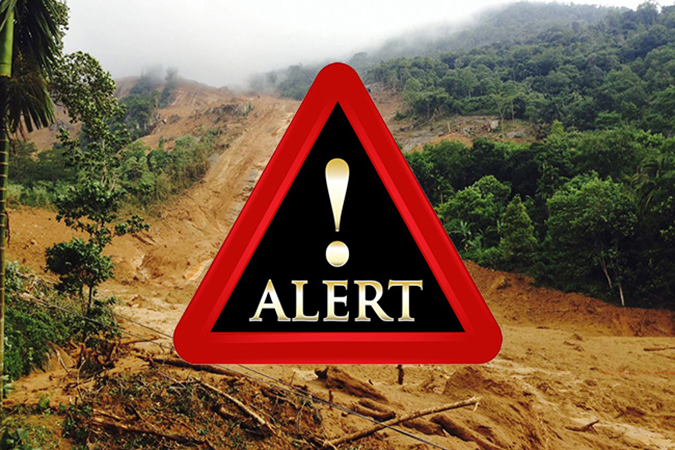
The National Building Research Organisation [NBRO] has issued landslide Red Alerts to the districts of Kandy, Kegalle and Nuwara Eliya effective from 14:00 hrs on 20.09.2026 To 14:00 hrs on 21.09.2026
Accordingly,
LEVEL III [RED] Land Slide early warnings have been issued to the Divisional Secretaries Divisions and surrounding areas of Pasbage Korale in the Kandy district, Dehiowita, Aranayake, Deraniyagala, Mawanella and Yatiyanthota in the Kegalle district and Kothmale West, Kotmale East, Ambagamuwa and Norwood in the Nuwara Eliya district
LEVEL II [AMBER] Land Slide early warnings have been issued to the Divisional Secretaries Divisions and surrounding areas of Padukka in the Colombo district, Nagoda, Thawalama and Neluwa in the Galle district, Bulathsinhala, Palindanuwara, Walallawita and Agalawatta in the Kalutara district, Ganga Ihala Korale in the Kandy district, Bulathkohupitiya and Kegalle in the Kegalle district, Akuressa and Pitabeddara in the Matara district, Thalawakele in the Nuwara Eliya district and Pelmadulla, Ratnapura, Ayagama, Kuruwita and Ratnapura in the Ratnapura district.
LEVEL I [YELLOW] Land Slide early warnings have been issued to the Divisional Secretaries Divisions and surrounding areas of Seethawaka in the Colombo district, Niyagama and Baddegama in the Galle district, Mirigama in the Gampaha district, Ingiriya in the Kalutara district, Udapalatha and Yatinuwara in the Kandy district, Galigamuwa, Warakapola and Ruwanwella in the Kegalle district, Kotapola, Pasgoda and Athuraliya in the Matara district, and Eheliyagoda, Kalawana and Elapatha in the Ratnapura district.
News
Development projects can deliver results to the people more quickly when the political authority and the public service work together towards a common goal – PM
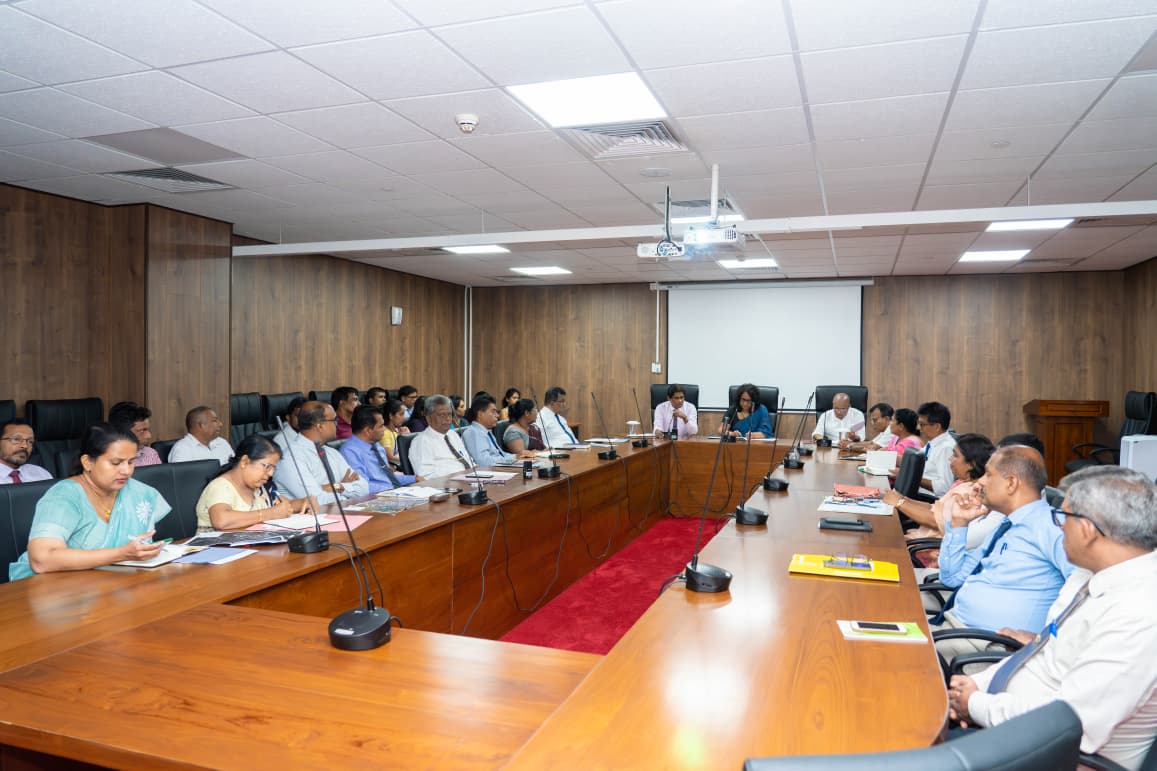
Prime Minister Dr. Harini Amarasuriya stated that development projects can deliver results to the people more quickly when the political authority and the public service work together towards a common, people-oriented objective.
The Prime Minister made these remarks while participating in a discussion held on Friday [September 18] at the Western Province Council Auditorium to review the progress of the development project to rehabilitate Rathmalana Kandawala Road and the drainage system on either side of the road, within the Dehiwala–Mount Lavinia Municipal Council limits in the Colombo District.
The project, which commenced on September 10, 2026, is scheduled to be completed before June 30, 2027. Implemented by the Provincial Road Development Authority (PRDA), the project includes the construction of a bridge at a cost of Rs. 64 million, the rehabilitation of the drainage system at a cost of Rs. 930 million, and the rehabilitation of the road at a cost of Rs. 115 million.
The Prime Minister also paid special attention to the progress of the responsibilities assigned to the Western Province Council, the Irrigation Department and the Ratmalana Divisional Secretariat in accordance with decisions taken at the previous committee meeting. Attention was also given to the current status of the plans being carried out by the Sri Lanka Land Development Corporation (SLLRDC), as well as the construction and maintenance activities being undertaken by the Provincial Road Development Authority (PRDA).
Commending the expedite and commendable progress of the project, the Prime Minister particularly appreciated the commitment demonstrated by officials of the relevant government institutions to work in close coordination with one another and in collaboration with the political authority.
The Prime Minister also emphasised the importance of taking measures well in advance to control flooding and minimise its impact on Colombo and several other districts in view of the rainy weather that may affect the Western Province during the latter part of this year.
The meeting was attended by the Chairman of the Colombo District Coordinating Committee and Member of Parliament Lakshman Nipuna Arachchi, Chairperson of the Ratmalana Divisional Coordinating Committee and Member of Parliament Samanmalee Gunasinghe, Chairman of the Roads Sub-Committee of the Colombo District Coordinating Committee Dewananda Suraweera, Mayor of the Dehiwala–Mount Lavinia Municipal Council Parakum Shantha, Chief Secretary of the Western Province K.G. Pradeep Pushpakumara, along with a number of government officials.
[Prime Minister’s Media Division]

Flood warning issued to the Divisional Secretariat Divisions of Ganga Ihala Korale, Udapalatha, Doluwa, Udunuwara, Yatinuwara, Gangawata Korale, Harispattuwa, and Pathadumbara

Landslide Red Alerts issued to the districts of Kandy, Kegalle and Nuwara Eliya

Shafali dazzles with 49-ball unbeaten 100 and India march into Asian Games final

Development projects can deliver results to the people more quickly when the political authority and the public service work together towards a common goal – PM

Landslide Early Warnings issued to the Districts of Colombo, Galle, Kalutara, Kandy, Kegalle, Matara, Nuwara Eliya and Ratnapura

Chamari Athapaththu’s unbeaten 83 leads Sri Lanka into final

‘Dates have the highest sugar content to fight Coronavirus’

Sunday Island 27 December – Headlines

#SundayIsland 17th December – Headlines

Sunday Island – 28th March

Sunday Island Headlines – 21 March

Sunday Island – 21st February – Headlines
-

 Opinion7 days ago
From Galkissa (Mount Lavinia) to Tambuttegama
-

 News4 days ago
US embassy won’t comment on IGP’s probe into joint drug raid
-

 Features6 days ago
The emptying university: why are academics leaving?
-

 Features7 days ago
Sri Lanka’s university crisis: Brain drain and union action demand urgent reform
-

 News3 days ago
Bid for Basil’s extradition nears final stage: Police
-

 Business4 days ago
All-new Bolero MaXX unveiled in Sri Lanka
-

 Opinion7 days ago
Ashraff: From the SLMC towards the National Unity Alliance
-

 Editorial7 days ago
Muscle flexing, astroturfing and dog-and-pony shows