
Business
RPCs put the ball in trade unions’court

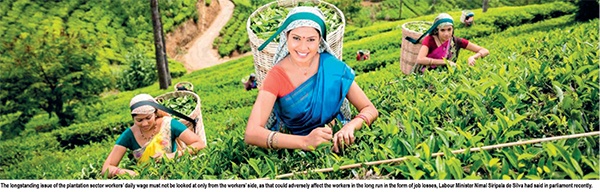
Rs. 1,000 minimum daily wage demand
During a meeting last Friday between Minster of Labour Nimal Siripala de Silva and Chairmen of all Sri Lankan Regional Plantation Companies (RPCs), a final proposal was submitted towards ensuring a ‘sustainable’ earnings model for tea estate workers, making it the trade unions’ responsibility to take the next action on the long-standing pain point of the industry.
This proposal takes into consideration the sustainability of both the industry and livelihoods of plantation workers, RPCs said.
“After a very productive meeting with the minister, RPCs have arrived at a final consensus on what we can sustainably offer, while providing the highest possible earnings potential for our workers. Our final offer amounts to a 30% increase in earnings on the fixed model, and there is no upper limit to what workers can earn under the productivity-linked components. This is the first step to modernising our entire industry, and moving beyond a basic daily wage system which is a relic of the colonial era and long overdue for an update,” they said.
“We have gone well beyond the Rs. 1,000 daily wage demand of Trade Unions, and this follows a 40% increase from just two years ago. At a time when others in the apparel and leisure sector are slashing wages and retrenching workers, ours is one of the precious few export industries which has shielded our employees from the negative impacts of the pandemic, and is actively pursuing a wage increase. This is no easy feat, and without improvements in productivity, it will still be extremely difficult for any RPC to remain financially sustainable. There is clear understanding from the government on our position, and it is now up to Trade Unions to make the right decision,” Chairman, Plantation Services Group, Employers’ Federation of Ceylon said.
Under the final proposal, RPCs are offering a fixed daily wage of Rs. 1,105, with the re-introduction of attendance and productivity incentives – a feature which Trade Unions had strongly and consistently opposed in the past, but have since reversed their position in the most recent negotiations.
The breakdown is as follows: Basic Wage – Rs. 700, EPF/ETF – Rs. 105, Attendance Incentive – Rs. 150 and Productivity Incentive – Rs. 150. Under the new proposal, workers will receive a substantial Rs. 6,250 increase to their monthly earnings.
Further to the revised daily wage model, RPCs also propose the implementation of productivity-linked earning components to ensure that workers are finally provided effective incentives and are rewarded for increasing their productivity.
The proposed fixed daily wage model will be implemented 3 days a week, and on the remaining days, RPCs have called for one of two productivity-based models to be implemented based on how suitable they would be to each RPC’s unique capacity – enabling workers to earn far more than the fixed Rs. 1,105.
Under the productivity-linked component, employees can earn Rs. 50 (inclusive of EPF/ETF) for every kilo of tea leaf plucked. In the case of Rubber, this would amount to Rs. 125 (inclusive of EPF/ETF) for every kilo of rubber latex.
Alternatively, employees will be remunerated based on a revenue share model, offering greater earnings, similar to what has long been practiced with success in the smallholder sector in Sri Lanka. Companies who do not wish to continue with either of these models, will reserve the right (at their sole discretion), to continue with the standard daily wage system.
Currently, the Cost of Production (COP) of tea amounts to Rs. 615 a day, higher than any other tea producing nation in the world. Out of this, cost of labour accounts for 63% of the total cost of production. With the proposed increase in daily earnings to Rs. 1,105, the COP will increase up to Rs. 730 a day. Unfortunately, increasing cost of production is expected to be met with stagnant prices in local and international markets, further annihilating the economic viability of the industry.
Previously, the auction price of RPC tea reached an all-time high of Rs. 601 per kg on average (USD 3.99) in 2017 and has since plunged to Rs. 581/kg (USD 3.16). However, Sri Lanka’s global market price for tea has become increasingly uncompetitive, especially in comparison to USD 1.94 for tea at the Mombasa auction in Kenya. Competitors like Kenya have seen a significant increase – as much as 50% – in crop output which has resulted in an oversupply in the global tea market, forcing the market price of tea to reduce further.





Global GIS (Pvt) Ltd, the pioneer of geospatial positioning solutions in Sri Lanka, celebrated its 12th year of successful operations with the grand opening of its new spacious 3-story head office building at 6th Lane, Pagoda Road, Nugegoda. The grand opening was followed by a series of religious events held at the new premises.
“As the pioneer in geospatial solutions in Sri Lanka, we are delighted to be celebrating this significant milestone in our journey by relocating to a more spacious premises warranted by the growth that we have been experiencing over the years. Furthermore, we have designed the new head office premises to add more value to our customers in terms of training, capacity building, and product demonstrations with a state-of-the-art auditorium,” stated Nishshanka De Silva, Registered Licensed Surveyor, Managing Director – Global GIS (Pvt) Ltd.
“This milestone serves as a testament to our dedication to innovation, leadership, and excellence. With our experience, our team of dedicated staff, and with the support of our long-standing partners, we are committed to providing our expertise in line with international best practices in the geospatial services industry,” he added.
“Global GIS operates a high-precision CORS (Continuously Operating Reference Stations) network that covers Sri Lanka, with strategically positioned GPS/GNSS receivers providing users with high-accuracy positioning data in real time”.

For merchants:UPI provides access to a large, digitally savvy customer base, improves cash management, reduces dependence on physical currency and enhances operational efficiency
For travellers:UPI offers the convenience of real-time payments, transparent exchange rates, and a familiar, secure payment experience
NPCI International Payments Limited (NIPL), the international arm of the National Payments Corporation of India (NPCI), has reaffirmed its commitment to expanding Unified Payments Interface (UPI) merchant acceptance in Sri Lanka. The initiative aims to enhance cross-border payment experiences for Indian tourists, support Sri Lanka’s growing digital economy, and further strengthen the deep economic and cultural ties between India and Sri Lanka.
UPI, India’s real-time, account-to-account payment system, enables instant and secure transactions through mobile applications. Processing over 20 billion financial transactions monthly, it has emerged as one of the world’s most advanced digital payment infrastructures. With over 700 million UPI QR- touch points across India, its open, interoperable architecture and strong security framework allows it to integrate seamlessly with international payment ecosystems, including Sri Lanka’s LankaQR infrastructure.
India has consistently remained Sri Lanka’s leading source for tourism. Over 4,16,000 Indian tourists visited the island in 2024, and this number grew to 5,31,000 in 2025, accounting for the highest share of total international arrivals. With this year-on-year growth, the need for seamless and reliable payment solutions has become even more crucial. Indian visitors travel to Sri Lanka for leisure, weddings, shopping, and spiritual tourism, highlighting the importance of smooth, secure, and convenient payment options throughout their journey.
Through the collaboration between NPCI International and LankaPay, Indian tourists can make digital payments across Sri Lanka by simply scanning LankaQR using their preferred UPI-enabled mobile applications, minimising the need to carry or exchange physical cash. UPI payments are now enabled at leading establishments including Cinnamon Hotels, Taj Hotels, Barista, Keells Supermarket and Odel, amongst others.To support this growing corridor, NIPL has been actively engaging with key stakeholders in Sri Lanka, including the Central Bank of Sri Lanka, acquiring banks, and key merchants, to scale UPI acceptance in line with Sri Lanka’s domestic payment framework.
This integration has significant advantages for both merchants and customers. For travellers, UPI offers the convenience of real-time payments directly from their Indian bank accounts, transparent exchange rates, and a familiar, secure payment experience. For Sri Lankan merchants, it provides access to a large, digitally savvy customer base, improved cash management, and reduced reliance on physical currency, driving greater operational efficiency.
Ritesh Shukla, MD & CEO, NPCI International, said, “NPCI International is committed to building trusted, interoperable payment corridors that bring countries closer through technology. Our engagement in Sri Lanka reflects a shared vision to enhance digital payment acceptance, simplify travel and commerce for millions of people, and create value for local businesses and the wider economy. Through our partnership with LankaPay, we are advancing seamless, secure, and real-time transactions that strengthens the economic partnership between India and Sri Lanka.”
As UPI adoption progresses, NIPL will continue working closely with Sri Lankan regulators, ecosystem players, and merchants to extend acceptance across high-frequency sectors such as hospitality, retail, tourism, and essential services. Recognized by the IMF as the world’s largest real-time payment system, powering 49% of global instant payments, UPI presents a significant opportunity for Sri Lankan merchant to elevate the travel experience for Indian visitors, boosting economic activity and enhancing cross-border commerce between the two nations.
Business
Celeste & BNS partner to revolutionize Sri Lanka’s quick commerce, lifestyle, and online shopping experience


Celeste, one of Sri Lanka’s most celebrated lifestyle brands, marked a defining milestone in its journey by announcing a landmark equity partnership with the country’s iconic music duo BNS. The announcement capped an evening that celebrated six years of growth, community, and the authentic connections that have come to define the Celeste brand today.
Designed as a customer-first celebration, the one-of-a-kind event brought together over 1,000 carefully selected guests from Celeste’s base of more than 135,000 customers, recognising those who have consistently engaged with the brand through loyalty, frequency, and long-standing interaction. The evening gave corporate clients and long-standing patrons the opportunity to interact directly with Celeste’s leadership while reflecting on the brand’s journey, the customer experience it continues to build, and its future ambitions.
During the event, Celeste formally announced an equity partnership with the iconic Sri Lankan music duo Bathiya and Santhush, widely known as BNS. Known for their groundbreaking influence on Sri Lankan music and their ability to connect with audiences across generations, Bathiya and Santhush bring both cultural star power as well as strategic business and entrepreneurial insight to the partnership.

SLC to hold EGM in April

Global GIS celebrates 12th anniversary with grand opening of new office building

NPCI International strengthens UPI Merchant Acceptance in Sri Lanka

Celeste & BNS partner to revolutionize Sri Lanka’s quick commerce, lifestyle, and online shopping experience

LankaPay–Weixin Pay tie-up set to transform tourism receipts and digital payments landscape

Bourse sags under persisting global economic uncertainty

‘Dates have the highest sugar content to fight Coronavirus’

Sunday Island 27 December – Headlines

#SundayIsland 17th December – Headlines

Sunday Island – 28th March

Sunday Island Headlines – 21 March

Sunday Island – 21st February – Headlines
-

 News2 days ago
Senior citizens above 70 years to receive March allowances on Thursday (26)
-

 Features4 days ago
Trincomalee oil tank farm: An engineering marvel
-

 News7 days ago
CIABOC tells court Kapila gave Rs 60 mn to MR and Rs. 20 mn to Priyankara
-

 Features7 days ago
Science and diplomacy in a changing world
-

 Features4 days ago
The scientist who was finally heard
-

 Business24 hours ago
Dialog Unveils Dialog Play Mini with Netflix and Apple TV
-
 News2 days ago
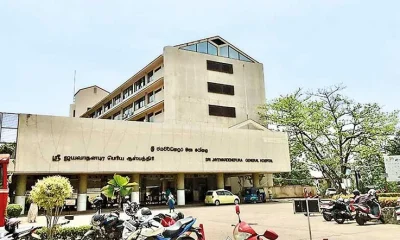
Japanese boost to Sri J’pura Hospital, an outright gift from Tokyo during JRJ rule
-

 News2 days ago
CEB Engineers warn public to be prepared for power cuts after New Year