
Features
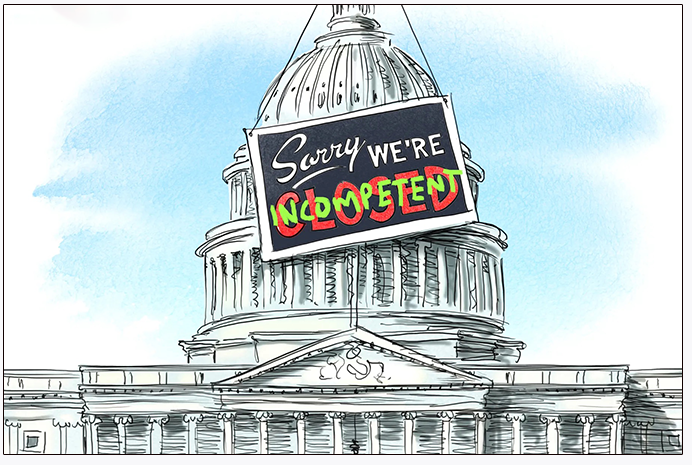
REPUBLICANS HOLD SECOND DEBATE, IN BACKDROP OF CORRUPTION, LABOR UNREST AND IMPENDING GOVERNMENT SHUTDOWN

by Vijaya Chandrasoma
The second Republican debate, hosted by the Fox News Network and Univision, was held on Wednesday, September 27 at the Ronald Reagan Library, Simi Valley California,The elephant was not in the room. Instead of participating in the debate, Trump visited Detroit to speak to non-union autoworkers on Wednesday, having been rebuffed by the striking Auto Union Workers (AUW) union members.
Trump’s absence was expected to give one of these candidates the opportunity of a breakout moment, like the one Nikki Haley had at the first debate. There was no such moment in this debate. It was more of a side show, where the candidates, instead of attacking Trump, diminished themselves by attacking each other. Unless the third debate is reduced to two or three viable candidates, perhaps DeSantis and Haley, Trump is likely to win the 2024 Republican nomination by default.
Many of these candidates seem to have already accepted the inevitability of Donald Trump being the 2024 Republican nominee, and may be vying for the vice-presidency. Although DeSantis did have a moment, when he denounced Trump, saying “Donald Trump is missing in action. He should be on this stage tonight. He owes it to you to defend his record where they added $7.8 trillion to the debt. That set the stage for the inflation we have today”.
Chris Christie, who has been Trump’s greatest critic, also described Trump as “Donald Duck”, who is not participating in the debates “because he cannot defend his criminal record during and after his presidency”. Nikki Haley appeared to be the only adult in the room, and unloaded her pent-up frustration against upstart Vivek Ramaswamy, when she said, “Honestly, every time I hear you, I feel a little dumber”. Ramaswamy got bogged down with his ties to the Chinese government, and his adoration of Donald Trump was pathetic. The contributions of Pence, Scott and Burgum were largely without import or substance.
Of course, Trump’s campaign may implode any time before November 2024, by constitutional disqualification, conviction/imprisonment, impending dementia or the moderate Republican voters’ overdue realization of his diabolical ignorance. In which case, the Republicans will be left with one of these candidates as their nominee, who are all below 15% in national polls, at least 40% behind Trump. In fact, it is rumored that alarmed Republicans are looking for a more credible candidate; the name of Governors of Virginia, Glenn Youngkin and Chris Sununu of New Hampshire are under serious consideration.
CORRUPTION IN US CONGRESS
U.S, Attorney, Damian Williams, said: “As the grand jury charged, between 2018 and 2022, (Democratic New Jersey) Senator Bob Menendez and his wife engaged in a corrupt relationship with….three New Jersey businessmen who collectively paid hundreds of thousands of dollars of bribes, including cash, gold, a Mercedes Benz and other things of value, in exchange for Senator Menendez agreeing to use his power to protect and enrich those businessmen and to benefit the Government of Egypt”.
Menendez and his wife, Nadine, who have pleaded not guilty to these bribery charges, were arraigned in US District Court in Manhattan on Wednesday, and released on bail. Their first appearance at the New York District Court is scheduled for Monday, October 2.
Senator Menendez was indicted a decade ago, charged with assisting a New Jersey doctor to commit Medicare fraud in excess of $8 million. He was acquitted on a hung jury, and allowed to return to his Senate seat.
Menendez has been stripped of his Chairmanship of the Senate Foreign Relations Committee, but he defiantly protests his innocence and refuses to resign his Senate seat in the face of demands of 30 Democratic Senators.
MORE CORRUPTION IN US SUPREME COURT
The Clarence Thomas Corruption Saga continues. It had already been reported that Thomas accepted lavish gifts from Harlan Crow, a billionaire Republican donor and collector of Hitler and Nazi memorabilia, including, inter alia, a gift of a luxuriously refurbished house where Thomas’ mother still lives, rent free; private school tuition fees for Thomas’ nephew; island-hopping luxury yacht and private plane vacations for Thomas and his white supremacist wife, Ginny, who was reported to have been tweeting Mark Meadows, Trump’s Chief of Staff on January 6, 2021, urging him to ensure the success of the Trump insurrection.
Recently, Thomas has been documented spending time with the Koch network, one of the most influential conservative political organizations in the nation. Thomas has been secretly participating in Koch Group Republican fund raising events for at least a decade, despite the fact that the Group has brought numerous cases before the Supreme Court. Brothers Charles and David Koch have been financially responsible for the emergence of the radical wing of the Republican Party, led by Trump.
Thomas has been the star attraction at 100,000 a plate fund-raising dinners organized by the Koch Organization, which have amassed millions of dollars for the Republican Party and its candidates.
While Thomas is by far the most corrupt Justice of the Supreme Court, Chief Justice Roberts and Justices Alito and Gorsuch, all appointed by Republican presidents, have also been alleged of taking bribes and commissions from law firms that have cases before the Court.
GOVERNMENT SHUTDOWN
On Wednesday, September 27, Republican Speaker Kevin McCarthy rejected a bipartisan stopgap spending bill, making the government shutdown scheduled for September 30 virtually inevitable.
McCarthy is faced with an unenviable choice. Either come to a compromise with the Democrats for a bipartisan spending bill and fund the government, which will benefit the country but cost him his job; or obey the demands of Trump and hardline Republicans to vote for a government shutdown, which will catapult the country into chaos. Recognizing the brittleness of McCarthy’s spine, he will favor a shutdown, when as many as four million federal workers could be adversely affected. While essential workers will be required to stay on the job, others will be furloughed (suspended), both categories without pay. The potential impact will grow the longer the shutdown persists, especially for regular Americans, who live paycheck to paycheck.
With just two days to go, tempers are boiling in Congress, and no compromise is in sight. The government will almost certainly shut down at midnight on September 30.
BIDEN, TRUMP WOO AUTO WORKER SUPPORT IN MICHIGAN
Two proposed visits of President Biden and former President Trump to Michigan on consecutive days occurred under divergent circumstances. Biden was invited by the President of the UAW, Shawn Fain, to join the picket line. Trump, on the other hand, was warned by Fain that he wasn’t welcome. An UAW executive said, “Trump is a pompous a…hole for visiting Detroit”.
President Biden underscored his solidarity with American workers when he joined the picket line of the UAW, the largest auto workers’ union in North America, in Michigan last Tuesday, stressing his lifelong commitment to a worker-centric economy.
However, Biden’s Achilles Heel may be his commitment of transition to electric vehicles (EVs) within the next decade. While the unions are not opposed to this transition to a green economy, it is crucial that it does not adversely affect the wages and benefits presently enjoyed by assembly line and electric battery workers.
A prolonged strike could have major ripple effects on the economy. Presidents typically act as arbiters in labor disputes. As Biden’s press secretary said, “We are not involved in negotiations. That is something for them to decide what is going to work for the parties that are involved, but he (the President) is standing with the autoworkers”.
At a speech on Wednesday at a non-unionized auto parts supplier in Michigan, in front of 500 Trump supporters, Trump made a play for the support of blue collar workers, despite his lifetime anti-union, anti-worker record. In a typical, meandering hour-long speech, he lied that “I put everything on the line to fight for you. I’ve risked it all to defend the working class from the corrupt political class that has spent decades sucking the life, wealth and blood out of this country”. Another despicable statement from a former president, whose first action as president in 2017 was to give a massive tax cut of $1.5 trillion to benefit those very corporations and billionaires who were “sucking the life, wealth and blood out of this country.”
Seeking the endorsement of the autoworkers for the 2024 presidency, Trump said, “They have to endorse Trump, because if they don’t, they are just committing suicide”. Suicide may be a preferable alternative to living four more years under a democracy-free, devoid of the rule of law, corrupt administration of this white supremacist kleptocrat.
There is little doubt that Biden will win the endorsement of the UAW for 2024, and his show of solidarity by joining the Union picket line last week may well have clinched it.
TRUMP’S NEW YORK BUSINESS EMPIRE EXPOSED AS A FRAUDULENT MYTH
Justice Arthur Engoron of New York state court in Manhattan ruled that Donald Trump and his family routinely defrauded banks and insurance companies by fraudulently inflating the value of their properties and other assets to build their business empire.
Trump lost his appeal to delay the start on this fraud trial, which is scheduled to begin on Monday, October 2. Trump and three of his adult children are listed as witnesses. The Judge has already determined that the Trump Organization had committed financial fraud. The purpose of this trial is to determine the sanctions, including ratification of cancellation of licenses to conduct business in New York and the extent of fines to be imposed on the Trump Organization.
In another blow to Trump, Manhattan Judge Tanya Chutkan denied a motion filed by Trump lawyers that she recuses herself from the sedition case she is scheduled to preside over against Trump on his role in the January 6, 2021 insurrection. Her decision not to recuse herself was based on case law, facts and the probability that the motion filed by Trump’s lawyers was a “weapon to further delay proceedings”.
HOUSE IMPEACHMENT INQUIRY AGAINST PRESIDENT BIDEN
Finally, the first hearing of President Biden’s impeachment inquiry began last Thursday. The impeachment was based on Trump’s evidence-free comments that Biden was a “Stone Cold Crook” who had, with his son, Hunter, taken millions of dollars in bribes from companies in Ukraine. Yet another classic projection.
In cringing obeisance to Trump’s recent order posted on twitter, “IMPEACH THE BUM, or fade into OBLIVION. THEY DID IT TO US”, the Republicans initiated this retaliatory process in the House without a shred of first-hand evidence against President Biden, three days before the government was scheduled to shut down. Even the Republican witness hired to investigate the alleged crimes of Hunter Biden stated at the inquiry that “the facts do not support the impeachment of President Biden”.
After six hours spent on Thursday on the impeachment inquiry “grasping at straws, and, in some cases, fabricating evidence”, Republican insiders were privately admitting to reporters this impeachment inquiry was an “unmitigated disaster”.
All told, Trump and the Republican hardliners had a terrible week, with many more such weeks likely to follow.









by Rajan Philips
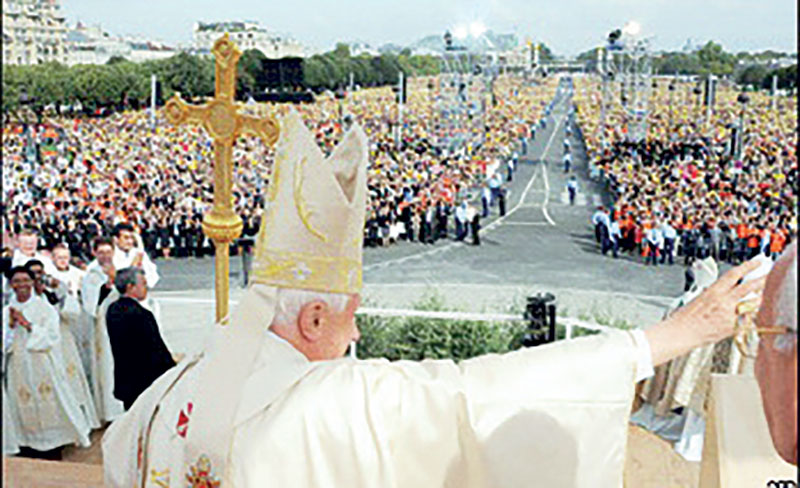
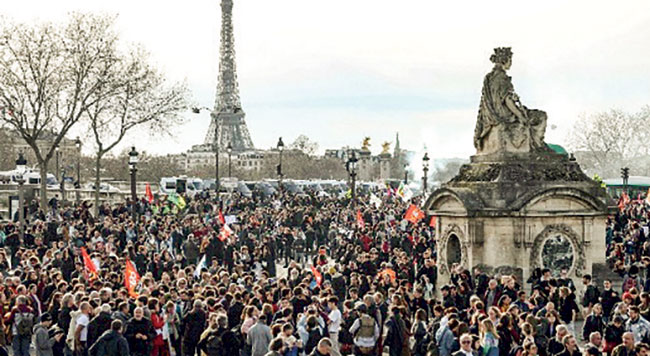
Paris has exploded in protests barely two weeks after peacefully assembling nearly a million people on its streets to welcome and salute Pope Leo XIV on his first visit to France. The good Pope himself has since been diagnosed with lung cancer and is convalescing after surgery in the Vatican. The protest triggers in France are youth frustrations over the state of the country’s education system and the broken conditions of its schools. The scale and mode of the current protests have brought back memories of the great French student protests in May 1968. The two are not the same and even though they may be comparable in appearance, the circumstances between then and now are vastly different and so will be the consequences.
It is not only in Paris, but the protests are also everywhere else in France. As well as in other cities in other countries in Europe and extending beyond. The protest triggers vary from country to country, but the arc of the protests from Paris to Delhi has a common strand: youth frustrations. Everywhere, it is the youth that is on the march – for better education in France, Belgium, Greece, Germany, Ireland, Albania and Austria; housing access and affordability in Spain; and opposition to official tampering with electoral voter lists in India. The young are restless about their future. “No future, no calm” is the chant in Paris.
France’s union of students, Union Syndicale Lycéenne (USL) had outlined four basic grievances before the protests began: “lack of teachers and staff, “dilapidated lycées,” overloaded timetables and classes, and the stress caused by Parcoursup” (a government web portal used for university admissions). The French government’s initial lukewarm response provoked the protests and when the government took a ham fisted approach, things went out of control. It has been the same story in other countries.
In India, the Modi government unleashed the police forces on students and others protesting the manipulation of the voter lists by the Chief Election Commissioner, Gyanesh Kumar, and calls for his resignation have become the rallying cry of the protests. The protests are no longer limited to the “Cockroach” youth movement or the Cockroach Janata Party (CJP), and more mainstream opposition parties are all in the fray.
Defending the Constitution has become the new motif for Rahul Gandhi and the Congress Party. The Cockroach movement that first tasted political blood in June this year, by forcing the resignation of the Union Education Minister Dharmendra Pradhan over national exam leaks, is looking for a second scalp. The government is not in any immediate danger, but Prime Minister Narendra Modi is rapidly losing his political varnish and these protests may mark the beginning of his retirement.
In Spain, Socialist Prime Minister Pedro Sanchez has called a snap election on the housing question, hoping to steal a march on the conservative Popular Party that has been leading in the opinion polls. Mr. Sanchez has been in power since 2018 and, despite the fluctuations in domestic approval rating, has gained international prominence following his clashes with Trump and Isreal over Gaza and the Iran war.
The beleaguered French President Emmanual Macron has six months left in office, and the next presidential election will be held in either April or May next year. In the cabinet meeting after three weeks of protests, President Macron reportedly acknowledged “that young people have legitimate concerns, but said these are being exploited for political purposes and turned into urban violence.”
The two main contenders to replace Macron are Jean-Luc Mélenchon who leads the far-left France Unbowed (LFI) Party, and Marine Le Pen leading the far-right National Rally (RN Party. Mélenchon is supportive of the protests, has condemned police brutality, and has participated in the Paris demonstrations. Le Pen, on the other hand, who is also the front runner in opinion polls, has blamed the students and supports police deployment against them.
There is also speculation that former President François Hollande (2012-2017) may stage a comeback as a more normal alternative to the two extreme contenders. Although he was deeply unpopular when he left office foregoing a second run, Mr. Hollande is considered to have been mostly mocked (as Rain Man) but not at all hated. His moderate positions and his socialist roots may attract a portion of the French electorate that is tired of “Jupiter” Macron and is weary of the diametrically opposite prospects.
-
- To Paris Turbulent
1968 Throwback
Whichever way, an orderly transition through France’s “rentrée politique” is in the offing, and the protesters are not clamouring to overthrow anything. That is a far cry from what transpired in 1968, when student protests ultimately led to the ouster of Charles de Gaulle. And there was more. Amidst convulsions in the US over Civil Rights legislation and the prosecution of the Vietnam War, Martin Luther King and Robert Kennedy were assassinated, President Johnson declared that he will not be a candidate in the 1968 presidential election, and Richard Nixon was elected as President eight years after his defeat by John Kennedy.
Besides the protests in France, there were protests in the then Communist countries and Yugoslavia, the Prague Spring in Czechoslovakia, the start of the troubles in Northern Ireland, and uprisings against military juntas in Latin America. Africa was becoming more and more independent and there were strong prospects of secular nationalism in the Middle East. The year 1968 also marked the start of many social movements including feminism, and the environmental and anti-war movements. Socialists were a force to reckon with in France and Italy, both politically and electorally. New Left politics was emerging as a counter to both unbridled capitalism and Soviet orthodoxy. The Club of Rome was born in 1968.
“L’imagination au pouvoir” (Power to the imagination) became the battle cry in Paris in May 1968. The protests were infused with optimism for a new social order supervening the postwar material progress. There were powerful cultural and literary overtones that have proved to be more durable than the political projects that inspired them. Television became the main political medium, if not also the message. Although the state power and structures survived, other structures were broken and the intellectual and cultural legacies of 1968 have continued.
It is a different ball of wax in 2026. The protesting students are not looking for any brave new world, but for decent furniture, clean toilets and back to basics teaching and immediate remedies to problems that should not be there in the first place. In Spain, the younger generation is looking for housing at affordable rents. European demographics are also not helpful. The ageing population has its own needs and demands while the youth are increasingly drawn from the immigrant and the working class sections of society. High youth unemployment, zero growth, and government debt have become recipe for stagnation and not resolution. In theory, it is called “gerontonomia,” a form of “democratically sustained economic stagnation.”
In politics, the radicals and populists were dominantly on the right unlike in 1968 when the political left held sway even if it was not in power. Donald Trump, who vulgarly led the rise of the ugly right, may be on his way out, but it is a different story elsewhere. The right has returned to power practically in every South American country. Brazil is almost equally divided between its socialist President Lula de Silva and his presidential challenger Flavio Bolsonaro, the Senator son of Jair Bolsonaro who is in prison for fomenting insurrection to upend the 2022 presidential election.
In 1968, China was at the peak of its Cultural Revolution. It is a different China now. Indonesia was beginning its post-Soekarno era, just as India was adapting to life without Nehru, albeit in vastly different ways. Field Marshal Ayub Khan was overthrown in Pakistan – then with its two wings, east and west, separated by a thousand miles of Indian territory. Within three years, Bangladesh would break free quite violently, redrawing forever the colonial map of the subcontinent. Bangladesh had another uprising in 2024 and the new government is struggling to keep the many promises it made in the elections that followed the overthrow of Sheikh Hasina after 15 years in power. Imran Khan decidedly eschewed Sri Lanka’s ‘aragalaya’ example to protest his ouster in Pakistan, but the army has locked him up and seems to be in no mood to release him. Now there are protests in Pakistan for his release before it is too late for everyone’s good.
It was all relatively quiet in Sri Lanka in 1968, but it would not be for long. The 1970s and every other decade since have seen political turmoils of one kind or another. 1968 / 1969 were also the years when Sri Lanka’s parliament began considering a response to the 1964 Privy Council ruling (in Bribery Commissioner v. Ranasinghe) and its implications for the ‘unalterably entrenched’ clauses of the Soulbury Constitution.
Dr. Colvin R de Silva, then an opposition LSSP MP, took over the debate and convinced everybody that the path to reforming the constitution was not through amending the Soulbury Constitution, but bypassing it and creating a new constitution and a new republic. Dr de Silva accomplished both but not without creating unintended consequences. Tamil separatism was one, and transforming Sri Lanka into a presidential polity was another. The former has come and gone, while the latter is still in force in spite of many promises and mandates to revert the country to its earlier parliamentary system.
President Dissanayake and the NPP government are the latest in a long line of promisers. The country is waiting for the final fulfillment of the promise and not its betrayal. The government can claim some credit for the current quiet in the country, but it would be a fool’s paradise to assume that peace and power are permanent.
By Milinda Moragoda
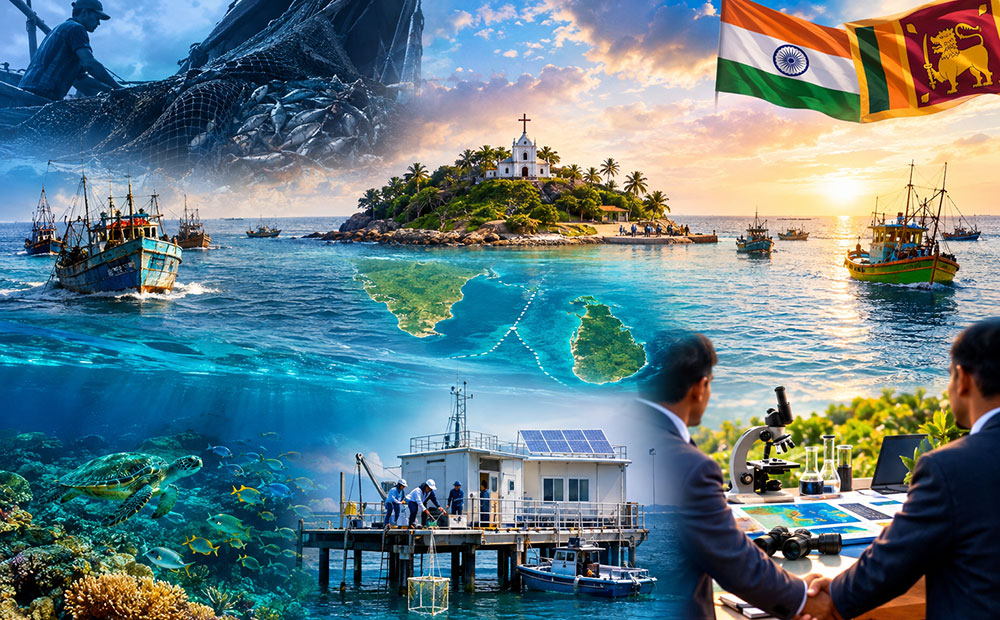
The latest proceedings before the Supreme Court of India offer an opportunity to move the Katchatheevu island debate beyond the familiar question of sovereignty. While hearing petitions challenging the 1974 and 1976 India-Sri Lanka maritime agreements, the court urged the central and Tamil Nadu governments to sensitise fishermen about the consequences of crossing the international maritime boundary and entering Sri Lankan waters. The Indian government, meanwhile, has made clear that it does not intend to reopen the agreements and is pursuing concerns relating to Indian fishermen through diplomatic channels.
More significantly, the Attorney General pointed to the depletion of fish stocks in Indian waters as one reason fishermen venture into Sri Lankan waters. The court also raised questions about fishing practices and the condition of Indian coastal waters during the hearing.
These observations point towards a more fundamental question: is the continuing focus on Katchatheevu distracting both India and Sri Lanka from the real crisis—the depletion of the Palk Bay’s marine resources and the persistence of destructive fishing practices?
A problem larger than an island
Over 50 years ago, Sri Lanka and India signed two maritime boundary agreements—one in 1974 and the other in 1976—defining the International Maritime Boundary Line and establishing the respective maritime jurisdictions of the two countries, including Sri Lanka’s sovereignty over Katchatheevu. The agreements did not grant Indian fishermen traditional fishing rights in Sri Lankan waters, nor did they provide reciprocal rights to Sri Lankan fishermen in Indian waters.
The constitutional and legal challenges to those agreements remain before the Indian Supreme Court. The court has not adjudicated their constitutional validity, and the matter remains pending. At the bilateral level, however, successive governments have treated the maritime boundary established by the agreements as the basis for managing relations between the two countries.
The concerns of Tamil Nadu’s fishing communities are genuine. Indian fishermen and their families face economic hardship when boats are detained and fishermen are arrested after crossing the maritime boundary. Tamil Nadu Chief Minister C Joseph Vijay has recently urged the Indian government to intervene to secure the release of detained fishermen and seized boats and called for renewed dialogue.
But these immediate concerns point towards a larger question: why are fish stocks being depleted, and what can be done to restore them?
The problem cannot be addressed simply through repeated diplomatic representations, arrests, releases and demands for the return of fishing boats. Nor can it be resolved by continually reopening the political debate over Katchatheevu.
The Palk Bay is a shared ecological system whose resources are finite. Its health ultimately determines whether fishing communities, on either side of the maritime boundary, can continue to make a living from it.
The ecological toll
Bottom trawling is at the heart of the problem. Dragging heavy nets across the seabed destroys marine habitats, captures juvenile fish and generates substantial bycatch. Its effects are cumulative and potentially long-lasting.
The issue is, therefore, not simply whether fishermen cross an international maritime boundary. It is also the impact on the marine ecosystem of continued large-scale, destructive fishing.
Sri Lanka’s Northern Province, once home to a thriving fishing industry, has experienced a sharp decline in fish catches, from 35,000 metric tonnes in 1995 to 17,000 metric tonnes in 2023. Multiple factors have contributed to this decline, including the legacy of decades of conflict and displacement. But pressure from large-scale trawling in the Palk Bay has added to the difficulties faced by northern fishing communities.
For fishermen on both sides, the long-term interest should, therefore, be the same: preserving the marine resource on which their livelihoods depend.
A consistent but passive response
Sri Lanka has maintained a consistent and restrained position on Katchatheevu for five decades, working within established legal and diplomatic frameworks. The island has also remained a symbol of the longstanding links between the two countries, particularly through St Anthony’s Church and the annual pilgrimage attended by devotees from both sides.
But Sri Lanka has done little to give Katchatheevu a constructive contemporary role. That should change.
Years ago, the Pathfinder Foundation proposed the establishment of a marine research station on Katchatheevu, led by the Department of Fisheries, the National Aquatic Resources Agency (NARA), and Sri Lankan universities.
The proposal deserves renewed consideration.
Turning Katchatheevu into a platform for science.
A marine research station would give Sri Lanka a practical means of exercising responsible stewardship while contributing to the preservation of the wider Palk Bay ecosystem.
It could monitor marine biodiversity and ecological degradation, assess the long-term impact of bottom trawling, track migratory patterns and spawning cycles, and provide scientific data for fisheries policy. It could also serve as a platform for marine diplomacy and dialogue between India and Sri Lanka.
India already possesses substantial marine research capabilities. Sri Lanka should develop a complementary capability on its side of the maritime boundary.
Advances in solar power, desalination and modular construction have also reduced the logistical obstacles that might once have made such a facility difficult to establish. A low-impact, high-value research station is now a feasible proposition.
From dispute to cooperation
The current debate offers an opportunity to change the nature of the conversation.
Tamil Nadu’s concern for its fishermen is legitimate. Sri Lanka’s concern about illegal fishing and the degradation of its marine resources is equally legitimate. Treating one concern as valid and the other as an obstacle will not produce a durable solution.
Nor will repeatedly returning to the sovereignty question.
Instead, India and Sri Lanka should focus on the management of the Palk Bay as a shared ecological system. Joint scientific monitoring, conservation programmes and discussions on regulated and sustainable fishing could provide the basis for practical arrangements that protect livelihoods while phasing out destructive practices, such as bottom trawling.
Such cooperation would not require either country to compromise its sovereignty or its legal position.
It would require both to recognise that marine ecosystems do not respect political boundaries.
Science over sentiment
The Katchatheevu debate has continued for decades. The immediate concerns of detained fishermen and fishing communities must be addressed through established diplomatic and legal channels. But those measures cannot substitute for a long-term solution.
The real challenge is not simply who possesses Katchatheevu. It is whether the waters surrounding the island will continue to support the communities that depend on them.
For Sri Lanka, the answer should be neither rhetorical confrontation nor passive diplomacy. It should be science, responsible stewardship and constructive regional cooperation.
Katchatheevu need not remain a symbol of contention. Properly used, it could become a platform for marine research, environmental stewardship and sustainable cooperation between India and Sri Lanka.
(Milinda Moragoda is a founder of the Pathfinder Foundation, a strategic affairs think tank. tweets @MilindaMoragoda. email@milinda.org, courtesy of The Print)

(Excerpted from “Madam-Sir,” by Manel Abeysekera career and dilemmas of Ceylon’s first woman diplomat)
After the training in London I was assigned to our Embassy in Rome as Attache as I was still a probationer in the sense we needed to pass the First Efficiency Bar Examination plus acquire proficiency in the assigned foreign language within a period of three years before being designated Third Secretary. The Italians simply could not understand the meaning of “probationer” in my passport [which I do not think should have been in our passports] and always looked askance at me thinking I was out of jail on probation!
My Ambassador, Sir Arthur Ranasinha, much to my embarrassment [probably to his too], was my brother Lakshman’s father-in-law whom I used to address at home as “Uncle” and now had to address as “Excellency” in public. To my surprise, I made the transition quite easily and never made a faux pas. Sir Arthur and Lady Ranasinha insisted that I stay with them rather than at a hotel till I found an apartment. It was extremely kind of them, but I insisted, after the first few days, that I not travel with him in the official car but find my own way to the Embassy as I did not want the staff to think that I was being favoured by the Ambassador which would have been bad for both of us.
Little did I know that I would have only 10 months in Rome. I was grateful to Methodist College for my knowledge of Latin and Roman history as I wandered around the city having a closer look at places and monuments, some of which I had already seen on our family tour of Europe in 1950 ten years before. Once again I was able to treat myself to Grand Opera both in the magnificent Opera House as well as in the spectacular Baths of Caracalla. Art and architecture of such munificence was there for me to savour.
I think Rome is one of the most beautiful cities in the world and unique in the way that the old and the new blend naturally. Italy is the place to boost any woman’s ego especially if she were a foreigner because of the fun loving, romantic and gallant Italians to whom the chase was the thing rather than the capture! They seem to be able to spot a foreigner a mile off as happened to my English friend and flat mate from New Hall, Mary Anne Pritchard whom I had arranged to meet at the Memorial of Vittorio Emmanuele [the first King of Garibaldi’s united Italy], popularly known as “the wedding cake” as it had some tiers and was white in colour.
She had been a little ahead of time and, when I arrived on the scene, she was surrounded by a number of Romeos – wasn’t she glad to see me and be “rescued”! As I have observed, Italians have a nose for foreigners, whatever be their colour! I found it great fun as I had got used to it and as the Romeos were never dangerous and one could extricate oneself from them! On one occasion, when I was walking to the Embassy, two Romeos on a motor bike were insisting on giving me a ride when the Indian Ambassador drove past with flag flying and, seeing a woman in saree, put his head out of the car window and, in a flash the Romeos disappeared and I was able to proceed!
I feel that keeping up their reputation of being handsome Latin lovers was a cult with them! This seemed to be extended beyond belief as when I went to the telecommunication authority to pay the private portion of my telephone bill the officer who dealt with me who looked quite professional though young naturally came to know my telephone number. The next evening my delightful “daily” maid Maria asked me who was telephoning my apartment and asking for the “the princess” to whom she had firmly replied that there was no princess living there!
Subsequently when I answered such a call, I realized it was the official who had attended to my telephone bill! He professed a keen interest in the history and culture of Ceylon and wanted to come and learn all about it from me! I promptly told him that it was my male colleague in the Embassy that dealt with it – which was not really true – and that he was most welcome to meet him! As I expected, that cooled his ardour!
My senior colleague [he and I were the only diplomatic officers], Melville Fernando and his wife Shelagh took me under their wing and really looked after me. I fondly called him “Unkie” as he was quite avuncular to me and Shelagh “Agh Agh” and he called me Manuel Gomez! [shades of my Oxford tutor!]. Three Ceylonese who were in and out of the Embassy and who were sharing an apartment with Nada [A. Nadarajah] our Chief Clerk, were Lakdasa Hulugalle who was with FAO, a son of the former Ambassador – with whom I had stayed one night en route to Maratea to visit Maria my Italian friend from Cambridge — Mahinda Pethiyagoda [Peththa to his friends] and S.K Charles, both of whom were students.
They told me that they had seen me in my sitting-room through their sitting-room window. I simply did not believe them as they were great teasers, but when they described the saree I was wearing the previous day, it seemed convincing as I had not met them that day. So, when I went home, I looked out of the two windows of my apartment – the sitting-room one and my bedroom one and realized to my horror that it was in my bedroom that they had actually seen me and thanked my lucky stars that I had been fully clothed at the time. My bedroom window was directly below their sitting-room window as mine was on the ground floor and theirs on the first floor next door!
I had taken the first apartment I had seen within my rent ceiling as I was keen on moving out of the Ambassador’s residence, without bothering about who my neighbours were. After my discovery, I kept my bedroom window shuttered whenever I was in it. Soon after, my neighbours invited Melville, Shelagh and me to dinner and as I was only going next door, I did not bother to carry a handbag but put my set of keys and a handkerchief in my coat pocket. After dinner Melville and Shelagh insisted on seeing me home and luckily, before they left, I discovered that I did not have my key case and, thinking that the boys had taken it from my coat pocket after I had taken it off and hidden it, we went back to their apartment and demanded it.
They looked the picture of innocence and denied having hidden it and, fumbling in my coat pocket I realized that there was a hole in it through which the case could have dropped. Though we retraced our steps, with the boys joining in the search, we could not find it. The key case was an Indian one with a design on it and a zip and it may well have happened that someone could have picked it up thinking that it was a purse. I was able to get into my apartment with the Portiera’s [female porter] front door key.
Next day Melville organized the changing of the front door lock and that of my bedroom. Italians are rather like us: they are wont to do a job in fits and starts! So, when I got home that evening, I did not realize that though the front door lock had been changed, the bedroom one had one handle – only on the outside. After a shower and having had my dinner, I went into my room and having unwittingly allowed the door to close, I found that I could not open it from inside! As it was late, all I could do was to laugh myself to sleep!
Melville would always call for me on his way to the Embassy, and I woke up early and called him about my plight and asked him to come a little early so that I could throw him the key of my apartment door through my bedroom window so that he could enter and open my bedroom door where I was marooned! The good soul he was, he did so and got into the Portiera’s courtyard below my window from which I threw him the key. He made up his own funny version of it that he had to serenade me before I threw down the key, nor did he let me forget the episode!
Melville liked to take the mickey out of me and advised me to buy a Fiat Panic car. Knowing Latin I did not fall for it, but when he suggested that I buy a Super Cortomaggiore, I fell for it as I did not know that it was the Italian term for super petrol!
My Ambassador very thoughtfully let me handle FAO work and it was a great thrill for me to sit behind the Ceylon name board at meetings. The experience of getting to know the workings of a UN Specialised Agency stood me in good stead when I was accredited to ECAFE when I served in Bangkok. It also gave me entre to Dr. B.R. Sen, the Indian Director General of FAO. He even suggested that I join FAO but wisely advised that I should wait until I was more senior in my own Service so that I could join at a higher level.
An amusing incident involving Dr. and Mrs Sen comes to mind when I was back in Ceylon after Rome, and they visited as the guests of their friend, the Governor General Sir Oliver Goonetilleke. Since they knew me I was assigned the task of taking them to Kandy and Nuwara Eliya where we stayed at the Governor General’s Residence. Sir Oliver was a close friend of our family and as he considered Mother a lucky person, he used to come on the first of the year to partake of kiribath.
Needless to say, his recollection of me was as a young woman lacking in experience to handle the duty of looking after his illustrious friends. So he called the Manager of King’s Pavilion, Kandy to enquire after his friends and to advise me to make sure that they were offered drinks before dinner and the like. In Nuwara Eliya, H.M. Queen Elizabeth II and Prince Philip had stayed at Queen’s Cottage where we were to stay and while the Sens were accommodated in the room that had been used by the Queen, I was accommodated in the one next door which had been used by the Prince.
Before dinner I thought I would have a bath in the refurbished attached bathroom. Although it was December and quite cold, the warm water made me feel great but, as I was finishing my bath, I heard the telephone ring in the room; there was no time to dry myself and put on my dressing gown and so I wrapped a bath towel round me and, dripping wet and shivering, I dashed to the telephone and answered it. To my surprise it was Sir Oliver on the line, to enquire after his friends.
While Sir Oliver had a natural stammer, I too must have been stuttering because of the cold! As soon as the call ended, I buzzed the operator and asked from whom the call had been as I thought that perhaps my brother was pulling my leg! But the operator’s shocked reply was that it was the “Uthumanan” and had I not recognized his voice! Wasn’t I glad and relieved that I had responded correctly! My brother, who when told the tale, assured me he would never have pulled my leg when I was on official duty!
My first experience of a cocktail reception was in Rome and so was my introduction to the popular Italian aperatif Campari. It was popular as a long drink with soda or orange juice or as a cocktail called negroni mixed with vodka. The deep crimson colour of the negroni made me reach for it, but one sip of it and I never tasted it again – so bitter was it on my tongue. Campari was one of the few drinks I was unfamiliar with as Father was a connoisseur of both liquors as well as liqueurs and taught me much of what I know; however, it was in Rome that I became acquainted with Italian aperitifs like Campari and the finer points of wines, their vintages and “bouquet”.
I must say that I enjoyed every moment of my stay in Italy and everyone in the Embassy was most kind and helpful and, apart from the Ambassador and his wife, Melville and Shelagh, there were others like Ornella Gulmanelli, a secretary who was always so caring and with whom I am in touch and see whenever I go to Rome, as well as others outside the Embassy like Nelson Fernando, Director of the Ceylon Tea Centre, who was great fun and had a lovely tenor voice, and whom we called Nelsone and his Italian wife.
My young girl friend Nelun de Silva whose step father Mr. Williams was with FAO and whose mother would allow her only to spend a night or week end with me in my apartment and, of course, both of us became and still are good friends as also with her husband Selvan Mather.
We had a lot of fun together but I had a problem of keeping the Italian Romeos away from her as she was and still is beautiful! We took a photograph together and titled it “Manel Nelun ha!” as in the famous “Danno Budunge”! One of my treats was to have been taken by Nelun’s parents to the Verdi Opera “Aida” staged at the Baths of Caracalla, where the Triumphal March was depicted with horses and chariots on stage – a most spectacular scene.
During my term in Rome, I had the joy of being in Venice to organize our stall at the Venice Biennale of Art, and taking time to visit the old Palace and St. Mark’s Cathedral. While in Rome, I sat for the First Efficiency Bar Examination and passed it – two years ahead of time – which resulted in my becoming a “passed Probationer” with the promoted rank of Third Secretary. This meant that as the Mission had no financial cadre provision to have more than one Third Secretary it could not pay my salary and I had to be transferred out.
I was extremely sad to end my “Roman Holiday” as it were. My Ambassador told me that he felt this would happen but that he did not tell me so as he thought that I might postpone sitting the Examination and as he felt it was not good for my career since he believed that young officers should get over examinations as soon as possible. I was given a farewell by the Embassy and I recall that the cork of the Champagne bottle popped, flew out and landed on my head! This I was assured was a lucky omen! I was given not surprisingly a cocktail shaker as a parting gift!
The only reason that I was glad to get home was that Mother had had a stroke. Yet Father advised me to accept New Delhi if offered as he thought it would be a good experience and, in any case, I would not be far from home. But that was not fulfilled as the Government was economising on foreign exchange and, alas, I never had the chance of serving in India which I have always considered is the cornerstone of our foreign policy.
So I took the sea route to Colombo from Naples, where Melville and Nada took me. A lasting, appropriate memory of the Italian character and of my departure was the lunch we had of very good fish, with Melville ordering three portions of the same for each of us. However, when the bill was brought, he noticed that he had been overcharged as it was not divisible by three; when questioned, the waiter smiled disarmingly and asked Melville whether he had not noticed that the lady had been served a “beeg fish”!

Pakistan quicks seal win after Salman Agha ton sets tone

Record 1,600 students take Russian Classical Ballet examination in Sri Lanka

Half a million people join protests in France, but some turn violent

Deadly fire breaks out at Canada military base

Showers or thundershowers will occur in most parts of the island after 1.00 p.m.

Buddhist hierarchy demands prison perks for monk convicts

‘Dates have the highest sugar content to fight Coronavirus’

Sunday Island 27 December – Headlines

#SundayIsland 17th December – Headlines

Sunday Island – 28th March

Sunday Island Headlines – 21 March

Sunday Island – 21st February – Headlines
-

 Latest News6 days ago
Nissanka’s return headlines Sri Lanka’s Test squad against Pakistan
-

 Features7 days ago
Intake 16: 45 years of duty and honour
-

 News7 days ago
Malwathu Chapter issues statement on talks with President over Gnanasara Thera’s robes
-
 News7 days ago
CP alleges NPP has taken the blame for illegal US sanctions on Iranian vessels
-

 News5 days ago
Sri Lanka, India caught in US-Iran ship crisis
-

 Opinion7 days ago
How long can Sri Lanka remain silent on its demographic crisis?
-
 Latest News6 days ago
Imran Khan’s PTI braces to fight federal takeover of Khyber Pakhtunkhwa
-

 Latest News5 days ago
Kusal Mendis’ unbeaten 87 hands Sri Lanka consolation win