
News
Public officials have the responsibility to see whether budget promises are fulfilled – Eran

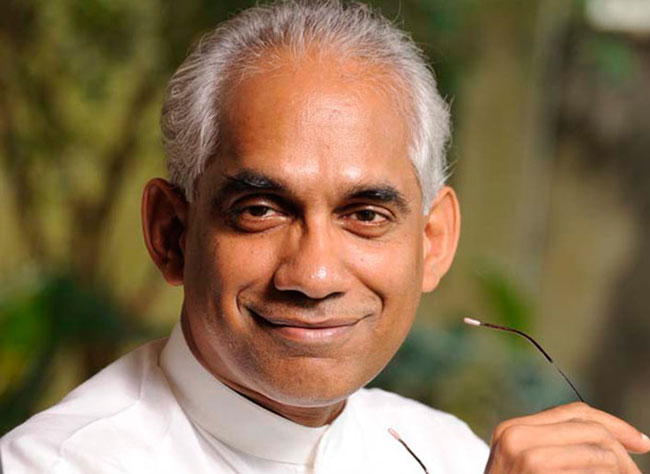
Sri Lanka, as a debt-ridden and bankrupt country, it is upon the Public Officials to ensure that budget promises are fulfilled, stated Eran Wickramaratne MP. As the month-long Budget debate came to an end, a reality check of the Budget proposals is a necessity. He emphasised that all heads of ministries and departments should fulfill their accountability and responsibility in this regard.
In general, governments in this country do not attain state revenue presented by budgets. The revenue forecast in the Budget of 2023 will decrease by about 15%. It has been estimated that the state income in 2024 will increase by 45% over the actual income in 2023. It can be said right now, that this is not achievable. But this should be analyzed.
State revenue in 2024 is projected to be about Rs. 4 trillion and expenditure about Rs. 8 trillion, a deficit nearing Rs. 4 trillion. Country’s debt is 128% of GDP, with plans to bring it down to 95% by 2032. Debt restructuring is essential, without which the goal to bring down debt to 95% by 2032 will not be attainable. We are happy that the International Monetary Fund has approved the second loan tranche and the agreement of the lending countries to restructure debt.
Wickramaratne, focusing on large-scale foreign funded projects of which there are approx. 116, said that 61 are underperforming and funding has been suspended for 31. He emphasised the importance of adopting methodology to assess for appraisal performance and progress, driving implementation.
The Budget proposes the establishment of new investment zones. There were such proposals since 2017 but none have come to fruition to date. The Auditor General himself had stated that albeit budget allocations, investment zones have not been set up.
In this Budget, there is emphasis on a National Artificial Intelligence Centre with a budget allocation of Rs. 3 Billion. Wickramaratne queried if there had been an appraisal done to this proposed investment with a projected ROI. Access to information on government projects on appraisal and performance is minimal. Inability to obtain information about government projects has increased from 12% in 2016 to 97% by 2023.
We must move away from our set mindset on ownership. Assets/resources belong to the people of a nation and not to a ministry/department or its workers. Assets/resources are of no use to its people, if not utilised and utilised at the right time. Assets/resources must generate financial and economic return to its people. Ownership alone is of no benefit to a nation or its people.
Government owned land is of no use if they do not generate benefit to the people of the country. Resources are of no use if they do not generate benefit to the people of the country. Wickramaratne made reference to a visit he made to Eppawala 20 years ago as the head of National Development Bank. There was resistance to bring in new investment for value addition. To date, Eppawala has not developed to its potential.
If the Middle Eastern countries held on to ownership of its oil resources, rejecting foreign investment, they’d still be Bedouin communities in the desert. These countries have economically advanced in the past 40 years and are now moving into new areas of development. Ironically, with the progression towards green energy, oil as a resource will continue to lose its value over time. In the same light, Sri Lanka has high quality graphene – it must be utilised in a timely manner. If not, with the advancement of science, artificial graphene being developed by China may reduce our potential gains.
The need of the hour is an independent Parliamentary Budget Office for which an allocation is set aside. Initially, the expressway from Colombo to Matara was built. Subsequently, the extension of the expressway from Matara to Hambantota was executed without an assessment of an ROI. Many government projects do not generate benefits to the people because of the absence of proper evaluation.
The MP insisted that we must move away from politicised decision-making to rational policy and managerial decision-making based on economic and financial assessments.
The establishment of an independent Parliamentary Budget Office must be based on a few fundamental principles; – the formation of a budgeting system, the development and execution of a budget based on scientific principles. We have a six-month process for a budget, which should not be the case and inadequate – budgets must be a continuous development – financial management, including that of the executing ministries/agencies performance must be monitored – compliance with law and regulations must be monitored – executive orders must be evaluated and endorsed prior to promulgation.
A clear example of this is the more recent decision to ban chemical fertiliser instantly, for organic fertiliser. Had there been an assessment of this directive by an independent body, it would have been evident that it is an initiative to be rolled out over a 10-15 year period and not one that should be attempted overnight. We would have avoided a catastrophic disaster to the farming industry and to the country in general.
Wickramaratne reiterated that critical decisions made in the recent past and that of the current Budget, should have been vetted by an independent body such as a Parliamentary Budget Office. Personal income tax, defence and welfare expenditure are among the expenditures that need continuous monitoring and are high. Wickramaratne urged the government to set up the independent Parliamentary Budget Office with immediate effect based on critical principles which include procurement, privacy policy and information policy, use of technology, coordination and review of all significant regulations.
In conclusion, Wickramaratne urged the public officials to take it upon themselves to ensure that the Budget is executed and in doing so ensure evaluation of decision-making and monitoring of the progress.







The Supreme Court on Thursday granted special leave to appeal to former Deputy Minister Shantha Premaratne, who was sentenced to four years’ rigorous imprisonment for soliciting and accepting a Rs. 50,000 bribe in return for promising employment.
Premaratne, a former United People’s Freedom Alliance (UPFA) politician and Sri Lanka Freedom Party (SLFP) organiser in the Ampara District, was convicted by the High Court in 2017.
The Commission to Investigate Allegations of Bribery or Corruption (CIABOC) has alleged that Premaratne solicited and accepted money from a party supporter after promising to secure employment for her son-in-law at the CEB.
The Court of Appeal upheld the conviction on November 05, 2024, prompting Premaratne to challenge the ruling before the Supreme Court.
A three-judge bench, comprising Justices Achala Wengappuli, Arjuna Obeyesekere and Gihan Kulatunga, granted special leave to appeal to consider whether the charge in the indictment had been proved at the trial.
Premaratne has maintained that the Rs. 50,000 was a donation for the construction of a party headquarters and not a bribe offered in exchange for employment. He has also alleged that political rivals instigated complaints against him after he lost a party selection contest in June 2008.
The Supreme Court fixed the appeal for argument on March 29, 2027. Attorneys Hafeel Farisz, Prashan Wickramaratne and Sanjeewa Kodithuwakku appeared for Premaratne, while Additional Director General Ruvini Wickramasinghe represented the CIABOC.
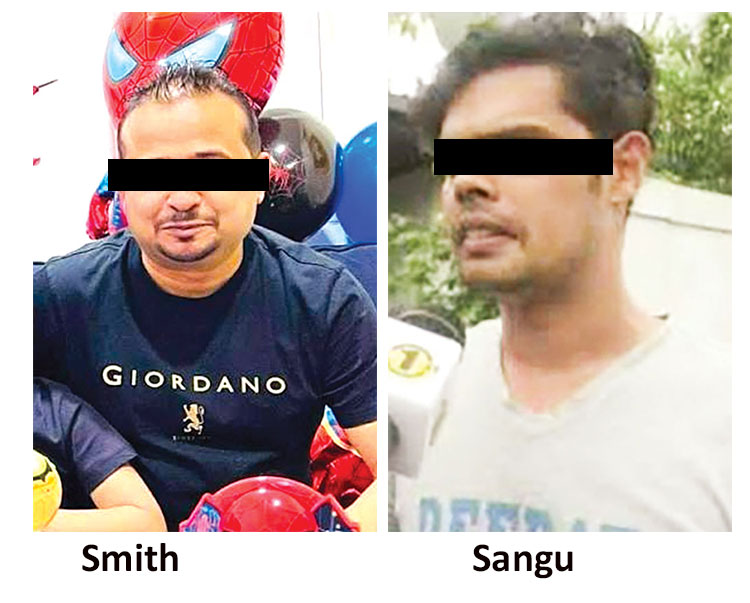
Police probe alleged links between officers and cricketer’s brother
Police Headquarters has launched a separate investigation into allegations that several police officers maintained close links with a national cricketer’s brother who is being investigated over alleged connections to organised crime and narcotics trafficking.
The move comes amid growing questions over the delay in arresting the 37-year-old suspect, despite earlier indications by investigators that arrangements were underway to take him into custody.
Police sources said the inquiry would determine whether the officers had assisted the suspect, known as ‘Ratmalane Sangu’, and members of his alleged criminal network, or interfered with ongoing investigations.
There are also allegations that some officers may have destroyed, concealed or caused the loss of evidence that could have helped investigators establish the suspect’s alleged involvement in criminal activities.
Investigators are examining whether any material was deliberately removed or concealed and whether police officers attempted to obstruct or derail investigations into the suspect and his associates.
Meanwhile, investigators have obtained an audio recording of an alleged conversation between the suspect and underworld figure Russell Smith, in which the two are said to discuss firearms-related deals.
The recording is being examined to establish the identities of the speakers, its authenticity and the context of the conversation. Investigators have yet to publicly establish the precise nature of any transactions discussed in the recording.
The suspect, a resident of Mount Lavinia, has previously served prison sentences for violent offences. Investigators are examining his alleged links to several major narcotics traffickers and underworld figures operating locally and overseas.
They are also probing information concerning his alleged role in the movement and distribution of heroin, methamphetamine, cannabis and hashish, as well as possible money-laundering activities.
Police are investigating information linking the suspect to the killing of 57-year-old Jathunga Priyantha near the Ratmalana Airport Junction on August 1.
According to police sources, the inquiry is proceeding on two fronts: establishing the suspect’s alleged involvement in organised criminal activities and determining whether police officers helped him or his associates evade detection or frustrate investigations.
The separate inquiry into the alleged police links is expected to examine communications and financial dealings between the officers, the suspect and his associates, as well as evidence of possible interference in earlier investigations.
Police Headquarters sources said investigators were also reviewing previous evidence and information to determine whether any material had been compromised or deliberately removed.


More than 1,600 students sat this year’s Russian Classical Ballet Examination, the largest number ever to take part in the examination in Sri Lanka. Exams were held in Colombo from 5, to 18, October and in Galle on 10 October.
Students aged four and above came from across the island, including Colombo, Galle, Gampaha, Negombo, Matara, Kelaniya, Panadura, Wattala, Kiribathgoda, Ratnapura, Kandy, Kurunegala, Bandarawela and Badulla. They are taught by 15 dedicated teachers trained in the Vaganova method, the renowned Russian system of classical ballet training.
They were examined by Dr. Oxana Karnovich of the Moscow State Academy of Choreography, a distinguished academic and curator.
The Russian School of Ballet and Dancing was established in 2001 by Michael Ustinov, Buddhapriya Ramanayake and Mrs Chandi Aluvihare, with Mrs Galina Pleshakova as its founding instructor. Today the School is led by Director Madam Maria Popova, Counsellor of the Embassy of the Russian Federation in Sri Lanka.


What nature knows that humanity has forgotten

Man Behind the Music: Ananda Ganegoda and Singlanka

Malinga’s career best effort fails to stop Pakistan crossing 300

The newborn baby

SC grants special leave to appeal against bribery conviction to ex-Deputy Minister

Police probe alleged links between cops and cricketer’s brother

‘Dates have the highest sugar content to fight Coronavirus’

Sunday Island 27 December – Headlines

#SundayIsland 17th December – Headlines

Sunday Island – 28th March

Sunday Island Headlines – 21 March

Sunday Island – 21st February – Headlines
-

 Latest News6 days ago
Nissanka’s return headlines Sri Lanka’s Test squad against Pakistan
-
 News7 days ago
CP alleges NPP has taken the blame for illegal US sanctions on Iranian vessels
-

 News5 days ago
Sri Lanka, India caught in US-Iran ship crisis
-

 Latest News6 days ago
Imran Khan’s PTI braces to fight federal takeover of Khyber Pakhtunkhwa
-

 Latest News5 days ago
Kusal Mendis’ unbeaten 87 hands Sri Lanka consolation win
-

 News7 days ago
Ex-Tiger witness claims Ekneligoda proposed to fire missile at MR’s plane
-

 Latest News5 days ago
Missiles intercepted near Riyadh after Saudi coalition hits Yemen fuel depot
-
 News6 days ago
Mahinda and Shiranthi hospitalised