
Latest News
Cummins, Kishan, Klaasen power Sunrisers Hyderabad into playoffs; Chennai Super Kings not out yet

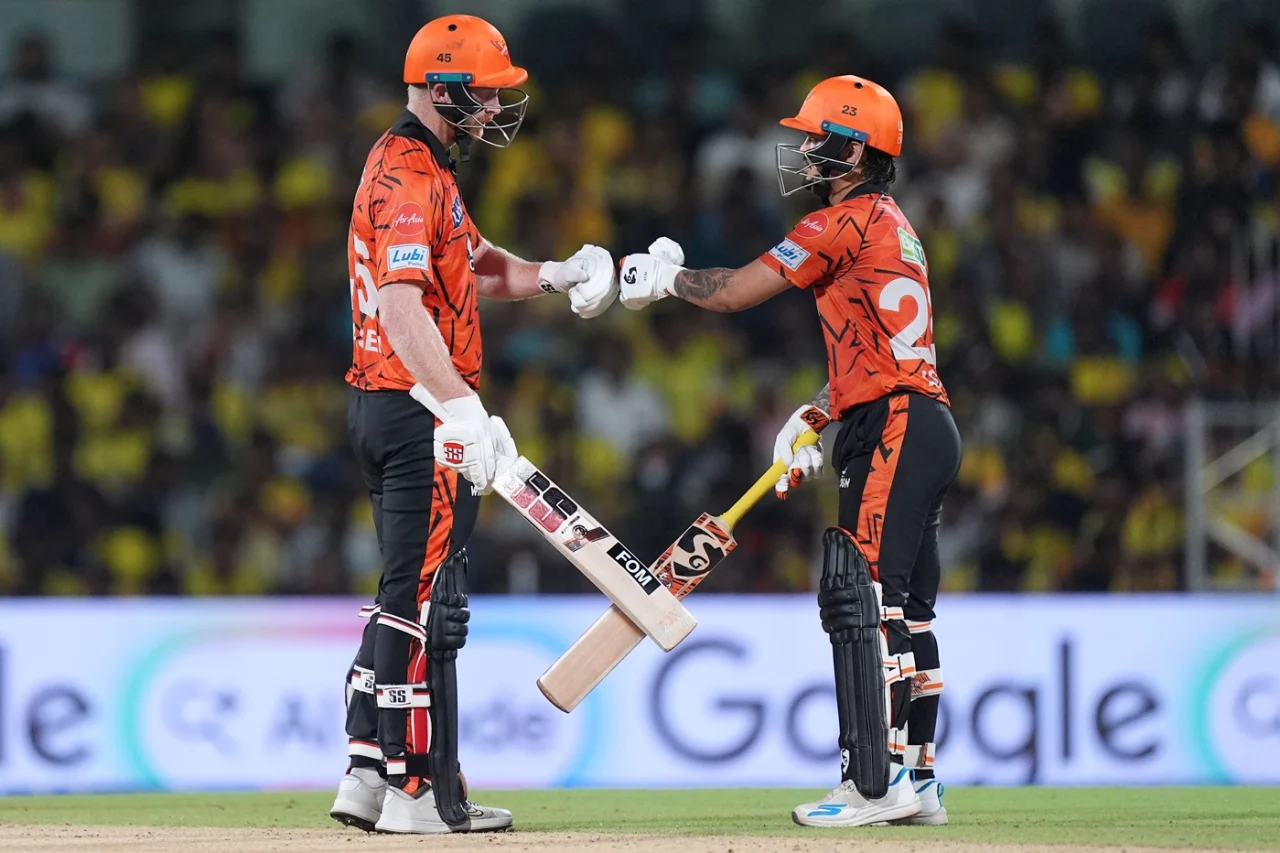
Sunrisers Hyderabad (SRH) have qualified for the IPL 2026 playoffs, taking Gujarat Titans with them. Chennai Super Kings (CSK), meanwhile, are on the brink of elimination. MS Dhoni made it to the ground for the first time this season, but his calf injury continued to keep him on the sidelines. His team fought all the way through, trying to defend a total of 180, but a fifty from Ishan Kishan and utter brilliance from Heintich Klassen won out in the end.
Rutraj Gaikwad was 9 off 11 at the end of the powerplay. He became the second batter this season to come through the first six overs with no boundaries after Lucknow Super Giants’ Arshin Kulkarni in the game against Royal Challengers Bengaluru on May 7.
It doesn’t appear as if Gaikwad is out of form. He is CSK’s second-highest run-getter. Just that he seems to be in denial about the way runs are scored in the powerplay in this IPL. With the field up, other openers are thinking boundaries all the time. He wants to get set and then go. It’s old school and that method, on Monday, gave him 15 in 21 balls – the lowest contribution by an opener at the time of his team’s 100.
On a pitch designed to neutralise bowlers of his pace, Pat Cummins picked up 3 for 28 in four overs. He nailed his match-up with Sanju Samson (one wicket for 23 runs in 20 balls in the IPL) and repeatedly went into the pitch with slower balls to add Kartik Sharma and Gaikwad into his back pocket. Led by the SRH captain’s example, Sakib Hussain took pace off for 18 of his 24 deliveries and finished with 2 for 34. These balls were sticking in the pitch and not coming onto the bat. It made setting up to play shots difficult.
Dewald Brevis walking out to bat is a spectacle all on its own, when he takes a knee just before entering the field. It’s clearly got something to do with his faith, but out here, it’s seen as a hero entry. As the main man marking himself out as the main man. Except coming into this game, he had a strike rate of 122.22. It was the sixth-lowest of all batters this season to have faced at least 50 balls.
SRH allowed only two boundaries in the five overs from nine to 13. CSK needed something from their star boy and finally he delivered. Hitting Nitish Reddy for a four and a six in the 14th over set him on his way to make 44 off 27. Confident in his cross-bat shots, he set himself up for the slow short ball and kept cutting and pulling them into the boundary.
At 17.5 overs, when Brevis was dismissed by Eshan Malinga, he, Samson and Kartik had scored 103 off 59, with 10 fours and seven sixes. Gaikwad, Urvil Patel and Shivam Dube had scored 54 off 52 with three fours and three sixes.
A third of CSK’s first seven overs were dot balls. Forty of SRH’s first 53 runs came in boundaries. The start of the chase was all about two teams pushing each other waiting for one of them to break.
Spencer Johnson and Mukesh Choudhary pushed the speed gun up to 140 kph and above, the polar opposite of what SRH’s quicks did, but they kept Travis Head and Abhishek Sharma in check and eventually got one of them out.
In between innings, CSK coach Stephen Fleming was deep in conversation with Akeal Hosein. A little bit of lip-reading suggested they were talking about how a left-arm spinner could succeed against left-hand batters. Hosein seemed to say he wanted to take the ball away from Abhishek and Head and Kishan first, and then bring one back to hit the stumps. It didn’t quite work out that way but he did get rid of Abhishek two balls into the match-up to lift CSK’s hopes.
A straight-bat push nearly resulted in his wicket but the ball dropped short of Hosein. Klaasen responded to that with a reverse sweep for four. Noor saw the change in stance and pulled out at the start of his next over. The next ball, Klaasen could have been dismissed for 18, had Johnson held on to a tough catch at deep square leg.
Once again, shrugging away the near-miss, Klaasen clattered Noor to the boundary. Klaasen dominated spin and finished with 47 off 26. He had a strike rate of 181 and was in control of 81% of the balls he faced. Those numbers should not have been possible on a pitch that was slow and a bit low. The impact he had on the game was apparent when Samson and Urvil had send-offs for Klaasen.
Batting in Klaasen’s slipstream was fun for Kishan. He brought up fifty off 37 balls. It wasn’t a fluent innings and that almost made it more special. He was so determined not to give it away and so alert when the bad ball came. Any time he had the chance to use his fast hands and whip stuff off his pads, he took them. He played the kind of innings that is important in the context of a season; a performance that says he may not be at his best but is still a threat.
Brief scores:
Sunrisers Hyderabad 181 for 5 in 19 overs (Abhishek Sharma 26, Ishan Kishan 70, Heinrich Klaasen 47, Nitish Kumar Reddy 11, Salil Arora 10*; Mukesh Choudhary 2-36,Anshul Kamboj 1-46, Noor Ahmad 1-40, Akeal Hosein 1-21) beat Chennai Super Kings 180 for 7 in 20 overs (Sanju Samson 27, Rutraj Gaikwad 15, Urvil Patel 13, Kartik Sharma 32, Dewald Brevis 44, Sjivam Dube 26. Prashant Veer 11; Praful Hinge 1-37, Pat Cummins 3-28, Eshan Malinga 1-26, Sakib Hussain 2-34) by five wickets
[Cricinfo]

Latest News
Confident Bangladesh pose Australia a fresh challenge after 15-year wait for an ODI series
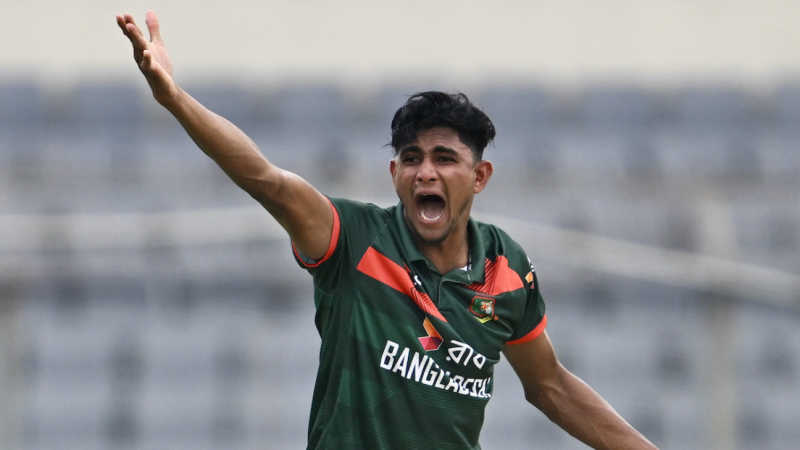
The voyage of discovery for Australia’s depleted one-day squad now moves to Dhaka against a Bangladesh side who are confident on their own turf. The visitors had hoped for reinforcements by now but that hasn’t proved the case with captain Mitchell Marsh still sidelined and Travis Head granted leave from the whole tour. But they were not a million miles away from beating Pakistan in spin-heavy conditions.
It is the first men’s bilateral ODI series between these teams in 15 years. One of the intriguing aspects of this leg of the tour is what conditions will confront Australia in only their second ODI series in the country. In times gone by it would have been billed as another trial by spin, but it may not play out that way this time. Pace bowling is now having a big say in Bangladesh. Across the six ODIs played this year – five of which have been in Mirpur, the venue for this series – pace bowlers have taken 69 wickets at 22.60 while spin has accounted for 26 at 35.50.
Having largely relied on Nathan Ellis for the last two matches in Pakistan – and even he was effectively bowling fast cutters most of the time – along with a handful of overs from Cameron Green, the likes of Xavier Bartlett and Ben Dwarshuis could well have a role to play.
Should pace play a significant part that should, in theory, provide a more familiar challenge for Australia’s batters. However, a home attack that could consist of Nahid Rana, Taskin Ahmed and the variations of Mustafizur Rahman should pose plenty of questions, especially for those struggling for form such as Marnus Labuschagne – if he is able to retain his place in the side. That isn’t to say spin won’t be a threat as well, with Bangladesh well covered in that department. Either way, it’s been a country where the bowlers are in the game: there hasn’t been an ODI total over 300 in Bangladesh since 2023.
The hosts have won their last four series at home – against Sri Lanka, West Indies, Pakistan and New Zealand – and while each of those teams have had problems of their own, Bangladesh have found a formula that is working.
Australia will get their first look at Nahid Rana who is emerging as one of the most exciting pace-bowling prospects in the world. In the recent six ODIs against Pakistan and New Zealand he took 16 wickets at 17.43. He impressed, too, in the Tests against Pakistan which is something to keep in the back pocket with Bangladesh touring Australia for two matches in August.
Mosaddek Hossain will most likely return to the Bangladesh ODI side for the first time since August 2022, while the pace attack will include the first choice trio.
Bangladesh (probable): Tanzid Hasan, Saif Hassan, Najmul Hossain Shanto, Tawhid Hridoy, Litton Das, Mosaddek Hossain, Mehidy Hasan Miraz (capt), Rishad Hossain, Taskin Ahmed, Mustafizur Rahman, Nahid Rana
Australia will likely need an extra pace bowler compared to how they finished the Pakistan series. Both Bartlett and Dwarshuis offer something with the bat, too, which is helpful for the balance of the lower order. Cooper Connolly remains available as a batter only, at least for the ODI series, and both he and the uncapped allrounder Liam Scott could put pressure on Labuschagne if the batting order was shuffled.
Australia (probable): Matt Short, Josh Inglis (capt & wk), Marnus Labuschagne, Aex Carey, Cameron Green, Matt Renshaw, Ollie Peake, Xavier Bartlett, Matt Kuhnemann, Nathan Ellis, Adam Zampa
(Cricinfo)

Iran’s military says it has halted strikes against Israel, but warned it would resume if Israel continues its military operation in Lebanon.
Israel has also stopped its strikes against Iran at Trump’s behest, according to an Israeli media report citing a senior Israeli official.
In a social media post, the US president urged both sides to stop “shooting” at each other immediately, saying “peace proceedings” would continue.
It comes after Israel and Iran exchanged a wave of missile attacks targeting key infrastructure. No casualties were reported on either side.
Yemen’s Houthi’s called for a “complete and total ban” of Israeli ships passing through the Red Sea
(Aljazeera)

AUSTRALIA
For the first time since 2017, Australia do not have global silverware to defend, with last year’s ODI World Cup semi-final exit following the relinquishing of the T20 title in 2024 after a hat-trick of trophies. They have a new captain, too, in Sophie Molineux who has taken over from the retired Alyssa Healy butAl has had a tricky start to her job due to a back injury.
Having been beaten at home by India in February, it’s a vital few weeks for the side to reaffirm their standing at the top of the tree. However, they find themselves in the group of death with one of them, India and South Africa unable to make the semi-finals.
While Healy has retired, the core of the squad remains very familiar although the call-up of left-arm quick Lucy Hamilton hints at the new generation. There is no shortage of spin options, so much so that Alana King may struggle to find a place in the XI despite recently being the Player of the Series in West Indies.
Squad: Phoebe Litchfield, Beth Mooney, Georgia Voll, Ellyse Perry, Ashleigh Gardner, Tahlia McGrath, Annabel Sutherland, Grace Harris, Nicola Carey, Sophie Molinuex (capt), Georgia Wareham, Alana King, Kim Garth, Megan Schutt, Lucy Hamilton
Player to watch
Even before Healy’s retirement, injuries had prevented her playing T20Is since the last World Cup so Georgia Voll has had a decent run to establish herself at the top of the order. She has taken it with both hands. In 12 matches Voll is averaging 39.50 with a strike-rate of 156.43 – while the sample size remains small, that’s the highest figure of anyone with at least 400 runs in T20Is.
She made her mark against New Zealand last year, then enjoyed an impressive start to 2026 with 88 against India in Canberra before a breakout century in West Indies, her batting characterised by power down the ground. It feels as though she is already at the stage where she can star in a global event.
Predicted finish: Finalists
BANGLADESH
Player to watch
Pace bowler Marufa Akter could relish the conditions in England, particularly given her ability to swing the ball at decent speeds. An on-song Marufa is a delightful sight for those who love to see the ball seam and shape towards the batters. She has taken eleven wickets in as many matches this year, while maintaining a good economy rate.
But she has little support in terms of pace from the other end. Bangladesh have left-arm seamer Fariha Islam and Ritu Moni’s slow-medium pace. As a result, Marufa has to do most of the attacking in the powerplay, and then return to bowl pinpoint yorkers and slower balls at the death.
Predicted finish: Group stage
INDIA
India enter the T20 World Cup with the tag of ODI champions. However, their form heading into this tournament has been a little iffy. In the last six months, they won at home against Sri Lanka and away against Australia but lost both the away series against South Africa (4-1) and England (2-1).
The three match series against England showed their inclination to have the returning Yastika Bhatia batting at No. 3, which meant Jemimah Rodrigues and Harmanpreet Kaur occupied Nos. 4 and 5. Bhatia was the leading run-getter in the series with 119 runs but her strike rate (126.79) was the lowest among the top-five scorers.
Injuries to Amanjot Kaur and Kashvee Gautam mean India’s combination leans towards a five-bowler strategy with Shafali Verma’s part-time offspin as the addition. India’s familiarity with English conditions – they also toured England in 2025 with wins in each of the white-ball series – means they head into the T20 World Cup with some confidence.
Squad: Harmanpreet Kaur (capt), Smriti Mandhana (vice-capt), Shafali Verma, Jemimah Rodrigues, Deepti Sharma, Richa Ghosh (wk), Arundhati Reddy, Renuka Singh, Kranti Gaud, Shree Charani, Shreyanka Patil, Bharti Fulmali, Yastika Bhatia (wk), Nandani Sharma, Radha Yadav
Player to watch
Smriti Mandhana is the lynchpin of this India team, and their fortunes will hinge on her. This is evidenced by the fact that she was India’s leading run-getter in last year’s ODI World Cup which they won. She also led Royal Challengers Bengaluru to their second WPL title earlier in the year, while topping the batting charts.
She is not just among the most experienced players in the Indian team but has the advantage of knowing conditions in the UK, thanks to her regular presence in the Kia Super League and the Hundred.
Predicted finish: Semi-finalists
NETHERLANDS

Netherlands will be at their first-ever women’s T20 World Cup (Cricinfo)
Everybody loves a newcomer, and this edition of the T20 World Cup welcomes Netherlands. They secured their spot at the qualifying tournament, where they finished in fourth place and beat the last tournament debutants, Scotland, along the way.
Though cricket is a minority sport in the country, it continues to punch above its weight and history provides plenty of reasons to regard the Dutch as plucky. In 2009, their men’s team made their first T20 World Cup appearance and beat England at Lord’s. In 2023, they were the only Associate nation to play at the men’s ODI World Cup. The women don’t have England in their group but take on heavyweights Australia, India – both for the first time – and South Africa, along with Bangladesh and Pakistan.
In personnel terms, Netherlands have four players with more than 1,000 runs in the format – Sterre Kalis, Babette de Leede, Robine Rijke and Silver Siegers – and they’re all in this squad. Iris Zwilling, their leading seamer, is two wickets away from 100. This will also be a swansong for coach Neil MacRae, who will hand over the reins to former Leicestershire, Namibia and Titans’ women’s coach Pierre de Bruyn on August 1.
Squad: Babette de Leede (capt), Caroline de Lange, Frederique Overdijk, Hannah Landheer, Heather Siegers, Iris Zwilling, Isabel van der Woning, Lara Leemhuis, Myrthe van den Raad, Phebe Molkenboer, Robine Rijke, Rosalie Lawrence (wk), Sanya Khurana, Silver Siegers, Sterre Kalis
Player to watch
Not only is Sterre Kallis their leading run-scorer in T20Is, but she has significant experience playing in England, across the domestic system and in the Hundred. Most recently, Kalis scored three fifties in the ECB Women’s One-Day Cup where she is the sixth leading run scorer.
Kalis has also played at the WBBL and will be able to provide her team-mates with inside information into a side they have never come across before. Along with Babette de Leede, who has experience playing in South Africa, Kalis will headline the batters as the Dutch look to show what they can do against some of the world’s best bowlers.
Predicted Finish One group stage upset and that’s where it will end.
PAKISTAN
As the women’s game develops at pace in many places around the world, there’s a sense Pakistan are struggling to keep up and this tournament could be a litmus test. Not only have their own board’s plans to develop a franchise T20 tournament akin to the men’s PSL stuttered then stopped entirely but, for reasons including geopolitics, their players have almost no exposure to major leagues. The consequences speak for themselves: Pakistan have won only one T20I series in the last two-and-a-half years and that was against women’s FTP newcomers Zimbabwe in May, and won one match in each of the last four editions of the T20 World Cup.
Though they are stacked with talent and have a well-resourced support staff, consistent results and major success are lacking. At an expanded tournament, their first aim will be to show they are a cut above the qualifiers and then to see if they can take some big names along the way. They’ll be hopeful of having their premier seamer, Diana Baig, for the entire tournament after she was injured during the 2024 event and will need their big hitters: Gull Feroza, Eyman Fatima and Natalia Pervaiz to come good to have a successful event.
Squad: Fatima Sana (capt), Aliya Riaz, Ayesha Zafar, Diana Baig, Eyman Fatima, Gull Feroza, Iram Javed, Muneeba Ali (wk), Nashra Sundhu, Natalia Pervaiz, Rameen Shamim, Sadia Iqbal, Saira Jabeen, Tasmia Rubab, Tuba Hassan
Key Player
Pakistan’s dynamic captain, Fatima Sana captured hearts when she had to leave the previous T20 World Cup after the sudden death of her father but then returned to lead thesa side in their final game. Though she earned much goodwill, she was unable to take Pakistan out of the group stage and was criticised for batting too low. Sana remains at No.6 but has had a remarkable 2026 so far, which has included scoring the fastest fifty in women’s T20Is, off 15 balls, and striking at over 200. Combine that with her new-ball bowling skills and the responsibility she carries as skipper, and it’s clear she is key to their chances.
Predicted Finish: Group Stage
SOUTH AFRICA
South Africa have done everything but win a World Cup recently – they have reached the last three finals across white-ball formats – so every cricketing conversation in the country is about when they will take the next step. Pressure? What pressure?
While they may face plenty of it from a home base hungry for its first senior white-ball World Cup, South Africa routinely find themselves spoken about behind the big three. That means they may feel less of the spotlight in England, where the home nation has hearts aflutter and other eyes are directed towards the big two in their group. Six-time champions Australia and current ODI World Cup title-holders India stand in South Africa’s path to the semis and the smart money could be on that pair but… South Africa beat India 4-1 in a pre-tournament series at home and knocked Australia out of the last tournament so they’ll back themselves to rise above the reputations they face.
They selected their strongest possible squad, which includes two former captains (Dane van Niekerk and Sune Luus), six seamers, five spinners, two wicketkeepers and a well-set top seven. On paper, they have all the ingredients. In practice, they need to cook.
Squad: Laura Wolvaardt (capt), Tazmin Brits, Nadine de Klerk, Annerie Dercksen, Shabnim Ismail, Sinalo Jafta (wk), Marizanne Kapp, Ayabonga Khaka, Suné Luus, Karabo Meso (wk), Nonkululeko Mlaba, Kayla Reyneke, Tumi Sekhukhune, Chloé Tryon, Dané van Niekerk
Player to watch
It’s hard to look past Laura Wolvaardt, who was the leading run-scorer at the last three ICC events, including two T20 World Cups, as being crucial to South Africa’s chances but they’ve also put their faith in reverse-retiree Shabnim Ismail. At 37, Ismail has not been an active international for over three years but is the leading seamer in league cricket and lost none of the aggression that made her so intimidating to face.
Predicted Finish: Ch… we’d never touch the money.
(Cricinfo)

Confident Bangladesh pose Australia a fresh challenge after 15-year wait for an ODI series

Tehran calls off attacks on Israel; warns not to hit Lebanon

Philippines earthquake kills 15, prompts tsunami fears:

T20 World Cup: Heavyweights, hopefuls and a debutant headline Group 1

Showers in the Western, Sabaragamuwa and North-western provinces and in Galle, Matara, Kandy and Nuwara-Eliya districts

Diesel replacement costs up to Rs. 4.5 bn in April

‘Dates have the highest sugar content to fight Coronavirus’

Sunday Island 27 December – Headlines

#SundayIsland 17th December – Headlines

Sunday Island – 28th March

Sunday Island Headlines – 21 March

Sunday Island – 21st February – Headlines
-

 News7 days ago
Lankan duo emerge winners in Latin dance championship held in Blackpool, UK
-
 Latest News5 days ago
Kusal Mendis, Pathum Nissanka, bowlers put Sri Lanka 1-0 up
-

 News5 days ago
New US tariffs proposed on 60 countries, including Sri Lanka
-

 News7 days ago
Sri Lankan teen killed in Chennai clash; three arrested
-

 Features4 days ago
Power crept into the Sangha and is now tearing it apart
-

 Features4 days ago
Kondachchi wind farm and battery storage project to boost energy security, says Power Ministry Secretary
-

 Features4 days ago
Saudi Arabia sets new benchmark in Hajj management as 1.7 million pilgrims complete sacred journey
-

 News3 days ago
Asst. Manager, security officer arrested over Rs 30 mn snatch at Horana PB branch