
News
Professor spells doom for Mannar migratory birds from Adani windfarm


By Rathindra Kuruwita
Approximately 15 million birds migrate to Sri Lanka from 30 countries every year, Prof. Sampath S. Seneviratne, of the Department of Zoology and Environment Sciences – University of Colombo says.
One of the primary entry points for these migratory birds was the Mannar islands, he said, expressing concern over the proposed Adani wind farm, which could lead to disastrous consequences for birds.
Prof. Seneviratne said each tower was 120 metres tall. Additionally, the rotor blades measure 96 metres in length.
“Windmills have no emissions, and they don’t make a lot of noise. However, whether these windmills are eco-friendly and would benefit the economy depends on a number of factors that lie outside the technology used,” he said.
Prof. Seneviratne mentioned that the proposed construction site was on the migratory path of birds. Over the past four years, the University of Colombo has conducted extensive research on bird migration routes using satellite imagery, as well as GMS and GPS technology. These data serve not only environmental interests but also aid the Civil Aviation Authority, Air Force, BIA, and other flight-operating agencies.
“Through our research, we’ve gained insight into Sri Lanka’s position within the migratory routes of birds. For instance, certain birds in Pesalai, Mannar, lay eggs in Europe, spending six months there before migrating to Sri Lanka for the other half of the year. This round trip spans approximately 25,000 kilometers. Additionally, some birds lay eggs in the Arctic during the brief period when the snow begins to melt, then journey to Sri Lanka with their offspring. Annually, approximately 15 million birds migrate to Sri Lanka from 30 different countries,” Prof. Seneviratne said.
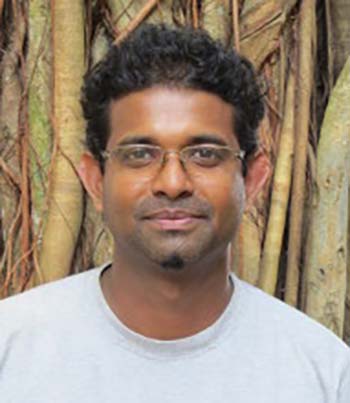
Prof. Sampath S. Seneviratne
According to Prof. Seneviratne, birds follow eight primary migratory routes, one of which is known as the Central Asian Highway. During September and October, when the northern regions of the world experience cold temperatures, approximately four billion birds use this route to migrate southwards. They then return to the north during March and April.
“Sri Lanka lies at the southernmost end of the Central Asian Highway, with Antarctica located approximately 12,000 kilometres further south. Through signed agreements, we have committed to safeguarding the well-being of these migrating birds while they are within our borders,” he said.
“There are three main routes birds take to enter Sri Lanka. One lies between Colombo and Chilaw, the second one is through Mannar and the third route lies through Jaffna,” Prof. Seneviratne said.
“Among the three primary routes, the majority of birds migrate through the Mannar and Jaffna pathways. Birds entering Sri Lanka via Jaffna typically originate from regions such as China and Russia. The Mannar route is favoured by birds from the Arctic and those migrating through the Indus Valley. Birds tend to avoid flying long distances over water due to the lack of emergency landing areas, preferring to stick to land masses whenever possible. Consequently, the safest passage for birds migrating to Sri Lanka is through what is known as Adam’s Bridge. As a result, millions of birds annually enter Sri Lanka via the Mannar route,” he said.
Prof. Seneviratne highlighted that from an environmental science perspective, several areas in Sri Lanka hold significant importance. Among them, Mannar stands out due to its crucial role in facilitating the migratory path of birds.
“We are going to establish 52 windmills that have 96-metre rotor blades that rotate at about 100 km per hour in the path of these birds,” he said.
Prof. Seneviratne pointed out that many individuals in developing nations often underestimate the impact of environmental issues on their lives. He noted that recent innovations have made wind power a cost-effective solution. In Mannar, there is already an existing windmill farm named Thambapavani, managed by the CEB. The proposed windmill farm is set to be established by Adani Green Energy Sri Lanka.
“Adani intends to utilise all the lands situated between Adams Bridge Marine National Park and Vankalai Ramsar Wetland for its power project. The cost-effectiveness of wind power is evident, with the average unit of electricity generated by wind power amounting to approximately two cents USD. However, we are expected to purchase a unit at about 9.7 cents USD, which is five times the global rate. Consequently, we will be entering into an agreement with Adani to procure electricity for five years at this significantly higher rate, with payments made in US dollars,” he said.
Prof. Seneviratne said the environment of Mannar, livelihoods of people there and the lives of animals would be severely affected by the Adani wind power project.
Prof. Seneviratne called for greater scrutiny and consideration of its environmental and social impacts. The Environmental Impact Assessment (EIA) report for the Adani wind power project had been released he said, questioning the integrity of the study, which he said, may have been more of a formality than a comprehensive analysis of the project’s implications.
“The regulatory body for renewable energy projects in Sri Lanka is the Sustainable Energy Authority (SEA) and the Environmental Impact Assessment report shows us that it is the SEA, which is the proponent for the Adani project. They are also involved in taking over the land from private individuals. This is problematic like many other aspects of the project. We have agreed to purchase a terawatt of electricity annually from the wind farm at five times the international market rate. We are destroying our environment and the livelihoods of many people. So, what is the benefit we are getting from this ‘green’ project?” he asked.







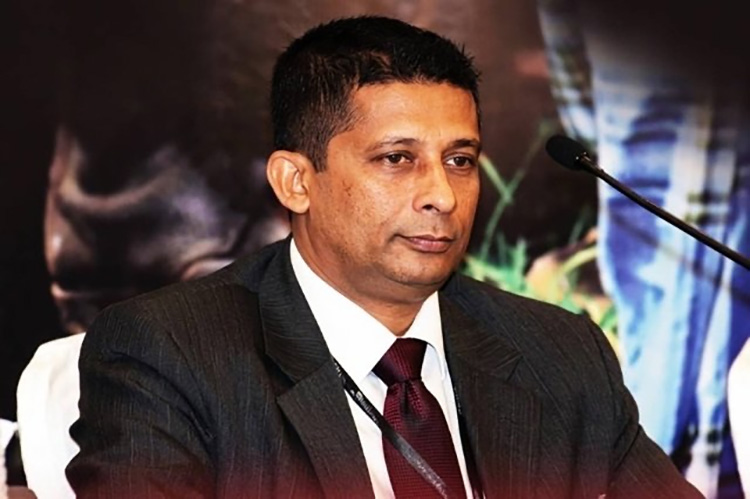
The government has chosen not to respond to questions raised by the United Nations Human Rights Council (UNHRC) regarding the detention of retired Maj. Gen. Suresh Sallay in connection with the ongoing investigations into the 2019 Easter Sunday attacks.
The Criminal Investigation Department (CID) arrested the ex-official in late February this year. The Special Rapporteur on the promotion and protection of human rights and fundamental freedoms while countering terrorism, the Working Group on Arbitrary Detention, the Special Rapporteur on the right of everyone to the enjoyment of the highest attainable standard of physical and mental health and the Special Rapporteur on the independence of judges and lawyers have jointly raised the issue on 20 July, 2026.
Drawing attention of President Anura Kumara Dissanayake to what they called alleged arbitrary detention of Sallay, former Director General of the State Intelligence Service (SIS) and former Director of Military Intelligence (DMI), under the Prevention of Terrorism Act (PTA), as well as allegations of torture and other cruel, inhuman or degrading treatment while in custody, resulting in the grave deterioration of his health, and imminent risks of retaliation through further torture and ill-treatment resulting in irreparable harm, should he be released from hospital and returned to custody, the UN sought the government explanation with a 60-day period.
The UN has stated: “This communication, and any response received from your Excellency’s Government, will be made public via the communications reporting website at the 60 days mark. Should your Excellency’s Government respond within 60 days, both the communication and the response, may be published before the 60 days mark. The communications and responses
will also be made available in the subsequent periodic report to be presented to the Human Rights Council.”
In the absence of the government’s response, the UN posted the letter, dated 20 July, 2026, addressed to President Dissanayake. The full letter can be accessed https://spcommreports.ohchr.org/TMResultsBase/DownLoadPublicCommunicationFile?gId=31125
News
Section of wartime KKS High Security Zone vacated to facilitate economic development in the area
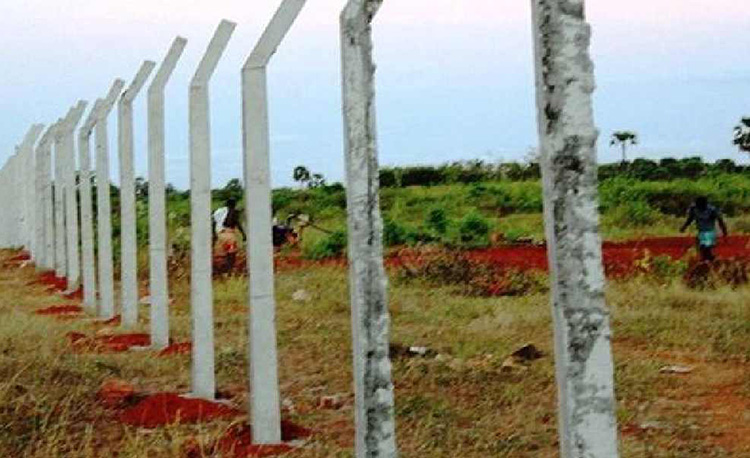
The Army, last week, vacated an area, within the wartime high security zone in the Jaffna peninsula. The Defence Ministry said that an extent of 187.56 acres of land, belonging to the Cement Corporation in Kankesanthurai, Jaffna, has been released by the military. The released land, located in Grama Niladhari Division J/233, Kankesanthurai West, within the Valikamam North (Tellippalai) Divisional Secretariat Division, had been utilised by the Sri Lanka Army since the middle of 1997.
The release of the 187.56-acre extent forms part of the initiative to make State land available for the proposed investment zone in Kankesanthurai, thereby facilitating future investment and economic development in the area.
A complaint has been lodged with the Colombo Fraud Investigation Bureau against the Government Printer and the Secretary to the Ministry of Media regarding the online release of falsified documents bearing a forged Speaker’s certificate.
Attorney-at-Law Aruna Laksiri has lodged a complaint with the Colombo Fraud Investigation Bureau requesting legal action against the Government Printer of the Department of Government Printing (No. 118, Dr. Danister de Silva Mawatha, Colombo 08), Prasanna Jayaratne, and the Secretary to the Ministry of Mass Media (Asidisi Medura, 163, Kirulapone Mawatha, Polhengoda, Colombo 05), Dr. Anil Jasinghe.
The complaint alleges the commission of offences by forging and uploading falsified documents online using a forged Speaker’s certification, failure to perform statutory duties, and misappropriation of public property.
The complaint states that a copy of the English translation of the 22nd Amendment to the Constitution was downloaded and printed from the official website of the Government Printing Department (www.documents.gov.lk), which operates under the Ministry of Mass Media. On its outer cover and on page 1, the text “certified on 25th of September, 2026” is inscribed inside brackets.
The complaint pointed out that the Speaker has certified an English translation. Under Articles 23, 79, 83, and 80 of the Constitution, Parliament enacts laws and the Speaker certifies bills strictly in the Sinhala and Tamil languages; under the Constitution, therefore the Speaker cannot apply such certification to an English translation.

Showers or thundershowers will occur at several places in the most part of the island after 1.00 p.m

GS1 Lanka drives Sri Lanka’s shift to 2D barcodes

Geneva takes up Sallay’s case and govt. ignores opportunity to answer accusations

Section of wartime KKS High Security Zone vacated to facilitate economic development in the area

Lawyer lodges complaint against Govt. Printer, Media Ministry Secy.

Sri Lankan troops in joint anti-terrorist exercise in Russia

‘Dates have the highest sugar content to fight Coronavirus’

Sunday Island 27 December – Headlines

#SundayIsland 17th December – Headlines

Sunday Island – 28th March

Sunday Island Headlines – 21 March

Sunday Island – 21st February – Headlines
-

 Latest News5 days ago
Gold winner Tharanga gets brand-new Honda Vezel from SLAAJ
-

 Features5 days ago
Why Sri Lanka needs an Inclusive Civic Nationalism – urgently
-

 News4 days ago
US-assisted ‘Ice’ detection: NPC to examine IGP’s move to transfer drug-busting team
-

 Features6 days ago
Thailand’s biggest new global star …
-
 News6 days ago
First cases taken up by SC after enactment of 22A dismissed
-

 News5 days ago
Civil society activist accuses govt. of favouring Ven. Gnanasara
-

 Editorial3 days ago
Colombo Port drug bust: The plot thickens
-

 Editorial6 days ago
Aftershocks of 22A