
Business
Environmentalists threaten legal action against Mannar wind power project

By Ifham Nizam
Environmentalists and civic organizations have come together to protest the detrimental effects of wind turbines fixed in the Mannar peninsula, stressing that they would take legal action against the project shortly.
Recently personnel representing both state and private institutions collectively decried alleged adhoc policies of the government in this regard that would lead to man-made disasters, particularly floods, which have been experienced with the turbines coming up.
Environmental Scientist Hemantha Withanage told The Island Financial Review that they would team up with other organizations to put an end to projects that would hamper nature and public welfare.
The Environmental Impact Assessment (EIA) for Adani’s 250 MW wind power project in Mannar is now available for public comment.
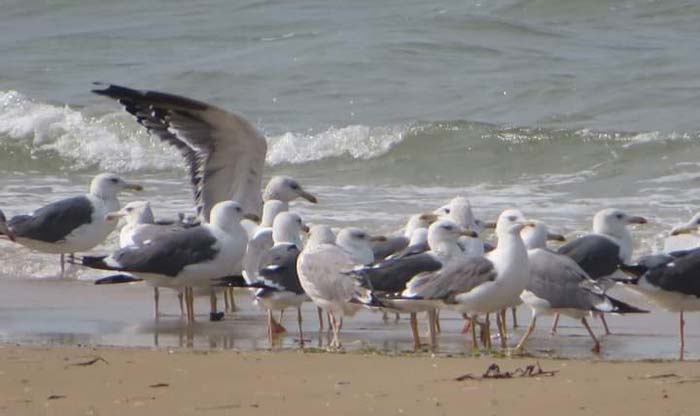
A study by renowned scientist, Professor Sampath Seneviratne of the University of Colombo, reveals that in total, about 15 million birds (of 250 species) from over 30 countries visit Sri Lanka.
The study also indicates that, however, an estimated 1 million birds from 150 species stay in Mannar during the migration period.
As the proposed 250MW wind farm covers the entire northern half of Mannar island that falls between the Adam’ Bridge Marine NP & its buffer zone & Veditaltivu NR & its buffer zone, the proposed wind farm can severely affect movement.
The Environment Impact Assessment (EIA) on the proposed 250MW Wind Power Project (Phase II) grossly devalues the importance of Mannar, a study points out.
Even though the EIA report proposed a narrow ‘Bird Corridor’ at the interior of the island, GPS-tagged birds in the Mannar Island show a wide use of the northern coast, while moving between the Protected Areas in Mannar (Adam’ Bridge Marine National Park, Veditaltivu Nature Reserve and Vankalei Sanctuary).
Some of the main reasons for the EIA to miss this important movement corridor along the north coast could be:
1. Wrong timing – The bird observations were done by observers walking in the forest – on foot – during the daytime from 6 am – 6 pm, while the bulk of the movement between protected areas happens between 6 pm – 6 am (at night).
2. Wrong season – The EIA did not cover the critical Migratory Period of birds during this study. Therefore, the observers failed to see the movement of large numbers of birds, as resident birds typically do not move in large flocks in Mannar.
3. The globally accepted technologies for the study of bird movement (that are available in Mannar) were not used to map the movement tracks.
4. It is surprising that the Central Asian Flyway and the Convention of Migratory Species of the United Nations were not stressed in the report.
5. Even though the EIA report states that a thorough review of information be carried out, the publicly available and widely circulated information on movement patterns of critical species of the Central Asian Flyway in Mannar was not referred to and seems to have been ignored. These satellite-tagged birds fly through the proposed wind farm.
6. The proposed narrow ‘movement corridor’ for millions of migratory birds seems highly arbitrary and lacks support from currently available information in the EIA report (on migratory birds in Mannar). The corridor is proposed conveniently away from the proposed wind farm based on – no study and no data (as stated in the report itself).







Business
Indian business leader urges SL entrepreneurs to tap into India’s rapidly expanding consumer market

By Sanath Nanayakkare
Speaking at the Sri Lanka Economic and Investment Summit 2026, T. Krishnakumar, Chief Executive Officer of Reliance Consumer Products Ltd (RCPL), emphasised that local enterprises can unlock substantial economic benefits by strategically aligning with India’s booming consumer base.
Addressing business leaders and policymakers at the Shangri-La Hotel in Colombo, Krishnakumar highlighted that geographical proximity and rich cultural ties provide a natural foundation for deeper commercial collaboration.
He noted that instead of viewing bilateral trade narrowly, regional partnerships should act as conduits to build robust, scalable enterprises capable of plugging into wide-reaching regional value chains.
“For Sri Lankan exporters dealing in traditional staples as well as value-added goods, accessing India’s rising middle class presents a phenomenal growth window,” he said.
Drawing insights from Reliance Consumer Products’ rapid expansion – which scaled efficiently to thousands of employees and multi-billion-dollar metrics – Krishnakumar stressed that modern corporate success relies on disciplined execution, localised consumer understanding, and smart technology integration.
Furthermore, he underscored that while rapid growth is critical, businesses must consistently anchor their models in affordability and consumer trust.
Concluding his address at the summit, the RCPL chief noted that pairing regional trade integration with resilient business practices and predictable regulatory frameworks will be vital as Sri Lanka transitions firmly toward accelerated economic development.
Addressing the Summit during a subsequent fireside chat, President Anura Kumara Dissanayake underscored that a core concern currently being targeted by the government is developing a critical mass of local entrepreneurs equipped to engage with international enterprise counterparts.
Business
SriLankan Airlines wins prestigious SATA 2026 Visitors’ Choice Award for Leading International Airline

SriLankan Airlines has once again been honoured with the prestigious Visitors’ Choice Award for Leading International Airline at the South Asian Travel Awards (SATA) 2026, reaffirming its continued recognition in the regional travel and tourism industry. The airline, which has received this award in previous years, was the only international airline to be recognised in this category at this year’s event. The 10th anniversary edition of the awards ceremony was held earlier this month at Hotel Barcelo Nasandhura in Male, Maldives.
Recognised as one of the key events on the Maldivian tourism and travel industry calendar, SATA celebrated its 10th anniversary on a grand scale, bringing together prominent industry stakeholders, including Government Ministers, distinguished dignitaries, diplomats and senior representatives from leading airlines and their respective head offices.
Commenting on the achievement, Dimuthu Tennakoon, Head of Commercial, SriLankan Airlines, stated, “We are honoured to receive this recognition at the South Asian Travel Awards 2026. Being named the Leading International Airline in the Visitors’ Choice Awards once again is a meaningful acknowledgement of our commitment to serving our passengers and strengthening our presence in the region. This award inspires us to continue enhancing the travel experience we offer and to build stronger connections with the markets and communities we serve.”
Complementing its commitment to service excellence, SriLankan Airlines offers an extensive flight network with convenient connections to destinations across the globe. In South Asia, the airline operates nearly 130 flights each week to 15 destinations across India, Pakistan, the Maldives, Nepal, and Bangladesh. With schedules thoughtfully designed to suit the needs of travellers, SriLankan Airlines provides seamless connectivity for those visiting Colombo for business or leisure, as well as passengers travelling onwards to destinations worldwide.
Business
JXG enters LMD’s Most Respected Entities in Sri Lanka 2026 for the first time, securing a place among the first 50

JXG (Janashakthi Group), Sri Lanka’s leading financial conglomerate, has been ranked 44th in LMD’s Most Respected Entities in Sri Lanka 2026, marking the Group’s first appearance in the prestigious listing. The recognition places JXG among Sri Lanka’s most respected companies and marks an important milestone in the Group’s master-brand journey.
As the holding company, JXG was also recognised across key attributes including Aspirational Workplace, Business Expansion, Business Innovation, Corporate Culture, Corporate Dynamism, Crisis Management, Employee Wellbeing, Honesty and Integrity, and Leadership Profile. The recognition reflects the growing strength of the JXG brand and the collective contribution of its businesses and people in building trust and confidence among its stakeholders.
JXG’s subsidiaries, including Janashakthi Life and First Capital, have also been recognised in the main table of LMD’s Most Respected Entities 2026 rankings, while Janashakthi Finance has been recognised under the Business Expansion attribute, reflecting the strength of the Group’s individual businesses alongside its growing master brand.
Conceptualised and commissioned by LMD and conducted by PepperCube Research Consultants, the Most Respected Entities special edition recognises companies based on an independent survey of Sri Lanka’s business community.
Commenting on the recognition, Gamika de Silva, Group Chief Marketing Officer at JXG, said, “This is a proud moment for all of us at JXG. We set out to build a Group brand that is not just seen but lived by our people and reflected in everything we do. Ultimately, the true testament to any brand lies in its people, and the credit for this recognition goes to everyone across JXG who brings our values to life every day. This recognition is an encouraging milestone for us, while also reminding us to keep raising the bar and earning the respect of our stakeholders through what we do.”
JXG’s approach to building trust is anchored in its core values of Integrity, Collaboration, Respect, Performance Driven and Innovation. These values guide how its businesses operate, how its people engage with one another and how the Group serves its customers and wider stakeholders.
As JXG continues to expand its businesses, the Group remains focused on strengthening its market presence, creating long-term value and contributing to the growth of Sri Lanka’s financial services sector, guided by its purpose, Breaking Barriers, Forging Futures.

Houthi missile attack on Yemeni presidential palace kills five, minister says

Physical development must be matched by the enrichment of people’s inner lives through aesthetics and culture – PM

Review of the operations of the 1818 Hotline introduced to report drug-related information

Showers in the Western, Southern, Central, Sabaragamuwa, North-Western and Northern provinces and in the Anuradhapura District

SJB: Govt. trying to reappoint Jayakody, who resigned from Cabinet amidst coal scam

India busts Pakistani salt smuggling via Sri Lanka

‘Dates have the highest sugar content to fight Coronavirus’

Sunday Island 27 December – Headlines

#SundayIsland 17th December – Headlines

Sunday Island – 28th March

Sunday Island Headlines – 21 March

Sunday Island – 21st February – Headlines
-

 News5 days ago
Sri Lanka escalates anti-graft drive with Shiranthi’s jailing
-

 News6 days ago
NPP govt. reminded of its responsibilities as US warship leaves Colombo
-

 Latest News7 days ago
Farhan, Sadaqat help Pakistan ace 183 chase to go 1-0 up
-

 Latest News4 days ago
Farhan and Sadaqat help Pakistan seal series in style
-

 News5 days ago
Iranian ships stranded, Lanka fears US sanctions
-

 Latest News3 days ago
Nissanka’s return headlines Sri Lanka’s Test squad against Pakistan
-

 Features4 days ago
Intake 16: 45 years of duty and honour
-

 News6 days ago
Interdicted top House official Kularatne receives special recognition in Mexican Parliament