
News
Professor spells doom for Mannar migratory birds from Adani windfarm


By Rathindra Kuruwita
Approximately 15 million birds migrate to Sri Lanka from 30 countries every year, Prof. Sampath S. Seneviratne, of the Department of Zoology and Environment Sciences – University of Colombo says.
One of the primary entry points for these migratory birds was the Mannar islands, he said, expressing concern over the proposed Adani wind farm, which could lead to disastrous consequences for birds.
Prof. Seneviratne said each tower was 120 metres tall. Additionally, the rotor blades measure 96 metres in length.
“Windmills have no emissions, and they don’t make a lot of noise. However, whether these windmills are eco-friendly and would benefit the economy depends on a number of factors that lie outside the technology used,” he said.
Prof. Seneviratne mentioned that the proposed construction site was on the migratory path of birds. Over the past four years, the University of Colombo has conducted extensive research on bird migration routes using satellite imagery, as well as GMS and GPS technology. These data serve not only environmental interests but also aid the Civil Aviation Authority, Air Force, BIA, and other flight-operating agencies.
“Through our research, we’ve gained insight into Sri Lanka’s position within the migratory routes of birds. For instance, certain birds in Pesalai, Mannar, lay eggs in Europe, spending six months there before migrating to Sri Lanka for the other half of the year. This round trip spans approximately 25,000 kilometers. Additionally, some birds lay eggs in the Arctic during the brief period when the snow begins to melt, then journey to Sri Lanka with their offspring. Annually, approximately 15 million birds migrate to Sri Lanka from 30 different countries,” Prof. Seneviratne said.
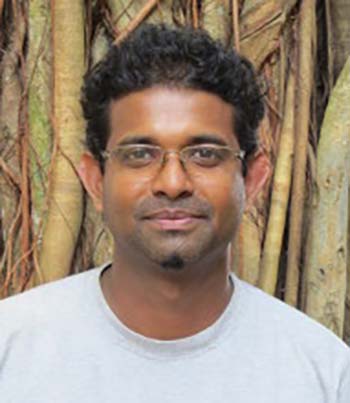
Prof. Sampath S. Seneviratne
According to Prof. Seneviratne, birds follow eight primary migratory routes, one of which is known as the Central Asian Highway. During September and October, when the northern regions of the world experience cold temperatures, approximately four billion birds use this route to migrate southwards. They then return to the north during March and April.
“Sri Lanka lies at the southernmost end of the Central Asian Highway, with Antarctica located approximately 12,000 kilometres further south. Through signed agreements, we have committed to safeguarding the well-being of these migrating birds while they are within our borders,” he said.
“There are three main routes birds take to enter Sri Lanka. One lies between Colombo and Chilaw, the second one is through Mannar and the third route lies through Jaffna,” Prof. Seneviratne said.
“Among the three primary routes, the majority of birds migrate through the Mannar and Jaffna pathways. Birds entering Sri Lanka via Jaffna typically originate from regions such as China and Russia. The Mannar route is favoured by birds from the Arctic and those migrating through the Indus Valley. Birds tend to avoid flying long distances over water due to the lack of emergency landing areas, preferring to stick to land masses whenever possible. Consequently, the safest passage for birds migrating to Sri Lanka is through what is known as Adam’s Bridge. As a result, millions of birds annually enter Sri Lanka via the Mannar route,” he said.
Prof. Seneviratne highlighted that from an environmental science perspective, several areas in Sri Lanka hold significant importance. Among them, Mannar stands out due to its crucial role in facilitating the migratory path of birds.
“We are going to establish 52 windmills that have 96-metre rotor blades that rotate at about 100 km per hour in the path of these birds,” he said.
Prof. Seneviratne pointed out that many individuals in developing nations often underestimate the impact of environmental issues on their lives. He noted that recent innovations have made wind power a cost-effective solution. In Mannar, there is already an existing windmill farm named Thambapavani, managed by the CEB. The proposed windmill farm is set to be established by Adani Green Energy Sri Lanka.
“Adani intends to utilise all the lands situated between Adams Bridge Marine National Park and Vankalai Ramsar Wetland for its power project. The cost-effectiveness of wind power is evident, with the average unit of electricity generated by wind power amounting to approximately two cents USD. However, we are expected to purchase a unit at about 9.7 cents USD, which is five times the global rate. Consequently, we will be entering into an agreement with Adani to procure electricity for five years at this significantly higher rate, with payments made in US dollars,” he said.
Prof. Seneviratne said the environment of Mannar, livelihoods of people there and the lives of animals would be severely affected by the Adani wind power project.
Prof. Seneviratne called for greater scrutiny and consideration of its environmental and social impacts. The Environmental Impact Assessment (EIA) report for the Adani wind power project had been released he said, questioning the integrity of the study, which he said, may have been more of a formality than a comprehensive analysis of the project’s implications.
“The regulatory body for renewable energy projects in Sri Lanka is the Sustainable Energy Authority (SEA) and the Environmental Impact Assessment report shows us that it is the SEA, which is the proponent for the Adani project. They are also involved in taking over the land from private individuals. This is problematic like many other aspects of the project. We have agreed to purchase a terawatt of electricity annually from the wind farm at five times the international market rate. We are destroying our environment and the livelihoods of many people. So, what is the benefit we are getting from this ‘green’ project?” he asked.








The special ward at Sri Jayewardenepura General Hospital, which had until now been reserved exclusively for the use of the Executive President, was opened for the public for the provision of medical treatment to the general public from Tuesday (24).
This decision was taken jointly by the Ministry of Health and the hospital administration, in accordance with instructions given by President Anura Kumara Dissanayake.
Constructed in 1984 with a grant from the Government of Japan, Sri Jayewardenepura General Hospital was originally established with a capacity of 1,000 beds. However, in line with the initial design, an additional special unit, designated as Room No. 1001, was included exclusively for the personal use of the Executive President.
Over the 42 years since the hospital’s establishment, this facility has been utilised only on a very limited number of occasions. Nevertheless, it has been maintained over the years in anticipation of a possible visit by a sitting President, without being made available for patient use.
With effect from today, this special unit will be utilised for the benefit of general patients receiving treatment at the hospital. This step has been taken in line with the Government’s policy of ensuring the more efficient use of public assets and resources to meet the healthcare needs of the people.

The second meeting of the Cabinet Sub-Committee appointed to ensure the orderly functioning of the public service was held on Tuesday (24) afternoon at the Presidential Secretariat, under the patronage of Prime Minister Dr Harini Amarasuriya.
Extensive discussions were held on the immediate measures required to ensure the uninterrupted delivery of government services to the public and to address the challenges faced by public servants.
Attention was also drawn to maintaining the continuous operation of services under the Ministries of Public Administration, Provincial Councils and Local Government, Health, Education, and Justice. Accordingly, it was decided to ensure that examinations are conducted as scheduled and that essential medicines are supplied to hospitals without disruption.
The challenges in passenger transport services and the railway transport system, as well as future measures, were also discussed at length. Focus was also placed on the steps to be taken regarding the transportation of essential goods.
In addition, attention was given to introducing digital service systems to facilitate working from home and to enhance the efficiency of existing services. It was also noted that these activities would be supervised under the Ministry of Digital Economy.
Instructions were further issued to review the current energy management practices across all ministries and departments and to take steps to implement necessary policy changes.
Minister of Public Administration, Provincial Councils and Local Government A. H. M. M. H. Abeyaratne, Secretary to the Prime Minister Pradeep Saputhanthri, Chief of Staff to the President Prabath Chandrakeerthi, Secretary to the Ministry of Public Administration, Provincial Councils and Local Government S. Aloka Bandara, Secretary to the Ministry of Health and Mass Media Dr Anil Jasinghe, Secretary to the Ministry of Energy Professor T. M. Udayanga Hemapala, Secretary to the Ministry of Digital Economy T. R. W. S. Dhanapala, Secretary to the Ministry of Justice and National Integration Ayesha Jinasena, PC, Senior Additional Secretary to the President Roshan Gamage, and Chairman of the Ceylon Petroleum Corporation D. J. A. S. S. Rajakaruna, along with other committee members, were also present at the occasion.
… first NPPer to face charges under Section 70 of Bribery Act
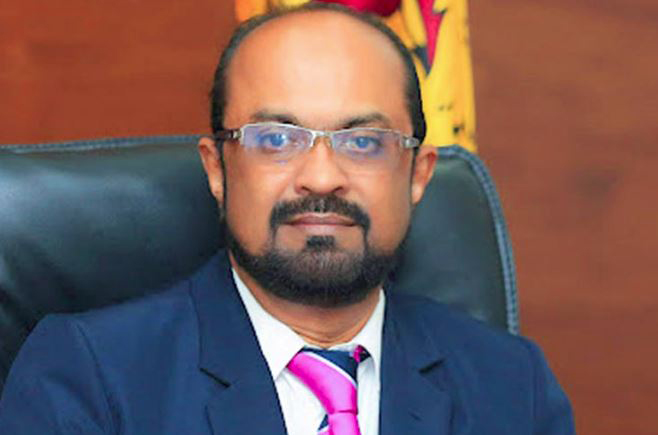
Colombo High Court has issued summons on Energy Minister Kumara Jayakody to appear in court today (27) to serve indictment in a corruption case filed by the Commission to Investigate Allegations of Bribery or Corruption (CIABOC). Action has been taken under Section 70 of the Bribery Act. The losses suffered by the government have been estimated at Rs. 8,859,708.
National List (NL) MP Jayakody is the first NPP minister or politician at any level to be indicted for corruption. The NPP parliamentary group consists of 159 including 18 NL members.
The summons has been issued by High Court judge Rashantha Godawalage.
Although CIABOC previously in many instances arrested those who had been under investigation and produced them before Magistrate courts, Minister Jayakody has been directly summoned by the Colombo High Court.
The investigation into alleged corruption in procurement during the time Jayakody served the Ceylon Fertilizer Corporation (CFC) started after the change of government in 2015.
According to the CIABOC investigation, the alleged instance of corruption took place in early 2014 towards the tail end of Mahinda Rajapaksa’s second term. At that time Jayakody was CFC’s Procurement Manager, and the CIABOC dragged the investigation until its current leadership under overall speeding up of the cases recently completed the inquiry.
Parliament recently announced that the debate on no-faith motion moved against Minister Jayakody over alleged irregularities in the procurement of substandard coal for the country’s only coal-fired power station at Norochcholai.
SJB MP Mujibur Rahman said that the NPP, having campaigned on an anti-corruption platform during presidential and parliamentary polls in 2025 couldn’t under any circumstances shield minister Jayakody. The indictment of Jayakody over a corruption case that had happened in 2014 and the failure on his part to fulfill obligations as Energy Minister under the current dispensation couldn’t be considered separately, the Colombo District MP said.
The issue at hand is whether the NPP would try to protect Jayakody at the expense of the government, MP Rahman said. Once the NPPer is formally charged in a corruption case the government would find it extremely difficult to keep him in the cabinet, the former UNPer said.
SJB lawmaker S.M. Marrikar recently warned Minister Jayakody that he should be prepared to serve a jail term. The warning was issued at a media briefing that primarily dealt with the alleged irregularities in the procurement of coal and their decision to move a no-faith motion against the minister. Marrikar explained how the crisis coupled with the growing diesel shortage could compel the government to increase electricity tariffs by as much as 18 percent next week. MP Marikkar said that they were eagerly waiting to see who backs Jayakody at the expense of the government during the upcoming vote on the no-faith motion.
There had been a previous case of a sitting minister being charged under the Bribery Act in respect of corruption perpetrated as a government servant. MP Rahman said that they intended to intensify the ongoing campaign against the government on the strength of the unprecedented corruption case and the outcome of the no-faith motion. “Of course, they have the numbers to defeat our no-faith motion. But, in doing so, they end up with egg on their face. That is the reality,” Rahman said, adding that those responsible for waste, corruption and irregularities whichever political parties they represented shouldn’t expect special status.
MP Rahman alleged that the CIABOC granted special status to Minister Jayakody. All those who had been indicted previously were first called to the CIABOC, recorded their statements and then arrested, handcuffed and produced in court. The media was afforded the opportunity to cover their humiliation, MP Rahman said, but in this case the powers that be paved the way for the accused to receive indictments directly from the Colombo High Court.
“Let us see whether the Bar Association of Sri Lanka responds to this development,” MP Rahman said.
By Shamindra Ferdinando

Presidential Suite at Sri Jayewardenepura General Hospital opened to the public

Cabinet Sub-Committee appointed to streamline the Public Service meets for the second time

PSL 2026: Teams allowed to submit two XIs and pick one after toss

Japan Premier League [JPL], building cricket from the ground up

Showers may occur at a few places in the Sabaragamuwa province and in Galle, Matara, Kalutara and Nuwara-Eliya districts in the evening

Energy Minister indicted on corruption charges ahead of no-faith motion against him

‘Dates have the highest sugar content to fight Coronavirus’

Sunday Island 27 December – Headlines

#SundayIsland 17th December – Headlines

Sunday Island – 28th March

Sunday Island Headlines – 21 March

Sunday Island – 21st February – Headlines
-

 News3 days ago
Senior citizens above 70 years to receive March allowances on Thursday (26)
-

 Features5 days ago
Trincomalee oil tank farm: An engineering marvel
-
 News19 hours ago
Energy Minister indicted on corruption charges ahead of no-faith motion against him
-

 News2 days ago
US dodges question on AKD’s claim SL denied permission for military aircraft to land
-

 Features5 days ago
The scientist who was finally heard
-

 Business2 days ago
Dialog Unveils Dialog Play Mini with Netflix and Apple TV
-

 News3 days ago
CEB Engineers warn public to be prepared for power cuts after New Year
-
 News3 days ago
Japanese boost to Sri J’pura Hospital, an outright gift from Tokyo during JRJ rule