
News
Destined to be pope:Brother says Leo XIV always wanted to be a priest


Robert Prevost’s brother, John, said a neighbor once told him he’d be pope.
Who is Pope Leo XIV?The 69-year-old Chicago native is the first American pope and is seen as a diplomat in the church.
When Robert Prevost was in the first grade, his neighbor told him he would be the first American pope, his brother told ABC News.
On Thursday, that prophecy came true, when Prevost, a 69-year-old cardinal, was elected to be the 267th pontiff — and the first from the United States.
Before he was Pope Leo XIV, Prevost grew up the youngest of three brothers in the South Chicago suburb of Dolton.
He always wanted to be a priest, his older brother, John Prevost, told ABC News outside his home in Illinois on Thursday.
“He knew right away.
I don’t think he’s ever questioned it. I don’t think he’s ever thought of anything else,” John Prevost said.
As a child, Pope Leo XIV “played priest,” John Prevost said. “The ironing board was the altar.”
The pope is a White Sox fan, his brother confirmed. “He’s a regular, run-of-the-mill person,” he said.
Leo started to emerge as a frontrunner for the papacy in the days before the conclave began, according to the Rev. James Martin, a papal contributor to ABC News.
John Prevost said he spoke to his brother on Tuesday, before the cardinals went into the secretive conclave, and told his younger brother that he also believed he could be the first American pope. At the time, his younger brother called it “nonsense” and “just talk,” saying, “‘They’re not going to pick an American pope,” John Prevost said.
“He just didn’t believe it, or didn’t want to believe it,” John Prevost said.
John Prevost said he expects his brother will follow in the late Pope Francis’ footsteps as a voice for the disenfranchised and poor.
“I think they were two of a kind,” John Prevost said. “I think because they both were in South America at the same time — in Peru and in Argentina — they had the same experiences in working with missions and working with the downtrodden. So I think that’s the experience that they’re both coming from.”
Louis Prevost, the eldest of the three Prevost brothers, was feeling under the weather and lying in bed at his home in Florida when the big moment came.
“My wife called to tell me there’s white smoke from the chapel,” he said.
Louis Prevost said he tuned in to the live broadcast of the Vatican announcement.
“They started reading his name, and when he went, ‘blah, blah, blah, Roberto,’ immediately I knew — that’s Rob,” he said. “I was just thankful I was still in bed lying down, because I might have fallen down.”
Louis Prevost said he got out of bed and started “dancing around like an idiot.”
“It’s just incredible,” he said. “I’m suddenly wide awake and feeling wonderful.”
He described his brother as “down to earth,” someone who has a good sense of humor and is “smart as a whip.” He loved his work as a missionary in Peru and being with the people, and through his work with the Vatican has traveled the world, Louis Prevost said.
“I thought I had done traveling in the Navy, but, my God, he blew me away,” he said.
His brother surmised that global experience may have stood out to the other cardinals in electing him pope.
Louis Prevost said his brother seemed to always know his calling, and that as young as 4 or 5, the family knew he was destined for great things in the Catholic Church. When his brothers were playing cops and robbers, Leo would “play priest” and distribute Holy Communion with Necco wafers, Louis Prevost said.
“We used to tease him all the time — you’re going to be the pope one day,” he said. “Neighbors said the same thing. Sixty-some years later, here we are.”
Leo started to emerge as a frontrunner for the papacy in the days before the conclave began, according to the Rev. James Martin, a papal contributor to ABC News.
John Prevost said he spoke to his brother on Tuesday, before the cardinals went into the secretive conclave, and told his younger brother that he also believed he could be the first American pope. At the time, his younger brother called it “nonsense” and “just talk,” saying, “‘They’re not going to pick an American pope,” John Prevost said.
“He just didn’t believe it, or didn’t want to believe it,” John Prevost said.
John Prevost said he expects his brother will follow in the late Pope Francis’ footsteps as a voice for the disenfranchised and poor.
“I think they were two of a kind,” John Prevost said. “I think because they both were in South America at the same time — in Peru and in Argentina — they had the same experiences in working with missions and working with the downtrodden. So I think that’s the experience that they’re both coming from.”
Louis Prevost, the eldest of the three Prevost brothers, was feeling under the weather and lying in bed at his home in Florida when the big moment came.
“My wife called to tell me there’s white smoke from the chapel,” he said.
Louis Prevost said he tuned in to the live broadcast of the Vatican announcement.
“They started reading his name, and when he went, ‘blah, blah, blah, Roberto,’ immediately I knew — “that’s Rob,” he said. “I was just thankful I was still in bed lying down, because I might have fallen down.”
Louis Prevost said he got out of bed and started “dancing around like an idiot.”
“It’s just incredible,” he said. “I’m suddenly wide awake and feeling wonderful.”
He described his brother as “down to earth,” someone who has a good sense of humor and is “smart as a whip.” He loved his work as a missionary in Peru and being with the people, and through his work with the Vatican has traveled the world, Louis Prevost said.
“I thought I had done traveling in the Navy, but, my God, he blew me away,” he said.
By Alex Perez and Meredith Deliso

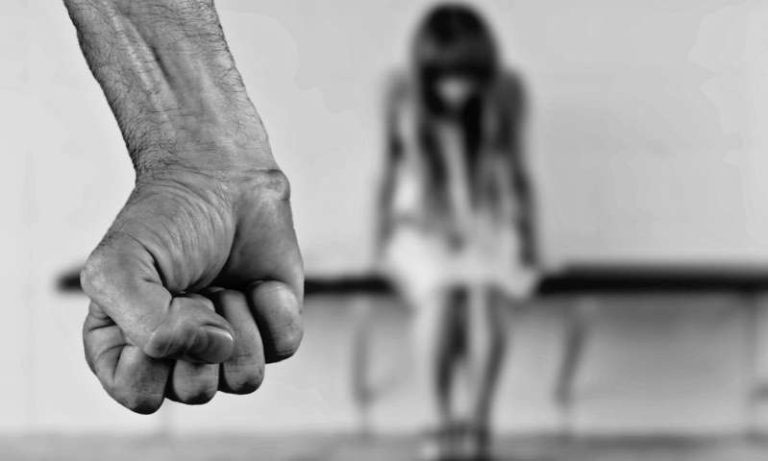
More than 108,000 complaints of child abuse had been received by the National Child Protection Authority (NCPA) between 2015 and 2025, Women and Child Affairs Minister Saroja Savithri Paulraj told Parliament yesterday.
Responding to a question raised by Opposition Leader Sajith Premadasa under Standing Order 27/2, the Minister said 4,421 child abuse cases were pending before High Courts as of April 30 this year, with indictments already filed against the accused.
She said the NCPA was working with 47 Police Child and Women Protection Bureaus under the Police Children and Women Abuse Prevention Division to expedite the hearing and conclusion of these cases.
The Minister said measures were also being taken to protect child victims during legal proceedings by introducing a system to record their evidence through video in a safe and child-friendly environment, thereby reducing the need for them to appear in court.
She said discussions were underway with the Ministries of Health and Mass Media and other relevant institutions to establish nine provincial video evidence recording units.
by Saman Indrajith ✍️
The Court of Appeal yesterday dismissed a writ petition seeking to postpone the 2026 G.C.E. A/L Examination by two months.
The petition, filed by a group of students due to sit the examination for the first and second time, sought an order delaying the examination, which is scheduled to commence next month.
The Court announced its decision after considering submissions made in support of the application and declined to grant leave to proceed with the petition.
As a result, the 2026 G.C.E. Advanced Level Examination will be held as scheduled in August.
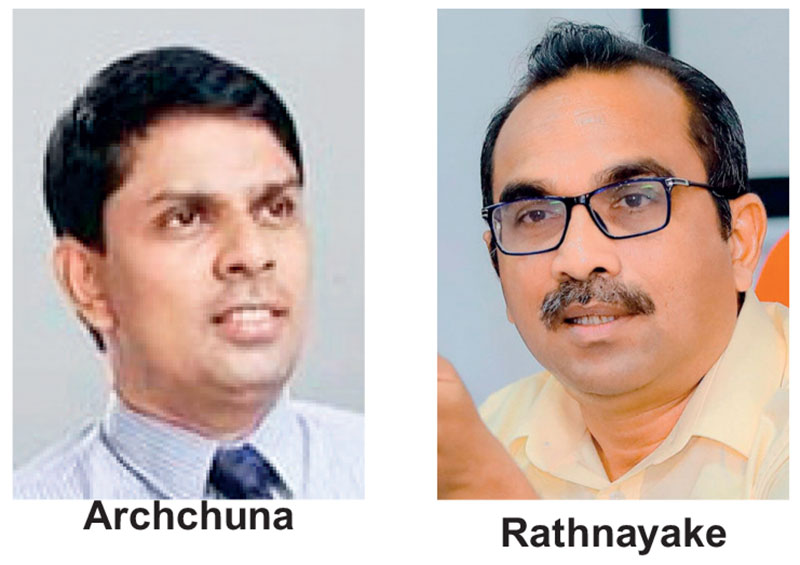
Leader of the House and Minister Bimal Rathnayake yesterday criticised the conduct of MP Archchuna Ramanathan in Parliament, describing the behaviour of certain lawmakers as “uncivilised, disgraceful and indecent”, while a heated exchange followed between government and opposition members.
Rathnayake made the remarks when Ramanathan attempted to raise a point of order during parliamentary proceedings.
“This parliament has one or two members who behave in a very uncivilised, disgraceful manner. We tolerate them because one of them is mentally ill,” Rathnayake said.
He alleged that Ramanathan had insulted even members of the Tamil community.
“The things he says may not be heard through the microphone, but the four walls of this Parliament are witnesses,” Rathnayake said, adding that Ramanathan’s conduct was not limited to Parliament.
He claimed that the Jaffna District Coordinating Committee meeting could not be held due to Ramanathan’s behaviour and said MP Gajendrakumar Ponnambalam had written to the Speaker stating that he could not sit near him.
The Speaker intervened during the exchange, warning Ramanathan not to behave in a manner that would turn Parliament into “a joke”. He also said the MP had previously addressed him in an insulting manner.
Opposition Leader Sajith Premadasa criticised the manner in which Rathnayake and the Speaker had addressed the matter, saying MPs should not be spoken to improperly and urging members to follow parliamentary Standing Orders.
Ramanathan, responding to the remarks, said: “I may be a psycho, but I am not a homosexual.”
by Saman Indrajith ✍️

Oil prices hit $100 for the first time since May

US hits dozens of trading partners with new wave of tariffs

Arachchige, Rathnayake and Malinga pump Jaffna

Hermann, Liyanage and Mujeeb steer Colombo Kaps to a 23 run win

Showers expected in the Western and North-western provinces and in Galle and Matara districts

Child abuse crisis: 108,000 complaints reported in 10 years

‘Dates have the highest sugar content to fight Coronavirus’

Sunday Island 27 December – Headlines

#SundayIsland 17th December – Headlines

Sunday Island – 28th March

Sunday Island Headlines – 21 March

Sunday Island – 21st February – Headlines
-
 Features6 days ago
Two memorable excerpts from a former SLAF commander’s memoir
-
 Business6 days ago
‘Giving up was never an option’: The fisherman who fought back after losing millions in SL
-
 Latest News6 days ago
Davis cup Asia/Oceania Group IV 2026 to be held in Colombo from 20th to 25th July
-
 Features6 days ago
Erdoğan’s New Republic
-
 Life style6 days ago
Taste of the Swiss Alps comes to Colombo
-
 Midweek Review2 days ago
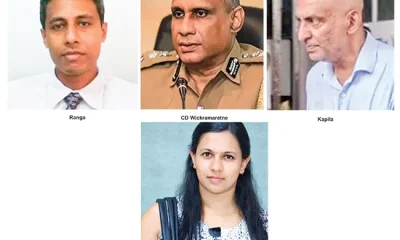
Three high-profile alleged suicides shaping key investigations
-
 News6 days ago
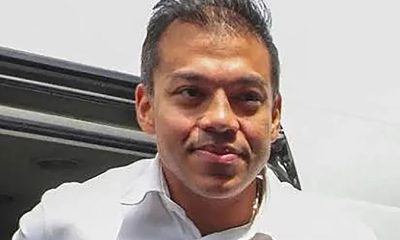
Evidence recorded in money laundering case against Yoshitha Rajapaksa
-
 News6 days ago
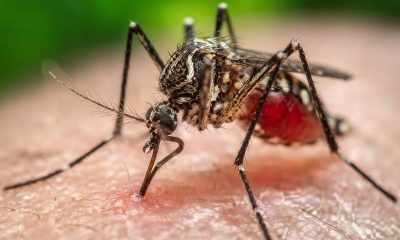
Dengue outbreak gallops ahead: Infections surpasses 73,455, leaving 50 dead