
News
Prof. Yuan Longping, Hybrid Rice and Local Ignoramuses


by Dr. MP Dhanapala
Some people are allergic to genetic improvement of crops. They are free to provide an appropriate technology to convince farmers to propagate and have their share of traditional crop species to lead a healthy life, ignoring the green revolution, improved crop species and use of agro-chemical inputs inclusive of plant nutrients.
I use the term “appropriate technology” to imply its feasibility, sustainability and economic viability from the farmers’ point of view. In this process, one should demarcate clearly between green revolution and green agriculture. The latter is yet ill- defined with no definite field tested technological recommendations for different crops developed or established.
Similarly, the sustainable agricultural enthusiast can engage in so called environment friendly non-toxic food production to feed the nation at an affordable cost. Surprisingly, the past cropping season (Maha 21/22) was deliberately ignored by the advisors and experts of sustainable green agriculture, without proper guidance and demonstrations to the farmers in all sectors of agriculture.
Everything was in a disarray and the responsible officers of the sector remained tight-lipped while securing their positions in office. Was this sustainable green agriculture? Are we to repeat the same? This needs an immediate and definite answer/solution before the Yala season begins in 2022. Farmers cannot proceed without well defined technological package.
To my mind, the agriculture we had until the first half of the 20th century was presumably sustainable and may have been green. The animal husbandry component together with farming systems and crop rotation, and sometimes the shifting/slash and burn cultivation system based on mixed-cropping associated with crop diversity were apparently considered Eco-friendly concepts in operation. But we failed to produce adequate food for the increasing population.
The land resources diminished gradually with more land being utilized to rear animals; then there was the population explosion. This situation led us to more intensive, demand-driven mono crop culture. Mechanization and other scientific innovations, inclusive of agrochemicals made good the acute shortage of labor as a result of people moving away from agriculture to white-collar jobs. This was influenced by education and urbanization.
How many of those who advise and insist on sustainable and green agriculture are prepared to engage in agriculture as their sole livelihood? Have they ever cultivated land to earn their livings? Probably not. But we have people from all sectors, including Buddhist monks (I am a Buddhist) promoting sustainable green agriculture with no strategies defined for successful implementation. They are unwilling to be full-time farmers. They preach and predict that in a few years’ time, agriculture would return to normal to feed the nation. They have no empathy with the farmers. This is the bitter reality.
The nostalgic eco-friendly scenario anticipated with sustainable green agriculture – forest cover, natural springs, unpolluted creeks and water bodies full of fish, soil microbes, flora and fauna etc. may well be only a dream that would not reappear on earth again. This lives in the minds of those who knew a more spacious era. We then had over 80 percent of forest cover in the country, Now it’s down to less than 30 percent with denudation of forests alongside the population explosion.
If we had the forest cover and a small population as in the past, then we could have continued life in a sustainable environment as we did centuries ago eating healthy food provided by nature. But now we have grown to a little over 22 million confined to 64.5 thousand square kilometers of land in an electronic age. We travel in carbon emitting limousines and supersonic aircraft consuming the resource of the earth without a care of what would happen the next day. Some of us only mark-time till we get the opportunity to migrate to greener pastures; but the poor and the incapable must continue to survive in this environment.
If one can supply the so-called healthy food at affordable prices for every inhabitant, then there is no necessity for a Green Revolution (not green agriculture) or Norman Bourlogue and his innovative approach to improve food production. We need food more than anything else, with the majority of our people born without silver spoons in their mouths.
The green revolution (not green agriculture) was brought about to produce more food for the increasing population within the country. Had we unlimited cultivable lands, the green revolution is meaningless as sustainable green agriculture was in place with rice and other field crops; but we were forced to improve productivity of crops within our limited agricultural land resource. This is the reason why the Norman Borlaugs of this world appeared. He was man who employed the modern plant type concept to improve productivity of wheat per unit area of land. This thinking migrated into rice and other cereal crops.
The modern Indica rice varieties were developed since the isolation of semi-dwarf rice mutant, Dee-Geo-Woo-Gen (DGWG), in Taiwan. There were two improved varieties, Taichung Native 1 (TN1) from Taiwan and IR 8 from the International Rice Research Institute (IRRI), introduced to Sri Lanka in the 1960s. But they failed to gain farmer acceptance. Sri Lanka too had a dwarf mutant of rice, K8 natural mutant (K8 nm), isolated at the Ambalantota Regional Rice Research Station.
K8 was known to be a sister-line of H4, the landmark cross-bred rice variety in Sri Lanka. The genetic improvement of rice in Sri Lanka was reported comprehensively in my newspaper article titled, “Rice Genetic Improvement Odyssey of Past Centuries” in the Sunday Island of 17/10/2021. This was to keep the misinformed or uncertain general public updated about the recorded historical developments of rice in Sri Lanka.
Some educated non-agriculturists distort the facts to convey to the general public that conventionally bred varieties were either hybrids or genetically modified entities. Probably the critics have forgotten the elementary Mendelian genetics they learned in “O Level” classes in schools. I invite attention of anyone who believes these critics to read the Sinhalese translation of the article titled “Are Modern Rice Varieties Genetically Modified Hybrids?” in page 11-17 in Govikam Sangarawa, 51 (2), June, 2020, Dept. of Agriculture..
Now, let me introduce Prof. Yuan Longping as the father of real hybrid rice. His contributions are in no way secondary to that of Norman Borlaug. He initiated the three parental hybrid rice technology to exploit heterosis/hybrid vigor to improve yield potential of rice and developed hybrid rice in China capable of out-yielding the conventionally cross-bred varieties by a substantial margin.
This procedure cannot be simply explained to convince the “local Longpings” who look at it without any background knowledge and experience in floral morphology and genetics of rice. Some of Prof. Longping’s “Super Hybrids” are capable of yielding 18 t/ha (360 bushels/ac) in high potential environments. Though he left us nine months ago and is not with us any more, Prof. Longping admitted that conventionally bred varieties in such specific environments are capable of yielding 16 t/ha (320 bu/ac).
I have listened to this statement of Prof. Longping on two occasions while answering a question raised by the IRRI hybrid rice breeder, Dr. Sant Virmani. Our national average yields of conventionally bred varieties are slightly below 5 t/ha (100 bu/ac) within the country, but I am confident that ours too can reach the potential of above 15 t/ha (300 bu/ac) or more in a matching environment.
The limiting factor is the potential of our environment; the edaphic (soil) and climatic factors specifically. Those who are misinformed that the conventionally bred (cross-bred) varieties are hybrids, can visit RRDI, Batalagoda to learn the breeding process of hybrid rice. The major constraints associated with the program are development of perfect cytoplasmic male sterile parent (A line) and its maintainer parent (B line); fertility restoration parent (R line); standard heterosis or pronounced hybrid vigor and the enhanced cross pollination capacity between the A and R lines (the rice plant is a hermaphrodite and an obligate inbreeder (cleistogamy); seed production process in isolation (space or time) without contamination and finally the unwarranted criticism by the local Longpings.
Now, we in Sri Lanka inclusive of all the local Longpings, can taste hybrid rice from China. All or some of the one million tons of Chinese rice to be imported shortly have to be hybrids, as more than 60 percent of the Chinese rice crop is from hybrid rice. Although one can conveniently avoid answering the questions in the media about the cultivation process (green or non-green), the yield potential of hybrid rice cannot be realized through sustainable green agriculture; it has to be some form of non-green agriculture involved in the process of commercial rice production in China.
The health-concerned local Longpings can investigate and compare the status of Cadmium (Cd), Arsenic (As) and Lead (Pb) and verify the quality and suitability of the imported rice for consumption by the general public. I am inclined to consume it any way, as I am from the farming community and confident that no Chinese can survive without kidneys.
I have expressed my gut feelings about the non-green rice cultivation advocated during my tenure in office at the Rice Research and Development Institute (RRDI), Batalagoda, in the newspaper article titled “Expert Advisor, Sustainable Farming and the Rice Farmer”, Sunday Island of 07/11/ 21. After serving 31 years at Batalagoda, with my family living with me and consuming non-green rice and other food items, we have suffered no ill effects. This is a real life experience.
Unfortunately the facts are being distorted by critics to their advantage. Accuracy and precision are two key words in scientific statements. In my newspaper article titled “Beyond Illusion to Reality with Traditional Rice”, Sunday Island of 10/10/2021, I have highlighted this fact as some conclusions were arrived at when evidence is inaccurate and incomplete.
Recently, in a U-tube discussion, the resource person was very confidently elaborating that Carbon and Nitrogen were subjected to pressure in the synthesis of urea and in the process Cadmium and Arsenic appear as contaminants. Is this how urea is synthesized? How come that something not in the raw material appears in the ultimate product? Also, in the same program, the resource person insisted that thunder showers make nitrate from atmospheric nitrogen and that is adequate to raise the rice crop in the field.
I knew nitrate as a negatively charged ion (NO3-), but not as a chemical compound called nitrate, and the lightening process will produce nitric acid (HNO3) identified in Sinhala as “Akunu Wathura”. (Plants grow better during rainy days irrespective of thunder showers. Here, the confounded effects of many factors are involved in the process. Availability of Sulphur in the form of Sulphur Dioxide (SO2) is reported from rain water analysis locally, but one can quantify the availability of adequate N in rain water in the form of any nitrogenous compound, by analyzing the rain water in March/April, the peak period of lightning and thunder showers.)
The media person in the program was patiently listening to and admiring the resource person. This reflected on his quality and knowledge more than the inaccuracy and the lack of precision of the two statements. Many unscientific and inaccurate statements of this kind may seep into society and get registered in the minds of laymen if the media is negligent, incompetent or qualified to do their job properly. The most sensible and rational strategy to come out from the present fertilizer dilemma in rice cultivation is suggested in the write-up “Are We Making Rational Decisions in the Rice Sector?”, Sunday Island of 12/09/2021.
Scientists never lie or distort facts to their advantage. If it happens, he is not fit to represent the scientific community any more. Prof. Yuan Longping was a dedicated scientist of extremely high caliber. Moreover, he was a very humble, down to earth gentleman. He made somethings happen that the rice scientists thought was extremely difficult, if not impossible. This would be appreciated only if you understand the morphology (hermaphroditism) and pollination mechanism (cleistogamy) of the rice floret (spikelet).
Prof. Yuan Longping’s hybrid rice research was immensely supported by the government of China. That made hybrid rice a reality by making its cultivation mandatory to some extent. Chinese understand the value of research. Hybrid rice is apparently the ultimate technological innovation or climax in rice breeding, if we are to protect ourselves from hunger.
It is too early to execute hybrid rice cultivation in our country as we need further research to confirm its practicability within our infra structure. However, our Longpings are protesing against hybrid rice at the outset itself, even prior to the development of hybrids without understanding the real mechanism underlying the breeding process. That is the difference between progressive and stagnating nations, probably governed by inherent genes.
I will conclude this disclosure quoting Prof. Yuan Longping, “The ship (hybrid rice) is always above the surface of water (conventional varieties)” i.e. when you improve the potential of conventional varieties, a hybrid can be developed to surpass the yield potential of that variety.
(The writer if a Retired Director/Rice Research & Development Institute, Bathalagoda)
Tel. 071 8412444, e mail: maddumadhanapala@yahoo.com

By Shamindra Ferdinando
The use of low quality coal, over a period of time, had led to the developing crisis at the Lakvijaya Coal Power Plant (LVPP) at Norochcholai that compelled the boastful NPP government to implement power cuts, former Lanka Electricity Company (Private) Limited (LECO) Chairman Bandula Chandrasekera said yesterday.
The government imposed one-hour countrywide power cuts on 19 Oct.
Chandrasekera, now a consumer rights activist, warned that though the government declared the power cuts would be limited to three days, the situation could take a turn for the worse.
The top United Republican Front (URF) activist said so in response to the government’s claim that Saturday’s sudden drop in electricity generation at the country’s only coal-fired power plant hadn’t been caused by the quality issue of coal.
The former LEOCO Chief emphasised that the country was paying a very heavy price for the controversial procurement of low-quality coal for the 2025/2026 season.
“Procurement of low quality coal is not an allegation. It has been accepted by a seven-member committee, headed by K. L. R. C. Wijayasinghe, Additional Secretary, Energy Ministry, appointed by Parliament,” Chandrasekera said, pointing out that the government was trying to mislead the public into believing that the use of coal supplied by Trident Chemphar wasn’t the cause of the current power crisis.
The expert committee that investigated the coal scam had disclosed losses caused by substandard coal, Chandrasekera said, adding that the total losses/damages could be as much as Rs 20 bn.
Trouble erupted in Dec, 2025 when LVPP began using coal purchased from the new supplier, whose selection was challenged by the Auditor General in a special report submitted to Parliament, in April this year, he said.
Since the government entered into a deal with the Indian company, LVPP has so far received 19 ship loads of coal. An investigation conducted on the orders of the Public Utilities Commission of Sri Lanka (PUCSL) revealed that the use of low-quality coal had had a detrimental impact on the LVPP.
The Frontline Socialist Party (FSP) exposed the corrupt deal in Sept. 2025. The NPP run Parliament ignored the disclosure made by the JVP breakaway faction.
Chandrasekera said that the Committee asserted that it would cost approximately Rs 80 mn to restore the LVPP to the previous status. Responding to The Island queries, Chandrasekera emphasised the country couldn’t meet the power requirement unless the LVPP operates without hindrance. Those who had been, for whatever reason, switched to South African coal provided by the Indian supplier should be held accountable and punished, Chandrasekera said, recalling how the NPP parliamentary group defeated the no-confidence motion moved against the then Power Minister Kumara Jayakody, who later quit, as the enormity of the scam and its repercussions shook the government.
Chandrasekera said that the government couldn’t maintain services though the powers that be intended to meet the power deficit with the help of hydropower generated by the Victoria power station. The ex-official underscored the need to inquire into the failure of the authorities to implement the backup plan last Saturday. Had Victoria met the requirement, last Saturday’s countrywide power failure, that lasted from 11.43 am to 11 pm could have been averted, Chandrasekera said.
He also questioned the controversial government decision to disconnect solar power over the weekend as the absence of solar generation obviously aggravated the problem. Chandrasekera emphasised that the latest countrywide power outage exposed the government whose basic strategy was to blame everything on the Opposition.
“We sincerely hope the Presidential Commission inquiring into the coal scams also looks into the situation developing at LVPP due to the use of substandard coal. According to him, the loss caused by the recent outage was estimated to be around Rs 16 bn and the crisis could not be addressed by propaganda campaigns, especially on social media. But, if other factors, including the expenditure on hydro and thermal generation were taken into consideration, the losses could be as much as Rs 20 bn.
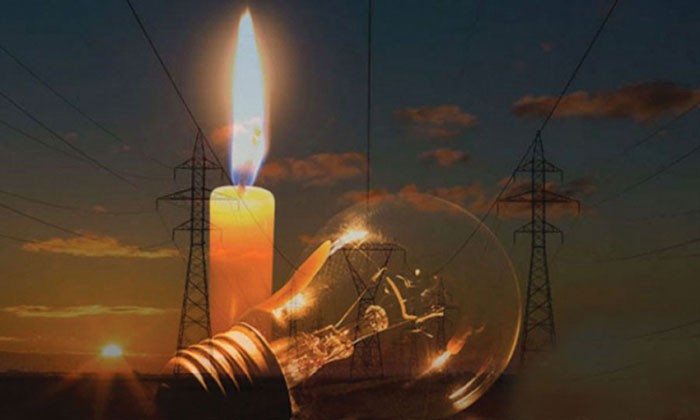
Power cuts continued across the country yesterday and are expected to continue today following the shutdown of all three generating units at the Lakvijaya Power Plant in Norochcholai.
The Public Utilities Commission of Sri Lanka (PUCSL) said approval had been granted on Monday (19) following a request by the National System Operator (NSO) to impose scheduled power cuts.
Accordingly, one-hour power cuts were scheduled between 4.30 p.m. and 9.00 p.m., with the country divided into four zones. Hospitals and locations providing essential services were exempted.
The three Norochcholai generating units remain out of operation following the countrywide power failure last Saturday, prompting the NSO to introduce daily power cuts to manage the available electricity supply.
NSO Chief Executive Officer Buddhika Samarasekara said the power cuts would be necessary yesterday and today (21).
By Shamindra Ferdinando
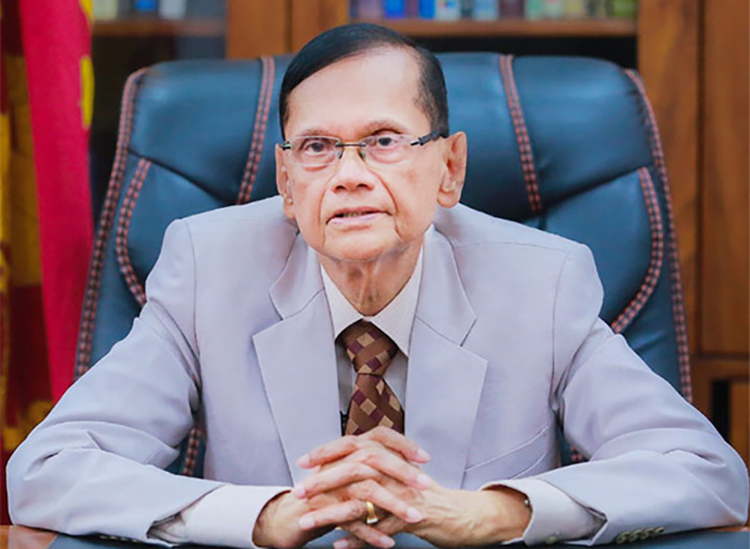
Prof. G. L. Peiris yesterday said he had not been concerned at all about being arrested when the Commission to Investigate Allegations of Bribery or Corruption (CIABOC) summoned him to record a statement regarding an ongoing investigation.
Addressing the media outside the CIABOC, the former External Affairs Minister emphasised that his family had never taken anything from people but contributed to their welfare. The internationally renowned academic said that he didn’t accept lucrative opportunities abroad but remained committed to do whatever possible for the public here.
The CIABOC questioned Prof. Peiris on the launch of the Shangri-La Hotel project here. The Convener of the Janathawadi Joint Opposition said that when the top management of the hotel got in touch with
him, he had brought the matter to the notice of the then President Mahinda Rajapaksa, who promptly gave the go ahead.
Shangri-La was opened in Nov. 2017 with the participation of the then President Maithripala Sirisena and Prime Minister Ranil Wickremesinghe.
Prof. Peiris said that he had been appointed External Affairs Minister nearly a year after the successful conclusion of the war against the LTTE in May 2009. Shangri-La, which owned over 100 hotels at that time, was keen to explore the possibility of opening a hotel here and the government had swiftly grabbed the opportunity. Referring to the opening of ITC Ratnadeepa, in late April 2024, Prof. Peiris explained the importance of foreign investment, particularly after the end of the 30-year war that caused massive devastation.
Responding to media queries, Prof. Peiris said that he strongly opposed efforts to silence political opponents but accepted the need to investigate waste, corruption and irregularities. “People shouldn’t be targeted over their political stand,” the ex-lawmaker said, adding that he as the Minister tasked with attracting such special investments worked in line with the overall government policy.

Showers above 100 mm are likely at some places in the Western, Sabaragamuwa, Central, North-western, Northern and Southern provinces and in Anuradhapura district.

Low-quality coal causes power cuts: Ex-LECO Chief

Power cuts continue

GL stresses importance of post-war Shangri-La investment after CIABOC questions him

Coal inquiry gets extension until 16 December

Dilshan, Hirupama named best athletes at All Island Schools Games Athletics Championships

‘Dates have the highest sugar content to fight Coronavirus’

Sunday Island 27 December – Headlines

#SundayIsland 17th December – Headlines

Sunday Island – 28th March

Sunday Island Headlines – 21 March

Sunday Island – 21st February – Headlines
-

 Features3 days ago
Kotahena:A Small Enclave, An Extraordinary Legacy
-
 News4 days ago
Asgiri Mahanayake calls for immediate release of Gnanasara Thera
-

 News3 days ago
Record 1,600 students take Russian Classical Ballet examination in Sri Lanka
-
 News6 days ago
AC President recuses himself from hearing prison attire case pertaining to Gnanasara Thera
-
 News5 days ago
Naval officer testifies Yoshitha received Rs. 5.15 mn in salaries during SLN service
-

 News3 days ago
Karannagoda pushed for £24,536 for Yoshitha’s UK training, Court told
-

 Editorial5 days ago
Saving Anojan: Beyond Executioner’s Blade
-

 News6 days ago
CID informs Fort Magistrate’s Court investigation into money laundering case against Namal completed