
News
PHIs blame indigenous physicians’ propaganda for booster jab hesitancy

By Rathindra Kuruwita
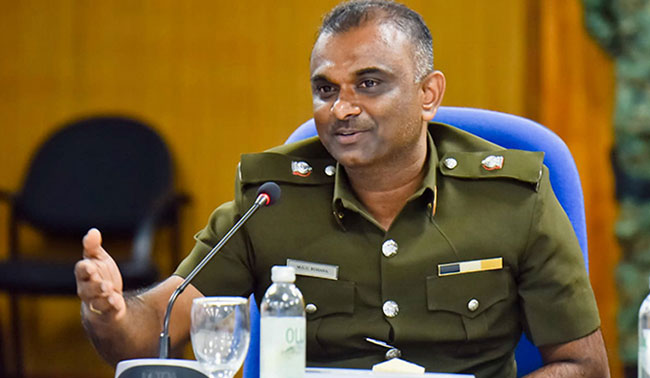
It would be difficult to increase the number of people who receive booster shots if the government did not address the growing anti- vaccine sentiments among the people, head of the Public Health Inspectors’ Union (PHIU) Upul Rohana said yesterday.
Rohana said that at the beginning of the pandemic anti-vaccine sentiments had been rare among the people and that the overwhelming majority of the people wanted to get vaccinated.
“People were waiting in queues. People were asking the government to double jab them as fast as possible. Some people demanded to be jabbed with the Pfizer vaccine. Heath officials have done little to counter anti-vaccine propaganda.”
The PHIU head said that even some medical professionals contributed to the anti- vaccine sentiments. A number of indigenous medical practitioners carried out a campaign against vaccination on social media and such campaigns have gained traction over the past months.
“What did we do? Health officials didn’t do much. We didn’t try to counter these sentiments with facts and figures. We have not taken any action against those who disseminate anti- vaccine sentiments. Now, these wrong ideas are firmly rooted among a significant number of people,” he said.
Rohana said that until very recently, health officials had failed to pay adequate attention to the growing anti- vaccine sentiments. Senior health ministry officials believed that the people were not getting vaccinated because there was an issue with vaccine distribution and availability.
“This is why a vaccination week was introduced. The opening hours of vaccination centres were extended and the locations of the centres too were expanded. However, it is now obvious that we did not address the root causes of booster jab hesitance. People are not getting vaccinated because they fear the assumed side effects. A lot of people worry that this will affect their fertility. This is why people are not getting vaccinated and we have not given convincing data or a narrative to prove otherwise,” he said.
On the other hand, people had let their guard down because the government gave the impression that the threat posed by the coronavirus was on its way out, he said. For a long time health officials have not reported the real number of cases, the regulations were relaxed and people were encouraged to go back to the way they were living before the pandemic, the PHIU head said.
“After all that, the government and officials now claim that people have to behave responsibly. Now, the people think that the government is trying to distract them from other issues by playing up the COVID-19 card,” Rohana said.
Although the official COVID numbers were around the 900 a day, now at least 2,500 people contracted Covid-19 daily, he said. During the peak of the Delta wave, health officials were carrying out 25,000 PCR tests a day, however, only 12,000 PCR and rapid antigen tests (RAT) were being done now, Rohana said.
“Out of this, most are RATs, which are not effective unless a patient has a high viral load. What about those who don’t have a high viral loads? They can spread the disease. We need to know the ground realities. That is why we must do testing. We need to do more random testing,” he said.
Rohana said that around 82% of Sri Lankans had had both doses of an anti-COVID vaccine and that was the main reason why the deaths caused by COVID had not gone up. The main role of a vaccine was to reduce the severity of symptoms and to minimise deaths, he said.
“So, World Health Organization (WHO) has warned the world that Omicron can cause deaths and hospitalisation. We really should not take this easy,” Rohana said.





Access to safe drinking water for populations residing in small towns and rural areas of Sri Lanka has not yet been fully ensured, and this continues to pose a major challenge to the country’s social and economic development.
With a view to overcome this situation, a programme has been planned to provide clean drinking water to approximately 600,000 families living in semi-urban and rural areas through the implementation of 300 projects covering 50 small towns and rural areas.
The projects are aimed at establishing safe, reliable and sustainable drinking water supply systems, with water to be treated through modern purification technologies, including chlorination and filtration systems, in conformity with national and international drinking water standards.
Accordingly, having considered the resolution furnished by the Minister of Housing, Construction and Water Supply, the Cabinet of Ministers granted approval for the implementation of the proposed programme by the National Water Supply and Drainage Board and the National Community Water Supply Department during the period 2027–2029, subject to the conduct of a feasibility study on the proposed programme and inclusion in the Public Investment Programme based on its outcome.
News
Cabinet nod to submit Import and Export (Control) Regulations No. 04 of 2026 to Parliament for its concurrence

Hydrochlorofluorocarbons (HCFCs), which are chemical compounds widely used in refrigerators and air conditioning units, are being globally phased out under the Montreal Protocol due to their high potential for ozone layer depletion and global warming.
Sri Lanka has likewise committed to phasing out these chemical substances by the year 2030 in a stepwise manner. Accordingly,
regulations under the Import and Export (Control) Act, No. 1 of 1969, namely the Import and Export (Control) Regulations No. 04 of 2026, published in Extraordinary Gazette Notification No. 2487/29 dated 2026-05-07, have been issued, prohibiting, with effect from 2026-06-06, the importation of equipment and appliances that operate solely on hydrochlorofluorocarbons, and prohibiting, with effect from 2028-01-01, the importation of compressors used as components in refrigeration systems of equipment and appliances that operate solely on hydrochlorofluorocarbons.
Accordingly, the Cabinet of Ministers has approved the resolution furnished by the President in his capacity as
the Minister of Finance, Planning and Economic Development to submit the aforementioned Regulations to Parliament for its concurrence.
News
Declaration of Elephant Migratory Corridors to minimize HEC in Monaragala and Hambantota districts
Wild elephants inhabit approximately two-thirds of the land area of Sri Lanka, and it has been identified that the rapid obstruction of elephant habitats and migratory corridors due to various development projects and human activities has directly contributed to the escalation of human–elephant conflict.
It has been recognised that, in order to mitigate such conflict to a certain extent, the protection of wild elephant habitats and migratory corridors must be undertaken as a matter of urgency.
The Department of Wildlife Conservation is currently engaged in identifying wild elephant migratory corridors in collaboration with relevant Divisional Secretaries, stakeholder agencies, and organisations.
Under the Wild Elephant Migratory Corridor Identification Programme in Monaragala District, the Wild Elephant Migratory Corridor from Handapanagala to Demodara
across Menik Ganga (River Menik) up to Yala National Park has been identified, and approval has been granted by the Monaragala District Coordinating Committee for that.
The Elephant Migratory Corridor from Yala National Park’s Zone VI -Lunugamvehera National Park to Udawalawe National Park has already been declared as the Wetahira Kanda Nature Reserve in 2002.
Within this area, five (05) licensed land plots have been identified, and these lands have not yet been developed.
Accordingly, the Cabinet of Ministers has approved the resolution furnished by the Minister of Environment to take the following measures:
To declare, under the provisions of the Flora and Fauna Protection Ordinance, the elephant migratory corridor from Handapanagala in Monaragala District to Demodara across Menik Ganga up to Yala National Park as a sanctuary.
To provide alternative land outside the wildlife reserve area in lieu of the five (05) licensed land plots located within the Wetahira Kanda Nature Reserve area, and to re-declare the Wetahira Kanda Nature Reserve as an elephant migratory corridor.
To acquire, upon payment of compensation, land parcels containing buildings constructed in a manner that obstruct the Koholankala elephant corridor in the Hambantota District, and to declare the relevant area of the Hambantota Wild Elephant Management Reserve as a sanctuary.

Battling Australia force series decider as questions grow for Pakistan

West Indies bowl vs Sri Lanka, Hetmyer not in the XI

Implementation of water supply projects in small town and rural areas.
Cabinet nod to submit Import and Export (Control) Regulations No. 04 of 2026 to Parliament for its concurrence
Declaration of Elephant Migratory Corridors to minimize HEC in Monaragala and Hambantota districts

Qualifier Maja Chwalinska extends dream French Open run

‘Dates have the highest sugar content to fight Coronavirus’

Sunday Island 27 December – Headlines

#SundayIsland 17th December – Headlines

Sunday Island – 28th March

Sunday Island Headlines – 21 March

Sunday Island – 21st February – Headlines
-
 News5 days ago
IMF urges Lanka not to meddle with exchange rate
-
 Business6 days ago
Sri Lanka’s construction industry losing ground while no one watches
-

 Business3 days ago
IMF’s unstated rate:Sri Lanka’s $695m loan costs about 5.33% per annum
-

 News2 days ago
Lankan duo emerge winners in Latin dance championship held in Blackpool, UK
-
 News5 days ago
State of emergency extended
-

 Features6 days ago
The Division Bell Mystery
-
 News3 days ago
UNP challenges NPP move to amend Vihara – Devalagam Act
-

 Features4 days ago
Are threats to Buddha Sasana external or from within?