
News
Opposition urges govt to table PCoI reports on Easter carnage and political victimisation


By Saman Indrajith
The SJB yesterday (10) called on the government to table the reports of the Presidential Commissions of Inquiry on Easter Sunday carnage and on Political Victimisation within this sitting week.
Chief Opposition Whip and Kandy District MP Lakshman Kiriella said that his party had requested at the last party leaders’ meeting that the government table the reports of the two presidential commissions of inquiry and a parliamentary debate held thereon.
“We need them tabled either on Thursday or Friday so that we could debate them during the next sitting week. Another Presidential Commission has been appointed to determine punishments on the basis of recommendations of the commission of inquiry on political victimization. It has been given only three months. We need to debate it in Parliament by that and to know the content of those reports. It is unfair to delay the process by not tabling them. The Speaker and Minister of Justice have promised that reports would be given to parliament.”
Leader of the Opposition Sajith Premadasa
: When the Chief Opposition Whip made that request at the party leaders’ meeting the government promised to table the reports of the commissions of inquiry, and also allocate dates during the next sitting week for the debate. There is a special presidential commission that has been appointed to implement the recommendations of the commissions of inquiry. We need to debate the reports before that implementation process starts. We call on the Speaker to order the government to table those reports in parliament on Thursday so that we could debate them in the third week of this month.
Leader of the House and Foreign Affairs Minister Dinesh Gunawardena:
We have made a promise to allocate time for a debate once the reports are tabled in parliament. Therefore, we are ready to allocate dates for the debate whenever the reports are given.
SJB MP Ranjith Madduma Bandara:
It is said that the reports have made recommendations pertaining to the leaders of the Opposition parties. The Prime Minister too has stated that these reports would be tabled in Parliament. We urge the government to submit the reports as soon as possible.
MP Dilan Perera:
The Speaker has said that he would present the reports to the House as soon as he receives them. That is what the government’s wish too. We too need that debate.



The National Cadet Corps (NCC) commemorated its 145th anniversary with a series of religious observances and ceremonial events held on April 28 and 29, invoking blessings for the institution and paying tribute to cadets and officers who sacrificed their lives for the nation.
The commemorative events commenced at the NCC Headquarters on April 28 with a Pirith Chanting Ceremony organized to seek the blessings of the Triple Gem for the continued progress and prosperity of the Corps. The Maha Sangha was ceremonially escorted in a vibrant procession featuring traditional dance troupes representing the 3rd, 9th, and 26th battalions.
Religious rites were conducted under the guidance of the Chief Incumbent of Sri Sudarshanaramaya Temple, Kalubowila. During the ceremony, merits were transferred to all NCC officers and cadets who made the supreme sacrifice in safeguarding the sovereignty of the motherland.
Following the overnight Pirith chanting, an almsgiving ceremony for the Maha Sangha was held at the Headquarters Administrative Complex in the early hours of April 29.
The Chief Incumbent commended the organizers for the successful arrangements and highlighted the importance of preserving religious and cultural traditions within national institutions. Cadets, commanding officers of all 30 battalions, executive and training officers, Tri-Forces permanent staff members, and civilian employees of the Corps also participated in the religious observances.
Meanwhile, the NCC’s annual flag blessing ceremony was held with solemnity and grandeur at the Gangaramaya Temple in Colombo on April 29.
Accompanied by traditional Hewisi drummers, Corps flags were carried in procession into the temple premises, where Pirith chanting and religious blessings were conducted for the National Cadet Corps flag, training centre flags, provincial headquarters flags, and all battalion flags representing the Corps’ 30 battalions.
The ceremony brought together Cadet Regimental Sergeant Majors (Cadet RSMs), commanding officers, executive officers, provincial deputy directors, training officers, and commandants of NCC training centres representing all battalions countrywide.
Senior NCC officials, including Brigadier (Administration and Quartering), the Corps Secretary, Colonel (Training), and the Head of Procurement, joined the Director of the NCC, Major General A.P.C.R. Premathilaka, in the religious observances.

The notion that home gardening can be treated as a blanket remedy for Sri Lanka’s deepening agricultural crisis is fundamentally misplaced, Senior Professor of Crop Science at the University of Peradeniya, Buddhi Marambe has warned.
Delivering the keynote address at the Science Forum on Food Security held at the National Science Foundation (NSF) on 29 April 2026, Prof. Marambe cautioned that while home gardens have an important role, they cannot substitute systemic solutions required to address structural weaknesses in the country’s food production sector.
Speaking at the forum, held under the theme, ‘Facing Agriculture Crisis – Home Gardening as a Tool’, Prof. Marambe said Sri Lanka’s food security challenges were increasingly shaped by shrinking agricultural land per capita, climate volatility and rising input costs.
He noted that global agricultural land per person had fallen sharply from about 1.45 hectares in 1961 to 0.6 hectares in 2023, while in Asia it had declined to 0.35 hectares. In Sri Lanka, he said, the figure had dropped further from 0.17 hectares to just 0.13 hectares over the same period, underscoring severe land constraints.
Against this backdrop, Prof Marambe said home gardening could not be expected to compensate for the loss of large-scale production systems such as paddy cultivation, which depended on wetlands that could not be replicated in residential spaces.
He also pointed to the growing impact of extreme weather events, citing Cyclone Ditwah (2025), which brought record 24-hour rainfall of 375 mm in parts of the country and caused extensive damage to paddy and other field crops. Climate-related losses in paddy production were estimated at 35.4 per cent, with policy-related disruptions accounting for a further 34.1 per cent.
Several districts, including Anuradhapura, Polonnaruwa and Batticaloa, recorded damage to over 20,000 hectares of cultivated land, he noted, warning that such shocks are becoming more frequent and unpredictable.

Prof. Marambe speaking at the science forum
Prof. Marambe highlighted economic pressures on agriculture, particularly the volatility in fertiliser prices. Citing global market data, he said urea prices had peaked at nearly USD 750 per tonne in early 2026 before easing marginally, placing additional strain on farmers.
Referring to the COVID-19 pandemic experience, he cautioned against unstructured promotion of home gardening, noting that during lockdowns many households had turned to cultivating crops such as ginger and turmeric, eventually leading to market gluts that disrupted livelihoods of commercial producers.
“Different crises require different solutions,” he said, arguing that home gardening should not be seen as a universal production substitute but rather as a targeted intervention.
He stressed that the most practical and sustainable role of home gardening lay in addressing household nutrition rather than bulk food production. At a time when rising food prices were contributing to nutritional decline, he said, home gardens should be reoriented towards improving dietary diversity.
“Even small-scale interventions such as keeping a few hens for eggs to obtain daily protein requirement or cultivating leafy vegetables in limited space can significantly strengthen household nutrition security,” he said.
Prof. Marambe advocated a shift towards “nutrition-focused home gardening”, integrating crops and small livestock within urban and rural homesteads. He also pointed to successful models of urban farming, community gardens in Colombo flats, and school gardening initiatives supported by development partners.
He said such systems, if properly structured, could play a meaningful role in cushioning vulnerable populations against food price shocks while improving dietary outcomes.
However, he reiterated that home gardening must be viewed as one component within a broader agricultural strategy rather than a standalone solution to Sri Lanka’s food security challenges.
The forum, organised by the Media and Event Management Division of NSF under the purview of the Ministry of Science and Technology, brought together leading experts in food science including Emeritus Professor K. K. D. S. Ranaweera, Prof. Renuka Silva and Dr Hiranya Jayawickrema, alongside representatives from print, electronic and social media.
News
Comprehensive reforms to be introduced in the higher education sector in line with primary and secondary education reforms – PM

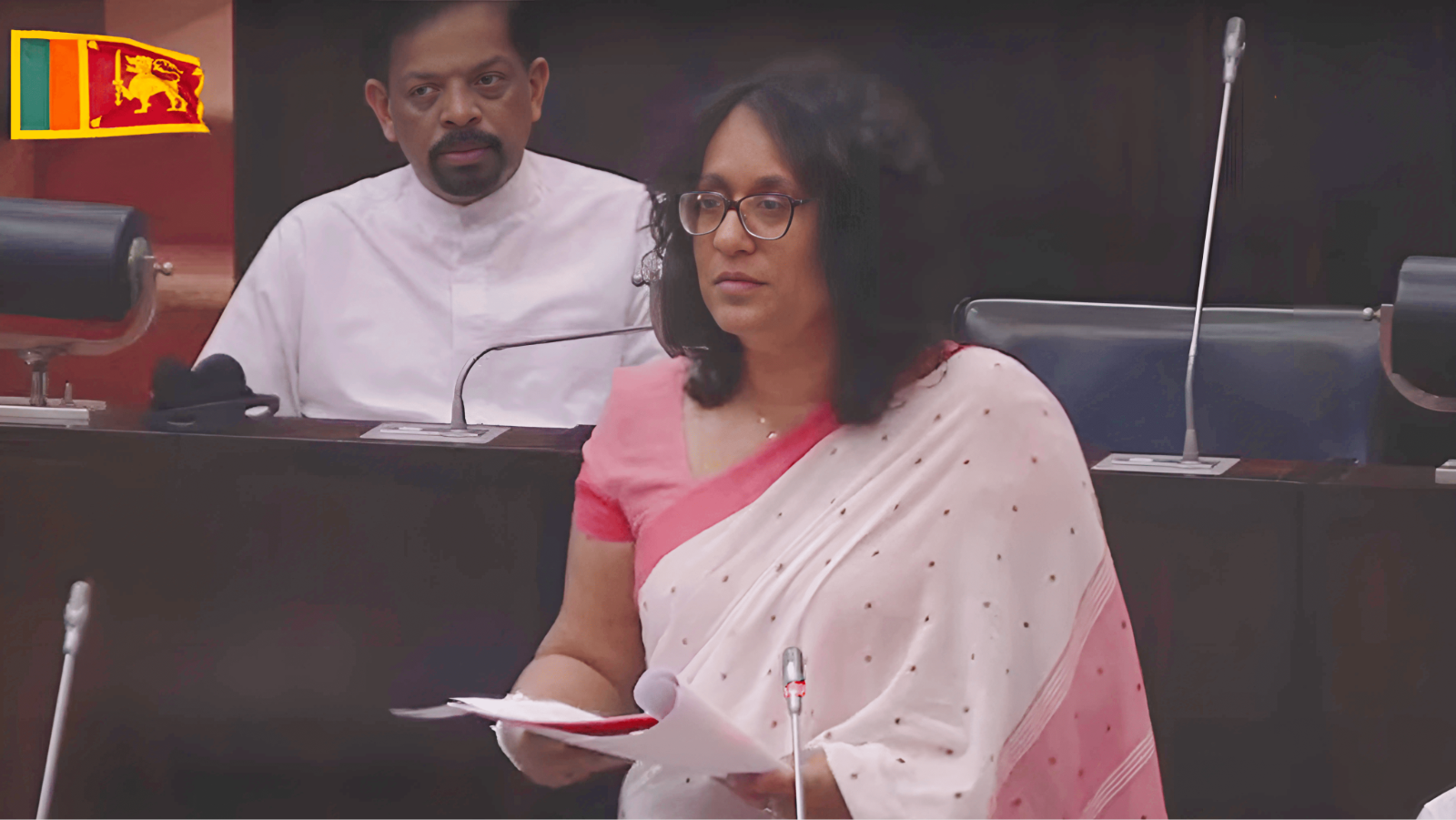
Prime Minister Dr. Harini Amarasuriya stated in Parliament on Wednesday [06th of May] that the Government has planned to introduce relevant changes in the higher education sector aligning with the new reforms being implemented in the primary and secondary education sectors.
The Prime Minister made these remarks while responding to questions raised by Member of Parliament Manjula Sugath Rathnayaka.
The Prime Minister further stated:
“A special expert committee appointed for this purpose has been in operation over the past six months, and based on the report of this panel, existing issues in the higher education sector will be identified and the necessary reforms will be implemented.
A total number of 281,810 students sat for the 2025 G.C.E. Advanced Level Examination, of whom 176,538 qualified for university admission. Following the subject streams, the number of students who qualified is as follows: 32,935 in Biological Sciences, 23,012 in Physical Sciences, 39,608 in Commerce, 58,269 in Arts, 4,199 in the General Stream, 12,472 in Engineering Technology, and 6,043 in Bio-Systems Technology from which 42,937 students are expected to be admitted to universities.
While ensuring the quality of education, the Government gives priority to improving facilities for university students. It has also been decided to maintain the intake for first-degree admissions at the same level as in previous years.
A new course in Geographic Information Systems has been introduced at the University of Ruhuna, and a course in Electronic and Intelligent Systems Engineering has been introduced at the University of Peradeniya from the academic year 2025/2026. Fifty students will be enrolled for each of these new programmes. Steps have already been completed to release the cut-off marks and forward the registration lists to the respective universities”.
Responding to a question raised by the Member of Parliament K. Kader Mastan regarding preschool education, the Prime Minister stated:
“As most preschools in the country are managed by the private sector, the Ministry currently has no provision to offer permanent appointments or salaries to their staff. However, steps are already being taken to provide a certain allowance to volunteer teachers in selected preschools under Provincial Councils.
By 2027, the entire preschool education system is expected to undergo comprehensive reform, with necessary measures being jointly undertaken by the Ministry of Education and the Ministry of Women and Child Affairs.
In addition, based on the recommendations of the National Education Commission, a national policy to regulate preschool education is scheduled to be established in 2026. Under this policy, teacher guidelines and model activity manuals are being prepared, along with plans to conduct teacher training programmes at the provincial level”.
Commenting on volunteer teachers, the Prime Minister emphasized that, in accordance with the Cabinet decision dated 04.01.2007, the policy of not recruiting any volunteer teachers beyond the approved 4,700 teacher aides will continue to be implemented.
[Prime Minister’s Media Division]

Building a sustainable future for Sri Lanka’s construction industry

The Vijay factor

Electricity tariff hike raises questions over fuel pricing transparency

Palm leaf manuscripts of Sri Lanka – 1

NCC marks its 145th anniversary

A new Sherlock Holmes novel

‘Dates have the highest sugar content to fight Coronavirus’

Sunday Island 27 December – Headlines

#SundayIsland 17th December – Headlines

Sunday Island – 28th March

Sunday Island Headlines – 21 March

Sunday Island – 21st February – Headlines
-
 News3 days ago
CJ urged to inquire into AKD’s remarks on May 25 court verdict
-

 News4 days ago
USD 3.7 bn H’tota refinery: China won’t launch project without bigger local market share
-

 News24 hours ago
MIT expert warns of catastrophic consequences of USD 2.5 mn Treasury heist
-

 News7 days ago
Alarm raised over plan to share Lanka’s biometric data with blacklisted Indian firm
-
 News5 days ago
Easter Sunday Case: Ex-SIS Chief concealed intel, former Defence Secy tells court
-
 News6 days ago
Ten corruption cases set for court in May, verdict ordered in one case – President
-

 News7 days ago
USD 2.5 mn fraud probe: Interdicted MoF official found dead at home
-

 Business5 days ago
Dialog Surpasses 1,000 5G Sites, Strengthening Nationwide 5G Coverage