
Business
New MD at Kia Motors

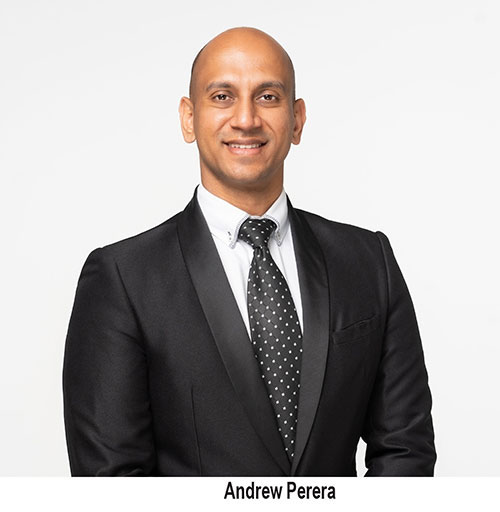
Kia Motors (Lanka) Limited has announced the appointment of Mr Andrew Perera, the Company’s Chief Operating Officer (COO) as Managing Director.
A company news release said “he will provide continuing leadership to the Company’s and the Kia brand’s next phase of growth in Sri Lanka.”
Perera who joined Kia Motors as COO in January 2013 and has played a pivotal role in the development and expansion of Kia’s aftersales service infrastructure and regional presence in Sri Lanka over nearly nine years. He was appointed an Executive Director of the Company in 2015 in recognition of his contributions and his value to the Board, the release added.
Announcing the appointment, Kia Motors (Lanka) Chairman Mr Mahen Thambiah said: “Andrew’s expertise, commitment, drive and energy have been an asset to Kia Motors during good as well as challenging times. With his support we have persevered with our expansion and restructuring plans even through the period marred by the global pandemic and local restrictions, and we look forward to his continuing leadership in the exciting years ahead of us.”
Commenting on his new role Perera said: “On the international stage, Kia is undergoing a transformation and reinvention that is designed to propel the brand to a leading position in the global car market. This is focused on developing more class-leading electric vehicles like the EV6, and introducing a broad range of sustainable mobility services tailored to meet the needs and tastes of individuals and local markets. I believe that the best of Kia is ahead of us, and I am delighted to take up the challenge of driving the brand’s next phase of growth in Sri Lanka.”
A management professional and an accomplished sportsman at the schools, clubs and national levels, Andrew Perera has more than 12 years of experience in the automobile sector. At Kia Motors his tenure as Chief Operating Officer has seen many milestone developments, including awards such as Distributor of Distinction 2013, Most Improved Distributor 2014 and Testimonial Award for Best Sales 2017 for the Company from Kia; the completion of the Rs 800 million Kia Logistics Centre in Malabe in 2018 and the development of a network of owned subsidiaries and franchised satellite sales, service and spare parts (3S) outlets that has significantly expanded the brand’s regional presence.
Perera serves the automobile industry as an Executive Committee Member of the Ceylon Motor Traders Association (CMTA) which is affiliated with the Ceylon Chamber of Commerce.
A past Head Prefect of Royal College, Colombo, and an ardent Royalist to this day, he has a B.Sc. (Hons) in Business Management from the University of Wales and a Masters in Business Administration (MBA) from the University of Leicester. He received his executive education from the National University of Singapore (NUS) focused on Strategic Management and followed the Program on Leadership at MDA Associates International, USA. He has also attained the rank of ‘Green Belt Sensei’ granted by the TSD Consultants, USA, for meeting the training and project implementation requirements in ‘Lean Operations for process excellence.’
Before his move to Kia in 2013, Mr Perera was responsible for overall operations for two automotive brands, Jaguar and Porsche, as Group General Manager at IWS Holdings. Prior to joining the automotive industry, he held several key positions at MAS Holdings Pvt Ltd. , working for global brands such as Victoria’s Secret in the areas of Design, Merchandising and as a Business Analyst.
As a sportsman, he has represented Sri Lanka in Under 17 cricket, the Sinhalese Sports Club (SSC) at U-23 Level and in the Premier Cricket League and was Vice Captain of the Royal College first XI. Continuing his association with sports, Mr Perera serves as an Executive Member of the Royal College Cricket Advisory Committee and the Games Council of Royal College.


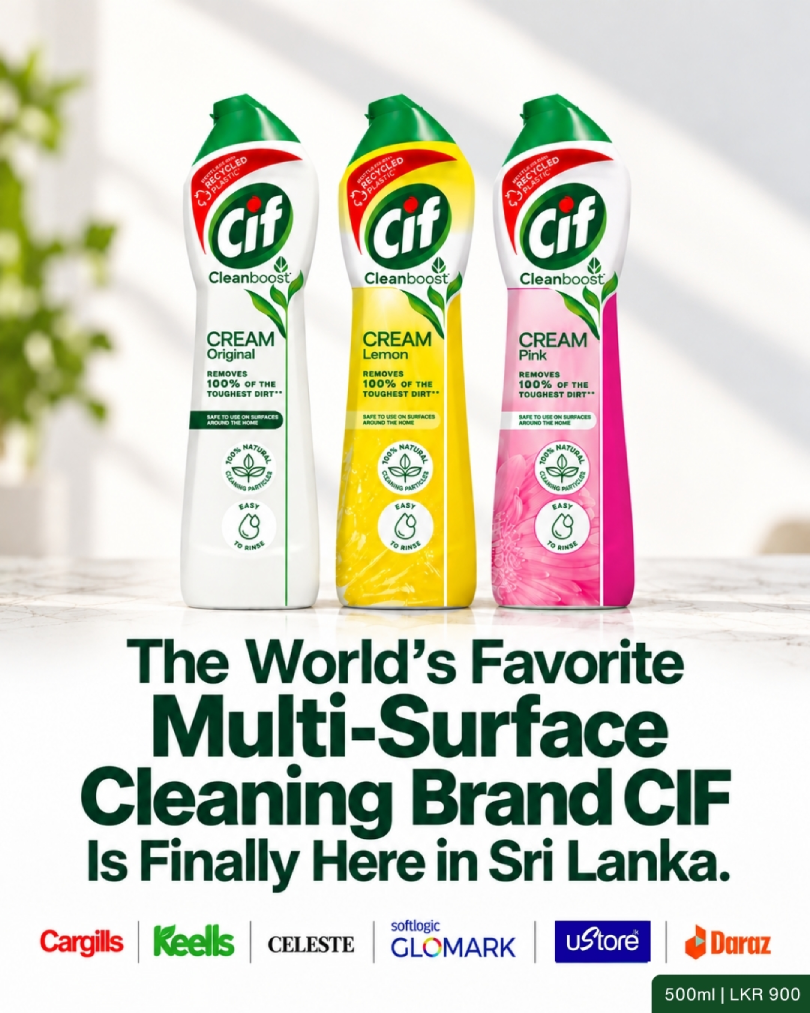
CIF, the globally recognized multi-surface cleaning brand, has officially entered the Sri Lankan market, expanding the range of international home-care solutions available to local consumers.
CIF products are now available at Cargills, Keells, Glomark and Celeste, as well as online through Daraz and uStore, at a retail price of Rs. 900 for 500ml. Shop CIF online at https://ustore.lk/collections/cif
Used by households around the world, CIF is known for its powerful cleaning performance and ability to tackle everyday dirt and some of the toughest cleaning challenges around the home.
Its introduction to Sri Lanka comes as consumers increasingly seek cleaning products that combine performance, convenience and versatility, particularly solutions that can be used across multiple areas and surfaces within the home.
One cleaner. So many possibilities.
From stubborn kitchen grease and grime to limescale around sinks and dirt that builds up on frequently used surfaces, CIF is designed to provide powerful cleaning performance while helping make every day cleaning simpler.
The brand’s multi-surface proposition allows consumers to address a range of household cleaning needs with one versatile solution, bringing greater convenience to modern cleaning routines.
CIF’s entry into Sri Lanka also brings the brand’s global philosophy closer to local consumers eventually helping people restore and rediscover the beauty of the places and things around them through effective everyday cleaning.
With its combination of global recognition, multi-surface versatility and powerful cleaning performance, CIF’s arrival provides Sri Lankan consumers with a new international option in the household cleaning category.
The world’s favorite multi-surface cleaning brand is finally here in Sri Lanka.
Just CIF it!
Business
A sustained wave of Indian assistance to Sri Lanka showcases defining shift in developmental diplomacy
By Sanath Nanayakkare
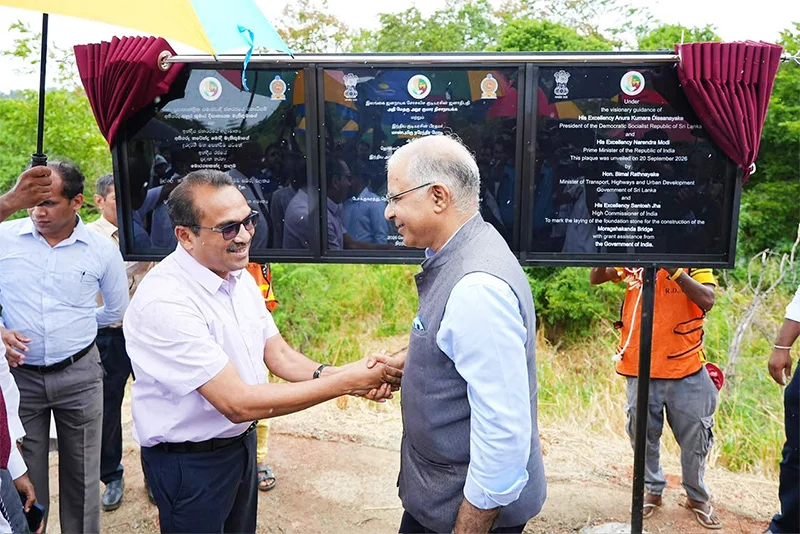
An evolving approach to regional diplomacy was brought into sharp focus with the recent foundation-laying ceremony for the Moragahakanda Bridge in Matale.
Jointly launched by Indian High Commissioner Santosh Jha and Minister of Transport, Highways and Urban Development Bimal Rathnayake, this 175-metre span is far more than a routine civil engineering project. It serves as the physical manifestation of a broader USD 450 million reconstruction package deployed by India in the wake of Cyclone Ditwah, which severely fractured the island’s transport arteries.
Foreign aid is too often discussed in cold, macroeconomic abstractions. Yet, every so often, a consistent pattern of targeted assistance alters the landscape of bilateral relations, offering a clear window into how regional partnerships evolve out of necessity and goodwill.
Across the country today, a remarkable narrative of multi-layered cooperation is unfolding.
From critical post-disaster infrastructure and maritime routes to grassroots agricultural uplift and institutional capacity-building, India’s developmental footprint is shifting unmistakably toward an organic, people-centric model of shared resilience.
What distinguishes this latest wave of assistance is its deliberate pivot from emergency support to permanent, climate-resilient transformation. When Cyclone Ditwah initially paralysed regional connectivity, India’s immediate response was marked by the rapid deployment of temporary Bailey bridges.
Today, that swift humanitarian intervention has matured into a structural blueprint: the Moragahakanda project stands as the vanguard of 13 permanent bridges being built across Sri Lanka’s provinces by IRCON International Limited, complemented by upcoming railway upgrades and modern signaling systems backed by a USD 250 million Line of Credit.
The true signature of this diplomatic shift lies in its breadth, operating simultaneously across multiple tiers of society:
Institutional Governance: Delegations of Sri Lankan parliamentarians and senior administrative officers regularly travel to India to study public policy frameworks, legislative systems, and administrative practices.
Economic Lifelines: Financial mechanisms, such as viability gap funding for the Nagapattinam-to-Kankesanthurai passenger ferry service, continue to shrink geographical distances, reviving coastal commerce and tourism.
Grassroots Empowerment: Specialised capacity-building programmes tailored for local stakeholders – ranging from state officials to rural dairy farmers -ensure that development reaches deep into the island’s hinterlands.
By aligning immediate disaster relief with long-term infrastructure, institutional capacity, and human capital, India and Sri Lanka are demonstrating how neighbours can build safer, more connected futures together, grounded firmly in mutual respect and tangible progress.

By Ifham Nizam
The Central Environmental Authority (CEA) yesterday urged visitors to the Colombo International Book Fair to bring reusable bags to carry their purchases, as part of a drive to reduce single-use plastic waste at the event.
CEA Director General R. S. P. Kapila Rajapaksha said large quantities of plastic, particularly “sili sili” bags, had been used to carry books at previous book fairs.
“We urge visitors to bring an environmentally friendly, reusable bag when they come to buy books. This simple step can help reduce the use of single-use plastic and protect the environment,” Rajapaksha said.
The book fair opens on September 25, with the CEA and the Sri Lanka Book Publishers’ Association launching an awareness programme targeting book sellers, food vendors and visitors.
The programme will be conducted under the theme “Read Smart, Carry Smart”, focusing on reducing polythene and plastic use throughout the exhibition.
The CEA said the use of plastic bags is also subject to regulations issued under the Consumer Affairs Authority Act. Gazette Extraordinary No. 2456/41, dated October 1, 2025, prohibits the free distribution of handled “sili sili” bags to consumers. Where such bags are sold, the charge must be included in the customer’s bill.
The CEA said food outlets at the book fair would also be required to comply with regulations prohibiting a range of single-use plastic products.
These include plastic straws and stirrers, disposable plastic plates, cups, spoons, forks and knives, as well as polythene-based food wrappers commonly known as lunch sheets.
The CEA said it had discussed the requirements with relevant stakeholders and reached agreement to ensure that prohibited products are not used at food outlets within the exhibition premises.
The authority urged both traders and visitors to cooperate with the initiative and help make this year’s book fair a more environmentally responsible event.

Niroshan Dickwella in Sri Lanka’s T20I squad for the first time since 2021

ICC’s agenda for 2027-31: more T20Is, fewer bilateral ODIs

CIF, the world’s favorite multi-surface cleaning brand, arrives in Sri Lanka

A Joint Regional Initiative to Ensure the Digital Safety of Children

PM meets with IMF delegation

Ms. P. M. Jayadeera (Engineer) appointed Director General of Irrigation

‘Dates have the highest sugar content to fight Coronavirus’

Sunday Island 27 December – Headlines

#SundayIsland 17th December – Headlines

Sunday Island – 28th March

Sunday Island Headlines – 21 March

Sunday Island – 21st February – Headlines
-

 News7 days ago
US embassy won’t comment on IGP’s probe into joint drug raid
-

 News5 days ago
Shanakiyan urges urgent action over reported death sentence for Lankan in Saudi Arabia
-

 News6 days ago
Bid for Basil’s extradition nears final stage: Police
-

 News4 days ago
Namal Rajapaksa Buddhist gambit fails, bail denied
-

 Business7 days ago
All-new Bolero MaXX unveiled in Sri Lanka
-
 Opinion7 days ago
A journalist who wrote across the divide
-

 Features4 days ago
Why the spelling Sri Lankan names in English vary
-

 Features4 days ago
Three bands, a new identity: Sri Lankan wolf snake recognised as distinct species